Types of Serial Killers

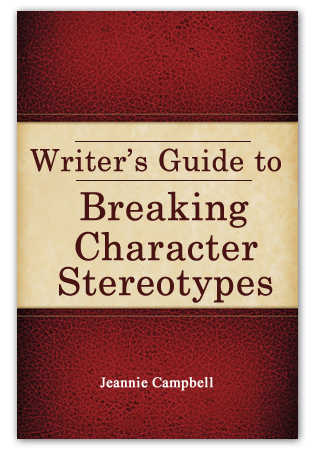
I’m honored to have licensed marriage and family therapist Jeannie Campbell at Redwood’s today as we do a cross-blogging adventure. Jeannie does what I do only with matters of the mind so I hope you’ll check out her blog (and become an enthusiastic follower) The Character Therapist. Jeannie also has a great book for writers called Breaking Character Stereotypes.


I will be at Jeannie’s blog discussing medical conditions that present like psychiatric cases. Think you know what they might be? You’ll have to troll on over there to find out.

Today, Jeannie offers great information into serial killers and their motives which is very important for character development. Very interesting information. 

Welcome back, Jeannie!


I’m happy to be back with part two in my series on psychopaths. (To read the first post, click here.) Today I wanted to talk about the two basic types of serial killers, since serial killers are definitely psychopaths.

Based on the serial killer’s motives, professionals have narrowed down two basic types of killers:


Act-FocusedThese killers generally don’t kill for the psychological gratification of the kill, making the act itself their primary emphasis. They usually kill quickly, with little pomp and circumstance. They come in two subtypes:

Visionaries – These killers usually receive a vision or hear a voice telling them to kill. Sometimes the vision or voice comes from God or the devil, both of which legitimate their violence.

Missionaries – These killers are on “missions” to eradicate a specific group of people, such as prostitutes, white-collared bankers, etc.

Process-FocusedThe majority of serial killers are process-focused. They get off (yes, in thatway) on the method of their kill. They kill for the enjoyment of it, and usually get a perverse sexual thrill out of it, so therefore they take their time and go very slowly. Hedonism at it’s worse. These killers fall into 4 subtypes, based on their motives as well:

Gain – Murdering someone for profit or personal gain. Most females usually fall into this category, like Lavinia Fisher, who would murder her hotel guests and keep whatever belongings and cash they had.

Thrill– Killing someone gives these people a rush or high. They especially like to watch the lights go out in their victim’s eyes. It’s the ultimate adrenaline rush…makes them feel alive and euphoric. They typically don’t engage in sex either before or after.

Power – The pleasure comes from manipulating and dominating, although the argument could be made for this category to fall in with any of the above. Usually sex is involved, but it’s not as important to this killer than to the Lust killer. That’s confusing, I know. Some research I found led me to think that this is considered the “sociopath,” but I think you and I both know that every person talked about on this post would be one of those.

Lust
– Murder is associated with sexual pleasure in the minds of these killers. These sick folk actually will have sex while in the process of killing or engage in necrophilia after they have killed. Either/or….twisted. It seems that Lust Killers are the most prevalent in the media and certain fiction genres, so I’d like to dissect them a little further.

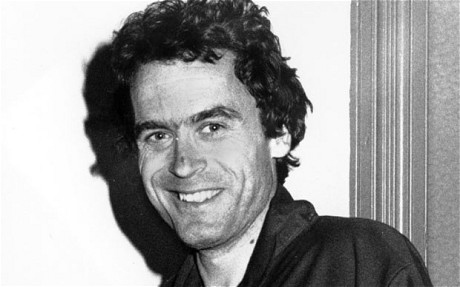
Infamous “Lust Killer” Ted Bundy

Lust Killers basically have sexual gratification as their main motivation. They almost always exhibit sadism (inflicting pain on others for their pleasure). They usually are not opportunistic killers, but rather highly organized, with vast amounts of planning and forethought put into their kills.
They tend to go through four phases:

Fantasy – they act out the crime over and over in their mind, maybe with use of pornographic material. The desire to kill is manifested, and this time period may last years before they progress to phase two.

The Hunt – the killer might focus primarily on the “right” type of victim, or he may focus on the “right” type of location. Once he finds the victim, he may stalk them (hunting) for a long time, memorizing their schedule down to the minute. It could take many more years to go through this phase, and cover 100s of miles.

The Kill – the victim is lured into the trap and then the killer makes real on his fantasy. Depending on how elaborate the kill ritual is, this could take a while…several days or longer, even. There will almost definitely be “overkill,” in that there could be extreme torture, mutilation, or dismemberment. The killer might have sex with the corpse, drink their blood, eat body parts…whatever they can do to preserve their moment of ecstasy however they can. The killer might take a token of their kill or leave a calling card, but not always.

Post-Kill – the killer will likely feel empty or depressed, because their inner torment was only relieved short-term. More lives will have to be taken in order to have temporary relief. It would be during this stage that a killer would write a confession to the police or media. Unless caught, it is inevitable that he will kill again, starting the cycle back over.

I know that’s not the happiest ending to a post, but hopefully this information will help your readers with their serial killer development.
Thanks for hosting me, Jordyn! 

**************************************************************************

Jeannie Campbell is a Licensed Marriage and Family Therapist in California. She is Head of Clinical Services for a large non-profit and has worked with families, teens, parents & kids for over 10 years. She loves her day job so much that she crossed over to diagnosing make-believe people. She’s the owner/operator of The Character TherapistTM, an online therapy service for fictional characters…and their authors. You can connect with her at http://charactertherapist.com.

Traits Most Psychopaths Have in Common

I’m so excited to have licensed marriage and family therapist Jeannie Campbell at Redwood’s today as we do a cross-blogging adventure. Jeannie does what I do only with matters of the mind so I hope you’ll check out her blog (and become an enthusiastic follower) The Character Therapist. Jeannie also has a great book for writers called Breaking Character Stereotypes.

I will be at Jeannie’s blog discussing medical conditions that present like psychiatric cases. Think you know what they might be? You’ll have to troll on over there to find out. You can find Part I of my series here.

Welcome, Jeannie!


I’m honored to be a guest on your blog, Jordyn. I find it fascinating that you do with medical facts what I do with psychological facts over at The Character Therapist.
Many medical thrillers include a psychopath villain, simply by virtue of the genre. Perhaps that’s why I am so enamored with your books!
I’m happy to present a two-part series on psychopaths, detailing significant traits most committers of violent crimes have in common, the types of serial killers that are out there, and then expounding on one type in particular commonly found in novels.
Psychosis truly does have its roots in childhood. I want to introduce you to the concept of the Macdonald Triad, which is also known as the Triad of Psychopathy (pronounced sigh-KOP-athy). It’s named for J.M. Macdonald, a forensic psychiatrist who wrote “The Threat to Kill” in 1963, a paper which appeared in the American Journal of Psychiatry.

In this paper, he detailed a set of three behavioral characteristics that, if found present together in a person, he claimed were to be associated with later violent tendencies. It should be noted that Macdonald focused on hospitalized patients who had a history of making threats to kill, not patients who had actually killed. Some studies have found statistical significance to the Triad, and some studies have not.

The traits, in no particular order, are:

1) Bedwetting

If a child wets the bed past the age of 5, Macdonald found this to be significant. Two psychiatrists (Hellman and Blackman), claimed that enuresis—the act of voiding urine while asleep—was a form of sadism or hostility, because the act of voiding in fantasy was equated with “damaging and destroying.”

More up-to-date research has subsequently discounted associating bedwetting with violent tendencies, but doesmake the point that bedwetting past the age of five can be humiliating for the child, depending on how the child is treated by parental figures for doing so. If belittled or treated cruelly, the child might then be more inclined to engage in the other aspects of the triad as an outlet for their frustration.

2) Animal Cruelty

Torturing animals can be seen as a precursor or rehearsal for killing humans. Torturing any animal is bad, but messing with dogs and cats is particularly so, because they are seen as more humanlike due to being pets. Toads, turtles, worms and the like don’t seem to violate that human-pet connection as much.

Some psychopaths engage in animal cruelty as a way to vent frustrations, since in childhood, they could not retaliate toward those who humiliated them. So they select vulnerable animals, seeing them as weaker. It’s future victim selection at a young age. Studies have been done that prove that those killers who engage in animal cruelty often used the same method on their victims.

3) Firesetting

Since extensive humiliation is often found in the backgrounds of many serial killers, it’s been theorized that setting fire and venting frustration and anger by doing so helps return the child to a normal state of self-worth.

It doesn’t have to be huge fires to be an outlet for aggression. Trash cans, small flame throwers, homemade “bombs”—they all serve their purpose, just as setting fire to a building or car does.

Join me on Wednesday as I continue this series on psychopaths. Thanks for having me, Jordyn!
****************************************************************************
Jeannie Campbell is a Licensed Marriage and Family Therapist in California. She is Head of Clinical Services for a large non-profit and has worked with families, teens, parents & kids for over 10 years. She loves her day job so much that she crossed over to diagnosing make-believe people. She’s the owner/operator of The Character TherapistTM, an online therapy service for fictional characters…and their authors. You can connect with her at http://charactertherapist.com.

Up and Coming

Hello Redwood’s Fans!

How’s your week been? Mine– good. Not as crazy in the ER as it has been recently and that’s good for everyone.

If you like my blog and are a writer– I know you’ll love this talk. I’ll be speaking at the Tattered Cover Bookstore at Highlands Ranch Town Center (Highlands Ranch, CO 80129) Monday, March 4th from 7:00pm-9:00pm. Hope to see you there. Topic will be Medical Mayhem: How to injure, maim, and kill your FICTIONAL characters correctly.

For you this week:

Monday and Wednesday: I am super-excited (yes UBER- excited) to do these posts. Jeannie Campbell and I decided to do a little blog crossover. If you haven’t checked out Jeannie Campbell’s blog– it is a must for writers everywhere. She does what I do only on the psychological side. Her blog is called The Character Therapist and you can find it here. Jeannie will be blogging about serial killers (warning signs and common types) and I’ll be blogging about medical conditions that present like psychiatric ones.

A lot of medical mayhem to be had. Hope you enjoy the posts!

Friday: In celebration of March being Autoimmune Disease Awareness Month, Stacey Thureen does some education on thyroid disease– did you know there was one that is also an autoimmune disease?

Great week here at Redwood’s. Hope you have a fabulous one, too.

Jordyn

Author Question: Death by Trophy

Susan Asks:

I have a woman murdered when she is hit on the back of the head with a metal trophy. The trophy is cup shaped so the largest part of it is a thinner metal. I expect the trophy will dent from the impact, but I’d also expect that there would be blood as a result of the injury. Would this kind of injury cause bleeding and if so can you give me a general idea of how much?

Jordyn Says:

It depends. Blows to the head can go either way. They can just cause internal bleeding (intracranial hemorrhage) and/or an external scalp laceration that would bleed A LOT depending on it’s size and depth. Scalp wounds are known for being pretty bloody.

These injuries can be nice for your character as you have some leeway medically to do them in as you please. 

Author Question: Medical Power of Attorney

Stacy Asks:

Is it possible for a father to grant a Medical Power of Attorney to another person for the general health care of their child? In my WIP, I’m dealing with an emotionally abusive father who isn’t particularly concerned with the health and well-being of his minor daughter (the mother is dead.) I wondered if her best friend’s parents might convince him to give them a MPOA (or whatever the abbreviation is) so they could take her to the doc when she is sick, etc.

Later in the story he turns physically abusive and she ends up in the hospital and will need treatment — he’ll be at home passed out from alcohol and won’t be able to grant it, so … would the friend’s parents be able to grant that? Would they even need the MPOA? How would she be treated if there was no responsible adult available?

Oh, and this takes place in 1999, not today.

Jordyn Says:

Interesting question.

Yes, the father can grant medical power of attorney to whomever he wants.

But… if there is not paperwork what happens when the child presents for medical care?

If the child presents with a life threatening situation– we will begin treatment regardless of ability to obtain consent.

If no life threatening situations exist the hospital is required under EMTALA to provide what’s called a Medical Screening Exam (MSE) to determine if the patient is having an emergency or not. If the patient is not having an emergency, the emergency department can opt out of treatment. However, in this case we could do the MSE and then try and contact next of kin for consent. Hospital policies generally dictate who can give consent in cases like this.

However, if there is concern for abuse– we will sign the patient in and get social work involved and follow their direction. We would likely treat this patient under those conditions.

Author Question: I Need a Medical Condition

Debra asks:

My WIP is set in the late 1800’s, and my hero is in a wheelchair. Is there some kind of an injury that isn’t permanent and is more of a mental thing? A doctor told my hero that he can walk. Even though my hero is a doctor, too, he doesn’t believe it. He doesn’t know it’s because he blames himself for his sister’s death. Does such a thing happen? If so, what would it be called, and would someone massaging his legs and bending them and stuff help him get better? Or how does one recover when their injury is partially due to trauma?

Jordyn says:

Thanks for sending me your question, Debra, and many congratulations on your latest release, Colorado Courtship.

Yes, such a thing does happen!

I think what would fit well for your character is a conversion disorder.

To highlight, the italicized portion is from the following link:

Conversion disorder symptoms may occur because of a psychological conflict.

Symptoms usually begin suddenly after a stressful experience. People are at risk of conversion disorder if they also have a medical illness, or the other mental health problem of dissociative disorder (escape from reality that is not on purpose) or a personality disorder (inability to manage feelings and behaviors that are expected in certain social situations).

Persons who have conversion disorder are not making up their symptoms (malingering). Some doctors falsely believe that this disorder is not a real condition and may tell patients the problem is all in their head. But this condition is real. It causes distress and cannot be turned on and off at will.

The physical symptoms are thought to be an attempt to resolve the conflict the person feels inside. For example, a woman who believes it is not acceptable to have violent feelings may suddenly feel numbness in her arms after becoming so angry that she wanted to hit someone. Instead of allowing herself to have violent thoughts about hitting someone, she experiences the physical symptom of numbness in her arms.

This link is interesting because it talks specifically about your time frame. http://en.wikipedia.org/wiki/Conversion_disorder

From the Mayo Clinic which is a very reputable site: http://www.mayoclinic.com/health/conversion-disorder/DS00877

http://www.med.nyu.edu/content?ChunkIID=96743

Would massaging his legs help him get better? Of this I’m not sure. Treatment would probably pertain to how they treated these injuries at the time. Massaging may help psychologically and therefore “improve” the injury. If he’s not using his legs– what will set in is atrophy/contracture of the muscles– like foot drop. What can help this is stretching and splints as far as contractures but muscle atrophy is going to develop depending on how long he’s in the wheelchair.

How does one recover when their injury is partially due to trauma? It depends on what the actual physical injury is which you haven’t outlined here. Psychologically? That’s a whole other ball game. There is no set time frame for matters of the mind so you would have some leeway here as an author. It depends a lot on the patient and whether or not they want to get better.

**************************************************************************

Debra Ullrick is an award-winning Christian romance author. In addition to multiple full-length novels, her stories have been featured in several novella collections, one of which made the New York Times bestseller’s list. Debra is happily married to her husband of thirty-eight years and has one daughter. For over twenty-five years, they lived and worked on cattle ranches in the Colorado Mountains. One of those ranches is partially owned by a famous movie star and her screenwriter husband. Debra loves writing, reading, feeding wild birds, animals, watching Jane Austen movies, COPS, or Castle, classic cars, mud-bog racing, and monster trucks.

Up and Coming

Hello Redwood’s Fans!

How has your week been?

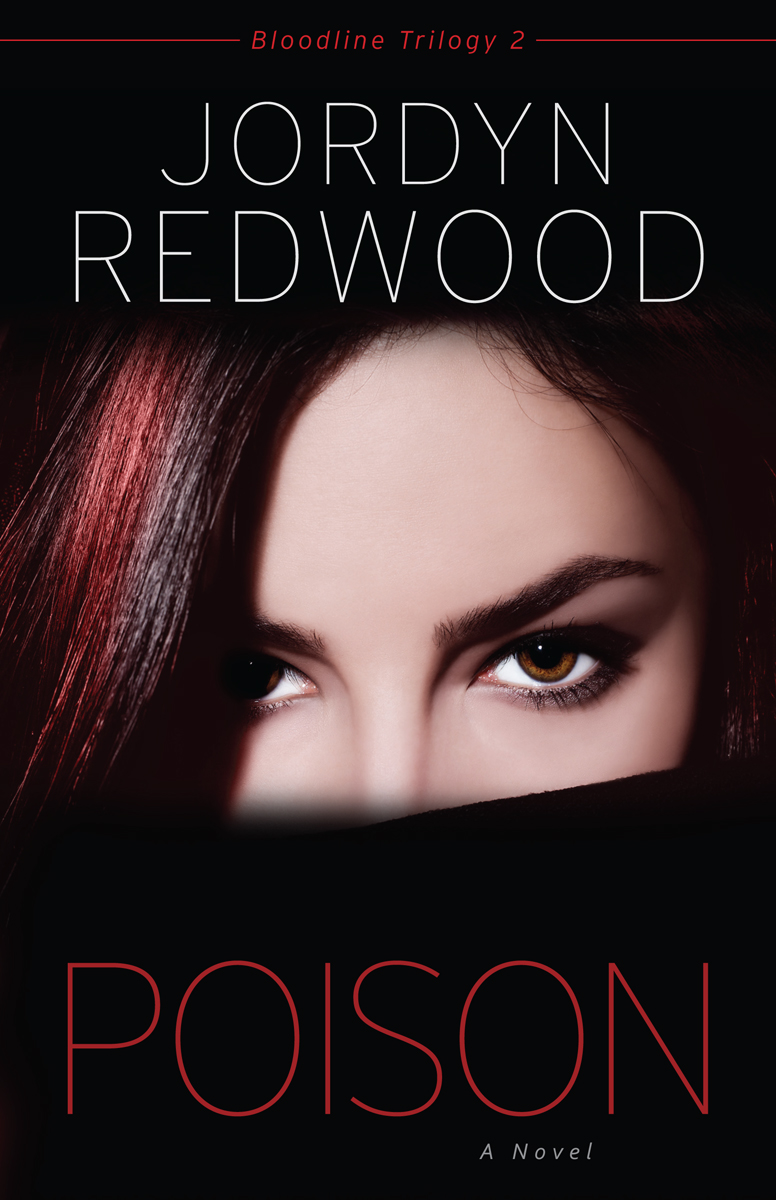
Mine– excellent. Poison launch is going well and I was ecstatic to get this STARRED review from Library Journal.

“Verdict: As intricately plotted and compelling as the first book in the trilogy (Proof),this psychological thriller will keep readers perched on the edge of their seats A must read for fans of Lis Wiehl and Frank Peretti. Jordyn Redwood’s Poison is a terrifying journey of darkness, possession, and survival.”

And– the Kindle version is now available. 

What new suspense books are you reading and enjoying?

I just finished Andrew Klavan’s A Killer in the Wind. I’d noticed he’d won a couple of prominent awards so was interested to see what his novels were like. This one did not disappoint so if you’re looking for a new read on the ABA side– check out this author’s book.

For you this week: It’s author question week!

Monday: Help! I need a medical condition.

Wednesday: Medical Power of Attorney.

Friday: Death by Trophy. Is it possible?

Hope you all have a fantastic week.

Jordyn

Forensic Fridays: All About Autopsies

Most living people never visit the morgue.

Most never speak of the morgue, except during shows like CSI, Bones, or Hawaii 5-0. The popularity of forensic TV series, however, is social proof that there’s hidden interest in finding out just what goes on behind the autopsy suite’s closed door.
The word autopsymeans ‘to examine for yourself’. It’s a medical procedure that sounds simple in principle – taking a look at the outside and inside of a cadaver to establish cause of death. In practice, a post mortem (PM) examination can be highly complicated and time consuming; employing leading-edge scientific expertise.

There are three types of PM’s. A hospital autopsy is a non-legal process where the cause of death is known, but the caring physician wants to confirm a specific issue – such as a cancer tumor. A routine autopsy is conducted when the cause of death is not known, but foul play is not suspected. Then there’s a forensic autopsy – the one that’s going to be torn apart in a murder trial.

All autopsies follow a standard protocol. It’s the nature of the investigation that determines just how in-depth the procedure gets. The deceased arrives at the morgue and is catalogued with personal details and a registration number. Yes, they really do use toe-tags. The body is then placed in a refrigeration unit and waits its turn for examination. In a busy morgue this can take several days.
Usually two people conduct the autopsy. The pathologist, or medical doctor who is trained in the study of death and disease, is assisted by the deiner (German word for helper). Often there’s observers present; police officers, students, or technicians who come and go. The length of time varies – fifteen minutes to confirm a tumor, two hours routinely, and up to eight for a complicated forensic ordeal.
External observation can take a good portion. The body is removed from its shipping shroud, stripped, photographed, X-Rayed, weighed, measured, and identifiers such as race, age, hair and eye color, markings, abnormalities, as well as evidence of trauma or medical intervention is recorded. In homicide cases, the bulk of the evidence can be recovered in the external exam – clothing perforations, gunshot residue, lacerations, abrasions, hair, fiber, DNA, chemical contamination, or foreign objects. The observations are recorded on notes, diagrams, photos, and verbal dictations.
The corpse is placed supine, on its back, on the examining table which is an angled stainless steel tray draining fluids to a disposal sink. A plastic block is placed under the back to elevate the chest and recline the head and arms, making internal operations practical. A Y-incision is sliced from the tip of each shoulder, horizontally to the center of the chest, then vertically down to the pubic area. The skin is scalpeled back in a butterfly pattern accessing the thorax and abdomen, then the ribcage is removed exposing the upper and lower organs.
The major ones are removed, weighed, and cross-sectioned – lungs, heart, liver, kidneys, spleen, stomach, and intestines. Tissue sections are exscinded and fluids are extracted – blood, urine, vitreous humor, and digestive contents. These can be of immediate visual interest, or may tell later tales in toxicology and microscopic processing.
Cranial examination is the part that most newbies find difficult. The neck is now propped to elevate the head and the scalp is cut from ear to ear, peeled over the face and down the neck, then the skull cap is severed with a vibrating saw. The brain extracts easily and is often preserved in formalin to gel for later sectioning.
Completion involves returning the organs to the central cavity and sewing the incisions before releasing the body to a funeral home. Tissue and liquids are retained for histology and toxicology. In forensic cases, exhibits such as bullets, trace evidence, DNA standards, and clothing are transferred to the crime lab.
Often the cause of death is conclusive at autopsy. Occasionally nothing is known until the lab results come in. And sometimes… it’s never determined just why the subject died.
Our scientific understanding of life and death is extensive, but it’s far from perfect.
************************************************************************
Garry Rodgers has lived the life that he writes about. Now retired as a Royal Canadian Mounted Police homicide detective and forensic coroner, Garry also served as a sniper with British SAS–trained Emergency Response Teams and is a recognized expert-witness in firearms. A believer in ‘What Goes Around, Comes Around’ Garry provides free services in helping writers throughhis crime and forensic expertise. Garry’s new supernatural thriller No Witnesses To Nothing is based on a true crime story where many believe that paranormal intervention occurred. An Amazon Top 10 Bestseller, it’s available on Kindle and print on demand. You can connect with Garry via his Website: www.dyingwords.net

The Fall of Lance Armstrong

I don’t know about you, but I was fascinated by the Lance Armstrong case.

I was one that supported him and his assertion that he wasn’t involved in anything nefarious. I know, call me gullible because I guess I have been proved seriously wrong.

What I couldn’t wrap my head around was how he passed hundreds of drug tests/doping tests and they were all negative.

Wikipedia

It was only in Lance’s recent interview with Oprah did it become clear that his undoing was the biological passport.

A biological passport is essentially a baseline of an athlete’s normal biological markers that is created over the testing of several specimens. This is then compared to data that is taken near the time of racing. If there is any strange spikes than the athlete is suspected of doping.

And this is what happened to Lance.

Evidently, they compared data of some later races (those in the late 2000’s) to his data from the Tour de France and that’s how he was first suspected.

The testing around his original Tour de France wins had much more lax testing. There were no surprise visits to the athletes home so Lance and others got very good at timing when drugs would clear their symptoms.

However, the biological passport was something they could not surpass.

Here are a few links to information about the biological passport:

http://en.wikipedia.org/wiki/Biological_passport

http://www.ncbi.nlm.nih.gov/pubmed/20020371

http://mashable.com/2013/01/22/biological-passport-sports-doping/

So of course, my suspense authorly mind began to consider ways the biological passport could be used for nefarious puposes. What do you think about Lance Armstrong? How do you think the biological passport could create a suspense plot?

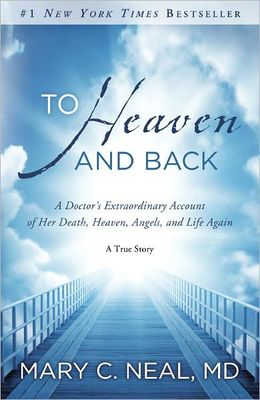
To Heaven And Back: Mary C. Neal, MD

As research for my next trilogy I’ve been reading a lot of non-fiction books surrounding near death experiences or NDE’s. 

You can read the series I did on Proof of Heaven by Eben Alexander, MD by following these links:

 http://jordynredwood.blogspot.com/2013/01/proof-of-heaven-dr-eben-alexander-13.html

http://jordynredwood.blogspot.com/2013/01/proof-of-heaven-dr-eben-alexander-23.html

http://jordynredwood.blogspot.com/2013/01/proof-of-heaven-dr-eben-alexander-33.html

To Heaven and Back is the personal account of orthopedic surgeon Mary Neal and the events of her life after she drowned and was later resuscitated kayaking on a river in Chile.

What‘s interesting, is just like Eben (who suffered from an extremely rare form of meningities), it seemed like God used Mary’s injuries to get her attention.

As she was kayaking, she was trapped in the boat underneath a deluge of water. As people tried to rescue her, both her legs broke as she was sucked by the water out of the kayak. On top of that, she obviously inhaled a lot of water and after her resusitation, developed a lung injury (likely pulmonary edema) related to drowning.

What amazes me is that she and her doctor husband chose to take public flights back to the US without medical attention (they were initially treated at a clinic) which probably should have resulted in her death considering how sick she was.

A couple of things facinated me about her account.

One: Her views of God and our life. She gives an account of a conversation with an angel in a field where we know our life plan before we come to earth. God essentially lays out the blueprint for our approval and there are several branches of where we can make good and bad choices. This fascinates me on many levels– such as– did I really choose or “give the okay” for this kind of trauma in my life. Because if so– man!– I was really crazy to think that was a good idea. Unless we remember that suffering and crisis for many people brings them closer to God.

Two: The events surrounding her son Willie’s short life are nothing short of astonishing. During this conversation with an angel she learned that she needed to go back to help her family cope with the forthcoming death of her son before his 17th birthday. I believe the night before his 17th birthday, a man had pulled a gun on her son after a minor car accident. This incident he survived. But a short time later, as he was on a hike with a friend, he literally looked out over the landscape and said something close to– “Wouldn’t this view be the best thing to see before you die?” And within minutes he was run over by a car and killed. The whole account of Willie’s life is seriously skin chilling and inspiring.

Three: How God uses nature as a witness to His presence. Really, you just have to read her story to believe some of the things that happened here. Barren trees blooming after loved ones had died.

What was amazing in reading these books about NDE’s is the other things that occurred to these people after their experiences– nothing less than what I would call miracles.

An interesting read.