Hello Redwood’s Fans!
Ebola in the USA: Part 2/2
One of the aspects I find most fascinating about the two individuals that returned to the USA for treatment of Ebola virus is the experimental serum both of them got called ZMapp. Before these two U.S. citizens became ill– the serum had never been tested on a human subject. Ever. Before this, it had only been tested in eight monkeys. It was far from sure that the drug would actually work.
There’s a lot about this Ebola outbreak that is fiction worthy and definitely has my author wheels spinning. Bringing infected patients onto U.S. soil. Do you think this five month long outbreak got media attention because three U.S. citizens were infected? This is what one editorial piece theorizes. Add to that the largest Ebola outbreak in recorded history. And on top of that, an experimental, life-saving serum tried in humans for the first time.
ZMapp was given to both these patients overseas. According to this editorial, Dr. Kent Brantley felt he was close to succumbing to the disease when he was given the treatment and had such an impressive response that he was able to walk from the ambulance when he arrived at Emory Hospital. Nancy Writebol’s symptoms also improved though she required two doses.
Some of the ethical questions posed in the piece are whether or not it was fair to just give the drug to these two people? Wouldn’t it have been better to give it to everyone infected? Why wasn’t something tried sooner for the existing patients? The CDC states there are few doses of the treatment available. Experimental drugs are not produced in large quantities. But the other issue always is, are people who are near death able to give true informed consent? Does it even matter if they’ll die? In the case of these two individuals the FDA allowed it under a compassionate exemption.
ZMapp is an engineered monoclonal antibody designed specifically to attach to the Ebola virus like your immune system normally would. In the case of the two U.S. citizens, mice were used to generate the antibodies. Tobacco plants are also being used.
To learn more about ZMapp– check out this video.
Ebola in the USA: Part 1/2
There are few headlines right now grabbing more attention than the two cases of confirmed Ebola virus that are now being treated on U.S. soil. Even before these two arrived in the U.S. did you know that the biggest Ebola outbreak is happening and is not contained at this time?
First of all, as a healthcare provider, I think it was risky to bring these individuals back. I’m not saying the U.S. should not have provided medical assistance to these individuals but bringing the virus onto U.S. soil is, at worst, potentially dangerous and, in the least, panic inducing. There have been at least nine patients tested for Ebola in the U.S. (Mt. Sinai in NY, Atlanta, Ohio and six other non-disclosed tests.)
Thus far, these tests have been negative.
What is Ebola?
Ebola is a virus. This means it cannot be treated with antibiotics. What’s left to the medical team is what is termed “supportive care” which means we support the patient and the symptoms they are having but we have to let the virus run its course. If you can’t breathe, we put you on a breathing machine. Best prevention would be a vaccine. Right now, there is no available immunization for Ebola though there are some in development.
There are some antiviral drugs that can shorten the length and severity of the illness. The one most familiar is Tamiflu. However, antivirals are not effective against all viruses.
Ebola is transmitted to people from wild animals and outbreaks occur near villages close to tropical rain forests. Then it spreads from human to human via close contact with their secretions. One interesting transmission of the disease is through semen up to seven weeks after recovery from the illness. Most patients feel that once they are symptom free– they are no longer at risk for transmitting the illness. People are infectious as long as their blood and secretions contain the virus. This comes from the World Health Organization.
While it may be hard to contract Ebola, the problem is, if you do, the mortality rate can be as high as 90%. This current outbreak seems to be running a mortality rate between 50-60%.
Early symptoms include sudden onset of fever, weakness, muscle pain, headaches and a sore throat. These symptoms can appear two to 21 days after infection.
Which is another potential problem with Ebola spreading worldwide. You can be contagious but be symptom free Although it is hard to determine from multiple news reports if this is a hard and fast rule. Some sources say you have to be symptomatic to spread the disease. There are respected organizations (as stated above) who say the opposite which, if bears out, makes the standard of monitoring people at the airport (and other transportation hubs) for fever not 100% effective.
Besides this, these symptoms can mimic other less life-threatening illnesses like the flu.
After these mild symptoms– the disease progresses and attacks major organ systems that can include internal and external bleeding. Bleeding is exhibited in about 20% of cases. Death usually results from shock and multi-system organ failure.
Outbreaks are considered contained after there hasn’t been a new case identified for 42 days which is twice the incubation period of the disease.
What I find most interesting was the creation of a serum called ZMapp that has antibodies to combat the disease. I’ll cover that next post.
What do you think? Should these U.S. citizens infected with Ebola have been brought back to the U.S. for treatment? Why or why not?
**All italicized portions come from the linked articles.**
Up and Coming
Hello Redwood’s Fans!
It’s back to school week! At least for us . . . which means business at the pediatric ER will be picking up. That’s good for us but not great for kids. But why is that? Well, kids are now in close proximity with one another which allows for germs to be transmitted. Kids, in general, aren’t super awesome hand washers and allows for another vehicle of transmission for both viruses and bacteria.
I find pathogens fascinating. Did you know that we’re currently seeing the largest Ebola outbreak ever? There’s so much about this current Ebola story that is fiction worthy. It’s the first time Ebola has been on U.S. soil. How do you feel about that? An experimental treatment called ZMapp was given to two patients– Caucasian patients– some find that ethically questionable considering how many contracted the virus before these two were infected. Can you give informed consent for treatment if you’re dying or think you will die?
All these are very interesting issues I’ll be exploring in this weeks post. It’s all about Ebola.
Dare to enter the Hot Zone?
Have a great week!
Jordyn
Book Review: Things That Matter
I am a Charles Krauthammer fan– the paraplegic FOX news contributor and Pulitzer Prize winning syndicated columnist. The man is wicked (like MENSA) smart. Today, I’m reviewing his book Things That Matter.
As far as some of the other columns, you definitely gain an understanding that he loves chess and the Washington Nationals which was a little hard for this non-sport fan to relate to.
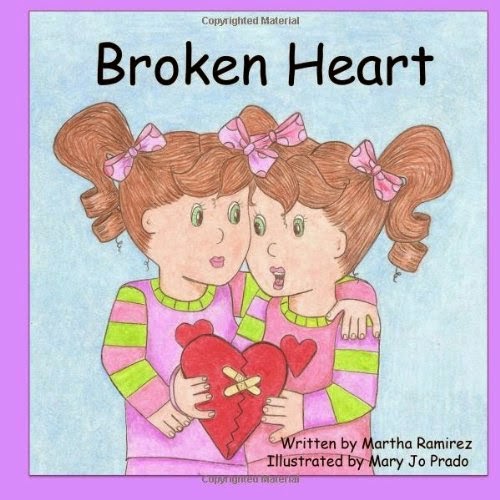
Congenital Heart Defects: Author Martha Ramirez
![]() |
| Photo by L.I.L.A Images |
*******************************************************************
In addition to writing, Martha is a 2012 Genesis Semi-Finalist, a member of ACFW (American Christian Fiction Writers), YALITCHAT.ORG, the Muse Conference Board, CataNetwork Writers, and American Author’s Association. Her articles have appeared in various places including the Hot Moms Club and For Her Information (FHI) magazine. In 2012, her blog was nominated website of the week by Writer’s Digest. She looks forward to expanding her career and is hard at work on her next young adult novel. She currently resides in Northern California where she enjoys gardening and kickboxing (not simultaneously). Visit her blog at Martzbookz.blogspot.com.
Up and Coming
Hello Redwood’s Fans!
How has your week been? Mine? Fascinating as always.
I did survive my husband’s 50th birthday party celebration.
Note to self: a 9 year-old may not be the best option to serve as a lookout.
My husband basically walked in unannounced! But, it was all good in the end. We did surprise him. It’s always good spending time with family and friends. There was enough food and liquor for everyone and also great to hear from so many that live out of state who sent cards.
Thank you all.
Then, when I think I’ve survived all of that, the dog (yes, you read that right) comes down with what I’m going to call strep throat. That was a hefty vet bill but what are you to do when they don’t eat for two days?
There is no rest for the nurse on the home front.
For you this week!
Tuesday: Author Martha Ramirez stops by Redwood’s Medical Edge to discuss a very personal story of her diagnosis of congenital heart disease and how it inspired her to write a children’s book.
Thursday: Book review of Things That Matter by Charles Krauthammer. If you don’t know much about Charles’s life, it’s pretty interesting. He became paralyzed from a diving accident while in medical school. Even though he had this devastating injury, he recovered, and was allowed to finish medical school. He even discovered a new type of psychiatric illness. He’s very smart and his thoughts on current day medical issues is pretty interesting.
Hope you have a great week!
Author Question: Treatment of Burns circa 1807
Michelle G asks:
I’m working on a historical (surprise, surprise) 1807, to be exact, in England, and wondered if you could give me a little medical advice? I’ve burnt the leg of one of my characters, a little boy, like 9, and I want him up and about in 3 weeks or so, but he can use a crutch. What would that leg look like? How much pain? How would he react that first week? I don’t want to overdo it, nor do I want to gloss over it either. What’s your .02?
Here’s what happened to him…
Jordyn Says:
Full thickness burns are problematic because they usually require grafting so back then treatment was likely very limited. We also do fluid resuscitation for significant burns and if both of his legs were this severely burned– he’d need quite a bit of fluid, and again, I’m not sure this would be available during your time period.
Here is a very interesting link that has tons of information on the evolution of burn surgery. It will give you some treatment options for your time period.
**************************************************************************
Keep up with the exploits of Michelle Griep at Writer Off the Leash, Facebook, Twitter, and Pinterest. You can check out her latest novel, A Heart Deceived, at David C. Cook as well as Amazon, Barnes & Noble, and ChristianBook.
Up and Coming
Hello Redwood’s Fans!
How has your week been? Mine? STRESSFUL! I’ve been planning a surprise birthday party for my husband. It’s a BIG one but I won’t divulge the number here. As of this writing, the party is tomorrow but when this posts the party will be DONE and I’ll likely be drinking some of the leftover liquor to celebrate.
Do you like surprises? I do. Maybe that’s why I’m a suspense author. It’s been interesting, weaving these lies to keep him in the dark until the big reveal. It’s actually been kind of hard because, even though I am a suspense author, I don’t find it easy lying to people in real life– particularly a loved one. I don’t know how people lead multiple lives and lie to SO many. I’ve had trouble with one birthday party and not letting something slip.
What’s been your most favorite surprise ever?
For you this week.
Tuesday: Michelle Griep stops by (who is awesome!) with an author question about historical treatment of burns.
Thursday: Author Martha Ramirez stops by to share her personal experience of discovering she had a congenital heart defect as an adult and how this inspired her to write a children’s book.
Have a great week!
Author Question: Hockey and Head Injuries
Elaine asks:
A hockey player gets knocked down in a fight and hits his head (with his helmet in place) on the ice. Could he be unconscious? I know the trainer would come out on the ice and possibly a doctor, but if he is unconscious, I’m assuming they’d call for the stretcher and put him in the ambulance as a precaution.
I was going to have him regain consciousness in the ambulance on the way to the hospital, but wonder what would the paramedics/EMT (which/who would it be) be doing in the ambulance? What would they do if he “came to”? And what would happen when they reached the hospital?
If he wakes up in the ambulance, they’ll first orient him to what happened. “Hey Mike, my name’s Roy and I’m a paramedic taking care of you. You took quite a hit on the ice and you were knocked out. To be safe, we put a c-collar on you and put you on a backboard to protect your back. We’re on the way to Swedish Medical Center to get you checked out.”
Then they’ll assess him. Can he move everything? Can he feel everything? Does he know his middle name? Does he know the month? Does he remember any part of the accident? Does he know what city he’s in?
The doctor will likely order plain x-rays of his neck and spine and a CT of his head. If all that checks out– he would probably be discharged home.