When West Meets East: A Nurse Gets Acupuncture

If you’re a frequent reader of this blog then you know I’m a western medicine girl. I’ve worked in nursing for over twenty years. I believe in vaccinations and almost all things that our medical care has to offer.

About six months ago, I suffered an upper back injury. I, of course, was a bad patient and continued to work-out even though I had significant pain. When I couldn’t take it anymore, I went to my PCP for a script for physical therapy and headed back to the therapist who rehabbed my shoulder when I dislocated it two years ago.

I’m a big believer in physical therapy. One of the things I’m not so keen on is surgery and so I’ll do just about everything prior to going under the scalpel. Physical therapy has healed both my knees, both my shoulders and a hip injury. I had high hopes it would do the same for my back.

After a couple of months in rehab, I’d only made moderate progress and was still having limited range of motion and pain. The physical therapist, who I do respect a lot because he’s a medical nerd like me, suggested I go for acupuncture.

Full. Stop.

I mean, just because I am a nurse doesn’t mean I like needles. I’ve not been a big believer in eastern medicine but since my insurance covered it and my medical nerd friend who I trusted thought it might work I decided it was worth a try. Even though I didn’t find out until AFTER that he’d never done it himself.

So– off I go. The doctor I met with had been trained in China. She said they use acupuncture for “95% of what ails you”. I don’t know if this is actually true– just her statement.

From what I gathered– chi (good blood and lymph flow) keeps you healthy. Bad chi gives you “broken branches and bad leaves”.

What was the treatment? Hickies to my back– or cupping– where small glass suction cups that are shaped like fish bowls are applied to the skin. Sometimes they put needles inside the suction cups. It does cause bruising. I’ve also had electricity applied to the needles as well.

I was skeptical but I have to say I did have less muscle soreness and improved range of motion to my neck after one treatment. Even my physical therapist measured improved range of motion and felt like my muscles were less tight.

What I’ve gathered is that these treatments do improve blood flow by causing trauma. We know that whenever something is injured– blood flow increases to the area. This is why your sprained ankle swells like a balloon. So, I think this minor tissue trauma does improve blood flow and good blood flow does provide healing.

I don’t think acupuncture will cure appendicitis but I do think it has value for some conditions/scenarios.

I survived and something that has been around so long seems to be helping a lot of people.

I may be a convert of its use in some limited medical situations.

What about you– have you ever tried acupuncture? Did it work? Would you ever use it in a novel?

Large List of Neurotoxins

Sometimes, all an author really needs is to be pointed in the right direction.

So today is my simple gift to you in a very short, sweet post.

A complete list of neurotoxins for your writing pleasure.

Happy reading and plot developing.

Jordyn

Up and Coming

Hello Redwood’s Fans!

How has your week been? Mine– seemingly never-endingly busy. I just wanted to include as many ing words as I could for you editor types.

Over at my author page we’re going through The Complete Book of Questions and you’ll have a chance to win special prizes every month just by stopping by and answering a few. It’s been great fun so far and I look forward to getting to know you better– quirks and all.

For you this week:

Tuesday: My acupuncture experience. We all know I’m a western medicine girl– obviously. So this was an unusual experience for me to try. It is amazing to me how by checking my pulse and looking at my tongue you can determine that I slept poorly but evidently you can. You can find out all about my broken branches and bad leaves.

Thursday: I’m beginning a three-part medical series on a non-fiction book I read called The Psychology of Dexter— yes, that Dexter. First installment deals with childhood PTSD.

Have a great week!

The Jahi McMath Case

My very first nursing job was working in an adult ICU. This was over twenty years ago. Even then, there was discussion of futile care and the withdraw of medical support in cases where further medical intervention would not constitute recovery for the patient.

The Jahi McMath case is an interesting one. In case you’re unfamiliar with the story, she is a 13 y/o girl who suffered bleeding after a tonsillectomy (and removal of other things), arrested and suffered irreversible brain death after her cardiac arrest. These have been widely reported. One of the reasons I had Dr. Mabry post about tonsillectomies is that bleeding is a known (though low) risk of the procedure due to the location of the tonsils by a major artery. Even though the risk is low– it can and does happen. I’ve cared for post-tonsillectomy patients that did require blood transfusion after surgery.

Though this case is tragic and I grieve for the family– it also doesn’t necessarily mean the hospital did something wrong though one blogger states, “Children’s Hospital faces serious malpractice questions about its care of Jahi.” Let’s let the courts iron that issue out. I know from personal experience that a patient’s death in a hospital does not automatically mean malpractice occurred. However, I don’t think this is a commonly held public opinion- particularly when a child has died.

What’s interesting about this case is what has transpired after she was declared brain dead. Brain death is considered legal death– even above cardiac death because we resuscitate people from cardiac arrest all the time. In fact, in his book Proof of Heaven, neurosurgeon Eben Alexander discusses this very difference.

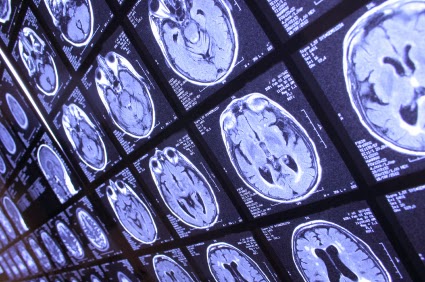
How do we know a patient is brain dead? I did a three-part series on this very issue that you can read here, here and here. These tests were done on Jahi and it was determined by multiple medical experts that she’d suffered whole brain death– so not even her brainstem had bloodflow. Whole brain death is considered legal death. It cannot be reversed.

Think of what the brain controls— everything. It is the computer hard drive of your body. If it has died– it is no longer signaling the production of hormones that control vital body functions. If the brain isn’t doing this– then we as medical providers have to administer medications that will do this. Because of this, the whole body begins to decompose and the heart will eventually stop beating.

Because brain death has occurred– the care provided to her is futile– because she has no hope of recovery. What comes in to play is who pays for her medical bills because the family insisted she be transferred to another medical facility due to the fact the hospital refused to provide further medical care. The coroner has issued a death certificate. There are news reports that after transfer from the hospital her body is in a state of decline

Likely, the family is going to be responsible for the medical bills after she was legally declared dead. This will easily add up to hundreds of thousands of dollars. So, what is fair? To burden this family with medical bills when their daughter will not recover from this tragedy?

There has been criticism of the hospital. One such article outlines that hospital staff began to use terms like “the body”. Though it may seem cruel, I know exactly why they did this.

It was in hopes of trying to get the family to accept that Jahi was no longer with her body. That her spirit had gone on so they could discontinue the very expensive medical care keeping her body alive.

I’m a pro-life girl but what I know from 20+ years in nursing is that whole brain death (which is different from living in a vegetative state where there is still brainstem function) is death and the care being provided for Jahi is sadly not going to bring about any sort of recovery.  Personally, I think it is giving false hope and a large medical expense to boot.

I am continuing to pray for this family.

What do you think? Should hospitals be required to continue to provide care when a patient has been declared brain dead by multiple medical experts? Who should pay those bills if the family cannot pay if it’s the family’s decision to continue medical care?

FYI: Radio Interview

Today, I have the honor of appearing on the Kevin Zimmerman show. I really enjoyed getting to know Kevin and am honored he reached out and chose me to be a radio guest. He’s an author himself and a great supporter of the military and I have a little jealousy, too, because he got to do my ultimate dream job– flight medic!!

I hope you’ll tune in. It airs today at 10:00 pm Eastern or 2200 Eastern for you medical/military types. You can hear what show I’ve watched recently that is FAR from being medically accurate plus you’ll get a chance to win Proof and/or Poison.

Here is the link.

Jordyn

Safe Surgeries Not Without Risk

Not only am I a pediatric nurse, but I’m a mother of two girls age 9 and 11. I tend to worry. Not about the little every day illness and injuries– like say my daughter’s broken arm that I didn’t have evaluated for 24 hours. Hey, it wasn’t deformed and she had good blood flow. Perfectly okay to see if rest and Ibuprofen made a difference.

What I do worry about is those zebras in the forest. This phrase is typically used for those diagnoses that happen but are a rare occurrence. Like your child with a nose bleed probably (99.5% of the time) doesn’t have cancer.

But– this is what I worry about out. Every headache is a brain tumor. I probably palpate lymph nodes more than I should which got me into an anxious worry cycle when my youngest was around three-years-old.

I looked at her one day and she has a lymph node bulging from her neck. She was otherwise fine– which was actually more worrisome, because she didn’t have a reason for the lymph node to be so prominent. No ear pain, sore throat, fever, scratch . . . etc.

I took her to her pediatrician and he wasn’t concerned. They did a CBC– which is a blood test that looks at red and white blood cells. It can give an indication of cancer but is generally not considered definitive. Even after the CBC came back normal, my mind wasn’t completely at ease so I scheduled to take her to the ENT. They, too, were nonplussed but could see how worried I was and so the physician says– “I don’t think it will show anything to biopsy this node but I will take it out if it will make you feel better.”

And that’s when my nursing brain kicked in and began to override my mommy brain. I was risking surgery to ease my anxiety. I was going to give her a scar so I could sleep at night when this trained and well-respected physician and given me reassurance. I asked him what would be the most conservative bridge between surgery and easing my worrying and he offered to track it by exam every three months for a year.

Done deal.

Not too long after that we cared for a patient that got an infection after this type of surgery. Post-operative infection is a known complication of ANY surgery and doesn’t imply that there was negligence.

My concern is this– many parents are choosing surgery as first line defense when, perhaps, problems could be managed another way. Doctors are deferring to parents, at times, against their medical gut to cover themselves from potential lawsuits– such as a parent insisting on a CT for head injury. This isn’t always in the best interest of anyone. 

Next post I’ll be analyzing the case of Jahi McMath– who is the girl who suffered a surgical complication that led to brain death. Do I think, from what’s been written about the case, that the hospital could be responsible for her death?

Up and Coming

I spend a lot of time on this blog critiquing things that are bad in books, movies and television. It does warm my heart when I see something done well.

It is true, that when we teach CPR, we tell people to do compressions to the beat of the Bee Gees song Stayin’ Alive which is both funny and appropos. As you sing it in your head and do compressions to the beat this will be a proper rate to get in the correct amount of compressions per minute which should be at least 100 regardless of the age of the patient.

The Chattanooga Fire Dept took this to heart and did what I would call a PSA about the correct way to do CPR highlighting this song.

It’s cheesy but it’s funny and, most importantly, medically accurate. I’m pretty fond of the first line, “That only works in movies, mam.” when a bystander tries to do a precordial thump. So, my hats of to Chattanooga Fire for your creative way of teaching CPR. A Redwood’s GOLD star and “STRONG WORK.” for you.

I am particularly fond of the disco balls on the ladder trucks. I don’t quite get the throwing the baby mannequin but all in all— a good show. 

For you this week:

I’m doing a discussion of the Jahi McMath case. If you aren’t aware of the story it concerns a 13y/o California girl who suffered complications post tonsillectomy, arrested, and suffered brain death.

Tuesday: “Safe” surgeries. Is there anything as risk free surgery?

Thursday: The Jahi McMath case and futile care. Should withdrawing medical care ever be mandated by the state?

Tonsillectomy: Useful But Not Without Risk

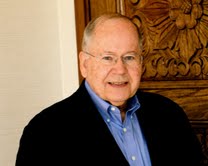
I’ve been fascinated by the case of Jahi McMath, who is the girl who suffered surgical complications after a tonsillectomy and has been left brain dead. I’ll be discussing other aspects of this case next week but I thought I’d invite fellow medical musketeer and ENT physician, Dr. Richard Mabry, by to discuss the risks/benefits of this procedure.

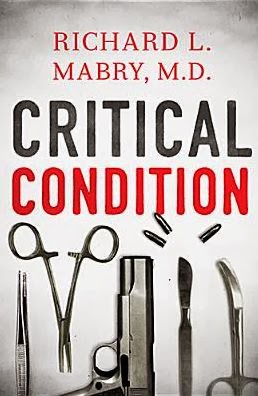
I happily endorsed Richard’s forthcoming novel Critical Condition. It’s a great story and gives insight into that elusive area of the hospital– the OR. I hope you’ll check it out when it’s released in April.

Welcome back, Richard!


Any resident physician in otolaryngology (ear, nose and throat) can tell you that tonsillectomy is not a benign procedure. It’s very useful when indicated, but strict criteria for its consideration have been developed.  These include recurrent documented infections as well as sleep-disordered breathing. Attention to these criteria is important before tonsillectomy is considered.
Prior to the procedure, parents should feel free to ask questions or seek clarification of any points they don’t understand. Most physicians have instruction sheets that are given to help prepare families for the procedure.
The procedure itself is typically short—30 to 60 minutes—after which the child is observed in the recovery room until they are fully awake and stable. The child may be discharged later that day if they’re doing well, but sometimes complications necessitate an overnight stay.
The risk associated with a general anesthetic administered by competent personnel is tiny. Probably equally or more important is the possibility of complications occurring after the procedure. 
Undoubtedly, the number one risk is post-operative bleeding. If the child expectorates clots or large amounts of bright blood, parents should seek medical attention immediately. They are also warned to watch for and report fever, persistent vomiting, or difficulty breathing.
The tonsils receive their blood supply from branches of five different arteries, so bleeding—at surgery and afterward—can be a problem. To deal with this possibility, various methods—primarily application of caustic chemicals, use of ligatures, or various types of cauterization—have been traditionally been used. In recent years, surgical methods other than sharp dissection have become more popular. These include partial tonsillectomy and use of lasers to remove tonsil tissue. Thus far, the perfect solution hasn’t been found.
What are the risks associated with tonsillectomy? According to a recent journal article, the risk of dying from the operation ranges from 1 in 10,000 to 1 in 35,000 cases. Although mortality (i.e., dying) is rare, morbidity (i.e., complications) still occur. The most important, of course, is bleeding after the surgery. In one study, the incidence of bleeding was reported at from 2% to 3% of cases. The two most common times for post-tonsillectomy bleeding to occur are immediately after the surgery and after about a week, when scabs separate.
Does that mean that all parents should shy away from a tonsillectomy for their child? Not at all. It’s a very beneficial procedure when indicated and performed by a competent physician. But it behooves every parent to ask questions, learn what to watch for, and participate in the care of their child while they recover from the surgery.
***********************************************************************
Richard Mabry is a retired physician, past Vice President of the American Christian Fiction Writers, and author of “medical suspense with heart.” His novels have been a semifinalist for International Thriller Writers’ debut novel, finalists for the Carol Award and Romantic Times’ Reader’s Choice Award, and winner of the Selah Award. You can follow Richard on his blog, on Twitter, and his Facebook fan page.

I Was Getting A Broken Baby

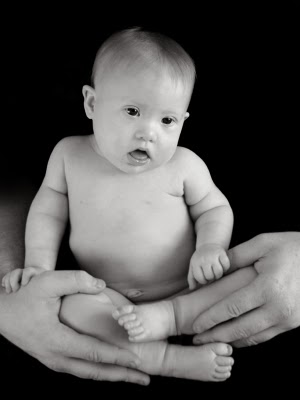
I’ve got genetically superior genes. I’m a winner with winner’s blood. Learning you’re going to have a child with Down Syndrome is like experiencing a death. That’s what I felt like. Like I was getting a broken baby.”

I work with a lot of special needs kids as a pediatric ER nurse. About three years into my nursing career (after working three years in adult ICU/ER) I started working in a pediatric ICU. Back then, I wasn’t as adept at working with kids as I am now and in my early PICU days I remember times when I would just stand in the middle of the unit and wonder what I was going to do about all these crying kids.

At shift change, we would ask all the parents to leave. It was an open unit so it was hard to protect patient privacy. Some of these aspects are highlighted in my most recent medical thriller, Peril. During one such time, we had a young girl whose leg was in traction and she began to fall apart when her parents left. Now– this was before I was a mother so cut me some slack but I stood there and thought, “What am I supposed to do for her?” when, within a few moments, a more seasoned nurse came and sat by her bed and stroked her hair to calm her down.

Oh, well, I can do that, too!

Not long after this, I was caring for a Down Syndrome child who needed heart surgery. It is not unusual for a Down Syndrome child to have heart defects. Sadly, this child’s veins were not the greatest and it was always a challenge to get blood and IVs in place. As a fellow nurse and I tried multiple times to get an IV in this todder– all he would do was say “I love you.” over and over, put his arms around my neck and snuggle his face against my cheek while all I was doing was causing him pain.

And I still cry thinking about that moment.

There is something about caring for special needs kids/adults that is challenging but truly brings out the best in most people– this deep seated sacrificial love. I believe all life has value and maybe special needs kids are more about teaching us about ourselves than about anything else.

The above quote comes from this piece about an athlete/father, Tom Rinaldi, and the emotional turmoil he went through when he learned he and his wife were having a child with Down Syndrome. It’s about 15 minutes but I hope you’ll take the time to watch.

It’s why I believe in the value of every life. Without this daughter, I think this man’s life would not nearly have been as rich as it is now. What do you think?

Up and Coming

What’s up Redwood Fans?

Are you officially out of your Christmas Coma?

I hope so because we are back to the usual medical mayhem and I have an interesting week coming up for you.

Tuesday: What is the value of a single life? One father’s tale of how he viewed his daughter with Down Syndrome before and after her birth.

Thursday: Dr. Richard Mabry stops by to discuss tonsillectomies. I’m doing this in prep for my analysis of the Jahi McMath case– which is the girl who suffered brain death after a tonsillectomy. Richard has a new book coming in the next few months, Critical Condition, which I happily endorsed. I hope you’ll pre-order now.

Also, over at my FB author page I’m going through the Complete Book of Questions this year. Who says you only need to celebrate gift giving in December? If you participate in answering the questions, you’ll be eligible for my monthly book drawing and other fun stuff.  

Have a great week!

Jordyn