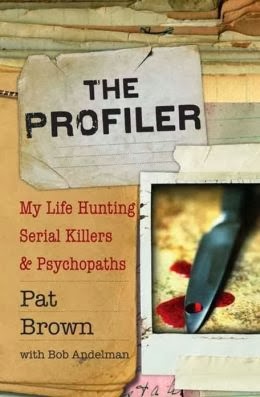
The Profiler by Pat Brown

I read a lot of non-fiction as research for my novels. Lately, I’ve been reading a lot of kidnap and keep stories– just finished the Jaycee Dugard story which is not necessarily a fun read but very insightful as to what happened during her years of imprisonment.

A very interesting expose I just finished was The Profiler by Pat Brown.

What I like about this book is it’s the antithesis of everything you think about profiling. Pat Brown never worked for the FBI. She self-trained herself and opened up her doors, eventually offering her profiling services to families for free.

The book starts out with her as a housewife. She lived in a small town and to help make ends meet, she and her husband rented out a room. Shockingly, there was a murder nearby of a young woman drowned in a river (which was generally unheard of for this area) and Pat began to suspect her border of perpetrating the crime.

In case she’s over thinking, Pat goes to the library to research the traits of serial killers via the old card catalogs. This is likely the genesis of her career. She becomes so convinced by what she finds that she searches her border’s possessions.

What she discovers further fuels her suspicion. Wet, muddy clothes. Used condoms. She packs up this evidence and carts it to the police station. She doesn’t outright accuse the border of murder but says for these reasons he should be looked at.

And the police basically treat it like the musings of a bored housewife.

Their dismissal pushed her to eventually make this her life’s passion. When she decided that this was what she was going to pursue– she was too old to join the FBI. She educated herself and found the best way to get word out about herself was to get media exposure and offer her services for free.

The book details several of her cases. They are microscopically detailed and repetitive at times but I enjoyed the minutia she gave and how her thought process works as she analyzes cases.

A couple of pearls I enjoyed.

“One of the main purposes of bringing in a profiler on a case is to reduce the number of suspects and to prioritize investigative avenues. While anything is possible, everything is not probable.”

“Profilers get called in on suicides more than any other kind of death. Though a few are staged homicides the majority are actually suicides.”– Paraphrased.

So, if you enjoy forensic case analysis from a feisty, independent profiler, I think you’ll like this book.
The Body Farm

Forensic specialist Amryn Cross is here for her monthly post on that elusive Body Farm.

Welcome back, Amryn!


Today I’m answering a question from an author who wished to remain anonymous.
I’d like to for my character to visit the Body Farm as part of their investigation. What is it really like?
First, let me preface this by saying that I haven’t actually been inside the Body Farm (technically known as The Forensic Anthropology Center at the University of Tennessee), but I can offer some insight on the facility. There are several good websites (http://fac.utk.edu/) and even a documentary out there, so I won’t try to cover the topic extensively. 
The Body Farm is a little over 1 acre situated behind the University of Tennessee Medical Center. The collection of skeletons (nearly 1000) is one of the largest in the world, and is housed under Neyland Stadium and in the Forensic Center below UT hospital. Once the bodies placed on the Body Farm are skeletonized and have reached the extent of their usefulness, many of them are transferred to the collection for further study.
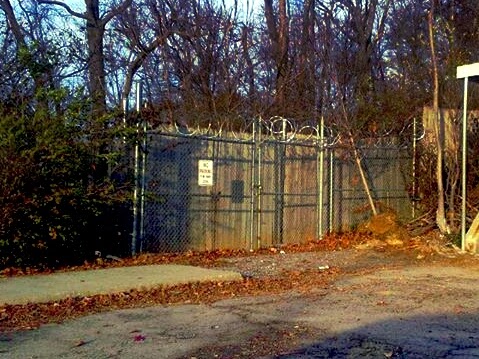
When your character approaches the Body Farm, they’ll notice it’s located in the back of the UT hospital employee parking lot. It’s surrounded by wooden and chain length fences with barbed wire around the top. The area beyond this is hilly and covered with trees. 
Beyond this point, human bodies in various stages of decomposition are placed around the campus. Some exposed to the elements, others inside a car or concrete structure. Few are buried at various depths. All this is to allow the staff to study and measure the markers of decomposition. During the summer, the smell of death is ripe, even outside the fence. I had the dubious honor of parking in front of the Body Farm during my year of clinicals at UT hospital. Definitely an interesting experience.
The Body Farm is also used to educate law enforcement personnel as it is an integral part of the National Forensics Academy. The NFA hosts law enforcement agencies from all over the country to teach them proper techniques in forensic death investigation. This includes a crime scene with an actual body donated to the facility.
Though the facility at UT was the first of its kind, there are now four facilities in the US—University of Tennessee, Western Carolina University, Texas State University, and Sam Houston State University.
***********************************************************************
Amryn Cross is a full-time forensic scientist and author of romantic suspense novels. Her first novel, Learning to Die, will be released in September. In her spare time, she enjoys college football, reading, watching movies, and researching her next novel. You can connect with Amryn via her website, Twitter and Facebook.


Up and Coming

Personally, I feel like I’m just coming out of my Christmas coma and am excited to get back to the medical mayhem. Plus, there is the haze of marijauna smoke in Colorado adding to laziness. And no, I don’t partake. I’d never consider it. Just seen too much damage wrought on families from abuse of legal and illegal substances.

But that’s a post for another day . . .

So– how are you? How was your Christmas? What’s the best gift you got? Me? I was supposed to work Christmas Day and was put on call and NEVER had to go in. So, I ended up getting to spend the day with my family which was awesome.

My favorite part of Christmas is going to the Christmas Eve service at our church. It never really feels like Christmas until that happens.

What about you? What gets you into the Christmas spirit?

For you this week . . .

Tuesday: Forensic specialist Amory Cannon is back to discuss just what the Body Farm is. And yes, it does exist.

Thursday: A book review of The Profiler by Pat Brown. Very interesting book and I’ll give my take.

Hope you are coming out of your Christmas Coma as well.

Jordyn
 

Too Thin on Margins?

A curious thing happened as I was trolling Facebook one day–a fellow author had posted about what she wasn’t doing for Christmas. “I’m not baking the seven different types of cookies that I normally do and I’m giving you permission to do the same. What is it you would like to give up this Christmas so you can spend more time with family?”

Whenever the first of the year rolls around it’s always time for the
dreadedexcitement of planning your (cue the music) New Year’s Resolutions. Often, these resolutions and goal setting add more to our plate rather than simplify our lives.

We should absolutely make goals–I’m a big believer in them. But how can we make them reasonable, doable, and achievable?

You might have heard about margins. Leave one inch margins around your written page. This used to be so there would be room for others to make comments. It’s morphed into leaving room in your life for the important things. You might have also heard people call this work/life balance.

But how do you know if your margins are too thin? What might some of the symptoms be?

1. You can’t say no. This means you don’t have boundaries. It’s really not healthy to be the go-to person for everything. You can’t always be at another person’s beck and call. I think volunteer work is important but pick ONE thing you’re passionate about and make sure the hours are reasonable.

2. You’re always running late. This can be symptomatic of two conditions. One, it’s just the kind of person you are. You’ve always been late and continue to be late. But if you used to be on time for everything and now you’re always just a few minutes (or more) late, then you’re probably over-scheduled. Why is it you can’t make it on time? Too many appointments or it’s something you don’t want to do? You’ve lost passion for your job, perhaps? Maybe never had any? Can you change that?

3. Your children/family/significant other don’t recognize you anymore. I remember when my girls were infants that I’d bring them into the bathroom while I was taking a bath and set them on the floor with some toys so I could keep an eye on them. The first time their eyes witnessed me dunk my head and come up with my hair slicked back, their quivering lips indicated that they thought I was not their mom anymore. I spoke to them and reassured them it was okay. If your family is coming in dead last then definitely some re-prioritizing needs to happen. What can you change about your current schedule that would make more room?

Since it is the first of the year, I do still think that it’s a good time to analyze and focus, but maybe with these tenets in mind. The goal has to be reasonable to make it fun and achievable; otherwise it’s doomed to fail from the start.

So, instead of the goal being I’m going to write THREE great American novels when you’ve never attempted one, attend a local writers conference to see if writing is suited for you.

Instead of losing ALL the weight you need to lose in the first three weeks of the year, shoot for a small piece of the whole. I want to lose 2 pounds in January. Once you’ve done that, set the next goal.

Goals are about focus, but they need to be achievable. You’ll still need to live your life. Keep those personal relationships strong. That’s what ultimately sustains you.

What are your reasonable and achievable goals for 2014? Will they maintain your life/work balance?

Next week restarts medical mayhem!!