Near Death Experiences: A Paramedic’s Perspective

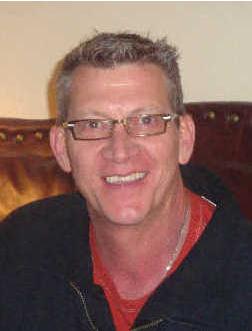
I’m pleased to host Tim Casey as he shares some of his patient experiences with near death.

Welcome, Tim!

Over my 30 plus years as a firefighter/paramedic I witnessed many souls depart this world, but also had the privilege to participate in the resuscitation of hundreds of patients. I developed a habit over the years of asking the previously lifeless about what they had experienced while dead.

As I was generally the very first face they saw upon rejoining the living, once I knew their physical well being was stable, I would simply ask them what they experienced. Some had a story and some had no memory of what had happened.

But first let me take you through the process of resuscitation in the field as a paramedic. We generally had advanced notice from our dispatch center that we were responding to a possible cardiac arrest, and a description of what was happening at the scene we were approaching. We would be advised if CPR had been initiated and if the patient was believed to be pulseless and not breathing (apneic).
This gave us time to mentally prepare for what procedures would be needed to begin as soon as we arrived. If in fact we found a dead human being defined as a person not breathing and without a heartbeat, the first thing to do is determine if there was any kind of heart rhythm we could treat. The patient was attached to a cardiac monitor to access what kind of electrical activity was occurring with the heart.
There are many heart rhythms that we can treat with electricity, but one quick note; we don’t shock what is colloquially known as a flatline. This rhythm is asystole and no amount of electricity will convert this rhythm back to a functional heartbeat. If a treatable rhythm is present we will “shock” the patient and in successful cases (cardio version) this will bring the heart beat back to a functional condition.

Many other things can happen following this first procedure including intubation of the airway, administration of drugs to assist life and other supportive care. Not all patients regain consciousness but in the rare case they did and they were not intubated, I felt compelled to question them about their experience.

Almost all these cases occurred in the back of an ambulance while transporting the patient emergent (lights and siren) to the hospital. I only had a handful of cognitive patients that could talk to me and describe what had happened.
All were profoundly at peace and their former life threatening condition seemed to become more stable. I must add a quick note, when I was on scene with a conscious patient that was on the verge of a heart attack but had not yet become unconscious; one of my primary questions was if the person felt an impending sense of doom. All said they did. They knew on a base level deep within themselves that their life was about to slip away.
The patients that had survived and regained consciousness had lost that feeling of doom. There was a noticeable change I could see right before my eyes. Now was this due to the treatment I had administered? The drugs and electricity that I had applied to a lifeless body?
I was told by these people it was not because of my efforts, it was in fact they felt that they had been sent back by someone or something. Many had complete memory of the whole event including what I had said. I always talked to my patients and encouraged them to help me, to stay alive. A common phrase in emergency medicine is this, “The last thing to go is the hearing.” and my experiences confirmed this for me.
On one occasion in a remote location where the ambulance was very far away I had the experience of resuscitating a gentleman in his bedroom. My engine crew was with me but because of his improved condition I had asked them to gather equipment to prepackage the patient for transport.
The gentleman and I were alone for a few moments. He had changed from ghostly white soaked in sweat to pink and dry, he smiled and thanked me. I had to ask.
“Did you see anything while you were gone?”
“I don’t believe I was gone. I was here. I watched you.” He said. “But there was another person here with us. I guess you could say, not a person, but God I believe. He told me it wasn’t my time and said I had to go back.”
“Did you see Him?” I was very excited.
“Not really, more felt Him, felt surrounded by Him I guess I would call it.” 
“And then what?” I asked.
“And then I was looking at you.” He said.
These experiences gave me a sense of my own spirituality. Maybe I wasn’t such a big deal as a paramedic after all. Maybe it was all predetermined and out of my hands. Or maybe God worked through me. Either way I guess I will never know until it is my time.
*********************************************************************

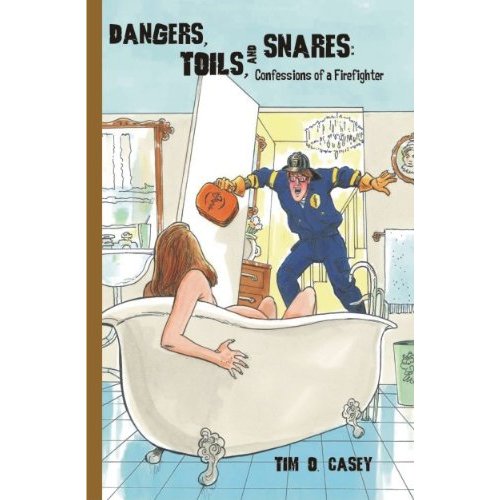
Tim Casey is a retired firefighter/paramedic with more than 30 years on the streets caring for the sick and injured. He has also written a memoir: Dangers, Toils, and Snares: Confessions of a Firefighter which has been number one on Amazon in the Kindle Store many times. Tim now
is a full time author and his new book on how to date a firefighter will be out later this year,

Cardiac Arrest in EMS Field: Dianna Benson, EMT

Dianna Benson writes a compelling first person account of a young woman in cardiac arrest.

Dianna’s debut novel, The Hidden Son, debuts this coming March. Hope you’ll check it out.

Welcome back, Dianna!

Our station buzzer and waist radios go off at midnight.

EMS 8. Cardiac arrest. Terminal C, near gate 34.
My partner and I rub the sleep from our eyes and restart our brains.
On scene in a near empty airport terminal, a middle-aged woman waves us toward her. Four airport security officers appear relieved by our arrival. All four scramble away from the unconscious patient’s side as I radio for firefighter assistance.  
“Help my daughter, please,” the woman begin a panic. “She just fainted.”
The daughter appears to be in her early twenties. “Ma’am?” I saytouching her shoulder.
Unresponsive. I feel her carotid artery. Pulseless.

I begin chest compressions. “Does she have any health issues? Allergies?” I ask the mother.

“No, she cries out. “Nothing.”
My partner presses defibrillator pads to our patient’s chest—one under her right clavicle, the other on her side over her left lower ribs.
“What was she doing when she collapsed?” I ask the mother as I continue non-stop chest compressions.
“Walking to our gate.” The mother pants several quick breaths. “We’re catching the red eye to Paris. Help her. Please. She’s only twenty-four.”
I swallow the sadness clogging my throat. God, please give this mother strength.
The cardiac monitor assesses the heart rhythm. The wave pattern displays on the screen, and I interpret it. “Pulseless ventricular fibrillation,” I tell my partner as he whips out our IV kit.
We defibrillate the patient. A small crowd gathers near us as two firefighters arrive on scene to help us.
“Take over compressions,” I say to the two males, and one of them does so, as my partner drills a hole into our patient’s shin for intraosseous access, the preferred and more effective route over intravenous in cardiac arrest.
I dig into our airway bag for an airway adjunct, an oxygen tank, and a BVM—bag valve mask. Iinsert the oropharyngeal airway down the patient’s throat and connect the BVM to an oxygen line to oxygenate our patient.
Bag her,” I say to the other firefighter, and he grabs the BVM from my hand.
I whip out our med box and spike a bag, as my partner finishes the IO (intraosseous) line. We push 1mg epinephrine and 40 unit vasopressin into the line; the firefighters continue with chest compressions and bagging.
I prick the patient’s finger and a run a BGL—blood glucose level—for possible hypoglycemia.“Does she take any medications?” I ask the mother for information as well as to engage her in hopes of keeping her calm. “87 BGL,” I say, telling my partner it’s at a normal level.
“No, she doesn’t,” the mother wails out, tears covering her face. “Why isn’t she waking up?” she screams, pulling on the jacket of the firefighter bagging the patient.
“Ma’am?” I gain her direct eye contact. “Let us do our job, okay? We’re here to help your daughter.
“Yes. Sorry.” She releases her grip on the firefighter and backs up. “Not my girl,” she cries out. “Not my Hannah. God, take me instead.”
Ma’am, take some deep breaths and keep on praying.”
She nods at me with the saddest smile I’ll never forget.
I check Hannah’s pulse. Carotid pulse still absent.
We repeat defibrillation then resume chest compressions and bagging. We add 300mg of Amiodarone to the line. Then sodium bicarbonate.
“I took a first aid class,” some male in the near distance says. “Do you want my help?”
“No, we’re good,” I answer loud enough for wherever he is to hear.
We start another line, this one IV in the left arm, and run cold fluids in it.
“Hey, you could use my help,” that male voice again says, although this time he sounds ticked.
“Sir?” One of the security officers rushes behind me. I hear scrambling. “Move on your way.”
“I’m trying to help.”
“That’s kind of you, but they’ve got it. Please walk on.”
A hand yanks on my shirt collar at the back of my neck. I squirm forward from it with no luck, but stay focused on the care of my patient.
“Let go of her. Now.” The grip on me releases. I hear more scrambling behind me.
“Hey. Hey. Hey.” The chaos behind me fads out.  
I apply new defib pads. We repeat defibrillation then resume chest compressions and bagging.
I check the carotid. Still no sign of life.
We add magnesium sulfate to the IO line. We push another 1mg of epinephrine and 150mg of Amiodarone. Then doses of Procainamide and Metroprolol.
We work the code for over twenty minutes, to no avail. I’m thinking Hannah possibly suffered acidosis, hyperkalemia or cardiac tamponade, or maybe she overdosed on some drugs. Maybe she has an undiagnosed heart condition.
“Astyole,” my partner says while viewing the monitor screen.
What does that mean?” the mother wails out. “That’s bad? There’s only one straight line thingon the screen over there.”
“Keep praying,” I tell the mother.
“Let’s inject Narcan,” I say to my partner, thinking it could be some kind of overdose.
“You’re on my brain wave,” My partner says about the med I suggested.
We inject Narcan into the line. Unfortunately, a minute later there’s no change in the patient’s lifeless condition, and typically an overdose patient will jerk to life in seconds.  
“How about some Atropine?” my partner says, and I nod, reaching for the medication.
We continue to push additional med dosages and work the full code as the two firefighters continue with bagging and chest compressionsneither nor my partner willing to call it.
Not yet.
I can’t yet let Hannah go, and the mother isn’t ready for it.

*****************************************************************

Dianna T. Benson is a 2011 Genesis Winner, a 2011 Genesis double Semi-Finalist, a 2010 Daphne de Maurier Finalist, and a 2007 Golden Palm Finalist. In 2012, she signed a nine-book contract with Ellechor Publishing House. Her first book, The Hidden Son, released in print world-wide March 1, 2013.

After majoring in communications and a ten-year career as a travel agent, Dianna left the travel industry to earn her EMS degree. An EMT and a Haz-Mat and FEMA Operative since 2005, she loves the adrenaline rush of responding to medical emergencies and helping people in need. Her suspense novels about adventurous characters thrown into tremendous circumstances provide readers with a similar kind of rush. Dianna lives in North Carolina with her husband and their three athletic children. Learn more about Dianna at www.diannatbenson.com.

<!–[if !mso]>st1\:*{behavior:url(#ieooui) } <![endif]–>

Up and Coming

Hello Redwood’s Fans!

How has your week been. Me— working on a new book proposal. Anyone know of any great medical mysteries? It’s pretty sad when I’m reading and am familiar with most. I want something unusual and preferably genetically fatal– so if you have any ideas . . .

On top of that– I need a setting. Any setting. I like creepy houses but I don’t think it’s a good setting for a trilogy– being confined to one place either. So– what’s your favorite setting? 

For you this week:

Monday: Author/EMS expert Dianna Benson is back to give a first hand account of cardiac arrest in the field.

Wednesday: Firefighter/Paramedic Tim Casey shares some of his patients’ experiences with near death.

Forensic Friday: Garry Rodgers is back starting a multi-part series on a true life death investigation. These posts are fascinating and I know you’ll enjoy.

Have a great week.

Jordyn

Types of Serial Killers

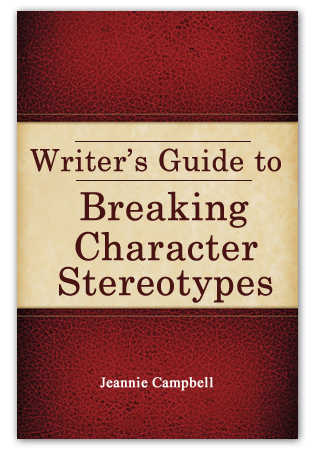
I’m honored to have licensed marriage and family therapist Jeannie Campbell at Redwood’s today as we do a cross-blogging adventure. Jeannie does what I do only with matters of the mind so I hope you’ll check out her blog (and become an enthusiastic follower) The Character Therapist. Jeannie also has a great book for writers called Breaking Character Stereotypes.


I will be at Jeannie’s blog discussing medical conditions that present like psychiatric cases. Think you know what they might be? You’ll have to troll on over there to find out.

Today, Jeannie offers great information into serial killers and their motives which is very important for character development. Very interesting information. 

Welcome back, Jeannie!


I’m happy to be back with part two in my series on psychopaths. (To read the first post, click here.) Today I wanted to talk about the two basic types of serial killers, since serial killers are definitely psychopaths.

Based on the serial killer’s motives, professionals have narrowed down two basic types of killers:


Act-FocusedThese killers generally don’t kill for the psychological gratification of the kill, making the act itself their primary emphasis. They usually kill quickly, with little pomp and circumstance. They come in two subtypes:

Visionaries – These killers usually receive a vision or hear a voice telling them to kill. Sometimes the vision or voice comes from God or the devil, both of which legitimate their violence.

Missionaries – These killers are on “missions” to eradicate a specific group of people, such as prostitutes, white-collared bankers, etc.

Process-FocusedThe majority of serial killers are process-focused. They get off (yes, in thatway) on the method of their kill. They kill for the enjoyment of it, and usually get a perverse sexual thrill out of it, so therefore they take their time and go very slowly. Hedonism at it’s worse. These killers fall into 4 subtypes, based on their motives as well:

Gain – Murdering someone for profit or personal gain. Most females usually fall into this category, like Lavinia Fisher, who would murder her hotel guests and keep whatever belongings and cash they had.

Thrill– Killing someone gives these people a rush or high. They especially like to watch the lights go out in their victim’s eyes. It’s the ultimate adrenaline rush…makes them feel alive and euphoric. They typically don’t engage in sex either before or after.

Power – The pleasure comes from manipulating and dominating, although the argument could be made for this category to fall in with any of the above. Usually sex is involved, but it’s not as important to this killer than to the Lust killer. That’s confusing, I know. Some research I found led me to think that this is considered the “sociopath,” but I think you and I both know that every person talked about on this post would be one of those.

Lust
– Murder is associated with sexual pleasure in the minds of these killers. These sick folk actually will have sex while in the process of killing or engage in necrophilia after they have killed. Either/or….twisted. It seems that Lust Killers are the most prevalent in the media and certain fiction genres, so I’d like to dissect them a little further.

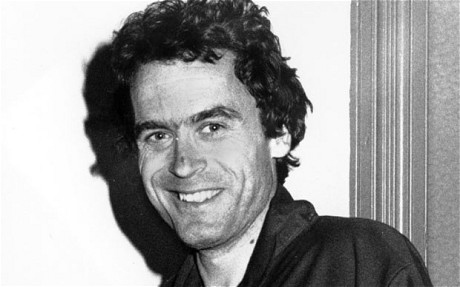
Infamous “Lust Killer” Ted Bundy

Lust Killers basically have sexual gratification as their main motivation. They almost always exhibit sadism (inflicting pain on others for their pleasure). They usually are not opportunistic killers, but rather highly organized, with vast amounts of planning and forethought put into their kills.
They tend to go through four phases:

Fantasy – they act out the crime over and over in their mind, maybe with use of pornographic material. The desire to kill is manifested, and this time period may last years before they progress to phase two.

The Hunt – the killer might focus primarily on the “right” type of victim, or he may focus on the “right” type of location. Once he finds the victim, he may stalk them (hunting) for a long time, memorizing their schedule down to the minute. It could take many more years to go through this phase, and cover 100s of miles.

The Kill – the victim is lured into the trap and then the killer makes real on his fantasy. Depending on how elaborate the kill ritual is, this could take a while…several days or longer, even. There will almost definitely be “overkill,” in that there could be extreme torture, mutilation, or dismemberment. The killer might have sex with the corpse, drink their blood, eat body parts…whatever they can do to preserve their moment of ecstasy however they can. The killer might take a token of their kill or leave a calling card, but not always.

Post-Kill – the killer will likely feel empty or depressed, because their inner torment was only relieved short-term. More lives will have to be taken in order to have temporary relief. It would be during this stage that a killer would write a confession to the police or media. Unless caught, it is inevitable that he will kill again, starting the cycle back over.

I know that’s not the happiest ending to a post, but hopefully this information will help your readers with their serial killer development.
Thanks for hosting me, Jordyn! 

**************************************************************************

Jeannie Campbell is a Licensed Marriage and Family Therapist in California. She is Head of Clinical Services for a large non-profit and has worked with families, teens, parents & kids for over 10 years. She loves her day job so much that she crossed over to diagnosing make-believe people. She’s the owner/operator of The Character TherapistTM, an online therapy service for fictional characters…and their authors. You can connect with her at http://charactertherapist.com.

Traits Most Psychopaths Have in Common

I’m so excited to have licensed marriage and family therapist Jeannie Campbell at Redwood’s today as we do a cross-blogging adventure. Jeannie does what I do only with matters of the mind so I hope you’ll check out her blog (and become an enthusiastic follower) The Character Therapist. Jeannie also has a great book for writers called Breaking Character Stereotypes.

I will be at Jeannie’s blog discussing medical conditions that present like psychiatric cases. Think you know what they might be? You’ll have to troll on over there to find out. You can find Part I of my series here.

Welcome, Jeannie!


I’m honored to be a guest on your blog, Jordyn. I find it fascinating that you do with medical facts what I do with psychological facts over at The Character Therapist.
Many medical thrillers include a psychopath villain, simply by virtue of the genre. Perhaps that’s why I am so enamored with your books!
I’m happy to present a two-part series on psychopaths, detailing significant traits most committers of violent crimes have in common, the types of serial killers that are out there, and then expounding on one type in particular commonly found in novels.
Psychosis truly does have its roots in childhood. I want to introduce you to the concept of the Macdonald Triad, which is also known as the Triad of Psychopathy (pronounced sigh-KOP-athy). It’s named for J.M. Macdonald, a forensic psychiatrist who wrote “The Threat to Kill” in 1963, a paper which appeared in the American Journal of Psychiatry.

In this paper, he detailed a set of three behavioral characteristics that, if found present together in a person, he claimed were to be associated with later violent tendencies. It should be noted that Macdonald focused on hospitalized patients who had a history of making threats to kill, not patients who had actually killed. Some studies have found statistical significance to the Triad, and some studies have not.

The traits, in no particular order, are:

1) Bedwetting

If a child wets the bed past the age of 5, Macdonald found this to be significant. Two psychiatrists (Hellman and Blackman), claimed that enuresis—the act of voiding urine while asleep—was a form of sadism or hostility, because the act of voiding in fantasy was equated with “damaging and destroying.”

More up-to-date research has subsequently discounted associating bedwetting with violent tendencies, but doesmake the point that bedwetting past the age of five can be humiliating for the child, depending on how the child is treated by parental figures for doing so. If belittled or treated cruelly, the child might then be more inclined to engage in the other aspects of the triad as an outlet for their frustration.

2) Animal Cruelty

Torturing animals can be seen as a precursor or rehearsal for killing humans. Torturing any animal is bad, but messing with dogs and cats is particularly so, because they are seen as more humanlike due to being pets. Toads, turtles, worms and the like don’t seem to violate that human-pet connection as much.

Some psychopaths engage in animal cruelty as a way to vent frustrations, since in childhood, they could not retaliate toward those who humiliated them. So they select vulnerable animals, seeing them as weaker. It’s future victim selection at a young age. Studies have been done that prove that those killers who engage in animal cruelty often used the same method on their victims.

3) Firesetting

Since extensive humiliation is often found in the backgrounds of many serial killers, it’s been theorized that setting fire and venting frustration and anger by doing so helps return the child to a normal state of self-worth.

It doesn’t have to be huge fires to be an outlet for aggression. Trash cans, small flame throwers, homemade “bombs”—they all serve their purpose, just as setting fire to a building or car does.

Join me on Wednesday as I continue this series on psychopaths. Thanks for having me, Jordyn!
****************************************************************************
Jeannie Campbell is a Licensed Marriage and Family Therapist in California. She is Head of Clinical Services for a large non-profit and has worked with families, teens, parents & kids for over 10 years. She loves her day job so much that she crossed over to diagnosing make-believe people. She’s the owner/operator of The Character TherapistTM, an online therapy service for fictional characters…and their authors. You can connect with her at http://charactertherapist.com.

Up and Coming

Hello Redwood’s Fans!

How’s your week been? Mine– good. Not as crazy in the ER as it has been recently and that’s good for everyone.

If you like my blog and are a writer– I know you’ll love this talk. I’ll be speaking at the Tattered Cover Bookstore at Highlands Ranch Town Center (Highlands Ranch, CO 80129) Monday, March 4th from 7:00pm-9:00pm. Hope to see you there. Topic will be Medical Mayhem: How to injure, maim, and kill your FICTIONAL characters correctly.

For you this week:

Monday and Wednesday: I am super-excited (yes UBER- excited) to do these posts. Jeannie Campbell and I decided to do a little blog crossover. If you haven’t checked out Jeannie Campbell’s blog– it is a must for writers everywhere. She does what I do only on the psychological side. Her blog is called The Character Therapist and you can find it here. Jeannie will be blogging about serial killers (warning signs and common types) and I’ll be blogging about medical conditions that present like psychiatric ones.

A lot of medical mayhem to be had. Hope you enjoy the posts!

Friday: In celebration of March being Autoimmune Disease Awareness Month, Stacey Thureen does some education on thyroid disease– did you know there was one that is also an autoimmune disease?

Great week here at Redwood’s. Hope you have a fabulous one, too.

Jordyn

Author Question: Death by Trophy

Susan Asks:

I have a woman murdered when she is hit on the back of the head with a metal trophy. The trophy is cup shaped so the largest part of it is a thinner metal. I expect the trophy will dent from the impact, but I’d also expect that there would be blood as a result of the injury. Would this kind of injury cause bleeding and if so can you give me a general idea of how much?

Jordyn Says:

It depends. Blows to the head can go either way. They can just cause internal bleeding (intracranial hemorrhage) and/or an external scalp laceration that would bleed A LOT depending on it’s size and depth. Scalp wounds are known for being pretty bloody.

These injuries can be nice for your character as you have some leeway medically to do them in as you please.