Up and Coming

Hello Redwood’s Fans!

How has your week been? Mine– excellent and a little crazy.

For those of you who are interested, I’ve been out and about blogging for my latest release Poison.

Here are some of the blogs who have been featuring posts and I hope you’ll stop by and check them out.

Candace Calvert’s Blog: A Pinch of Poison. Check this one out for a chance to win Poison!

Dale Eldon’s Blog: The Duality of Toxins.

Thriller Writer: Where do those story ideas come from?

For you this week:

Monday: Book review of To Heaven and Back by Dr. Mary C. Neal. What do you think about near death experiences?

Wednesday: Lance Armstrong and the biological passport.

Friday: Garry Rodger’s returns for Forensic Friday and it’s all about autopsies.

I hope you all have a fabulous week.

Jordyn

Do Do I Need a Coroner, Medical Examiner or Pathologist?


I’m so excited to have Garry Rodgers join my honored team of medical experts. To be honest, I’ve been looking for someone on the “other side of life” to offer their insights because I do see a fair number of forensic questions and this is not my area of expertise. I try to keep the living from crossing over.

Garry will be here on a regular basis doing Forensic Fridays and I’m so glad to have him. I hope you’ll check out his novel, No Witnesses to Nothing.

Welcome, Garry!

Hi. I’m Garry Rodgers and I’m delighted to be a guest on Redwood’s Medical Edge.

For over three decades I’ve been involved in the death business. I’ve been a Royal Canadian Mounted Police homicide detective, served as a sniper on Emergency Response Teams, and finished up my forensic career as a Coroner. So I’ve seen my fair share of bodies.

Everyone knows what a homicide cop does, and most would rather not be in the sights of a sniper, but there’s a lot of misunderstanding about the role of a Coroner as opposed to a Medical Examiner (ME) and to a pathologist. A bit of a history here.

All civilized jurisdictions have a judge of the dead whose duty is to find fact. Not fault. The facts to be determined are the Who, When, Where, How, and By What Means that the deceased expired. Once these facts are determined, the death must be classified into one of five categories; Natural, Accidental, Suicide, Homicide, or Undetermined. This method of fact-finding and classification is universal, whereas the structure of appointing the judge is not.

The office of the coroner dates back to 10th century England when the Crowner of the King (hence the word coroner) investigated any number of matters, including sudden and unexplained human deaths. This evolved into an inquisitional role where the coroner would conduct simple inquiries, or in cases of public interest, would hold inquests and compel witnesses to testify. Coroner appointments generally went to upstanding citizens of the community, not necessarily to those of a medical, legal, or investigative background.

As science progressed, it became prudent to retain the expertise of medical professionals, particularly in the clinical areas of autopsy and toxicology. This coincided with the massing of population in urban areas. Out of practicality and economics, the cities would employ full time medical doctors as examiners who’d delegate field investigations to lesser qualified persons. The rural areas, having a lower caseload, adopted the reverse where they’d contract out the specialties.

A pathologist, on the other hand, is a medical examiner who’s been specifically trained in the study of death and disease. The term pathologist dates back to ancient Greece; pathos meaning suffering, and logos meaning writing. Taking it a step further, a forensic pathologist signifies a specially-trained medical doctor who’s qualified to testify in court.

I can’t say the Coroner system is any better or worse than the Medical Examiner system. The professionals may have inverse roles, but all are exceptionally well trained. Both speak to the deceased’s interests and that’s what’s important. Death investigations have become more complex as science advances and, regardless of the administrative issues, having the right people doing the right jobs is key to determining the proper cause and classification of death.

Just a note on the personal qualities required to investigate deaths. First you need an inquisitive mind. Often things aren’t what they seem on the surface, and it’s through attention to detail that the facts rise. Second – empathy. You deal with those in the world which the deceased suddenly left; families, friends, co-workers, and to them it’s not just another case. Last, you need a strong constitution. Some of the death scenes can be exceptionally unpleasant.

In an upcoming sequence of posts, I’ll take you deeper into the world of a coroner. We’ll follow a true case which I investigated that employed the spectrum of forensic techniques. I was able to correctly classify the death, but I’ll assure you… it wasn’t what it seemed on the surface.
So stick around. I promise to be interesting!

***********************************************************************

Garry Rodgers has lived the life that he writes about. Now retired as a Royal Canadian Mounted Police homicide detective and forensic coroner, Garry also served as a sniper with British SAS–trained Emergency Response Teams and is a recognized expert-witness in firearms. A believer in ‘What Goes Around, Comes Around’ Garry provides free services in helping writers throughhis crime and forensic expertise. Garry’s new supernatural thriller No Witnesses To Nothing is based on a true crime story where many believe that paranormal intervention occurred. An Amazon Top 10 Bestseller, it’s available on Kindle and print on demand. You can connect with Garry via his Website: www.dyingwords.net

What Does An Occupational Therapist Do?

I’m happy to host author Catherine Richmond as she discusses her “real life” job of occupational therapy. Hopefully, you can check out her novel, Through Rushing Water. Is that cover not gorgeous?

Welcome back, Catherine!

What do occupational therapists do? We work with people to set goals, find their motivation, and overcome conflict – does that sound familiar to you writers? So what does that mean in practice?

Currently I’m working in an acute care hospital. My patients might be dealing with anything from a knee replacement to alcohol withdrawal, cancer to pneumonia. OTs help patients return to taking care of themselves. A person who has had a stroke needs to learn how to open a toothpaste tube and feed himself one-handed. After a hip fracture, patients aren’t allowed to bend, twist, or cross their legs, so OTs teach how to use devices such as dressing sticks and sock aides to dress themselves. Families learn how to safely help the patient and support their improvement.

Patients who need more help after their medical crisis is resolved might continue to work with OTs in skilled nursing facilities, rehabilitation hospitals, outpatient clinics, or at home with home health care.

I’ve also worked as an OT in schools. Students with coordination problems learn to zip, open milk cartons, and write. Some children needed equipment such as a pencil grip, heavy lined paper, or a computer to complete their homework. I helped teachers adapt their curriculum to include students with handicaps. Children with severe handicaps might need positioning use their arms, changes to their food and feeding utensils for meals, and adaptations to allow them to interact with their environment.

What’s the difference between Occupational Therapy and Physical Therapy? There’s a lot of overlap! In the hospital, PTs work mostly on walking and stair climbing. The PT might teach leg exercises, while the OT works on arm exercises. In the school, physical therapists work closely with PE teachers to ensure students’ participation. OT overlaps with Speech Therapy, too. The ST works on swallowing and communication, while the OT makes sure the patient is sitting correctly and provides adaptive utensils.

In the early days of OT, a hundred years ago, patients stayed in hospitals for months and needed activities such as knitting and woodworking to pass the time. Since then, OT has grown and changed. So if you write about OT – and I hope you will! – be sure to consider the era and the context where your therapist is building a bridge between the person and the environment.

****************************************************************************

Catherine Richmond is the author of Spring for Susannah and Though Rushing Water. She supports her writing habit by working as an occupational therapist.
 

Gun Shot Wound: Dianna Benson, EMT

EMS expert and author Dianna Benson blogs today writing a first person account of caring for a gunshot wound victim. I love how she’s written this post with such detailed information that portrays the medical info so accurately.

EMS 4. Gun Shot Wound. 123 Main Street, Apartment G. 
I flip my book closed—Jordyn Redwood’s newest suspense—and zip it inside my backpack. I rush from my station’s crew quarters to the ambulance bay.
My partner slips behind the steering wheel; I signal us en route to the call via our laptop nailed to the dashboard.
“Twenty-nine year old male, GSW in abdomen, conscious and breathing,” I relate the facts as I read them on the laptop screen. “Raleigh PD already on scene.”
I wait for further information to display; my nerves rev up. GSW calls often place EMS in deadly situations. Even if the scene is safe at first, bystanders, the shooter, even the patient can turn violent. Prepared for anything at any given moment is the hallmark philosophy to staying alive.
“RPD in process of securing scene,” I read the new information out loud. “Stage near the manager’s office.”
“Manager’s office?” my partner turns our ambulance left at an intersection. “That can’t be far enough.”
I hear the fear in his voice. Only six months ago, he suffered a knife wound from a patient’s husband who didn’t want us to resuscitate his wife. 
“I know these apartments,” I say. “Building G is in the back. Furthest away from the office.”
More information came across the screen.
“Patient took off on foot. Stumbled away from the shooter. He’s down. Gas station on corner of Hill Street and Brown Avenue.”
Once we arrive at the gas station and notice RPD has the scene in their control, I duck under the yellow tape blocking the public from our GSW patient lying supine in one of the parking spaces like a car. Five firefighters surround the patient, each one pressing towels to his abdomen, as countless cops hold the perimeter they’ve established.
The firefighters step away, allowing us to take over medical care.
    
 “Sir, can you tell me your name?” I yell over the chaos surrounding me.
“Ronald,” he uttered with a flutter of his eyes.
I peek under the wad of bloody towels to examine the wound in his upper abdomen. Since bullets often act like a plug, gun shot wounds often don’t produce heavy external bleeding. This one the exception.
“Package and go,” I say to my partner. “Ronald, what medications do you take?”
“Nothin’.”
Gunfire whizzes near my ear, busts the car window next to us. My heart is pounding as cops tackle some guy behind me. The scene is safe again.  
With the help of the firefighters, my partner and I log roll the patient onto a spine board, place the backboarded patient onto our stretcher, and wheel it toward our ambulance.
I lean my face near Ronald’s ear. “What about street drugs, Ronald? I’m not a cop, so it’s best for your health if you tell me the truth. I don’t want to inject any med—”
“Nothin’.”
“Okay.”
We load the stretcher inside the ambulance.
“Any health issues? Allergic to anything?” I continue to ask Ronald questions.
“No, no,” he says, squirming. “The pain. It’s bad. Real bad.”
“I’m sure. Hang in there with me, okay?”
One of the firefighters slip behind the steering wheel as two others hop into the back with me and my partner.
I place a bunch of bandages over the bullet wound, crisscrossing and stacking them. I spike an IV bag, as my partner inserts an eighteen gauge needle into our patient’s arm. As I connect Ronald to our cardiac monitor via a 12-lead, one firefighter maintains direct pressure to fresh towels over the bandages, the other wraps a BP cuff on the patient’s right arm then clips a pulse ox to his left index finger for a blood oxygen saturation reading.
I glance at the readings on the monitor. “Hypotensive and tachycardic,” I shout over the sirens wailing and engine roaring. “82 over 54. Pulse 160.” I feel his left radial artery. It’s thready. “Trendelenburg,” I say, instructing the firefighter on my right to lift the foot of the stretcher, a treatment of hypoperfusion (shock), this case hypovolemic shock due to blood loss.  
I’m thinking the bullet pierced the vena cava. If so, this patient is bleeding internally and surgery is vital.
As my partner shoots morphine in the IV catheter, I notice our patient’s eyes are closed and he’s still and silent. Blood oozes from his mouth. His oxygenation reading drops to 91%
“Ronald?”
He’s unresponsive. I press my fingers to his carotid artery. Pulse still present.    
I suction blood from his mouth. In order to protect his airway, I slide a lubricated oropharyngeal airway down his throat. With a curved laryngoscope, I lift the epiglottis and gain a visual of the glottic opening and white vocal cords. I drop the orotrachael tube between the cords, down the trachea. I connect a bag valve mask over the tube opening. To keep him oxygenated, I squeeze the football-size bulb every five seconds.  
I read the newest vital signs on the monitor, “74 over 46. HR 168.”
My partner grabs the radio, switches it to the closest trauma hospital.
“Wake Med ED? This is EMS 4.”
“Wake Med. Go ahead EMS 4.”
“We’re en route with a twenty-nine year old male. Abdominal GSW. Tachycardic at 168. BP falling, last reading 74 over 46. Trendelenburg position. Administered morphine. Endotrachael in place. ETA five minutes.”
I glance at the cardiac monitor screen. “Astyole,” I shout out. “Take over bagging,” I tell one of the firefighters.
I begin chest compressions, as my partner injects epinephrine and vasopressin into the IV line. Nine compressions later, Ronald’s eyes flash wide.
I smile down at him. “You still hanging in there with me?”
He nods as we pull into the emergency department.   

<!–[if !mso]>st1\:*{behavior:url(#ieooui) } <![endif]–>

**************************************************************************


Dianna Torscher Benson is a 2011 Genesis Winner, a 2011 Genesis double Semi-Finalist, a 2010 Daphne Finalist, and a 2007 Golden Palm Finalist. In 2012, she signed a nine-book contract with Ellechor Publishing House. Her first book releases March 2013.

After majoring in communications and a ten-year career as a travel agent, Dianna left the travel industry to earn her EMS degree. An EMT and a Haz-Mat and FEMA Operative since 2005, she loves the adrenaline rush of responding to medical emergencies and helping people in need. Her suspense novels about adventurous characters thrown into tremendous circumstances provide readers with a similar kind of rush. You can connect with Dianna via her website at www.diannatbenson.com

Up and Coming

Congratulations to the following three people who have won a personalized copy of my latest medical thriller Poison:

1. Heather

2. Michelle

3. Nancee

Ladies, I’ll be e-mailing you within a few days on how to claim your prize.

I’ve been thinking of you New Englanders and all the SNOW– praying for your safety.

For you this week:

Monday: Dianna Benson stops by to give a first-person account of treating a gunshot wound victim. I like when experienced professionals do this as it gets readers right into the shoes of what it’s like to treat such emergencies.

Wednesday: What do occupational therapists do?

Friday: Do I need a coroner, a medical examiner or a pathologist? Garry Rodgers stops by to clear up the difference between these forensic specialists.

Have a GREAT week.

Jordyn

Deadly Toxin: Mustard Gas


To celebrate Poison’s release, I’m giving away THREE personalized copies of Poison by random drawing to commentors on this weeks posts. To be eligible, you must leave a comment that includes your e-mail address. Must also live in the USA. Drawing will take place midnight on Saturday, February 9th. Winner announced here at Redwood’s February 10th.

I like book titles with double meanings. My first published book was titled, Proof. There were two types of proof the heroine needed. Proof to convict her assailant of his horrific crimes and proof of God in her life.

Poison, the second book in the Bloodline Trilogy, is releasing this month and in this instance—there is an actual nefarious agent (not giving away too much) and a side meaning as well.
What poisons your life? Is it a bad relationship? Is it believing a lie? Is it an actual toxin like dirking too much liquor, using illegal drugs or prescription drugs in ways they weren’t intended?
Writing suspense, particularly with a heavy medical edge, I think requires something unusual to be found. I’m a research hound. I love to learn about new things. And for Poison, I read a lot on different types of toxins.  
Aren’t toxins interesting? How minute substances can make a person ill or end up killing? This is the stuff suspense novels are made from and the lure for every author—finding that one poison—undetectable, fast-acting, easily transmittable or ingested without the victim knowing.
I remember as a youngster hearing the story of how a long-dead great uncle had passed. According to my grandfather, he’d served in the military during WWI and had died as the result of complications from mustard gas exposure.
So lately, in thinking about toxins, I began to wonder what exactly mustard gas was and how did it kill.
Interestingly, I discovered that term “gas” can mean more than just a vaporous substance and can be any chemical substance.
Lethal Gases: Lead to disablement or death.
Harassing agents: Disrupt enemy soldiers.
Accidental Gases: Gases encountered during war that are not related to a chemical agent like excessive gases from gunpowder during a fight.
Mustard gas falls into the first group—lethal gases. Tear gas, for instance, would fall into the second category. 
But how does mustard gas kill?
Mustard gas is also called sulfur mustard and its name is derived from its foggy yellow appearance and mustard like smell. It’s a blistering agent/alkylating agent and comes in many forms: vapor, liquid or solid. When a person comes into contact with the agent, it damages the skin and mucous membranes inside. The chemical liquefies tissue.
Since it freezes at a high temperature, it’s not very effective when it’s cold. It doesn’t spread easily and would fall to the ground before soldiers could be exposed. This property also made it a good weapon because it could stay low on the ground for weeks depending on the temperature and expose unsuspecting troops going into the area. Another factor that made it a good weapon—people adjusted to the smell quickly.
Mustard gas was used first by the Germans in 1917 and was born out of the trench warfare era where new military strategies had to be devised to get men out of their bunkers. The agent was fitted onto artillery shells which were then shot to toward the enemy lines without the accompanying explosion which I’m sure seemed strange to the soldiers at the time.
Hey, why didn’t that thing blow up? What exactly is that yellow fog?
Unfortunately, mustard gas doesn’t often kill expediently. The first symptom was generally red blisters to the skin that developed within 2-24 hours. If the gas was inhaled, these blisters would slowly develop and seal off the airway.
Other symptoms:

  •  Eyes: Irritation, redness, burning, inflammation and even blindness
  • Skin: Itchy redness that is replaced with yellow blister
  • Respiratory system: Runny or bloody nose, sneezing, hoarse throat, shortness of breath, coughing, sinus pain
  • Digestive system: abdominal pain, diarrhea, fever, nausea and vomiting

It was possible for the body to heal if there was a short, brief encounter. Longer, more frequent exposures proved to be more deadly. 
By the end of WWI, chemical agents inured 1 million soldiers and civilians and killed 100,000 people.
Likely, mustard gas wouldn’t be considered favorable to use in chemical warfare these days because of its prolonged activity. 
This link goes to a very powerful article on mustard gas and its effects and was used heavily in the writing of this piece—the italicized areas are from the article. It is definitely worth the read.
What about you? What interesting things have you researched that have ended up in a novel?

The Truth About False Memories


To celebrate Poison’s release, I’m giving away THREE personalized copies of Poison by random drawing to commentors on this weeks posts. To be eligible, you must leave a comment that includes your e-mail address. Must also live in the USA. Drawing will take place midnight on Saturday, February 9th. Winner announced here at Redwood’s February 10th.

During the 80s, there were a number of children who falsely accused adults of molestation. Some of these adults were sent to prison and later found to be innocent.

You can read a little bit about that here

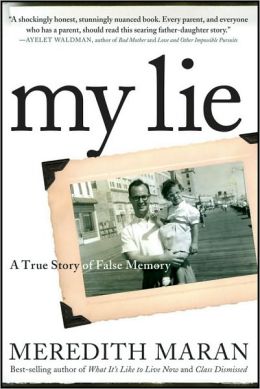
For my second book in the Bloodline Trilogy, Poison, I researched how false memories can be created. I came across a non-fiction book called My Lie by Meredith Maran.

In her autobiography, Maran outlines how she began to believe she had been molested by her father, when in reality, she had not.

At the time, Maran was a journalist doing a number of pieces about child molestation. She was observing family therapy sessions where incest had occurred. Suddenly, very innocent things from her life (like dreaming about her father’s hands) became evidence that her father had harmed her.  Obviously, when she came to know the truth, her relationship with her father was significantly damaged.

There was a definite craze in the 80s about recalling repressed memories under hypnosis. This is problematic for a couple of reasons. One, is there such a thing as a repressed memory? That being that something traumatic is witnessed by a person and as a form of protection, the mind bundles it up and tucks it away until a later time where recalling the memory is safer.

Some say yes– absolutely. Others say, no. You can read more about the different thoughts here which is a lengthy treatise but very interesting, balanced information.

The other problem is that hypnosis places the mind in a suggestible state and perhaps, a therapist with ill intentions, could use this suggestible state to introduce an idea into someone that they then begin to believe is true.

Is that possible? Hmm . . . you might have to read Poison to find out.

What we know from every day life is that some people believe things that are NOT true. And this belief in a lie can become great fodder for suspense novels. The eyewitness who falsely accuses. Possibly believing harm has come to you as a child when in fact, like Meredith, nothing insidious happened.

The question becomes, how do we prevent these false memories or false beliefs from harming other individuals? Is there a way to have a “perfect” justice system where only the truly guilty are imprisoned. 

I don’t know . . . sounds like another book. 


The Science of Body Language

To celebrate Poison’s release, I’m giving away THREE personalized copies of Poison by random drawing to commentors on this weeks posts. To be eligible, you must leave a comment that includes your e-mail address. Must also live in the USA. Drawing will take place midnight on Saturday, February 9th. Winner announced here at Redwood’s February 10th.

I thought I’d talk a little bit about the research I did for the novel. I’m a research hound for sure and can get easily sidetracked into finding those fun little facts that help make the story more fun and interesting for the reader.

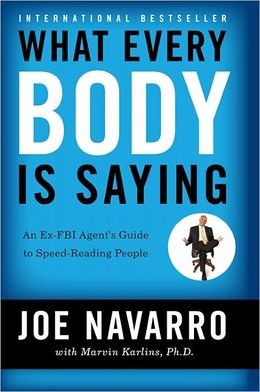
I am fascinated by body language. I often watch Tonya Reiman on the O’Reilly Factor as she analyzes body language. I have not read any of her books so cannot speak to their quality but I did read What Every Body is Saying by Joe Navarro who is an ex-FBI type and I do highly recommend it for anyone wanting to learn more on the subject. 

Some of the most interesting points were as follows:

  • The limbic brain (the emotion center) gives a true response through body language that is congruent with how we really feel. It reacts reflexively, instantly, in real time and without thought. 
  • The neocortex is the higher, thinking part of the brain and is also the least honest. 
  • Non-verbal behaviors are sometimes referred to as “tells” that disclose the person’s true state of mind.
  • What must be determined first is the subject’s baseline behavior which would include:
    • How they typically sit.
    • Where they normally place their hands.
    • Usual position of their feet.
    • Posture and common facial expressions.
    • Tilt of their heads.
    • Where they place and hold possessions.
    • Blink rate
  •   Then you look for signs of discomfort– followed by a pacifying behavior. This might be someone pursing their lips (showing discomfort) and then smoothing their palms over their legs (a pacifying gesture). 
  • In watching Tonya and reading Joe’s book– neither will say that you can 100% tell if a person is lying. What you can see is that surrounding a group of questions– the person has a lot of discomfort/pacifying behaviors and a skilled body language reader will then hone in on that area for questioning.
  • The face is the most dishonest part of they body. Think about it– from the time we are born we are taught to tell “little white lies” with a straight face. According to Joe, the feet are the most honest part of the body. So he prefers a subject to be sitting where he can observe their feet.

What about you– what do you think of the science of body language? have you ever used it in a book?

Up and Coming

This week, I’m celebrating all things Poisonous by blogging on topics related to the research I did for my recently released baby.

Here is the book trailer for your viewing pleasure.

I am a research hound at heart and I love reading a lot of non-fiction to find those fantastic little details that enrich the novel for the reader.

Also, as a celebration, I’m giving away THREE personalized copies of Poison by random drawing to commentors on this weeks posts. To be eligible, you must leave a comment that includes your e-mail address. Must also live in the USA. Drawing will take place midnight on Saturday, February 9th. Winner announced here at Redwood’s February 10th.

Also, the winner of Pioneering Today is Karen K! Congratulations Karen and I’ll be e-mailing you on how to claim your prize.

For you this week:

Monday: The Science of Body Language

Wednesday: False Memories

Friday: Toxins

Hope to see all of you dropping by and leaving comments– with e-mail addresses!

19th Century Contraception

This week I’m focusing on historical issues for authors. Today, I’m so pleased to have Catherine Richmond as she discusses 19th century contraception. I found this information really fascinating. What were the options for women during that era?

Welcome, Catherine.


In 1874 Dakota Territory, Susannah Mason’s miscarriage terrified her husband. Jesse took her to a doctor who diagnosed Susannah as too frail for childbearing, much less homesteading. With a century to go before the availability of The Pill, what contraceptive methods did the doctor prescribe?

First, he cautioned that his instructions were confidential. In fact, since the Comstock law passed the year before, mailing information about birth control had become illegal.

 So what did he recommend?

o   Abstinence. Quite a challenge in a soddy with only one bed!

o   Withdrawal. One of the least effective methods of preventing pregnancy.

o   Rhythm. Unfortunately, scientific knowledge at the time meant physicians gave incorrect information about fertility. The doctor’s recommendation actually increased the chance of pregancy.

o   Sponge. A sea sponge or a wad of cotton or wool, about the size of a green walnut or small apple, formed a barrier.

o   Douche. The recommended agent was widely-available vinegar.

o   French letter. For centuries, condoms had been used to protect against sexually transmitted diseases. Gradually their use expanded to contraception. In 1874 condoms were made of sheep intestines or rubber.


With medical advice being sparse and of questionable quality, women went to each other for guidance. Letters from the 19th century – if the descendants haven’t edited them out of the horror of discovering great-grandma knew about sex! – show wives coaching each other on use of the calendar. Mothers knew breastfeeding helped increase the time between pregancies. Women shared recipes, including one for a barrier made of boric acid and cocoa butter.

Researching 19th century contraception for Spring for Susannahwas fascinating.  And made me thankful that advances in science have made birth control safer and more reliable!

**********************************************************************

Catherine Richmond is the author of Spring for Susannah and Though Rushing Water. She supports her writing habit by working as an occupational therapist.