Author Question: Paying Medical Bills

Carrie S. Asks:

My character’s ended up in hospital a second time! This time it’s not against his will, but the question I have is about paying for his treatment. He’s just received treatment for a broken arm, and now he needs to leave. I understand that the hospital would treat him regardless of whether he could pay, but I assume they would also do their best to make sure they were paid if possible.

The situation is this: My character does not have insurance, but he can pay, thanks to a friend. However, he doesn’t have any means of payment right now. Nor does he have an address, bank account, or any way for the hospital to make sure he pays up. What would happen? Would they just let him go and hope he was honest enough to come back with the cash?
The hospital in question is non-profit, if that makes a difference.
Jordyn Says:

Wow! Your character is definitely running into some bad luck. 

The hospital would discharge him and hope he pays at some point. If seen in the ED, they may request a copay at the end of his visit (you can’t ask for copays until the patient has been seen) but if he doesn’t have the money there’s not much that can be done at that point. We don’t hold people hostage for payment–particularly the nursing staff. It will be the billing department that ultimately follows up.
It really does not make a difference if the hospital is for profit or non profit. Each requires money to keep their doors open. Most hospitals do try to work with individuals and set up payment plans for services rendered.

Up and Coming

Hello Redwood’s Fans!

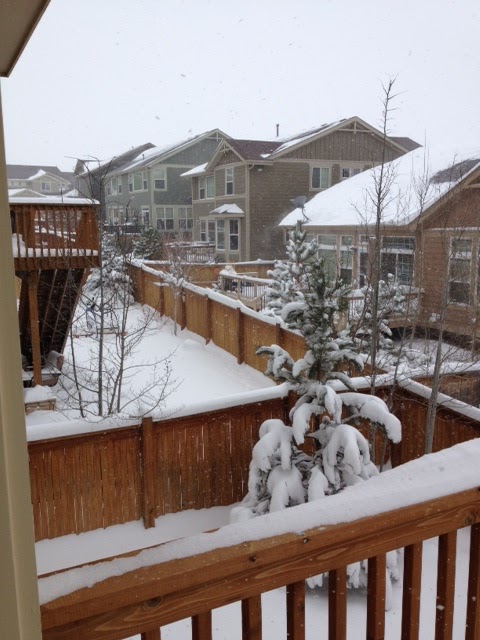
Are you enjoying spring? This is how we enjoy spring in Colorado. I know . . . you’re jealous, right? It is sooo chilly!

Currently, I’m still doing some blog tours for the release of Poison. Here are two opportunities you have to try and win it.

1. Heather Day Gilbert’s blog. She’s doing an interview and a giveaway that ends March 27th.

2. Elaine Stock’s blog Everyone’s Story. Here I share a little bit about what keeps me on this crazy writing journey in the absence of a James Patterson type paycheck. Hopefully it will encourage you as well. Drawing ends March 29th.

For you this week! I’m focusing on author questions which is always great fun for me.

Monday: Paying medical bills. I know . . . what joy!

Wednesday: Consent issues in the pediatric ER.

Forensic Friday
: Condition of a body found in water.

I hope you’ll tune in for these fabulous posts and drop by those blogs to try to win Poison!

Forensic Friday: What Happened to Kenny? Part 2


In the first part of this series on an actual death investigation, Kenny, a male corpse in various stages of decomposition, was discovered dumped in a wooded area near a Canadian west coast city on a hot summer day.
There was no immediate identification, no apparent time of death, no location where he might have died, and certainly no obvious cause of death. Even without these basics, the corpse and the scene still crawled with information. On the surface, thousands of things were going to help in narrowing down the length of time that Kenny had been there.
Insects.
Entomology is a long accepted forensic science in determining the progression of nature’s recycling program. It relies on the study of the insect life cycle; egg, larva, pupa, adult, and back to egg. Each species has a specific time frame and a collection of specimens from the scene is critical. By determining which insects were present and what stages of development they were in, you can simply count the days of production. Fortunately, two factors were in favor this day.
One is that the conditions were perfect for insect proliferation; early summer, hot and dry weather, being in a semi-shaded rural area, and having a huge supply of rotting flesh. The second was having a world renowned lady entomologist residing a phone call away at the University of British Columbia – the ‘Bug Bitch’ as she’s affectionately known in the forensic world.
The scene was held until the entomologist arrived and took samples of the insect life and surrounding vegetation. A forensic pathologist was consulted by phone but declined to attend. Contrary to popular police shows, pathologists rarely examine a body on site as there’s little they can do that the coroner and police forensic officers can’t. A common misconception is that time of death can be readily determined by a pathologist taking rectal temperature or pulling some rabbit from their hat. Absolutely not so.
A must-do was a manual search of the corpse for any identifiers; wallet with ID, jewelry, pocket contents – anything – and in Kenny’s case nothing was found. There were some apparent things for follow-up. His mummified left arm showed numerous tattoos and his teeth, very visible in the skeletonized skull, showed a large gap between the top incisors. Without a doubt, in life, Kenny would have been very recognizable when he smiled.
A scene search had been methodically conducted by a small army of police officers and two service dogs. This was done in a strict grid pattern and anything of interest was recorded on a GPS data point, then collected, catalogued as evidence, and mapped out in a computerized reconstruction. This sounds easy, but the thick woods and step terrain made the search a logistical hassle.
Compounding the challenge was that the site had been used as an unauthorized waste dump. For years, careless people had chucked stuff over this bank and it was strewn with plastics and papers, tires and tools, boards and bags and boxes. Determining what was current, what was historic, and what was relevant, was a judgment call however something of interest could be seen trapped under the body.
Remains removal is usually a matter of physically lifting the corpse and placing it in a body bag, then carrying it to a van and transporting to the morgue. In Kenny’s case – not so easy. His state of decomp was to the point of disarticulation; in other words coming apart at the joints. Now this is not the first time a rotting corpse had been transferred and a trick of the trade is to use large, plastic snow scrapers to effectively ‘team shovel’ the cadaver in one piece into a bag. Again, sounds simple, till you consider this was on an incline and the first disturbance caused a swarm flies and a reek of gassing off.
With Kenny now on his way to the morgue, a better look was taken at what had been underneath him. A white plastic bag was recovered which contained the usual garbage; 7-11 wrappers, Big Gulp cups, napkins, pop cans… and a receipt with a time and date.
This obviously had been down the bank before Kenny landed on top of it, but did it come with him? It’d eventually proved corroborative in determining Kenny’s time of death, but who was he? How’d he get here? And what or who the hell killed him?
There was a lot of science ahead. And some good ‘ol detective work.
*****************************************************************************  
Garry Rodgers has lived the life that he writes about. Now retired as a Royal Canadian Mounted Police homicide detective and forensic coroner, Garry also served as a sniper with British SAS–trained Emergency Response Teams and is a recognized expert-witness in firearms. A believer in ‘What Goes Around, Comes Around’ Garry provides free services in helping writers throughhis crime and forensic expertise. Garry’s new supernatural thriller No Witnesses To Nothing is based on a true crime story where many believe that paranormal intervention occurred. An Amazon Top 10 Bestseller, it’s available on Kindle and print on demand. You can connect with Garry via his Website: www.dyingwords.net

Lisa’s Story: Part 2/2

Today concludes Lisa’s story– a story that likely happens every day– nurses advocating on behalf of their patients to save their lives.

You can  read Part I here.

Welcome back, Lisa!

I instantly had a suspicion of what I might be dealing with and finally called the pulmonologist. Lucky for me, it was a doctor I was quite familiar with and someone I trusted. He could sense the urgency in my voice, as I relayed the information to him. And he started dictating a number of tests that he wanted done. I had to get firm with him, and finally told him to stop.

“She just returned from India 2 weeks ago, she’s been in and out of 3 hospitals and 4 urgent cares in the last 2 weeks.”
 He stopped dead in his tracks, and said, “Lisa, what do you think this is we are dealing with?”
I was shocked he asked, but I had a gut feeling. “I think she might have malaria.”
His reply was a barrage of orders and ended with a “Holy . . .”
 
“Wait,” I replied.
He stopped and asked what was wrong. I then relayed that she had taken her 2 year old daughter with her.
Here’s the thing. I had heard about malaria and we had touched on it in nursing school, but I had never seen a case of it, so I had truly no idea if that was right. His mind was racing too. This was South Carolina! We don’t see cases of malaria here. He said I needed to call the hospitalist back and make sure he told the husband to take the little girl to the children’s hospital.
I called the hospitalist back and had to argue with him on the phone. I remember as clear as day telling him that if he didn’t let the man know to get his 2 year old daughter to the hospital, her death would be on his hands not mine. I remember arguing and even cussing at him, I was so angry and he seemed to care about was that I was interrupting his 3 am sleep.
Fast forward . . .
The lady ended up being transferred to the other hospital where in fact the 2 year old had been admitted for also having a case of Malaria. The husband had not traveled with them so luckily he had not contracted it. My patient was transferred to the other hospital on her 30thbirthday. What a way to spend your birthday!

In the end, both she and her daughter were treated and were fine. But that story still warms my heart, because of my stubbornness and persistence I truly believe that I was responsible for saving not one but two precious lives.

The following day I was leaving the floor and heading home. For some reason I decided to go through the ICU to take the stairs instead of the elevator.
As I walked past the nursing station, I heard a man’s voice saying, “Are you Lisa?” I stopped to see the face of an unfamiliar doctor. “Yes, I’m Lisa.”
“The same Lisa who called me last night and chewed me a new orifice, and demanded I call Mrs.X’s husband?”
I sheepishly replied, “Uh, yeah, that was me, guilty as charged.” I said holding up my right hand in admission of being the woman who had made his night a living hell.
He bowed and said, “You may have just saved not only 2 lives, but my career.”
He reached over and kissed my hand in a bowed position with one knee on the floor. I was to say the least shocked and embarrassed. The entire ICU staff started smiling at me. I left with the biggest smile on my face and my heart filled with joy.
Those are the moments that make nursing truly worthwhile.
Shortly after this happened, have you traveled outside of the country was added to the admission forms.
Here is a link to Malaria and its signs and symptoms: http://www.ncbi.nlm.nih.gov/pubmedhealth/PMH0001646/
****************************************************************************

Lisa was born Lise Amanda Forest on November 19, 1966 in Ontario. She has 2 children, and 1 grandchild. She currently, lives in SC. Lisa speaks French and English. She graduated from College and worked as a flight attendant for a Montreal based airline. Lisa is a world traveler, having been to South America, Caribbean, and all over Europe; Lisa has been employed as an RN for the last 18 years. Lisa has moonlighted as a realtor and interior designer. Now she’s a writer and her debut novel Oracle is in editing. You can visit Lisa at her blog www.lisaforest.blogspot.com.

Lisa’s Story: Part 1/2

I wanted to share this story of a fellow comrade in arms– a nurse working in the trenches that likely, only through her efforts, did a patient not succumb to death.

There is so much of nursing that goes unnoticed. What nurses do every day. The battles we fight on behalf of patients and their families that likely are never known by those we care for.

I also like first person accounts because they allow writers to “live in someone else’s shoes” for a moment and might make writing from that person’s position much more authentic.

Part I will be today and Part II will conclude on Wednesday.

Welcome, Lisa!


I am so happy to share this story, as this is one of my favorite moments as a nurse.

I typically worked the Baylor shift of 7pm to 7am at one of the local hospitals. Even though the story I am telling you happened about 7 years ago some of the details are still so very fresh in my mind. I have always believed there are no such things as coincidences. And this story truly emphasizes that.
I had arrived to the floor, received my change of shift report and was settling in for the night.
Shortly, thereafter we got a call that a young 29 year old woman was being admitted to the floor. I had no empty beds and my co-worker was a male nurse. This young woman was brought up to the floor with an admitting diagnosis of urinary tract infection and possible respiratory alkalosis.
Immediately, the diagnosis just seemed off to me. When the woman arrived I also noticed she was from India, she felt very uncomfortable with the male nurse so I asked him to switch off with me and I would take the admission. I really didn’t understand why she was being admitted to my floor. We were the IICU, intermediate intensive care unit. We essentially took the overflow from the ICU, with the only exception that we didn’t taker arterial lines. We did everything else, from vents, to trach’s, to PICC lines, and countless drips, and we rarely got anyone under the age of 50.
At first glance the woman really didn’t seem that ill. I was rather confused by her admission to my unit. After a few questions, I returned to enter her information into the computer system. I had barely sat down and the bell was ringing. I got up and headed towards the room. I had never seen anything like it. She was ashen, diaphoretic, and trying to make her way to the bathroom due to nausea. As I reached over to help her up she felt like she was on fire. I told her to sit still. I had just checked her temperature not 15 minutes prior and it had been slightly elevated around 99.8. But this time when I checked it, it was over 103. I was shocked and terrified for this poor woman.
I helped her up to the bathroom and helped her get changed and settled her back into bed. I took a look at all the new orders, returned with some Tylenol for her and began looking at the history. Something in my gut was telling me we were missing something. I read and reread her admission paperwork trying to find a clue. I called the hospitalist on call and related my story. He essentially blew me off and said I needed to contact the pulmonologist. Before I had a chance to call, she was ringing the bell again, and this time she looked even worse. Her body was writhing all over the bed, almost convulsing and she had no control over it. I looked at her and asked a simple question.

“Have you traveled outside of the country in the last few months?”

Her reply was “yes”, she and her daughter had just returned from India 2 weeks prior.
 I looked at her, and asked, “How old is your daughter?”
The reply, “She is only 2 years old.” 
Hope you’ll join us for Part II on Wednesday to see what this patients mysterious illness is. What might your guess be?
**************************************************************************

Lisa was born Lise Amanda Forest on November 19, 1966 in Ontario. She has 2 children, and 1 grandchild. She currently, lives in SC. Lisa speaks French and English. She graduated from College and worked as a flight attendant for a Montreal based airline. Lisa is a world traveler, having been to South America, Caribbean, and all over Europe; Lisa has been employed as an RN for the last 18 years. Lisa has moonlighted as a realtor and interior designer. Now she’s a writer and her debut novel Oracle is in editing. You can visit Lisa at her blog www.lisaforest.blogspot.com.

Up and Coming

Hey Redwood’s Fans!

What are you up to this week?

Me– still working on that darn book proposal. I have read some very concerning things– oh, say– like the government (US gov.) experimenting on US citizens and that’s no conspiracy theory. I’ll be blogging about that in the future.

What’s up in your life?

For you this week:

Monday and Wednesday: ICU nurse Lisa Forest drops in to share a first hand account of how her nursing tenaciousness saved the life of a woman and her daughter. Very interesting posts and great insight into the work that nurses do every day.

Forensic Friday: We continue Kenny’s death investigation. This series is already proving to be very popular so don’t miss out on Garry’s post.

Have a GREAT week.

Jordyn

Forensic Friday: What Happened to Kenny? Part 1


Welcome to the first of a series on an actual death which I investigated; probably the most interesting of my career. What makes this case so intriguing is the wide variety of forensic and investigative methods that were used and the incredible challenge in mandating the Coroner’s duty of establishing:
Who was the deceased?
When did they die?
Where did they die?
What was the cause of death?
By what means did they die?
In Kenny’s case I had none of these answers… to start with. Let me set the scene.
One hot summer morning, on beautiful Vancouver Island in British Columbia, Canada, a cyclist was coasting downhill through a curved, thick, wooded stretch on a rural road when she caught the overpowering whiff of decaying organic matter. Stopping to investigate, she peered over a steep bank, seeing a blackened mass crawling with insects one hundred feet below. Thinking it was a deer that’d been hit by a car, she was about to leave when it occurred that deer don’t wear running shoes.
She punched her cell and, in fifteen minutes, the place was swarming with cops.
I arrived within the hour to examine the corpse. The police had the scene secured, photographed, GPS’d, and were doing perimeter grid searches with a service dog. As required by law, no one had interfered with the position nor condition of the body. The first thing that struck me was the cadaver’s bizarre condition.
Post mortem mechanisms of body breakdown are fairly predictable and uniform. There is a long recognized scientific process of ‘Mortis’ or changes in composition. It starts with ‘Palor Mortis’ which is a color difference once oxygenated blood stops flowing. ‘Algor Mortis’ comes next – the cooling of temperature which heads towards an equilibrium of the surroundings. ‘Rigor Mortis’ occurs within a few hours. It’s the stiffening of muscle tissue caused by an enzyme change. ‘Livor Mortis’, or lividity, is the gravitational settling of blood which creates a distinctive pattern on the lower sections and pressure points. ‘Putrefaction’ is the breaking down of tissue and the gassing off which creates the horrible smell associated with rotting meat. ‘Decompositon’ is lengthier and leads to the finality of ‘Skeletonization’ or ‘Mummification’.
In Kenny’s case, everything was going on here. He was supine, or lying on his back, with his left arm folded across his chest and his right positioned under his torso. Both legs were outstretched with his buttocks lodged against a large stump, preventing him from descending further down the hillside. Kenny’s face was gone, exposing a grotesque sneer like something from Pirates Of The Carribean, but the back of his scalp was intact holding a long mess of light brown hair. His only clothes were a baggy T-shirt, athletic shorts, and a pair of brand-new, unlaced Nike runners.
Kenny was The Body-Farm’s poster boy. His skull was a combination of skeletonization and putrefaction. His anterior (front) torso was in decomposition, but his posterior (rear) still showed lividity with minor rigor present in the neck and shoulders. Algor was at scene temperature and palor was all over the place. Curiously, his left arm and hand had mummified, right ones were decomposing, his exposed legs – from thighs to ankles – were only bones, but his feet were perfectly preserved inside the rubber shoes. To compound matters, Kenney was a mess of maggots and a swirl of flies.
There was one clear culprit at work. Heat.
But a variance in heat.
Kenny was lying on a north downslope, positioned parallel to the summer sun’s high east-to-west path. There were rows of evergreens between Kenny and the openness of the upper road which created a picket-fence effect, letting direct sun exposure at different times on different body parts. Full sun had been most prevalent on his center which mummified the arm/hand, but the shield of his shirt trapped in torso moisture, allowing a normal decomposition. His pelvis had been semi-shaded, though his legs had full sun, resulting in skeletonized bone. Kenny’s face was also obliterated by sun exposure and the quicker breakdown of the sun-beaten areas was exacerbated by insects who found the softer tissue easier to feed on.
So all I had was an apparent male found deceased in a very suspicious manner, as if killed somewhere else and dumped off this roadside. But who was he? When did he die? Where did he die? What caused his death? What were the means? Was the classification a homicide? An accident? Suicide? Natural cause? It was also apparent he’d been there for a considerable time. How long?
Time would tell.
This was the start of a long, complex investigation before I found out what happened to Kenny.
************************************************************************

Garry Rodgers has lived the life that he writes about. Now retired as a Royal Canadian Mounted Police homicide detective and forensic coroner, Garry also served as a sniper with British SAS–trained Emergency Response Teams and is a recognized expert-witness in firearms. A believer in ‘What Goes Around, Comes Around’ Garry provides free services in helping writers throughhis crime and forensic expertise. Garry’s new supernatural thriller No Witnesses To Nothing is based on a true crime story where many believe that paranormal intervention occurred. An Amazon Top 10 Bestseller, it’s available on Kindle and print on demand. You can connect with Garry via his Website: www.dyingwords.net

Near Death Experiences: A Paramedic’s Perspective

I’m pleased to host Tim Casey as he shares some of his patient experiences with near death.

Welcome, Tim!

Over my 30 plus years as a firefighter/paramedic I witnessed many souls depart this world, but also had the privilege to participate in the resuscitation of hundreds of patients. I developed a habit over the years of asking the previously lifeless about what they had experienced while dead.

As I was generally the very first face they saw upon rejoining the living, once I knew their physical well being was stable, I would simply ask them what they experienced. Some had a story and some had no memory of what had happened.

But first let me take you through the process of resuscitation in the field as a paramedic. We generally had advanced notice from our dispatch center that we were responding to a possible cardiac arrest, and a description of what was happening at the scene we were approaching. We would be advised if CPR had been initiated and if the patient was believed to be pulseless and not breathing (apneic).
This gave us time to mentally prepare for what procedures would be needed to begin as soon as we arrived. If in fact we found a dead human being defined as a person not breathing and without a heartbeat, the first thing to do is determine if there was any kind of heart rhythm we could treat. The patient was attached to a cardiac monitor to access what kind of electrical activity was occurring with the heart.
There are many heart rhythms that we can treat with electricity, but one quick note; we don’t shock what is colloquially known as a flatline. This rhythm is asystole and no amount of electricity will convert this rhythm back to a functional heartbeat. If a treatable rhythm is present we will “shock” the patient and in successful cases (cardio version) this will bring the heart beat back to a functional condition.

Many other things can happen following this first procedure including intubation of the airway, administration of drugs to assist life and other supportive care. Not all patients regain consciousness but in the rare case they did and they were not intubated, I felt compelled to question them about their experience.

Almost all these cases occurred in the back of an ambulance while transporting the patient emergent (lights and siren) to the hospital. I only had a handful of cognitive patients that could talk to me and describe what had happened.
All were profoundly at peace and their former life threatening condition seemed to become more stable. I must add a quick note, when I was on scene with a conscious patient that was on the verge of a heart attack but had not yet become unconscious; one of my primary questions was if the person felt an impending sense of doom. All said they did. They knew on a base level deep within themselves that their life was about to slip away.
The patients that had survived and regained consciousness had lost that feeling of doom. There was a noticeable change I could see right before my eyes. Now was this due to the treatment I had administered? The drugs and electricity that I had applied to a lifeless body?
I was told by these people it was not because of my efforts, it was in fact they felt that they had been sent back by someone or something. Many had complete memory of the whole event including what I had said. I always talked to my patients and encouraged them to help me, to stay alive. A common phrase in emergency medicine is this, “The last thing to go is the hearing.” and my experiences confirmed this for me.
On one occasion in a remote location where the ambulance was very far away I had the experience of resuscitating a gentleman in his bedroom. My engine crew was with me but because of his improved condition I had asked them to gather equipment to prepackage the patient for transport.
The gentleman and I were alone for a few moments. He had changed from ghostly white soaked in sweat to pink and dry, he smiled and thanked me. I had to ask.
“Did you see anything while you were gone?”
“I don’t believe I was gone. I was here. I watched you.” He said. “But there was another person here with us. I guess you could say, not a person, but God I believe. He told me it wasn’t my time and said I had to go back.”
“Did you see Him?” I was very excited.
“Not really, more felt Him, felt surrounded by Him I guess I would call it.” 
“And then what?” I asked.
“And then I was looking at you.” He said.
These experiences gave me a sense of my own spirituality. Maybe I wasn’t such a big deal as a paramedic after all. Maybe it was all predetermined and out of my hands. Or maybe God worked through me. Either way I guess I will never know until it is my time.
*********************************************************************

Tim Casey is a retired firefighter/paramedic with more than 30 years on the streets caring for the sick and injured. He has also written a memoir: Dangers, Toils, and Snares: Confessions of a Firefighter which has been number one on Amazon in the Kindle Store many times. Tim now
is a full time author and his new book on how to date a firefighter will be out later this year,

Cardiac Arrest in EMS Field: Dianna Benson, EMT

Dianna Benson writes a compelling first person account of a young woman in cardiac arrest.

Dianna’s debut novel, The Hidden Son, debuts this coming March. Hope you’ll check it out.

Welcome back, Dianna!

Our station buzzer and waist radios go off at midnight.

EMS 8. Cardiac arrest. Terminal C, near gate 34.
My partner and I rub the sleep from our eyes and restart our brains.
On scene in a near empty airport terminal, a middle-aged woman waves us toward her. Four airport security officers appear relieved by our arrival. All four scramble away from the unconscious patient’s side as I radio for firefighter assistance.  
“Help my daughter, please,” the woman begin a panic. “She just fainted.”
The daughter appears to be in her early twenties. “Ma’am?” I saytouching her shoulder.
Unresponsive. I feel her carotid artery. Pulseless.

I begin chest compressions. “Does she have any health issues? Allergies?” I ask the mother.

“No, she cries out. “Nothing.”
My partner presses defibrillator pads to our patient’s chest—one under her right clavicle, the other on her side over her left lower ribs.
“What was she doing when she collapsed?” I ask the mother as I continue non-stop chest compressions.
“Walking to our gate.” The mother pants several quick breaths. “We’re catching the red eye to Paris. Help her. Please. She’s only twenty-four.”
I swallow the sadness clogging my throat. God, please give this mother strength.
The cardiac monitor assesses the heart rhythm. The wave pattern displays on the screen, and I interpret it. “Pulseless ventricular fibrillation,” I tell my partner as he whips out our IV kit.
We defibrillate the patient. A small crowd gathers near us as two firefighters arrive on scene to help us.
“Take over compressions,” I say to the two males, and one of them does so, as my partner drills a hole into our patient’s shin for intraosseous access, the preferred and more effective route over intravenous in cardiac arrest.
I dig into our airway bag for an airway adjunct, an oxygen tank, and a BVM—bag valve mask. Iinsert the oropharyngeal airway down the patient’s throat and connect the BVM to an oxygen line to oxygenate our patient.
Bag her,” I say to the other firefighter, and he grabs the BVM from my hand.
I whip out our med box and spike a bag, as my partner finishes the IO (intraosseous) line. We push 1mg epinephrine and 40 unit vasopressin into the line; the firefighters continue with chest compressions and bagging.
I prick the patient’s finger and a run a BGL—blood glucose level—for possible hypoglycemia.“Does she take any medications?” I ask the mother for information as well as to engage her in hopes of keeping her calm. “87 BGL,” I say, telling my partner it’s at a normal level.
“No, she doesn’t,” the mother wails out, tears covering her face. “Why isn’t she waking up?” she screams, pulling on the jacket of the firefighter bagging the patient.
“Ma’am?” I gain her direct eye contact. “Let us do our job, okay? We’re here to help your daughter.
“Yes. Sorry.” She releases her grip on the firefighter and backs up. “Not my girl,” she cries out. “Not my Hannah. God, take me instead.”
Ma’am, take some deep breaths and keep on praying.”
She nods at me with the saddest smile I’ll never forget.
I check Hannah’s pulse. Carotid pulse still absent.
We repeat defibrillation then resume chest compressions and bagging. We add 300mg of Amiodarone to the line. Then sodium bicarbonate.
“I took a first aid class,” some male in the near distance says. “Do you want my help?”
“No, we’re good,” I answer loud enough for wherever he is to hear.
We start another line, this one IV in the left arm, and run cold fluids in it.
“Hey, you could use my help,” that male voice again says, although this time he sounds ticked.
“Sir?” One of the security officers rushes behind me. I hear scrambling. “Move on your way.”
“I’m trying to help.”
“That’s kind of you, but they’ve got it. Please walk on.”
A hand yanks on my shirt collar at the back of my neck. I squirm forward from it with no luck, but stay focused on the care of my patient.
“Let go of her. Now.” The grip on me releases. I hear more scrambling behind me.
“Hey. Hey. Hey.” The chaos behind me fads out.  
I apply new defib pads. We repeat defibrillation then resume chest compressions and bagging.
I check the carotid. Still no sign of life.
We add magnesium sulfate to the IO line. We push another 1mg of epinephrine and 150mg of Amiodarone. Then doses of Procainamide and Metroprolol.
We work the code for over twenty minutes, to no avail. I’m thinking Hannah possibly suffered acidosis, hyperkalemia or cardiac tamponade, or maybe she overdosed on some drugs. Maybe she has an undiagnosed heart condition.
“Astyole,” my partner says while viewing the monitor screen.
What does that mean?” the mother wails out. “That’s bad? There’s only one straight line thingon the screen over there.”
“Keep praying,” I tell the mother.
“Let’s inject Narcan,” I say to my partner, thinking it could be some kind of overdose.
“You’re on my brain wave,” My partner says about the med I suggested.
We inject Narcan into the line. Unfortunately, a minute later there’s no change in the patient’s lifeless condition, and typically an overdose patient will jerk to life in seconds.  
“How about some Atropine?” my partner says, and I nod, reaching for the medication.
We continue to push additional med dosages and work the full code as the two firefighters continue with bagging and chest compressionsneither nor my partner willing to call it.
Not yet.
I can’t yet let Hannah go, and the mother isn’t ready for it.

*****************************************************************

Dianna T. Benson is a 2011 Genesis Winner, a 2011 Genesis double Semi-Finalist, a 2010 Daphne de Maurier Finalist, and a 2007 Golden Palm Finalist. In 2012, she signed a nine-book contract with Ellechor Publishing House. Her first book, The Hidden Son, released in print world-wide March 1, 2013.

After majoring in communications and a ten-year career as a travel agent, Dianna left the travel industry to earn her EMS degree. An EMT and a Haz-Mat and FEMA Operative since 2005, she loves the adrenaline rush of responding to medical emergencies and helping people in need. Her suspense novels about adventurous characters thrown into tremendous circumstances provide readers with a similar kind of rush. Dianna lives in North Carolina with her husband and their three athletic children. Learn more about Dianna at www.diannatbenson.com.

<!–[if !mso]>st1\:*{behavior:url(#ieooui) } <![endif]–>

Up and Coming

Hello Redwood’s Fans!

How has your week been. Me— working on a new book proposal. Anyone know of any great medical mysteries? It’s pretty sad when I’m reading and am familiar with most. I want something unusual and preferably genetically fatal– so if you have any ideas . . .

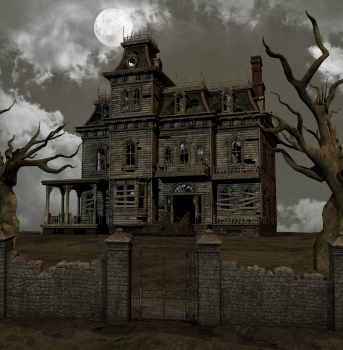
On top of that– I need a setting. Any setting. I like creepy houses but I don’t think it’s a good setting for a trilogy– being confined to one place either. So– what’s your favorite setting? 

For you this week:

Monday: Author/EMS expert Dianna Benson is back to give a first hand account of cardiac arrest in the field.

Wednesday: Firefighter/Paramedic Tim Casey shares some of his patients’ experiences with near death.

Forensic Friday: Garry Rodgers is back starting a multi-part series on a true life death investigation. These posts are fascinating and I know you’ll enjoy.

Have a great week.

Jordyn