A Miracle in the Desert

I’m so pleased to host Dr. David Carnahan who will be blogging every month or so here at Redwood’s. To introduce him, he’s doing a three-part series on the Widow Maker— and I’m not talking black spiders…

Part I about why this medical condition is so deadly can be found here.

Welcome back, David!

“I need to make you aware of a situation.” The Intensive Care Unit Director, Dr. Thomas Winfield, said as he entered my office. “We have an American contractor in the ICU who is having a large anterior wall MI.”

I heard the words “widow maker” in the back of my mind because those were the words used when I learned an anterior wall myocardial infarction was the worst kind to have. “What’s his name?”


“Richard Hall. He showed up at the clinic and collapsed. The ambulance got him to the ER and they started coding him there. We don’t know how long he was down, but we’ve coded him four times since he’s been in the ICU.”


It was here that the ICU director and I were thinking the same thoughts. Will he be a vegetable when he wakes up? If, he wakes up. We could save the heart, but lose the mind.


“Have you called about a special mission?”


He anticipated my question and before I finished it, he said. “They can’t make it until after midnight.”


I shook my head. In the Iraqi desert, all we could do was give him medicine to bust the clot up and wait for transportation to fly him to Germany, but in the states we would send this man to the Cardiac Cath Lab where he would get a state-of-the-art stent.


“I don’t think he’ll make it twelve hours and if he does ….”


I nodded. “It’s too early to call it.”


“We’ll keep coding him.”


Dr. Winfield and I returned to the ICU and saw Dr. Baur running through the advanced cardiac life support (ACLS) algorithms. The team was tense, but composed. When the patient recovered, Dr. Bauer put her card in her pocket. “Great job everybody.” She gave us a weary look as we approached her.


“What was he in?” Winfield asked.


“V tach.” Ventricular Tachycardia is when the bottom two chambers of the heart start going faster than usual and if prolonged is incompatible with life.


“How many times have you coded him?” I asked.


“I’m losing count. He seems to be coding about every twenty minutes.”


“Have you talked with his friends? Does he have family?”


Dr. Bauer looked to Dr. Winfield, who said, “I’ve told his coworkers he’s probably not going to make it. They told me he has a brother who they’re trying to reach.”


“Dr. Bauer,” a strained voice from the patient’s bed called out. “He’s coding again.”


The ACLS dance began again. I turned to the group waiting outside the ICU. I needed to have a discussion with them myself. As I approached, the expressions on their faces said everything. He was more than a co-worker; he was a brother. Thousands of miles from home, tons of sand and the threats of a combat zone will do that.


“I’m Dr. Carnahan. Who’s Mr. Hall’s supervisor?”


“I am,” said a stocky man with a mustache and goatee. He extended his right hand. “Tim Williams.”


“Mr. Williams,” I said as I lowered my voice to a respectful hush, “it doesn’t look good.” He nodded as did the others crowding around him. “We’ve coded him about five or six times in the short time we’ve had him.”


“Doc, we appreciate everything you’re doing.”


I met his eyes. “I just want you to know that the next plane to Germany probably won’t be able to get here for another twelve hours.” They looked at me, trying to find the meaning in this kernel of information. “I don’t think he’ll make it that long.”


Then, their expressions dropped.

Stay tuned… the remainder will post Friday.


*******************************************************************************

Dr. David Carnahan is a Board Certified Internist, who fell in love with writing while getting his Masters Degree in Epidemiology at the University of Pennsylvania. He has served in the Air Force for the past 14 years as an academic clinician/educator and now works in the area of Healthcare Informatics. He has a wonderful wife and two beautiful daughters, and invites you to read about his life (www.dhcarnahan.blogspot.com), and weekly installments of his current work in progress, The Perfect Flaw (www.theperfectflaw.com).

The Rogue Medical Character

The dream of getting published has been a long one for me. And today, that day, has arrived! The day I’ve longed wished came true.

To celebrate, anyone who leaves a comment on my blog during this weeks posts will be eligible to win a free copy! I’ll also be drawing from my followers/subscribers lists as well. So, plenty of places for you to win. Drawing cutoff will be Sunday, June 3rd. Winners announced Tuesday, June 5th. To claim, you must e-mail me with your info so definitely check the June 5th post. Must live in the USA.

Then, there’s always where real life and dream life meet in some sort of fantastic collision. What you expected is far from what happens. Both good things and bad things.

Mostly good things.

Running a medical blog for authors is a great source of fun. But even I’m not a medical expert in all areas. My first novel, has an OB physician as a major character. Now, I have never been an OB nurse nor do I have any desire to be. That’s why I had other specialists review my novel to make sure everything was authentic and not just the part that I knew about.

The best medical expert to get to review your work is someone actively working in the area currently. These are the experts I sought out and through that process I learned some important lessons that I’d thought I’d share here.

If your novel has some heavy medical aspects, it is best to have it reviewed by someone who works the area. I recently reviewed a manuscript for someone who was writing about diabetes. The character was newly diagnosed and she had done some research to try and determine what the treatment would be. Let me give some kudos here and say she was close. But close is like not scoring a touchdown when you’re on the one yard line. Wrong route giving insulin. Hanging clipboards at the end of the bed (which is not done anymore people!!) and not providing for rehydration which is the #1 therapy for DKA. It’s the little details that will trip you up.

People don’t want their profession to be disparaged. Now, as a writer, I understand characters needing to do bad things for the sake of the plot. So, how do you handle a medical person gone bad without people practicing in that profession lighting your manuscript on fire?

I recently read a contest entry where the author had two nurses doing very bad things to a patient. Even the “bad” nurses I know would never do the things these nurses were doing– very demeaning things.

Here is how I’ve determined the best way to handle the issue. You must have one character in the profession in the scene who points out the bad behavior and shows how the real medical person is going to act. It’s the seasoned charge nurse that comes into the room and dresses down the two horrible nurses. Now, beauty of this, adds conflict! Particularly if the patient is awake (which in real life should never happen in front of a patient.)

It’s okay to have bad, rogue, medical person as long as another character in the story is pointing it out. Then, the reader will know you know what you’re writing about.

What do you think? How do you handle rogue characters without people in that profession being offended?

Black Market Trade of Human Body Parts

This week my debut novel, Proof, releases!

To celebrate, anyone who leaves a comment on my blog during this weeks posts will be eligible to win a free copy! I’ll also be drawing from my followers/subscribers lists as well. So, plenty of places for you to win. Drawing cutoff will be Sunday, June 3rd. Winners announced Tuesday, June 5th. To claim, you must e-mail me with your info so definitely check the June 5th post. Must live in the USA.

Welcome back , Bette!

It’s RN Gina Mazzio’s wedding eve. She answers the week’s final OB/Gyn advice call and a deadly serious voice says, “She’s all cut up.”

That single telephone call ignites a series of irreversible events, and instead of marriage and a honeymoon, Gina is plunged into the dangerous, illicit trade in human body parts.
Illicit trade in human body parts?
Gimme a break! That could only happen in fiction. Right?

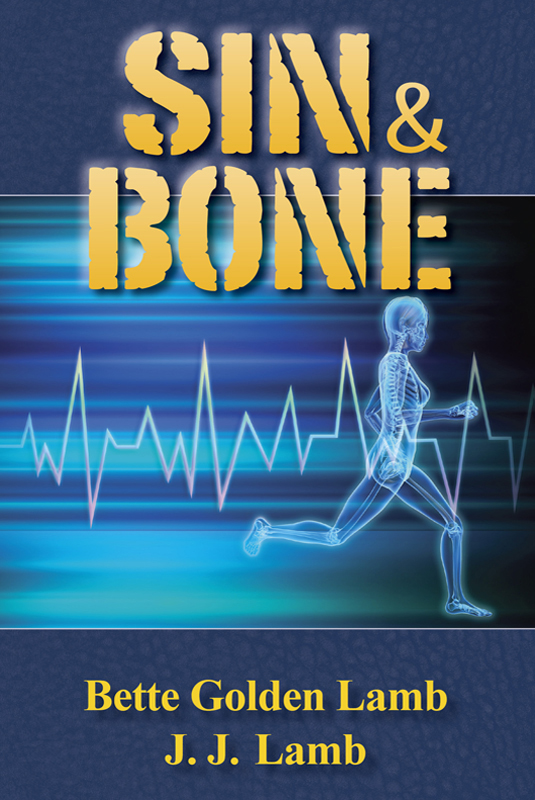
Although the new medical thriller, Sin & Bone, by J. J. Lamb & Bette Golden Lamb, is fiction, this second book in the RN Gina Mazzio series, is steeped in a reality that most of us never think about.

Can some black-market creep (or shall I say entrepreneur?) steal your body and make an unbelievable profit in untraceable cash?  They can and they do. It’s all a matter of supply and demand. When it comes to body parts, the demand is sky-rocketing. A lot of people are stepping up to the plate and they’re out for the money. Legal or not.
So, yes, there’s a huge black market trade in human body parts.
Who are these people who work in this international illegal industry?  The ones who obtain, prepare, carve up, and sell bodies for profit?
Unethical doctors, dentists, drop-out medical students, funeral parlor owners and/or employees, and, of course, the mafia probably has a hand in it, too. But really anyone with a decent knowledge of anatomy can figure out how to take advantage of this dubious opportunity. After all, it’s easier to cut and paste without a live patient screaming at you to stop.
Most of us think of heart or vital organ transplants when we talk about harvesting the human body. But the black market makes your whole body even more valuable when it’s picked apart and divided into many pieces. Corpses are disjointed, dissected, sold, and distributed from the US and other countries around the globe.
Did I say there was money in it?  It’s huge. Teeth, nails, eyes, connective tissue, bone of every variety – leg, arm , knee cap — and there’re fingers and toes, ligaments, heart values – and on and on. They’re all valuable and vital even though illegal replacements are implanted without ruling out any of the dangerous diseases they might carry with them. Bacteria and viruses will be passed on to the receiver without a second thought.
Our brave new world, with its medical and pharmaceutical advances, has now created an environment where it’s possible to replace sick or dying organs. Though it’s still a dangerous experience we have learned how to do it — and so have the body-snatchers.
Living forever?
Does all this replacement of body parts take us down the road to immortality? Well, yes. The only fly in the ointment? We are short of all the viscera to replace all that we need to keep going.
Will there ever be enough affordable replacements to go around?  I don’t think so. And what kind of money are we talking about anyway? How much does it cost to save someone’s life?
It varies from place to place, but here are some ballpark figures: Lung, $50,000, liver, $40,000, heart, $60,000, kidney, $20,000.
Why not go the legal route? Use your insurance company to pay for the procedure, that is, if you have insurance. After all, it’s the safest, most ethical, disease-free way to go
Watch a few TV medical dramas, or listen to the news, or read your newspaper, or tap into your I Pad media app and it won’t take long to find an answer: You could die long before you even got near to the top of the waiting list. Also, I’m a cynic, but I think people with money and influence will get to the top of those critical lists while you hover somewhere around the bottom.
So without being one to throw the first stone, I understand those who investigate illegal pathways to stay alive. I really get it!
 Few of us are ever ready for that final void.

Here are some real life links of current instances:

http://www.slate.com/articles/life/faithbased/2009/07/organ_failure.html

http://www.usatoday.com/money/2006-04-26-body-parts-cover-usat_x.htm

http://www.unicef.org/mozambique/pt/Liga_Mocambicana_dos_Direitos_Humanos_Trafficking_Body_Parts_in_Mozambique_and_South_Africa__2008.pdf

***********************************************************************

Bette Golden Lamb is unmistakably from the Bronx – probably why she likes to write thrillers. When she isn’t writing crime novels, you can find her in her studio playing with clay. Her artistic creations appear in juried regional, national, and international exhibitions. She sells through galleries, associations, and stores. She’s also an RN, which explains, Bone Dry, a medical thriller, and Heir Today, an adventure/thriller which also has a medical aspect to it. And just released at Amazon .com, Sister in Silence, a medical thriller about barren women — available as an ebook or trade paperback. Both books were co-authored with husband J.J. Lamb. You can learn more about Bette here:

Pacifiers: Detrimental or Beneficial?

I’m so pleased to have Tanya Cunningham back as she discusses another popular medical myth– or is it? Do pacifiers cause difficulty with breastfeeding.

I think it’s important on a couple of levels for an author dealing with these issues to be aware of both sides. A seasoned, nursing professional keeping up with research is going to know this information. Our responsibility as nurses is not to sway the patient to our belief (though, of course this does happen) but to present unbiased information to the family so they can make the decision that best suits their needs.

Welcome back, Tanya!

Pacifiers have long been vilified as major disruptors between infants and successful breastfeeding. Have they been given a bum rap, or are the accusations substantiated? Is it actually true that pacifiers
interfere with breastfeeding? If you asked me this a few months ago, I’d say, “It depends.”

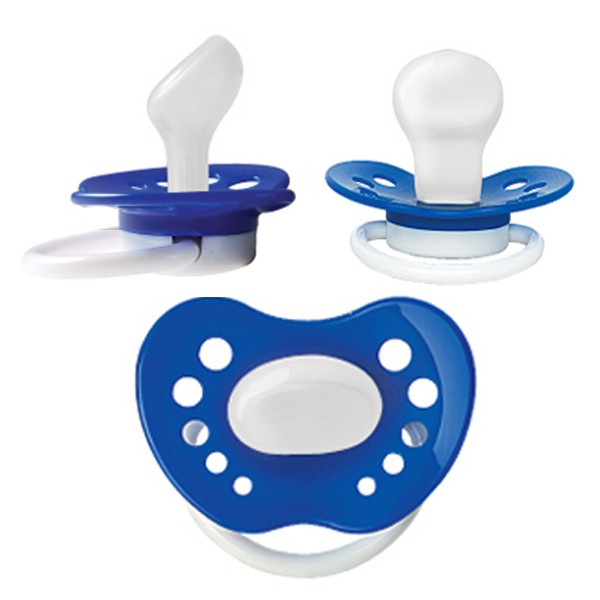
Being a postpartum mother/baby nurse, I want all my patients who endeavor to breastfeed to be as successful as possible. I would discourage pacifier use if the mother had “flatter” or “inverted” tissue. However if her anatomy were similar to the pacifier (everted and firm), the risk of “nipple confusion,” I felt, was decreased.

I would relay my own experience with my two children, who I had breastfed for a year each. I had used pacifiers with them, but only if they were fussy and needed to suck for soothing. Then when they were calm, I’d take it away, not letting the pacifier, “just hang out” in their mouths. Neither of them used pacifiers beyond a couple to a few months old.

In medicine and healthcare, we want our practice to be evidence or researched based. If we do or recommend something, it’s because it has been proven by research studies. Do you feel like medical recommendations are always changing? You’re right. In medicine, we are always learning and growing.

With new research, established ideas can be challenged, sometimes causing us to cringe, but forcing us to grow. In researching for this blog post I found intriguing newer evidence concerning pacifier use that I’m excited to share with you.

In 2011, the American Academy of Pediatrics updated its recommendations regarding the prevention of sudden infant death syndrome or SIDS. Interestingly enough, among the updates was offering a pacifier at nap time and bedtime. According to an article by Medscape Education entitled, “AAP Statement Expands SIDS Guidelines on Safe Sleeping Environment,” it doesn’t matter if the pacifier falls out of the baby’s mouth during sleep. “The protective effect persists throughout the sleep period,” states the article. The reason for this isn’t known as of now, but the evidence is there.

At the end of April this year, the Today Show ran a segment on pacifiers actually promoting breastfeeding. Are you thoroughly confused now? The story spoke on how the Oregon Health & Science University Doernbecher Children’s Hospital, in seeking to become a UNICEF and WHO

(World Health Organization) Baby Friendly Hospital locked up their pacifiers. This was to be in compliance with the WHO’s “Ten Steps to Successful Breastfeeding.” On the Today website you’ll find a post by Corey Binns who reports that the hospital’s exclusive breastfeeding rate dropped from 80% to 70% after easy access to pacifiers was blocked. The hospital performed an observational study of 2,249 babies from June of 2010 to August of 2011.

This study raises questions instead of answers for me. Are health care workers doing new mothers a favor by locking up pacifiers? Is practicing the suck reflex between feedings promoting breastfeeding in newborns? The truth is more research needs to be done. What do we do in the mean time? I think the only thing I can do is tell new mothers what I know, the current idea of pacifiers causing “nipple confusion” may not be true, the AAP now recommends pacifier use during sleeping times to reduce the risk of SIDS, and newer research may actually show benefits of pacifier use in relation to successful breastfeeding. The new mother can consider the newer evidence with a grain of salt, pending corroborating studies, and make an informed decision on what’s best for her and her newborn. 

Each mother and baby are unique and what is true for one pair may not be true for another. If you’re

a new mother reading this, and you’re now not sure what to do, use your mommy instincts. Trial and
error is a natural process in motherhood. Decide for yourself if using a pacifier for your little one is detrimental or beneficial.

***********************************************************************
Tanya Cunningham is a mother/baby RN and lives in Missouri with her husband and two small children. She has been caring for mothers and their newborns for almost four years, before which she was a RN in the USAF. During that time, Tanya worked on a multipurpose inpatient unit for two and a half years (taking care of ortho, neuro, medical, general surgical, and tele) and a family practice residency clinic for a year and a half. Tanya earned her BSN at Oral Roberts University.
Tanya has been writing children’s stories for almost 2 years now and is working towards being published. She enjoys raising her children, cooking, and reading medical suspense/mysteries, especially those in Christian Fiction. You can find out more about Tanya by visiting her website.

Historical Treatment of Epilepsy

Jorydn, thanks for hosting me today!

I’d love to give away a paperback copy and an electronic copy of The Homesteader’s Sweetheart to two of the people who comment. Jordyn will draw names Friday the 4th at midnight and announce the winner Satuday, April 5th!

Also, in honor of my birthday this month, I’m doing a special promotion for the book release. Check it out at www.megamaybirthdaybash.com. Jordyn here: I am happy to say I am part of the Mega May Birthday Bash as well so if you’re interested in a couple of free chapters of Proof and a chance to win the novel– I’ll be there!!
What would you be willing to do, how far would you be willing to go to get your child the medical treatment they need?

That was the question I started with when writing The Homesteader’s Sweetheart.

I knew that the hero’s daughter would have some kind of health issue. Her health would be a pivotal part of the book for the hero, who needs money to get her the treatment she needs. Based on the research I did, I gave her a childhood form of epilepsy.

In 1890, there was really only one accepted drug to treat epilepsy: bromide. The side-effects of this drug are described as “considerable” and are listed as sedation, depression, skin rashes, and gastro-intestinal distress. So basically your choices were to suffer the seizures or live in a state of half-awareness. Thankfully, it seems that seizure-controlling drugs have come a long way since then and are able to help a lot of people.

Another suggestion for managing epilepsy in 1890 was to lead a more sedentary life—a lot of resting and relaxing. But for Jonas’s five-year-old, a precocious little girl who wants to follow her older brothers around, that’s not an option either.

And so the hero of my story has a desperate need to raise funds for a (fictional) experimental treatment for his daughter. And he will do anything to get that money, to get his daughter the treatment.

Having kids of my own, I have a lot of empathy toward my hero. I hate it when my kids even get a little sniffle, so I know that dealing with something like this can definitely make you feel powerless and desperate to do anything to help.

Here’s a short excerpt from The Homesteader’s Sweetheart. This is a scene where Breanna (the daughter) is suffering a seizure and the heroine, Penny, realizes that the hero has a lot more on his plate than she thought.

An hour passed without a word spoken between them. Breanna woke up. She seemed quieter, more reserved, and this seemed to worry Jonas, if the crease on his brow was any indication. He insisted they stop awhile under a clump of trees. Sam roused, too, though he remained taciturn and kept to himself. They ate a small picnic in the limited shade from the wagon before continuing on their way.

Breanna did not chatter this time. Penny idly wondered if the trip was a mistake—she already missed conversing with her friends from town.

The summer sun made her drowsy, and she was half-dreaming about her father forcing her down the aisle to meet Mr. Abbott when a startled exclamation from Jonas roused her.

“Breanna? Do you feel ill?”

Breanna did not answer, but Penny turned in time to see the little girl collapse into the wagon.

Suddenly, the placid, quiet man next to Penny leapt into action.

“Whoa!” He pulled back on the reins and set the brake as the wagon rolled to a stop. Instantly, he scooped Breanna into his arms from her prone position in the wagon and maneuvered himself off the bench seat.

Breanna appeared to be shaking. She hadn’t seemed sick at all this morning…

Alarmed by the girl’s pallor, Penny blurted, “What can I do to help?”

Sam jumped from the back of the wagon, shaking his head as if he’d been drowsing, too. “What’s wrong?”

“Jonas?” Penny questioned again, forgoing propriety.

Jonas ignored Sam as he settled the girl in the small patch of shade cast by the wagon itself. He spoke to Penny instead. “Can you get the canteen? It’s under the bench there. And find a piece of fabric to wet her face?”

She reached for the canteen tucked under the bench seat and hiked up her skirts before stepping down on top of the wagon wheel to dismount. As she pulled her other leg from the wagon, her boot slipped on the smooth wheel and she tumbled to the ground, knocking her chin on the way down. She ended up sprawled inelegantly on her backside, the canteen rolling away.

And face-to-face—albeit across the wagon—with Jonas. He was gentleman enough not to laugh at her. He only grunted, “You all right?”

She chose not to reply, instead reaching underneath her gown and ripping off a piece of her petticoat. She stood and rushed around the wagon to join Jonas kneeling near Breanna in the soft spring grasses.

The girl lay on her side, her entire body convulsing.

“Will she be all right?” Penny asked, voice breathless from her fall and the suddenness of Breanna’s episode.

“Yes, in a bit.” Jonas did not look away from Breanna’s face. He’d loosened the neck of her dress and Penny caught sight of the girl’s undergarment, so worn it appeared gray.


Thanks Lacy for this great post! Looking forward to participating in your Birthday Bash!


Lacy also did a great series here at Redwood’s Medical Edge last July on historical medicine. You can find them here: Part I, Part II, Part III, PartIV.
*****************************************************************************

As a child, Lacy Williams wanted to become a veterinarian “when she grew up”. However, the sight of blood often made her squeamish so she gave up that dream before her teen years. As a college student, Lacy was a physical therapy major for approximately two weeks—until she found out she’d have to take a cadaver lab to complete that degree plan. As a writer, Lacy has finally found a way she can handle blood and gore—fictionally.
A wife and mom from Oklahoma, Lacy is a member of the American Christian Fiction Writers and is active in her local chapter, including a mentorship program she helped to start. She writes to give her readers happily-ever-afters guaranteed and mostly reads the end of the book first. You can find out more about Lacy at her website www.lacywilliams.net. She is also active on Facebook (www.facebook.com/lacywilliamsbooks) and Twitter (www.twitter.com/lacy_williams).

The Art of Poultice Making

Author Jillian Kent stops by today for a little medical assistant with a question for all of you. What do you know about poultices?
I write historical romantic suspense. I love the history of all things medical and try to incorporate them into my novels. However, I’m no expert when it comes to knowing all that much about the poultice. I’ve been looking around the internet and I’ve found a few interesting sites. Here’s one that will give you a description. http://www.healing-from-home-remedies.com/make-a-poultice.html

is that the instructor uses the mortar and pestle that was used during the Regency but the types and styles are many and although I have no idea when the first mortar and pestle came into use I’m thinking possibly Egyptian times. Anyone know?

I used what knowledge I gained in Chameleon, book two of The Ravensmoore Chronicles and now I’m researching more material for book three which I have to turn in on June first so I’m just a little nervous. It’ll all come together.

If you are an expert on the making of a poultice during the Regency era, please jump in here and help me out. I’m especially fond of learning how to make a poultice for wounds, something that will help with infection yet not burn or irritate the skin.

Now, I’m also intrigued with alternative medicine, acupressure, acupuncture, herbs, etc. but I better save that for another time. So if you’ve ever used a poultice I want to know. If you’ve put the use of a poultice in your books please share and if you actually know a bit about using the poultice during the Regency please jump in and share your knowledge. I’m wondering what type of cloth they would have used and how they got the poultice to remain in place.

Thanks Jordyn for letting me visit. I love it here.

Asthma: Part 2/2– Emergency Treatment

Last post, we discussed generally the disease of asthma. Today, I’m going to focus on emergency treatment.

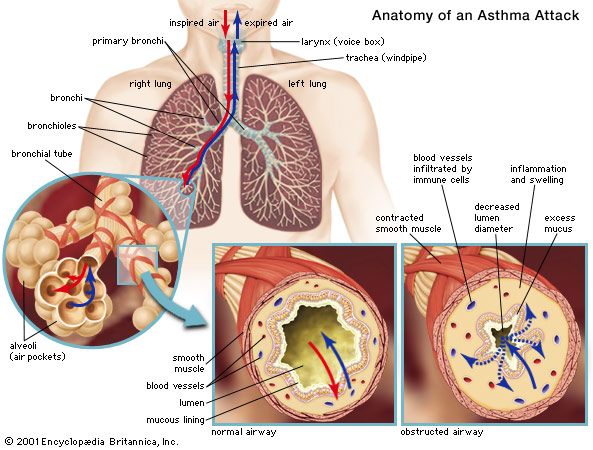
The three major problems with asthma are the airway constriction, the inflammation and the mucous production.

Therapy is targeted at reversing these issues.

Treatment starts as follows:

1. Connect the patient to the monitor, determine baseline oxygen level. Normal oxygen saturation is 90-100%. Anything less than 90% is considered hypoxic. If the patient’s oxygen saturation level is less than 90% then they should be placed on oxygen. Now, there are some caveats to this but for your novel, this should suffice.

Shay0885/Photobucket

 2. Give breathing treatments. Generally, Albuterol and Atrovent are given together in three back to back nebulizer treatments. This is a medication that is inhaled. Both act to relax the tightened muscles around the airways to ease breathing.

3. Give steroids. This targets the inflammatory response. Most often these are given orally in the form of a syrup (for the little ones) or pills if the patient can swallow. If unable to swallow, then it is given IV.

4. Keep the patient hydrated. This will help clear mucous. The thinner mucous is, the easier it is to cough up.

That’s basic treatment. Now, if the patient doesn’t improve with the above treatment then we will go further. Often times, we will place them on a continuous Albuterol nebulizer. There are also medications that can be given intravenously (IV) to relax the smooth muscle of the airways as well.

Remember, Albuterol is a stimulant. It will be normal for the patient’s heart rate to be elevated and for them to feel quite jittery. These are expected side effects of the medication and it is helpful to explain this to the family.

Asthma pearl: Doctors try very hard not to place an asthma patient on a breathing machine and it is generally considered a last resort to keep the patient from dying. This is a different viewpoint in treating a lot of different medical conditions because generally early intubation is preferred to stabilize the patient.

In respect to asthma, the endotracheal tube (ETT– the thing they stick in your throat) aggravates everything we are trying to reverse. The ETT can cause bronchospasm and increased secretions. Remember, the problem is air trapping. When a patient is on a ventilator– breaths are pushed into the patient via the machine (positive pressure ventilation). This can lead to more air being trapped in the lungs which puts the patient at risk for pneumothorax (which is when the lung get a hole in it and deflates). These patients are ususally medically paralyzed and sedated so their breathing can be totally controlled by the machine.

Have you written an ER scene with an asthmatic in distress presenting as a patient?

Asthma: Part 1/2

Recently, I did an overview of diabetes. Here are the links to Part I and Part II. As authors, I think it’s good to have a general understanding of the major illnesses so you have a background of whether or not you’d like to afflict your character with it.

Asthma AKA reactive airway disease. Generally, when we think about respiratory disorders, we divide them between the upper and lower part of the respiratory system. The division between the two is generally your larynx or voice box. Upper airway disorders are things such as croup, foreign body, and epiglotitis. Disorders of the lower airway are asthma, bronchiolitis and pneumonia.

There are several things happening in the lowers airways during an asthma attack. There is constriction of the airway as well as inflammation and increased mucous production. It’s easier for air to get in than to get out.

Symptoms of asthma can include some or all of the following: Difficulty breathing, wheezing, coughing, low oxygen levels, air hunger, tripod positioning, and pale or blue lips.

In pediatrics, there is reluctance to diagnose asthma under the age of three years. So, even if a child presents with multiple episodes of wheezing, they are likely to be diagnosed as having “reactive airway disease” until they are older and their clinical picture becomes more clear.

The other thing to keep in mind is that all wheezing is not asthma. An upper airway issue can lead to wheezing in the chest. These sounds are deferred. Think a balloon that is stretched to the point where it squeaks as air passes through the tight opening. This can happen in the lungs as well if the larger upper airways are having a problem.

Sometimes, an infection in the lungs (either viral or bacterial) can also lead to wheezing and we will target this wheezing with asthma like therapies. It doesn’t mean the person will end up with asthma. It is possible it was just a symptom related to their illness.

However, if the patient develops a picture of wheezing consistently with every viral illness– then an asthma diagnosis becomes more probable as viral illnesses can be a trigger for the disease.

Next post: Emergency Treatment of Asthma.

Do you have a character that suffers from asthma in your ms?