Trauma Call/Domestic Violence: Dianna T. Benson, EMT

I am pleased to welcome back award-winning novelist Dianna T. Benson. I love how she writes these scenes fictionally but conveys a host of medical details along with it. 

Welcome back, Dianna!
EMS 6, Stabbing, TAC Channel 12”
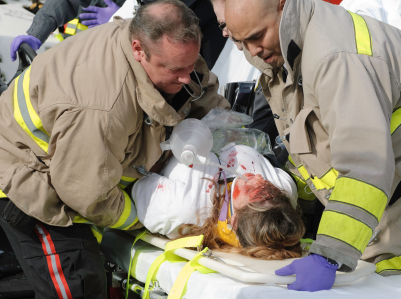
     Responding to a domestic disturbance call, my partner and I park our ambulance in front of an upscale home over a million dollars. Not atypical – EMS is too often called out to the rich on domestic violence.
     “Did you know the power company turns off this zip code for lack of pay more than any other in the state?” I ask my new partner.
     “Yep. Idiots living beyond their means. No wonder they’re so stressed out and hurt each other.”
     At the front door, we join a fire crew, as three cops enter the house, all three with weapons drawn.
     “Scene isn’t safe?” I ask.
     “Not sure,” the last cop answers then trails his two buddies.
     The fire crew of four hangs back with me and my partner.  
     “Was the door unlocked?”
     “Yup,” one of the firefighters answers me.
     After five long and boring minutes of standing around on the lawn in the dark of night, I radio in to dispatch. “EMS 6. Standing by outside residence. Any updates from PD on scene?”
     “Yes. Scene is secure. PD is with victim.”
     “Copy that.” I roll the front of our loaded stretcher into the house.
     In the family room, I find one officer bent over a body, the other two talking with an agitated man.
     I kneel at the woman’s other side. She’s supine on the carpet, her lapped hands pressed to her lower abdomen and covered in blood.
     “Ma’am?” I touch her shoulder in comfort.
     My patient blinks at me then flutters her eyes closed.
     “Can you tell me your name?”
     “Judy,” she whispered in a pained voice.
     I brush my hand over hers. “Judy, are you hurt anywhere other than here?”
     “Don’t know,” she mumbles.
     “Judy?” I stare into her eyes, mascara smudged underneath them. “Can you move your arms down at your sides?”
     She does.
     My partner hands me trauma scissors, a stack of 5X9 sterile gauze pads, and an occlusive dressing. As I rip open the gauze packages, my partner hooks up the patient to our cardiac monitor and focuses on assessing and monitoring vital signs.  
     “How can I help?” one of the firefighters asks me.
     “Perform a rapid trauma assessment.”
     “You got it.” He starts at the head.
     With the trauma scissors, I cut Judy’s shirt, exposing the wound. Noting no debris other than blood, I cover the gushing horizontal wound—thin but long—with one sterile gauze pad after another, and apply direct pressure with my palms. “Did a knife do this, Judy?”
     “He did.”
     “With a knife?”
     “Steak knife.”
     “I see nothing else,” the firefighter informs me at the patient’s feet.
     I nod. “Thanks.”
     I glance at the monitor screen for Judy’s vital signs. Her heart rhythm is normal, but her blood pressure is too low, pulse too high, indicating she’s headed to shock due to blood loss. My guess is she’s bleeding internally, the knife blade sliced an organ or two, maybe the abdominal aorta. Regardless of what’s injury, she needs a surgical team.
     I look at my partner. “We gotta go. Now.” 
       
     “Give me the switchblade,” one of the cops says, alarm in his tone. “Sir, you’re just making things worse for yourself.”  
     “Past time to go,” I whisper to my partner, a rush of panic clogging my throat.
     “No kidding,” he whispers back, wide-eyed.
     “Get out of here,” one of the cops says to us.
     “What’d you say to them?” the agitated man shouts.
     “You don’t want a murder charge, do you? The EMS crew needs to get her to the hospital.”

     The cops deal with the perpetrator, as my partner readies the stretcher. I blanket the dozen or so bloody gauze pads with a towel.
     Inside the moving ambulance, I raise the foot of the stretcher to treat for shock. I cover Judy’s mouth and nose with a non-rebreather oxygen mask and turn on the O2 to 15 lpm. Since none of her organs eviscerated, I do not apply an occlusive dressing. Instead, I add additional 5X9s and a fresh towel and instruct the one firefighter who joined us en route to press his hands over it for direct pressure. I insert an IV saline bolus and consider administering morphine or fentanyl for pain.
  
     “More cops dispatched to scene,” my partner yells back from the driver’s seat. “Guy stabbed one of the cops and fled the scene on foot.”
     I look down at my patient. She doesn’t indicate she heard those disturbing words.
  
     “We’re ten minutes out,” my partner yells back at me.
     I pick up the radio. “Wake Med ED, this is EMS 6.”
     “Go ahead EMS 6.”
     “We are enroute with a thirty-eight year old female. Left lower quadrant adnominal stab wound. No evisceration. BP 82 over 56. Heart rate 173. Non-rebreather at 15 liters per minute. Legs elevated for shock treatment. Place OR on stand by. ETA 10 minutes.”
     “See you in 10. Wake Med out.”
     “EMS 6 out.”  
**********************************************************************
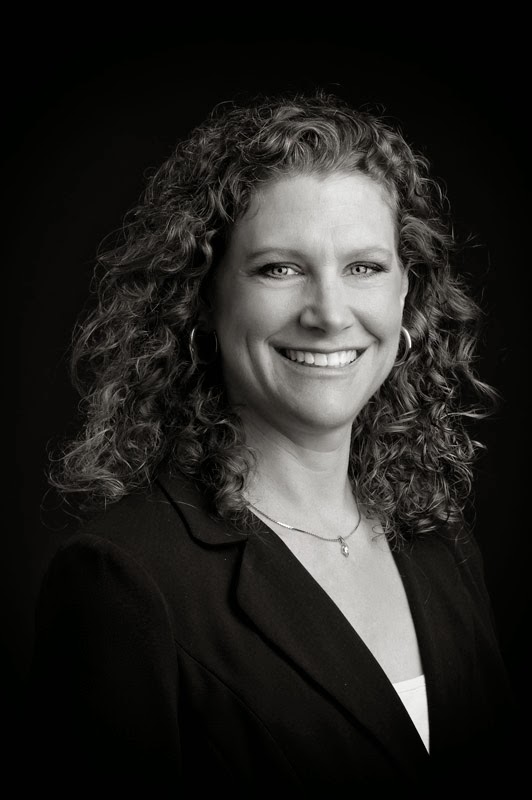
Dianna Torscher Benson is a 2014 Selah Award Winner, a 2011 Genesis Winner, a 2011 Genesis double Semi-Finalist, a 2010 Daphne de Maurier Finalist, and a 2007 Golden Palm Finalist. In 2012, she signed a nine-book contract with Ellechor Publishing House. She’s the author of The Hidden Son, her debut novel. Final Trimester is her second release. After majoring in communications and a ten-year career as a travel agent, Dianna left the travel industry to earn her EMS degree. An EMT and a Haz-Mat and FEMA Operative since 2005, she loves the adrenaline rush of responding to medical emergencies and helping people in need. Dianna lives in North Carolina with her husband and their three children. You can connect with Dianna via her website.


Dianna T. Benson: A Son’s Tale of Traumatic Brain Injury


The term concussion is well known. The medical field refers to a concussion as a TBI – Traumatic Brain Injury. Contact sports are one of the top causes of a TBI, another are MVCs – Motor Vehicle Collisions.
My teenaged son has endured four concussions. The first two as a goalie for the Junior Hurricanes and the third in a MVC. The first one took him out of school for a month and hockey for three months. The second, a year later, was more mild, which is unusual. Typically, a patient suffers a more severe TBI the second time. In the MVC, a classmate was driving them to school when another car struck them. This third TBI ended my son’s hockey career, preventing him from attending the Junior Hockey draft in Canada Spring of 2013.
The problem wasn’t simply that this was his third concussion, although that in itself is a strong reason to end a contact sport career. With this third TBI, a neurologist evaluated him versus just the concussion clinic MDs who’d treated him with the first two. Not only was it his third TBI, but his symptoms were extremely severe, which didn’t make sense to me – the details of the MVC didn’t suggest such injuries for my son: 1) None of the others involved in the crash suffered any injuries 2) No air bags deployed 3) Vehicle damage was minor. As an EMT for nearly a decade, I wondered about underlining health conditions in my son. I also considered he had not fully recovered from the first two concussions and was in denial about his symptoms in order to play hockey.
Sure enough, the neurologist diagnosed my son with hyper-mobile joints (something I already knew but wasn’t aware of the danger with contact sports.) The MD also diagnosed him with mild CP (cerebral palsy), a diagnosis that made sense to me since my son was born in respiratory arrest and was non-verbal and had spasticity until over age two. Both diagnosis are a recipe for injury, especially in contact sports. The MD gently told my son he was done playing goalie forever – it was devastating and crushed him. Understanding his hockey career was over, he admitted he’d ignored symptoms because he had a shot to play Junior Hockey, college hockey, and possibly professional hockey. A life-long athletic competitor myself, I completely understood the denial that led him to ignore his body.
Hyper-mobile joints, while creating an incredibly athletic body, are highly susceptible to any musculoskeletal injury in that individual. For my son, after two TBIs in a contact sport, his hyper-mobile neck was easily and severely whip-lashed in the MVC, jostling his brain fiercely, causing all his concussion symptoms to return and more heightened than ever.
Ten months after the car accident, the fourth TBI occurred December 2013 just days after the neurologist cleared my son to return to his life minus contact sports. The neurologist gave my son the green light to snowboard. That December day on the mountain, my son didn’t even hit his head and he sustained no head trauma – simply snowboarding jostled his brain enough to cause another TBI.   
Even though he’s extremely athletic, my son’s body shouldn’t do what it can to do. The risk of permanent brain damage and partial or full paralysis is too high for him– something he now understands. I described it to him as this: When Cam Ward (the goalie for the NHL team Carolina Hurricanes) is playing goalie, his body is naturally like a SUV of protection in a MVC. Whereas, for my son, his body is like a motorcycle in a MVC – no protection.
Until Spring 2015, my son is restricted from doing anything with speed, wheels, height or repetition (basically everything fun.) This next year his brain will heal, then little by little he can attempt things (no contact sports ever, though) to see how his body responds. At 6’7” in height and extremely athletic, he appears a medically sound seventeen-year-old, but inside his body tells a different story. 


God works in amazing ways and this is my son’s blessing. Since cerebral palsy only affects motor function, and none of the four TBIs caused him any loss of cognitive abilities, he’s still as annoyingly brilliant as ever and is anxious to head off to college this fall. For now, his goal is to graduate medical school with a degree in neurology and become a neurosurgeon since he feels (understandably so) he can relate to patients’ symptoms with head trauma. 
***********************************************************************


 Dianna Torscher Benson is a 2014 Selah Award Finalist (winners not yet announced), a 2011 Genesis Winner, a 2011 Genesis double Semi-Finalist, a 2010 Daphne de Maurier Finalist, and a 2007 Golden Palm Finalist. In 2012, she signed a nine-book contract with Ellechor Publishing House. She’s the author of The Hidden Son, her debut novel. Final Trimester is her second release.
After majoring in communications and a ten-year career as a travel agent, Dianna left the travel industry to earn her EMS degree. An EMT and a Haz-Mat and FEMA Operative since 2005, she loves the adrenaline rush of responding to medical emergencies and helping people in need.
Dianna lives in North Carolina with her husband and their three children. 
Her releases are available wherever books are sold. Below are the links to Final Trimester at the three largest booksellers:


Medical Critique: James Patterson’s Kill Alex Cross 1/2

I am a James Patterson fan. I’ve restricted myself lately to the Alex Cross and Michael Bennett novels.

I just finished Kill Alex Cross. You can read my Goodreads review of the novel here.

This post is to discuss the medical aspects of the novel and what I find suspect. Come on, James. Hire me as your medical consultant– I think– no I know you can probably afford me.

In this post we’ll deal with a male adult that is involved in a motor vehicle collision. The character was driving a van at a high rate of speed and took a header into a bus.

Initial treatment of the victim was good. Jaws of life. C-collar in place. Suspicion of drug use based on dilated pupils– specifically PCP which is an accurate bodily response.

All good until this line: “The van driver was out on a gurney now, hooked up to a nasogastric tube and IV.”

Anyone know what is wrong with this sentence?

Simply put, EMS is never going to put down a nasogastric tube.  Are paramedics trained to do the procedure? Yes. Have they ever in the field? Not that I’ve seen in twenty years of specialized nursing.

Now– a flight team on a long transport– maybe.

An nasogastric tube (or NG tube) runs from your nose to your mouth. It is used to drain/vent secretions and air from the stomach. If the stomach is retaining a lot of these things– it can impact on the patient’s ability to breath. A secondary use is as a feeding tube though there are many more comfortable styles (like a cor pak which is thin and flexible but doesn’t drain well.)

All this sounds very good for the patient, right? Why not put one in in the field?

One– patient priority is different in the field than in the hospital. It’s basically secure the airway, breathing and circulation and get on your way . . . fast. Placing an NG would simply slow down scene time and they can be difficult to place.

Impacted Nurse

There are also contraindications to an NG tube placement. One is a basilar skull fracture. We all have bones that line the base of our skull. If these are broken– there can be a direct conduit from your nose into your brain. Signs of basillar skull fracture are misshapen face, fluids (blood and serous drainage) leaking from the ears and nose. Mid face fractures.

That’s what we don’t want– an NG tube in the brain. Yes, it can happen as evidenced by the photo that comes from this article which discusses just such a case.

Really, James, call me. 

Fall Call: Dianna Benson, EMT


<!–[if !mso]>st1\:*{behavior:url(#ieooui) } <![endif]–>
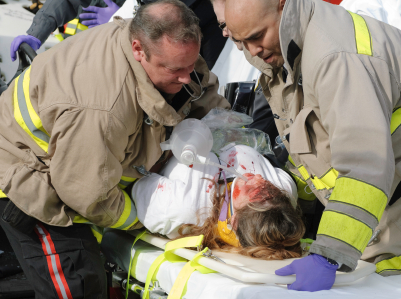
I love these posts from author and EMS expert Dianna Benson where she weaves medical detail into a fictional piece. 
Welcome back, Dianna!
I shake my head to full awake from my cat-nap, and gear up for the trauma call less than a minute drive away. Once my partner and I roll on scene, I note the three cop cars arriving.
Additional information regarding the call flashes across our ambulance laptop screen.
Proceed with caution. Law enforcement dispatched.
“What’s the deal?” my partner yells out the driver window at a cop rushing toward the building.
“Another worker pushed the guy.”
“Ah,” I say with a nod. “Attempted homicide.”
“Or homicide, but if the guy’s not already dead, he’s gonna need us.” My partner jumps out of our ambulance.
We grab a C-collar (cervical collar) and a backboard, and toss it onto our stretcher already loaded with EMS equipment and supplies.
“Remember caution?” I remind my partner.
“Yeah, yeah. Guy was pushed not shot or stabbed. Let’s go.”
I really didn’t want to hang back either. Our patient’s life may be over if we wait.
Inside the building, we push through a crowd of gawkers. I notice three cops drawing their guns at a man choke-holding some young woman, her wide eyes glossed-over.
“Let her go,” the cop at the left yells out. “Now.”
I’m hoping the guy follows the demand or we’ll have more than one patient. As I rest my hand on my radio in case I need to request additional EMS crews, I scan the area for an injured man on the ground. I spot our patient on the other side lying supine and lifeless in a pool of blood on the cement, his attacker in the middle and blocking us from our patient. I glance up and see the catwalk and assume our patient was pushed off of the suspended walkway about twenty feet above.  
The guy fell twenty feet? I think to myself.  If he’s alive over there, he’s in critical condition.
“Clear out,” the cop to the right shouts. “Everyone. Out of this room. Now.”
The crowd scampers away. My partner and I hold our position behind the cops. The perpetrator doesn’t have a weapon, so there’s no danger to us.
After a few drawn-out minutes of the cops warning the perp to let the woman go, and our patient remaining lifeless and out of my reach on the ground in the near distance, I somehow dig up my most gentle tone and interject, “Sir, I don’t think you want to hurt her. Do you?”
The perp jerks his head in my direction. Ten seconds tick by with him just staring at me as if pleading me to help him out of this. “Ah…no. No, not really.”
“I didn’t think so. How about letting her go and we’ll talk?” Stop blocking me from my patient. If he’s not already dead, he needs me now. Needed me minutes ago.
 “Talk? Yeah, yeah,” he nods, “I just need to talk.” Chest panting, arms shaking, the perpetrator shoves the woman aside and drops on the ground. All three cops pounce on him and drag his arms behind his back.
I roll the front of the stretcher around the chaos on the ground; my partner pushes from the back. As I pass the perp, I ignore his insistent yells to talk with me since my focus is on my patient.
“Sir?” I say to the lifeless man as we approach him.
No answer. No movement of any kind.
I slide my fingers to his neck and find a thready carotid pulse. His chest is rising and falling in steady rhythm bi-laterally.
My partner holds his head in an in-line spinal stabilization position as I strap the C-collar around his neck. I slip a towel underneath his head for hemorrhage control and feel for trauma. I find an open skull wound, crepitus bone, and flesh.
Two firefighters appear at our side and assist me with log rolling the unconscious patient onto a spine board and strapping his body down. I secure the man’s c-collared head to the backboard with head blocks, straps and tape, allowing my partner to finally release the manual c-spine stabilization.  
“What do you need from me?” some guy asks. “I’m his supervisor.”
“How old is he?”
The manger answers that pertinent question as well as all my others, as I connect my patient to our cardiac monitor. Less than a minute later, I’ve assessed all vital signs and the heart rhythm, as my partner performs a rapid trauma examination. Our patient remains unconscious. I’m thinking internal bleeding is the main cause and he’s headed to hypovolemic shock, and if that’s the case, surgical interventions are vital. No more time to waste on scene.
“Femur fracture,” my partner says.
“Among other things,” I say. “Let’s go.”
All of us lift the backboarded man onto the stretcher, and roll it out to my ambulance.
As one of the firefighters drive, my partner and I attend to our trauma patient in the back with the assistance of another firefighter. Our patient remains unconscious. In order to protect his airway, I slide a lubricated oropharyngeal airway down his throat. With a curved laryngoscope, I lift the epiglottis and gain a visual of the glottic opening and white vocal cords. I drop the orotrachael tube between the cords, down the trachea. I connect a bag valve mask over the tube opening. To keep him oxygenated, I squeeze the football-size bulb every five seconds.  
“Take over bagging,” I say to the firefighter, and he grabs the bag valve mask from my hands.  
I spike an IV bag as my partner slides in an eighteen-gauge IV needle into our patients left arm. Since the patient is unconscious, there’s no point to administer pain meds.
I grab the radio mic. “Wake Med ED, this is EMS 16.”
“Go ahead EMS 16.”
“We are en route with a thirty-three year old male. Trauma patient. Twenty-foot plus fall onto concrete. Unconscious. Intubated. Open head trauma posterior. Fractured femur.  Normal sinus cardiac rhythm. BP 95/52 and falling. 182 heart rate. ETA 5 minutes.
Even if this man’s body survives, his brain will probably never be the same. I swallow the sadness clogging my throat, hoping he doesn’t have any children, and I re-focus on finishing my job on this trauma call.
*************************************************************************
 

Dianna T. Benson is a 2011 Genesis Winner, a 2011 Genesis double Semi-Finalist, a 2010 Daphne de Maurier Finalist, and a 2007 Golden Palm Finalist. In 2012, she signed a nine-book contract with Ellechor Publishing House. Her first book, The Hidden Son, released in print world-wide March 1, 2013. 

After majoring in communications and a ten-year career as a travel agent, Dianna left the travel industry to earn her EMS degree. An EMT and a Haz-Mat and FEMA Operative since 2005, she loves the adrenaline rush of responding to medical emergencies and helping people in need. Her suspense novels about adventurous characters thrown into tremendous circumstances provide readers with a similar kind of rush. Dianna lives in North Carolina with her husband and their three athletic children. Learn more about Dianna at www.diannatbenson.com.

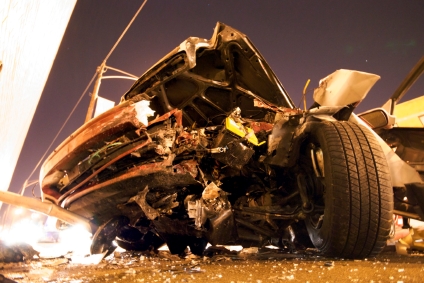
Author Question: Treatment of Car Accident Victims


Taylor asks the following regarding treatment of multiple victims of a car accident. 
SCENARIO: Serious MVC involving two cars and multiple victims. All passengers were wearing seatbelts, and airbags deployed, but the crash was serious enough that victims are still severely injured.
Jordyn: When writing about the car crash—I’d have it be pretty visual that the car is near ruin. Particularly if someone has died on scene. Having the car rollover several times would accomplish this.

Taylor: Three girls (friends) were in one car together, on the way to a Christian concert. Drunk driver character had an argument with his wife about his drinking, denying that he has a drinking problem, then got angry, left the house and went out for drinks (doing the very thing they just argued about, partly to spite her and partly “to calm down”). He causes a crash with the girls.
CAR ONE: This vehicle contains only the driver.
DRIVER:The driver is a male in his early thirties. He is slumped forward in his seat, initially unresponsive, but rouses when medics address him. There is a strong smell of alcohol on his breath, and although he is responsive, he is displaying obvious signs that he is intoxicated. Upon seeing the crash scene in front of him, he becomes upset, crying and saying things like, “I didn’t mean to”, “My wife is going to kill me”, and “What have I done?” He has a bleeding laceration on his forehead and minor scrapes and bruises on his face (from the impact of the crash and airbags), and bruising from his seatbelt. Aside from these, he is uninjured. Vital signs are elevated, but within normal limits.
Jordyn: This patient would be placed in C-spine precautions. An IV/fluids started. Usually, when EMS starts an IV—they’ll grab several tubes of blood that the hospital can send to the lab. They’ll dress the laceration on his forehead and not likely worry about the minor cuts and scrapes. Whenever there is seatbelt bruising, we always worry about what would be injured underneath.
In the ER: Since he’s intoxicated, he’s not a reliable informant about his pain. So, he’ll get automatic C-spine films to rule out neck/back fracture. They might even consider a CT of his chest and abdomen (they’ll take vital signs into consideration). Law enforcement will be involved and they’ll want blood alcohol levels and if your book is in a specific/real location—I would figure out what the procedure is in that town/city. After major stuff is ruled out—his cuts will be cleaned. The laceration to his forehead would be irrigated and stitched. Tetanus shot if none in the last five years. Once he’s medically cleared, I’m guessing he would be off to jail.
CAR TWO:This vehicle contains a driver and two passengers.
DRIVER:The driver is a female, age 18. She has no detectable pulse or respirations. Apparent DOA, killed on impact in the crash.
Jordyn: She may be declared dead at the scene. That would probably be the easiest way to manage this patient.
PASSENGER ONE:Female, age 17. Managed to free herself from the car after the crash, and is sitting in the grass a short distance away. She is displaying signs of shock. Respirations are slightly shallow and rapid, skin is pale and clammy, and pulse and heart rate are elevated but still within normal limits. She is mostly responsive, but groggy/drowsy and complaining of severe headache, nausea, and dizziness. Chest and neck are bruised from her seatbelt, and she has several other bruises and superficial bleeding cuts on her body. Her right arm is bruised, swollen, and oddly angled, and she is cradling it against her chest and complaining of pain.
Jordyn: Since she is shocky, she’ll get an IV/fluids and tubes drawn for labs at the ER. Considering the mechanism of injury (the fact that one of the occupants of the crash has died) she’ll be placed in C-spine precautions as well. All surviving patients (including the drunk) will also be give oxygen (as it is treatment for shock as well). Her arm will be splinted in a position of comfort. It’s hard to know if they would give her pain medication or not—her c/o of headache, nausea and dizziness could signify head injury and giving a narcotic could complicate that assessment. So, she may just have to tough it out until she’s in the ED.
ER: Vital signs. X-rays of neck, back and deformed arm. Possible CT of the head, chest and abdomen. Often times, deformed extremities need to be reduced either in the OR or can be done under conscious sedation while in the ED. Depends on how you want to go. This patient may be able to go home if her arm can be set in the ED and no other significant injuries are noted.

PASSENGER TWO:Female, age 17. Pinned in her seat inside the car, unable to free herself. Conscious and responsive, but clearly very frightened, and displaying signs of shock. She is complaining of some pain in her neck, numbness and lack of sensation below the waist, and inability to feel or move her legs. Chest and neck are bruised from her seatbelt, and she also has several bruises and cuts on her face, arms, and legs. There is a large, deep bleeding laceration on her right lower leg.
Jordyn: Same: C-spine/back board. IV, fluids, oxygen. Get blood for labs. Laceration of right lower leg will be bandaged to control bleeding. 

ED: Largest concern for this patient is her sign of C-spine injury. So, not only would she get C-spine films. She’ll likely get CT of her neck, spine, chest and abdomen. Probably would x-ray the leg with the laceration to look for foreign bodies before closing it up. Stuff like the leg laceration can wait until a medical game plan is decided upon after they figure out what her neck injury is.

Near Death Experiences: A Paramedic’s Perspective

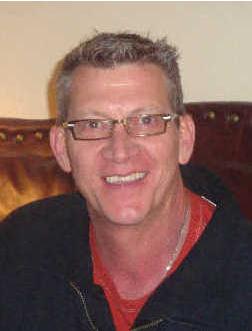
I’m pleased to host Tim Casey as he shares some of his patient experiences with near death.

Welcome, Tim!

Over my 30 plus years as a firefighter/paramedic I witnessed many souls depart this world, but also had the privilege to participate in the resuscitation of hundreds of patients. I developed a habit over the years of asking the previously lifeless about what they had experienced while dead.

As I was generally the very first face they saw upon rejoining the living, once I knew their physical well being was stable, I would simply ask them what they experienced. Some had a story and some had no memory of what had happened.

But first let me take you through the process of resuscitation in the field as a paramedic. We generally had advanced notice from our dispatch center that we were responding to a possible cardiac arrest, and a description of what was happening at the scene we were approaching. We would be advised if CPR had been initiated and if the patient was believed to be pulseless and not breathing (apneic).
This gave us time to mentally prepare for what procedures would be needed to begin as soon as we arrived. If in fact we found a dead human being defined as a person not breathing and without a heartbeat, the first thing to do is determine if there was any kind of heart rhythm we could treat. The patient was attached to a cardiac monitor to access what kind of electrical activity was occurring with the heart.
There are many heart rhythms that we can treat with electricity, but one quick note; we don’t shock what is colloquially known as a flatline. This rhythm is asystole and no amount of electricity will convert this rhythm back to a functional heartbeat. If a treatable rhythm is present we will “shock” the patient and in successful cases (cardio version) this will bring the heart beat back to a functional condition.

Many other things can happen following this first procedure including intubation of the airway, administration of drugs to assist life and other supportive care. Not all patients regain consciousness but in the rare case they did and they were not intubated, I felt compelled to question them about their experience.

Almost all these cases occurred in the back of an ambulance while transporting the patient emergent (lights and siren) to the hospital. I only had a handful of cognitive patients that could talk to me and describe what had happened.
All were profoundly at peace and their former life threatening condition seemed to become more stable. I must add a quick note, when I was on scene with a conscious patient that was on the verge of a heart attack but had not yet become unconscious; one of my primary questions was if the person felt an impending sense of doom. All said they did. They knew on a base level deep within themselves that their life was about to slip away.
The patients that had survived and regained consciousness had lost that feeling of doom. There was a noticeable change I could see right before my eyes. Now was this due to the treatment I had administered? The drugs and electricity that I had applied to a lifeless body?
I was told by these people it was not because of my efforts, it was in fact they felt that they had been sent back by someone or something. Many had complete memory of the whole event including what I had said. I always talked to my patients and encouraged them to help me, to stay alive. A common phrase in emergency medicine is this, “The last thing to go is the hearing.” and my experiences confirmed this for me.
On one occasion in a remote location where the ambulance was very far away I had the experience of resuscitating a gentleman in his bedroom. My engine crew was with me but because of his improved condition I had asked them to gather equipment to prepackage the patient for transport.
The gentleman and I were alone for a few moments. He had changed from ghostly white soaked in sweat to pink and dry, he smiled and thanked me. I had to ask.
“Did you see anything while you were gone?”
“I don’t believe I was gone. I was here. I watched you.” He said. “But there was another person here with us. I guess you could say, not a person, but God I believe. He told me it wasn’t my time and said I had to go back.”
“Did you see Him?” I was very excited.
“Not really, more felt Him, felt surrounded by Him I guess I would call it.” 
“And then what?” I asked.
“And then I was looking at you.” He said.
These experiences gave me a sense of my own spirituality. Maybe I wasn’t such a big deal as a paramedic after all. Maybe it was all predetermined and out of my hands. Or maybe God worked through me. Either way I guess I will never know until it is my time.
*********************************************************************

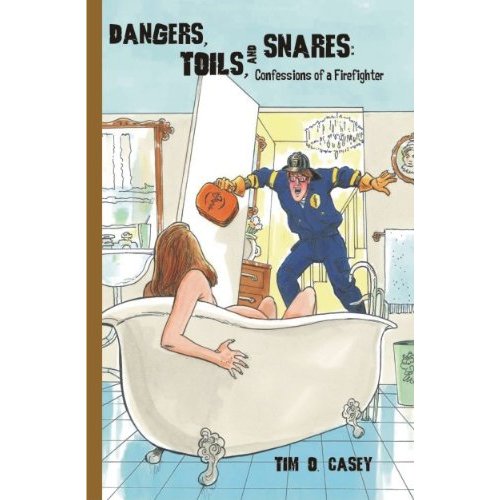
Tim Casey is a retired firefighter/paramedic with more than 30 years on the streets caring for the sick and injured. He has also written a memoir: Dangers, Toils, and Snares: Confessions of a Firefighter which has been number one on Amazon in the Kindle Store many times. Tim now
is a full time author and his new book on how to date a firefighter will be out later this year,

Gun Shot Wound: Dianna Benson, EMT

EMS expert and author Dianna Benson blogs today writing a first person account of caring for a gunshot wound victim. I love how she’s written this post with such detailed information that portrays the medical info so accurately.

EMS 4. Gun Shot Wound. 123 Main Street, Apartment G. 
I flip my book closed—Jordyn Redwood’s newest suspense—and zip it inside my backpack. I rush from my station’s crew quarters to the ambulance bay.
My partner slips behind the steering wheel; I signal us en route to the call via our laptop nailed to the dashboard.
“Twenty-nine year old male, GSW in abdomen, conscious and breathing,” I relate the facts as I read them on the laptop screen. “Raleigh PD already on scene.”
I wait for further information to display; my nerves rev up. GSW calls often place EMS in deadly situations. Even if the scene is safe at first, bystanders, the shooter, even the patient can turn violent. Prepared for anything at any given moment is the hallmark philosophy to staying alive.
“RPD in process of securing scene,” I read the new information out loud. “Stage near the manager’s office.”
“Manager’s office?” my partner turns our ambulance left at an intersection. “That can’t be far enough.”
I hear the fear in his voice. Only six months ago, he suffered a knife wound from a patient’s husband who didn’t want us to resuscitate his wife. 
“I know these apartments,” I say. “Building G is in the back. Furthest away from the office.”
More information came across the screen.
“Patient took off on foot. Stumbled away from the shooter. He’s down. Gas station on corner of Hill Street and Brown Avenue.”
Once we arrive at the gas station and notice RPD has the scene in their control, I duck under the yellow tape blocking the public from our GSW patient lying supine in one of the parking spaces like a car. Five firefighters surround the patient, each one pressing towels to his abdomen, as countless cops hold the perimeter they’ve established.
The firefighters step away, allowing us to take over medical care.
    
 “Sir, can you tell me your name?” I yell over the chaos surrounding me.
“Ronald,” he uttered with a flutter of his eyes.
I peek under the wad of bloody towels to examine the wound in his upper abdomen. Since bullets often act like a plug, gun shot wounds often don’t produce heavy external bleeding. This one the exception.
“Package and go,” I say to my partner. “Ronald, what medications do you take?”
“Nothin’.”
Gunfire whizzes near my ear, busts the car window next to us. My heart is pounding as cops tackle some guy behind me. The scene is safe again.  
With the help of the firefighters, my partner and I log roll the patient onto a spine board, place the backboarded patient onto our stretcher, and wheel it toward our ambulance.
I lean my face near Ronald’s ear. “What about street drugs, Ronald? I’m not a cop, so it’s best for your health if you tell me the truth. I don’t want to inject any med—”
“Nothin’.”
“Okay.”
We load the stretcher inside the ambulance.
“Any health issues? Allergic to anything?” I continue to ask Ronald questions.
“No, no,” he says, squirming. “The pain. It’s bad. Real bad.”
“I’m sure. Hang in there with me, okay?”
One of the firefighters slip behind the steering wheel as two others hop into the back with me and my partner.
I place a bunch of bandages over the bullet wound, crisscrossing and stacking them. I spike an IV bag, as my partner inserts an eighteen gauge needle into our patient’s arm. As I connect Ronald to our cardiac monitor via a 12-lead, one firefighter maintains direct pressure to fresh towels over the bandages, the other wraps a BP cuff on the patient’s right arm then clips a pulse ox to his left index finger for a blood oxygen saturation reading.
I glance at the readings on the monitor. “Hypotensive and tachycardic,” I shout over the sirens wailing and engine roaring. “82 over 54. Pulse 160.” I feel his left radial artery. It’s thready. “Trendelenburg,” I say, instructing the firefighter on my right to lift the foot of the stretcher, a treatment of hypoperfusion (shock), this case hypovolemic shock due to blood loss.  
I’m thinking the bullet pierced the vena cava. If so, this patient is bleeding internally and surgery is vital.
As my partner shoots morphine in the IV catheter, I notice our patient’s eyes are closed and he’s still and silent. Blood oozes from his mouth. His oxygenation reading drops to 91%
“Ronald?”
He’s unresponsive. I press my fingers to his carotid artery. Pulse still present.    
I suction blood from his mouth. In order to protect his airway, I slide a lubricated oropharyngeal airway down his throat. With a curved laryngoscope, I lift the epiglottis and gain a visual of the glottic opening and white vocal cords. I drop the orotrachael tube between the cords, down the trachea. I connect a bag valve mask over the tube opening. To keep him oxygenated, I squeeze the football-size bulb every five seconds.  
I read the newest vital signs on the monitor, “74 over 46. HR 168.”
My partner grabs the radio, switches it to the closest trauma hospital.
“Wake Med ED? This is EMS 4.”
“Wake Med. Go ahead EMS 4.”
“We’re en route with a twenty-nine year old male. Abdominal GSW. Tachycardic at 168. BP falling, last reading 74 over 46. Trendelenburg position. Administered morphine. Endotrachael in place. ETA five minutes.”
I glance at the cardiac monitor screen. “Astyole,” I shout out. “Take over bagging,” I tell one of the firefighters.
I begin chest compressions, as my partner injects epinephrine and vasopressin into the IV line. Nine compressions later, Ronald’s eyes flash wide.
I smile down at him. “You still hanging in there with me?”
He nods as we pull into the emergency department.   

<!–[if !mso]>st1\:*{behavior:url(#ieooui) } <![endif]–>
**************************************************************************


Dianna Torscher Benson is a 2011 Genesis Winner, a 2011 Genesis double Semi-Finalist, a 2010 Daphne Finalist, and a 2007 Golden Palm Finalist. In 2012, she signed a nine-book contract with Ellechor Publishing House. Her first book releases March 2013.

After majoring in communications and a ten-year career as a travel agent, Dianna left the travel industry to earn her EMS degree. An EMT and a Haz-Mat and FEMA Operative since 2005, she loves the adrenaline rush of responding to medical emergencies and helping people in need. Her suspense novels about adventurous characters thrown into tremendous circumstances provide readers with a similar kind of rush. You can connect with Dianna via her website at www.diannatbenson.com

Author Question: Car Accident Injuries 1/2

Author questions are some of my most favorite posts to do. How do you really write an accurate medical scene? Which injuries are plausible and which are not?

Amy is visiting and Dianna Benson (EMS expert) and myself (ER nurse extraordinaire) are going to tackle her question. Dianna will be today and I’ll be Friday.


Amy asks: I am putting one of my characters in a pretty major car accident — a rollover in which she lands on a broken window and ends up with a lacerated back full of broken glass, in addition to a broken leg, fractured ribs, etc. I need a scene to take place in the hospital where she is recovering. With those kinds of injuries, what treatments would she be under? More importantly, how exactly would she be laying in the bed? Obviously not on her back. But would she be on her side or stomach? Perhaps that depends on the other injuries she sustains… but the lacerated back is the biggest one I want her to have.

Dianna Says: The story and the characters are first priority, so I’ll make the medical aspects fit into what you’ve explained. Since it sounds like you don’t have an EMS scene at all (no scene where rescue crews—EMS and fire—are present), it keeps it simple from my end, but I’ll give you pertinent background on what I’d do if I were the EMS crew on your scene. Also, based on the MOI (mechanism of injury) you described, I’ll explain what type of injures are possible. Every patient is different, every MVC (motor vehicle collision) is different, and every rollover is different, so that definitely gives you leeway.

First of all: I like the scenario: Your character runs a red light causing another car to slam into hers, which causes it to spin then roll over while her back is dragged on the asphalt over the broken window. I also like the adding of a boyfriend; yes, he’d definitely worsen her injures by landing on her, so have him either land elsewhere inside the car or just have him belted in (unless you want her seriously injured to the point she’s in-hospital for a long while and possibly suffering with lasting effects). Just so you know: The reason for the seatbelt law is not just to protect the person wearing the seatbelt; it’s to protect others from being struck by that person propelling in the air (inside and outside of vehicles) like a weapon. Just a thought — if she landed on the driver window and it’s a rollover, then the car is on its side (driver side) upside down, right? Make sure you’re clear about that.  

Any rollover is a high index of suspicion of injury; meaning, severe injuries and death likely. You have two separate impacts in this story: 1) Smash from the other car 2) Rollover. Therefore, you have two separate MOI’s and both cause different injuries.

Since fiction is about the story and the characters, make the speed of the car fit; meaning, if you want your character(s) to be seriously and extremely injured, keep the speed high. For a character who is injured and needing in-hospital care (not just on-scene EMS treatment and ED treatment) yet doesn’t sustain any life lasting effects or long term damage, then keep the speed down low.  

Possible injuries for both the side impact and the rollover: Again, every patient and incident is different, and I’ve seen it all—some accidents where based on the MOI patients surprisingly die and some where patients surprisingly live.   

1)      Whiplash: back and neck
2)      Air bag deployment: facial injures (soft tissue), labral tear (shoulder), etc.
3)    Seat belt injures (chest injuries, labral tear, etc.)
4)      Head injures
5)      Anything flying around inside the vehicle and hitting her and boyfriend
6)      Other possibles: knee ramming into door and shattering patella, elbow ramming into steering wheel, shoulder striking window., etc. etc. 
7)      Fractured femur or fractured tib/fib or just one of them (tibia or fibula) from twisting or hitting, etc. 
8)    Fractured hips
9)      Fractured ribs
10)      Etc. Etc. Etc.

A fracture is the medical term for broken bone.

Assuming the patent is unconscious when I arrive on scene, I’d verify she has a pulse and is breathing efficiently. If so, then I’d control all bleeding via wound care—sterilization and bandaging. I’d strap a C-collar (cervical collar) around her neck then extricate her from the vehicle onto a back board with padded blocks holding her head in place and strapped to the board. I’d splint any dislocations or suspected fractured (I don’t have x-ray vision) if not properly splinted via backboard. We do a ton of medical treatments and monitoring, but I won’t blah, blah, blah it all, especially since you don’t have an EMS crew on your scene.

****************************************************************

Dianna Torscher Benson is a 2011 Genesis Winner, a 2011 Genesis double Semi-Finalist, a 2010 Daphne Finalist, and a 2007 Golden Palm Finalist. In 2012, she signed a nine-book contract with Ellechor Publishing House. Her first book releases March 2013.

After majoring in communications and a ten-year career as a travel agent, Dianna left the travel industry to earn her EMSdegree. An EMT and a Haz-Mat and FEMA Operative since 2005, she loves the adrenaline rush of responding to medical emergencies and helping people in need. Her suspense novels about adventurous characters thrown into tremendous circumstances provide readers with a similar kind of rush. You can connect with Dianna via her website at www.diannatbenson.com.  

Author Question: The Pesky Reporter and the Wildfire

Charise’s question is very pertinent particularly with so many wildfires burning in my home state of Colorado right now. How does EMS handle it all?
Charise asks:

I’ve got a forest fire happening and a news photographer out trying to get the best shots. She’s walking around recently scorched areas. Her car is parked on black top.  It’s still pretty hot and smoky but she is there without an air tank so it can’t be too crazy. 

I need her car to be inoperable but nothing too crazy like exploding. Is it possible that parked on asphalt, the tires would blister or begin to melt (but a person could still be okay walking around on the dirt)? It seems the way heat is conducted in the earth vs. pavement makes this plausible?

Also, I know animals flee a fire but do they get caught sometimes? Is it possible she’d come across a dead deer?

After she leaves the area, it’s normal she’d have some smoke inhalation problems? Coughing, hacking, etc? Does that require medical treatment or would she be left alone since she’s lucid and otherwise healthy?

Dianna says:

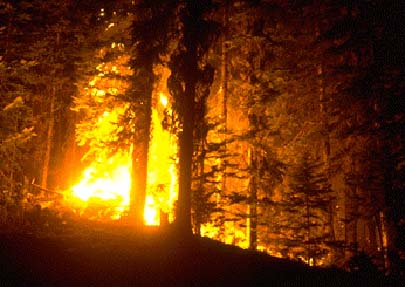
My first thought is that rescue personnel (fire, EMS, law enforcement, haz-mat, etc.) form a perimeter (boundary circle) of three areas: the hot zone, the warm zone and the cold zone.
Hot zone is where the actual emergency event is occurring (in your story case, the forest fire). Warm zone is the surrounding area next to the hot zone; it’s for rescue personnel to enter and exit the hot zone and for decontamination. Cold zone is the area beyond the warm zone and is the only area okay for civilians, including the media.
That said, your character wouldn’t be allowed in an area that her car would experience the damage you stated. Now, of course, sometimes the media and other civilians enter a restricted area like the warm zone (they wouldn’t enter the hot zone unless they’re willing to die). So, you could certainly add that into your story, but she would have charges brought on her, so your story needs to reflect that.
It sounds like you have your reporter character staying with rescue crews, and that’s not accurate. We “deal with” the media this way — we tell them exactly where they can stand and set up their equipment, we keep them informed and updated, and we monitor their whereabouts, but we don’t hang around with them since our job is to work the scene (not watch it unfold), and we certainly don’t allow them to travel around with us at a scene. Sure, we talk with the media, even joke around and share information as appropriate (sometimes just to emotionally handle intense situations), but it’s kept to a minimum and very professional. Good conflict for fiction, though, would be for a rescue personnel to deviate from this, but make sure that person has strong reason for doing so.
It’s highly unlikely she wouldn’t be caught (the boundaries are well monitored), especially since you say she suffers with respiratory issues, so the authorities would know she entered the warm zone (we’d hear her coughing).
As for the medical issues she’d experience, it depends on where exactly she traveled at the scene and it depends on her signs and symptoms. She wouldn’t be covered in ash unless she was actually in the hot zone. If she does experience any respiratory distress, she’d be unwise not to seek medical treatment, and the treatment we’d provide is oxygen therapy, IV, possibly meds and a CPAP depending on her signs and symptoms, and we’d definitely hook her up to our cardiac monitor and evaluate her vitals. This is my thinking: If she’s “covered in ash” then her respiratory system was definitely compromised and she needs medical treatment from EMS.   
So, make medical information fit into your story (not the other way around) by simply keeping things within the possible and changing little things in the story as needed. For example: If a character suffers a head injury and you don’t want that character to go to the hospital on scene, then simply have the character well cognizant with minor signs and symptoms, and later on that character could develop serious signs and symptoms if that’s what you want. Another thing: all patients are different, so how one patient’s body responds medically isn’t the same as another patient’s body; meaning, there are a ton of ways to write medical aspects in fiction.              
As for animals: Sure, all types of animals are caught in all kinds of disasters, so anything there is possible.

****************************************************************************

After majoring in communications and enjoying a successful career as a travel agent, Dianna Torscher Benson left the travel industry to write novels and earn her EMS degree. An EMT and Haz-Mat Operative in Wake County, NC, Dianna loves the adrenaline rush of responding to medical emergencies and helping people in need, often in their darkest time in life. Her suspense novels about characters who are ordinary people thrown into tremendous circumstances, provide readers with a similar kind of rush. Married to her best friend, Leo, she met her husband when they walked down the aisle as a bridesmaid and groomsmen at a wedding when she was eleven and he was thirteen. They live in North Carolina with their three children. Visit her website at http://www.diannatbenson.com

Decompression Illness: Dianna T. Benson, EMT

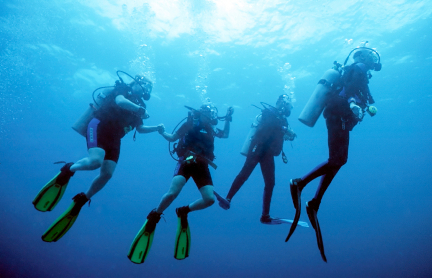
If you ever write a scuba diver character, a deep sea diver, a search/rescue/recovery diver, a Navy submariner, etc., you’ll need to understand Decompression Illness (DCI), a serious illness caused by trapped nitrogen.

There are two mechanisms of DCI:

1)      Decompression Sickness

2)      Arterial Gas Embolism

SCUBA (Self-Contained-Underwater-Breathing-Apparatus) divers breathe a purified air mixture of 79% nitrogen and 21% oxygen. The longer a diver is breathing this mixture and the deeper he/she descends, the more nitrogen will be absorbed by the body. A slow ascent and a safety stop at about thirty feet for three minutes, allows the diver to efficiently exhale the nitrogen. Dive tables set limits for dive times and depths. Decompression Illness is caused by tiny nitrogen bubbles forming (instead of being exhaled) and becoming trapped in the blood and tissues.

There are two types of Decompression Illness:

1)      Type I

2)      Type II

Type I:

1)      Skin capillaries fill with the nitrogen bubbles, resulting in a red rash.

2)      Musculosketal: Joint and limb pain

Type II:

1)      Neurological decompression sickness: Tingling, numbness, respiratory problems and unconsciousness.

2)      Pulmonary: Bubbles interrupt blood flow to the lungs, causing respiratory distress or arrest.

3)      Cerebral: Bubbles travel to arterial blood stream and enter the brain, causing arterial gas embolism and symptoms of blurred vision, headache, confusion, unconsciousness.

General Decompression sickness symptoms:

Extreme fatigue, joint and limb pain, tingling, numbness, red rash, respiratory and cardiac issues, dizziness, blurred vision, headache, pain with swallowing, confusion, loss of consciousness, ringing in ears, vertigo, nausea, AMS (altered mental status), pain squeeze, SOB (shortness of breath), chest pain, hoarseness, neck fullness, cough. 

Factors that increase the risk of getting decompression illness: Dehydration prior to dive, stressful dive or rapid movements during dive, alcohol intake prior to diving, flying too soon prior or post diving, not following dive tables.

As every patient is different, every diver will have their unique combination of symptoms and reaction to both the illness itself and the treatment.

Decompression illness is treated by hyperbaric recompression chamber therapy. Only certain hospitals in the word have a hyperbaric chamber. The severity of the patient’s condition and his/her symptoms will decide the length of time the patient is treated inside the chamber. 

Nitrogen narcosis is also caused by trapped nitrogen, but this is a simple fix and isn’t serious if resolved. The diver simply ascends to a shallower depth until his/her symptoms clear. Symptoms include: An altered state of awareness and gives the diver an intoxicated state of feeling, incoherent reasoning and confusion.

As always, thank you for reading and for your interest. Please do not hesitate to ask if you have any questions.

*****************************************************************************

After majoring in communications and enjoying a successful career as a travel agent, Dianna Torscher Benson left the travel industry to write novels and earn her EMS degree. An EMT and Haz-Mat Operative in Wake County, NC, Dianna loves the adrenaline rush of responding to medical emergencies and helping people in need, often in their darkest time in life. Her suspense novels about characters who are ordinary people thrown into tremendous circumstances, provide readers with a similar kind of rush. Married to her best friend, Leo, she met her husband when they walked down the aisle as a bridesmaid and groomsmen at a wedding when she was eleven and he was thirteen. They live in North Carolina with their three children. Visit her website at http://www.diannatbenson.com