Author Beware: Inaccurate Ultrasound Scenes Part 1/2

Redwood’s Medical Edge is pleased to host Shannon Moore Redmon, an ultrasound sonographer, and she’s offering her insights on how to write ultrasound scenes accurately. I know I’ve learned a few things for sure. Today, we’ll cover tips #1 and #2.

Welcome, Shannon!

Americans love to watch medical television shows, like Grey’s Anatomy, ER, or House. We buy up the latest medical thriller and discover the scientific world of healthcare.

What many fail to recognize are the glaring inaccuracies associated with the ultrasound profession and the exams being performed on the television screen. Such scenes contain incorrect anatomy, probes placed in wrong positions, or actors who need more camera face time and scan patients backwards.

Doesn’t Hollywood consult experts when they use ultrasound to determine an abnormality of a baby or find cancer in a patient’s liver?

As a registered diagnostic medical sonographer for over twenty years and an instructor who teaches others to utilize this amazing modality, here are five tips to make those ultrasound scenes more accurate.

Tip #1:  Sonographers perform the majority of scans.

Whether in a hospital setting, an outpatient center, most OB/Gyn offices, vascular offices, and general imaging facilities, registered sonographers are the ones who perform the majority of ultrasounds on patients . . . not doctors.

In my experience, sonographers scan the patient first and sometimes are the only one who take the images. If a patient is high-risk OB, a sonographer will scan her first, then a maternal fetal medicine doctor will scan after to confirm the diagnosis.

When abdominal or vascular ultrasounds are performed, sonographers scan these patients and the reading physician or surgeon may come into the room to discuss with the patient. More than likely, they will read the images from a digital archiving system located in their office down the hall, then attach a report to the patient’s medical record.

Most episodes on television have a doctor performing the exam. Where have all the sonographers gone? Having lunch together down by the river?

For writers: When writing your ultrasound scenes, let the sonographer take the images and discuss the case with the reading physician. If you want to ratchet up the drama, then let them have a heated discussion over what the sonographer believes she sees versus what the physician thinks he knows.

Great radiologists and reading physicians will critique a sonographer’s images and call them out on sloppy pictures. Sonographers will defend their opinions and their patients when a doctor minimizes the seriousness of the findings with a list of differential diagnoses or refuses to discuss the diagnosis with the patient. This happens in real life.

Tip #2:  Sonographers turn off the sound of the heartbeat.

In the famous Doritos commercial, granted the scene is a comedic parody, but if you listen close during the entire exam, the heartbeat is playing in the background and there is no Doppler technology activated. This is also the case in many television scenes, depicting actual exams.

In real life, the heartrate sound does not play during the entire exam. Sonographers know the heart rate plays only when we turn on the Doppler technology, drop the gate into position and hit the update key. We listen for a few seconds, acquire a heartrate strip along the bottom and then turn the sound off.

For writers: If there is background noise, it comes from the cooling fan on the machine.

Next post: Tips #3-#5.

********************************************************************************************
Shannon Moore Redmon writes romance suspense stories to entertain and share the gospel truth of Jesus Christ. Her stories dive into the healthcare environment where Shannon holds over twenty years of experience as a Registered Diagnostic Medical Sonographer. Her extensive work experience includes Radiology, Obstetrics/Gynecology and Vascular Surgery.

As the former Education Manager for GE Healthcare, she developed her medical professional network across the country. Today, Shannon teaches ultrasound at Asheville-Buncombe Technical Community College and utilizes many resources to provide accurate healthcare research for authors requesting her services.

She is a member of the ACFW and Blue Ridge Mountain Writer’s Group. Shannon is represented by Tamela Hancock Murray of the Steve Laube Agency. She lives and drinks too much coffee in North Carolina with her husband, two boys and her white foo-foo dog, Sophie.

Author Question: Nurse Comforting Orphaned Child

Erynn Asks:

First Question: What’s the protocol when a child is brought in after a traumatic event (like being the sole survivor of an accident) while waiting for next of kin if they’re not local? I had originally written a scene where a nurse was comforting him, but I feel like I remember a reader telling me they wouldn’t be allowed to hug or hold a child . . . .even if they’re alone. Is this correct? Are there nurses who wouldn’t care and would do it anyway?

Second Question: Would CPS (child protective services) necessarily be involved? The child in question has an adult sibling and a will exists that will show that he should be the guardian. Would there be any hoops for him to jump through before they let him take him home?

Jordyn Says:

I’ve worked as a pediatric ER nurse at two different large pediatric medical centers and have never been admonished to not hug or hold a child if that’s what they emotionally required. I actually find that utterly shocking any hospital would tell their nurses not to do this— though obviously understand why.

A pediatric nurse will always provide age appropriate care. Infants and toddlers usually need to be held to be comforted. With a school age child or older we would go based on the child’s cues. We would probably ask, “Do you need a hug?” or “Can I sit with you?” Sometimes, open ended questions are hard for kids who are dealing with traumatic events to answer. Questions like, “What do you need right now?” probably won’t elicit much of a response so the nurse will ask very pointed questions.

Who else could assist the child? An ED tech. A volunteer. A child life specialist.

I think you’d need to place close attention to where this novel is set and the hospital would need to match your setting. Community ER’s (common in rural areas) are more comfortable dealing with the adult patient so they might approach this situation very differently and not have as many resources available.

Child Life specialists are generally not staffed 24/7 so I would keep that in mind. I also haven’t found them outside pediatric hospitals. Same with chaplains– may not be available 24/7. Depends on the type of hospital.

As a pediatric institution, we also would probably not involve Child Protective Services though probably social work consultation would be advisable in this situation. In CO— we generally reserve CPS for concerns for abuse.

If the adult sibling could prove legal guardianship in the case of the death of the parents than the child would be released into their care. Even in the case of lack of paperwork, the child would likely go to next of kin, of which it sounds like would be this sibling.

Happy writing!

Reader Question: Medication Charges for OR

This reader question was asked in the comments and Kim gave a very detailed answer that I thought should be posted as well.

Susan Asks:

I have a question. I have had several surgeries, including foot surgery where a block was used. The list of medications on my bill were astounding! I understand the induction agent, narcotics and versed, but what is the anesthesia gas for? Just to keep the patient asleep? I love these posts!

Kim Says:

Hi, Susan!

Thanks for your question. One of the fascinating things about anesthesia is that there are as many different ways to give an anesthetic as there are different types of patients. Anesthesia is based on the type of surgery you are having, your own health/anesthetic surgery, preferences of the surgeon as well as the experience and preference of your anesthetist.

In the old days, you breathed in an anesthetic gas until you were asleep. If you ever had anesthesia with ether, you’d understand why we’ve continually looked for better ways to render patients insensible to pain.

Another way was to “block” the pain impulses by the use of local anesthesia either as a “field block” (blocking the area similar to what a dentist does), as a spinal or epidural, or a block of an extremity. One thing we’ve learned through the study of pain is that blocking the area with a local anesthetic decreases the over all amount of pain a person has post op. Because the nerve impulses to the brain are blocked, the brain doesn’t respond by releasing stress chemicals that cause inflammation until after the local wears off which means that less pain and inflammation happens over all.

So the “modern” way of doing an anesthetic has changed to what we call a multi-modal approach.

1) The block was to prevent pain and to keep you comfortable for a time after surgery.

2) The induction agent (versus breathing enough gas to go to sleep which isn’t especially pleasant in an adult) puts you to sleep initially, while the Versed (an amnestic) and narcotic (pain relief) provide other pieces of the anesthetic puzzle.

3) The anesthetic gas is added after you are asleep from the induction agent and also provides amnesia and pain relief. It also helps to control blood pressure changes from surgical stimulation or the use of a tourniquet in extremity surgery (used to keep the sterile field “bloodless” and expedite the surgery).

With the advent of outpatient surgery, patients no longer snooze the day away waking up from their anesthetic. They need to be deeply asleep and then awake enough to go home in a matter of hours. Using a multi-modal approach (using a combination of drugs for different reasons) is much more effective than each of those drugs by themselves.

For example, without the use of the anesthetic gas, much more narcotic is required. Without the narcotic, much more gas is required to do the same job. Every drug has side effects which increase with dosage and in the case of anesthetic gasses, time.

Using a combination of drugs allows us to keep the side effects to a minimum. It is a common misconception that we give a patient an anesthetic drug and then coast through the surgery and like magic they wake up when it is over. Even surgeons think so.

In reality, though it seems like a large number of medicines, each one has a specific purpose and one of the reasons anesthesia is safer and more pleasant than the old days.

Probably more info than you wanted, but I enjoy when people who are interested in what I do. I’ve been a CRNA for 34 years and I still find it absolutely fascinating!

*********************************************************************************
Kimberly Zweygardt is a Christ follower, wife, mother, writer, blogger, dramatist, worship leader, Certified Registered Nurse Anesthetist, a fused glass artist and a taker of naps. Her writings have been featured in Rural Roads Magazine, The Rocking Chair Reader, and Chicken Soup for the Soul Healthy Living Series on Heart Disease. She is the author of Stories From the Well and Ashes to Beauty, The Real Cinderella Story and was featured in Stories of Remarkable Women of Faith. She lives in Northwest Kansas with her husband where their nest is empty but their lives are full. For more information: www.kimzweygardt.com
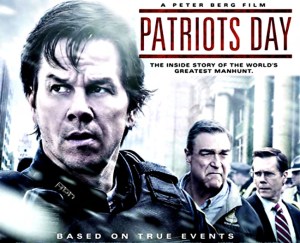
Author Beware: Movie Patriots Day and Narcotic Distribution

Recently, I took in the movie Patriots Day starring Mark Wahlberg that follows the events surrounding the Boston Marathon bombing that took place on Monday, April 15, 2013.

The movie is insightful and entertaining and I don’t think I’ll be spoiling anything by discussing it here. Plus, the issue I’m highlighting really has nothing to do with the events of the actual bombing.

Mark Wahlberg plays Sergeant Tommy Saunders. In the movie, he is suffering from some sort of chronic knee injury. He walks with a limp and is looking to get off patrol for this very reason.

In the aftermath of the bombing, he goes to one of the local hospitals to interview witnesses. He approaches the nurses’ desk and asks a nurse for something for pain. The nurse offers Lortab, a scheduled narcotic, but he declines and asks for Tylenol or ibuprofen instead.

Yea— just no.

Even in a disaster, a nurse is not going to be handing out scheduled medication for several reasons that I’ll highlight below.

First, what are scheduled medications? The FDA schedules medications that have the potential to be addictive. Schedule I medications are highly addictive and have no currently accepted medical use— drugs like heroin and LSD. Lortab is a Schedule II medication– which means it’s highly addictive, but does have a medical use. All scheduled drugs in the hospital have a process where they are counted to ensure no one is diverting (not using the medication for its intended purpose) the medication.

Narcotics counts where there is less drug there than should be are taken VERY seriously. Even in a disaster situation, these would be watched closely. The nurse would not be handed a bottle of Lortab to dispense as she wishes.

Why would a nurse not be able to simply give this police officer Lortab in a critical incident where there is a large influx of patients and things are generally crazy?

1. The police officer is not a patient. Any medical treatment rendered by the hospital should be documented. Now, I could see the nurse tossing him a few Ibuprofen considering these circumstances. In all likelihood, this would be frowned upon but understood. Not so with a narcotic.

2. It is outside the nurse’s scope of practice. Scope of practice deals with what a provider can and cannot do. It is generally determined by the state licensing board where the individual practices. Scope of practice issues tend to be a big pitfall for writers everywhere and I’ve blogged about it previously here and here.  A nurse cannot order medication for a patient without a standing protocol in place— this is a provider function. A nurse also cannot dispense medication— this is the function of a pharmacist. Even with automated medication dispensing systems, there is usually a pharmacy double check before the medication can be pulled from the machine. In an emergency this function can be overridden, but that is highly frowned upon.

Overall, Patriots Day was an entertaining film and most probably won’t even realize this error. However, in writing please keep in mind scope of practice issues. Not every medical provider can do every medical function— even during a disaster.

PSA: Drowning Doesn’t Look Like Drowning

This is an educational post from your friendly neighborhood pediatric nurse.

During summertime, pediatric nurses are confronted with an increasing incidence of preventable injuries— the biggest one in my opinion is drowning.

It is not uncommon to get pediatric near-drowning cases in the summer. Obviously, more kids are playing in large bodies of water whether it be a shallow baby pool, regular pool, lake or ocean. Kids can drown in very shallow water. Also, just because your child has passed a few swimming lessons doesn’t mean they won’t drown. Kids in open bodies of water should be wearing life jackets.

The classic set-up is a party where there is some type of pool where all the kids are enjoying themselves. The adults are drinking and socializing and no one is watching the children play. Some adults feel that the older kids can keep an eye out for the younger ones— I cannot scream enough at the top of my lungs how patently false this is. If you have a teen who is a certified lifeguard and is tasked with watching the children in the pool I might agree. Otherwise, no.

At any party where kids are swimming, including a little tiny baby pool, there needs to be a sober adult who is watching the children AT ALL TIMES! I truly cannot express this enough. Drowning can happen in a minute or less. You cannot merely check on them every ten to fifteen minutes— that can be too late.

Also, drowning may not look like drowning and I’m including a couple of videos that highlight the point.

Enjoy the summer, but be safe! Keep an eagle eye on those kiddos enjoying the water.

Author Question: Gunshot Wound to the Torso

Heather Asks:

If my hero gets shot in the torso, is there somewhere it can hit that won’t be fatal? It can be a “miraculous” miss, that kind of thing. He can be weakened and bleeding, but I just need him to stay conscious for maybe five to ten minutes after? Any ideas?

Jordyn Says:

Sure, there are always miracles.

In medicine we view the torso as including the chest and abdomen. Generally the diaphragm is the dividing line between the two. So the chest is everything above the diaphragm and the abdomen is everything below it.

Gunshot wounds to the chest not hitting anything is tough. Think about everything that’s there. The heart, lungs, major vessels and arteries. Can a bullet pass through and miss everything— or hit something less minor and just cause bleeding? Sure. Anything is possible. I would recommend staying away from the left side of the chest for the wound— just so much there. The right chest and lower might be more believable because it’s just the lung sitting there. There are major blood vessels that underline each rib so nicking one of those could cause the bleeding you want. Hit outside or inside enough and you could miss the lung.

Abdominal wounds could go either way. A lot to hit in the belly as well, but also good odds for missing. If he’s wearing a bullet proof vest, you could have the bullet enter through his side and low– just under the lung and diaphragm. Problem is you have highly vascular organs on either side– the liver on the right and the spleen on the left. So, I’d aim below that as well or merely have them be grazing wounds to these organs. This could also cause significant, but survivable bleeding.

Hope this helps and happy writing!