Rachael Asks:
I’m sure you get questions on this all the time, but I was wondering what insight you can provide on traumatic wounds. My project is science fiction and the characters in question have enhanced healing and a sped up metabolism which I’ve just been using as my cure-all, smooth-over for any inaccuracies thus far. But then I found your blog- which has been incredibly fascinating and entertaining.
The first question I had which led me here was in general for a gunshot wound to the chest though not involving the heart. Namely, the various potential complications, the meds, supplies, or procedures that may be employed, and the sorts of phrases and terminology and reactions that may be overheard from the staff working on the patient. I’ve read on the risks of things like a sucking chest wound and consequential lung collapse, punctured lung, of course blood loss, but I still am at a loss for particularly the things the medical staff on hand would be saying or doing. (Bonus points if you have any tips for the internal monologue for the victim besides “ow.”)
Jordyn Says:
Hi Racheal! Thanks for sending me our question.
Your question is hard to answer. You don’t give specifics of the injury though it looks like you’re leaning toward a collapsed lung. There are a couple of ways you can research the feel of an emergency and that is by watching reality based (non scripted) shows that center on emergency medicine or look for teaching videos (or live videos where they capture the procedure on a real patient on You Tube).
For instance, a patient with a collapsed lung will likely need a chest tube placement. You can search You Tube for “placement of a chest tube” and see what comes up. The below video is pretty good as it gives lots of technical detail on what the physician is doing, seeing, feeling, and even what medicines might be prescribed for the patient. However, it does lack a lot of language of what would be said to the patient during the procedure.
The next video shows more patient interaction and what might be said. Between these two videos you could probably extrapolate together a scene. I will say that typically patients are connected to a larger suction device, but what the below physician is connecting to looks to be a more portable device so the patient can be up and walking. Also, a patient with a tension pneumothorax who is crashing may not receive local anesthesia and may even be unconscious.
Your best option, once the scene is written, is have a medical person who actively is practicing in the field review it. If your scene is written from the POV of the doctor placing the tube, it would need to be more technical versus if you’re writing it from the POV of the patient. You can also search Google for patient experiences of having a chest tube placed to get a feel for the inner dialogue you’re looking for.
Hope this helps and good luck with your story!
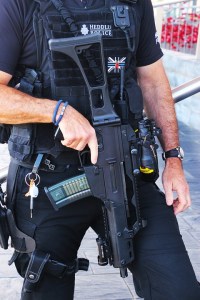 I have a cop who is involved in a shooting. She’s wearing a vest and is hit outside the vest’s protective area. I need her hospitalized long enough that the shooter (who she killed— they shot simultaneously, more or less) to have been claimed post autopsy. I can’t have her debilitated for months— just a week or two. Where would I shoot her? Hip? Leg seems hard to hit and shoulder does too. I don’t want her disabled, nor do I want a months long rehab.
 My fit male character (34 years old) is in a shootout. He’s shot with a 9mm handgun but the bullet ricochets, grazes his chest, and fractures a rib. He doesn’t notice initially. He begins to feel some pain after about five minutes. Then feels woozy and has a head rush. I want him to fall after the action is over, but be able to talk a little with some struggling.
 Cop, mid-thirties, in excellent health and physical condition is shot with a low caliber bullet from about 10 feet away. The bullet hits his chest, goes through the lung and exits out the back. He’s got colleagues nearby who administer basic first aid and the EMTs get there within 5 minutes. Say about 15 minute drive to the hospital. They radioed ahead so the hospital is expecting them and has an OR ready.
 You give your victim immediate first aid and EMS responds quickly. Keep in mind that you’re going to need a paramedic to respond to give more advanced field procedures. A basic EMT is limited in what they can do— CPR, wound dressings, assisting the patient with some of their own medication administration. Depending on the state, some EMTs can start IVs, so if your novel is set in a specific location then I would research this for that area. Assuming he has a paramedic respond then he’ll get an IV, IV fluids, oxygen, and possibly pain medications. Of course, a set of vital signs and cardiac monitoring.
 Jordyn Says
 Redwood's Medical Edge