Medical Question: Scope of Practice

Elaine asks:
I have some medical questions from my WIP. I have a character who has had multiple concussions from past sports (ice hockey). I wondered if concussions are considered a “traumatic brain injury”?
Also, or along with the above, I have the hero suffering a fall at a remote location in Hawaii on some lava rocks which leads to possibly another concussion and a dislocated shoulder. My heroine, who is an athletic trainer, arrives on the scene and I thought it was reasonable to assume that she could try to reduce (is that the right word?) his shoulder since there is no way for help to arrive, i.e. no one else on scene and no cell phone reception plus a 30-minute hike back up to the road where her car is. Is it reasonable to assume that with his help they get to her car and she takes him to a minor emergency clinic who will probably send him to an actual emergency room for x-rays, or more tests? Also, that he might not show signs of any disability or impairment from the concussion until later?
Jordyn says:
Yes, concussions are considered traumatic brain injuries.
 3. http://www.post-gazette.com/healthscience/20000229hconcush2.asp: News piece looking at testing post concussion. What you’ll find in patients who have had a lot of concussions can be learning disabilities, headaches, issues with balance to name a few. Sometimes, symptoms suffered post head injury are termed post-concussion syndrome.


Photobucket/emilillylouloumay

As far as the question concerning your athletic trainer, I think it would be outside her “scope of practice” to try and reduce (yes, that is the correct term) a dislocated shoulder.

Most often, the patient will be splinted in a position of comfort and sent to the ED. General ED management, depending on the type of dislocation, is to take an x-ray (sometimes a pre-reduction x-ray is not done), IV placement, IV medication for pain/relaxation, the reduction is complete and stabilized— for the shoulder this is typically a sling/swath. Then post-reduction films are taken to ensure that everything is back in place as it should be.

One instance I could see this trainer attempting the reduction would be if there were problems with perfusion to the hand. For example, it’s numb (this would be worrisome for nerve entrapment, compromise), it’s pale or purple (which would suggest poor blood flow). This may actually be good for your fiction because it would be great internal conflict for the character. She’s performing a procedure outside her scope of practice but to help her friend lessen his chances for permanent damage. If you choose this, I would make it clear to the reader it’s outside her scope of practice but she’s willing to take the risk and consequences of doing the procedure.
Actually, this question started to intrigue me and I started looking up athletic training protocols to see if it was a possibility. I found one from the University of Georgia— read it. It does outline a scenario like the one I describe above with some qualifications of the person who may be allowed to try.
Any other suggestions for Elaine?
***********************************************************************
Elaine Clampitt is currently melding her passion for writing and ice hockey into a series about women in the world of professional ice hockey. She owned her own business which manufactured women’s apparel and has been able to continue to fulfill her love for numbers as treasurer of various organizations. An “empty-nester”, Elaine enjoys encouraging others in their writing and going to as many Avs games as possible.  This is her second year serving as the Secretary/Treasurer for Mile High Scribes, the ACFW South Denver chapter. You can find out more about Elaine at her websites: elaine@emclampitt.com, http://www.thewomenofhockey.com/.

Principles of Poisoning: Part 3/3

Today’s post will conclude my three part series on Principles of Poisonings. There’s lots more to talk about in this area so I’m sure I’ll have more on this fascinating topic in the future.

For the last part, I’m going to cover basic treatment guidelines of the poisoned patient. We’re going to assume the patient arrives to the ED alert and breathing.

1. Obtain the patient’s weight. This may seems odd but when we look at whether or not a patient has ingested a toxic amount of the drug it will be determined by the mg/kg of the medicine. For example, if I take 1000mg of acetaminophen, this is a “normal” dose for someone of my weight. And no, I’m not going to tell you my weight. Let’s say, a child weighing 10kg took the same amount. This would be 100mg/kg of drug/body weight ratio. A normal dosing guideline for acetaminophen is 10-15mg/kg so this patient is at 10 times the normal dose.

2. Determine the amount of the drug and the time of ingestion. This can be more challenging than it seems. People don’t usually know the “exact” amount left in a bottle unless it is a medication they take every day. Also, kids are classic for not really being able to say how much they ingested. We assume worst case scenario and go from that point.

3. Call Poison Control. They are the experts. We go over the above information and generally follow their advice. Most often it will be observation and symptomatic support. Remember, patients will also have effects from the drugs we give as well. We want to minimize this if possible and only use these if the patient has an inherent risk of suffering toxic effects that are life threatening. Generally, if the patient presents within one hour of their ingestion to the ED and we are concerned they will have toxic effects, we will give activated charcoal. Syrup of Ipecac is generally out of vogue and no longer used. Then, we’ll obtain a baseline drug level (if it can be measured) and subsequent levels to make sure it is dropping.

Have you experienced a real life overdose/accidental ingestion?

Principles of Poisoning: Part 2/3

What is a nomogram and how does it relate to poisoning? A nomogram is a graph that aids in treatment guidelines for the medical practitioner. Based on the level of drug and the time post ingestion, it basically tells when additional treatment (this would be above and beyond activated charcoal) would be necessary to potentially save the patient’s life.

Here is an example of a nomogram for acetaminophen. When the patient plots in the grey area, we would institute aggressive measures to counteract the effects of the drug… particularly on the liver. Mucomyst is the drug of choice for acetaminophen toxicity.

http://www.merckmanuals.com/professional/print/lexicomp/acetylcysteine.html

Have any of you had experience with acetaminophen toxicity?

Principles of Poisoning: Part 1/3

Nothing will get a writer’s mind whirling like dreaming up the perfect poison to kill off a character. Is there a perfect, undetectable poison? Maybe, probably… but you’d be amazed at what might be available in your own bathroom cabinet.

If you’re going to use drug poisoning as a way to sicken or kill a character, there are a couple of things you’re going to need to research in order to figure out how much to give them, how long it will take the medication to take effect and what the patient’s signs and symptoms will be.

Consider these guidelines:

Guideline #1: What is a toxic dose of the drug/plant/poison? After all, you don’t want to hype up this scene where a character is poisoned and you’ve given them a normal dose of the drug. That would be very anti-climatic. One way to do this is to look for the LD50 which stands for median lethal dose. In very basic terms, it’s the dose of the drug that will kill 50 out of 100 people. Now, it may take less of the drug to kill some and some people may live through that dose as well, but it will be a good place to start from. You can also get a good gauge on this from looking at drug information sheets under the overdose or toxicology sections.

To read more on LD50:
1. http://en.wikipedia.org/wiki/Median_lethal_dose
2. http://www.rsc.org/pdf/ehsc/ld50.pdf

Guideline #2: When does the drug peak and what is its half life? These are time issues. Peak concentration is the maximum concentration of drug in the circulation. Generally, when the patient will feel the full effect of the medication. This is important to know because drug peak concentrations range wildly from a few seconds to days. Half-life is how long it takes 1/2 the drug to be eliminated from the blood. This is roughly how long the effect of the medication will last.

To read more:
1. http://www.beltina.org/health-dictionary/peak-level-drug-concentration-blood.html
2. http://www.wisegeek.com/what-does-a-drugs-half-life-mean.htm

Guideline #3: How is the drug metabolized in the body? This is important because whatever organ breaks down the drug will be overwhelmed by the amount of the drug and begin to shut down. In addition to this, it’s important to know what that organ does specifically. Acetaminophen is metabolized by the liver. Hence, its toxic effects and what ultimately kills the patient is the failure of this organ.

1. http://www.medicinenet.com/tylenol_liver_damage/page3.htm
2. http://www.medicinenet.com/script/main/art.asp?articlekey=191

Have you written a scene using a drug/plant/poison to injure or kill a character?

What’s the Difference Between?

Sometimes it’s hard to know the difference between certain medical professionals but these differences can be important to the medical care they provide. For instance, today, Jude Urbanski is going to guest blog on the difference between a phycisian’s assistant and a nurse practitioner. One thing to consider when writing a medical scene is… what is included in that person’s “scope of practice”. This is basically the laws that govern that person’s medical practice… what they can do and not do to a patient.

Welcome Jude!

I am a former nurse practitioner. In fact, I was among the first to receive prescriptive privileges in my state. I was a pioneer. I made the first waves. I loved my many years as a women’s health nurse practitioner. I worked with a wonderful group of OB/GYN doctors in Bloomington, Indiana at Aegis Women’s Health Care. They gave me their trust in a beginning era. We learned together about this new field.
Many years later, I’m blogging about differences between a nurse practitioner (NP) and a Physician’s Assistant (PA). While there are differences, I believe, foremost, each professional considers the patient a priority.
Both an NP and a PA is a finished product. They are not enroute to become a medical doctor. This is a concept patients and others find fuzzy. One, that after many years when patients continued to call me Doctor Judy, I simply acquiesced.
Each profession has stringent academic criteria. An NP must have a bachelors’ degree in nursing before achieving a master’s degree in a nurse practitioner specialty. The NP earns her advanced degree in a school of nursing. She or he provides medical care to patients in hospitals and other health facilities. NPs are responsible for recording and analyzing a patient’s history, performing physical exams, diagnosing, ordering appropriate tests, prescribing physical therapy or prescribing medications. The NP can practice independently, but generally has collaboration with a medical doctor.
Physician Assistants became popular after the Vietnam War. Many were former medical corpsmen who pursued additional education. Today a PA is generally, but not necessarily, a college graduate completing a two year program for physician assistants. Some PAs complete a master’s degree as do all NPs. PAs do not have to be a nurse first, but may have equivocal, if not even more, clinical training hours.
NPs are trained via nursing programs and PAs via medical programs. While this creates different models, each specialty does similar work. Their salaries are comparative. Each must pass certification exams and complete yearly continuing education requirements. Depending on state differences, each can usually prescribe medications.
I found a Google search as well as blog comments on the differences between NPs and PAs very modern day. I have to say, while I’ve loved being a NP and would probable do it again, the PA field looks promising!
****************************************************************************

Jude Urbanski (pen name for Judy Martin-Urban) is published in nonfiction and will have her first women’s fiction book, Joy Restored, released electronically by Desert Breeze in November, 2011. 

For many years, she worked as a nurse practitioner in women’s health. Now, a large family, writing as well as church and community work, keep her busy. She lives with her husband Conrad in the Midwest.
Jude is active in national, state and local writing groups. She teaches writing classes and is an inspirational speaker. She is a regular columnist for Maximum Living, a magazine focusing on spirituality and women’s health. Visit Jude at judeurbanski.blogspot.com or at her soon-to-come new website http://www.judeurbanski.com/.
Least known fact about Jude: Born at home and named for midwife Jude Flowers.

Anna Bigsby: Milk Sickness

Around 1828, a midwife by the name of Anna Bigsby (possibly Bixby) noticed a strange occurrence that milk sickness seemed to occur during summer and early fall. She began to warn her neighbors not to drink milk until after the first frost.

Milk sickness, also known as puking stomach, sick stomach and the slows may have taken the life of Abraham Lincoln’s mother, Nancy Hanks. Symptoms included loss of appetite, weakness, muscle pain and stiffness, vomiting, constipation and coma.


Snakeroot


Shawnee women showed Anna the responsible plant: Snakeroot. The cows would eat the plant and the toxin would build up in their milk and poison those who drank it. To ensure this was the right plant, Anna fed some of the leaves to a calf who then became ill. She warned her fellow southern Illinois settlers about it and they eradicated the plant and thus eliminated the illness from their community.

Unfortunately, Anna was a midwife and her expertise was not particularly appreciated by physicians outside her community during that time. Thus, milk sickness persisted widely until the 1920’s when the US Department of Agriculture officially discovered the cause to be snakeroot.

I wonder how many lives could have been saved during those 100 years? Adapted from:

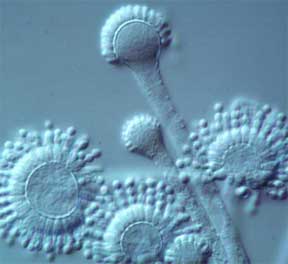
Killer California Spores

I was recently on a trip through the Midwest visiting my aunt and uncle. Shout out to Linda!! My uncle asks if I’ve heard of the new “killer virus” that is in California. Now, this peaks my interest for several reasons. One, as a nurse, I hadn’t heard about any new virus but know if it’s in the news, parents will soon be asking/worrying about it. And two, as a novelist, what mayhem could this add to future book ideas?

I immediately go to what I refer to as “Google University” and type in “killer California virus” in the news search engine. What comes up is not a recent story but one from about a year ago about fungal infections caused by a spores. The following is from a CNN news piece from April 2010:

Image courtesy of healthyairusa.com

“The fungus, known as Cryptococcus gattii (or C. gattii), has infected dozens of humans and animals–including cats, dogs, and dolphins–in Washington and Oregon in the past five years. While rare, the fungus has been lethal in about 25 percent of the people in the U.S. who have developed infections, according to Edmond Byrnes III, a doctoral student in molecular genetics and microbiology at Duke University and one of the lead authors of a new study about the fungus.”

The thing that stuck out for me was the death rate of 25% of infected individuals. Though it infected relatively few people, 1:4 died. The next striking thing when I delved more into it is that some were healthy people without pre-existing conditions. Though, some were immunocompromised as well. Immunocompromised patients typically can have a difficult time fighting fungal infections. Here’s a JAMA article about Cryptococcus gattii.

 http://jama.ama-assn.org/content/304/9/955.full

The last thing that was fascinating was its infection among animals and humans. That got me thinking… fungal infections typically aren’t transmitted from person to person. You’re generally infected by directly inhaling the spores. What if it mutated so that it was transmitted from person to person and carried a death rate of 25% for all people? That was my first plot idea.

Does this real life fungus give you any plot ideas? List one in the comments section.

Room Issues: The Womb

Our OB/Neonatal nursing expert, Heidi Creston is back to discuss uterine anatomy. Now, why is this a good topic for writers? I sense the men blushing out there. They’re fearful this is one of those times when the women get together and begin to discuss dreaded “female issues”. Trust me, this post is very tame and a high area of conflict in any novel can be infertility issues. This will give insight. I’ll turn it over to Heidi…

You may be wondering at this point, just what is this girl doing forcing perinatal information down our throats? Truly the sole purpose of my blog is to Right the Perinatal Wrongs, that I have read in several fiction books over the past few years. Authors, even fictional writers, need to acknowledge that they have a responsibility to their readers to give them accurate information especially when writing medical scenes.
Your reader may actually have the condition mentioned in your story, or know someone that does. Your readers may be in the medical field, professionals or paraprofessionals that take great pride in their work and tremendous offense to your presentation of their skills-or lack their of.
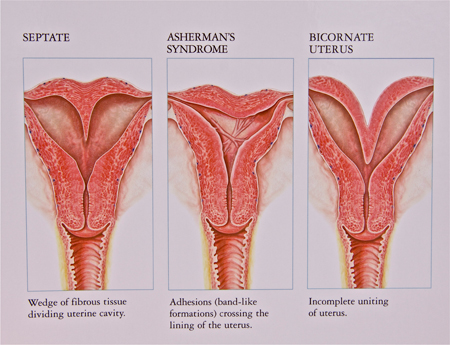
Think about it, just like a professional writer would know the difference between a comma and a semicolon, wouldn’t an Infertility Specialist be just as distinct when diagnosing the bicornuate and septate uterus? Of course they would.
It’s okay if you personally don’t know, but if you have a character in your story that is supposed to know….that is not okay, unless of course it’s weaved somewhere into your plot, otherwise it makes your character look ignorant, and in turn that reflects upon the author.

The editor will not necessarily pick up on your mistakes either. They may know as little about obstetrics as you do. It is your job to do your homework to ensure you have the right diagnose and treatment for your characters. So I’m getting down off my soap box now and here we go….

You got a what? Bicornuate Uterus? Are you sure about that?

Authors love to fill their stories with drama, and what brings more tears and heartbreak then a beloved couple struggling with multiple miscarriages…and their diagnosis, is a misdiagnosis via the author…. a bicornuate uterus.


www.acfs2000.com/surgery_services/mullerian-anomaly-surgery-double-uterus.htmlaption


A bicornuate uterus is an acquired birth defect where the top of the uterus forms like the top of a heart (valentine heart) thus making the uterus two distinct chambers. The two major risk factors for a bicornuate uterus are cervical insufficiency and preterm labor. Bicornuate uterus is not a factor in recurrent miscarriages. The patient is closely monitored for preterm cervical dilation. The physician may recommend a cervical cerclage (stitch) in order to prevent preterm dilation. In most cases physicians do not treat this condition. This condition can be corrected laproscopically.

Septate uteri is often misdiagnosed as bicornuate uterus. Septate uteri is round shaped one chambered uterus, that contains a band of tissue called a septum running down the middle. The septum has very little blood supply and cannot support implantation. Women with this condition have an extremely high recurrent miscarriage rate. The treatment for this condition is hysteroscopic surgery (surgical removal of the septum).
Diagnostic determination of these conditions is trifold. Proper diagnosis requires ultrasound, OBGYN evaluation and hysterosalpingraphy levels(HSG).
So, please be careful with your diagnosis, especially when your character is a specialist in their field of study. A professional infertility specialist would make the distinction between these two conditions and the treatment regime to implement. 

*******************************************************************************

Adelheideh Creston lives in New York. She is former military and married military as well. Her grandmother was a WAVE and inspired her to become a nurse. Heidi spent some time as a certified nursing assistant, then an LPN, working in geriatrics, med surge, psych, telemetry and orthopedics. She’s been an RN several years with a specialty in labor and delivery and neonatology. Her experience has primarily been with military medicine, but she has also worked in the civilian sector.

Heidi is an avid reader. She loves Christian fiction mysteries and suspense. Though, don’t recommend the gory graphic stuff to her… please. She enjoys writing her own stories and is yet unpublished. 

Dangerous EMS Scenes

This month, Dianna focuses on when EMS scenes become unsafe. Do these give you any new ideas for your novel?

When Safe Scenes Turn Dangerous

Unlike inside a hospital, EMS operates in uncontrolled settings and environments. At any given moment a scene can and does suddenly become unsafe for us while we’re in the process of medically treating a patient.
As an EMS crew is enroute, responding to a 911-Call, if Dispatch informs us PD (police department) or LEOS (law enforcement officers) are also being dispatched, a crime has possibly been committed or the scene may somehow be unstable or unsafe. However, all rescue personnel on scene is responsible for his/her own safety. We can’t depend on PD or LEOS to protect us; instead, we must follow our own protocols and work the scene with all other rescue crews effectively. Regardless if PD or LEOS are on the scene with us or not, safe scenes can and do suddenly become unsafe in various ways with little to zero warning as we’re at the patient’s side giving medical care.
The patient, the patient’s loved-ones, or bystanders can suddenly become violent or their behavior can drastically change due to: mental illness, fear, anxiety, drugs or alcohol, declining medical condition, they’ve committed a crime on scene, they’re a desperate criminal with a concealed weapon, etc. altering the safe scene to a dangerous situation.
I can’t go into detail, but I’ll share the basics of two scenes that turned unsafe for me and my partner: 1) An attempted suicide patient – a prison inmate – grabbed a police officer’s weapon. We physically and then chemically restrained the man without anyone getting injured, but it wasn’t easy or quick. 2) Adult children of a bi-polar patient called 911 because their father became disoriented and agitated. After our arrival, the patient turned aggressive and combative. I called for PD back-up, but instructed them not to use force unless absolutely necessary. I used the talk-down technique to calm him as I also reassured and counseled his adult children. After an intense hour, I finally had the patient physically and chemically restrained in my ambulance.
Hazardous material are another safety concern – if an EMS crew is dispatched without the knowledge haz-mats are on scene, our lives and health are at risk. Immediate recognition of haz-mats and following of procedure is essential, but at times haz-mats are disguised and sometimes a human (for various reasons) is setting up and controlling that disguise. Can you guess why an individual(s) would do this? I’ll give you one idea to get the ball rolling – meth labs (which are easy and cheap to construct) can easily explode. 
EMS crews use code phrases to alert each other of danger. One old code phrase: “Let’s get the red oxygen cylinder out of the ambulance.” After speaking a code phrase or hearing it, I evacuate the area, notify Dispatch of the situation, and request for additional resources as necessary.
Severe weather creates a large range of dangers as well as hindrances for an EMS crew, including: hurricanes, tornadoes, earthquakes, floods, blizzards, downpours, intense wind gusts, extreme lows or highs of air temperature, etc. A darkened mile-long tunnel when electricity is not functioning causes additional issues; so does nighttime darkness, especially if the emergency situation is on a back country road with only the half-moon above lighting the scene. Weather related issues can be on-going during a shift and worsen, or occur suddenly with no warning.
The worst weather-related scenario I’ve worked: A multi MVC – motor vehicle collision – at night on a darkened section of a highway. While we were extricating the severely injured and trapped passengers and drivers down a wooded embankment, a downpour suddenly began and refused to let up. The raven’s ground was previously saturated from days of rainfall. Lightening and thunder added to the already dangerous and intense situation.  
Fires and/or explosions can and do erupt suddenly while we’re on scene, unstabilizing structures and creating yet another danger for us as well as our patient and any bystanders.
What other scenarios can you think up that would suddenly create an unsafe environment for an EMS crew, and how do you think we handle those situations?
Obviously, as EMS we need to be prepared for anything at all times as well as be able to adjust and respond effectively when our surroundings change on scene
Thank you in advance for reading and for your participation and comments. If you have any questions, please do not hesitate to ask.
****************************************************************************

After majoring in communications and enjoying a successful career as a travel agent, Dianna Torscher Benson left the travel industry to write novels and earn her EMS degree. An EMT and Haz-Mat Operative in Wake County, NC, Dianna loves the adrenaline rush of responding to medical emergencies and helping people in need, often in their darkest time in life. Her suspense novels about characters who are ordinary people thrown into tremendous circumstances, provide readers with a similar kind of rush. Married to her best friend, Leo, she met her husband when they walked down the aisle as a bridesmaid and groomsmen at a wedding when she was eleven and he was thirteen. They live in North Carolina with their three children. Visit her website at http://www.diannatbenson.com/ 

Transfusing Blood Products

I can always count on Dale for great medical questions. Dale asks:

I was curious about blood transfusions. Sometimes in stories when a character gets a transfusion the writer messes it up, and of course those who do this sort of thing for a living know better. So how does a blood transfusion work, and what type of blood is universal?

Jordyn says:

The first thing is to determine the patient’s blood type. This is typically referred to as a “type and cross” if we know we are going to transfuse the patient.

When you donate blood, you’re giving whole blood and this is rarely used for transfusion. The blood bank splits the whole blood up into several components (after testing for infectious diseases) into packed red blood cells, platelets, cryoprecipitate, and fresh frozen plasma. Each of these four components would be in a different bag and are used for different reasons.

Transfusing blood products is relatively simple. We’ll take packed red blood cells. You get the bag of blood up from the blood bank. For adults, it resembles the bag they collect when you donate. For pediatric pateints, it comes up in a syringe at times because we give a lot less volume.

You can prime the tubing with just the blood product or with normal saline. We only use normal saline for transfusion as it won’t cause the cells to break and rupture like other IV fluids will.

All hospitals require a couple of double checks to ensure the correct blood is given to the right patient. This generally includes a check when picking up the blood product from the blood bank, and a double check against the patient’s blood ID band (which the patient should be wearing) at the bedside (nurse/nurse, nurse/doctor). Who double checks the blood at the bedside is co-signed on the transfusion record.

In the case of packed red blood cells, the infusion is typically given IV over four hours and the patient is closely monitored for several types of reactions. Different blood products are given over different lengths of time. Of course, if needed, the blood can be given very rapidly if the patient requires it due to hemorrhage.

There is no universal blood type. What you might be thinking of is this. O negative blood is the universal blood donor. Anyone can receive O negative blood and it is often used in emergency situations if a patient needs blood before a type and cross can be done. Type AB positive is the universal recipient. A person with this blood type can be transfused with any blood type.

Here’s a previous post about how blood type is determined: http://www.jordynredwood.com/2011/02/how-to-determine-blood-type.html.

Have you written a scene that has a blood transfusion?

******************************************************************************

Here’s more about Dale in his own words:

My name is Dale Eldon, I am originally from Colorado Springs, and have spent most of my life in the Midwest. I am currently working on a four part sci-fi thriller series that takes espionage to the next level.
 In book one, two CIA agents fight to uncover the truth behind a terrorist related syndicate that seems to have their hands in a wide range of power across the country. Time is running out as the shadowy syndicate continues to practice dangerous experiments that could rip the space-time-continuum itself in half. The journey will go beyond personal sacrifice for a country; the world slowly through scientific manipulation is on the downward spiral to malicious hands.
 In book two, I will be focusing a lot on a FBI supervisory agent (profiler), who suffers from an unknown mental condition that is caused by one of these experiments. I had asked Jordyn to help me with some information on the medical side of what this character goes through.
 I am not yet published, but plan to be when I am finished writing my manuscripts.