Drug Abuse in America: Part 1/3

Dr. Edwards is here for his monthly post and I thought his topic of choice was very timely. He sent me a piece on dealing with chronic pain patients in the ED. This is a problem for every ED… including pediatrics.

In the past two years, I’ve been shocked by the number of chronic pain patients we are seeing in those under the age of 18. If you’re writing an in-depth novel with an ED worker in the center, this is one area of conflict you could explore.

How do we deal with these patients? Is there a component of drug addiction in this patient population? To say no for all cases would not be the truth either.

I think this trend bodes for some introspection on all of us. Here is Dr. Edwards post. On Wednesday and Friday this week I’m going to explore this topic more in depth and why there might be such an explosive prescription drug abuse problem in the US… and believe me… there is.

Desperately Seeking

Frank J. Edwards, MD

I hadn’t been practicing emergency medicine very long when I saw this particular patient, a thin woman in her mid-seventies wearing an old fashioned lace-collared evening gown.

“Doctor, I’ve passed another kidney stone,” she said.

My mind’s eye narrowed.  Was this a narcotic seeker?  Kidney stones are like white-hot ice picks thrust into one’s flank and violently twisted, over and over again.  Marine drill sergeants cry with kidney stones.  But there she sat smiling.  I was young.  Did she take me for an easy mark?

“Oh really,” I said.  “Are you looking for some medication, ma’am?”

“Heavens no,” she said.  “I thought you might like to see it.  I have these things all the time.”

“See it?”

Out of her cloth handbag, she fished a chunk of coarse roadbed gravel and plopped it in my hand.  Driving in the hospital entrance that muggy Sunday morning I had noticed a pile of similar stone.

“You can keep it if you like, doctor,” she said.

Since then, I’ve seen hundreds of patients feigning illnesses, but unlike the lady of the road gravel, they definitely want something more than the smidgeon of attention and sympathy she needed.   They may have headaches, back spasms, abdominal cramping or severe pelvic pain, but kidney stones do remain a common theme.  And, unlike her, they come in writhing and wincing.  When asked to give urine, they may prick their fingers and squeeze a drop of blood into the sample so the dipstick comes back positive. 
The typical drug seeker will have a genuine history of a disease characterized by recurrent episodes of agonizing pain.  Along with kidney stones, such conditions include migraine headaches, lumbar disc disease, fibromyalgia, inflammatory intestinal disorders (Crohn’s disease, for example), and pelvic problems such as endometriosis and interstitial cystitis.   Thanks to the powerfully addicting properties of the narcotics used to treat their pain, a handful gradually awaken in the labyrinth of Morpheus, from which escape is very hard.


These patients generate a swirl of negative emotions in healers.   You want to give everyone the benefit of the doubt, but you do not like the sense of being manipulated.  You do not want to reinforce their addiction, but on the other hand, you understand they are suffering.  You just do not really know how much of the suffering is physical pain and how much is . . . whatever.   And, Lord help the healer who pigeonholes a drug seeker and misses something disastrous.  Drug seekers get sick too.

So you examine them carefully and maybe run some tests, and you look for the usual clues.  Drug seekers often frequent many local EDs.  They’ve had multiple work-ups that never reveal anything new.  If you are blessed with the ability to look up records on the Internet (an innovation which can’t come too soon), you may discover they were in the ED at a hospital down the road just last week and neglected to mention it.   They are allergic to all the non-narcotic pain relief options and they know exactly which agent on the menu works best.  They demand the dose IV and require amounts that would kick most opiate virgins into a coma.
  
I know some healers who pretty much give in and give the drug seeker whatever he or she wants just to sweep them out quickly, and who may even discharge them with substantial prescriptions for more narcotics (a real mistake).  Other healers get angry and point to the door immediately.  Most of us are in the middle somewhere, but it is never a happy situation.  At some level, you feel like a drug dealer.  I assuage my conscience by counseling them on the dangers of secondary addiction, and try referring them to pain centers.  I’ve also stopped calling them drug seekers.  They are chronic pain patients until proven otherwise, which removes some of the tendency to pass judgment.

Regarding the danger of cynicism, not long ago, a doctor going off duty passed me a back-pain case.  His plan was to give this young man a single shot and send him packing in the hope he wouldn’t darken our doorway again.    The patient had admitted to visiting an urgent care center the day before and had furthermore confessed to heroin abuse in the past.

Slam dunk drug seeker, right?   Wait a minute.  How many of them volunteer a history of heroin abuse?  That’s either a pretty dumb drug seeker, or a rare instance of honesty.   I sat down and listened to his story, got a sense of his personality and observed the concern of his girl friend.  Then I re-examined him and ended up ordering a CT.  The next morning he had surgery for a severely herniated lumbar disc. 

Then, there are the true professional patients—few in number and slippery—who ply their ailments to score drugs for the street trade.   One patient I recall from many years ago made a circuit of EDs from Florida to Virginia.  He had a draining bone infection—chronic osteomyelitis of the tibia—from a motorcycle accident.  If he took his antibiotic, the wound would start to heal.  If he stopped taking his antibiotic, the wound would boil and drain pus.  He could literally shut it off and on like a faucet.

It was very hard to argue with such an ugly wound, and he reeled me in like a catfish on Valium.  Until I saw him again a few months later at an ED on the far end of North Carolina.  With a different name.

*****************************************************************************

Frank Edwards was born and raised in Western New York.  After serving as an Army helicopter pilot in Vietnam, he studied English and Chemistry at UNC Chapel Hill, then received an M.D. from the University of Rochester.  Along the way he earned an MFA in Writing at Warren Wilson College.  He continues to write, teach and practice emergency medicine. More information can be found at http://www.frankjedwards.com/.


   

Use of Torture in Fiction

I’d like to welcome Tessa Stockton to Redwood’s Medical Edge. Today, she guest blogs about a controversial subject– use of torture in fiction. How much violence is too much violence?
Welcome, Tessa.
I have an odd fascination with torture and how to apply it in novels with believability. Since I’ve written a political intrigue series based in South America, touching on some of the endless conflicts between the politically left and the right, the subject of torture comes up in my research. A lot.
The interest started about 17 years ago while I worked with human rights groups. During a time where I had read so many testimonies from survivors of torture, I experienced a shift in my life’s direction and began applying what I learned toward what I wanted to convey through writing stories.
Reading testimonies is one thing. They can be incredibly stirring and influential. However, sometimes details need to be backed up by medical facts, such as the physical and psychological responses—not just the emotive. As an example, if a central character endures electric shock treatment, a writer needs to know how their body reacts—not just, “It hurt.” The swelling of a tongue and the immense thirst contribute to a likely residue. Also, if one drinks water too soon after “the session” he or she can suffer a heart attack. If a person’s nails are yanked, sometimes they can grow back in time, sometimes they can’t if the nail bed is too damaged.
This information is important, say, if you base a story around someone who is a political prisoner and who endured sessions in the “operating theater,” (my novel forthcoming), where spiritual healing coincides with physical healing.
While I don’t like my novels to get too graphic, I feel some description of this nature makes them more realistic. I try to strike a balance, inserting key depictions where most appropriate.
My debut novel, The Unforgivable, which released through Risen Books on April 1, 2011, is a love story entangled in the aftermath of Argentina’s Dirty War. In a nutshell, a Christian woman falls in love with a man who is despised by his nation, accused of war crimes, and who faces trial. There is a necessary chapter in my book entitled, “Private Testimony.” It’s necessary, because it causes the protagonist to shift in how she views this man with whom she has fallen in love. When she hears a survivor’s real life experience in undergoing an interrogation, suddenly a giant hurdle blocks the relationship with her love interest—especially with the claim that he was the one who quite possibly conducted and/or ordered the interrogation.
Details, details, details! They’re often gruesome but manageable. Here’s what I did in an excerpt, spoken from “Rosa,” the survivor:
“Electricity became intimate with me—forced its intimacy through pain I had never known—when it made contact with every part of my body, even my tongue which swelled, and under my nails.
 This man, my interrogator, focused especially on those areas that should have been hidden from him and all men, aside from my husband,” Paloma interpreted. “This man preferred applying shock to those parts the most. I did not recognize my own voice when I screamed. It made me feel like an animal. I defecated on myself. I begged for mercy. I remember thinking: this is what hell is. I had died and gone to hell.
“Soon after—but I really do not know how much time had lapsed—everything blurred and things like time became insignificant. Nothing mattered except for the need to survive.”
So, how much is too much?—because too little often doesn’t deliver the same weight—not if you’re a realist. Well, I’m a romantic realist—but that’s another story! While I like to insert a few “special descriptions” to give a scene that sense of horrible reality, I try not to go overboard. I might write a scene but use milder words when pointing out certain body parts for instance. Torture is by nature horrific but can be filtered for generality—if its inclusion is necessary for plot enhancement.

I can never read too little on the subject. Knowledge is useful. The more I learn the better I can write. Strange but true, fiction serves an array of purposes—even with its use of torture.

***********************************************************************

A former contemporary dancer and missionary, Tessa Stockton, who has also been active in politics and human rights groups, now writes Christian novels. The Unforgivable, now available in Paperback, Kindle & Nook, is her first book in the political intrigue series, Wounds of South America. For more information, visit her at http://www.tessastockton.com/.

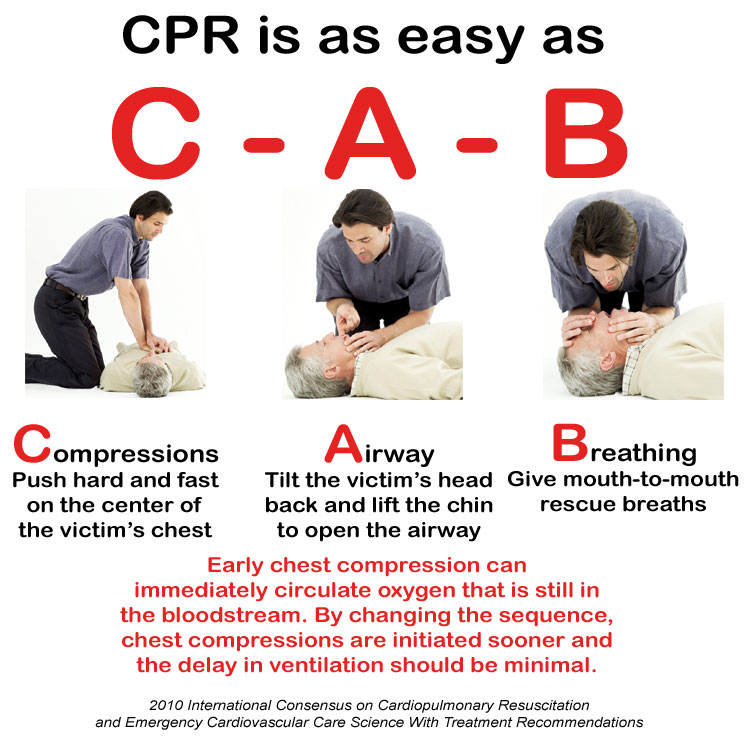
C-A-B: The new CPR guidelines.

At some point in your novel, perhaps you’ll have a character that has a life-threatning event and will require CPR. If so, it’s important to know that there has been a big change in how CPR is delivered to victims from lay people all the way to the healthcare professional.

Why change? Every five years, the American Heart Association (AHA) examines available scientific study to determine if the current guidelines are the best way to resuscitate a patient who is not breathing and does not have a pulse. Over the last ten years, what’s been found, is that compressions are paramount to delivering residual oxygen loaded up on hemoglobin to the cells. The only way to do that is to keep the blood moving.

Another couple of components was the general discomfort among the lay public to initiate CPR, particularly mouth-to-mouth resuscitation. Also, several studies showed that people (including healthcare professionals) were not that great at determining whether or not the patient was breathing and/or had a pulse. Some people mistook agonal respirations (which are gasps of air when a patient is near-death) as breathing and thus would delay support of the patient.

In the new guidelines, there is a quick check for responsiveness. If not responsive and you’re alone, you should get an AED if one is available and call 911. Then return to the patient and attempt resuscitation by starting chest compressions. If you’re with someone then one stays with the patient to perform CPR and the other will get the AED if available and call 911.

The sequence goes as follow:
1. Check the patient for responsiveness and no breathing.
2. Call for help.
3. Check the pulse for no more than 10 seconds.
4. If no pulse, give 30 compressions.
5. Open the airway and give 2 breaths.
5. Resume compressions.

Consider these new AHA guidelines when writing scenes that involve resuscitating a patient. Another thing to keep in mind is that some fire departments are instituting protocols whereby the arriving EMT and/or paramedic will provide 200 compressions before delivering a shock as a way to “prime the pump”. This has been shown to increase the effectiveness of electrical defribillation. If you’re writing a location specific novel, check the local fire department to see what their protocol dictates.

Marketing and Social Media

Today, I’m taking a short break from all things medical mayhemish and participating in a blitz blog on marketing. My agency, WordServe Literary, through Rachelle Gardner’s blog is doing an all out attack on the good and bad of this side of the book business. Several authors are participating so you can find more links on her August 2nd post.

If this is the first time you’ve ever stopped in at Redwood’s Medical Edge… welcome! This blog is devoted to helping authors of historical and contemporary fiction write medically accurate details. So, keep this place in mind for those medical questions and nuances you may need help with.


billypitter/PhotoBucket

 Marketing is the bane of most authors I think. We’d much rather stay in our writing caves than have to worry about this “other side” of the book business. My debut suspense novel has just been contracted and is set to release sometime in the Spring of 2012. I’m just dipping the tips of my toes into the large ocean of marketing possibilities and it is foreign territory. It feels a lot like learning a new language. After all, nursing school didn’t have a lot of emphasis on marketing… all right… none.

Here’s what I’ve started doing to “get my feet wet”.

1. Begin to build relationships through social media. I’ve found people to guest blog for me through these avenues. For me, FaceBook has been the most useful social media tool. I like it because you can carry on a decent conversation with people and are not limited in the amount of words you can say. I feel like I’m getting to “know” others who have the same interests as mine through FaceBook. I do participate in Twitter but this is a little bit of an enigma for me. I’m not sure I understand the full potential that exists. I don’t often read other people’s tweets whereas I do find myself surfing FaceBook to see what my friends are up to. The aspect of Twitter that I do like is that my blog posts go to Twitter and are then posted to Facebook. That’s a lot of advertising work that doesn’t need my input. I’m on LinkedIn but I don’t use it and don’t actively network there. LinkedIn has not been beneficial for me.

2. Learn from other authors and marketing professionals. There are lots of resources out there where you can begin to learn about marketing for little money. One place to check out is WildFire Marketing. This site has a lot of free resources that will definitely give you ideas to get started. I read Austin S. Comacho’s self published book Successfully Marketing your Novel in the 21st Century. Although it is more geared toward self publishing and e-publishing, I did pick up several helpful hints on how to market with a traditionally published book. I think he covers how to set-up and handle book signings well which many publishers are now leaving up to the author to arrange. Also, he has good tips on press kits. A what? Exactly. He explains it nicely. Also, check out the Murder Must Advertise Yahoo Group.

3. Think about your brand early on. This is one area I’m working really hard on. A brand clearly links you with a product– be it a novel, record or coffee. You know what Starbucks sells even if you haven’t stepped foot into a store. They have a strong brand. I think many authors feel a pressure to get out there in the Internet realm and don’t spend a lot of time thinking about their brand. What is it that will make you stand out from the other hundreds of authors who have a blog? I spent a good couple months mulling over what my blog would be because once an impression is out there, it may be hard to change mid-stream. Have a clear identity at the beginning. If you’re not gifted as a web/blog designer, this is one area I would consider investing some money to have it professionally done.

If you’re in my stage of marketing, what are some things you’ve done that have worked or not worked?

Guest Blogger: Lillian Duncan

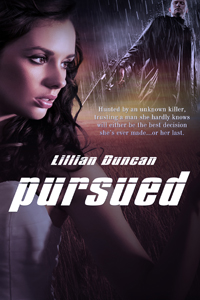
I’m pleased to have Lillian Duncan guest blogging here at Redwood’s Medical Edge today. She’s discussing her research into diabetes and how she managed this character’s disease in her novel Pursued.

Welcome, Lillian!

According to statistics, diabetes affects 25.8 million Americans of all ages which is 8.3% of the U.S. population. It only makes sense that sooner or later one of my character’s was going to end up with the disease.

The character’s name is Reggie Meyers and you can find her in my new book, Pursued.  In spite of Reggie being chased by an unknown killer, she manages to keep her sugar level on an even keel while her blood pressure spikes through murder attempt after murder attempt. The woman is seriously committed to eating right and taking care of herself!
In real life, diabetes is not a laughing matter, and I certainly don’t treat it lightly in my book or in my life. I don’t have diabetes; however, my father died from complications of it along with my paternal grandparents, aunts, uncles, and cousins on both sides of my family.

I chose to give my heroine diabetes to bring more awareness of the disease to my readers. I also wanted to show that with a combination of diet, exercise, and other lifestyle choices, a person can live a full and healthy life in spite of having it.

It was easy in my book to keep Reggie making the right food choices and following good medical advice. Unfortunately, it’s a lot harder in real life. People struggle every day with making the right lifestyle choices or suffering from the consequences of not making the right choices.
As I wrote Pursed, I had to walk a fine line between keeping it in the readers’ minds that Reggie was diabetic without belaboring the point. If I wrote about it too much, it would bore the reader. If I didn’t include enough details—especially physical details— it wouldn’t feel real.
An example of this is during a scene where all the characters are drinking a soda. Without mentioning her diabetes, Reggie’s friend simply hands her a sugar-free soft drink. No big deal. Another time, Reggie is given two choices for breakfast—sweet rolls or multi-grain cereal. She is sorely tempted but in the end she made the right choice.
Research was an important component when I decided Reggie had Type 1 Diabetes. In spite of family members having the disease, I wanted to make sure I had the right information, which isn’t always easy in spite of the glut of information on the Internet. I only included a small amount of what I learned, but it was there in the back of my mind as I wrote each scene.
Reggie’s diabetes definitely added to the challenge of writing Pursued, but I’m glad I included it. I wanted to show a character who had a serious health issue, but didn’t use it as an excuse to not accomplish her goals and dreams. In Pursued, Reggie makes the choice to be as healthy as she can be in spite of being a diabetic.
Everyone has challenges in this life. The question becomes are we going to let the challenges stop us from being the best we can be? And the answer comes in the form of the choices we make every day.
***********************************************************************

Lillian lives in a small town in the middle of Ohio Amish country with her husband, four parrots, one Jack Russell, and a Cavalier King Charles Spaniel. Whether as a speech-language pathologist, an educator, or as a writer, she believes in the power of words to change lives, especially God’s Word. She also enjoys a variety of activities, including traveling, camping, and bowling. She is active in her church where she serves as a sign language interpreter and teaches sign language classes. Lillian believes books can be entertaining without being trashy. She writes the types of books she loves to read, suspense with a touch of romance. Along with writing novels, she writes devotions for ChristianDevotions.us. Previous novels include Shattered and In a Corner of Her Heart. To learn more about Lillian and her books visit: www.lillianduncan.net

Diabetes: Part 2/2

Diabetic emergencies are not uncommon in the emergency room. In simple terms, there are two types of diabetic emergencies: the blood sugar is too low or the blood sugar is too high.
Hypoglycemia: This is a term used when the blood sugar is too low. Often times, in a person with diabetes, it is the result of taking too much of their medication causing sugar levels to drop. This is not the only thing that can cause a blood sugar to be too low.

Unrelated to diabetes, in the pediatric population, particularly among infants, there can be several causes of low blood sugar. Some of the top reasons are sepsis (blood or urinary tract infection), stress, and hypothermia (low body temperature).

Hypoglycemia is relatively easy to treat. If the patient is alert enough to swallow something, we can give them sugar by mouth (orally). It can be as simple as having them drink a small container of juice or giving them a fancy commercial preparation of sugar. If they are unable to take anything by mouth, then an IV is placed and the sugar (glucose) is given intravenously in the form of Dextrose.
Diabetic Ketoacidosis: Otherwise known as DKA. This results from a high level of sugar in the blood. As part of this, there is also a build-up of acids (ketones) in the blood as well. See last post for full explanation of this process. In order to correct this emergency, we have to bring both the blood sugar down and clear the ketones (the acidosis).
1.   Start an IV and get labs. There are several labs that need to be closely monitored in the diabetic patient. We’ll get a BMP (basic metabolic panel). This can also be known as a Chem 7 (or other number depending on how many items are measured). We’re looking specifically at the blood salts: potassium and sodium. These shift as sugar shifts. A BMP is generally monitored every 4-6 hours. Every hour, the patient will get a bedside glucose. We can only bring the sugar down so fast, typically no more than 50-100 points an hour. If the sugar falls too quickly, this can be problematic for the patient.
2.   Give IV fluids in the form of normal saline. Typically, the patient has a relative dehydration. Fluids are given very carefully as rapid fluid resuscitation can cause build up of fluid in bad places… like the brain (called cerebral edema). This is a phenomenon more common in pediatrics than the adult population. Giving fluids will also help the body clear ketones.
3.   Give insulin. Insulin is given to move the sugar from outside the cell (extracellularly) to inside the cell (intracellularly). This will bring the blood sugar level back down.
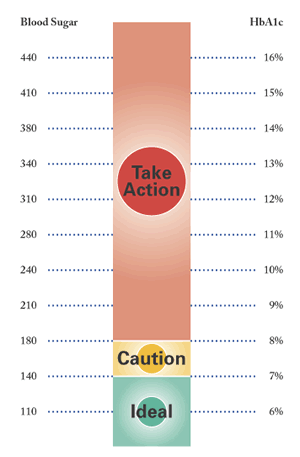
At some point, when the sugar level comes down to around 250 (remember normal level is 60-120) we will add IV fluids that contain sugar and continue to give the insulin until the ketones are cleared or the patient is no longer acidotic. We can check this by checking the urine for ketones or by testing the blood (a blood gas) to see what the pH level is.
Once both the sugar levels are normalized and the acidosis has cleared, the patient can begin to transition back to their normal diet.
Have you known someone that’s had a diabetic emergency?
Resources for you:

Diabetes: Part 1/2

I thought it would be good to do a few posts about the more common medical conditions. Since I’ll be highlighting Lillian’s novel on Friday, I thought I’d cover the basics of diabetes and then emergency care of the diabetic patient.
There are three major forms of diabetes. Type I, Type II and gestational diabetes.
Type I: This type of diabetes is caused from an autoimmune reaction where the body turns on itself and destroys, in this case, the insulin producing cells in the pancreas. As a result, the person can no longer manufacture insulin. Its onset is usually young children.
Type II: This type of diabetes is the most common form of diabetes in our society. This is a condition where the body produces enough insulin, but the cells are resistant to it.
Gestational Diabetes: Occurs during pregnancy. Generally resolves after the infant is delivered.
When thinking about diabetes, the most important thing to understand is the role of insulin. Insulin is produced by the pancreas. It is a transport agent. It moves sugar (glucose) from outside the cell to inside the cell. Every cell in your body requires glucose to function. It is the primary energy source.
What happens when sugar is not transported inside the cell? First thing that happens is that sugar builds up in the blood stream because it has nowhere else to go. This leads to an elevated blood sugar in the blood stream. This is something we can measure. Normal blood sugar is roughly between 60-120.
When the cells are starved of sugar, the body begins to break down other sources for energy. In this case, fat and muscle. The breakdown of these tissues leads to an increase of acids in the body. The by-product of this process is ketones. You may have heard the term diabetic ketoacidosis.
Now, I need you to think back to basic biology and the process called osmosis. This is where cells try to equalize particles between barriers and they do this by moving fluid. When the sugar levels are high in the blood, the body wants to equalize that out. It does so by craving more water. This is why people with a high blood sugar have increased thirst and increased urination. Also, because the cells are starved for sugar, the patient will actually lose weight.
Your body also has a certain threshold for sugar. Once this level is surpassed, glucose begins to show up in places it wouldn’t normally be. One place we check is the urine. What will also show up in the urine are those ketones that have built up because of the body’s alternative processes for finding energy.
Have you had a character suffering from diabetes?

Next post: Emergency Treatment of Diabetes.
For further information of diabetes, check out these resources:
  1. http://diabetes.niddk.nih.gov/dm/pubs/overview/
  2. http://ndep.nih.gov/media/Youth_Tips_Diabetes.pdf
  3. http://www.diabeteswellness.net/Portals/0/files/DRWFUSdiabetes.pdf

Western Medicine Circa 1890: Part 4/4

Lacy concludes her four-part Friday series today on western medicine during the 1890’s. It’s been a pleasure to have her and I hope you’ll check out her novel. Lacy, best of luck and many blessings on your writing career. I hope you’ll stop in again.

I hope you’ve enjoyed the excerpts from Marrying Miss Marshal that I’ve shared the last three weeks. This week, I thought I’d talk a little bit about my current project, which is now on my editor’s desk (hopefully soon to be bought!).

The story is set in the same time period and area as Marrying Miss Marshal but with different characters. In it, the hero has several adopted children and one of them falls off a ladder in the barn and breaks his leg. Because of this, the hero has to rely on the heroine’s help or he risks losing the hay he needs to put up to make it through the winter.
FRACTURES
In the reference Family Physician: A manual of domestic medicine, it is recommended that only medical doctors be allowed to treat fractures, otherwise the results could be lost of use of the affected area (finger, limb, etc.).
However, according to Bleed, Blister and Purge, if there was no doctor available, the only choice was for the homesteader or whoever it was to do their best to repair the broken bone. Treatment included splinting and then wrapping with surgeon’s plaster to put the limb in a cast. I would assume that sometimes in this case, the fracture would not be set exactly right and probably resulted in loss of some functionality of the arm or leg. However, in my story, I did choose to make a doctor available to help.
Here’s an unedited excerpt from my current project. Enjoy!
Penny found the house dark, and a bent-shouldered Jonas sitting on the porch steps. The lightening sky provided enough light to see his head was between his hands. Was he sleeping?
“Jonas?” she called softly and his head jerked up. Not sleeping, then. “Everyone all right?”
He stood and raised a hand to the back of his neck, half-turning from her so she couldn’t see his face.
“Yes. The doctor arrived just after you left—”
“After you made me leave.”
“—and set Maxwell’s leg. It’s splinted now with a plaster cast. He’s supposed to stay off it for a few days—or as long as I can keep him down.”
“Did he get any sleep last night?”
“Doc gave him some pain medication, knocked him right out.”
She couldn’t resist reaching out to touch his arm. He jumped at the contact but didn’t pull away.
“And you?”
He shook his head, ran his other hand down his face. “Couldn’t get my mind to quiet. We’re already behind on the haying, and with the Sumners’ fields to cut, too—without a driver—without Maxwell, I don’t see how we’ll finish.”
“Can you hire someone else?”
He was shaking his head by the time she’d finished her question. “Everyone’s hired out for the season. It’s not likely.”
“Well, what about Poppy?” As she said the words, she thought about her grandfather’s continuing exhaustion, though he’d been trying to hide it from her. “No, he probably shouldn’t be out in the sun all day.”
“There’s no one…”
She’d never heard Jonas so disheartened before. She knew part of his defeated attitude was because of his worry for Maxwell and loss of sleep. Maybe that’s why he’d overlooked the last obvious answer.
“What about me?”
Copyright © 2011 by Lacy Williams.
REFERENCES:
Family Physician: A manual of domestic medicine (1886) is available in the public domain on Googlebooks:
(Treatment of fractures begins page 717)
Bleed, Blister and Purge by Volney Steele, M.D. (2005)
CONTEST REMINDER
Don’t forget to leave a comment to be entered to win a copy of Marrying Miss Marshal and three other Love Inspired Historical books. You’ve have until 11:59pm EST to comment and I’ll be drawing a winner tomorrow! Full contest details were posted June 30th.
***********************************************************************
As a child, Lacy Williams wanted to become a veterinarian “when she grew up”. However, the sight of blood often made her squeamish so she gave up that dream before her teen years. As a college student, Lacy was a physical therapy major for approximately two weeks—until she found out she’d have to take a cadaver lab to complete that degree plan. As a writer, Lacy has finally found a way she can handle blood and gore—fictionally. 
A wife and mom from Oklahoma, Lacy is a member of the American Christian Fiction Writers and is active in her local chapter, including a mentorship program she helped to start. She writes to give her readers happily-ever-afters guaranteed and mostly reads the end of the book first. You can find out more about Lacy at her website http://www.lacywilliams.net/. She is also active on Facebook (www.facebook.com/lacywilliamsbooks) and Twitter (www.twitter.com/lacy_williams).

HELLP!: Pregnancy Complications/Heidi Creston

There is a lot of difference between saying you have a cold vs. saying you have bacterial pneumonia. In the world of writing especially medical writing, it is very important that you as the author understand the proper diagnosis and treatment of your character. If it is not clear to you then surely your readers will be confused as well.
Be assured that you will have readers that have either had the condition that your character has, knows someone who has been through it, or like myself, have treated individuals with it. I am more of reader than a writer at this point, and from a readers perspective I will ascertain that nothing will frustrate me faster than an inappropriate diagnosis and/or the incorrect treatment of that condition.
 I focus on the perinatal patient because that is my area of expertise, but I’ve been known to check on a condition if I’m exposed to it in a story. If your story does not center or pivot around the diagnosis and treatment of your character, then it is best to keep everything as simple as possible and not try to overload your reader with information you’ve gathered on the internet. All this being said, I would like to take the time to address the three most prevalent pregnancy related complications written about in general fiction: Preeclampsia (PIH), Eclampsia, and HELLP Syndrome.  
Preeclampsia, Eclampsia and HELLP syndrome are all serious complications that are fairly common and can occur during pregnancy. In fiction these conditions are often used interchangeably by writers, but these are three very different conditions requiring different levels of care in the world of obstetrics.
Preeclampsia is also known as toxemia or pregnancy-induced hypertension.  It presents clinically as high blood pressure and extra protein in the urine after twenty weeks of pregnancy. Signs of Preeclampsia include severe headaches, temporary loss of vision, blurred vision or light sensitivity, upper abdominal pain that usually occurs under the ribs on the right side, unexplained anxiety, nausea and vomiting, dizziness, decreased urine output, blood in the urine, rapid heartbeat, ringing in the ears, fever and sudden weight gain such as more than two pounds a week or six pounds in a month.
Eclampsia is a life threatening condition of pregnancy. Signs of Eclampsia are seizures, severe agitation, and unconsciousness, musculoskeletal aches and pains, involuntary movements, the relaxation phase of deep-tendon reflexes may be longer, apnea, and vision problems. Usually the patient has been previously diagnosed with preeclampsia, but this is not always the case.
The most serious complication of Preeclampsia besides death is the HELLP syndrome. Hemolysis (rupture of red blood cells); EL stands for Elevated Liver enzymes; LP stands for Low blood levels of Platelets. Women who have this syndrome may have problems with bleeding, high blood pressure or liver problems. The most obvious signs of HELLP syndrome are nausea, epigastric pain (pain just below the ribs), or right upper quadrant pain, feeling tired, bad headaches, and there may be swelling that occurs in the face and hands. The compromised body functions can cause seizures, liver failure, kidney failure, heart failure or stroke.
Have you written a scene with one of these syndromes?

Medical Question: Opposite Fight vs. Flight Response.

Kristin asks: My medical issues have to do with the female lead who has reverse fight-or-flight reactions. When under extreme stress or in fearful situations her heart rate slows and her breathing becomes shallow sometimes to the point of passing out (at least once in the story). I tried to Google this condition and found almost nothing about it. The only reason I’ve heard of it is because one of my best friends has it.
Jordyn says: I think what you’re looking for is called a vasovagal reaction. It can be the body’s response to stress/fear. I don’t know that I would classify it as opposite the fight-or-flight but I can see how someone may have explained it this way to your friend. It can be brought on by seeing something traumatic (extreme emotional stress, seeing bloody things). What occurs is that the vagus nerve is stimulated, which leads to a drop in the heartbeat (bradycardia), which leads to less blood flow to the brain, which leads to passing out.
This is a very common cause of fainting (syncope).
 Here’s a couple of references: