Contemporary Pharmacy Practice: Part 1/4

I’m so pleased to have Sarah Sundin back. She’s going to give us a glimpse of her real life as a pharmacist in a four-part series.

Welcome back, Sarah!

Fiction writers do mean things to their characters. If those mean things require pharmaceutical care, you may find the need to introduce a pharmacist character. Or if medications play any role in your story, you’ll need to understand how pharmacies work. As a pharmacist myself, I want to help you get those details straight.
Today’s article is a general overview of the pharmacy profession. The following articles will discuss pharmacy education and training, practice in the community pharmacy setting, and practice in the hospital setting.
Meet Your Pharmacist



Sarah’s Graduation: UC San Francisco 1991

A pharmacist is the member of the health care team primarily concerned with the safe and effective use of medications. Although the profession of pharmacy is relatively small—268,030 employed pharmacists in the United States in 2010, according to the Board of Labor Statistics (1) —pharmacy plays a vital role in health care.

People drawn to pharmacy enjoy math and science, and tend to be detail oriented, methodical, and conscientious. Although many pharmacists are naturally quiet, they do tend to enjoy working with people. For the record, modern pharmacists strongly dislike being called “druggists.” Please don’t use this term in your contemporary novels. Thank you.

Demographics

Traditionally, pharmacy was a profession for white males, and even as late as 2004, 54% of licensed pharmacists were male, 88% were white, and only 7% were Asian and 2% black. However, the demographics of the profession have shifted dramatically over the past few decades, with extreme gains by women and Asians in particular. In 2004, 67% of doctorates in pharmacy (the entry degree as of 2000) were awarded to women, 23% to Asians, 7.7% to blacks, and 3.7% to Hispanics. (2)
One of the reasons pharmacy appeals to women is the ability to work part-time. Indeed, 24% of female pharmacists work part-time, primarily between the ages of 31-35 during the child-rearing years. Conversely, only 13% of male pharmacists work part-time, mostly over the age of 72.
Areas of Practice
About 65% of pharmacists work in a community pharmacy, filling prescriptions in either chain or independent drug stores. Another 22% work in hospital pharmacies. Others work as consultants for skilled nursing facilities (nursing homes), in pharmacy education, for governmental agencies, or for pharmaceutical companies—in clinical research or to provide drug information for other health care professionals.
Responsibilities
The traditional responsibility of the pharmacist is to purchase, store, compound, prepare, and dispense medications. Most medications are currently available from commercial manufacturers, leading to a diminishment of the pharmacist’s role in compounding—mixing ingredients to create elixirs, tablets, pills, suppositories, ointments, etc.
However, as the quantity and complexity of medications increases, pharmacists have positioned themselves as the medication experts. The practice of “clinical pharmacy” or “pharmaceutical care” involves working closely with physicians, nurses, and patients to assure the best possible care for the patient. Pharmacists are trained to watch for allergies, drug-drug interactions, and drug-disease interactions, and to adjust doses based on kidney or liver function, age, and weight. To increase patient compliance, pharmacists educate patients about their medications and answer questions.
Proper pharmaceutical care has been shown to decrease medication errors and the cost of therapy.
Pharmacist Shortage
A shortage of pharmacists has existed for several decades as the demand outstripped the graduation rate. This bumped up salaries significantly. In 2010, the average salary was $109,000, but this varies widely by geographic region. The shortage protected the profession from the recent economic downturn. However, many new schools of pharmacy have opened in the past decade, and the economic downturn has led pharmacists to postpone retirement and to work more hours. Anecdotally, fewer positions are open, and salaries are leveling off.
References
1)      Occupational Employment and Wages, May 2010: 29-1051 Pharmacists. United States Department of Labor, Bureau of Labor Statistics website. http://www.bls.gov/oes/current/oes291051.htm Accessed 29 Sept 2011.
2)      Report of the ASHP Task Force on Pharmacy’s Changing Demographics Am J Health-Syst Pharm. 2007; 64: 1311-9. American Society of Health-System Pharmacists website. http://www.ashp.org/s_ashp/docs/files/practice_and_policy/workforce/1311.pdf Accessed 29 Sept 2011.
*****************************************************************************
      Sarah Sundin is the author of the Wings of Glory series from Revell: A Distant Melody (March 2010), A Memory Between Us (September 2010), and Blue Skies Tomorrow (August 2011). She has a doctorate in pharmacy from UC San Francisco and works on-call as a hospital pharmacist.
Monday Zombie Fest: Part 1/4

This October, we’re having a Monday Zombie fest. I mean, isn’t everyone half dead on Monday anyway? And, October is the time to do spooky things. We’ll be talking with Dale about his eventual forthcoming novel about zombies and how he conceived the idea and made it medically feasible.

If you leave a comment on any of Dale’s posts and you live in the USA, you’ll be eligible to win a zombie prize pack that will include David Moody’s novel Autumn: The City and K. Bennett’s novel: Pay me in Flesh. The drawing will be midnight on October 31st which is also the one year anniversary of this fine blog.

We’re going to start our Dale/Zombie fest with a few medical questions.

Dale asks:

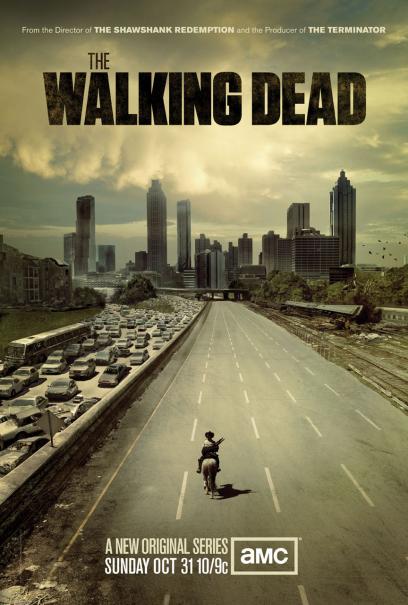
I was watching the first episode of The Walking Dead with my mom, and we were talking about what if this was real? What if you awoke from a coma in a world now in an apocalyptic condition, in this case zombies.

First off, the main question that struck me was how would the lead character, Rick Grimes, go into a coma from being shot behind the shoulder? I know that when I was a teenager, I had my finger smashed in a metal drawer and passed out for 30 seconds, so it can happen, but how? The injury had nothing to do with his brain, nor did mine.

Second big question, how long can coma patients survive without the IV bag being changed?

Jordyn says:

Aaahhh… how sweet to be watching zombie stuff with your mom! That’s awesome. As to your first question, the mechanism between your passing out from your finger getting smashed and Rick Grimes coma from being shot in the shoulder are likely different.

Dale, likely what you experienced was a vasovagal reaction. This can be a physical response to pain and causes low heart rate, lower blood pressure and eventual loss of consciousness. I did a post on this here that explains it more in depth. Not all people lose consciousness but may swoon. The same thing is occurring.

The mechanism behind this character’s comatose state was likely shock. These two things are distinctly different. If a character is shot, he experiences blood loss. If you lose enough blood, the remaining level of red blood cells won’t be enough to supply all the oxygen to each cell. This lack of the body to meet its metabolic demands is termed shock. There are many possible causes of shock but the end result is the same– your body can’t deliver oxygen to its cells.

Your brain is very sensitive to lack of oxygen and can be starved of oxygen in this manner. If the brain is deprived of enough oxygen, it can lead to the patient slipping into a coma.

How long a patient can survive without their IV bag being changed has numerous factors. How fast was the IV running? I think a better way to look at this question would be to understand how much total water the patient would need for the day.

I actually found a pretty good resource to help my followers figure this out and it takes into consideration body weight, level of exercise and climate. You can find that here: http://www.csgnetwork.com/humanh2owater.html.

Once you know that, you can determine when his IV would stop running. A normal IV rate for an adult patient to stay hydrated would be 100-150ml/hr. IV fluids come in liter bags containing 1000ml so this would last approx 6-10 hours. After that point, he would no longer be receiving hydration.

Probably after three days, your character is going to be in dire straits. You can read more about how long you can live without water here: http://health.howstuffworks.com/diseases-conditions/death-dying/live-without-food-and-water2.htm.

What other thoughts do you have for Dale?
*********************************************************************************

Author Dale Eldon lives in a Macomb, Illinois, and takes care of a sick mother while working overnights at McDonald’s. He spends his free time with loved ones and writing his butt off. Between blogging and writing anthology submission calls, he is currently working on a zombie trilogy for a series of novellas and a novel.

One Brave Cookie: Alice J. Wisler

Often times, I will read biographies as research to delve into what it might have been like to live in the shoes of the person I’m trying to portray fictionally. Some experiences are beyond our imagination and first hand accounts help us to draw these characters more realistically.

I’m pleased to have Alice here at Redwood’s Medical Edge today discussing her son’s battle with cancer. She’s so brave to share her story with us and I’m very thankful she chose to give us insight into some of the emotions that surrounded her during that time of her life.

Welcome, Alice.

In 1996 we had tickets for a three-week trip to Japan. As I packed for our trip, excitement filled me.  I couldn’t wait to experience the reactions of my three kids as we flew to Japan where I grew up as a missionary kid. My picnic-plaid journal would record their words and their vacation memories.

My husband and I hoped three-year-old Daniel would be fully recovered from his surgery and back to his energetic self by the date of our June departure.  It sure looked promising because the night of his surgery he did cartwheels in our grassy lawn, laughing with friends who stopped by to check in on him.
Right before Memorial Day when people were getting their coolers stocked for picnics, the pediatrician called with news.  The lump on Daniel’s neck was not Cat Scratch Fever or TB as earlier presumed. The surgery from the previous day showed that my son had a mass that consisted of small round blue cells.
That weekend I became familiar with a childhood cancer called Neuroblastoma.  At UNC Hospitals in Chapel Hill, NC, Daniel had another surgery, a Broviac catheter inserted through his body—into the right side of his neck and out his back— and the start of his first round of chemotherapy.  The catheter was the line used to dispense his chemo.  Nurses taught us how to flush the line, clean the area of skin it was near, and tape the catheter to his back for safety purposes.  We also learned the names of chemo drugs and found out that the narrow cot placed alongside Daniel’s bed was not as comfortable as it looked. It didn’t really matter; hospitals are not known for places of rest, regardless of the type of bed provided.
Daniel’s prognosis looked good—for a kid with cancer.  Over the months of week-long hospital stays, the tumor responded to the harsh medications.  He lost his hair, he hated being bald.  He made friends with the oncologists and nurses, teasing and laughing with them.  He threw up and felt weak and tried to be brave.  I recorded each day in my picnic-plaid journal.
In the hospital chapel he asked God to heal him.  “Please God, take away my boo-boo.” He liked to hear how people around the world were praying for his health.
But on a balmy day in January after his chemo and radiation treatments ended, he felt weak.  I took him to a scheduled check-up at the oncology clinic.  At nine his blood pressure was fine, but there was some concern about his blood counts.  His hematocrit was dangerously low.  The nurse was ready to take another blood sample to test again when Daniel complained of not being able to breathe. “I just wanna go home,” he told me. The doctor was called in; no pulse could be found.  Daniel was wheeled to the ER.  He coded once he arrived, was resuscitated, and coded again.  A staph infection was discovered to be the culprit.
Daniel lived on the ventilator in the PICU for five days.  When the EEG showed he had no brain activity except for voluntary, I asked for another.  But the second results matched the first, so we removed him from the ventilator, saying our good-byes. Yet Daniel’s heart and lungs continued to function. Since the staff in the PICU could do nothing more for him, his oncologist asked that we consider moving him to a room on the cancer ward.  “We want to take care of him and of you,” he said.  “Daniel is our patient.  We remember when he walked down the corridors swinging off his infusion pole.” I looked at my son, a calm figure with his eyes shut, morphine pumping into him. Surely, God would provide a miracle and Daniel would wake from his comatose state and jump on the bed as he had before.
When Daniel breathed his last in my arms on a cold night at the beginning of February, I was six months pregnant.  My baby within kicked with life as my bloated and compromised child ceased to move. 
I felt abandoned by God. I didn’t care to live.  During the next days, I didn’t want another casserole or vase of flowers brought to my front door. I wanted my son back in my arms—a chance for him to live life outside hospital walls with a new crop of hair as he played with his siblings.

Instead, I would have to learn to survive his death.  It would mold me, push me, shape me, and change me.  I would feel God’s presence again.  In time, I would walk with a new faith, one harbored within a broken heart.

***********************************************************************

Alice J. Wisler is the author of RAIN SONG (Christy Finalist 2009), HOW SWEET IT IS (Christy Finalist 2010), HATTERAS GIRL and A WEDDING INVITATION—-all by Bethany House Publishers. In memory of her son, she teaches online grief-writing courses and at conferences across the country.  Visit her website: http://www.alicewisler.com/.

Dr. Richard Mabry: Ideas 101

It’s always a pleasure to have Dr. Mabry here at Redwood’s Medical Edge. He’s a great supporter of this blog and it’s my pleasure to be hosting him Monday through Wednesday this week in support of the release of his fourth novel, Lethal Remedy. Don’t forget, leave a comment on any of Dr. Mabry’s posts and you’ll be eligible to win a copy of Diagnosis Death and a signed copy of his latest novel, Lethal Remedy. Must live in the US. Winner will be drawn midnight MST on October 7th and announced here on October 8th. This originally posted April 1, 2011.
 “WHERE DO YOU GET YOUR IDEAS?”
I don’t believe I’ve ever spoken to a group of non-writers without being asked this question: “Where do you get your ideas?” I’ve been tempted at times to tell them I use a book titled 1001 Story Ideas For Writers and send them scurrying to find that non-existent volume. Or refer them to a spurious website called http://www.freebookideas.com/. But instead, I tell them the truth. I get my ideas from following the advice given me years ago by author Alton Gansky. “Ask yourself the question: ‘What if…?’”
Let me give you an example. My third novel of medical suspense, Diagnosis Death, officially releases today. In it, Dr. Elena Gardner, is accused of the mercy killing of several patients, one of whom was her critically ill husband. The twist is that she can’t really defend herself, because she can’t be sure her accusers are wrong. Sorry, you’ll have to buy the book to learn more about it, but let’s backtrack to the way I came up with that plot.
About the time I was casting about for a storyline for this book, the aftermath of Hurricane Katrina brought forth a story that caught my eye. A colleague of mine in New Orleans was accused of ending the life of four terminally ill patients trapped in the unspeakably difficult conditions of the hospital where she worked with no hope in sight of rescue. She was subsequently exonerated in the courts, and I won’t say anything further here about the case, but it brought to mind the subject of euthanasia and end-of-life decisions.
There was another factor in my choice of subject matter. I had first-hand experience with withdrawal of life support, not just as a physician, but in the case of my first wife, who suffered a devastating stroke. I knew how it worked, and knew all too well the emotional roller coaster associated with making that decision, as well as the guilt that followed it. So that was the way I got the idea that evolved into Diagnosis Death.
Alton Gansky told the class I was in that he keeps a file of three by five cards with story ideas, and it’s unlikely he’ll ever run out. I don’t have such a reserve, but I do have an almost endless supply of potential material. I read the newspapers. I watch TV. I talk with other people. In the world around us are story lines galore. We just have to use a little imagination and ask ourselves, “What if…?”
Here’s one final example. I read not long ago in a medical journal about a great new antibiotic, effective where other drugs had failed. So I asked myself, “What if that wonder drug really has potentially dangerous side effects, but someone falsified the research data to make it look good?” That’s the theme, by the way, of my fourth novel, Lethal Remedy, due out September 1.
So ask yourself, “What if…?” Then start writing.
Look at the news today… what plot idea can you come up with?
******************************************************************************
Dr. Richard Mabry built a worldwide reputation as a clinician, researcher, and teacher before retiring from medicine. His published series, Prescription for Trouble, under Abingdon Press includes Code Blue, Medical Error, Diagnosis Death and Lethal Remedy. Dr. Mabry is also current Vice President of the American Christian Fiction Writers group. You can learn more about him at his website and follow him on his blog.

Warning: Technical Jargon Ahead

We’re continuing our celebration of Dr. Mabry’s fourth novel.

Welcome back, Richard!

Writing a novel that involves one’s profession is a definite two-edged sword. On the one hand, most people are interested in sports or medicine or law (just to name three examples) so there’s an automatic reader attraction from the subject matter alone. On the other hand, it’s easy for an author to get bogged down in the jargon of his or her profession and completely lose the reader.

I love baseball. I played some semi-pro ball, and coached it for decades. But suppose I wrote a novel about baseball (I have—it’s just not published…yet) and included this dialogue. Would it be meaningful to you?
Locked up in the final frame. Runners at the corners. Two down.  Full count. Here’s the pitch, and Young lofts a Texas leaguer to shallow right. Close play at the plate. Borbon executes a perfect fade-away slide. Rangers win.
Really held your attention didn’t it? Well, actually, it did mine, but I understand the language. If you didn’t, you were lost.
I really enjoy reading the legal thrillers of John Grisham. But suppose he wrote a scene like this:
“I’m filing a writ of mandamus and requesting a habeas corpus hearing under section 337, section a, sub paragraph ii of the judicial code.”
The judge rapped his gavel. “The bailiff will release the prisoner.”
Heady stuff, huh? No? You didn’t understand it? Neither did I. And at that point I’d probably put the book aside for another day.
Medical writers face the same problem. The trick is to use the language and terms doctors might ordinarily use, but slip in an explanation along the way, preferably without being too obvious about it.
Here’s an example from my second novel, Medical Error:
“It’s not blood loss,” Jenkins said. “He’s having an anaphylactic reaction. Could be the blood. Did you give him an antibiotic? Any other meds?”
Anna’s mind was already churning, flipping through mental index cards. Anaphylaxis—a massive allergic reaction, when airways closed off and the heart struggled to pump blood. Death could come quickly. Treatment had to be immediate and aggressive.
It’s possible to use terms that are totally foreign to the lay reader. They may even be open for misinterpretation. Here’s an example of that, also from Medical Error:
He’d see her at M&M. Not the candy. Anna wished it were. No, this was Morbidity and Mortality Conference, the meeting each month when the staff discussed their patients who had suffered adverse consequences from treatment. “Morbidity” sounded so much better than “something went wrong.” And “mortality” was more acceptable than “they died.” But when it came to assigning blame, there was no sugar coating her.
So the next time you read a novel written by someone familiar with a particular field, see how good a job they’ve done in not losing you in technical terms. If you’re drawn in by the setting of the novel, whether operating room, courtroom, or football field, but don’t have any trouble understanding what’s going on, silently tip your hat to the author. They’ve done their job.

Dr. Richard Mabry: This Little Pill Went to Market

Monday through Wednesday this week we’re celebrating Dr. Mabry whose fourth novel is coming out this week. Leave a comment on any of his posts and you’ll be eligible to win Diagnosis Death and a signed copy of Lethal Remedy! Must live in the US. Winner will be drawn Friday, October 7th, 2011 at midnight and announced Saturday, October 8th!

                Welcome back, Richard!

                Ever wonder how that pill or capsule you just took came into being? It’s a complex process, and one that the average consumer never considers. As I often said when I was still practicing medicine, most patients don’t care how it’s done. They just want to be well, and they’d prefer it occur retroactively.

Sometimes accidents lead to great discoveries. The prototypical event was the discovery of penicillin by Sir Alexander Fleming. He was a great researcher but a poor housekeeper, and returned to his laboratory on September 8, 1928, after a month’s holiday to discover in the midst of a pile of Petri dishes that one of his bacterial cultures was contaminated by a fungus, and that the bacteria hadn’t grown in the area of the fungal colonies. After calling the substance “mould juice” for a while, he eventually named it after the fungus, which was Penicillium notatum. However, it wasn’t until 1941 and the outbreak of World War II that the work of Florey and Chain allowed penicillin to be mass-produced in order to treat war wounds.
  Things are different now. Every major pharmaceutical company has huge sections and large budgets devoted to R&D—research and development. Exact figures aren’t readily available, but it’s generally accepted that most new compounds never progress beyond the Phase I stage. By the time some of them do eventually make it through all the necessary steps, there’s been a massive amount of time and money invested in them. That’s why pharmaceutical companies are anxious to recoup their investment and make a profit before their patent on the preparation expires and the generic manufacturers—often derogatorily referred to as the “me too” companies—take advantage of the opportunity to produce the same medication without all the R&D costs. Patents are generally filed early in the development process, because although they typically run for twenty years, the drug may not reach the market until a lot of that time has expired.
 Bear in mind that before reaching the stages of human testing, drugs have been tested in the laboratory using a variety of animals. Only if they pass these tests do they enter into the phases of human trials necessary to seek eventual approval for marketing. (http://www.nlm.nih.gov/services/ctphases.html) 
In a Phase I trial, researchers test a new drug or treatment in a small group of people for the first time to evaluate its safety, determine a safe dosage range, and identify adverse effects. Most drugs never make it beyond this phase, generally because of side effects. This is when the company must consider a decision to scrap further research on that compound, even though time and money have been invested in its development.
If a drug makes it to the Phase II trial, it’s given to a larger group of people to determine its effectiveness and observe for adverse consequences. There’s still not been a comparison with other known effective drugs. The emphasis is on safety and effectiveness, although some dose-ranging tests may occur, determining the lowest effective dose without side effects.
Phase III is the true test of the drug, because at this point carefully designed studies compare it with a known and already approved compound for effectiveness, still watching for adverse effects and frequently using different dosages to determine the optimum one. Following successful Phase III testing, an extremely detailed application is filed with the Food and Drug Administration. (http://www.fda.gov/Drugs/DevelopmentApprovalProcess/HowDrugsareDevelopedandApproved/ApprovalApplications/NewDrugApplicationNDA/default.htm)
            After the drug comes to market, testing isn’t finished. Pharmaceutical companies continue to gather reports from physicians about the drug’s effectiveness and—most important—any adverse reactions. This Phase IV testing is the reason patients are urged to report problems with their medications to their doctors. Minor side effects such as nausea are common. But severe side effects send up a red flag. This occurred when a popular antibiotic class turned out to be the cause of tendon ruptures in a significant proportion of patients treated with it. Phase IV reports can result in anything from a “black box warning” on the information that accompanies the prescription to withdrawal or modification of the offending compound (as happened with an antihistamine that posed a heart rhythm problem to certain patients).
            So the next time you take a pill or capsule, know that a lot of effort has gone into its development. And, if you wonder whether everyone involved in the process played fair and reported all their results accurately…well, they undoubtedly did, but what if they didn’t? That’s the premise of my next novel, Lethal Remedy. Hope you read it and enjoy it. (http://www.amazon.com/Lethal-Prescription-Trouble-Richard-L-Mabry/dp/1426735448/ref=sr_1_1?ie=UTF8&s=books&qid=1305904911&sr=8-1)
*******************************************************************************

Dr. Richard Mabry built a worldwide reputation as a clinician, researcher, and teacher before retiring from medicine. His published series, Prescription for Trouble, under Abingdon Press includes Code Blue and Medical Error. Diagnosis Death released today! Dr. Mabry is also current Vice President of the American Christian Fiction Writers group. You can learn more about him at his website and follow him on his blog.

Contest Announcement

Since the blog calendar is becoming full– what a blessing!– I’ve decided to post upcoming events and blog topics on Saturdays.

This week, we’re celebrating Dr. Richard Mabry. His fourth novel in the Prescription for Trouble series is out this week. His latest novel, Lethal Remedy, is now available. Richard’s novel Medical Error finaled in the 2011 ACFW Carol Awards.

Richard will be posting Monday-Wednesday this week. Leave a comment on any of his posts and be eligible to win a copy of Diagnosis Death and a signed copy of Lethal Remedy! Must also live in the USA. Winner will be drawn at midnight MST on October 7th and announced here on Sat, October 8th.

Also, on Friday will be Alice’s first hand account of dealing with her son’s death from cancer. First person accounts allow us to live for a moment in that person’s shoes and I’m very thankful Alice has decided to share her story with us.

Have a great week!

Author Beware: Implausible Killing Methods

I know the difficulty writers face at having to come up with unique and unusual methods of killing off their fictional characters. Hence, the constant hunt for lethal, undetectable poisons.

One popular author came up with the following scenario for his serial killer. I read this detailed scene with great interest but in the end, the implausibility of the scenario kept me up that night. I continually analyzed the scene in my mind and wondered if the author might have posed the question to a medically sound person as to its plausibility.

In short, essentially the killer drilled holes into the victims ankles to drain her blood. This would be death by exsanguination. But then, plugged up the holes with glue. Proceeded to string the victim up. Then pulled off the glue plugs so the victim would hemorrhage to death.

Inventive… yes, absolutely. Haven’t read anything quite like it. Plausible… not really. Here’s why.

In order to bleed to death quickly, a major vessel needs to be disrupted. Preferably an artery. Your heels are not very vascular meaning they are not rich in blood supply. Imagine a cut on your heel and the same cut on your head. Which will bleed more swiftly? There are arteries in your feet. They are located on the top of your feet and near the inner malleolus which is the knobby bone on the inside of your foot. Drilling through the ankle into the heel likely will not catch either of these major arteries.

The other issue. Plugging up the holes. Any time bleeding is stemmed, the blood has a chance to clot. Now, in this novel, the killer was very busy for quite some time hoisting the victim. I think enough time for the victim’s blood to clot. Therefore, when the plugs were removed, I think very little bleeding would have actually occurred.

What scenarios have you found in novels that are implausible? Were they enough to draw you out of the story? Please, keep the author’s name and book title off any comments, otherwise they will be deleted.

Author Beware: Use of Medical Equipment

I’m an avid reader. Don’t you have to be as a writer? I have to admit, there are a few authors I lean toward. Generally, I’ll read most of what they publish.

I also have an issue. I know that it can be very hard to get medical details right in a manuscript. I faced this challenge when I wrote an OB scene and had an OB nurse review it. To put it mildly, she was displeased with what I wrote. I was actually relieved to find that out during the editing phase rather than have a whole lot of obstetrical nurses throwing my novel into the trash because they were offended at something I’d written.

Usually, I’ll give a little leeway to those I read… a little. For instance, using EKG instead of ECG is okay… not great but I generally peruse by without much thought.

I was reading one mega-bestselling novelist when he began to write a hospital scene. The character had been beaten up fairly well and there was a description of the medical equipment that was attached to his body. It read something to the effect that, “He had nasal cannulas in his nose.”

A nasal cannula (nasal prongs) is an oxygen delivery device. It’s very common. The correct way to note the use of this piece of equipment would have been to say, “He had a nasal cannula in his nose.”

The way the writer phrased it immediately brought an image to my mind of two of these stuck up his nose. Now, my story bubble has burst and I’m re-reading this sentence to be sure that’s what he really said.

If you’re unfamiliar with medical equipment, run the scene by someone familiar with its use to avoid simple mistakes like this one.

Author Beware: Medication Concentrations

Flashpoint is one of my favorite television shows. Within the last month was a fairly intense episode where an officer was shot six times at near point blank range in the chest. Luckily, he had his vest on (thank goodness because he is my favorite character) and suffered some gunshot wounds to the arms but was otherwise in good shape.

Off to the ER he goes.

Now, of course, my nursing/analytical brain turns on and I begin to look at every nuance to see how accurate they’ll portray the scene. They didn’t do too badly until the doctor orders the nurse, “Give the patient 10ml of Morphine.”

Nice… if you want to kill your patient.

The issue with morphine is that it is prepared in multiple concentrations. The lowest concentration is 1mg/ml. In this scenario, the patient would have received 10mg of morphine which would have been okay. Most often you’ll see smaller doses titrated up for pain control.

On our unit, we have two concentrations of morphine: 2mg/ml and 4mg/ml. I know I have very smart readers so you can see the potential problem. The physician ordering 10ml without specifying the concentration means this patient could either get 20mg or 40mg of Morphine. These are both potentially lethal doses and would have put our fine character in serious trouble.

The morphine dose should have been ordered in milligrams not milliliters. Drugs are rarely, if ever, just ordered in milliliters.

Be careful with drug dosing. You don’t want to accidentally kill off a character you want to have around for awhile… or do you?