Pediatric Controversies: Immunizations 1/3

I’m going to focus on aspects of the pediatric immunization controversy that could easily be a whole novel in itself (and has been), but can add layers to novels that have a pediatric character or perhaps you want to add conflict to an issue that involves a child.

Issue based novels that are preachy typically perform poorly. It has to be about characters first. A novelist who does this well is Jodi Picoult. There is generally a central issue in her novel but the characters are likely why you keep reading.

One of the largest areas in pediatrics that is a main source of controversy and angst amongs parents is whether or not to immunize their child. Much of this stems from the fear that there is a link between autism and vaccines, particularly the MMR vaccine. Thus far, no credible scientific study has proven a link between autism and any vaccine.


67cupchamps

Let’s start by talking about thimerosal. Thimerosal is a preservative that contained mercury that was added to vaccines. This additive has largely been removed from immunizations since 2001. It can still be found in some influenza vaccines so if you’re concerned, ask your healthcare provider about it.

However, did you know that since thimerosal has been removed from vaccines, rates of autism have continued to rise? I’m going to list some articles that talk about this revelation. Is it known among parents that this is the case? I’m not convinced.

Check out these resources:

1.http://journals.lww.com/neurotodayonline/Fulltext/2008/02070/Removing_Thimerosal_from_Vaccines_Did_Not_Reduce.6.aspx

2.http://www.fda.gov/BiologicsBloodVaccines/Vaccines/QuestionsaboutVaccines/UCM070430

3.http://leftbrainrightbrain.co.uk/2010/09/thimerosal-in-vaccines-did-not-cause-an-autism-epidemic/

Unfortunately, the power of celebrity is over-riding sound medical study and research in some cases. Millions in research dollars have gone to disproving and have disproved many of these vaccination myths. The question to ask now is whether or not we should continue to investigate these myths or put these limited dollars into research that actually supports the autism community in finding a cure.

Not immunizing your children has risks as well. We’ll be talking about this next post.

How can this add conflict to your novel? What if a child died from a disease that he could have been protected against but the parents chose not to immunize? Would that parent have guilt? Would the medical team caring for the child place blame on the parent? What are your thoughts?

I am very interested in comments, however, I know there is a lot of passion on both sides of this debate. So, keep it respectful and curse word free and it will stay posted– even if you disagree.

Forensic Issues: Bruising

On every crime show where a murder has occurred, there’s usually a big scene with the medical examiner asserting time of death or determining the time of an injury. In pediatrics, this becomes important when we look at timing a child abuse injury so we can place who was with the child during the suspected event.

The question is, can bruising give an exact time for the injury?


http://orthopedics.ygoy.com/

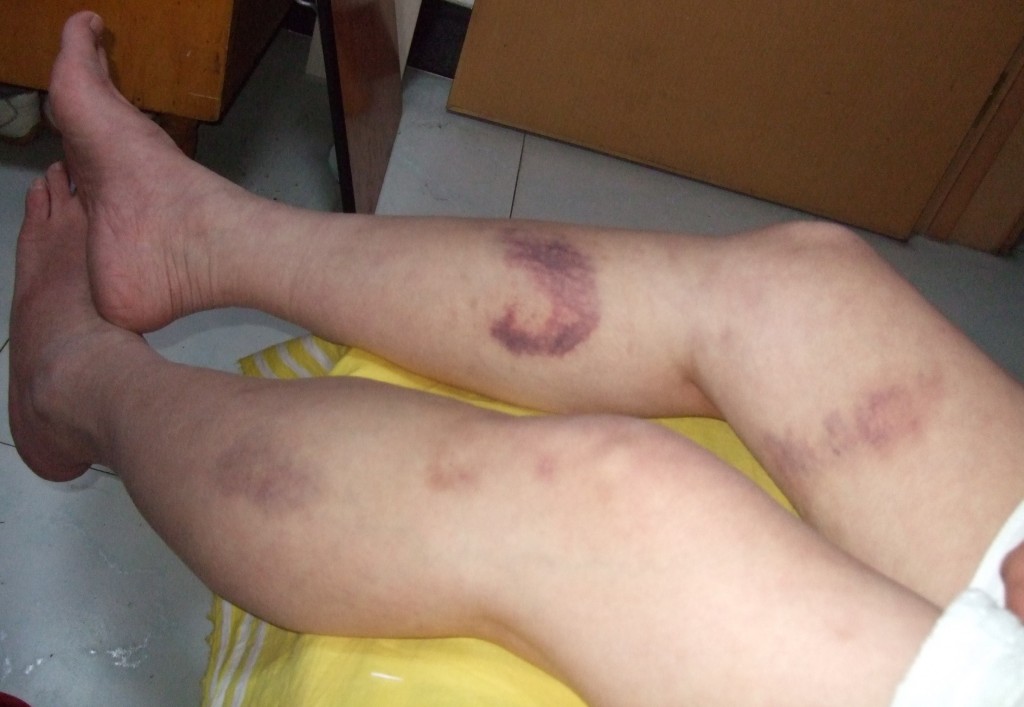
 Bruising happens when an object comes into contact with the skin, and the small capillaries underneath break open and cause bleeding. Generally, patterned shaped bruises are more suspicious for intentional injury. For something to make a pattern on the skin, it generally needs speed or velocity to imprint the pattern onto the skin. For instance, it is far different if I tap you with a belt versus swinging and slapping it down.

Point blank, bruising is not a good way to determine time of injury. Bruising is influenced a lot by the individual person. Are they on blood thinners? Do they normally heal quickly? Age factors influence speed of healing as well. Bruising can give a time frame but color of bruising is also open to interpretation. Here’s one set of guidelines.

Color of Bruise
Red– swollen/tender: 0-2 days
Blue/Purple: 2-5 days
Green: 5-7 days
Yellow 7-10 days
Brown 10-14 days

As you can see, 48 hours is a large time frame. In the case of pediatrics, imagine the potential of how many people could have come into contact with an infant.

Interesting bruising fact: Bruises generally heal from the inside out. If you watch a bruise you have, you’ll notice they become lighter at the center as healing progresses.

Did you think bruises could give an accurate time frame for injury?

Aortic Injuries: Part II

Dr. Edwards concludes his series on anuerysms today with a look at abdominal aneurysms.

The last blog in this series discussed problems with the upper (thoracic aorta) and how the condition known as a dissecting thoracic aorta can mimic heart attacks and be rapidly fatal if the wrong medication (a clot dissolving drug, for example) is given.  This time we’re looking at the abdominal section of the aorta.


www.health-news-blog.com

 By far the most common emergency condition involving the abdominal aorta involves a ruptured aneurysm. An aneurysm means a ballooning.  Abdominal aortic aneurysms, however, do not develop suddenly.  They rupture suddenly, but the underlying problem—the development of a large bulging section—occurs slowly over years.  We know that hypertension is a risk factor for this, but there are most likely hereditary factors as well.  Typically the aneurysm begins in a person’s forties, fifties, sixties or later, and is often present, usually undetected, for ten years or more before reaching the dimensions (usually greater than 4 cm in diameter) where sudden rupture may occur.    


Many, if not most, AAA’s remain asymptomatic and never rupture.   If a physician discovers one on physical exam or finds one incidentally in the course of performing an ultrasound or a CT scan for an unrelated condition and the AAA is less than 4cm, the patient can be followed by repeat ultrasounds every six months or so.  When and if the AAA reaches 4 cm, then consultation with a vascular surgeon is in order to consider a prophylactic graft procedure.

Unlike what happens with the thoracic aorta where a tear develops and blood channels inside the vessel wall, the AAA actually ruptures through the entire wall of the aorta and the patient can rapidly die from blood loss.  Time is very much of the essence.

The classic presentation of a ruptured AAA will be a patient in their seventies or eighties with a long standing history of hypertension who has the acute onset of severe lower back or possibly flank area pain which may or may not extend around to the front of the abdomen.  The pain is severe and a fair percentage of the time it is accompanied by a fainting episode and low blood pressure.  In some ways the pain mimics that of a kidney stone, though I have personally seen two patients with a ruptured AAA that came in complaining of feeling constipated. 

The diagnosis can be picked up by ultrasound or CT, but in a good number of cases, you can actually palpate a pulsatile mass in the abdomen.  Emergency providers must keep a high index of suspicion for the presence of a ruptured AAA in any elderly patient with abdominal pain.   If you don’t think about it, you can easily not consider it until the patient is crashing, and then it’s often too late.  In general, though, it must be said that the mortality rate is very high even if the physician does everything right.

****************************************************************************** 

Frank Edwards was born and raised in Western New York.  After serving as an Army helicopter pilot in Vietnam, he studied English and Chemistry at UNC Chapel Hill, then received an M.D. from the University of Rochester.  Along the way he earned an MFA in Writing at Warren Wilson College.  He continues to write, teach and practice emergency medicine. More information can be found at http://www.frankjedwards.com/.

Diabetic Emergency: Dianna Benson

Dianna’s back for her monthly guest blog. Today, she covers EMS care for a diabetic emergency.

EMS 4 diabetic emergency at 123 Fox Street, at 123 Fox Street on TACH Channel 12

I stuff the rest of my sandwich into my mouth and gulp down some water as I rush out of the fast food joint to hop into my ambulance. As my partner signals RESCOM (dispatch) we’re en route to the above (sample) call, I speed our ambulance down the road, lights and sirens.
I won’t discuss the full assessment and treatment we’d perform on a diabetic patient, but if you want clarification or further explanation for your fictional writing needs, please ask me.
On scene we find first responders assisting an unconscious male sitting slumped over in a Target bathroom.
“His blood sugar is 12,” one of the firefighters tells me. “He works here and his co-workers say he takes insulin daily.”
“Sir?” I say to the patient. “Can you hear me?”
No response. His eyes are half open. His pupils are dilated and sluggish.
My partner and I insert a line (IV), and push one 25g AMP (ampule) of D50 (dextrose 50% in water). I attach him to our cardiac monitor via a 12-lead (ECG patches), and assess his heart rhythm and all his vital signs. He’s in normal sinus rhythm and all his vits are within normal range; however he’s slightly tachycardic (heart rate too high), but an elevated HR is the body’s defense to survive a hypoglycemic episode (low blood sugar).   
“Sir?” I place my hand on his shoulder. “Hey, buddy, talk to us.”
The patient remains unresponsive, so my partner and I push another 25g AMP of D50.
Via a glucometer, we test his BGL (blood glucose level). It’s now 43. We’re headed in the right direction, but the patient is still unresponsive. We administer 1mg of glucagon IM (intramuscular injection).
“Sir?” I squeeze his hand. “I need you to talk to me. Okay?”
He stirs, his eyes attempt to focus. We load him onto our stretcher and wheel him inside our ambulance. Within a few minutes, he stares at me. “Where am I?”
“You’re in an ambulance, sir. I’m EMT Benson.” I finish retaking his BGL again. It’s now 98 (within normal limits). “Do you know what happened?”
He nods. “Yeah. It happened again. Twice this week. Stupid blood sugar.”
Can you tell me your name?” I ask, even though I know his personal information via his co-workers. I start this line of questioning to assess the patient’s mental status.
“Bob.”
“Okay. Bob, what’s your birthday?”
“Ah…February 3, 1972.”
“Uh-huh. Gosh, Bob, my math is horrible. How old does that make you?”
“Thirty-nine, but don’t tell my girlfriend. She thinks I’m thirty-one.”
I laugh. “I won’t say a thing, but you may want to tell her yourself soon, what do you think?”
“You’re probably right.” 
“You take insulin, I hear. Did you take any today?”
“45 units, early this morning.”
“45, huh? Have you eaten anything today?” I note the time is twenty minutes past noon.
“Two graham crackers.”
“You need to eat more than that, you know? Especially after 45 units. Breakfast is the most important meal of the day. Promise me you’ll eat breakfast everyday.”
He nods as he smiles at me. 
I radio the hospital. “Wake Med, EMS 4 en route with pt (patient) initial BGL 12, then 43, now 98. We’ve given 2 AMPS of 25g D50, and 1 mg of glucagon. Initially pt was unresponsive, now A&O times 4 (alert and orientated times 4). Vitals within normal limits. ETA 2 minutes.”
“ED room on arrival. Wake Med out.”
“EMS 4 out.”
*****************************************************************************
After majoring in communications and enjoying a successful career as a travel agent, Dianna Torscher Benson left the travel industry to write novels and earn her EMS degree. An EMT and Haz-Mat Operative in Wake County, NC, Dianna loves the adrenaline rush of responding to medical emergencies and helping people in need, often in their darkest time in life. Her suspense novels about characters who are ordinary people thrown into tremendous circumstances, provide readers with a similar kind of rush. Married to her best friend, Leo, she met her husband when they walked down the aisle as a bridesmaid and groomsmen at a wedding when she was eleven and he was thirteen. They live in North Carolina with their three children. Visit her website at http://www.diannatbenson.com 

Author Beware: Seasonal Illnesses

One thing to keep in mind when you’re writing a novel is that some illnesses are seasonal. So if your book covers an obvious time of year– say the summer. It may behoove you as an author to be aware of the illnesses that are and aren’t around.

Croup: AKA laryngitis. Used to be seasonal but we typically see it year round. No time restrictions needed here.


fyi.utah.edu

RSV: The leading viral cause of bronchiolitis typically starts in late fall, early winter and lasts approximately 20 weeks. This is what healthcare professionals happily (maybe?) term “respiratory season”. It means gowns, gloves and masks need to be worn for patient’s that present with cough and fever. Another fact to keep in mind.

Influenza: Influenza is truly a respiratory illness and not a gastrointestional (GI) one. You know an author has thoroughly checked their facts when they have a summer illness with vomiting and diarrhea and don’t call it influenza. This is why flu shots are given Sept-Nov… to help prevent the transmission of this illness.

Keep seasonal illnesses in mind when you’re writing a novel that occurs during a specific time of year. It may behoove you to ask if that contagious illness you’re killing off your characters with would actually occur during your time frame.

Have you used a contagion, known or “created” in your novel?

The Curious Case Of Typhoid Mary

We’ve all heard sick people exclaim, “Watch out, I’m typhoid Mary today!” over concern of how many people they could potentially infect.

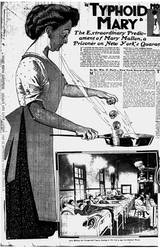
I happened to be reading the book, Deadly Choices, by Dr. Paul Offitt which is a non-fiction book that talks about the effects of the anti-vaccine movement on public health. I happened to come across the true story of Mary Mallon AKA Typhoid Mary.

Mary Mallon was a cook. In 1906 she was hired by New York banker Charles Warren for the summer as he vacationed with his family in a rented home on Oyster Bay, Long Island. During that summer, six of eleven people in the household became ill with typhoid fever. Since typhoid fever is spread through food and water sources, the homeowners feared they wouldn’t be able to rent the property again unless the true source was discovered so they hired private investigators to look into possible causes.

All roads led back to Mary Mallon and she was approached to give samples of her blood, urine and feces to look for the bacteria. To say Mary Mallon was a cooperative patient would be like saying the Tasmanian devil was a soft furry bunny. She had to be brought against her will to the hospital and though sources don’t explicitly say, I’m gathering she didn’t easily give up the specimens they wanted.

Salmonella typhi was found in her feces and Mary Mallon became the first identified healthy carrier of  salmonella typhi. This was very hard for her to understand. How could she possibly be causing these illnesses if she herself was asymptomatic? In order to prevent her from infecting others, she was quarantined to a small cottage on North Brother Island from 1907-1910.

In 1909, Mary sued the health department for unlawful imprisonment but lost. In 1910, after a new health commissioner came to power, she was released under her promise that she would never take work as a cook again.

January 1915, Sloan Maternity Hospital in Manhattan suffered a typhoid outbreak. It was traced back to a cook, Mrs. Brown, who was really Mary Mallon working under a pseudonym.

She was quarantined for the remainder of her life from 1915-1938. She spent a total of 26 years in quarantine.

The case of Typhoid Mary brings up several interesting issues. One being, what power should the state/government hold for the health of a population? I’m curious as to your answers as we’ll be looking at this more when it comes to religious and philosophical exemptions to vaccines.

Barber-Surgeons

Have you ever wondered about the origin of some symbols? How about the infamous barber pole? Are you familiar with the role of the barber-surgeon? If you write historical fiction spanning the 13th through the 18th century, you may want to familiarize yourself with their function.


aj_da_barber

The practice of medicine was separated from the practice of surgery. Medical practice was generally carried out by those who went through a university program whereas surgery was considered more of a trade.

The characteristic red and white barber pole with the brass bowl symbolized the basin used to collect the blood during blood-letting and the red and white stripes represented the blood and dressings. This represented members of the Barber-Surgeon Guild until 1745.

To learn more about barber-surgeons, check out these references:

1. http://en.wikipedia.org/wiki/Barber_surgeon

2. http://unusualhistoricals.blogspot.com/2009/01/professions-barber-surgeon.html

3. http://www.sciencemuseum.org.uk/broughttolife/people/barbersurgeons.aspx

4. http://www.barberpole.com/artof.htm

Would you have been comfortable going to a barber-surgeon?

Top Three Most Popular Posts: #1

I’m so blessed that it’s been such a great first year for this blog. I owe it to all of you and your interest in how to appropriately injure, main and kill your fictional characters. Thanks to everyone who follows and subscribes and even the lurkers who peruse by….

It isn’t surprising to me that this remains the most popular post of all time here at Redwood’s Medical Edge with nearly 1000 page views. This myth continues to be perpetuated in books and TV.

I love the series Dexter. If you’re unfamiliar with it and you’re a writer, I think it’s a great exercise in intricate plotting techniques. However, it is violent, so proceed with caution. The general premise is that Dexter works for Miami Police as a blood splatter specialist. In his free time, he’s a serial killer, but only kills those that the justice system doesn’t put away. This show is also good study for the sympathetic villain.

In one episode, poor Dexter has been in a motor vehicle collision. He is dazed and is taken to the ER. The doctor says something to the effect of, “You have a head injury. You’ll need to stay awake for the next several hours.” Great.

Sleepiness post head injury is a classic set-up for pediatrics. Every day in the ER is a story like this. It’s close to bed time. The children are running amok. Some child falls down, falls into, or falls off of something and hits their head. They cry their little heart out. After all, hitting your head hurts, a lot. After a good crying bout, they’re sleepy. Parents first thought is, he must have a terrible head injury. Off to the ER.

Now, one, I want to make it clear. Getting your child checked in the ER for head injury is good and reasonable. However, we aren’t all that concerned with sleepiness. What we are concerned with is how arousable they are from sleep. This is what we’ll be monitoring every fifteen minutes to an hour if the child sleeps during his ED visit.

Level of consciousness is assessed as an indicator of an injury going on inside of the head. How arousable you are is the most sensitive indicator of level of consciousness. If the child falls asleep, and we are concerned about head injury, we’ll try to wake them up every so often to assess their level of arousability. If we cannot wake them up, then we are concerned. It has to be more than a gentle nudge. You are really working to wake the patient and they won’t respond. This is concerning.

Remember, things that are injured need rest. This is why we put you on crutches if you break an ankle. The brain rests by sleeping. It helps it to heal. If you’re a subscriber to this myth, how long should we keep the patient awake? An hour? Two hours? A day? If you want a skewed neuro exam, try doing one on a sleep deprived patient.

For additional resources regarding this myth, check out the following:

1. http://firstaid.about.com/od/headneckinjuries/f/09_Waking_Heads.htm

2. http://familydoctor.org/online/famdocen/home/common/brain/head/084.html

Top Three Most Popular Posts: #2

Suspense novelists are a little consumed with finding ways to kill their characters. I’m guessing that’s why this post by Kathleen Rouser was the second most popular post.

Plants: Poisons, Palliatives and Panaceas

Then God said, “I give you every seed-bearing plant on the face of the whole earth and every tree that fruit with seed in it. They will be yours for food.” Gen. 1:29 NIV

Shortly after the time Adam and Eve were forced to leave the Garden of Eden, because of their fall into sin, human beings most likely began looking for relief from pain and sickness. Perhaps by God’s guidance or by what seemed like coincidence, they found that there were certain plants that not only nourished, but also relieved symptoms or cured illnesses.

Throughout the ancient world healers emerged, whether as a medicine man, priest, wise woman or physician. They were brave enough to search by trial and error to find the right cure for each malady. These practitioners, whether spurred on by superstition or curiosity, had to figure out which plants healed… and which ones harmed. The line between healing and poisoning was often quite fine.

A few of the remedies the Sumerians used were made from licorice, myrrh, mustard and oleander. The Code of Hammurabi, originating during his reign (1795-1750 BC), regulated medical practice. There, apothecaries emerged, since the role of preparing medication was considered separate from that of the physician.


Poppy Plants

Around 1500 BC, the Egyptians wrote a dissertation on medicine and pharmaceuticals. Among many plant sources they derived their drugs from were castor seed, spices, poppy and acacia. They imported some ingredients due to the limitations of what they could grow. The Egyptians developed ways to dry, ground up and weigh these materials. Those that concocted medicines were called ‘pastophors’ and were members of a priestly profession.


Seventh century BC clay tablets have been discovered revealing that the Babylonians used many plants as pharmaceuticals including castor seed, thyme, peppermint, myrrh, poppy and licorice.

Various theories of diagnosis and treatment arose through the Greek and Roman civilizations. Pedanius Dioscorides, who lived from around 50-100 AD, wrote Materia Medica, which listed various materials with their medicinal uses and also Codex Aniciae Julianae. This text on herbals, listed many plants and how to prepare them through drying and extraction. Dioscorides, a surgeon to the Roman armies, shared a philosophy with another famous Roman medical man, Galen. They believed that each plant’s shape, color or other physical characteristics left a clue as to which body part or ailment it was meant to treat. By the 16th century, this was foundation to one Christian viewpoint, which had expanded upon the Doctrine of Signatures, stating that it was the Creator who had marked each of these plants for their use.

During the Dark Ages, the Arab world and the monasteries of Europe, with their healing gardens, preserved much pharmaceutical knowledge.

Throughout history, many folk remedies, based on superstition, were supplemented with chants and rituals. Most often they missed the mark, perhaps imparting comfort if nothing else, considering man’s need to feel as though he is doing something! But apart from that, many plants continued to be used for healing and a large proportion of modern day prescription drugs are rooted in their derivatives. Some emerged to the forefront.


Cinchona Tree

During the 1600s, European Jesuit missionaries in South America sent a powder back home, derived from the bark of the cinchona tree. They’d been surprised to find out that the Native Peruvians knew how to successfully treat malaria, an illness spread by mosquitoes that has killed so many. In 1820, when French chemists extracted a chemical compound from the powdered bark of the cinchona tree, they called it quinine, based on the Peruvian name for the tree, quinquina.


William Clark and Meriwether Lewis took cinchona bark with them on their westward expedition. Lewis’s mother was an herbalist of some renown and imparted some of her knowledge to her son. While the men did not wind up contracting malaria, they found the bark useful for lowering fevers and as ingredient in poultices.


**************************************************************************

Kathleen lives in Michigan with her hero and husband of 29 years. First, a wife and mother, she is “retired” after 20 years of home educating their three sons, who are all grown and have moved away. Since then, Kathleen returned to Oakland Community College to complete a Liberal Arts degree and a certificate of achievement in ophthalmic assisting. Last year the American Board of Opticianry certified her. Kathleen has been published in Home School Digest and An Encouraging Word magazines. She writes regularly for the local women’s ministry “Sisters” newsletter. She also contributes articles and author interviews to FavoritePASTimes.blogspot.com, a blog devoted mostly to historical fiction. Read about her fiction writing endeavors at: www.kathleenrouser.com


Top Three Most Popular Posts: #3

The one year anniversary of this blog was October 31st! Now that the zombies have been put to sleep for another year, it’s time to celebrate by taking a stroll down memory lane and looking at the top three most popular posts of the last year.

I love hosting Sarah Sundin. She’s a truly gifted novelist and I hope you’ll check out her books. This post, ranked #3, struck a chord with people and I think it’s the way Sarah painted the picture using her authorly ways to make this time period come alive.

Pharmacy in World War II—The Drug Store

In the 1940s, the local drug store was more than just a place to get prescriptions filled and pick up toothpaste—it was a gathering place. If you’re writing a novel set during World War II, it helps to have an understanding of this institution.
As a pharmacist, I found much about my profession has changed, but some things have not—a personal concern for patients, the difficult balance between health care and business, and the struggle to gain respect in the physician-dominated health care world. On February 14th, I discussed the role of the pharmacist in the 1940s, today I’ll describe the local drug store and how its role changed during the war, and on February 18th,  I’ll review the rather shocking role—or lack thereof—of pharmacy and pharmacists in the US military.
Welcome to the Corner Drug Store—1939
Perkins’ Drugs stands on the corner of Main Street and Elm, where it’s stood all your life. Large glass windows boast ads for proprietary medications and candy, and a neon mortar-and-pestle blinks at you. When you open the door, bells jangle. The drug store is open seven days a week, sixteen hours a day, so you know it’ll always be there for you. To your right, old-timers and teenagers sit at the soda fountain on green vinyl stools, discussing politics and the high school football game. The soda jerk waves at you.
You pass clean shelves stocked full of proprietary medications, toiletries, cosmetics, hot water bottles, hair pins and curlers, stockings, cigarettes, candy, and bandages. You know where everything is—and if you can’t find it, Mr. Perkins or his staff will be sure to help you.
The owner, Mr. Perkins, is hard at work behind the prescription counter with good old Mr. Smith and Mr. Abernathy, that new young druggist Mr. Perkins hired last year. Mr. Perkins greets you by name, asks about your family, and takes your prescription. He has to mix an elixir for you. If you don’t want to wait, he’ll be happy to have his delivery boy bring it to your house. But you don’t mind waiting. You have a few items to purchase, and you’d love to sit down with a cherry Coke.
Welcome to the Corner Drug Store—1943
Perkins’ Drugs still stands at the corner of Main Street and Elm. Large glass windows boast Army and Navy recruitment posters and remind you that “Loose Lips Sink Ships.” The neon sign has been removed to meet blackout regulations. The store is open for fewer hours since Mr. Smith retired and Mr. Abernathy got drafted. Mr. Perkins hired Miss Freeman. Not many people are thrilled to have a “girl pharmacist,” but if Mr. Perkins trusts her, that’s good enough for you. Perkins’ Drugs and Quality Drugs on the other side of town alternate evening hours so the town’s needs are met.
A placard on the door reminds you that Perkins’ Drugs is authorized by the Office of Civilian Defense as a pharmaceutical unit, meaning the store will provide a kit of medications and supplies for the casualty station in case of enemy attack. You pray the town will never need it.
Bells jangle when you open the door. The soda fountain is closed. Mr. Perkins can’t buy metal replacement parts for the machine, the soda jerk is flying fighter planes over Germany, and sugar is too scarce a commodity.
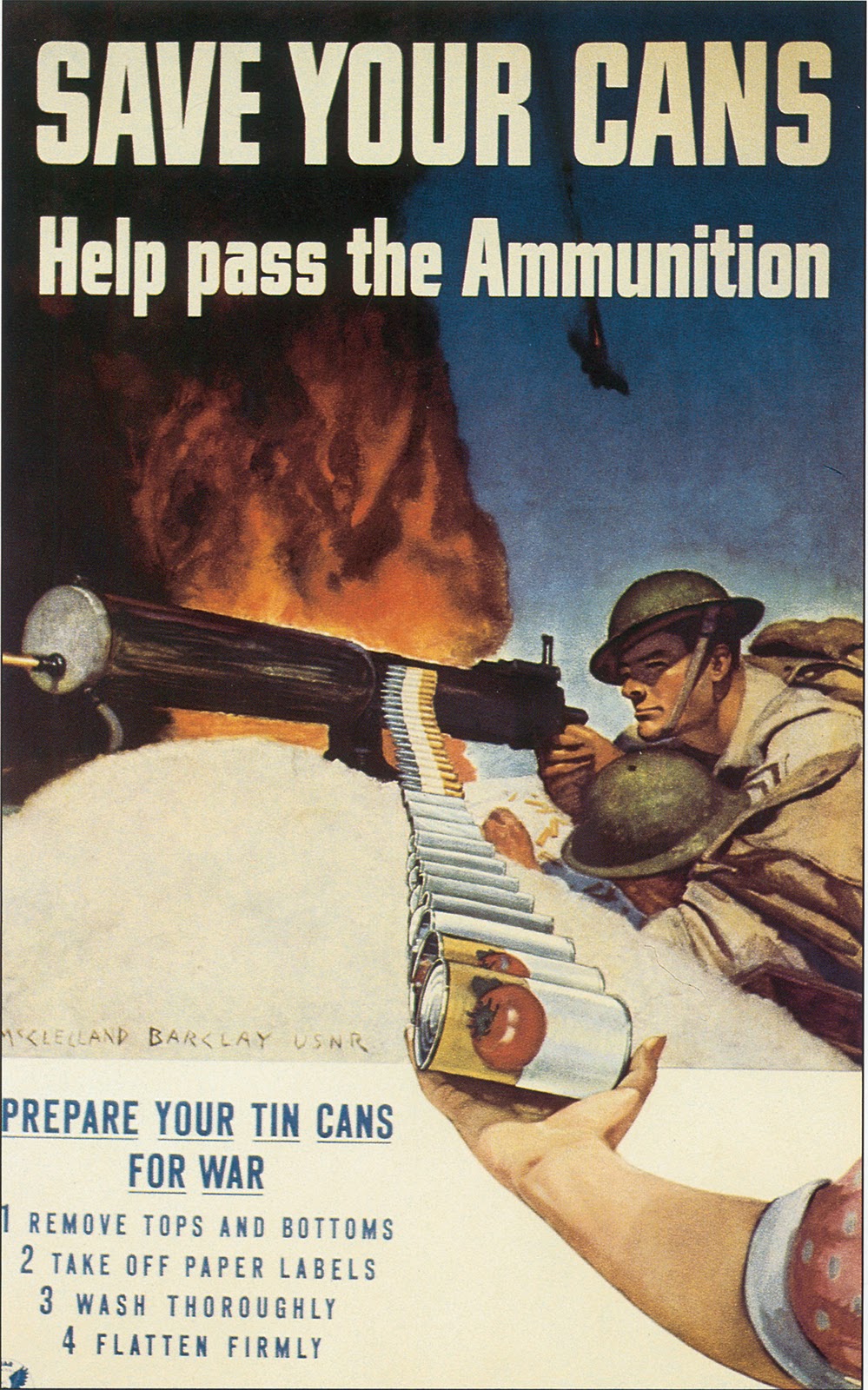
A barrel stands by the door. You toss in five tin cans, washed, labels removed, tops and bottoms cut off, and flattened. Mrs. Perkins at the cash register thanks you.
You pass clean shelves with depleted stocks. Proprietary medications, cosmetics, toiletries, and medical supplies remain, but rubber hot water bottles, silk and nylon stockings, hair pins and curlers, candy, and cigarettes are in short stock—or unavailable. Most of the packaging has changed. Metal tins have been replaced by glass jars and cardboard boxes. You pick up a bottle of aspirin and a tube of toothpaste, double-checking that you brought your empty tube. Without that crumpled piece of tin, you couldn’t purchase a replacement. Tin is too dear.
At the prescription counter, Mr. Perkins greets you by name and asks about your family. Miss Freeman gives you a shy smile and you smile back. There’s a war on and women have a patriotic duty to do men’s work so men are free to fight. Mr. Perkins frowns at your prescription for an elixir. He’s used up his weekly quota of sugar, and his stock of alcohol and glycerin are running low. Would you mind capsules instead? Of course not. Mr. Perkins phones Dr. Weber and convinces him to change the prescription. Mr. Perkins can’t have the prescription delivered—he doesn’t qualify for extra gasoline and he couldn’t find a delivery boy to hire anyway.
You and Mr. Perkins discuss war news as he sets up a wooden block with little holes punched in it, then lines the pockets with empty capsule halves. He weighs powders on a scale, mixes them in a mortar, then fills the capsule shells. After he sets the capsule tops in place, he puts the capsules in an amber glass bottle with the familiar Perkins’ Drugs label.
You buy a few War Bonds. Your wages are higher than ever with the war on, and with all the shortages there’s nothing to buy. Besides, War Bonds are a solid financial investment and your patriotic duty. On a poster by the counter, a smiling pilot leans out of his plane and reminds you: “You buy ‘em. We’ll fly ‘em. Defense Bonds and Stamps.”
Mr. Perkins thanks you for your purchase, and you thank him for his service. War or no war, you know Perkins’ Drugs will always be there for you.
Resources
My main source was this excellent, comprehensive, and well-researched book: Worthen, Dennis B. Pharmacy in World War II. New York: Pharmaceutical Products Press, 2004.
http://www.lloydlibrary.org (Website of the Lloyd Library and Museum, which has many articles and resources on the history of pharmacy).
*****************************************************************


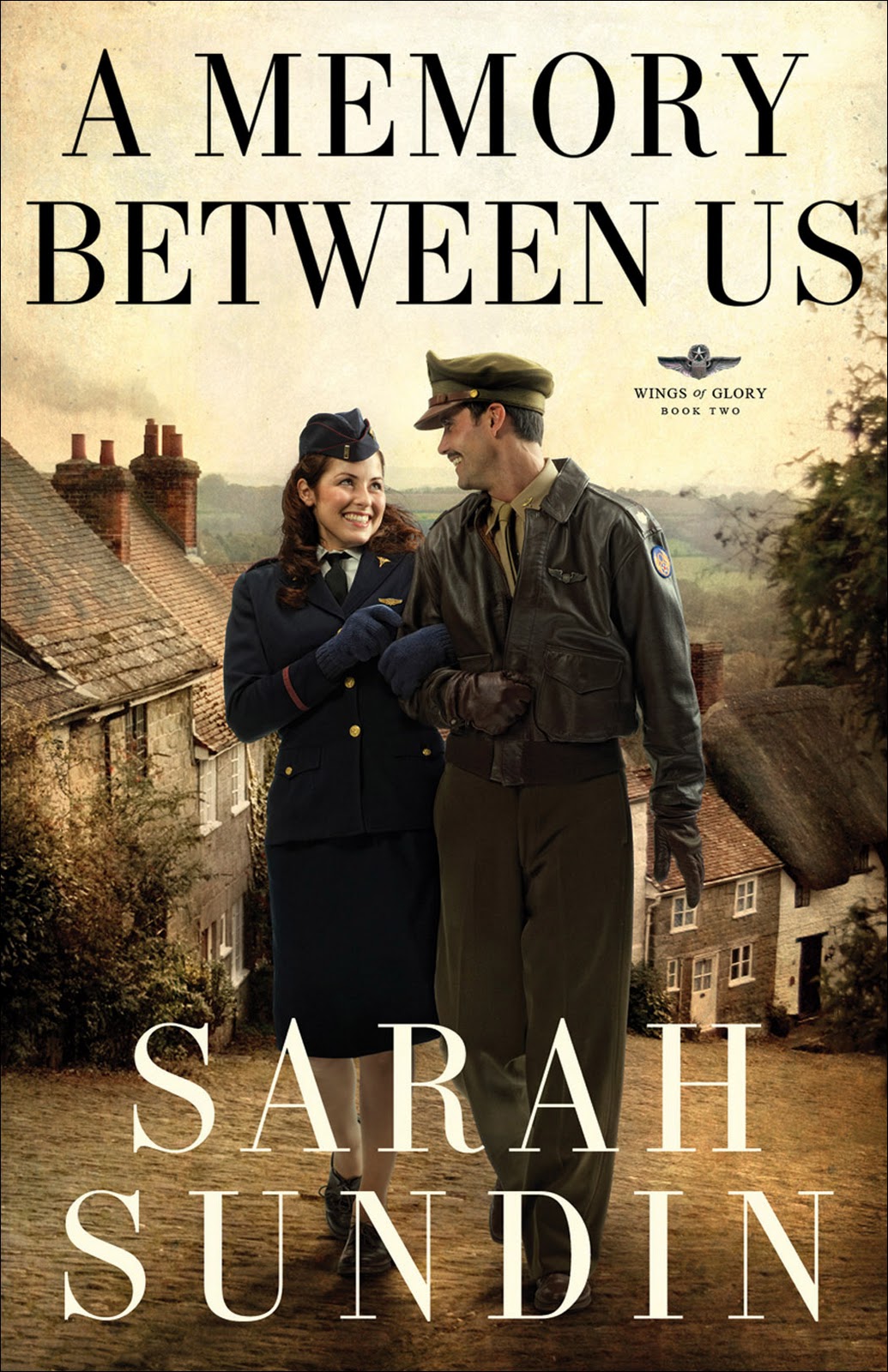
Sarah Sundin is the author of the Wings of Glory series from Revell: A Distant Melody (March 2010), A Memory Between Us (September 2010), and Blue Skies Tomorrow (August 2011). She has a doctorate in pharmacy from UC San Francisco and works on-call as a hospital pharmacist