Peter Golden: Comback Love 1/2

I’m so honored to be hosting award winning author and journalist Peter Golden as he blogs about the research aspects of his new novel Comback Love. I find the subject matter of this book fascinating– the tumultuous 60s and a young woman in medical school. As Peter discusses, it’s far different than what female medical students face these days.

Welcome, Peter.

Part I

Mark Twain observed that there are “liars, damn liars, and statistics,” and while Twain is one of my favorite writers, sometimes it helps to believe in numbers. Perhaps that’s just the historian in me, since I also write history, but statistics—one in particular, that is—certainly came in handy when I was writing my first novel, Comeback Love.

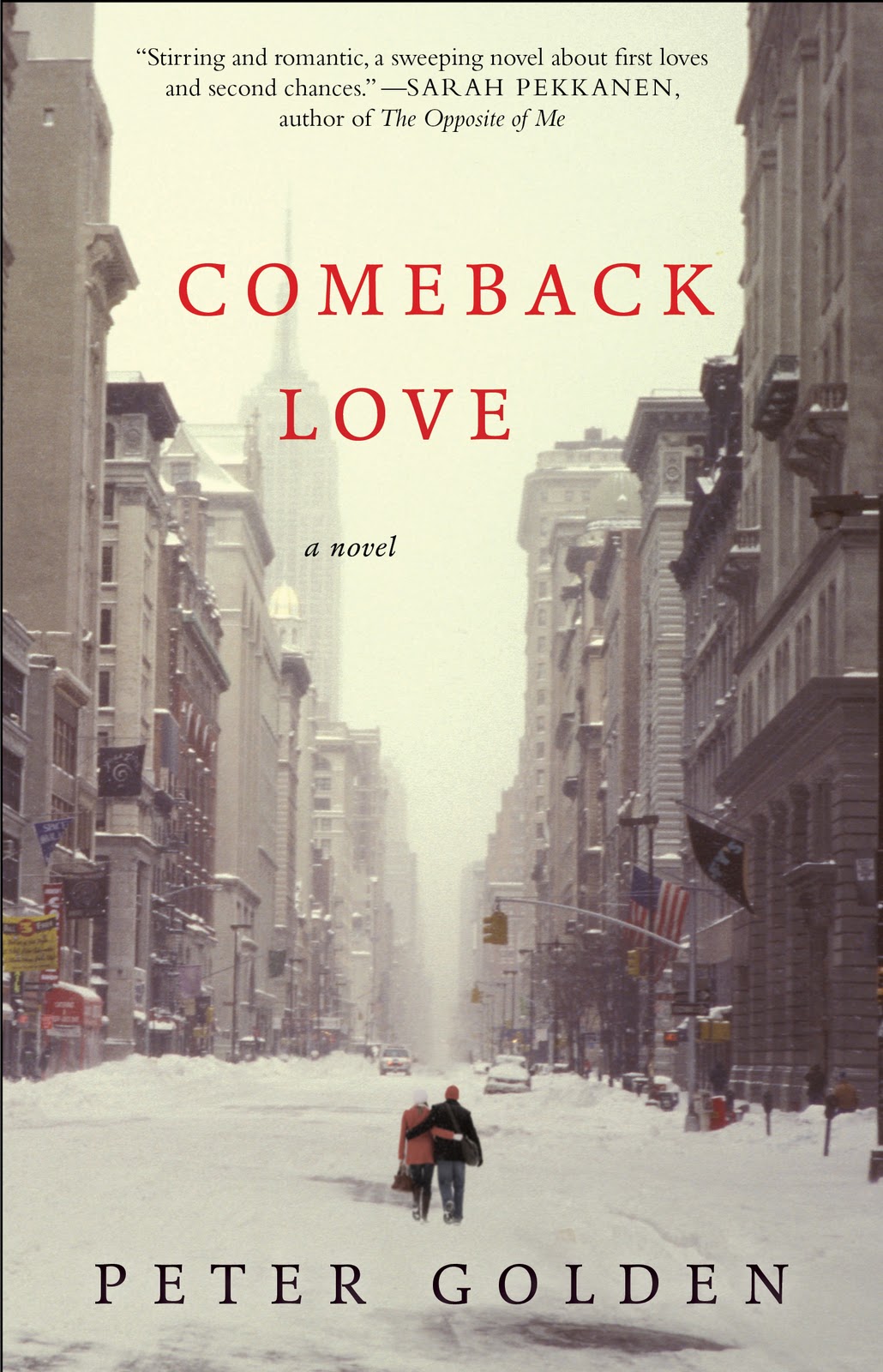
To understand the number—which happens to be 5.8 percent—you have to know a little about the novel, which shifts between the past and present.  It begins with Gordon Meyers, who decides to track down Glenna Rising, a woman he loved and lost 35 years ago. When Gordon and Glenna first meet in the 1960s, he is an aspiring writer and she is a medical student. Their relationships unfolds against the backdrop of the Vietnam War and the Women’s Movement—only to crash and burn when the outside world gets in the way. Now, years later, Gordon has an overwhelming desire to see Glenna again. Though she’s stunned when Gordon walks into her Manhattan office, Glenna agrees to accompany him for a drink. As they walk through the snow-swept city, we learn about the passions that drew them together before tearing them apart. Finally, as the evening unfolds, Gordon revels the true reason for his return, and both he and Glenna are wondering—where do we go from here?

By the time I sat down to write Comeback Love, I was up to my neck in numbers, because for several years I had been researching and writing a history of the Cold War. And one question kept nagging me. What was the greatest change that occurred in the United States during these years?
Which leads me to the 5.8 percent. That  was the percentage of women in medical schools in the early 1960s. (Today, the percentage has climbed to approximately 50 percent.) I wanted to look at a woman from that bygone era, and explore how the changes impacting her also impacted the man she loved. That was the beginning of Gordon and Glenna.
For research, I had notes that I had made during the 1970s when I worked in a hospital. I had met a number of med students, men and women, and I’d heard plenty of stories, many of which I had the good sense to write down. One of the most revealing was of a male attending physician talking to a group of med students, only one of whom was a woman, and at one point the attending turned to the young woman and asked if she would bring him some coffee.
Of course, to examine the changes in women’s roles during the 1960s and 1970s, I could’ve looked at a variety of professions, but none offered easy access to an issue that remains as controversial today as it was then: abortion.
Peter returns Friday for Part II. 
****************************************************************************

Peter Golden is an award-winning journalist and author. Golden’s Quiet Diplomat, a biography of industrialist and political-insider Max M. Fisher made the Detroit Free Press bestseller list. Among those he interviewed were Presidents Nixon, Ford, Reagan, and Bush; Secretaries of State Kissinger, Haig, and Shultz; and Israeli Prime Ministers Shamir, Peres, and Rabin. Golden’s O Powerful Western Star, a history of the Cold War, will be published in the spring of 2012. For that book, Golden interviewed Mikhail Gorbachev.

His debut novel, Comeback Love, will be published by Atria Books on April 3, 2012.

The Tale of Two Book Covers

Today, I’m doing a special post. What’s the point of having your own blog if you can’t do a little shameless self promotion from time to time?

Here is the official cover for my debut novel, Proof, set to release June 1, 2012. It is available for pre-order. You can “like” it on Amazon for me.

Proof deals with the real life possibility of DNA testing setting a guilty criminal free.

Here are some of the early endorsements:

“Jordyn Redwood may be new on the scene, but she writes like a seasoned pro. Proof is one of the best books I’ve read in a long time with well-drawn characters, a villain I despised and a hero and heroine I rooted for. I thought I would just take a peek at the first chapter and finish the story later. I thought wrong. I read late into the night, lost sleep and put off my own writing to finish this book. I’m eagerly awaiting the second book by Jordyn and will be the first in line to purchase it the day it releases.”  Lynette Eason, author of When the Smoke Clears.

“Jordyn Redwood’s debut novel is a page-turning medical thriller with an ingenious premise and solid Christian values.  A satisfying read.”  Frank J. Edwards, author of Final Mercy.

It’s been an amazing journey and there is still a lot to be done. If you want to read more about the author’s process in designing a book cover, you can read my post at the WordServe Water Cooler.

Plus! If you leave a comment here and over there– you’ll be entered for a chance to win my debut novel. Drawing will be midnight, Saturday, April 7th. Winner announced here Sunday, April 8th.

As some of you may or may not know, today is an ever important day. I’ve launched my new website as well! You’ll notice that there is a change and that www.jordynredwood.com does now bring you to the website.

Do not worry– Redwood’s Medical Edge will still be ever present, posting Mon, Wed, Fri to help meet your writing medical needs. The blog address is as follows: http://jordynredwood.blogspot.com/ but you can access it via the website as well. Just look at the top.

There will be lots on the web site as well and I hope you’ll spend some time perusing its features. Topics for writers and readers and a new blog as well. So many new things as I work to build my professional writing life.

For those of you coming over from the WordServe Water Cooler– welcome!

Medical Question: Can my Rocker Perform?

Stacy Asks:

I have a couple of questions for you about a broken foot. In my WIP, my main male character broke his foot. About how long would it be before he could be up on stage in a rock concert? He’s the lead guitarist of a Christian rock band and is quite active during the show (running around, etc).

Jordyn Says:
First, I’m assuming you mean a bone in the foot is actually broken and not the toe itself.
I was actually able to run this by an ortho doc and these are his thoughts. Splint/crutches for one week with limited mobility. Then a walking boot for 4-6 weeks. He thought it would be hard for him to bear weight for the first two weeks so I think jumping around on stage would be problematic during that time frame.

After the first two weeks, he should be able to walk and bear weight but jumping around may still be difficult. Probably could go either way. If he does choose to do a concert– at least have the foot be painful during/after the performance.

Medical Question: Orderly Conduct

CT asks:

I’m working on a short story that takes place in a hospital. The patient is in the room with his family when an orderly shows up. What does this orderly say?  Does he introduce himself in a friendly way or is the relationship strictly analytical and dry?
How can I avoid clichés when describing this scene? Is a clipboard mandatory? Would they wear scrubs and a stethoscope? Also, what should I avoid in the “doctor-talking” between patients and doctors/nurses/orderlies? Any information or advice you have is appreciated. And thank you for your help and your time.

Amitha says:

My first reaction when reading this was–what the heck is an orderly? I vaguely remembered an old Jerry Lewis movie called The Disorderly Orderly. I knew this wasn’t a made up job description, and ended up using Wikipedia to find out the answer. You can find that here: http://en.wikipedia.org/wiki/Orderly

For those who don’t know, an orderly is a type of medical assistant no longer used in the US health care system, but still exists in other countries. Thus, if your story relies on the existence of an orderly it will be very clear that your story does not take place in the US.

Asking whether the orderly is friendly or not is kind of like asking whether a lawyer is friendly or mean, or if a shoe-salesman comes to greet you in a store or not. It depends entirely on the person. This answer is a little bit of a cop-out so I’ll try my best to give you some hints.

How a person talks to a patient also depends slightly on the type of information they need. Naturally, if he is someone like a hospital administrator who just needs basic facts to fill out forms–name, birthdate, social security number, etc.–his demeanor will be less engaging, and more fact-based so they can efficiently move on to the next patient.

If he is a doctor or a nurse who needs the answer to broader questions–about the history of the patient’s illness, the patient’s medical history, etc.–he will try to be more sympathetic, friendly, and engaging to get more information. It is difficult to get answers from people if they don’t like you.

In general, the professional thing to do when working at a hospital is to be kind and courteous. Doctors and nurses try not to talk down to patients or use too much jargon. Remember that these are real people, so the way they interact with others also depends on their personality, how tired they are, etc. I can say that in general, it is unprofessional to talk about a patient in a way they can’t understand in front of the patient. But this doesn’t mean that people don’t do it from time to time.

What a person wears depends on where they work and what their role is. For example, doctors usually don’t wear scrubs, but rather professional attire (pants, blouses, button-down shirts, ties). If they are on call or are surgeons, they may wear scrubs and even then it is considered more professional/cleaner to only wear scrubs in the OR.

Nurses often wear scrubs no matter where they are in the hospital as do medical assistants because they do handle more bodily fluids than doctors tend to. But if you were to have a doctor wearing scrubs or a nurse wearing regular pants, this wouldn’t really be “incorrect” either.

Clipboards–if someone needs to fill out forms a lot, they may carry a clipboard, or they might just use the table that’s in every hospital room. It depends again on the person. I used to carry a clipboard as a med student and as a starting out intern, but as I got busier, I quickly realized the clipboard was just something that didn’t fit in my white coat pocket, and thus could potentially be left somewhere on accident. But if you have more of a desk job or something more patient-intake oriented, it would make sense to keep one around.

To make a long story short–you are the one writing your story, not me, so it’s up to decide how people will interact with each other. Likewise, I can’t help you choose which details tell the most about a person. I can only tell you whether things are realistic or not. Deciding what is or isn’t cliché, unfortunately, is up to you.

*******************************************************************************

Amitha Knight is a former pediatric resident turned writer of middle grade and young adult fiction. She’s also a blogger, a book lover, an identical twin, and a mom. Follow her on twitter @amithaknight or check out her website: http://www.amithaknight.com/.

Rare Disorders – Flesh Eating Disease

I’m so pleased to host Tanya Goodwin, OB/GYN extraordinaire. She’ll be stopping by on a monthly basis to offer her insight into all things medical.

Welcome, Tanya!

http://www.medicinenet.com/necrotizing_fasciitis/article.htm

As a medical student I was taught about a barrage of diseases, acute and chronic, common and rare. One of the rare was necrotizing fasciitis.

Thinking I’d never encounter this deadly disease, I forgot about it until one night as a second year OB/GYN resident (4 year specialty training after medical school) when I was called to evaluate a woman who was transferred from a community hospital to our large teaching institution with possible necrotizing fasciitis.

I briefly reviewed this disease before I took the elevator, along with my intern (aka 1st year resident) to the ninth floor, ready to evaluate this young woman.

It was midnight when we entered her room. My attending (supervising physician) had accepted her transfer as a direct admission, bypassing her need to enter via the emergency department.
She laid in the bed, covered with a white hospital sheet, her husband holding her hand. He darted his eyes towards us. Why would he trust us? His wife’s condition had worsened despite being hospitalized for the last three days.
During that time, she’d received intravenous antibiotics upon the recommendation of a doctor who specialized in infectious diseases. The consult was requested by her obstetrician who had admitted her to the hospital one week after she had given birth vaginally to a healthy baby boy.

Diagnosis? Necrotizing fasciitis.

Necrotizing means dying or death and fasciitis refers to inflammation of the fascia, a tough connective tissue overlying muscle. Rare, the incidence of NF is approximately 1 in 450,000 or 600 people per year.

Otherwise known by the moniker, Flesh Eating Disease.

During childbirth, the obstetrician performed an episiotomy, a surgical incision of the perineum, that skin between the vagina and anus to afford a wider opening to deliver the baby. After the delivery, the episiotomy was sutured closed. The woman went home with her baby, but had called the OB’s office several times with complaints of episiotomy pain, a common occurrence.

Instructed, as usual, to apply anesthetic foam and to take an oral pain medicine, she did so but with no improvement. After multiple phone calls, she now complained of not only refractory episiotomy pain, but fever and chills, malaise, and reddening of her genitals and inner thighs. She was told to come to the doctor’s office.

Diagnosed with an episiotomy infection, her OB admitted her to the hospital for intravenous antibiotics. The redness spread, her fever continued, she was now nauseated, and her blood work showed a significantly elevated white blood cell count consistent with a severe infection. An infectious disease consult was then made by her OB.

Necrotizing fasciitis is caused by invasion of bacteria into the fascia after a break in the skin. Many bacteria or a single offender are the culprits. Typical bacteria are of the streptococci family such as Group A streptococcus or a staphylococcus, both found on our skin. The disease really is not “flesh eating” as the toxins from the bacteria do the damage.

Some have contracted NF by swimming in water containing Vibrio vulnificans. These victims of NF had a portal of entry: a skin scrape or laceration. Those at risk for necrotizing fasciitis are people with lowered immunity from chronic diseases such as autoimmune disorders, diabetes, and liver disease, but it is also seen in healthy people or those that have had surgery or an incision. Symptoms are pain, swelling, redness, feeling poorly, nausea, vomiting, and fever.

What I saw that night still sticks in my memory 20 years later. The woman’s thighs down to just above her knees looked like the worst sunburn I’d seen. At this point, she felt nothing in the affected area as numbness had set in.

My attending physician had examined her as well. After explaining the gravity of the situation, the woman was taken to the operating room to debride, or cut out, the dead tissue. In two surgeries, the first taking all night, she had her vaginal tissues and thighs removed.

She died the second day in the intensive care unit. The bacteria had spread to all her deep tissues. She became septic and died of multiple organ failure, leaving a grieving husband and a newborn son.

NF has a mortality rate greater than 70%. If diagnosed early and treated promptly with surgical debridement, some literature suggests a mortality rate of 33%. Unfortunately for this woman, the diagnosis was correct, but the initial and critical treatment was not.

Hopefully as more providers are aware of this deadly disease, more cases of necrotizing fasciitis will be correctly diagnosed and promptly treated, saving lives.
***************************************************************************

Tanya Goodwin is an obstetrician/gynecologist and a novelist of romantic suspense with slice of medicine. She enjoys sprinkling unusual medical conditions in her writing. A character in one of her novels has the misfortune of contracting necrotizing fasciitis, and in her debut novel, If Memory Serves, due for release in November by Knight Romance Publishing, her main character, Dr. Tara Ross has dissociative fugue, a rare disorder as well. You can find out more about Tanya at www.tanyagoodwin.com.
Author Question: Refusing Medical Treatment

Carrie Asks:

My novel is set in the US and my MC, who’s eighteen, is injured. He’s suffering from concussion, blood loss, and hypothermia, and is very weak and quite disorientated. He is, however, conscious and responding, and adamant that he does not want to be treated or taken to a hospital (and the plot requires him not to be). I understand that he’d be able to refuse treatment if he signed a form saying so. My question is, is there a standard procedure that an EMT would follow before letting him sign?

Jordyn Says: Thanks for e-mailing me your question. You have an interesting scenario here.

I’m going to come from the standpoint of this person presenting to the ER. Put simply, we are not going to let this patient sign out AMA. A couple of things in your statement about his condition will prevent this. Almost everything you’ve listed as far as his medical condition makes it impossible for him to make a reasonable decision regarding his care–concussion, disorientation, hypothermia. Even though he can talk, it doesn’t mean he has enough medical capacity to make an appropriate decision regarding his care until these issues are straightened out.

We would do everything in our power to keep him in the ED. Considering that– you have a couple of options. Make him a lot less sick. Maybe just a few bumps and scrapes. Or, he could elope from the ED somehow, but if we were really concerned about his medical condition we might send the police to fetch him back. Of course, this could add conflict into your story.

I did verify this through an EMS friend of mine as well. The issue is not whether or not they can talk, it’s whether or not they are medically competent to make a decision about refusing care. This character’s condition precludes that.

Ten Myths of Drug Addiction 2/2

Today, we’re concluding Dr. Rita Hancock’s guest post on the ten myths of drug addiction. Today, we’re finishing the last five. These posts have been a wealth of information. Thanks, Rita.

Myth #6:
Most addicts have a “favorite” class of drugs to abuse. Crank addicts don’t necessarily like barbiturates b/c crank addicts like uppers. They might like cocaine, though, b/c that’s also an upper.

Myth #7:

If you’re going to use the term “narcotics,” make sure you know what the term means. Not all habit-forming drugs are “narcotics.” Narcotics are only one specific type of drugs, even though the term “narcotics” is mistakenly used to describe all varieties of illicit drugs. E.g. a “narcotics” police officer actually investigates abuse of non-narcotic drugs, as well. Drugs that are potentially addictive but are non-narcotic include, amphetamines, cocaine, marijuana, hallucinogens, barbiturates, benzodiazepines, etc.

Myth #8:

Naloxone is a medicine used as a antidote for narcotic overdoses. But it does NOT treat overdoses of ALL (e.g. NON-narcotic) controlled substances. On TV shows, I’ve seen it given for barbiturate overdoses, and that’s utterly wrong. It’s used ONLY to reverse narcotic overdoses (with examples of narcotics being morphine, codeine, hydrocodone, oxycodone, methadone, etc.). Moreover, the effects of naloxone don’t last very long. If the overdose is on a long-acting narcotic like methadone, you’re going to have to repeat the naloxone dose after only a short time (like minutes). You might have to give the patient many doses of the naloxone before they’re “safe.”

Myth #9:

Flumazenil is a medicine used as an antidote for benzodiazepine withdrawals (e.g. Valium, Librium, Xanax, etc). In the same way that naloxone is specific for narcotic OD’s, flumazenil is specific for benzodiazepine withdrawals. Again, some benzo’s are longer-acting than others. If your character overdoses on a long-acting benzo, like Librium, he or she may need several doses of Flumazenil in the E.R. 

Myth #10:

There’s a drug called buprenorphine (an orally absorbable narcotic) that’s mixed with naloxone (a narcotic antidote) to form a new type of drug called Subutex (aka Suboxone). It’s novel and interesting b/c it can’t be abused easily and it’s often used to help addicts come off the drugs more safely. It gives the desired therapeutic effect only when you let it dissolve on the tongue. In contrast, if you try to abuse it by swallowing it or by altering it (by crushing, dissolving, etc.), the naloxone takes effect, overriding the narcotic portion, and causes you to go into withdrawals. Doctors have to apply for special licenses to administer Subutex, and they’re limited to having only a small number of patients on it at any given time for the purposes of detox.
***********************************************************************
Dr. Rita Hancock, a full-time physician and author of Christian health books, writes about how emotional and spiritual factors contribute to physical disease through the mind-body-Spirit connection. According to Dr. Rita, “Once these underlying barriers fall away in the healing light of God’s truth, patients automatically feel less physical pain, experience fewer stress-induced symptoms, lose weight, and shed addictive behaviors more easily.” Dr. Rita is the author of The Eden Diet (Zondervan, 2008) and an as-yet untitled release with Charisma House, pending January 2013. She resides in Oklahoma City with husband Ed, and two wonderful children, Lindsey and Cory.

Ten Myths About Drug Addiction 1/2

Dr. Rita Hancock, a specialist in pain management, is stopping by Redwood’s Medical Edge to discuss the Top Ten Myths about drug addiction. Today, we’re covering the first five. On Friday, we’ll finish off with the last five.

Welcome, Rita!

Myth #1:

If you claim a character in your story is “addicted,” make sure you know the accurate definition of the word. People confuse the terms “physiological tolerance” (meaning your body gets used to the medicine and, over time, you can need more and more medicine to get the same amount of pain relief), “physiological dependence” (meaning if you don’t take the medicine you go through physical withdrawals), and “psychological dependence” (THIS means “addicted,” i.e. you’re dependent on the medicine to cope with stress, anxiety, etc).

The first two are normal physical phenomena that happen in ALL patients who take heavy doses of narcotics, but only the last one is abnormal/pathological. Thus, if you claim your character is addicted, his or her behavior should show at least a few pathological psychological features (bad relationships, inability to hold a job, stealing to pay for fixes, lying to doctors for drugs, etc.).

Myth #2:

You don’t become physiologically tolerant and/or physically dependent on ALL drugs. Thus, you don’t necessarily go through withdrawals when you come off certain controlled substances (e.g. hallucinogens like marijuana and PCP don’t cause withdrawals). And not all withdrawal symptoms are the same. They depend on the drug in question. E.g. withdrawals symptoms and overdose treatment for alcohol/benzodiazepines/ barbiturates are similar. However, the symptoms of stimulant withdrawal and overdose will be totally different. The point is the writer needs to research the specific overdose and/or withdrawal symptoms for the individual drug his or her character is hooked on.

Myth #3:

Only SOME people are susceptible to addiction to controlled substances (don’t make the mistake of thinking that ALL people who take controlled substances eventually become addicted). People susceptible to addiction tend to exhibit addictive tendencies early on (teenage or young adult addictions to smoking, alcohol, etc). In general, young people are more susceptible to developing addiction because their coping skills aren’t yet developed and they can learn to rely on drugs for dealing with the underlying anxiety that leads them into addiction.

Myth #4:

I see many elderly people with severe, painful joint pathology who don’t want to take narcotics b/c they’re afraid of getting addicted. But if they’ve taken narcotics periodically during their lives for e.g. root canals, fractures, etc, and have never had a problem getting off the drugs, they’re at lower risk for addiction. As noted above, though, they will (especially if they’re on large doses) eventually become physically dependent).

Myth #5:

There’s a difference between pain and suffering. Pain happens when an inciting event causes pain receptors to fire (e.g. a burn, a sprain, a pulled muscle, etc.). However, that physical pain is interpreted by the brain in the context of the person’s emotional state. A highly anxious patient or one with a volatile psych history (history of abuse, etc.) is more likely to experience psychological “suffering” with a low level of pain.
Thus, if the person tries to medicate his or her subjective experience with pain using pain pills, he or she is likely to over-medicate to quell the anxiety. You’re not supposed to treat your anxiety with pain pills. That’s how you become addicted. Many, many chronic pain patients suffer with psych issues, and often those psych issues long pre-dated their chronic pain. Psych issues are a definite risk factor for chronic pain and addiction.

***********************************************************************

Dr. Rita Hancock, a full-time physician and author of Christian health books, writes about how emotional and spiritual factors contribute to physical disease through the mind-body-Spirit connection. According to Dr. Rita, “Once these underlying barriers fall away in the healing light of God’s truth, patients automatically feel less physical pain, experience fewer stress-induced symptoms, lose weight, and shed addictive behaviors more easily.” Dr. Rita is the author of The Eden Diet (Zondervan, 2008) and an as-yet untitled release with Charisma House, pending January 2013. She resides in Oklahoma City with husband Ed, and two wonderful children, Lindsey and Cory. 

What’s the Difference Between?

Today, I’m pleased to host guest blogger Jason Joyner. Have you ever been confused by certain letters behind health care provider’s names? Jason is here to clear that up.

Welcome, Jason!

When I interviewed for the physician assistant program at my university, the program director offered this scenario to me.

“You are working as a PA, and you need to consult with your supervising physician on a patient. You go to the exam room he’s in, knock softly, and when you don’t hear an answer, you crack the door to see if he’s really in there. You find him making love to a patient. You shut the door quietly, apparently escaping detection. What do you do?”
 Recently there was a guest post by Amitha Knight on How To Write A Hospital Scene that described the different levels of medical training from med students to interns, residents, and attending physicians. There are other levels of health care providers that can be in a hospital or clinic setting, with potential for deeper conflict and development in a story.
A relatively new concept is the “mid-level provider,” a clinician that is under a doctor but can still see and treat patients. There are three main types of mid-levels: nurse practitioner, nurse midwife, and physician assistant. They function in similar ways and are often indistinguishable to a patient, but there are training, legal, and practice differences.
A nurse practitioner has to be a graduate from an RN (registered nurse) program first, with a bachelor’s level degree. Most of the time they will have practiced as a nurse before going back to school. They are trained in the nursing model, with an emphasis on patient care and learning diagnosis and treatment algorithms to treat patients. They often can practice independently – an NP could hang out a shingle and see their own patients, but they are usually working with other physicians. This may vary by state. NP’s are often trained in a specific field, such as pediatrics, ob/gyn, or internal medicine.
A nurse midwife is similar in that they are RN’s first, but then do advanced training that focuses on ob/gyn. They are an option for uncomplicated deliveries, but have to be able to have back-up in case of complications.
A physician assistant is trained in the medical model like a regular physician, but with a shortened time frame. The average program is two years, and it is mostly a master’s level degree anymore. A PA is required to work under the supervision of a physician, but it does not mean that the doc has to see every patient the PA does. It means that the doc has to review a certain amount of the PA’s charts and be available for consult. The PA could be hundreds of miles away from their supervising physician in a rural area, if the doc is available by phone. PA’s are trained in primary care, not usually specializing at first. They can be trained by their supervising physician for specialties such as orthopedics, cardiology, or urology.
Oh, and my pet peeve? It is physician assistant. No “apostrophe ‘s'”. We’re not someone’s possession.
Mid-level providers have received a lot of acceptance in the medical field by both patients and professionals alike, but there are still barriers. I get asked when I’m going to finish medical school by patients. Cardiologists in hospitals fight against giving privileges to an NP, because they don’t want to be asked to consult by a “lowly” mid-level. PA’s and NP’s have a friendly rivalry, but there can be sniping between the two groups. Nurses and mid-levels can be partners together against a tyrannical MD, but may have turf battles or issues on their own.
Many patients now prefer to see mid-levels, feeling the PA or NP listens to their concerns better. Doctors are so busy that they may rush through patient visits more (of course this is stereotypical – there are very caring physicians and mid-levels that have the bedside manner of moldy bread). Mid-levels are working more and more in hospitals to help alleviate shortages of physicians, so it is realistic to have one involved in a medical scene.
As my opening hook suggested, there can be a lot of drama created by utilizing a PA, NP, or nurse midwife in a story. What if a doctor orders the wrong medicine for a patient, but the NP sees it in the chart? What if a PA makes a mistake and has to tell their supervising physician?
A good novel has many layers of depth and sub-plots going on that help drive the plot or challenge the characters. I would encourage a writer to use mid-levels in their books to give them a better prognosis.
***********************************************************************

Jason works as a physician assistant in southeast Idaho, while trying to keep up with three crazy boys and a little princess. He is working on a medical suspense with international flair. Follow him on Twitter @JasonCJoyner or his blog at http://spoiledfortheordinary.blogspot.com/

Renee Yancy: Ancient Medicine in Ireland

I’m so pleased to host author Renee Yancy today as she discusses her research into ancient medicine in Ireland. And, as a special treat, if there are 10 or more comments, she is giving away a free copy of her book!

Welcome, Renee!

In my 5th century historical novel, A Secret Hope, my heroine Ciara is studying to become a druid physician. Having a medical background myself, it was a delight to research ancient medicine in Ireland. Here are some of the tidbits I found.

In the 21st century we know Lambs Ear as the soft, silvery-green leaves in a flower garden that children love to “pet.” But once upon a time, Lambs Ear was known as Woundwort, because the leaves were believed to have healing properties. During the Civil War, Lambs Ear leaves were used as bandages. And what did people do before Band-Aids were invented? A single wooly Lambs Ear leaf is perfect to roll around a hurt finger. A long blade of grass or a pine needle could be used as a fastener.

Another staple of ancient medicine was the water-loving willow tree. Willow bark

contains salicin, and salicin is used to create acetylsalicylic acid, better known today as aspirin. The ancient Celts would simmer willow bark, let it steep, and drink the resulting tea. In the cold, damp areas of Britain, Scotland, Wales, and Ireland, the magical willow bark tea would have been a precious commodity for people who suffered the pains of rheumatism and arthritis.

Another fascinating plant is comfrey. Comfrey has had lots of names over the course of history: Blackwort, Knitbone, and Boneset, to name a few. The last two names give a hint as to one of the major uses of comfrey in ancient medicine.

The leaves would be ground to make a vivid green poultice for bruises and sprains. For broken bones, the fresh roots would be grated and applied over the fracture. This root poultice would turn rock hard and be left over the limb until the bones would “knit”. Comfrey contains several vitamins and minerals, allantoin (which aids cell growth) and 18 amino acids. This amazing plant is known as far back as the 1st century, and is mentioned in the writings of Dioscorides, considered to be the Father of modern pharmacology.
Honey has been used for at least 2,000 years as a dressing for wounds and burns. The ancients didn’t know that honey has anti-inflammatory and anti-bacterial properties but they knew that it worked. The use of honey reduced healing time and decreased scar formation. Plus it smells good!

When antibiotics came on the scene in the 1940’s, the use of honey declined. Now seventy years later when overuse of antibiotics has resulted in scary drug-resistant microorganisms, the use of honey is once again current. In my research I read the report of a 15 year old boy who contracted meningococcal septicemia. He developed peripheral necrosis (tissue death) of his hands and feet. He had to endure bilateral amputations of both legs mid-tibia (shin bone) and lost most of his fingers. His hands healed well but he had many unsuccessful skin grafts to his legs. The pain was so intense that his dressing changes had to be done under anesthesia.

Finally honey dressings were tried. Within a few days the skin on his legs began to improve. In ten weeks his wounds had healed and he went on to successful rehabilitation. Something to think about the next time you stir a teaspoon of honey into your tea!
********************************************************************************
Renee Yancy has been living vicariously through historical fiction since she was a young girl. Her all time favorite book is Shogun by James Clavel. One of her writing goals is to be as historically and archaeologically as accurate as possible. Every object she describes in her novels, including jewelry, dishes, furniture and glassware, are actually in museums all over the worlds. In her other life she is an RN with many years of nursing experience and presently works in an Endoscopy Unit. Learn more about Renee by visiting her website and blog at http://www.reneeyancy.com/ and http://www.reneeyancy.blogspot.com/.