The Bells and Whistles of a NICU

I’m pleased to welcome back Terri Forehand, NICU RN, and she explains the NICU environment. Great details for any author writing a NICU scene.

Welcome back, Terri!

Understanding the bells and whistles of a Neonatal Intensive Care Unit (NICU) is essential for the nurses and neonatologists that care for these tiny infants but it can be especially confusing for parents of a premature infant and down right mind boggling for those trying to write about a premature infant in their fiction. If you are a writer creating a plot or storyline around a NICU unit there are a few things you need to understand.

First, the NICU can be a unit where there are private rooms for each infant and where parents can spend long hours at the bedside in a more comfortable environment with the door closed. An open NICU unit is a huge room with stations or “patient areas” where there is room for the incubator for the baby, monitors, other medical equipment, and standing room around the incubator for the doctors and nurses to care for the infant. Many times you will see a rocking chair cleverly placed between the equipment so mom or dad can be only an arms length away from their baby. The overall feel of a busy unit may feel too close and crowded for many visitors.

A list of general equipment at each bedside regardless of whether it is an open unit or private rooms includes:

  • Incubator or infant warmer sometimes called an island.
  • Suction canister, tubing, and control gage usually attached to the wall used to assist in clearing the airway of an infant.
  • Monitor and cords that attach to the infant’s chest that measure heart rate, respiratory rate, and another cord that attaches to the infant’s foot, toe, ear, or wrist that measures constant oxygen levels in the blood. The specific term for this particular probe is called oxcimetry.
  • Supply cart or shelf that includes needles, blood collection supplies, extra respiratory equipment, diapers, pacifiers, and anything else the infant might need in a hurry.
  • Blood pressure cords to measure the blood pressure of the infant.
  • Feeding supplies.
  • Many other items specific to each infant and the diagnosis including Intravenous pumps, bilirubin spot lights, and blood infusion pumps.

Advantages for the private room concept are privacy for parents and more room for staff to work on each infant. It is considered family centered and parents and grandparents seem more satisfied with these newer creative NICU units that at times can appear more like a plush hotel rather than an intensive care unit for sick babies. The biggest disadvantage for nursing staff is that you can only eyeball one baby at a time, feeling like you cannot keep the best eye on the infants in your care because of the walls between each incubator.

An advantage for the open unit style is easier management of patient care for the staff. It is easy to watch a monitor for one infant and be feeding an infant in close proximity. The nurse can see, hear, and know all about her babies because there are no barriers between patient care areas. This can also mean that private conversations between parents can be over heard by other parents making it more stressful.  The disadvantage is that it can be noisy and more overwhelming for parents not only with mixed conversations but the clanging of alarms from every direction is frightening.

A newborn between 23 and 36 weeks has no place to go but the NICU.  Gestational aged infants between 23 and 28 weeks have the additional complication of breathing issues many times requiring a ventilator. (More on that in another post) The need for extra equipment to support breathing takes up more room, adds more stress to the parents, and adds more alarms to the already frightening atmosphere. It can also be a complication in the plot of a good story.

Parents may be astonished at how complicated a NICU patient area can appear when they first see their tiny infant in that setting. Those of you writing a scene to include a NICU can appreciate how complicated the scene looks to an outsider. It also may offer the possibility for many clever or mysterious scenarios in combination with your imagined family relationships, after all babies are born to the rich, poor, good, bad, honest, and criminal characters both in real life and in the life of your imagination.

********************************************************************************
Terri Forehand is a pediatric/neonatal critical nurse and freelance writer. She writes both fiction and nonfiction, is the author of The Cancer Prayer Book released in 2011. Her picture book titled The ABC’s of Cancer According to Lilly Isabella Lane is due out in 2012. She writes from her rural home in Indiana which she shares with her husband of almost 30 years and an array of rescue animals.

Inter-Hospital Transfer of the Pregnant Woman: 2/2

Dr. Tanya Goodwin concludes her two-part series on NICU designations and transfer of the OB patient. Excellent information for any author writing this scenario. You can find Part I here.

Welcome back, Tanya!

Prior to any transfer, the woman’s pre-term labor must be assessed. The OB performs a history and physical examination while the nurses attach a fetal Doppler and a Tocometer to record fetal heart beat and uterine contractions respectively, start an IV, and they or a lab tech draw blood.

MPR News

Typical blood work would include a complete blood count (for evidence of infection, anemia, or clotting problem) electrolytes (blood chemistry), type and screen (in case blood transfusion necessary or injection for blood type – Rhogam). If the woman is contracting then medications to stall labor are started (Magnesium Sulfate IV, Procardia orally).

Before the OB or labor nurse performs a vaginal exam to assess cervical dilation, a sterile speculum is inserted into the vagina and a special swab called fetal fibronectin is done (a positive result increases the risk that the woman will deliver pre-term). If ruptured membranes are suspected then a sample of fluid is evaluated for amniotic fluid. If the water hasn’t broken pre-term, then the OB does an internal exam to check for cervical dilation.


Antibiotics may be given to decrease the risk of neonatal Group B Streptococcal sepsis (severe and life threatening bacterial infection) Also a corticosteroid injection may be given to the woman between 26 – 32 weeks gestation to help accelerate fetal lung maturation.

Once the woman is assessed for labor, the OB must make a decision as to the probability that his/her patient will make it to another facility without giving birth en route or encounter a medical complication. The OB’s first obligation is to the mother, and then fetus. Stabilizing the pregnant woman is paramount. The fetus depends on the health of the mother.

A U.S./governmental code called EMTALA or Emergency Medical Treatment and Active Labor Act forbids rejection of care and transfer of an unstable patient to another facility. This applies to all hospitals that participate (or receive payment) from Medicare/Medicaid, which is virtually every U.S. hospital. Its original intention was to prevent hospitals from “dumping” indigent patients into “charity hospitals”.

The OB explains the situation to the woman and any family she consents to relay medical information to. This is typically the father of the baby. Risks and benefits of transfer are discussed with the woman and “family” and the woman must give consent to be transferred.

The OB then calls a “transfer center” relaying information regarding the woman’s status and the necessity for transfer to a higher level of care. The transfer center finds the nearest suitable facility and connects the admitting OB to the receiving/accepting OB. Medical information is exchanged. Once the patient is accepted, then depending on distance or urgency, the woman is transported via helicopter (weather permitting) or ambulance. If this is a neonate, then the pediatrician is in charge of obtaining appropriate transport. Nurses also give nurse-to-nurse report. Medical records generated are copied and go with the patient. Everyone involved keeps one another updated as to the outcome, hopefully a happy ending but unfortunately not always that way.

***************************************************************************
Tanya Goodwin is an obstetrician/gynecologist and a novelist of romantic suspense with slice of medicine. She enjoys sprinkling unusual medical conditions in her writing. A character in one of her novels has the misfortune of contracting necrotizing fasciitis, and in her debut novel, If Memory Serves, due for release in November by Knight Romance Publishing, her main character, Dr. Tara Ross has dissociative fugue, a rare disorder as well. You can find out more about Tanya at www.tanyagoodwin.com

Inter-Hospital Transfer of the Pregnant Woman: 1/2

I’m pleased to host Dr. Tanya Goodwin as she discusses the difference between NICU’s and their designation. This will be Part I of her post. Part II covering transfer specifics will be on Wednesday.

One thing I want to point out is the Trauma Center designations run opposite of NICU’s. A Level I Trauma Center is where the most critical patients are taken if possible. Level II and Level III can always stabilize but may need to transfer the patient out.

Welcome back, Tanya!

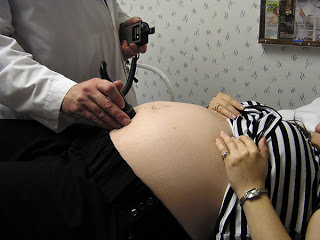
Most pregnant woman will happily deliver their babies in a comfy hospital maternity unit. But for a few, their labor and delivery may need to be at a more specialized facility, or their infants may need to be transferred to an appropriate NICU or Neonatal Intensive Care Unit.

So how does this all happen?


Aside from a rare, life threatening maternal illness or a pregnant woman involved in a traumatic accident, transfer of the pregnant woman is usually based on the neonatal need.


A woman between 36 and 40+ weeks gestation (last month of pregnancy) can stay at a level I facility. Their babies will do quite well in a regular newborn nursery. Occasionally, a full-term baby may not adjust well to extrauterine life or have breathing problems or unforeseen medical or surgical issues that requires prompt transport to level II or III NICU (usually level III).


A level II nursery or special care nursery can accommodate those infants between 32 and 35 weeks. A 35 “weeker”, if doing well can stay at a level I /newborn nursery. Infants in a Level II are mainly there to feed and grow or receive a course of antibiotics.


Level III NICU’s are for babies that need long term care such as assistance with respirations via ventilators, medical or surgical issues. They may need to be fed through special nutritional intravenous fluids. These are the NICUs you usually see on TV.


A newer level, IV, has been touted as the place for extreme pre-term babies, between 22-25 weeks. Level III/IV are in urban centers (tertiary centers or teaching hospitals) where there are 24 hr neonatologists/sub-specialty neonatologists, physicians, surgeons, anesthesiologists, fellows, residents, and medical student. A very busy place!


Two of the most common scenarios requiring maternal transfer are pre-term labor (labor before completed 36 weeks pregnancy) and premature rupture of membranes (water breaking before 36 weeks). These conditions frequently co-exist, but not necessarily. If the OB is in a level I unit, then transfer of the woman is considered. If the OB is in a level II unit then depending on the gestation, the woman may stay or may be transported. No problem if already in a tertiary hospital.

More on this topic Wednesday.
******************************************************************************
Tanya Goodwin is an obstetrician/gynecologist and a novelist of romantic suspense with slice of medicine. She enjoys sprinkling unusual medical conditions in her writing. A character in one of her novels has the misfortune of contracting necrotizing fasciitis, and in her debut novel, If Memory Serves, due for release in November by Knight Romance Publishing, her main character, Dr. Tara Ross has dissociative fugue, a rare disorder as well. You can find out more about Tanya at www.tanyagoodwin.com

A Minor Detail: Heidi Creston

Handling the medical treatment of a minor can be tricky. Heidi Creston is back to discuss some of these special circumstances.

Welcome back, Heidi!

I work in L&D, and by far, dealing with family issues is more demanding of my time and energy than anything else. There is one issue that continually pops up and more and more I am finding it in the books I’ve been reading as well. I’m not an expert but I’d like to toss my two cents in for whatever it’s worth.

There are three primary condition that will emancipate a minor WITHOUT a court order:

1. Marriage
2. Joining the Armed Forces
3. Reaching the age of 18

Marriage or enlistment in military service by a minor brings about a new relationship of obligation and responsibility between the child and someone other than the parents. The severing of the child-parent relationship in this manner constitutes as an implied emancipation.

Substantiated reports of desertion, abandonment, non-support and other conduct of the parent may constitute reasonable circumstances for implied emancipation of a minor depending on the age and maturity level of the minor.

Pregnancy, in most states, does not constitute for implied emancipation. The pregnant minor is MEDICALLY emancipated, meaning they can make medical decisions for themselves and their baby only. The best option is to research the emancipation laws in the state that your are writing about because regulations vary from state to state.

Some states are pretty liberal with their emancipation procedures and a judge can sign off on it without a hearing if all parties involved are in agreement. So if you are planning some animosity within your story with those teenagers, take a quick peek at the laws first.

Marriage is another minor detail as well. Some states, like Wyoming, the legal age of marital consent is 19, not 18. So there is good reason said boy had to talk to girl’s dad first.

Jordyn here: I did a series as well on HIPAA issues that you might find interesting. Several aspects of this law are violated by authors frequently. Check these links for further information.

1. http://jordynredwood.blogspot.com/2011/12/author-beware-law-hipaa-part-13.html
2. http://jordynredwood.blogspot.com/2011/12/author-beware-law-hipaa-part-23.html
3. http://jordynredwood.blogspot.com/2011/12/author-beware-law-hipaa-33.html

**************************************************************************
Adelheideh Creston lives in New York. She is former military and married military as well. Her grandmother was a WAVE and inspired her to become a nurse. Heidi spent some time as a certified nursing assistant, then an LPN, working in geriatrics, med surge, psych, telemetry and orthopedics. She’s been an RN several years with a specialty in labor and delivery and neonatology. Her experience has primarily been with military medicine, but she has also worked in the civilian sector.

Heidi is an avid reader. She loves Christian fiction mysteries and suspense. Though, don’t recommend the gory graphic stuff to her… please. She enjoys writing her own stories and is yet unpublished.

Author Question: The Pesky Reporter and the Wildfire

Charise’s question is very pertinent particularly with so many wildfires burning in my home state of Colorado right now. How does EMS handle it all?
Charise asks:

I’ve got a forest fire happening and a news photographer out trying to get the best shots. She’s walking around recently scorched areas. Her car is parked on black top.  It’s still pretty hot and smoky but she is there without an air tank so it can’t be too crazy. 

I need her car to be inoperable but nothing too crazy like exploding. Is it possible that parked on asphalt, the tires would blister or begin to melt (but a person could still be okay walking around on the dirt)? It seems the way heat is conducted in the earth vs. pavement makes this plausible?

Also, I know animals flee a fire but do they get caught sometimes? Is it possible she’d come across a dead deer?

After she leaves the area, it’s normal she’d have some smoke inhalation problems? Coughing, hacking, etc? Does that require medical treatment or would she be left alone since she’s lucid and otherwise healthy?

Dianna says:

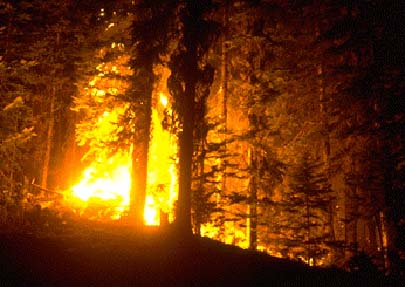
My first thought is that rescue personnel (fire, EMS, law enforcement, haz-mat, etc.) form a perimeter (boundary circle) of three areas: the hot zone, the warm zone and the cold zone.
Hot zone is where the actual emergency event is occurring (in your story case, the forest fire). Warm zone is the surrounding area next to the hot zone; it’s for rescue personnel to enter and exit the hot zone and for decontamination. Cold zone is the area beyond the warm zone and is the only area okay for civilians, including the media.
That said, your character wouldn’t be allowed in an area that her car would experience the damage you stated. Now, of course, sometimes the media and other civilians enter a restricted area like the warm zone (they wouldn’t enter the hot zone unless they’re willing to die). So, you could certainly add that into your story, but she would have charges brought on her, so your story needs to reflect that.
It sounds like you have your reporter character staying with rescue crews, and that’s not accurate. We “deal with” the media this way — we tell them exactly where they can stand and set up their equipment, we keep them informed and updated, and we monitor their whereabouts, but we don’t hang around with them since our job is to work the scene (not watch it unfold), and we certainly don’t allow them to travel around with us at a scene. Sure, we talk with the media, even joke around and share information as appropriate (sometimes just to emotionally handle intense situations), but it’s kept to a minimum and very professional. Good conflict for fiction, though, would be for a rescue personnel to deviate from this, but make sure that person has strong reason for doing so.
It’s highly unlikely she wouldn’t be caught (the boundaries are well monitored), especially since you say she suffers with respiratory issues, so the authorities would know she entered the warm zone (we’d hear her coughing).
As for the medical issues she’d experience, it depends on where exactly she traveled at the scene and it depends on her signs and symptoms. She wouldn’t be covered in ash unless she was actually in the hot zone. If she does experience any respiratory distress, she’d be unwise not to seek medical treatment, and the treatment we’d provide is oxygen therapy, IV, possibly meds and a CPAP depending on her signs and symptoms, and we’d definitely hook her up to our cardiac monitor and evaluate her vitals. This is my thinking: If she’s “covered in ash” then her respiratory system was definitely compromised and she needs medical treatment from EMS.   
So, make medical information fit into your story (not the other way around) by simply keeping things within the possible and changing little things in the story as needed. For example: If a character suffers a head injury and you don’t want that character to go to the hospital on scene, then simply have the character well cognizant with minor signs and symptoms, and later on that character could develop serious signs and symptoms if that’s what you want. Another thing: all patients are different, so how one patient’s body responds medically isn’t the same as another patient’s body; meaning, there are a ton of ways to write medical aspects in fiction.              
As for animals: Sure, all types of animals are caught in all kinds of disasters, so anything there is possible.

****************************************************************************

After majoring in communications and enjoying a successful career as a travel agent, Dianna Torscher Benson left the travel industry to write novels and earn her EMS degree. An EMT and Haz-Mat Operative in Wake County, NC, Dianna loves the adrenaline rush of responding to medical emergencies and helping people in need, often in their darkest time in life. Her suspense novels about characters who are ordinary people thrown into tremendous circumstances, provide readers with a similar kind of rush. Married to her best friend, Leo, she met her husband when they walked down the aisle as a bridesmaid and groomsmen at a wedding when she was eleven and he was thirteen. They live in North Carolina with their three children. Visit her website at http://www.diannatbenson.com

Author Question: Will the ER do DNA test?

Marion asks:

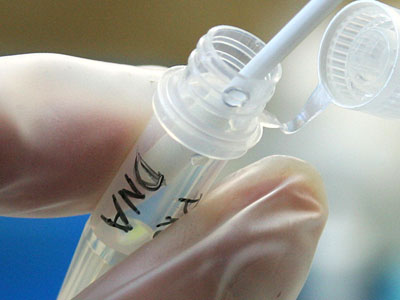
Will the ER do an emergency DNA test to establish familial relationship?

Jordyn says:

I actually have this scenario in my forthcoming second novel, Poison, releasing 2/1/2013. I needed to prove a woman was related to garner custody. Between my ER docs and my brother who works for a large sheriff’s department– we figured out a plausible solution.

The ER is not going to run this test on an emergent basis and I don’t know of many hospitals who even have the capacity in house to accomplish this. So, the lab would be a “send out”.
What will happen is that the ER will contact social services (in house and whatever county the child is in– this might be known as department of family services or DFS) and make arrangements for the test to be performed. Turn around time for a private lab (maybe the family volunteers to pay for the test) may be 1-2 days. Something done through the state is going to take longer– my brother quoted 7-10 days.
During that time, the child can be admitted into the hospital (but again, this will depend on how full the hospital is and may be unlikely if the child is not ill.) Or, the child will go into foster care until the test results become available and social services examines the home the child is going to. In my book, the child went into short term foster care– this can always add conflict to your ms.

Forensic Issues: Determining Time of Death

Determining time of death is important for criminal prosecutions to narrow down the list of suspects. Some things that can aid narrowing down this window are forensic terms you may of heard of: Algor Mortis, Livor Mortis, and Rigor Mortis.

I was fortunate to hear a local coroner speak several months ago. And she reviewed these terms and what they meant.

How fast does a body cool? In a 70 degree room the body will cool 1 degree an hour if maintained at a steady temperature. Issue being, how often are the deceased found in a perfect, unchanging, 70 degree environment? They can be found in temperature extremes, exposed to the elements, or buried in differing depths. All these will effect determining time of death.

Algor Mortis: Reduction in body temperature after death. There is generally a steady decline until is matches the ambient temperature of the environment. Problem being if the body is found in a much hotter area like a house with little air conditioning in a hot, humid environment.

Livor Mortis: Dependent pooling of blood when a person dies. This can be helpful in determining the position of the body at death and if a body has been moved. For instance, let’s say a nude body was found face down, yet their buttocks, heels, shoulder blades and posterior scalp are purplish. This would indicate a change in the position of the body. It starts 30 seconds to two minutes and becomes fixed in 8-12 hours.

Rigor Mortis: Stiffening of the muscles. Starts in small muscle groups first. Begins 2-4 hours, fully developed in 6-12 hours and disappears in 36 hours.

Things that can speed up or slow down these time frames are: the environment, fever, and whether or not the body was buried. Considering the long time frames, an exact time of death is hard and the best hope is to narrow down the time frame.

Here’s a good overview and includes additional discussion of the process of putrefaction.

http://www.deathreference.com/Py-Se/Rigor-Mortis-and-Other-Postmortem-Changes.html

Have you written a scene using any of these concepts?

Forensic Issues: Collecting a Rape Kit (2/2)

Last post, I covered some generalizations about how a sexual assault victim is managed in the ED. Today, I’m going to get into specifics about how a rape kit or Sexual Assault Examination (SAE) kit is collected.

Herald Times Online

The sexual assault victim is a crime scene. Medical needs always come first. If the victim presents with life threatening injuries, these will be managed first above everything else. Collection of evidence will come at a point when the patient is stable.

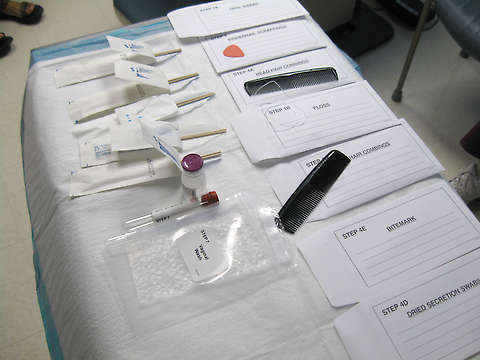
In the kit are generally some large paper drapes. On the ground, we’ll lay out two large bed sheets with the towel on top. The patient (assuming she is wearing the same clothes at the time of the attack) is asked to undress in the middle of these sheets and then given a gown to wear.

Each piece of clothing is bagged in a different paper bag and labeled. I do a piece of clothing, time, date and my initials. Plastic bags are never used. Moist things in plastic will mold and disintegrate and this can damage valuable evidence.

Once the clothes are bagged, each of those sheets are bagged individually as well. This is done in hopes of collecting trace evidence that may have dropped off the patient as she unclothed.

Next, it is important to know the details of the assault as this will dictate what pieces of evidence are collected.

Mouth swabs are collected. They do need to dry before being placed in either an envelope or small cardboard box designed for these swabs.

Fingernail scrapings are collected and fingernails are also trimmed and collected as well.

The pubic hair is combed and any debris is collected in an envelope. The comb is placed there as well.

Probably one of the most humiliating parts of the exam for the victim is that known hair samples need to be collected from their head and pubic area. These must be pulled from the victim. The hair cannot be cut. The point of this is to get the hair shaft that contains DNA so this can be compared to other DNA samples that are combed off the victim.

Blood samples are collected.

A pelvic exam will be conducted by either the ED doctor, ED Nurse Practitioner or the SANE nurse. This would be outside the scope of practice for a bedside ER nurse to do but she is able to do all the other parts of the kit.

If residual fluids are left behind, these are swabbed as well. Any place where the victim may have been bitten will also be swabbed.

Remember, all swabs need to be air dried before they are placed in an envelope or cardboard container. This takes time.

Photographs are taken.

The patient will likely be prophylactically treated for sexually transmitted diseases and pregnancy (if they choose). Counseling will be done in these areas. Some STD’s require follow-up testing– like HIV and a follow-up medical plan will be provided for the patient as well.

For additional information on collection of a rape kit, check this source: http://www.enotes.com/forensic-science/rape-kit.

Forensic Issues: Collecting a Rape Kit (1/2)

ER nurses need to be familiar with the collection of a rape kit or Sexual Assault Examination (SAE) kit. This is good information for a novel that involves a rape victim or a character working as an ER nurse. I’m going to cover this in two parts, the first being some generalizations to consider and then I’ll move into specifics for the second post.

Sexual Assault Nurse Examiners (SANE) are nurses who have received specialized training in the collection of an SAE kit. It is not a simple one day class but multiple classes and clinical hours before the certification can be earned. It is not required that a SANE nurse be the one to collect the SAE kit. SANE nurses are not available at every hospital though you are likely to find them in major metropolitan areas.

The ED staff and police work in conjunction for the victim.

There is not a “national” standardized SAE kit. Each police jurisdiction may have their own of what they want collected.

The location of the crime is important as this will dictate what police agency handles the crime and evidence. The location of the hospital doesn’t play into this. If the crime occurred four hours away– that police jurisdiction will have to send an officer to our location.

The victim needs to give consent for collection of evidence and pictures. The victim can refuse and though we will encourage them to think about this differently, they do have the ultimate say. It is preferred that kits are collected within the first 24 hours though can be done up to 72 hours. After that time, one may still be collected but those involved may be concerned about how much evidence could be recovered and whether or not it will benefit the victim to be put through the exam.

Crime photographs are mostly managed through the police department CSI folks. Though, again, this may change in smaller, more rural locations. If you are writing specifically about a known town and a “real” hospital, it will behoove you to talk to someone there to get the details right.

If available through the police department, a victim’s assistant will come to the hospital to help the victim to understand the process. The nurse may have to advocate on behalf of the patient and ask the police if one is available. Often, these are a team of volunteers that support the police, especially during the night and weekend hours. They also receive specialized training sponsored by the police department. Smaller departments may not have one available. In that instance, an option would be to have the bedside nurse ask a chaplain to come and support the patient.

Next post we’ll talk about specifics of the kit.

Shock Me To Death

There’s nothing like watching a TV show and seeing medical personnel come in with the paddles (even these are rarely used) to shock a patient. Many people say this is “jump-starting” the heart and this is really the wrong clinical picture to give as far as medical accuracy is concerned. The use of electricity on the heart actually stalls it.

What?!?

How could that possibly be helpful to a patient?

Heart cells are very unique, cool little contraptions. Each cell in your heart can generate a beat. Yes, that’s right, every little teeny one. Most often, the normal conduction system of the heart overrides this unique property of heart cells, and the electricity flows from the AV node to the SA node so the heart contracts in a normal, orderly fashion.

Heart Cells: Douglas Cowan, Children’s Hospital Boston
The heart’s normal beat is important because when the top (the atria) contract, it pushes the remaining blood that doesn’t flow via gravity when the valves open into the ventricles. When the ventricles contract, it pushes blood out to the rest of the body.

The purpose of blood flow is really oxygen delivery to the cells. Of course, there are other functions but this is primary. Without oxygen delivery to the cells, cells will die. Lack of oxygen delivery to the cells is called shock.

We’ll talk more about shock in later posts.

Defibrillation (or unsynchronized cardioversion) is only used in a few arrhythmias. Ventricular tachycardia and ventricular fibrillation. These arrhythmias appear when something has affected the heart’s normal conduction system– such as a heart attack, electrical injury, lack of oxygen. They are more common to the adult population than to the pediatric.

In these arrhythmias, the heart’s normal conduction system is no longer working properly and other cells in the heart become active in an attempt to keep the patient alive. The problem with these arrhythmias is that they do not produce a pulse.

No pulse is clinical death. So, we must get back the patient’s pulse back in order for them to have a chance at survival.

What defibrillation actually does is stop the heart by briefly terminating all electrical activity in hopes that the heart’s normal conduction system will begin to work and a palpable pulse will then ensue.

Important note— there must be some electrical activity for defibrillation to work. So, it is not indicated for the treatment of asystole or when the patient has “flatlined”. This is done often in television shows and is a clear medical inaccuracy.

Electricity is also used in another condition called supraventricular tachycardia (SVT). Supra means above. So this rhythm is a very fast rhythm generated somewhere in the atria. Sometimes, when the heart beats incredibly fast, it doesn’t have enough time to fill with blood. When it fills with less blood, it pumps less blood out. Less blood out means less oxygen delivery. The patient can have signs and symptoms of lightheadedness, dizziness, sweating, chest pain, and difficulty breathing to name a few. They still have a pulse though it may be weak and thready.

The goal of using electricity in this instance is again to disrupt this pathway by stalling it in hopes that the heart’s normal conduction system will take over at a much slower rate.

There is also a medication that can be given that will chemically stall the heart, too. It is called adenosine and is used in the stable patient presenting with SVT. It is used in instances of fast rhythms to slow the pulse down.

Does this change your impression of how defibrillation really works?