Nurse as Patient

When my debut medical thriller, Proof, was going through the editorial process there was a question about a particular character’s reaction to finding his friend, and love interest, attacked and unresponsive in her home.

Kadin Daughtry is an OB/GYN. So, he’s used to being under pressure. After all, babies can be in a rush sometimes to be born.
However, when he finds Lilly, beaten, he does the necessary things– checks her pulse, calls 911. But he is stunned and having difficulty.

Editorial thought he should have his act much more together– after all, he is a trained physician.

Hmmm….

It’s true, medical people have the knowledge to deal with emergencies. But they still are people and can suffer the same reactions other people under stress will feel.

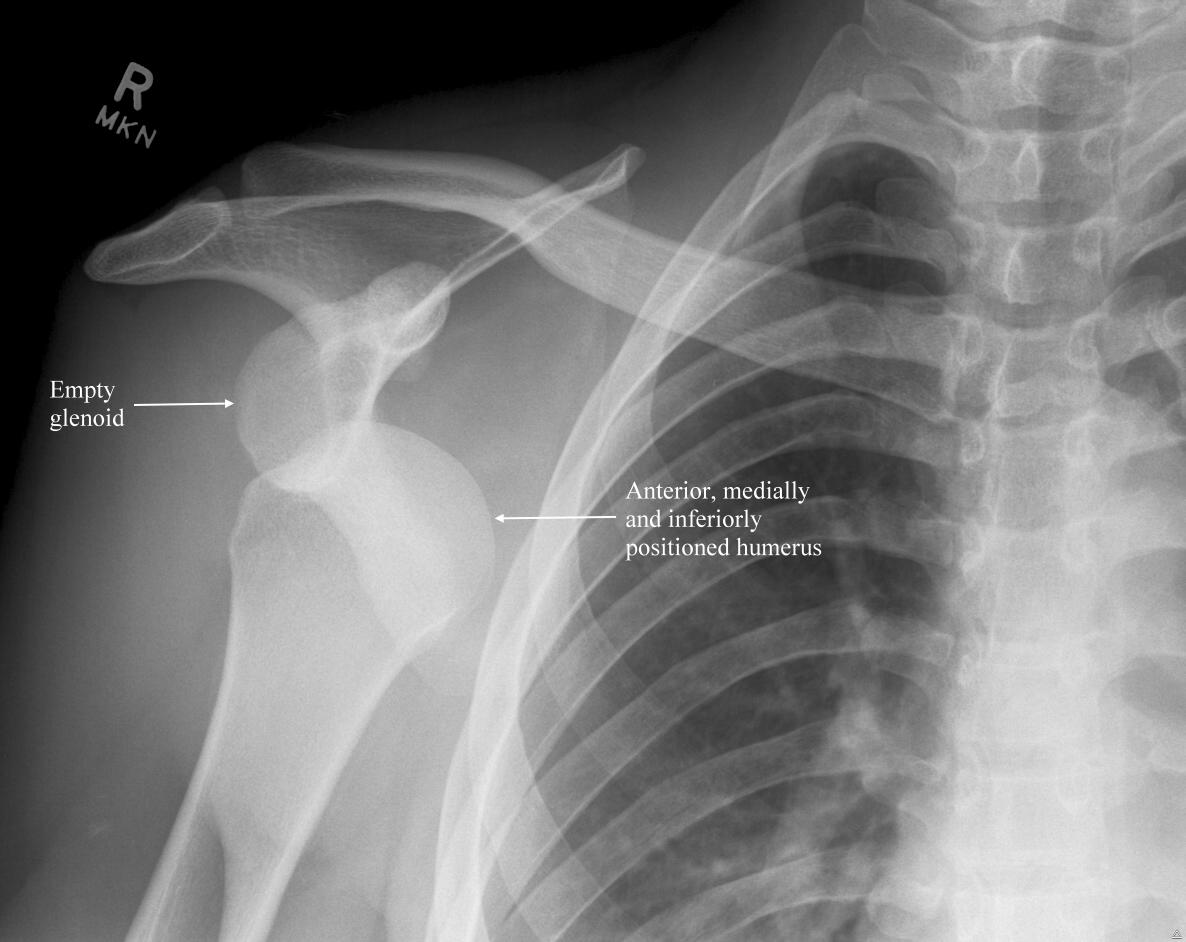
About nine months ago, I dislocated my shoulder while working out with a personal trainer. Unfortunately, this was not a new thing (to the left shoulder it was!) so, initially, I felt like– okay, I can manage this. We just need to get it back into place as I’d been able to self reduce my right shoulder before.

The pain was pretty awful. No quite as bad as burning my eyeball with a curling iron (yes, the actual eye!– I know– it takes talent) or giving birth but up there. When it became clear that I wasn’t going to be able to reduce it myself and wasn’t willing to let my trainer try because he doesn’t carry Fentanyl in his pocket– in retrospect I realized a couple of things.

1. Pain makes it really hard to think. It doesn’t matter how well versed you are about treatment of certain injuries, pain makes it hard to think through your options. You just want the pain to stop– quickly.

2. Because of #1– making decisions is hard. It’s not that your clinical brain checks out. You can still assess the injury and walk someone else through the treatment, but it’s not seemless. Meaning, there were long moments of silence as people waited for me to tell them what to do because they know I’m an ER nurse.

3. You really want someone else to make the decisions. Even though I am an ER nurse, I really wanted someone else to step up and say– this is what I’m going to do and this is what I need you to do. We’re going to get you up. I’m going to call an ambulance… It’s reassuring to feel that someone has your back. When people are doubtful around you and looking horrified at your injury– you begin to worry about yourself more. That’s why having that “doctor face” is important. People want to feel like you can competently handle whatever is wrong with them.

4. Ambulance rides are very bumpy! Don’t ever write that an ambulance is a comfortable ride. They are not.

What about you? Have there been times people looked to you to be an expert but you really needed someone else to step in?

Author Question: How Long to Drown to Death?

Kara asks:

I’m a fan of your blog and was hoping you could help me. My current work in progress has a seven-year-old girl die from drowning. After the rest of her family goes inside, she returns back to the pool to retrieve something and then is found minutes later.

My question is two-fold:

1. What is the minimum amount of time a girl that age and of average weight and height would succumb to drowning (assuming she fell & hit her head, then fell into the water.)

2. Physically, what exactly happens when a person drowns? I’m assuming there is a lot more to it than just the lungs filling with water. For example, what would an autopsy show to prove that it was a drowning?

Jordyn says:

I had prepared this post to run long before I got a phone call from a good friend who also happens to be an ER nurse and mother of seven. I don’t know what it is about kids and water– but it draws them like a moth to a flame.

I think personal accounts of situations are good for us to read through as writers because it gives us a glimpse of what it’s like to have a moment in another person’s shoes. My friend’s young son drowned and was subsequently revived with no neurological deficits. This is a MIRACLE and you can read her first hand account of this event here.

Part one of your question– first thing you need to determine is does she fall into the water unconscious? If so– she will drown quicker. Versus, if she falls into the water conscious– she will struggle in the water (you can determine this) before succumbing to the water based upon her ability to swim. Maybe this struggling lasts for 2-3 minutes, then she goes unconscious.

When she goes unconscious, the water will flow into her lungs. When water is in the lungs– there can no longer be gas exchange. When there is no longer gas exchange, the organs begin to die from lack of oxygen. The most common time frame you’ll hear for “brain death” to occur is four minutes.

Now, it would not be all that unusual to revive her at some point after four minutes. We may get a return of her pulse but her brain likely will be past the point of return. So, upon finding her down in the pool, say after 10 minutes of someone last seeing her, you could just have them be unable to revive her at all. That would probably be the easiest way to deal with it. She would likely still be transported to the hospital and worked on because she is a child and pronounced dead at the hospital.

If she is revived– that’s a whole other can of worms you may not want to go into.

As far as what the autopsy would show– this is an excellent resource I think you should read through. I think it has a lot of what you’re looking for.

http://forensicpathologyonline.com/index.php?option=com_content&view=article&id=101&Itemid=125

******************************************************************************
Kara Hunt is an inspirational speaker and writer who throughout the years has mentored women on the various aspects of living daily and triumphantly as women of God, despite their past and regardless of their circumstances. Kara’s transparent testimony touches hearts and has helped many women reconnect and refocus on what’s truly important during their spiritual journeys. As Kara ministers out of her own personal experiences, she desires to communicate God’s truth as He reveals it, and wants other women to know that they too can experience God’s merciful and unspeakable joy.

Kara also created the Christian Fiction blog “Fiction With Faith.” See her upcoming reviews and news at http://www.kararhunt.com/

Ectopic Pregnancies: Dr. Tanya Goodwin

Today I’m going to talk about ectopic pregnancy. An ectopic pregnancy really means any pregnancy not in the uterus. Mostly this refers to pregnancy in the fallopian tube or tubal pregnancy.


The uterus has a fallopian tube attached to each side. At the end of each fallopian tube are delicate fingerlike projections called fimbriae. These fimbriae function to catch ova (eggs) released from the ovary and help transport the egg(s) down the tube and into the uterus. Sperm actually meet the ovum (egg) in the tube. The resulting early embryo is then wafted down to the uterus where implantation normally occurs. Tiny little hair-like structures inside the fallopian tube called cilia beat rhythmically, also moving the embryo along the tube. If the embryo gets stuck along the way then an ectopic/tubal pregnancy occurs. The embryo grows in the narrow tube until the tube can no longer accommodate it. The tube then ruptures, causing bleeding into the abdomen.

An opened oviduct with an ectopic pregnancy at about 7 weeks gestational age. Wikipedia
Symptoms of tubal pregnancy include missed period (which may be a short irregular one), spotting, and pelvic/abdominal pain. The pregnancy test will be positive. OB/GYN’s specifically look at the blood (serum) pregnancy test result called a beta HCG. This result is typically abnormally low compared to a healthy pregnancy in the uterus. Normally this value, early in pregnancy, should double every 48 hours. If these values do not double appropriately, then a tubal pregnancy is suspected.

If a woman presents with a positive pregnancy test, a tender distended belly, low blood pressure, and rapid pulse, then she must be taken for emergency surgery as blood from the ruptured tube is spilling into the abdomen resulting in shock.

Most of the time, this scenario is not that dramatic. There may be blood leaking from the end of the tube, or the tube may not have ruptured. If caught early enough by pelvic ultrasound, and if the tube hasn’t ruptured, then the tubal pregnancy can be treated medically with Methotrexate. This is an anti-neoplastic medicine (meaning killing growing cells) that is injected into a muscle (ie usually buttock/hip). This hopefully should kill (dissolve) the ectopic pregnancy. Given the appropriate conditions, Methotrexate works well. The pregnancy hormone levels must be watched carefully until they decline to zero. Occasionally a second dose is needed. Sometimes Methotrexate fails and surgery to remove the tubal pregnancy is necessary.

Surgery for tubal pregnancy can involve removing the part of the tube affected if it is ruptured (salpingectomy). If the rupture is slight or not at all, then the tube may be surgically slit open, the ectopic pregnancy scooped out, and the tube heals over time (salpingostomy). These surgeries are usually done laparascopically.

Any woman having a tubal pregnancy is at risk to have another tubal pregnancy in the future. We tell these women to be checked out early the minute they know they are pregnant.

Risk factors for tubal pregnancy are previous tubal pregnancy, scarred tubes from tubal infections, endometriosis (also can scar tubes), smoking (causes the cilia to not beat properly, and previous tubal ligation (sterilization by tying tubes, burning them, or placing special clips/rings on tubes). Tubes can re-cannulize or grow back together. Also assisted reproduction such as in vitro fertilization (IVF) can increase the risk that the embryo can migrate up into the tube.

More rare and extremely dangerous ectopic pregnancies include cornual ectopics (getting stuck in the junction where the tube inserts into the uterus), cervical ectopics (in cervix), and pregnancies inside the abdomen. These pregnancies can get very large and when rupture occurs it can cause extensive blood loss.
***************************************************************************************
Tanya Goodwin is an obstetrician/gynecologist and a novelist of romantic suspense with slice of medicine. She enjoys sprinkling unusual medical conditions in her writing. A character in one of her novels has the misfortune of contracting necrotizing fasciitis, and in her debut novel, If Memory Serves, due for release in November by Knight Romance Publishing, her main character, Dr. Tara Ross has dissociative fugue, a rare disorder as well. You can find out more about Tanya at www.tanyagoodwin.com

Apnea in Prematurity

Terri Forehand is back to discuss a common malady for premature infants. Good information for an author writing about this age group.

Welcome back, Terri!

Apnea is one of the most frightening symptoms for parents of premature infants. Apnea is a pause in breathing for 15-20 seconds.  It is associated with the infant’s color changing to a pale or bluish tint and with the heart rate slowing for a period of time. It can be alarming for those witnessing an episode of apnea for the first time and requires reassurance and education from the staff for those frightened parents.

The major reason premature infants experience apnea is their immature respiratory center of the brain. Preemies have bursts of big breaths followed by periods of short or shallow breaths or breathing pauses. It is most common in sleeping infants which is also reason for concern for new parents.

Bradycardia or the slowing of the infant’s heart rate is also a common symptom of prematurity and often goes along with the episode of apnea. Other causes for the premature infant to drop their heart rate include during or after a feeding and during a bowel movement.

Treatment for apnea may include medications such as caffeine or aminophylline to stimulate breathing and CPAP (continuous positive airway pressure) or oxygen by nasal cannula. Nasal cannula is the preferred way to administer this treatment and is done with little tubes into the baby’s nose. Mechanical ventilation may be used for very premature infants until they can manage breathing on their own with the assistance of CPAP only.

Most infants grow out of these symptoms close to their original due date as their brain centers mature. If premature infants still are having apnea spells but otherwise could go home, they can go home on an apnea monitor. Parents are trained to apply the monitor and to know how to use it as well as what to look for in their baby if the alarms go off.

Once the premature infant matures and the apnea resolves, it will not come back. Education and reassurance will help new parents of the premature infant to feel confident in caring for their infant during the last few days before discharge and when finally at home with their new baby.
***********************************************************************
Terri Forehand is a pediatric/neonatal critical nurse and freelance writer. She writes both fiction and nonfiction, is the author of The Cancer Prayer Book released in 2011. Her picture book titled The ABC’s of Cancer According to Lilly Isabella Lane is due out in 2012. She writes from her rural home in Indiana which she shares with her husband of almost 30 years and an array of rescue animals.

Editor’s Question: Consent for Rape Kit in Unconscious Victim

During my blog tour for Proof I had an interesting question from fiction editor, Ramona Richards, in the comments section of the blog on this post that dealt with collecting a rape kit.

Ramona: If a sexual assault victim is stable but unconscious– will the medical team do a rape kit and if so– who do they get consent from?

Jordyn: This is an interesting question on many levels. As a nurse, I’m first an advocate for the patient but also as a nurse and woman– I want to see justice happen for this woman as a victim.

The central issue is that part of the rape kit is very invasive. Particularly the pulling of the hair from the head and groin area and well as the internal pelvic exam.

No one wants to put a victim through something more traumatizing– so generally– permission must be given by the victim in order for the exam to be done.

But say– the victim looks like she is not going to wake up to give that permission?

Part of the exam can be done. External evidence and swabs can be collected. An external exam of the vaginal area could also be done. Pictures can be taken.

Likely– we’ll wait to see if the patient wakes up. Nothing should be disturbing the internal presence of the evidence if the patient is hospitalized. Exams should be done within 72 hours and one nurse practitioner I work with said semen could be preserved on the cervix for 10 days.

But what if it looks like the victim is never going to wake up?

Then it becomes an issue for the courts. They would have to issue an order for the exam to be done. So either the victim has to give permission (and no– not next of kin)– or the court would order the exam to be done.

A Miracle in the Desert

Today, Dr. David Carnahan concludes his series on the widow maker and finishes up with his first hand experience of a patient surviving this usually fatal heart attack. The first part can be found here.

Now, David….

Then, their expressions dropped.


“I’m sorry I don’t have better news.” I paused, letting the words sink in and waited for their questions to bubble up to the surface.


“Does this mean you aren’t going to do anything else for him?”


“No. We’re going to continue to do everything we can to keep him alive. I just wanted you to know how grave the situation is.”


An hour later, the team stood at the bedside, waiting for another round of electrical shocks and epinephrine to urge his body to fight through the blockage in his heart.

I walked up next to Dr. Winfield again. “He still the same?”


“Pretty much. I think we are at the decision point now.”


“Yeah?”


“He’s on eleven drips.”


Most patients in the ICU are on a couple of drips: antibiotics, sedation, pain meds, but eleven is an unusually high number.


“I’m worried he’s not going to get his brain function back,” Winfield said.


I envisioned him at the end-state: awake, alive but functioning at a third grade level or worse, non-communicative. Are we doing this guy any favors by bringing him back? I rubbed my forehead with my right hand and then scratched the top of my head as I thought again about the consequences of our decision. “I think the next time he codes, you should code him. But, if he doesn’t come right back, then just call it.”


As I finished my sentence the announcement was made again, “He’s in V tach.”


I watched as they pushed on his chest, the patient’s ribs flopped up and down. Dr. Winfield looked over at me and I knew what he was thinking because I was thinking it as well: we’re torturing this poor man.


I walked over to the crowd of co-workers who’d assembled for the impromptu vigil. “Mr. Williams, I’m worried he’s not going to regain his mental abilities. We’re at a point where I feel the best thing to do is to let him go.” They looked at me apparently expecting this because they all held their expressions with little reaction. “I know this is tough, but I think the right thing to do is to let him pass when he codes next.”


“Can our chaplain say a prayer over him?”


“Of course.”


The look of relief on the faces of Drs. Winfield and Bauer told me I’d made the right decision, but I still wondered.


The chaplain stood beside the patient’s bed and the onlookers formed a semi-circle around him as well. “I would like to start by saying, on behalf of his co-workers and his family, that we appreciate the heroic measures you all have taken to preserve his life.” He grabbed the black skinned book in both hands and dipped his head. “Richard loved to laugh. He’s a good man and well liked. I know he will be missed greatly.” He paused, closed his eyes and said, “Will you join me in prayer.”


Several weeks later, I sat at my desk, working on a presentation that I would give to the medical staff of the hospital. I did this every month to relay the outcomes of the patients we sent to a hospital in Germany. I paused on the slide that represented Mr. Hall; the man I predicted would never make it to Germany alive. Tears rolled down my cheeks as I smiled in remembrance.


After the chaplain’s brief prayer, Mr. Hall, who coded almost ten times during the first four hours in the ICU, went the next fourteen without so much as a blip on the telemetry monitor. He then made it to the next hospital while being managed in a plane on a ventilator and eleven drips for eight hours. But most importantly, I later learned that he woke up and began following commands – a sign his brain had made it through the whole ordeal.


To this day, I am humbled at how close we came to “calling the code,” and thankful that God hears the cries of his people. Most of all, I was honored to watch God’s handiwork on yet another Sunday.


****************************************************************************

Dr. David Carnahan is a Board Certified Internist, who fell in love with writing while getting his Masters Degree in Epidemiology at the University of Pennsylvania. He has served in the Air Force for the past 14 years as an academic clinician/educator and now works in the area of Healthcare Informatics. He has a wonderful wife and two beautiful daughters, and invites you to read about his life (www.dhcarnahan.blogspot.com), and weekly installments of his current work in progress, The Perfect Flaw (www.theperfectflaw.com).

A Miracle in the Desert

I’m so pleased to host Dr. David Carnahan who will be blogging every month or so here at Redwood’s. To introduce him, he’s doing a three-part series on the Widow Maker— and I’m not talking black spiders…

Part I about why this medical condition is so deadly can be found here.

Welcome back, David!

“I need to make you aware of a situation.” The Intensive Care Unit Director, Dr. Thomas Winfield, said as he entered my office. “We have an American contractor in the ICU who is having a large anterior wall MI.”

I heard the words “widow maker” in the back of my mind because those were the words used when I learned an anterior wall myocardial infarction was the worst kind to have. “What’s his name?”


“Richard Hall. He showed up at the clinic and collapsed. The ambulance got him to the ER and they started coding him there. We don’t know how long he was down, but we’ve coded him four times since he’s been in the ICU.”


It was here that the ICU director and I were thinking the same thoughts. Will he be a vegetable when he wakes up? If, he wakes up. We could save the heart, but lose the mind.


“Have you called about a special mission?”


He anticipated my question and before I finished it, he said. “They can’t make it until after midnight.”


I shook my head. In the Iraqi desert, all we could do was give him medicine to bust the clot up and wait for transportation to fly him to Germany, but in the states we would send this man to the Cardiac Cath Lab where he would get a state-of-the-art stent.


“I don’t think he’ll make it twelve hours and if he does ….”


I nodded. “It’s too early to call it.”


“We’ll keep coding him.”


Dr. Winfield and I returned to the ICU and saw Dr. Baur running through the advanced cardiac life support (ACLS) algorithms. The team was tense, but composed. When the patient recovered, Dr. Bauer put her card in her pocket. “Great job everybody.” She gave us a weary look as we approached her.


“What was he in?” Winfield asked.


“V tach.” Ventricular Tachycardia is when the bottom two chambers of the heart start going faster than usual and if prolonged is incompatible with life.


“How many times have you coded him?” I asked.


“I’m losing count. He seems to be coding about every twenty minutes.”


“Have you talked with his friends? Does he have family?”


Dr. Bauer looked to Dr. Winfield, who said, “I’ve told his coworkers he’s probably not going to make it. They told me he has a brother who they’re trying to reach.”


“Dr. Bauer,” a strained voice from the patient’s bed called out. “He’s coding again.”


The ACLS dance began again. I turned to the group waiting outside the ICU. I needed to have a discussion with them myself. As I approached, the expressions on their faces said everything. He was more than a co-worker; he was a brother. Thousands of miles from home, tons of sand and the threats of a combat zone will do that.


“I’m Dr. Carnahan. Who’s Mr. Hall’s supervisor?”


“I am,” said a stocky man with a mustache and goatee. He extended his right hand. “Tim Williams.”


“Mr. Williams,” I said as I lowered my voice to a respectful hush, “it doesn’t look good.” He nodded as did the others crowding around him. “We’ve coded him about five or six times in the short time we’ve had him.”


“Doc, we appreciate everything you’re doing.”


I met his eyes. “I just want you to know that the next plane to Germany probably won’t be able to get here for another twelve hours.” They looked at me, trying to find the meaning in this kernel of information. “I don’t think he’ll make it that long.”


Then, their expressions dropped.

Stay tuned… the remainder will post Friday.


*******************************************************************************

Dr. David Carnahan is a Board Certified Internist, who fell in love with writing while getting his Masters Degree in Epidemiology at the University of Pennsylvania. He has served in the Air Force for the past 14 years as an academic clinician/educator and now works in the area of Healthcare Informatics. He has a wonderful wife and two beautiful daughters, and invites you to read about his life (www.dhcarnahan.blogspot.com), and weekly installments of his current work in progress, The Perfect Flaw (www.theperfectflaw.com).

Sudden Death: The Widow Maker

I’m so excited to have Dr. David Carnahan joining Redwood’s as a guest blogger because for a while now I’ve been wanting to do a series on those things that cause sudden death. When David sent his first hand experience with such a case, the infamous widow maker, I knew he’d be the perfect expert to blog on this topic.

Welcome, David!

It sounds like a name you’d give an advanced military weapon or a designer drug, but in the medical community, it refers to a scenario far too many Americans experience. In 2007, the United States had a little less than a million people present with a new heart attack; while over 400,000 died from Coronary Heart Disease.

The scariest statistic is that over 150,000 Americans died of cardiovascular disease who were less than 65 years of age.2 No matter how you slice it, Coronary Heart Disease has been the uncontested leading cause of death for many years, and the widow maker is a significant reason why.


Why is the widow maker especially dangerous?


It comes down to the anatomy. The blood vessels to the heart branch very early into the right and left coronary arteries. The primary purpose of these arteries is to feed nutrients and oxygen to the heart itself.


The right coronary artery is not as critical because it provides blood flow to the right side of the heart, which is the proverbial weakling who gets sand kicked in his face. Sure, it will hurt and cause damage, but nothing like the other side of the heart.


The left coronary artery starts as an artery we call the left main artery, but quickly divides into two other arteries: the left circumflex (not important to know), and the left anterior descending artery (also referred to as the ‘LAD’). If the left main or LAD arteries are blocked with cholesterol plaques and then a blood clot shows up, the patient could die in minutes.


You might be wondering why? How could these blockages cause the whole body to die?


It really comes down to a simple principle: without oxygen, every organ in the body will die. These arteries provide oxygenated blood to the left side of the heart, which pumps oxygen to the rest of the body. This makes this part of the heart crucial to your body’s survival. So, if the blockage kills the left side of the heart (a.k.a. the left ventricle) then the rest of your body will follow suit.


The scary thing about the widow maker is that there can be little warning that there is a problem. The press is full of examples of young, healthy people who suddenly die due to a blockage in these critical areas.


One striking example was Daryl Kile, a professional baseball pitcher for the St. Louis Cardinals, who died at age 33 while resting before a game. The manager had to break down the hotel door when he wouldn’t answer his messages.3Autopsy showed he had two arteries that were completely blocked – I’m betting one of them was the left main or the LAD.


Another recent example was Tim Russert of Meet the Press notoriety. He died at the age of 58 while working in preparation for another Sunday morning show. Despite having a colleague witness the collapse and immediately start CPR (cardiopulmonary resuscitation) and having EMS arrive at the scene within 5 minutes of the 911 call, he was pronounced dead within an hour of his collapse.4


So, when you hear someone refer to a widow maker or when you plan to use it in your writing, the important thing to realize is that it is primarily a designation of the location of the blocked artery: usually the left main artery or a proximal LAD lesion. Though, it would be a cool name for a super secret military weapon.

References:

1. Words that Harm, Words that Heal. [Interesting article about how doctors use language and why they may use the terms they use] http://archinte.jamanetwork.com/article.aspx?articleid=217147

2. American Heart Association Statistical Update on Acute Myocardial Infarction. http://circ.ahajournals.org/content/123/4/e18


***************************************************************************

Dr. David Carnahan is a Board Certified Internist, who fell in love with writing while getting his Masters Degree in Epidemiology at the University of Pennsylvania. He has served in the Air Force for the past 14 years as an academic clinician/educator and now works in the area of Healthcare Informatics. He has a wonderful wife and two beautiful daughters, and invites you to read about his life (www.dhcarnahan.blogspot.com), and weekly installments of his current work in progress, The Perfect Flaw (www.theperfectflaw.com).

Why McDreamy is the Worst Neurosurgeon Ever

First and foremost, let me say that I am a Grey’s Anatomy fan– not for the medical accuracy for sure– but it is a guilty pleasure of mine. So, considering the known medical inaccuracies I’ve seen, I don’t have to be a neurosurgeon to guess that they are likely a little loose with the surgical details.

But this one I could not ignore.

Neurosurgeons place VP (ventriculostomy-peritoneal) shunts. What is that?

A VP shunt is a tube that is placed in a person’s brain, specifically the ventricle, to drain off excess cerebrospinal fluid (CSF). Placing a VP shunt is primary treatment for a condition called hydrocephalus where there is excess accumulation of CSF in the brain. Too much CSF will lead to increased intracranail pressure– which can be deadly.

A VP shunt helps keep the brain at an even pressure by draining extra fluid into the perotoneal cavity (or your gut.)

Here is a primer on traumatic brain injury. This post covers some important principles of managing traumatic brain injury. For quick review, the skull contains three components: your brain, blood, and CSF.

Back to Grey’s.

Derek (aka McDreamy) and his surgeon wife adopt a baby named Zoila. One of the principle reasons for the adoption was that the child (approx 2 y/o) had a VP shunt and Dr. McDreamy would be an expert at managing her condition.

Really?

So, when the child begins to have vomiting and fever– he makes the statement, “Well, she just has the flu.”

The first thought in a neurosurgeon’s mind, until ruled otherwise, is that something is wrong with the shunt in her head!

This concept is drilled into emergency medical personnel– particularly pediatrics, that if a person with a VP shunt presents with headache, vomiting, and fever– it is an emergency. First assumption is something is wrong with the shunt and if not treated, the person could have elevated intracranial pressure (which is bad) and die (which is super bad!)

Classic symptoms for increased pressure in the brain is headache and vomiting. These could mean that the shunt is obstructed and no longer draining CSF. Fever could indicate the shunt is infected– which essentially means the patient has a brain infection (meningitis)– another really bad thing.

So for super surgeon, McDreamy, to blow this off as a viral illness is a big no-no. Off to the ER little Zoila should have gone.

What Makes a Medical Thriller

As a writer of medical thrillers, I thought this would be an easy task to blog about what makes a medical thriller until I actually began to think of those things that distinct a medical thriller from other types of novels in the same genre (legal, military, etc..)

Here’s what I’ve determined to be essential when labeling a book a medical thriller.

1. It must have one of these three elements:

            a. The leading character(s) is a medical person.
            b. The setting is a hospital, clinic, etc.
            c. There is an inherent medical mystery.
2. There is a moral question: If you look at some of the well-known medical thriller authors like Robin Cook, Michael Palmer, Michael Crichton and Harry Kraus to name a few—at the heart of the book is an ethical dilemma. In Crichton’s Jurassic Park—is genetic engineering wise? Cook’s Acceptable Risk—was a toxin responsible for the behavior of those accused of being witches during the Salem Witch Trials? Kraus’s Stainless Steal Hearts—is experimenting on aborted fetuses ethical?

3. They take a known medical situation and put a twist on it. This is what, perhaps, makes a medical thriller so scary. You can understand the potential for it to happen—particularly when the news highlights stories that you’ve read in a book. Here’s a recent headline that got my writer’s wheels spinning. South Korean officials found pills from China filled with crushed infant remains. At first I thought, surely—this is one of those internet conspiracy theories but I found it referenced in more than one reliable source. What do you think of that? What medical plot could be born from this true life story? I’m keeping mine a secret—for now.

My debut novel, Proof, examines the real life possibility of DNA testing setting a guilty man free. What does the criminal justice system do when the gold standard of criminal prosecution fails? What does the victim do?

4. It is helpful, possibly mandatory, to have a medical background. To pen an authoritative medical manuscript, medical training and having worked in the medical field are paramount to giving the manuscript an authentic feel. Writing from a medical angle is difficult. Interpreting the language, knowing those special nuances, and knowing how these systems work is essential to a good novel. If you’re trying to write a medical thriller and have never been involved in the medical field—I highly suggest you pay a medical type to review your work. Of those well-known medical thriller writers—I couldn’t think of one that didn’t have a medical background. Can you?

What do you think are the essential components of a medical thriller? Can you think of a well-known medical thriller writer that didn’t have a medical background?

This piece originally posted on Nike Chillemi’s Crime Fictionista Blog.