Strangulation: Facts 2/3

I’m continuing my series on strangulation injuries. Here is Part I.

I once worked with a physician who was having a baby. Her father handmade her a crib. Sadly, his grandchild was strangled in that crib.

Vintage crib where slats are too wide.

I often think about that family– how he must feel to have constructed the tool of this infant’s demise. How was the relationship of that woman with her father after that? Definitely enough conflict in just that scenario to carry a novel.

While researching this series of posts on strangulation for a reader, I came upon a lot of interesting facts I didn’t know myself. This is one reason why I’m such a research hound– I love learning these things to add extra detail for the reader.

There are four types of strangulation:

1. Hanging
2. Manual: The use of bare hands.
3. Chokehold: Elbow bend compression
4. Ligature

Strangulation injury is not as uncommon as I thought– it accounts for 10% of all violent deaths in the US. Perhaps because the hands are such a ready weapon– the criminal doesn’t have to think about bringing them to the crime scene.

Infants are likely to be strangled by falling between something (like slats in a crib that are too wide), or entangling themselves in something (like cords that dangle down from blinds).

Teens and pre-teens can suffer strangulation injury by playing the “choking” game or engaging in autoerotic hanging. These are not so uncommon activities in the pediatric population and we should discuss their danger with our children.

Women are increasingly using hanging as a means of suicide whereas in the past it was more common among men.

Prisoners will often kill themselves by hanging as it is the means of suicide that is most available to them.

When treating the victim of a hanging– it is important to know the height they dropped from. A height equal to or greater than their height brings forth large concerns for C-spine injury. When a prisoner is hanged, they essentially die from decapitation. The C-spine is fractured between C1-C2 and thus severs the spinal cord(also called a Hangman’s Fracture) so the head will free float. If done right, death is instantaneous.

When a person is strangled, there may be no signs of injury to the neck or very minimal signs. There may be only a single bruise present which is caused by the imprint of the thumb.

Resources:

General Overview: http://emedicine.medscape.com/article/826704-overview

Wisconsin Medical Journal: Strangulation Injuries http://www.wisconsinmedicalsociety.org/_WMS/publications/wmj/pdf/102/3/41.pdf

Emergency Medicine Reports: Strangulation Injuries. http://www.ahcmedia.com/public/samples/emr.pdf:

How to Improve Your Investigation and Prosecution of Strangulation Cases. http://www.ncdsv.org/images/strangulation_article.pdf:

Strangulation: What Really Kills the Victim 1/3

I got a message from a new blog reader with this comment:

Finding this blog is so timely for me, as my protagonist witnesses a strangulation in the first scene of my WIP, and I haven’t been able to find out the precise observable symptoms.  I wanted to ask if you’d done a posting on strangulation.  I’ve looked back a bit in the blog archives, but haven’t seen that topic yet.

Well, let’s just fix that for Colleen.

I’m sure many of you, particularly if you’re an avid crime show TV watcher, have seen the scene with the medical examiner and the victim splayed open on the table talking about damage to the “hyoid” bone. Though this is true, damage to this bone or the trachea itself is not what ultimately kills a victim who is strangled to death, though it can complicate their care if they live.

For instance, there have been instances of individuals with tracheotomies hanging themselves and the ligatures were above the level of the trach– which means the person would still be able to breathe.

So the following theories are proposed as explanations for the cause of death related to strangling.

Venous obstruction, leading to cerebral stagnation, hypoxia, and unconsciousness, which, in turn, produces loss of muscle tone and final arterial and airway obstruction.

Arterial spasm due to carotid pressure, leading to low cerebral blood flow and collapse.

Vagal collapse, caused by pressure to the carotid sinuses and increased parasympathetic tone.

Which is a lot of scientific language to say “death ultimately occurs from cerebral hypoxia and ischemic neuronal death“.

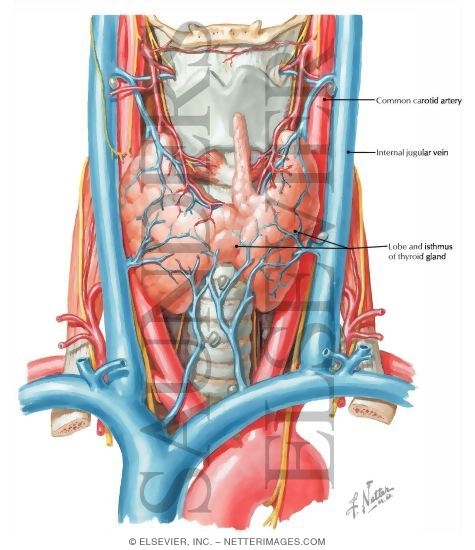
Which means– when a person is strangled, they die because their brain is no longer getting blood flow from the carotid arteries, which leads to brain cells dying from lack of oxygen.
As you can see from this photo, the major blood vessels that drain blood from the brain but also, more importantly, feed it with oxygen– are in very close proximety to the trachea or windpipe.

It is the vital oxygen these vessels carry to the brain that upon slowing or stopping– is the biggest problem for the victim.

Next post we’ll discuss some strangulation facts. Third part of this series will include treatment of the strangulation victim.

Source:  http://emedicine.medscape.com/article/826704-overview

Other Resources:

Wisconsin Medical Journal: Strangulation Injuries http://www.wisconsinmedicalsociety.org/_WMS/publications/wmj/pdf/102/3/41.pdf

Emergency Medicine Reports: Strangulation Injuries. http://www.ahcmedia.com/public/samples/emr.pdf:

How to Improve Your Investigation and Prosecution of Strangulation Cases. http://www.ncdsv.org/images/strangulation_article.pdf:

As I Am: A Quality of Life Issue

I’m pleased to welcome Dr. Karen Pirnot as she talks about an amazing patient of hers, Garret Frey.

Welcome, Karen!

Imagine yourself totally paralyzed just below your chin.  You can move nothing but your head.  And then imagine a ventilator attached to your throat to help you breathe.  This is not a temporary “nuisance” condition.  This is the life of Garret Frey of Cedar Rapids, Iowa.

Injured in a motor vehicle accident at the age of four, Garret was rendered quadriplegic and ventilator-dependent for life.  After the accident, Garret was immediately placed on artificial, mechanical breathing while his parents rushed to the hospital.  It would be months before they would know that Garret’s paralysis and inability to breathe on his own would be permanent.

After nearly a year in various intensive care units and a children’s rehabilitation hospital, Garret was discharged to his home, along with supplies which would fill the ordinary person’s closet.  Garret’s parents were trained to care for him but as they both worked, a full-time nurse had to be with Garret, severely depleting the medical insurance benefits.  For some time, Garret remained confused and depressed.

While others speculated about a vegetative, non-productive existence for the child, Garret, his mother and a Clinical Psychologist went about trying to develop the best quality of life possible, within the permanent medical parameters.  Over a period of seven years, Garret was taught to use his brain in order to have an entirely cognitive experience of life in which his remaining senses would become highly and acutely developed.  As Garret’s brain matured and he became emotionally prepared for his life as it was, his relationship with his psychologist was terminated.

Garret’s mother and the psychologist fought for a free, public education for Garret.  When the school board in Garret’s community resisted, the matter was adjudicated and Garret was allowed entrance into school.  The decision was appealed several times and eventually ended up in the United States Supreme Court where the Judges ruled in Garret’s favor.  The ruling has set precedence for thousands of handicapped children across the nation.

While the court battles went on, Garret learned to participate in a full public school life.  He was eventually placed in an accelerated academic program and he thrived both academically and socially.  In high school, his friends were trained in the operation of the ventilator and Garret was then free to attend concerts, restaurants and school functions.

In daily life, Garret continues to require 24/7 supervision for the care of his body and the functioning of his ventilator.  Garret considers his care and equipment simply a part of his daily life.  He sleeps through most of the personal care essential to keep his body functioning.

And so, we might just ask how the quality of life is determined for any one individual?  In all probability, we never know our own limits until faced with our own worst fears.  For some, it may be the loss of a limb and for others, the loss of speech, sight or hearing.  For some, quality of life is determined by athletic or intellectual skills; for others, by the accumulation of wealth.

For Garret, quality of life as a child meant that he was able to get a free, public education in the least restrictive environment.  As an adult, quality of life for Garret means he is able to be out with friends and that he has people who love and support him while he takes college courses and ponders the various mysteries of life.  Garret maintains a steadfast belief in God as well as an optimistic attitude about each and every day of life granted to him.

Finally, we might ask who should determine what the quality of life is for any one individual.  More and more, health issues are legislated rather than left to personal decision-making.  There are pros and cons to each side of the coin but for Garret:  “I do not remember the day I was born and I do not remember the day that I died.  I only remember myself AS I AM.”  (This is the first sentence of the book AS IAM by Garret Frey and Dr. Karen Hutchins Pirnot.)
***********************************************************************
Dr. Karen Hutchins Pirnot has worked with children and families in various capacities for the past forty years.  She is a Clinical Psychologist who practiced in Cedar Rapids, Iowa and later, in Sarasota, Florida.  For years, she worked extensively in the human services and juvenile justice systems as well as various school and hospital settings.  Dr. Pirnot worked with special needs children as well as children and families experiencing transitions and tragedies. Dr. Pirnot’s books are written to empower children and their families.  The books may be found on Amazon, Barnes and Noble and www.drpirnotbooks.com  

What are Life Saving Measures?

To say there is some confusion among authors as to what constitutes lifesaving measures really should not be a surprise. After all, most people not involved in medicine can have a difficult time with the concept.

Lifesaving measures is a broad term. It can be used to describe any futile care to a patient that is likely not to live. However, often times these same lifesaving measures are really a bridge to get a patient through a critical illness that they can fully recover from and still lead a long life but will certainly die if they are withheld.

What you should do is examine each of these areas and think through the possibilities of what situations you would be okay receiving these and which you wouldn’t and make that decision clear to your family.

So– what are some of these lifesaving measures.

1. CPR: This is chest compressions. Generally, when people are a DNR (Do Not Resusitate), this is its basic definition. If your heart stops and you’re a DNR– we won’t do compressions. You can delineate this further by also saying I don’t want drugs or electricity. Some patients are fine getting the medications but they don’t want their chest to be pounded on. However, CPR is the one mechanism that will MOST LIKELY bring you back in conjunction with these other therapies.


2. A ventilator: This is a breathing machine where a tube is inserted into your mouth, through your vocal cords, and into your trachea to assist with breathing. Being on a ventilator is hard. It is not anything like the natural way we breathe. A patient can say– I don’t want to be intubated. However, this can also be short term. Say a healthy, young male has a severe pneumonia. He’s just not able to maintain his oxygen levels and his breathing worsens. In most circumstances– as a nurse– I would not expect the patient to die but he NEEDS that breathing machine to buy him some time for the antibiotics to kick in…etc.

3. Vasopressors: These are drugs that help support blood pressure. Many shock states will cause lower blood pressure which is bad. You need normal blood pressure to heal. This is another area that might be short-term to buy the patient the time they need to get better.

4. Nutrition: I’m going to lump this all into one category. It can include everything from IV fluids, to TPN (which is IV nutrition) to a feeding tube. If this is withheld, what you die from is dehydration and starvation. This is what the Terry Schiavo case centered on. Some people believe withholding food and fluid is unethical as it is a basic requirement to live. How about you?

5. Oxygen: You can get oxygen many ways without being on a ventilator. Through nasal prongs, through a mask, and sometimes via a machine called CPAP or BiPAP. Again, this may be a short term measure to help a patient through an illness and most often is used for that very reason. But, if you take them of their oxygen– they will die.

Patients and families need to be well-educated in what these terms actually mean well before they are sick enough to be forced to make a decision during a crisis.

Lifesaving measures and End-of-Life Care are not really interchangeable. Have these conversations with your family now.

What about you? What would you want and not want? Under what kind of circumstance?

Do Nurses Ever Stop Caring? End of Life Issues…

There is nothing that distresses me more than watching a television show, seeing a movie or reading a book that says something akin to the following…”He’s going into hospice. They’re not going to care for him anymore.”

Honestly, boils my blood.

When I was in nursing school, I spent six weeks caring for a hospice patient. Our community health instructor first asked for volunteers. I remember her saying, “It’s for six weeks but he is expected to live several more months.”– implying that we wouldn’t have to deal with his death.

Let me first say no human can put an expiration date on you.

It came down to a lottery and my name was drawn.

He was in his mid 60s and was diagnosed with multiple myeloma– which is a type of bone cancer. I would visit he and his wife at their mobile home to make sure his needs were met. They had a feisty, young golden retriever that was one huge, butterball of energy that greeted me at the door every visit.

My non-care (yes– that is dripping with sarcasm) included pain management (helping the family choose a PCA pump, instructing them in how to use it, etc) and discussion of end of life issues. This includes a lot of talk about where you think you’re going to end up. Heavy, spiritual issues.

I was just twenty-one.

As we were talking one day, he said he’d really like to go up to the mountains. Unfortunately, he was bedridden. The previous summer, I spent a camping trip in Rocky Mountain National Forest and had some pictures.

I brought him this huge pile of photos. I said, “I’m really sorry you can’t go to the mountains but perhaps you could pick one of these photos and put it by your bed to help you visualize being there.”

And that’s just what he did. Took a red, push-pin and shoved one of those photos right into the wall.

A visit shortly after that and the normally exuberant golden retriever was inconsolable. He would not leave this gentleman’s side and in my heart I knew that was the last time I would ever see my patient alive. He died within a few days.

I went to the funeral, with some other members of my nursing class, and I still can hear the bagpipes play in that church and how my soul just ripped apart at the grief of his widow. He truly touched my life in those short few weeks I was with him.

After the funeral, my class went to a Chinese restaurant for lunch. My fortune cookie said, “Your kindness to another will not be forgotten.”

I don’t know… call it what you will, but I think that was a God wink.

His wife gave me that picture back and told me how often she would find her husband just staring at it. I still have that photo and that fortune in a frame some twenty years later.

Please, do not make the mistake of EVER saying that medical personnel stop caring for patients when they have made the choice to forgo further lifesaving measures.

There is much care that is done, very humbling, straight-at-the-heart moments and hospice nurses are truly angels on this earth.

Civil War Amputations and Anesthesia

I’m so pleased to be hosting author Jocelyn Green this week. She e-mailed me a feasibility question and I managed to rope her into writing a few posts about the medical aspects of the Civil War!

I know…I’m a tricky girl.

Jocelyn has graciously agreed to give away a signed copy of her novel Wedded to War. Just leave a comment in the comments section that includes your e-mail address on any of her posts this week and you’ll be eligible to win– though must live in the USA. Drawing will be Saturday, September 1, 2012 at midnight. Winner announced here on Sunday, Sept 2, 2012!

Here is Part I and Part II.

It’s impossible to write a Civil War novel about medical care in the Union army without having at least some text devoted to amputations. Here’s some of the information that helped me as I wrote Wedded to War, and even now as I’m working on the next novel, Widow of Gettysburg.

Contrary to popular belief, the days of “biting the bullet” (or a leather strap) during an amputation were over by the time of the Civil War. Anesthesia was available in the form of chloroform and ether, even in field hospitals. However, if the soldier had been wounded more than 24 hours prior to amputation, the surgeon would not give anesthesia for fear the patient would not recover from it. And unfortunately, the Confederacy had a severe shortage of medicines, including these, to work with. So even though the medicine existed, there were plenty of cases where the patients had to go without it.

Photo courtesy of Kevin Ling
But in the cases where anesthesia was available, there were specific guidelines for how to administer it.

Chloroform

According to the Manual of Military Surgery Prepared for the Use of the Confederate States Army (published 1863):

·         Chloroform should be given in the fresh air with the patient’s head on a pillow and the body remaining horizontal throughout inhalation.

·         Clothing should be loosened about the neck, chest and abdomen so that breathing is not restricted.

·         Only a light but nutritious meal should be given earlier, or the state of unconsciousness during the second stage of the anesthetic might bring on vomiting.

·         Before giving the chloroform, first give brandy. (Union surgeons did not always follow this point. They used alcohol stimuli only on physically depressed patients because they felt it could slow down the induction of anesthesia  in a healthy patient.)

The Confederate manual went on to instruct: “all special instruments of inhalation have been discarded, and a towel or napkin, folded into a cone, by having its corners turned down, is not almost universally employed for the purpose. The chloroform, about a drachm (one-eighth ounce) is poured into this cone, and is held over the patient’s mouth and nostrils which should previously have been anointed.” Holding the cone a half-inch from the patient’s face prevented facial blistering and allowed adequate air flow.

The first stage of anesthesia was one of excitement, producing “muttering, wild eyed, the cries, the exalted imagination” followed by “violent struggles, attempts to rise, and rigid contraction.” If the spasm extended to the larynx, there would be danger of breathing being obstructed. Surgeons were instructed to remove the cone temporarily if this were the case.

The second stage was that of unconsciousness, insensibility and relaxation of the voluntary muscles. Eyelids would no longer contract when touched. The pulse would slow and weaken, respiration became shallow and feeble.

Ether

Ether was slow-acting, had a foul smell patients objected to, and caused coughing. But it was frequently used in general hospitals where time was not as pressing, because, unlike chloroform, it did not cause vomiting, prostration or increased excitement.

It was also far less dangerous if the wrong dose was given. Throughout the Civil War, only four deaths were recorded from overdoses of ether, while chloroform’s rate was 5.4 deaths for every thousand that used it.

The Operation

The book, Civil War Medicine, by C. Keith Wilbur, M.D. has easy-to-understand explanations and diagrams of various types of amputations. Those interested in primary source material for the operations can thank SonoftheSouth.net for posting excerpts from The Practice of Surgery by Samuel Cooper, here: http://www.sonofthesouth.net/leefoundation/amputation.htmThe book, written in 1820, would have served as the how-to guide for surgeons in the beginning of the war. These online excerpts provide detailed instructions for amputation of legs, arms, fingers and toes, including photos of original Civil War instruments.

Carl Schurz, commander of the Union’s 11th Corps at Gettysburg, offers this account of amputations after the battle:

Most of the operating tables were placed in the open where the light was best some of them partially protected against the rain by tarpaulins or blankets stretched upon poles. There stood the surgeons their sleeves rolled up to the elbows, their bare arms as well as their linen aprons smeared with blood, their knives not seldom held between their teeth while they were helping a patient on or off the table, or had their hands otherwise occupied around them pools of blood and amputated arms or legs in heaps sometimes more than man high. Antiseptic methods were still unknown at that time. As a wounded man was lifted on the table often shrieking with pain as the attendants handled him the surgeon quickly examined the wound and resolved upon cutting off the injured limb. Some ether was administered and the body put in position in a moment. The surgeon snatched his knife from between his teeth where it had been while his hands were busy, wiped it rapidly once or twice across his blood stained apron and the cutting began. The operation accomplished the surgeon would look around with a deep sigh. and then—“Next!”

Read The Reminiscences of Carl Schurz at Google Books here: http://bit.ly/OCf1CD
Recommended Sources:
For more in-depth study, in addition to the resources I listed on my last post, I recommend:
Cooper, Samuel. The Practice of Surgery. London: A and R Spottiswoode, 1820. Available at Google Books here: http://bit.ly/OvS97P.
Hamilton, Frank Hastings. A Practical Treatise on Military Surgery. New York: Balliere Brothers, 1861. Available at Google Books here: http://bit.ly/O72JCN
Teacher Tube video (5 min.) from the Museum of the Confederacy about amputations and artificial limbs. Not graphic at all. http://bit.ly/SZhlEF
I also did a post on ether and chloroform. You can find that here.
*********************************************************************************


A former military wife, Jocelyn Green authored, along with contributing writers, the award-winning Faith Deployed: Daily Encouragement for Military Wives and Faith Deployed . . . Again. Jocelyn also co-authored Stories of Faith and Courage from the Home Front, which inspired her first novel: Wedded to War. She loves Mexican food, Broadway musicals, Toblerone chocolate bars, the color red, and reading on her patio. Jocelyn lives with her husband Rob and two small children in Cedar Falls, Iowa.


Connect with Jocelyn:
www.jocelyngreen.com

Chief Camp Diseases of the Civil War

I’m so pleased to be hosting author Jocelyn Green this week. She e-mailed me a feasibility question and I managed to rope her into writing a few posts about the medical aspects of the Civil War!

I know…I’m a tricky girl.

Jocelyn has graciously agreed to give away a signed copy of her novel Wedded to War. Just leave a comment in the comments section that includes your e-mail address on any of her posts this week and you’ll be eligible to win– though must live in the USA. Drawing will be Saturday, September 1, 2012 at midnight. Winner announced here on Sunday, Sept 2, 2012!

Here is Part I.

My novel Wedded to War explores the medical care of the Union army during that first chaotic year of the Civil War. During this time, disease was more of a killer than injury, especially in the Army of the Potomac during their ill-fated Peninsula Campaign in the marshes and swamps south of Richmond, Virginia.

Below are a few of the most prominent diseases that affected troops even before they could shoulder their rifles in battle. This information can be found in many sources, including the National Museum of Civil War Medicine (www.civilwarmed.org) in Frederick, Maryland, which I visited as part of my research for this novel. The statistics for the Confederate side were not tracked as well. (Other sources will be listed at the end of this post.)

Diarrhea and Dysentery

The terms diarrhea and dysentery were often used interchangeably, but both were widespread and seriously debilitating. (Some sources say General Robert E. Lee was suffering with it during the Battle of Gettysburg in 1863, and that it affected his decision-making ability.) On the Union side, there were at least 1.6 million cases with more than 27,000 deaths during the course of the war. Causes ranged from poor diet and cooking practices (called at the time “death by frying pan”) to infection with microscopic organisms. For unknown reasons, chronic diarrhea and dysentery sometimes persisted for the remainder of a soldier’s life. Treatment included a good diet of fresh fruits and vegetables, opiates in alcohol and sometimes oil of turpentine and glycerin.

Malaria

Malaria is a fever-inducing disease caused by microscopic parasites transmitted to humans by the bite of the Anophelesmosquito—but no one knew this during the Civil War. The cause was thought to be “swamp miasma,” an invisible agent which floated through the air. Nearly a million cases of malaria were reported in Union records, with approximately 4,800 deaths. The disease was most common among soldiers of both sides serving in the deep South. Quinine, as the powdered bark of the cinchona tree or as quinine sulfate derived from the bark, served as an effective preventative and cure.

Nutritional Diseases

The major nutritional diseases seen during the war were scurvy (vitamin C deficiency), night blindness (vitamin A deficiency) and malnutrition. With diets often devoid of fresh fruits or vegetables, the vitamin deficiencies were often seen together. In addition to the individual disease symptoms (i.e. tender or bleeding gums), the poor diet led to compromised immune systems which hampered recovery from wounds and other diseases. Decent diet was known to cure and prevent the problems, but field logistics made this nearly impossible. There were 46,000 cases of scurvy in Union records, with 771 deaths.

STDs

“Camp-followers” and city brothels offered ample encounters with prostitutes. Sexually transmitted diseases, primarily syphilis and gonorrhea, were common in the armies of both North and South. Among white Union troops, there were 182,800 cases of both diseases combined. There were no effective treatments, and there would be none until long after the war. Among the techniques they tried were rest, diet, injection of various metals in to the urethra, internal use of mercury compounds and even the application of mercury vapor on the surface of the body. Reports that nearly one-third of post-war deaths in veterans’ homes were due to late-stage venereal disease show the futility of these treatments.

Typhoid Fever

Typhoid fever, an intestinal infection caused by the bacterium Salmonella typhi, is generally contracted from contaminated food or water. Symptoms include delirium, fever, exhaustion, and red skin lesions. Associated diarrhea can lead to puncturing of the intestines and death. Survival of the infection was known to confer immunity from further infection. Union records show 75148 cases among white troops with 27,058 deaths, a 36 percent mortality rate. Similar rates were found in Black Union troops and Confederate troops. Treatments, generally ineffective, included opiates for pain, quinine for fever, various diets and calomel (a mercury medicine).


Recommended Sources:

This is just a general overview of a few of the diseases that afflicted Civil War troops. For more in-depth study, I recommend:

Adams, George Worthington. Doctors in Blue: The Medical History of the Union Army in the Civil War. Baton Rouge: Louisiana State University Press, 1952. [For the South, see Doctors in Gray by H.H. Cunningham.]

Freemon, Frank R. Gangrene and Glory: Medical Care during the American Civil War. Chicago: University of Illinois Press, 1998.

Letterman, Jonathan. Medical Recollections of the Army of the Potomac. New York: D. Appleton and Company, 1866. Available at Google Books here: http://bit.ly/OnmGGw

Wilbur, C. Keith. Civil War Medicine. Guilford, Connecticut: The Globe Pequot Press, 1998.

Woodward, Joseph Janvier. Outlines of the Chief Camp Diseases of the United States Armies. Philadelphia: Lippincott, 1863. Available at Google Books here: http://bit.ly/M0b1b2

********************************************************************************

A former military wife, Jocelyn Green authored, along with contributing writers, the award-winning Faith Deployed: Daily Encouragement for Military Wives and Faith Deployed . . . Again. Jocelyn also co-authored Stories of Faith and Courage from the Home Front, which inspired her first novel: Wedded to War. She loves Mexican food, Broadway musicals, Toblerone chocolate bars, the color red, and reading on her patio. Jocelyn lives with her husband Rob and two small children in Cedar Falls, Iowa.






Connect with Jocelyn:
www.jocelyngreen.com

www.heroinesbehindthelines.com

www.pinterest.com/jocelyngreen77

Author Question: Civil War Dead House

I’m so pleased to be hosting author Jocelyn Green this week. She e-mailed me a feasibility question and I managed to rope her into writing a few posts about the medical aspects of the Civil War!

I know…I’m a tricky girl.

Jocelyn has graciously agreed to give away a signed copy of her novel Wedded to War. Just leave a comment in the comments section that includes your e-mail address on any of her posts this week and you’ll be eligible to win– though you must live in the USA. Drawing will be Saturday, September 1, 2012 at midnight. Winner announced here on Sunday, Sept 2, 2012!

Now, let’s get on to some exciting stuff!

Jocelyn Asks:

Hi Jordyn: I’m a Civil War novelist and working on my second book in the Heroines Behind the Lines series right now. (My first, Wedded to War, is about pioneering nurses for the Union Army and just released July 1 from River North, an imprint of Moody.) I’ve got a couple questions for you!
1) I read an account by Capt. O.H. Miller of the 59th GA which said he was basically called a lost cause (after an injury at Gettysburg) and “They ordered me to the dead-house where I remained fifteen days.” My question to you is: HOW in the world would he have been able to survive that? Can we believe his first-person statement? I did read in another book an account of a soldier who was left in a field for three days surviving by eating the maggots out of his puddle of blood. (I’m so sorry, that’s gross.) So, I suppose if Capt. Miller was in a dead-house, there would have been plenty of maggots to eat. What do you think? Any insights on this? It seems unbelievable, but I WANT to believe it because I want to use it in my novel!

2) I need one of my main characters to suffer from temporary amnesia from an injury at Gettysburg. What kind of a wound would produce this? I want him to regain his memory in about a month’s time (two weeks minimum).

Jordyn Says:

Hmmm…. okay question #1. Being in the dead house for just over two weeks. According to my research, the dead house is the morgue so there wouldn’t be any provision of food and water. The problem will be this… does he have access to water? If he has something to drink it’s probably reasonable to say he could have survived but with NOTHING to drink– dehydration will kill you in a few days– around one to three depending on the elements your body is in. So, if you want to use this in your ms—you’ll need to at least have him drinking something. But, he can’t just be lying there without fluids for 15 days and not die. I do find that particularly unbelievable.
Here’s a previous post that discusses aspects of dehydration.

Regarding question #2– what type of injury will produce amnesia? Really any type of head injury can produce amnesia so you could have some writerly leeway here.

A fall from a height, blunt force trauma to the head, gunshot wound to the head (though this is hard to survive in today’s medical climate so would be probably lethal during civil war times.)
Here’s a previous post about amnesia.

I found a few resources that were particularly interesting for my inner medical nerd.

1. This one dealt with treatment of the dead. Very interesting insight here particularly concerning how dog tags for soldiers likely came about. http://www.deathreference.com/Ce-Da/Civil-War-U-S.html

2. Photos of Lincoln General Hospital—A Civil War Hospital. http://southcarolinaavenue.webs.com/civilwarhospital.htm
**********************************************************************

A former military wife, Jocelyn Green authored, along with contributing writers, the award-winning Faith Deployed: Daily Encouragement for Military Wives and Faith Deployed . . . Again. Jocelyn also co-authored Stories of Faith and Couragefrom the Home Front, which inspired her first novel: Wedded to War. She loves Mexican food, Broadway musicals, Toblerone chocolate bars, the color red, and reading on her patio. Jocelyn lives with her husband Rob and two small children in Cedar Falls, Iowa.



Up and Coming

Hey Redwood’s Fans… how’s the week been treating you?

I am fully submerged underwater so if anyone has a life preserver out there… send it my way. LOTS of busyness but goodness going on.

For you this week:

THE CIVIL WAR

So many amazing things changed medically during this war. Author Jocelyn Green will be here all this week to discuss the medical aspects of the War between the States. It is fascinating stuff for sure AND she is giving away her book Wedded to War.

Enjoy the fun!

First Steps….

Welcome to Jordyn’s section of the blog parade! I have a fondness for parades as I am a former marching band geek and I do say that with pride. Two of my most fond high school years were spent in the marching band. I played flute, then piccolo, then marching mellophone (which is the french horn.)

For those of you familiar with instruments– you would know what a hard transition it was going from a wind instrument to a brass one– and much heavier to march with too!

Today, I’m participating in the WordServe Water Cooler Blog parade. It’s designed to help Cooler readers discover more about the authors who write there by sending them to their personal blogs. **Details on a chance to win Proof at the bottom of this post.**

So– if you’re visiting Redwood’s Medical Edge for the first time– this blog is designed to help authors write medically accurate fiction. Or– as I like to say– learn how to injure, main and kill your FICTIONAL characters the right way.

We will be getting back to the medical mayhem on Monday.

Today, I’m going to write on the topic of our parade: First steps I took in becoming an agented and/or published author.

1. Finished my novel! This might seem like the easiest steps but first steps are always the hardest. It’s like an infant when they first start walking and they have that cute orangutan type maneuvering. Arms high in the air. Their little booty shaking as their knees high march– just like in marching band. The first words to paper for a writer can be awkward. Just like walking takes lots of practice– so does authoring a full-length novel. Many people can write a few great first chapters but can they finish a 60,000-100,000 (depending on the genre) novel? This is ultimately what an agent or publisher wants to know. They likely won’t take you on until they know you can cross that finish line.

2. Attended a large writer’s conference. I do recommend writers conferences for a number of reason. For networking. For finding fellow friends to share this journey with. After all, no one will understand why you seek the perfect poison to kill off a character then a fellow suspense novelist. Honestly, I’m surprised I haven’t seen a police presence at writer’s conferences for all the talk of murder and mayhem that goes on– albeit from an unsuspecting, not-part-of-the-conference guest! More importantly, as part of your conference registration, you get an opportunity to meet with agents and editors. Even have a say in which ones (most of the time so register early!) Face to face contact (yes, even for introverts) is important because it puts a personality with the manuscript. Do you and the agent hit it off? Do you have similar goals? Do they like you? Do they LOVE your idea? They should because championing a novel to the finish line takes lots of cheering and faith.

3. Was Persistent. Pursuing publication is definitely not for the faint of heart. You WILL be rejected. You WILL get one star reviews. People will take your months-years of hard work and give it a good tongue lashing just because they can. In these dark moments of the writing life– you’ll need to have it in you to push yourself over these obstacles. To understand, to have it in you– why it is you’re putting yourself through all the torture. Is it to see/catch the moments of brilliance? When your own words make you cry? When a reader writes you to say just how much your story touched them and changed their perspective? Is it for the starred review from a well respected publication?

These were some of my first steps toward becoming an agented and published author? How about you? What steps are you taking?

As a reward for all those who are participating in the blog parade by perusing all these fine blogs, I’m offering a chance to win a free copy of Proof. Simply leave a comment with your e-mail address in the comments section of this post. Drawing will be Sunday night, August 26th, at midnight MST. Must live in USA. I will e-mail the winner and announce here Tuesday, August 28th, 2012.