Up and Coming

Hello, Redwood’s Fans!

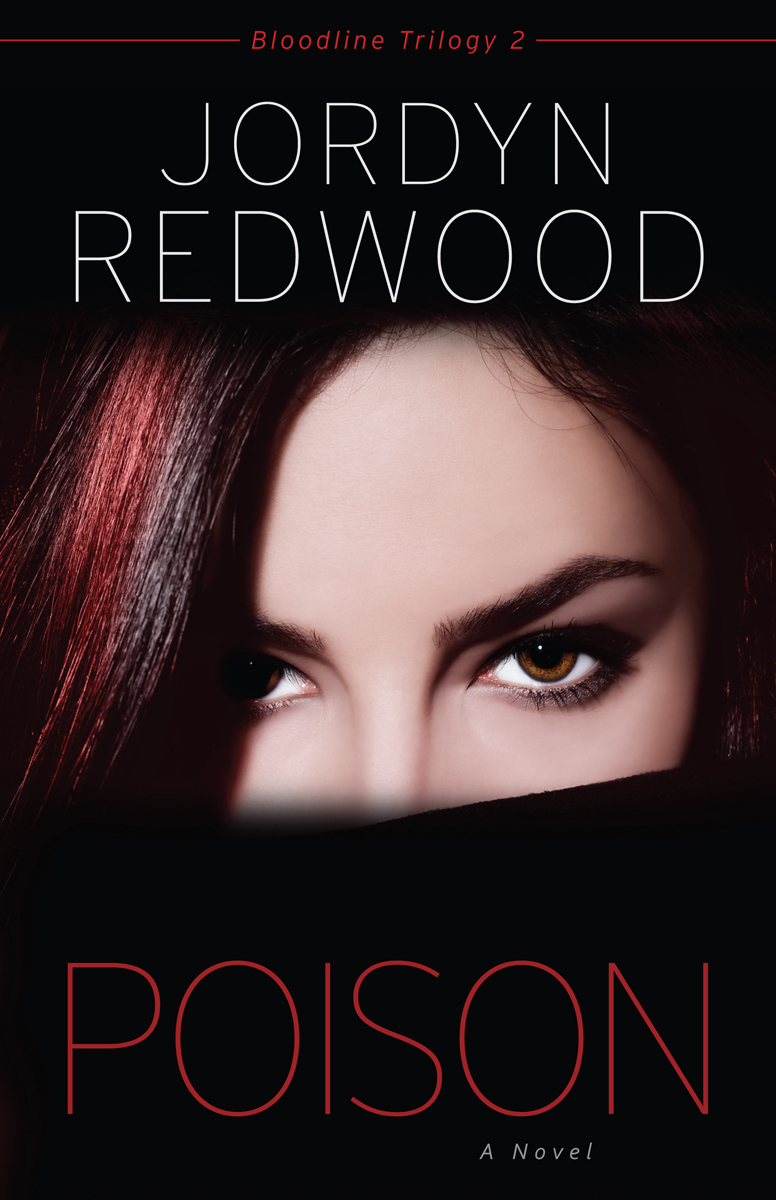
The release of Poison is rapidly approaching. To help celebrate, over the next several weeks, I’ll be posting the first five chapters. You can find the first chapter here.

Enjoy!

For you this week I’m highlighting author questions. These are some of my favorite posts to do.

Monday: Hallucinogenic Drugs

Wednesday and Friday: I’m highlighting my brother’s police prowess as he tackles a long list of author questions. Even though they are not medical in nature– it’s too good of information not to post here.

Hope all of you have a fabulous week.

Jordyn

Proof of Heaven: Dr. Eben Alexander 3/3

Today, I’m concluding a three-part series on the non-fiction book, Proof of Heaven, written by Dr. Eben Alexander as he discusses his Near Death Experience (NDE) after he contracted a rare, often deadly form of E-coli meningitis. Here are Part I and Part II.

Toward the end of the book, Dr. Alexander lists the current medical theories offered as explanations for NDE’s and why he now completely discounts them and now has a firm belief that there is a loving God and Heaven.

1. Primitive brainstem program to ease terminal pain. Discounted due to the vibrant nature of his experience.

2. A distorted recall of memories from the limbic system. Again discounted for the same reason as above.

3. Endogenous glutamate blockade with excitotoxicity– mimicking the hallucinatory anesthetic, ketamine. I mean, really, this is how smart and scientific he viewed this process. As he explains in his book, he’d seen people under the effects of ketamine and the hallucinations are nonsensical whereas his were not. I would agree with that regarding ketamine as we use it for conscious sedation in the ED.

4. DMT dump which is a naturally occurring serotonin that causes vivid hallucinations. Dr. Alexander confesses to experiencing some hallucinations with drug use in his teens and argues against this theory because you’d have to have a relatively intact, functioning brain for which he did not while in his coma.

5. Functioning areas of cortical regions but he discounts this considering the severity of his meningitis.

There are four more that he lists in the book. What Dr. Alexander did do that I found interesting was write down his experience with as much detail as he could before he read about other NDE experiences so as not to taint his own perception or tarnish his data. Then he thoroughly researched what others had scientifically proposed and steps through why they are not relevant.

Overall, I found this to be a very fascinating book. It does at some points read like a textbook but I think we in the medical community need to pay attention to the spiritual aspects of our patients as part of their illness/injury process and I think learning from people who have had these experiences can help us to that.

Proof of Heaven: Dr. Eben Alexander 2/3

In today’s post, I’m continuing my discussion on Near Death Experiences or NDE’s by highlighting Dr. Eben Alexander’s book Proof of Heaven. Here is Part I

Each medical specialty has a definite stereotype. I’ve found that most labor and delivery nurses have had cheerleading background. I. Kid. You. Not. For a while, I asked every L&D nurse I knew if they did cheerleading in highschool and ALL said yes.

I found that a very important job requirement for labor nurses because heaven knows if you didn’t have that affinity, you would get TIRED of coaching women through labor shift after shift. I mean, I was rolling my own eyeballs at myself at what a pain I was when I delivered my own children.

Neurosurgeons are the same way. They are very cerebral. Smart. But not always personable. I’ve only met one or two that could interact socially in a pleasant way– like the ham it up, crack-a-few jokes kind.

That is not to say they are not friendly . . . just so above (not in a snooty way) the average person intellectually. I mean, think about how intelligent you have to be to operate on the smartest, fastest biological computer ever created.

That’s the sense that I got about Dr. Alexander. Driven. Uber-smart. I’m sure he has a Mensa card for sure. He bought into all the normally offered medical explanations for NDE.

I think God has a funny sense of humor. I imagine Him thinking– how can I get Eben’s attention? This man who loves the brain and its chemistry and lives and dies to fix it. What would be the one disease I could give him to convince him of My presence?

How about . . . meningitis. And not just your average, run-of-the-mill easily curable kind. But one that is so rare that most people die of it. So rare that you have a risk of 1:10 million chance of contracting the disease. Whereas you have a 30% chance of being in a serious car accident in the next year.

And that’s what happened. Dr. Alexander contracted a rare form of E-coli meningitis. Generally only seen in adults if you’ve had neurosurgery or traumatic brain injury (I’m guessing skull fracture that would disrupt the normal protective nature of the bones.)

Dr. Alexander’s meningitis did not respond to antibiotics. He was comatose for seven days. The family was at the point where they were considering withdrawing life support.

And while he was in that coma– he had a NDE that changed his whole outlook on life and caused him to discount every previous medical theory he’d bought into from a very analytical, scientific point of view. That’s what we’ll talk about next post.


Proof Of Heaven: Dr. Eben Alexander 1/3

I first heard about Eben’s story when it was highlighted on Biography Channels I Survived . . . Beyond and Back.When his non-fiction book, Proof of Heaven, released– I knew it was going to be a must read for me considering his background as a medical doctor and (before his NDE) an a-religious person. He did attend church but had no personal connection with his faith.

Most of you know that I am a pediatric ER nurse– still showing up for work twice a week until I start to earn James Patterson type money on my books. I’m confident that will happen in 2013 for sure, right?

The tough thing about working in pediatrics is when a child dies. There’s something inherently wrong with the world order when that happens. I’ve been with patients before they die.

Near Death Experiences, or NDE’s, do fascinate me. I am a religious person. I believe in heaven and hell. That’s why I Survived . . . Beyond and Back intrigued me so because it told stories of people who had died and come back. Most went to heaven. Some went to hell. And a few just had strange experiences– like aliens rolling dice on a poker table kind of weird.

As a medical person, I can attest that we don’t handle the spiritual stuff very well. I think part of that is that religious persons like myself don’t feel like they can openly discuss these issues with patients without possibly coming under fire from upper management for proselytizing . . . so generally this is left in the hands of chaplains to deal with.

Except, there aren’t always chaplains available.

Patients who are dying have very valid questions. Is there heaven? Is there hell? What did my life on earth mean?

If you think back to the advent of resuscitative medicine, it’s only been around for a good 40-50 years. Instructing the masses in CPR. Advanced life support measures like ventilators. Algorithms to manage emergency scenarios.

In the past, there likely weren’t hordes of people surviving death. But now, with medical technology, we are more and more pulling people from “the drain” as we sometimes term it. In light of that, there are many more people surviving medical calamities that would have killed them but now they are opening up and talking about their NDE’s.

One such person is a neurosurgeon by the name of Eben Alexander. A very smart, astute physician who was firmly in the camp of believing that NDE’s had a medical explanation . . . until he died himself.

And had an NDE.

We’ll pick up his story next post.

Up and Coming

Hello Redwood’s Fans!

You . . . have . . . officially survived the holidays! Congratulations. Now, we can get on with life– if only my husband would get the Christmas decorations packed up. I know, not fair, but I DID buy and WRAP 80% of the presents.

As the new year has officially set in and we seemingly have all survived the Mayan apocylpse, the beginning of a new year generally brings about some reflection about the past and future.

I’m no different. I do like to make New Year’s resolutions or at least set goals for the coming year. Here’s a post I did recently at the WordServe Water Cooler that talks about goal setting and lists some ways to help achieve your goals for the coming year.

However, here at medical mayhem central I thought I’d spend a week discussing Dr. Eben Alexander’s book, Proof of Heaven.

What do you think about human consciousness? How do these cells we call neurons collectively bring rise to our sense of self, our interaction with the environment . . . our sense of morality.

Do you believe in heaven, hell, or any sort of afterlife?

Let’s see what Dr. Alexander thinks of it all as he recalls his Near Death Experience (NDE) during his week long coma as he nearly died from a rare form of bacterial meningitis.

His journey is truly one filled with miracles and a fascinating read. I hope you’ll check it out.

Management of Infant Crying

This week, I’m highlighting some blog posts that I did for Erin MacPherson’s Christian Mama’s Guide last year. Some of you may not know but I am a real live pediatric ER RN. As always, these posts are meant to be educational and do not replace a doctor’s visit if your child is ill.

Erin has a WICKED sense of humor and is releasing a series of books this spring so I hope you’ll keep an eye out for them.

There is nothing that will bring a weary family into the ER faster than an infant who won’t stop crying. This is a leading cause of ER visits for the infant population.

Our approach starts with a good physical exam looking for a source of something that would cause the infant pain. Is there an ear infection? Is there a hair tourniquet?  Did they accidentally scratch their eye? Are they dry and fed?

A hair tourniquet happens when a piece of hair becomes wrapped around a baby’s fingers, toes or penis in the case of boys. They are usually easy to identify because the area distal to the constriction becomes purple from lack of blood flow. Imagine when you wrap a string too tightly around the tip of your finger.

If a hair tourniquet is found and we can see the piece of hair, first we’ll try to unwrap it. If it isn’t embedded into the skin, we may try a hair removal product to disintegrate it. If the hair is deeply embedded, the child may require surgical removal.

A corneal abrasion is a scratch to the eyeball and is quite painful. To look for these in a child, we’ll stain their eyeball with a dye and look at it with a Wood’s lamp in a darkened room. If one is present, generally the child is sent home with an antibiotic ointment for the eye for several days.
If a source of the infant’s pain cannot be found, we’ll generally try soothing measures like oral pain medication to see if that will calm the infant.

If the child continues to cry, a source of infection cannot be found and the baby is also resistant to soothing measures, then the physician may choose to proceed with a spinal tap and additional septic work-up. One reason for an inconsolable infant is meningitis.

If a septic work-up is negative, the infant may be said to have colic.

Were you aware of other sources for pain in the infant like a hair tourniquet or corneal abrasion?


Eight Questions: New Authors

Last week, I did a blog post that answered these eight questions about my current wip. You can find the post here. It’s all about Peril which will follow Poison— releasing here in Feb.

1. What is the working title of your book?

2. Where did the idea come from for the book?

3. What genre does your book fall under?

4. What’s the synopsis of your book?

5.  Will you book be self-published or represented by an agency?

6. How long did it take you to write the first draft of your manuscript?

7. What other books would you compare this sotry to within your genre?

8. What else about your book might pique a reader’s interest?

So check out the following authors and their eight questions!

Anita Brooks: http://brooksanita.com/eight-questions-why-did-i-write-this-book

Dena Ratliff Dyerhttp://denadyer.typepad.com/my_weblog/2013/01/a-resource-for-wounded-women.html

Sheila Hollingheadhttp://www.sheilahollinghead.com/2012/12/the-next-big-thing.html

Laura McClellan: http://bellewoodfarm.blogspot.com/

Carol Moncadohttp://carolmoncado.wordpress.com/2013/12/03/questions-about-my-wip/

Enjoy!

Top Three Pet Peeves of Pediatric ER Nurses

At least my top three!

This week, I’m highlighting some blog posts that I did for Erin MacPherson’s Christian Mama’s Guide last year. Some of you may not know but I am a real live pediatric ER RN. As always, these posts are meant to be educational and do not replace a doctor’s visit if your child is ill.

Erin has a WICKED sense of humor and is releasing a series of books this spring so I hope you’ll keep an eye out for them.

Here’s a look into the mind of the pediatric ER nurse. Don’t we all have pet peeves when it comes to our jobs? Of course… the ER nurse is no different. Often times, these are not mentioned in “public” as we don’t want to offend families. But, in honesty, there are some things parents do that drive us crazy. Here are a few at the top of my list.

  1. Calling medicine candy. This is a big no-no for us pediatric nurses. We really don’t want kids to associate taking medicine with the fun of having candy. Candy is good. Candy is fun. Candy is generally not lethal if you eat too much. Medicine is far different from that. So say something like, “This tastes sweet.” Or “This tastes like orange.”— but don’t associate medicine with candy in the same sentence.
  2.  Children not wearing helmets. I’m amazed at how many families come to the ER over concern for head injury after a fall off of (insert something with wheels here) and their child wasn’t wearing a helmet. First question: Do they have one? Often times the response is, “Yes, I just can’t get him to wear it.”
First off, as a parent, set the example. Are you wearing your helmet when you ride your bike? Second, from the moment your child is on anything with wheels, they need a helmet. Yes, even when they’re on their tricycle. This will institute a habit and an expectation—just like wearing a seatbelt.

Secondly, be firm. If they don’t wear their helmet, they lose their wheels. Parent, “I can’t keep him off his bike.” Well, then the wheels come off the bike. The skateboard is locked in the trunk of your car. Be firm.
It only takes one bad head injury for devastating effects. Don’t risk it.
  1. Smoking. Secondary smoke is a big health risk for kids. If you smoke, you need to stop. Smoking outside, unfortunately, doesn’t help. Yes, even if you have a “smoking jacket”. If I can smell smoke, the particles are on you and can even be enough to trigger an asthma attack in kids. If you are a smoker, talk to your pediatrician about resources your state might have to help you quit. Smoking during pregnancy has been linked to the development of congenital heart defects in infants along with a host of other problems.
Now, you tell me, what are some other pet peeves you think a pediatric ER nurse may have? Are you offended by reading these?


Treatment of the Newborn with Fever

I’m highlighting some blog posts this week that I did for Erin MacPherson’s Christian Mama’s Guide last year. Some of you may not know but I am a real live pediatric ER RN. As always, these posts are meant to be educational and do not replace a doctor’s visit if your child is ill.

Erin has a WICKED sense of humor and is releasing a series of books this spring so I hope you’ll keep an eye out for them.


Question:  Is it really a bad idea to take a newborn out in public? What will really happen if he/she gets sick?

Jordyn Says:
 
I can remember when my youngest was born and was just a few days old when my in-laws came by to visit. My father-in-law was horribly ill with bronchitis, coughing and hacking at the doorway. I held the baby up for them to see from a distance and kindly asked them to go on their way. They could come back around when he was well.
Here’s the issue: An infant less than two months (some doctors will say three months) that presents with a fever of 100.4 or greater generally gets a septic work-up. The concern is that an infant’s immune system hasn’t quite revved up yet and it can become easily overwhelmed by infection. Therefore, we approach this age infant very cautiously to prevent this from happening.
A septic work-up entails gathering specimens from the most likely places that would become infected. This includes placing an IV to get blood for a blood culture and blood counts, doing a urine cath (placing a small plastic tube into the bladder) for urine and doing a spinal tap (lumbar puncture) to collect cerebrospinal fluid (CSF) which is the fluid that bathes the brain.
Infants are generally admitted into the hospital for 24-48 hours at a minimum on IV antibiotics until their cultures are negative. If their cultures are positive, then they would stay longer to get a full course of antibiotics.
This is not always done but is your “worst case scenario” for ER management. There are some situations that may alter the physician’s medical approach. One may be that we can prove the infant has another source for the fever like an ear infection or RSV (in fall and winter). We generally look for these first. If another source cannot be found, then generally, these other tests are performed.
Unfortunately, a small percentage of infants do die from sepsis. This is why we are very cautious. 
As you can see, these are very invasive procedures and this is why I personally encourage minimal public contact when the infant is under two months.
If you choose to take your new baby in public, here are a few guidelines:
1. Use good hand washing. Before anyone touches the baby, they should wash their hands with soap and water. If water is unavailable, then use antiseptic hand gel.
2. If you develop a cold (runny nose, cough) wear a medical mask around the infant. These can be picked up at stores that have a pharmacy.
3. Keep sick siblings away from the newborn.
4. Encourage younger siblings to kiss the baby’s feet or the back of their head.
5. Immunize.
6. Well newborns need to stay out of the ER! A common scenario is for the whole family to show up with a sick older sibling and bring the new baby. This should only happen if that’s your only option. Otherwise, keep the newborn at home with a responsible adult. There isn’t a way to fully decontaminate the ER waiting room. It’s likely the baby will pick something up during the ER visit of the other sibling.
 

Up and Coming

Hello Redwood’s Fans!

Are you ready for the New Year? Making any New Year’s resolutions?

I am anxious for this year. I’ll be releasing two books and sending out a new book proposal. Lots of work to be done.

What are some of your plans for the coming year?

This week, I’m highlighting some guest blogs I did over at Christian Mama’s Guide for Erin MacPherson. Erin has a series of books releasing this spring that I’m excited for because she has a wicked sense of humor.

Here’s a previous post she did for Redwood’s.

http://jordynredwood.blogspot.com/2011/09/ways-to-induce-labor-according-to-old.html

For you this week:

Monday: ER management of the newborn with fever. 

Wednesday: Top three pediatric ER nursing pet peeves.

Friday: Management of infant crying.

Have a great New Year’s Day!

And remember . . . responsible drinking people.