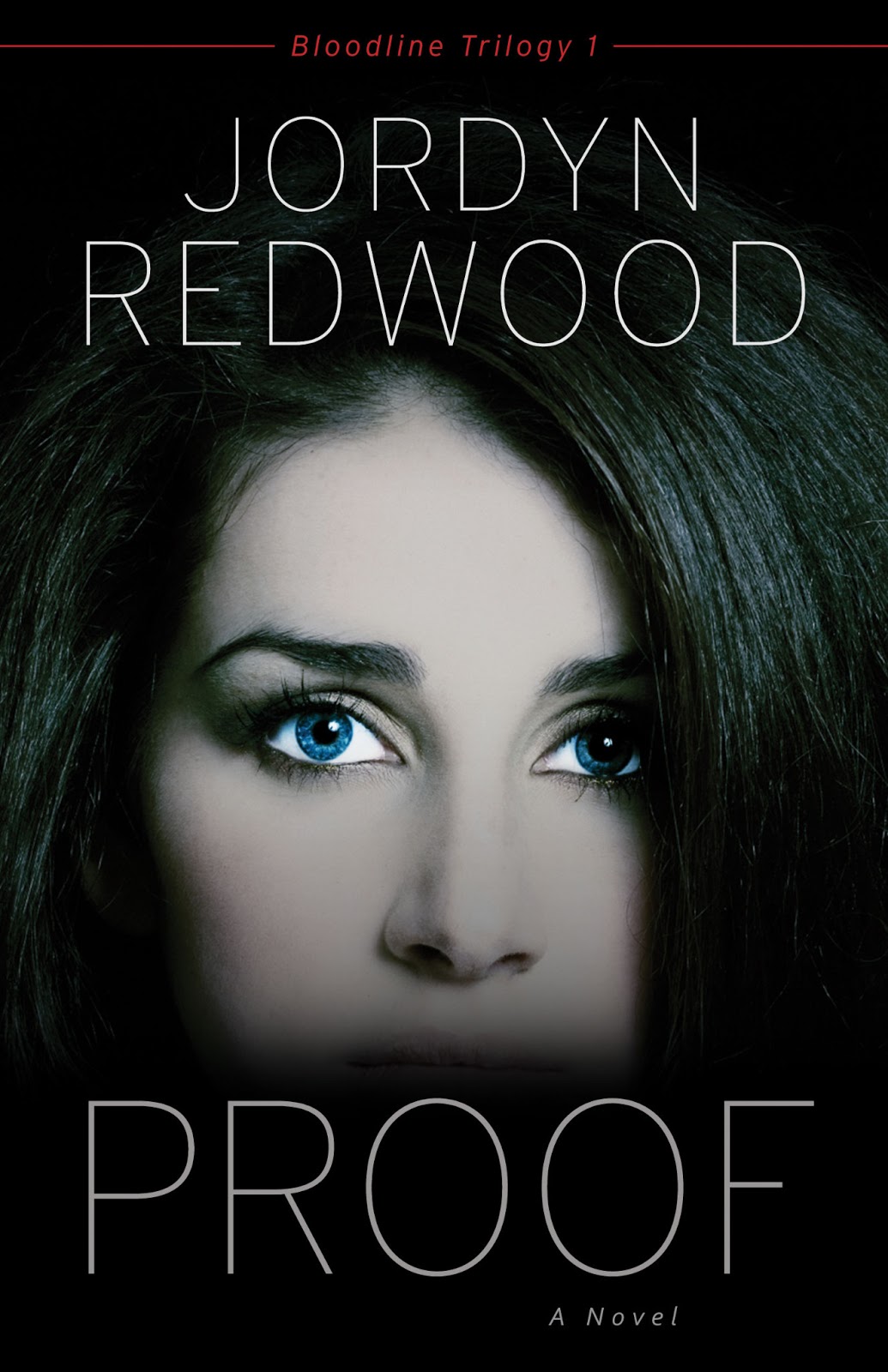
Welcome to the Asylum: Horrific Politically Incorrect Practices of Yesteryear


I’m honored to host author and friend, Michelle Griep, as she blogs about aspects of historical medicine this week. Check out her wonderful new novel, A Heart Deceived.
Welcome, Michelle!

In the eighteenth century, medical care for the mentally ill was both a remedy and a punishment. What went on behind the ivy-covered walls of most mental institutions makes
One Flew Over the Cuckoo’s Nest seem like a five-star hotel stay.

Granted, the majority of doctors really were trying their best to help their patients, but a many of their practices only made things worse. Here’s a sampling of what might happen to you…

Spinning

Think of riding a crazed merry-go-round on steroids. Feeling queasy? This was worse. The “Swinging Chair” is a contraption designed to spin the patient at high speed, which would induce vomiting, bladder evacuation, and eventually lull the poor little buddy into a tranquilized state of mind.

Trephining

Ever had a really bad headache? Just thinking about this course of treatment makes my brain hurt. Trephining is an early form of lobotomy and was actually the first psychosurgery procedure to change socially unacceptable behaviors. Without getting too gory, just picture a huge drill bit hovering a breath away from your skull—only it doesn’t hover for long, if you know what I mean.

Shock Treatment

There’s nothing electrical about this kind of shocking treatment. The patient was left blindfolded on a platform, waiting, and waiting, and then bam! Suddenly the platform falls and he plunges into a tub of icy water, which was intended to shock the brain back into normalcy. Noise shock treatment was used as well, wherein an individual was again blindfolded and then without warning, a cannon behind them was shot off.

Besides these three, there was the usual bloodletting, purging, binding, and the attempt at good ol’ hypnosis. All this to say, an asylum was best avoided if at all possible—which is exactly what the heroine in my latest release, A Heart Deceived, is trying to do…

Miri Brayden teeters on a razor’s edge between placating and enraging her brother, whom she depends upon for support. Yet if his anger is unleashed, so is his madness. Miri must keep his descent into lunacy a secret, or he’ll be committed to an asylum—and she’ll be sent to the poorhouse. 

Ethan Goodwin has been on the run all of his life—from family, from the law … from God. After a heart-changing encounter with the gritty Reverend John Newton, Ethan would like nothing more than to become a man of integrity—an impossible feat for an opium addict charged with murder. 

When Ethan shows up on Miri’s doorstep, her balancing act falls to pieces. Both Ethan and Miri are caught in a web of lies and deceit—fallacies that land Ethan in prison and Miri in the asylum with her brother. Only the truth will set them free.

Fortunately, the mental health industry has come a long way since then, but if you’d like a glimpse into the roots of present day psychiatric care, pick up a copy of A Heart Deceived, a timeless tale of love, lies and redemption. 
***************************************************************************

A Heart Deceived is available by David C. Cook and at Amazon, Barnes & Noble, and ChristianBook. Keep up with the exploits of Michelle Griep at Writer Off the Leash, Facebook, Twitter, and Pinterest.


Up and Coming

Wow– what a week. The final edits on Peril are done. I wonder if how I feel is how movie people feel when the final scene of a movie is shot. I just don’t know if I can say good-bye to these characters.

When Peril was first going through edits– the editor I was working with said something close to “You have like four endings. It’s only your inability to say farewell to these characters that lends to this.”

Sigh. And yes, I did pick one ending but I have saved the others and I’m sure they’ll show up for you over at my website someday.

The Bloodline Trilogy is complete. Three books. I never thought I’d publish ONE fiction book . . . ever. Quite a dream come true. I’m very thankful for it.

In October– I’ll be celebrating a lot so be sure to be following my author page for a HUGE party with lots of amazing prizes. You can find it here.

This week I’m excited to host fellow friend and author Michelle Griep. I love it when historical authors come to visit and blog about their medical research in eras that have passed. Michelle takes on the insane asylum and other topics and I know you’ll enjoy her posts. Please take time to check out her novel A Heart Deceived. Isn’t her book cover just gorgeous?!?

Hope you have a great week.

Jordyn

News Stories for Authors: Cyanide and the Lottery Winner

Just as I’m writing a series about medical news stories that could perk a writerly ear, and I’m choosing to highlight the woeful tale of the man who committed suicide in court after his verdict was read, comes the case of the lottery winner who died of “natural causes” the day after he collected his winnings– close to a half-million dollars.

About one month after his death, his lump sum lottery check was cashed.

According to this ABC news video, a suspicious family member asked the medical examiner’s office to take a closer look so they ran a toxicology test on his blood and lo and behold– cyanide.

What was interesting to me is that the medical examiner stated that cyanide’s use as an instrument of murder is effective but actually fairly rare. It wasn’t in this particular interview but in another one where he stated he had seen another case but it was almost 20 years ago (don’t quote me– but it was a long time.)

So in light of cyanide being on the news so much lately, I thought I’d specifically talk about the treatment for cyanide poisoning and how it works.

Remember, last post, the cyanide molecule works quickly (depending on the ingested dose) to block the cell’s ability to use oxygen. So you basically asphyxiate on a cellular level.

Signs/Symptoms of cyanide poisoning may be:

1. Weakness
2. Headache
3. Dizziness
4. Seizures
5. Coma
6. Abdominal Pain
7. Nausea/Vomiting
8. Difficulty Breathing
9. Chest Pain

A Cyanide Antidote Kit contains three medications:

1. Amyl Nitrite Pearls
2. Sodium Nitrite
3. Sodium Thiosulfate

These medications work differently to bind up the cyanide molecule which will then allow the cell to resume cellular respiration. For instance, the sodium thiosulfate converts cyanide to thiocyanate which is then cleared by the kidneys. The pearls are crushed then inhaled as treatment until IV access can be established.

What’s interesting to note as well is that one article states– do not wait for laboratory confirmation to 
institute treatment. Just shows how rapidly a patient can die.

You can read more about treatment here.

Other interesting facts.

Cyanide can be inhaled (hydrogen cyanide) and absorbed through the skin. In fact, cyanide gas is used in gas chambers.

Chronic consumption of cyanide-containing foods (cassava root, apricot seeds) can lead to cyanide poisoning.  Some symptoms of this would be ataxia (inability to walk– like an intoxicated person will walk) and optic neuropathy (visual changes, etc).

Smoke inhalation, suicidal ingestion, and industrial exposure are the most common instances of toxicity.

A person involved in a fire with soot in the mouth/nose, decreased level of consciousness, and low blood pressure may have cyanide poisoning.

Suicide by cyanide is more common among males.

Persons who survive cyanide toxicity may continue to have medical problems that involve the central nervous system. 

What is MERS-CoV?

This week is all about pathogens. The good (well, is there really a good part), the bad and the super ugly.

These posts might want to make you duck and cover– particularly MERS which is affecting Saudi Arabia.

Just what is it?

MERS-CoV stands for Middle East Respiratory Syndrome coronavius.

The problem is prevention. Authorities are stumped as to where the virus comes from and how it is spread. Add that “someone” sent the virus over oceans to a Dutch virologist who placed the virus under a Material Transfer Agreement which legally requires others NOT to develop products– like a vaccine. Does this mean that individual would “own” the cure?

People– you cannot make this stuff up. I’m taking notes for my next medical thriller. 

To read more about MERS and where much of the information came for this blog piece– check out the following links:

Why a Saudi Virus is Spreading Alarm.

Summer Safety

Okay– 4th of July is tomorrow and I JUST can’t help myself. In real life, I am a pediatric ER nurse and summer always brings a unique set of injures. Drownings increase. This is a completely preventable injury.

It’s not unusual to have a child who suffered a drowning (you die) or near-drowning (got resuscitated) on a holiday. Adults get together and there are lots of above ground pools around. Adults are drinking. Adults assume their child is an adequate swimmer after passing swimming lessons (this is not necessarily true.) Adults assume the older kids will watch for the younger ones.

Lesson One: Don’t assume.

I’ll share a personal story. We were with friends in Kansas for a 4th of July BBQ many years ago. They had fashioned a plastic slide to a large above ground pool and all the children were having a blast. My oldest at the time was two.

Knowing what I know– I parked myself right next to the pool with a soda. Responsible watching people. Sure enough, my daughter goes down the slide and when she hits the pool, she can’t gain traction and goes under.

There are several older kids with her in the pool (middle school age) and they happily splash as she is drowning right next to them.

I shudder to think what would have happened had I not been right there.

Remember, above ground pools should be treated like regular swimming pools. They should be fenced off. The fence should not include access from the home.

Lesson Two: Learn the facts. 

Everyone: Please READ this article: Drowning Doesn’t Look Like Drowning.

Lesson Three: Know it CAN happen to you or your child. 

Have a SAFE and responsible holiday.

Please– I don’t want to see you in my ER.

News Stories for Authors: Cyanide Poisoning

In 2012, there were some gripping medical news stories that held my attention from a medical perspetive that could be used to seed ideas for fiction. Often, I get my ideas from real live events and torture my characters with them.

One such story was the sad case of Michael Marin who had been convicted in court of felony arson. There’s convincing video evidence that after his guilty verdict, he appears to, not once but twice, swallow something and in less than 10 minutes is convulsing and is later pronounced dead.

A later news story reported that the substance Marin ingested was cyanide. But how does cyanide kill so quickly?

Cyanide works to lock up cellular respiration by inhibiting the cells ability to use oxygen. We think of respiration as the person breathing in and out. Well, there is respiration on a cellular level– not the mechanical breathing in and out but enzymatic reactions that keep the larger host alive. Cyanide works at the cellular level to stop the energy cycle from working. If you don’t have cellular energy– you body’s furnace burning to keep you alive– you’ll cease working as an organism pretty quickly.

Here’re a few links that might explain cyanides effects on the body more eloquently than me.

 http://indianapublicmedia.org/amomentofscience/how-cyanide-kills/

 http://wiki.answers.com/Q/How_does_the_poison_potassium_cyanide_kill_a_person

 http://en.wikipedia.org/wiki/Cyanide_poisoning

There is an antidote for cyanide poisoning but it must be administered rapidly. There is a “Cyanide Antidote Kit” that contains several medications to try and get cellular respiration back on track. You can read about that here.

Have you ever used cyanide in a story line?

Up and Coming

Hello Redwood’s Fans!!

Hope your week has gone well and that this upcoming week you have special plans for July 4th!

I am wrapping up edits on Peril! Final round. That’s a big relief.

I got AMAZING news last week that I finaled for a Carol Award through ACFW in the debut novel category for Proof. This is a prestigious award and I’m super excited to be nominated with such amazing authors. I won’t find out anything until September.

Keep your fingers crossed for me!

For you this week:

Monday: News Stories for Authors: Or as I like to say– you can’t make this stuff up as a fiction author and get away with it. A true story of cyanide poisoning.

Wednesday: Summer Safety. You know I’m a pediatric ER nurse and just can’t help myself. Let’s keep those kiddos safe. This post is on drowning.

Friday: Another example of “real” life cyanide poisoning.

Have a GREAT holiday.

Jordyn

Author Question: Hallucinogens

Stephane Asks:

I’m writing a story where one of the characters comes in contact with a hallucinogen that plagues the person with their greatest fear. Could this hallucinogens be fatal? Would there be long term affects? How long does a normal hallucinogen last? What are the affects on the human body? Heart rate, breathing and so forth.

Jordyn Says:

What are the common hallucinogens? These would be LSD, Hallucinogenic mushrooms, Psilocybin (active ingredient in mushrooms– I believe this can be synthesized), DMT, Ayahausca (which is an hallucinogenic jungle vine.)

Here are some links you might find interesting:

Psychology Today: Hallucinogens: http://www.psychologytoday.com/conditions/hallucinogens

Psilocybin and Brain Function: http://www.psychologytoday.com/blog/unique-everybody-else/201210/psilocybin-and-brain-function

Magic Mushroom altering personality: http://www.livescience.com/16287-mushrooms-alter-personality-long-term.html

DMT: http://en.wikipedia.org/wiki/Dimethyltryptamine

Ayahuasca: https://en.wikipedia.org/wiki/Ayahuasca

http://www.soberliving.com/resources/addictions/ayahuasca-hallucinogenic-drug-south-america-trip-trip-shamans

The effects of hallucinogens generally last 6-12 hours. They are generally not fatal. What can be fatal is if a person does something under the effects of a hallucinogen– like jump off of a building.

Symptoms of hallucinogens:  http://www.testsymptomsathome.com/sym_drug_hallucinogens.asp

Long term effects of abusing hallucinogens: Permanent floaters (in eye vision), psychosis, and mental health issues.

Two lists of short and long term symptoms:

http://www2.courtinfo.ca.gov/stopteendui/teens/resources/substances/hallucinogens/short-and-long-term-effects.cfm

http://www.psychologytoday.com/conditions/hallucinogens

Fall Call: Dianna Benson, EMT


<!–[if !mso]>st1\:*{behavior:url(#ieooui) } <![endif]–>
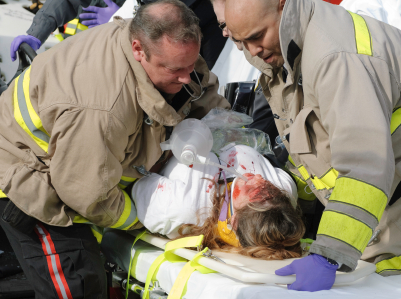
I love these posts from author and EMS expert Dianna Benson where she weaves medical detail into a fictional piece. 
Welcome back, Dianna!
I shake my head to full awake from my cat-nap, and gear up for the trauma call less than a minute drive away. Once my partner and I roll on scene, I note the three cop cars arriving.
Additional information regarding the call flashes across our ambulance laptop screen.
Proceed with caution. Law enforcement dispatched.
“What’s the deal?” my partner yells out the driver window at a cop rushing toward the building.
“Another worker pushed the guy.”
“Ah,” I say with a nod. “Attempted homicide.”
“Or homicide, but if the guy’s not already dead, he’s gonna need us.” My partner jumps out of our ambulance.
We grab a C-collar (cervical collar) and a backboard, and toss it onto our stretcher already loaded with EMS equipment and supplies.
“Remember caution?” I remind my partner.
“Yeah, yeah. Guy was pushed not shot or stabbed. Let’s go.”
I really didn’t want to hang back either. Our patient’s life may be over if we wait.
Inside the building, we push through a crowd of gawkers. I notice three cops drawing their guns at a man choke-holding some young woman, her wide eyes glossed-over.
“Let her go,” the cop at the left yells out. “Now.”
I’m hoping the guy follows the demand or we’ll have more than one patient. As I rest my hand on my radio in case I need to request additional EMS crews, I scan the area for an injured man on the ground. I spot our patient on the other side lying supine and lifeless in a pool of blood on the cement, his attacker in the middle and blocking us from our patient. I glance up and see the catwalk and assume our patient was pushed off of the suspended walkway about twenty feet above.  
The guy fell twenty feet? I think to myself.  If he’s alive over there, he’s in critical condition.
“Clear out,” the cop to the right shouts. “Everyone. Out of this room. Now.”
The crowd scampers away. My partner and I hold our position behind the cops. The perpetrator doesn’t have a weapon, so there’s no danger to us.
After a few drawn-out minutes of the cops warning the perp to let the woman go, and our patient remaining lifeless and out of my reach on the ground in the near distance, I somehow dig up my most gentle tone and interject, “Sir, I don’t think you want to hurt her. Do you?”
The perp jerks his head in my direction. Ten seconds tick by with him just staring at me as if pleading me to help him out of this. “Ah…no. No, not really.”
“I didn’t think so. How about letting her go and we’ll talk?” Stop blocking me from my patient. If he’s not already dead, he needs me now. Needed me minutes ago.
 “Talk? Yeah, yeah,” he nods, “I just need to talk.” Chest panting, arms shaking, the perpetrator shoves the woman aside and drops on the ground. All three cops pounce on him and drag his arms behind his back.
I roll the front of the stretcher around the chaos on the ground; my partner pushes from the back. As I pass the perp, I ignore his insistent yells to talk with me since my focus is on my patient.
“Sir?” I say to the lifeless man as we approach him.
No answer. No movement of any kind.
I slide my fingers to his neck and find a thready carotid pulse. His chest is rising and falling in steady rhythm bi-laterally.
My partner holds his head in an in-line spinal stabilization position as I strap the C-collar around his neck. I slip a towel underneath his head for hemorrhage control and feel for trauma. I find an open skull wound, crepitus bone, and flesh.
Two firefighters appear at our side and assist me with log rolling the unconscious patient onto a spine board and strapping his body down. I secure the man’s c-collared head to the backboard with head blocks, straps and tape, allowing my partner to finally release the manual c-spine stabilization.  
“What do you need from me?” some guy asks. “I’m his supervisor.”
“How old is he?”
The manger answers that pertinent question as well as all my others, as I connect my patient to our cardiac monitor. Less than a minute later, I’ve assessed all vital signs and the heart rhythm, as my partner performs a rapid trauma examination. Our patient remains unconscious. I’m thinking internal bleeding is the main cause and he’s headed to hypovolemic shock, and if that’s the case, surgical interventions are vital. No more time to waste on scene.
“Femur fracture,” my partner says.
“Among other things,” I say. “Let’s go.”
All of us lift the backboarded man onto the stretcher, and roll it out to my ambulance.
As one of the firefighters drive, my partner and I attend to our trauma patient in the back with the assistance of another firefighter. Our patient remains unconscious. In order to protect his airway, I slide a lubricated oropharyngeal airway down his throat. With a curved laryngoscope, I lift the epiglottis and gain a visual of the glottic opening and white vocal cords. I drop the orotrachael tube between the cords, down the trachea. I connect a bag valve mask over the tube opening. To keep him oxygenated, I squeeze the football-size bulb every five seconds.  
“Take over bagging,” I say to the firefighter, and he grabs the bag valve mask from my hands.  
I spike an IV bag as my partner slides in an eighteen-gauge IV needle into our patients left arm. Since the patient is unconscious, there’s no point to administer pain meds.
I grab the radio mic. “Wake Med ED, this is EMS 16.”
“Go ahead EMS 16.”
“We are en route with a thirty-three year old male. Trauma patient. Twenty-foot plus fall onto concrete. Unconscious. Intubated. Open head trauma posterior. Fractured femur.  Normal sinus cardiac rhythm. BP 95/52 and falling. 182 heart rate. ETA 5 minutes.
Even if this man’s body survives, his brain will probably never be the same. I swallow the sadness clogging my throat, hoping he doesn’t have any children, and I re-focus on finishing my job on this trauma call.
*************************************************************************
 

Dianna T. Benson is a 2011 Genesis Winner, a 2011 Genesis double Semi-Finalist, a 2010 Daphne de Maurier Finalist, and a 2007 Golden Palm Finalist. In 2012, she signed a nine-book contract with Ellechor Publishing House. Her first book, The Hidden Son, released in print world-wide March 1, 2013. 

After majoring in communications and a ten-year career as a travel agent, Dianna left the travel industry to earn her EMS degree. An EMT and a Haz-Mat and FEMA Operative since 2005, she loves the adrenaline rush of responding to medical emergencies and helping people in need. Her suspense novels about adventurous characters thrown into tremendous circumstances provide readers with a similar kind of rush. Dianna lives in North Carolina with her husband and their three athletic children. Learn more about Dianna at www.diannatbenson.com.

Author Question: Injuries Sustained from Physical Assault

Kara Asks:

I am a fan of your Medical Edge blog. Back in August of 2012 you answered a question for me regarding drowning for my current WIP. The information you sent and posted on your blog about drowning was invaluable and I made sure to save it in my research files for future reference.

That same WIP is now finished but as I am going through and tweaking the chapters, I’ve come up with one more question I could use your help with. If a woman in her 40’s, of average height and weight survives a vicious beating (from a much larger male) what would her condition be like when she wakes up in the hospital?

Currently, I have her waking up after being in a semiconscious state for two days, with a shattered left hand and wrist, that were crushed by being stepped on.  Some of the things she endured include –  being thrown against a stone wall, a slap to the face that sent her backwards, dragged across a dirt floor by her hair, several kicks to her side from a steel-toe boot and cuts and scratches from struggling to get away.

Jordyn Says:

Good to hear from you. Congratulations on being a Genesis
Finalist!!

Regarding your question: I’m going to take each of the injuries you
listed and talk about our concern as medical providers and what
injuries what might be present.

1. She would likely be in a “semi-conscious” state if she received
blows to her head. So I’d include this as a mechanism of her injuries.

2. Being thrown up against a stone wall. Depending on how much
clothing she was wearing– bruising and abrasions. Could also have
lacerations here. A hard enough force will break bones so we’ll look at points of contact and likely x-ray if there is point tenderness.

3. Slap to the face. Bruising. A punch would be more a mechanism for
closed head injury unless she hit her head on something when she went
reeling.

4. Dragged across the floor by her hair– you can get scalp injuries
from this– from hair being torn out.

5. Kicks to her side from steel-toed boots. This is actually the most
  concerning mechanism for injury. We’d worry about the organs underneath and the
injuries that may have happened from these kicks. You can Google
anatomy pictures to figure out what lies underneath. If it’s organs
such as the spleen (on the left) and the liver (on the right)– she’d
likely get some CT imaging to determine of these organs were
“lacerated” and to what grade.

You’ll have to be careful in the text to give a mechanism for each
injury she receives.

**********************************************************************

 Kara Hunt is a member of American Christian Fiction Writers (ACFW) and has been named an ACFW 2013 Finalist in the Genesis Contest in the Mystery/Suspense/Thriller category. Kara also semi-finaled in the 2012 Genesis Contest in Women’s Fiction.

Kara also created the Christian Fiction blog “Fiction With Faith.” See exciting interviews, reviews and news on inspirational fiction and their authors at http://kararhunt.wordpress.com/