Ideas From the ICU Waiting Room

Omni

I have probably seen the inside of a hospital more than I’ve cared to these past couple of weeks. I have a relative who had surgery– then a major surgical complication– for which he had to be admitted back to the surgical ICU.

He is on the mend but continued prayers appreciated.

What was interesting while sitting in the waiting room? I can’t help but look at and examine my environment and develop story ideas.

Many of you are probably aware that most medical units use machines to dispense drugs. These go by a few names. Pyxis machines or Omni cells.

When I first started nursing, these machines were mostly used for drug dispensing so nurses on units didn’t have to wait for the pharmacy to fill a med order and then deliver it. It’s very helpful in situations where the patient is in a lot of pain or say . . . seizing.

These machines have evolved to dispense quite a few things. In our unit, they dispense not only drugs but about 90% of the supplies we use for patient care. Things like suture kits, nasal cannulas, wound packing, etc.

I discovered a Pyxis machine that dispensed scrubs.  How awesome is that!

Now, you may ask yourself . . . “Just why did Jordyn find that soooo fascinating?”

Simple– how could a bad guy use it to get where he wanted to be in the hospital setting. Or, how could someone use it to disguise themselves to get out.

Awww— now you see how my devious mind works.

What the machine required was an ID and password because they probably know what devious minds think. Yes, I did punch a few buttons to see exactly how it worked. Research, people.

What ideas have you come up with in waiting rooms?
Up and Coming

How has your week been?

Mine? Well, you know, never a dull moment.

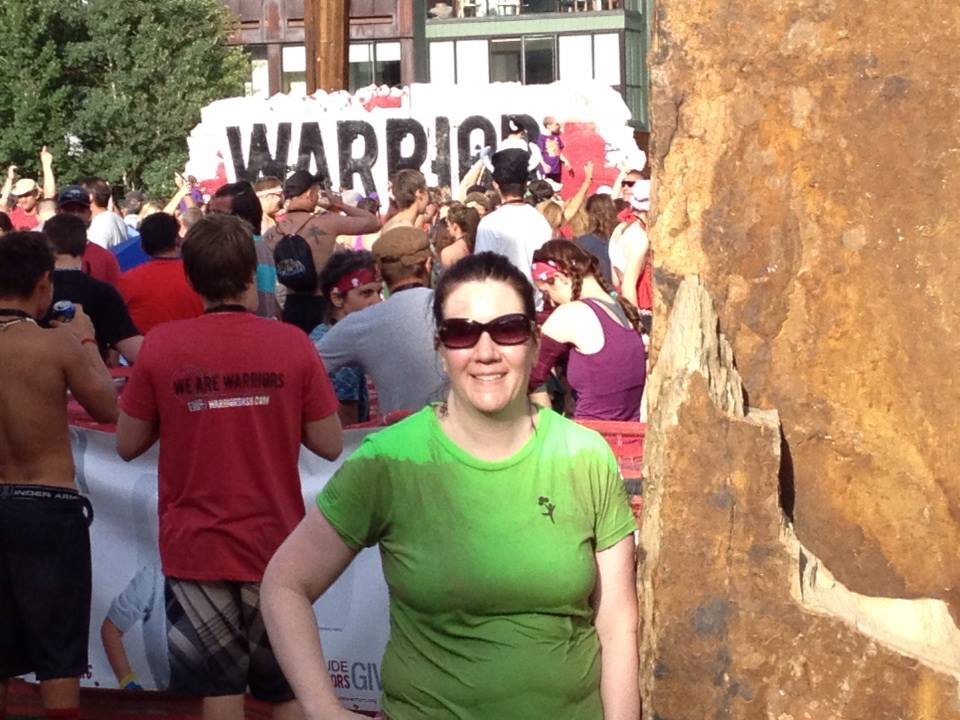
Yesterday, I participated in the Warrior Dash. It is a 5K with obstacles on the course. Things like climbing over a 10 foot wall. I think there were three of those. It was great fun minus a minor shoulder injury. Just why my shoulders like to gravitate out of their sockets mystifies me. I did finish and here is photo proof. I did clean up a bit.

This summer I’ve done a lot of physical things I’ve never done before and those who know me can attest to the fact that I am not a fitness guru. I still would pick chocolate over celery on any given day. Nachos over hummus. You get my drift.

But, I have been trying to get into shape. So, in my wake over the last several months are three 5K’s, one 10K and I’m hoping to hike one 14teener (a mountain where the peak is at 14,000 feet.)

Sadly, I am still not a size four. Nor will I ever be but this summer of mostly fun physical activity got me thinking about writing goals. Just how do you try and achieve something where the finish might not be as glamorous as you imagined. A finish like you’ve published almost three books and still can’t quit your day job.

Here are my thoughts:

1. Striving toward a goal gives you confidence. When you accomplish little things (like running a 5K)– you believe you can do the bigger things (like running a 10K.) Words will add up to sentences. Sentences will add up to paragraphs. Paragraphs become chapters! Once you pile enough of those up you will have a novel.

2. Sometimes the step in front of you is all you can focus on. When I ran my first 10K– I lasted about 5.5 miles. I had run six miles before but I was mentally having a bad day– like my friend who was walking still had a faster pace than me jogging. At one point– all I was doing was looking at the sidewalk and counting to four. Four steps was the distance between the cracks and meant that section of sidewalk was finished. I would count to four again. I must have done this for a mile just trying to take the next step. Focusing on the large picture can be overwhelming. What is your next step?

3. Finishing is fun! It is great to have that moment where you cross the finish line. You have a completed book. People like the book! Your words touch someone. Sometimes visualizing those moments can help you take those small steps.

What is a goal you’re working on?

For you this week!

Tuesday: I’ve spent a lot of time in the hospital with a sick family member this month. Just what got my authorly wheels turning?

Thursday: A GREAT resource for writers with LOTS of information on death. I know– but this is how suspense authors think.

Also– I am getting ready to launch my newsletter! Subscribe and be eligible to win the WHOLE Bloodline Trilogy, $50.00 in gift cards and some nifty home-made items in time for Halloween!

Medical Critique: James Patterson’s Kill Alex Cross 2/2

Last post and this post I’m doing a medical critique of James Patterson’s Kill Alex Cross. Usually, I don’t mention the book or the author’s name but I’m hoping James will spend a little of his cash on a medical consultant and am also probably losing out on a chance that he will endorse one of my novels.

Oh well, living on the edge . . . that’s me.

If you have not read the book this post may contain some spoilers you’d rather not know so you have been warned.

At one point in the book, a suspect is kidnapped and he is given “truth serum” in order to get him to divulge the location of the president’s kidnapped children.

The prisoner is given scopolamine.

Well, hmmm. This did cause me to scratch my head a little bit. Why? Well, come to find out this was a drug used once for this purpose in the early 20th century. Where did I discover that? Well from the CIA’s own website. Interesting what a little research will show.

Now– the CIA should know about good truth serum. Here’s what it says about scopolamine:

Because of a number of undesirable side effects, scopolamine was shortly disqualified as a “truth” drug. Among the most disabling of the side effects are hallucinations, disturbed perception, somnolence, and physiological phenomena such as headache, rapid heart, and blurred vision, which distract the subject from the central purpose of the interview. Furthermore, the physical action is long, far outlasting the psychological effects. 

And that was my thought– there are much better drug choices.

What scopolamine is used for most these days is as a patch for motion sickness. That’s really the only use I’m aware of.

What James Patterson did say in his book is correct: “Lying is a complex act.”

What “truth serum” drugs really do is loosen inhibitions and makes lying more difficult– not that it can’t be done.

Some better drug choices? Sodium thiopental or some of the benzodiazipines. I revealed something very personal under the influence of Versed given prior to surgery once that I normally would have never disclosed.

Yes, indeed, that was a fun time.

Let me just say– never have surgery at a hospital where you are employed.

Medical Critique: James Patterson’s Kill Alex Cross 1/2

I am a James Patterson fan. I’ve restricted myself lately to the Alex Cross and Michael Bennett novels.

I just finished Kill Alex Cross. You can read my Goodreads review of the novel here.

This post is to discuss the medical aspects of the novel and what I find suspect. Come on, James. Hire me as your medical consultant– I think– no I know you can probably afford me.

In this post we’ll deal with a male adult that is involved in a motor vehicle collision. The character was driving a van at a high rate of speed and took a header into a bus.

Initial treatment of the victim was good. Jaws of life. C-collar in place. Suspicion of drug use based on dilated pupils– specifically PCP which is an accurate bodily response.

All good until this line: “The van driver was out on a gurney now, hooked up to a nasogastric tube and IV.”

Anyone know what is wrong with this sentence?

Simply put, EMS is never going to put down a nasogastric tube.  Are paramedics trained to do the procedure? Yes. Have they ever in the field? Not that I’ve seen in twenty years of specialized nursing.

Now– a flight team on a long transport– maybe.

An nasogastric tube (or NG tube) runs from your nose to your mouth. It is used to drain/vent secretions and air from the stomach. If the stomach is retaining a lot of these things– it can impact on the patient’s ability to breath. A secondary use is as a feeding tube though there are many more comfortable styles (like a cor pak which is thin and flexible but doesn’t drain well.)

All this sounds very good for the patient, right? Why not put one in in the field?

One– patient priority is different in the field than in the hospital. It’s basically secure the airway, breathing and circulation and get on your way . . . fast. Placing an NG would simply slow down scene time and they can be difficult to place.

Impacted Nurse

There are also contraindications to an NG tube placement. One is a basilar skull fracture. We all have bones that line the base of our skull. If these are broken– there can be a direct conduit from your nose into your brain. Signs of basillar skull fracture are misshapen face, fluids (blood and serous drainage) leaking from the ears and nose. Mid face fractures.

That’s what we don’t want– an NG tube in the brain. Yes, it can happen as evidenced by the photo that comes from this article which discusses just such a case.

Really, James, call me. 

Up and Coming

Hello Redwood’s Fans!

How is your week going? Is your summer winding down? Getting ready to go back to school?

I have recovered from camping, horse back riding and white water rafting. Looking back I think those were the easy things.

Coming up for me are my first 10K race (well, I am just hoping to finish) and a Warrior Dash– the muddy 3-mile long obstacle course.

Yes, I am insane. But you knew that already.

For you this week.

I am taking on author James Patterson. Usually I don’t rat out authors or their books if I give a medical critique of their scene. However, James is unique because he can certainly afford a team a medical consultants so I tend to give him a lot less leeway.

This week we’ll look at the medical woes in one of his latest Alex Cross books– Kill Alex Cross.

Have a GREAT week.

News Stories for Authors: The Black Death Returns

Rats. Cute, right? Unless you think about the diseases they help to transmit. Here’s a short list here.

Evidently, the Black Death or Plague has not died. Well, perhaps it never did but a curious thing is that it disappears for years on end and then . . . it . . . comes . . . back.

Which always makes for a good medical thriller.

But now, it seems that the Black Death is popping up on the West Coast. Some interesting points from this article.

1. In LA county, a squirrel tested positive for bubonic plague or The Black Death. It is genetically similar to the organism that killed 200 million people in the 14th century.

2. Plague is spread from fleas, to rodents and then to humans. You can read further about transmission here.

3. There have been almost 1,000 cases of plague in the US. New Mexico sees almost half of these cases.

4. The pathogen responsible for bubonic plague is Yersinia pestis. It can be successfully treated with antibiotics. It’s death rate is around 11%.

5. There is a season for plague (just like flu and some other viruses) that runs from late spring to early fall. My guess is because that’s when rodents are active and not hiding in the snow during winter.

6. Untreated, the bacteria will spread through the body in one to six days. When it reaches the lungs– it can then become airborne and is then called pneumonic plague which is why some think it would make a good biological weapon.

7. Death can occur in as short as three days.

The question is– why does it disappear? What factors cause this to happen? Do you think there could be a true pandemic of The Black Death again?

Has the Black Death returned? Click to Tweet.

News Stories for Authors: Cure for HIV?

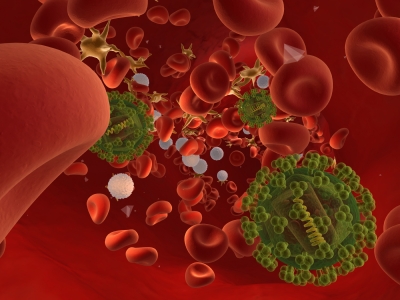
What would you think of a miracle cure for HIV that was too expensive and too labor intensive to cure most of the people who have HIV?

Well, that may be exactly what has occurred for two patients who are seemingly testing negative for the disease after receiving a bone marrow transplant for lymphoma.

Now, if that’s not a medical thriller, I don’t know what is.

Here are some of the highlights of the article that discusses this “cure”. I put that in quotation marks because two patients with no evidence of disease (NED) does not a proven cure make. Much, much more research needs to be done.

1. Evidently, when people with HIV receive bone marrow transplants, they stop taking their HIV meds. In these two cases, the patients continued to take their HIV medication.

2. From #1, it is theorized that continuing to take their HIV medication kept the virus from taking hold once the new immune system was transplanted because the viral load was kept low.

3. Since the bone marrow transplant, both patients stayed on their HIV medication for a period of time but have now stopped taking their medication. One for seven weeks and the other for 15 weeks and the virus has not returned. This does not mean that it won’t at some point but this does sound very promising.

4. One patient was transplanted with cells that carried a mutation, CCR5, that evidently prevents infection with HIV by blocking it from infecting the immune system. This is an area of interest for research in gene therapy.

All good news, right?

Well . . . maybe. From the article . . .

“Many clinicians would agree, however, that the three possible treatment options described in the article– including that used in the two highlighted cases– are not practical in a treatment setting, or may present too many safety and tolerability risks for the vast majority of HIV- infected patients.”— emphasis mine. 

My thoughts: Bone marrow transplants are arduous procedures. They are timely and expensive. It’s hard to find donors as they have to be an HLA match. Hence, donor registries.

According to the CDC, nearly 1.2 million people are living with HIV in the US alone. World wide there are 33.4 million people.

Sadly, what it will come down to if this proves to be a cure is who can afford it or not. This is one thing I fear with more and more health systems being run by governments. It’s pencil pushers deciding who gets treatment or not. Who gets the cure or not.

What do you think? If this proves to be a cure, how does everyone get it? Should everyone get it despite the expense?

A true cure for HIV or just another plot for a medical thriller? Click to Tweet.

Fungal Fright: Sprial by Paul McEuen

I wish I could say exactly how I discovered Spiral by Paul McEuen. I want to say it was a Goodreads review and I’m always looking for new medical thriller authors– particularly ones that can back it up with good sound expertise.

Paul is a professor at Cornell University and has received the Agilent Technologies Europhysics Prize, a Packard Fellowship, and a Presidential Young Investigator Award as listed in his bio. I am just guessing he’s one really smart dude.

This debut medical thriller also won the International Thriller Writer’s Debut Category for 2012. Strong work, Paul– as I like to say.

Spiral begins the first part of the book in the past– specifically a close examination of two war ships in the ocean– of a few men in a raft– and the large gun ship swiftly disposing of them because they want to come aboard.

The reason they aren’t rescued– and actually murdered– is because of the fear that they have been infected with a deadly fungus named Uzumaki.

The early scenes of the novel– from the terror realized as the infection manifests, to the other ship trying to “quarantine” the fungus in the middle of the ocean until one stray bird lands on the infected vessel . . . and then takes off. . . 

I never thought a bird landing on a ship would lead to heart palpitations– seriously.

Fast forward and the young military fungal specialist is now a well-acclaimed university professor specializing in fungus and one of the few who know about Uzumaki– and now others want the fungus born again for nefarious reasons.

What I really liked about this novel was it reminded me of the early Robin Cook books. Take a medical concept and take it to the worst case scenario. Or take something theoretical, somewhat expiramental and think about the way it can run amok on humanity. I think that’s what makes a medical thriller— well– thrilling!

I liked learning about fungi and the tiny robots called microcrawlers (and how deadly they can be!) In fact, I wanted to look up some of these concepts to see how “true to life” they really were. I also liked the examination of how prevalent antibiotic usage can be detrimental.

I would have enjoyed more of the fungus unleashed on humanity. Instead, there were only a few infected people. The story centered more on the family and how the secret of the fungus was kept hidden.

Overall, a good read for medical thriller fans. I’ll be excited to read this author’s future works.   

Fungal Fright: Killer Spores

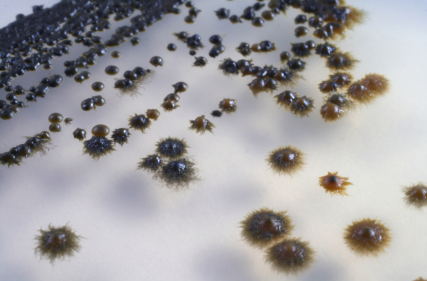
In preparation for Thursday’s post– I did a quick Google University search for “deadly fungus” and up came Cryptococcus– again. I first blogged about this fungus here.

The interesting thing about fungal infections is that they are like the unwanted orphans of pathogens. Their infections can take a while to manifest and be equally as difficult to treat– often requiring months of anti-fungal therapy.

I first blogged about Cryptococcus two years ago but have you even heard of it? The reason bacteria and viral infections get much more press is that they tend to spread and manifest much more quickly– thereby meeting our need for instant gratification. We’ll know, likely within a few weeks, whether you’re going to live or die.

Not so much with a fungal infection.

A person gets infected by cryptococcus by directly inhaling the spores. There are two species that are responsible for MOST human infections. C. neoformans, found in the soil, generally infects people with weakened immune systems like those with the HIV virus. The other, C. gattii, affects more healthy populations.

What’s interesting is that these fungus spores are continuing to spread along the western sea board. Compared to when I first wrote about this infection, the death rate has risen to about 33% from 25%. What’s more interesting is that the same fungal infection for Canadians only has a death rate of about 10%.

It makes me wonder if the difference in geography plays into the host, the fungus, and/or the ability to fight the infection. All good plot points for a medical thriller.

Treatment is antifungal medications for many months but if these prove inneffective then surgery may be required.

What about you? Have you heard of this deadly spore?

You can check out the following links if you want to read more about Cryptococcus and these links are also where I got the information for this post.

http://www.realclearscience.com/articles/2013/05/28/cryptococcus_spread_of_a_deadly_fungus_106543.html

http://www.cdc.gov/fungal/cryptococcosis-gattii/

http://www.ncbi.nlm.nih.gov/pubmed/20570552

http://www.ncbi.nlm.nih.gov/pmc/articles/PMC2669189/

Winner!!

Just a quick post on this happy Monday to announce the winner of the Who Will Survive The Zombie Apocalypse Contest– or at least have fun trying whilst reading a copy of either Proof or Poison.

The winner is: Audrey Allyn Reilly!!

Audrey– e-mail me at jredwood1(at)gmail(dot)com and I’ll tell you how to claim your prize.

Thanks for playing everyone. It was fun to see your percentages. I’m not sure I’ll be hanging with those of you who scored under 65%– you might have to fight those zombies off on your own. Now– as Crystal said– time to stock up on canned foods and weapons.