Author Question: Power of Attorney 2/2


We’re continuing with author Christy Barritt’s question. You can find Part I here that deals with a gunshot wound to the head and brain bleeding. 
Christy Asks:
The victim’s father had Power of Attorney and the father lived four hours away, would it be possible for the father to request that his son be transferred to a hospital closer to his home so he could keep an eye on him? Or is that not done with victims with brain injuries? I need something for the fiancee and the future in laws to fight about.
Jordyn Says:
Yes, hospital transfer is possible but it depends on what type of injuries you pick. For instance, if you go the brain swelling route and there are no critical care services where the father lives—the hospital can’t transfer just based on that. Plus, my guess is they would wait until he was a little more stable anyway.
There would need to be appropriate hospital services there (where the father lives) that would be able to care for his injuries before the transfer would be approved.
*****************************************************************
Christy Barritt is an author, freelance writer and speaker who lives in Virginia. She’s married to her Prince Charming, a man who thinks she’s hilarious–but only when she’s not trying to be. Christy’s a self-proclaimed klutz, an avid music lover who’s known for spontaneously bursting into song, and a road trip aficionado. She’s only won one contest in her life–and her prize was kissing a pig (okay, okay… actually she did win the Daphne du Maurier Award for Excellence in Suspense and Mystery for her book Suspicious Minds also). Her current claim to fame is showing off her mother, who looks just like former First Lady Barbara Bush. When she’s not working or spending time with her family, she enjoys singing, playing the guitar, and exploring small, unsuspecting towns where people have no idea how accident prone she is. For more information, visit her website at: www.christybarritt.com.


Author Question: Brain Bleeding 1/2

I’ll be handling Christy’s question in two parts. Part one today.

Christy Asks:

A bullet grazes my hero’s brain. He’s taken to the hospital where he has an intracranial hematoma.Would he be in a medically induced coma after this? If so, for how long? When do doctors decide to take someone out of a medically induced coma? What would a victim be like after the fact? Sedated? When would they know the extent of the injuries?

Jordyn Says:

It depends. Let’s start from the top.
A bullet grazing someone’s brain. Okay—well in order for it to even hit the brain it has to come through the skull. So, it’s not going to be a minor injury considering that. Not like a bullet grazing your arm.
An intracranial hematoma means you have bleeding on the brain but you haven’t really specified the area. For instance, epidural hematomas occur between the dura (which is a tough membranous covering) and the skull. These are almost always taken to surgery.
In a subdural hematoma the bleeding occurs between the dura and the arachnoid layer. These are not always evacuated by surgery. It depends on their size. Intracranial bleeding can mean a lot of things—that the bleeding is just within skull (which includes the two things I’ve mentioned) or in the brain tissue itself. Bleeding within the brain tissue itself is much harder to deal with.
Would he be in a medically induced coma? It depends. The decision to put someone in a medically induced coma is more based on whether or not the doctors think the brain will swell as a result of the injury and not necessarily because there was a bleed. For instance—epidural hematomas are generally taken to surgery and evacuated without the patient needing to be put into a coma.
If they think they see a significant amount of swelling of the brain tissue then a medically induced coma is more likely. A patient is generally placed into a coma through the period of peak swelling which is generally 48-72 hours post injury. The patient gets a special monitor (a bolt) that monitors their brain pressure (or ICP—intracranial pressure). 
After that peak period of swelling comes and goes a decision will be made to wean the patient off their sedation. The pressure may stay high. If the pressure stays high the patient may proceed to brain death (caused by herniation or hypoxia related to the pressure), or significant brain injury, or recover. It may not be known for several months what the outcome is though generally if a patient is going to suffer brain death they will do it in that 48-72 hr window. Past that, if they live but the pressures have been high—more a vegetative state or significant neurological impairment. If pressures have stayed lower—the patient may recover okay.
I have seen miracles, though, too so this is not cut and dried.
As far as knowing the extent of injures—they’ll know that pretty quickly based on CT imaging. However, what won’t be known is the affect on the patient. People can have the same exact brain injury—some die—some fully recover so there is a lot of writing leeway here. It may not be known for years how the patient will recover or what their lives post-injury will look like. 
********************************************************************

Christy Barritt is an author, freelance writer and speaker who lives in Virginia. She’s married to her

Prince Charming, a man who thinks she’s hilarious–but only when she’s not trying to be. Christy’s a self-proclaimed klutz, an avid music lover who’s known for spontaneously bursting into song, and a road trip aficionado. She’s only won one contest in her life–and her prize was kissing a pig (okay, okay… actually she did win the Daphne du Maurier Award for Excellence in Suspense and Mystery for her book Suspicious Minds also).

Her current claim to fame is showing off her mother, who looks just like former First Lady Barbara Bush. When she’s not working or spending time with her family, she enjoys singing, playing the guitar, and exploring small, unsuspecting towns where people have no idea how accident prone she is. For more information, visit her website at: www.christybarritt.com.

Up and Coming

Well, I survived the Zombie Apocalypse– oh, I mean traveling across country to OK with my two daughters and my father. A generational tour you could call it. Overall, the trip was good until about the last two hours of our 11 hour drive (which was turning into 13 hours after road trip stops) when we stopped in Limon, CO for a potty break.

It was dark, cold and rainy. My youngest had complained for the past hour about the need to pee but then couldn’t find her flip-flops in the car to walk into the gas station. There was some encouragement (all right– yelling) about putting anything on her feet she could find and hence we entered the gas station with her in her Sponge Bob slippers to a non-functioning toilet.

One of my childhood homes.

The joy of road trips.

It is fun to look back. For a brief time, my family lived in small Kansas town. The house was pretty close to some major streets. I was about 4-5 during those years. One day, I remember a man beckoning me to follow him. And so what did I do? Tell my mom?

Oh no– I followed.

A neighbor found me walking along the highway and picked me up and brought me back home. Who knows what would have happened if that man got a hold of me. I think back to the situation as a good beginning for a suspense novel.

When I was returned safely home my mother didn’t know whether to beat me to death or hug me to death. It was a little of both and I remember crying into my Snoopy sheets until my father got home. I’m sure my mother felt like if I was locked in my room I wasn’t wandering down lonely Kansas highways.

My father took me by that house– as seen in the picture– and it’s fun to try and remember what it was like living there.

I’m amazed it still stands.

For you this week–

Author Christy Barritt stops by with a few author questions for me to tackle. One regarding medically induced comas and the other about medical power of attorney.

Hope you guys have a GREAT week! Anyone road tripping it for the holidays?

Two Important Questions

I’m pleased to welcome back fellow medical thriller author and good friend Dr. Richard Mabry.

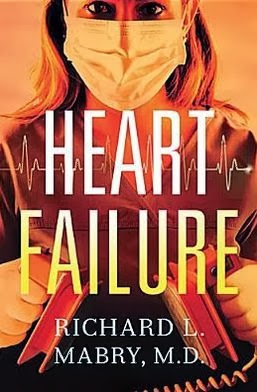
Richard’s latest and greatest novel, Heart Failure, has just released and I hope you’ll take some time to read his work if you’re a fan of this genre. Personally, I can’t wait to get my hands on it!

Welcome back, Richard!


I wish I had a nickel for every time I was asked, “Where do you get your ideas?” And the answer, for me and for most authors of fiction, is pretty much always the same—ideas are all around us, if you ask the right questions.

Early in my writing experience, Alton Gansky taught me that the most important question for an author to ask is, “What if?” I’ve taken that advice to heart, and it’s led me to the plots of all my books. For the latest, Heart Failure, I read a story about a man living under another name in an unfamiliar city because he’d been placed in the Witness Security Program.
I wondered, “What if the man fell in love and was about to be married? Would he tell his fiancé about his past? What if something happened that forced him to reveal his secret?”
And thereby hangs a tale, as the saying goes.
Jeff Gerke is responsible for the other question I’ve learned to ask myself when considering a plot: “So what?” I spent a very frustrating half-hour in the lounge at the Mount Hermon Conference trying to explain a story idea to Jeff, and each time I paused for breath he’d ask, “So what?” I finally figured out what he meant. If the protagonist fails, what would be the consequences? What would failure mean? If the stakes aren’t high enough, the reader will lose interest. That’s why this is such an important question.
For Heart Failure, the “so what” was initially that the protagonist might lose the woman he’d come to love. However, as the plot develops, it becomes obvious that both their lives are in danger, and the driving force changes to staying alive.
For all the writers reading this blog, I’d urge you to ask two questions when developing a plot—“what if” and “so what?” When you get the right answers to those questions, you’re on your way.
*****************************************************************************

Richard Mabry is a retired physician, past Vice President of the American Christian Fiction Writers, and author of “medical suspense with heart.” His novels have been a semifinalist for International Thriller Writers’ debut novel, finalists for the Carol Award and Romantic Times’ Reader’s Choice Award, and winner of the Selah Award.  You can follow Richard on his blog, on Twitter, and his Facebook fan page.
 

How Much Evidence?

I’m so excited to host forensic specialist Amryn Cross as a new guest blogger to Redwood’s Medical Edge. To welcome her properly I asked my Facebook peeps what forensic questions they might have.

This was the first one:

How much forensic evidence does the court need to declare a missing person dead without a body?

Welcome, Amryn!!


Great question. The short answer is, it depends.
Any question involving the court itself has the potential to be highly variable. Different states have different laws, and some judges may allow things that others would not. That being said, I’ll answer this based on the most common occurrences in the U.S.
In most states, common law indicates a missing person may be declared dead after seven years with no evidence to indicate they may be alive. That means if a missing person’s bank account still gets regular deposits and withdrawals, if their name shows up on a deed in another state, or if they contact anyone this would be sufficient evidence that the person is alive (or their identity has been stolen, in which case this would be investigated).
If, after seven consecutive years of absence and a diligent but unsuccessful search for this person, there may be a court order issued to the registrar, instructing them to issue a death certificate.
As far as forensic evidence goes, a person may be declared dead sooner than seven years based on “sufficient evidence”. What constitutes sufficient evidence may be up to a judge in that jurisdiction.
One example includes finding a large pool of the victim’s blood provided it is a volume large enough that a person couldn’t have survived a loss that significant.
The other caveat is a person may be presumed dead because they were in imminent peril. This happens following plane crashes or mass disasters or even war. The passengers of the Titanic who did not arrive aboard the Carpathia in New York were declared dead in a matter of days and weeks. A similar thing happened after September 11.
Courts don’t automatically grant the order for a death certificate, even after the seven years. If a petition is made for a death certificate, the following criteria may be considered as reasons to deny the petition:
·         the absent person was a fugitive from justice
·         the absent person had a bad relationship
·         the absent person was having money troubles
·         the absent person had no family ties or connection to the community
Again, this is highly dependent on individual courts/judges. It always pays to check the laws in your particular jurisdiction.
Here’s a good article on the basics of declaring death and what happens when that person turns out to be very much alive. 
*********************************************************************

Amryn Cross is a full-time forensic scientist and author of romantic suspense novels. Her first novel, Learning to Die, will be released in September. In her spare time, she enjoys college football, reading, watching movies, and researching her next novel. You can connect with Amryn via her website, Twitter and Facebook.
 

Up and Coming

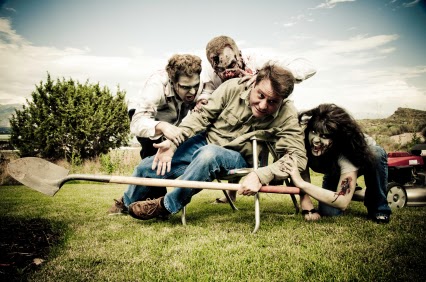
When this posts I’ll actually be driving back from Oklahoma with my two children (age 9 and 11) and my father. Hopefully, my life will feel as carefree as the photo but somehow (in already surviving past trips) it may feel more like the second photo– zombies attacking.

Road Trip Possibility A

As you know I’m also a pediatric nurse. I am more of a strict, I-will-do-as-I-say parent. So if I make a threat (and they can be pretty inventive) it is going to happen. Many years ago, my husband and I were driving from Colorado to Ft. Wayne, Indiana. There is a lot of road between here and there. The girls were maybe 4 and 7 at the time at they were fighting, fighting, fighting.

We kept saying if you can’t be calm in the car then you can’t be in the car!

It didn’t really change much. So finally, I said to my youngest who was the biggest instigator of the fighting. “If you can’t stop fighting and screaming I’m going to pull over and you’ll sit in the field until you can be quiet.”

Fighting ensued.

Road Trip Possibility B

Next exit ramp– car is over and my husband takes her from the car and marches her to the middle of a field and sits her down and stands about two feet away.

I can’t hear the conversation but I can see the body language. Both are with arms crossed just flat out sizing the other one up. It was chilly– with sleet falling.

It took about five minutes before she felt like the car might be warmer and more comfortable than the middle of the field.

There’s something about road trips that bring out the good and bad. Hopefully this one will be ALL good.

This week I’ll be hosting a Facebook Party for Peril’s release and giving away over $500.00 worth of prizes. Hope you’ll join the fun.

For you this week:

Tuesday: I am so excited to be hosting new guest blogger, Amory Cannon, a forensic scientist. She’ll be blogging about exactly what evidence (or lack of) the courts need to declare someone dead.

Thursday: Author Richard Mabry stops by to give some background into his latest and greatest medical thriller, Heart Failure. I know I’m excited to check this book out.

Have a GREAT week.

Jordyn

Author Question: Antibiotic Usage

Amanda Asks:

I thought it would be good conflict to give my nurse protagonist TWO patients with rival needs. The fast facts:

A) Fugitives from the law.
B) No access to medical treatment.
C) The nurse does have some Amoxicillin but just enough for about another week for Patient #1 (the man she loves), who has been on it for almost five days now (fever broke, lucid now, still sick though.) He has bacterial pneumonia, rib fractures, and malnourishment.

They’re running for their freedom if not their lives. In comes Patient #2, who dug a tracking device out of his body with a non-sterile instrument and now has cellulitis (red streaks from the wound, low-grade fever, awesomeness.)

My nurse has to give him antibiotics or he could die.

But if she gives them to Patient #2, Patient #1 could relapse. And die.

So . . . Nurse Jordyn . . . which patient truly needs the medicine the most? Is there any use whatsoever in giving each of them half of it?

If she gives the whole dose left to Patient #2, will Patient #1 necessarily relapse? Is it unrealistic if he doesn’t?

If she gives the whole dose left to Patient #1 will Patient #2 necessarily die?

And now for the big question: as a nurse, what would YOU do?

Thank you, you are awesomely awesome.

Jordyn Says:

Wow, Amanda. This is a very intense question and not as hard an answer as you might think.

The issue you’ve given these two patients . . . Patient #1 has presumed bacterial pneumonia because I’m assuming no chest film was taken (which would be a definitive diagnosis) since they are running from the law. Patient #2 has cellulitis. 

The reason this is an easy answer is that Amoxicillin is typically not used to treat skin infections. What is generally used is an antibiotic called Keflex. This uber-smart nurse would know that and continue to give the Amoxicillin to the man with the pneumonia– particularly if he was improving. If the patient improves it can be a logical assumption that the antibiotic had something to do with it and he should finish the course of treatment.

That being said— let’s consider your questions.

Is there a benefit in giving each half the dose? Yes and no. This could be effective and also dangerous. Under dosing an antibiotic could lead to partial treatment and some bacteria still being left alive. Now, the bacteria have been exposed to the antibiotic and may mutate leading to a resistant strain which could ultimately put them both in danger.

Would patient #1 die if treatment stopped half-way through? Again, yes and no. He could survive and be fine but also develop a more resistant infection later on.

Would patient #2 die without treatment? Yes, this is probable with a bad cellulitis. Likely, what would happen eventually, is the bacteria gets into his blood and he dies from blood-borne sepsis or blood poisoning as it is sometimes called.

I do hope one of these fine gents lives.

In My Arms: A Tale of Special Need

I’m pleased to host friend and author Gillian Marchenko as she guest posts to give a brief glimpse of taking care of her special needs daughter.

Many of you know that I’m a pediatric ER nurse and I come into contact with special needs kids and their families often. What you don’t know his how tough as nails and compassionate these caregivers are. Truly, some of the most special people on earth. Today, Gillian blogs about something so simple– holding her daughter in her arms.

Gillian, I am honored to have you here. Welcome.


“Mom!” Polly yells out in her sleep. Her body thrashes to and fro on our queen sized bed. Her legs kick the covers off. Sweat glistens her forehead.
 

The house is quiet. My husband and two older girls went out for the night. My youngest has been asleep for an hour in her room. I bedded Polly in next to me, thinking that my husband would move her when he got home, and that her slight of breath, up and down, methodical, musical, may inspire me as I grab a few last minutes in the day to write with our fuzzy white dog at my feet.
“Honey, what’s wrong. Tell Mama what’s wrong.”
She doesn’t respond but continues to fuss and squirm.
“Shh, there, there,” I attempt to settle her back into her dream cycle. This part isn’t new to me, a seasoned mother of four. There have been countless nights in the last twelve years where I’ve brushed wet hair off a forehead, hummed a melody, and lulled a child back to sleep.
But my coaxing doesn’t work.
“What’s wrong, Polly? Does something hurt?”
My daughter nods, and a shot of electricity zaps my extremities.

When Polly was born at 37 weeks, she wasn’t breathing. The doctors resuscitated her, and she spent the first three weeks of her life in an incubator fighting for her life.

By the time I felt the weight of her tiny, five-pound body in my arms, I had already been informed of her diagnosis of Down syndrome.
I wrote about that time in my recently published memoir Sun Shine Down. Polly too weak to leave her plastic dome and me, too weak to fathom the curve ball of Down syndrome. 
Sometimes my arms ache to hold Polly the baby. What I wouldn’t give to scoop her up, to hell with my fear of the unknown, to hell with sickness, and to hell with stigmas hidden within, stigmas I didn’t know existed in me until I heard the words Down syndrome. 
“Show me where it hurts.”
Polly gestures towards her head.
“Your head hurts?”
She nods yes again. I pull her up onto my chest. It is not an easy task because she is now seven years old. 
But we don’t screw around with headaches in this family.
Three years ago, Polly had a catastrophic stroke which resulted in the diagnosis of Moyamoya, a disease that thins the arteries in the brain to the point of strokes and seizures. Unbeknownst to us, this disastrous disease had been causing mild strokes in her body throughout her short little life.

Polly underwent two brain surgeries that diminished the chances of recurrent strokes and seizures from 67% to 7%. She rocked the surgeries, actually running circles around me after the second one, just days after her neurosurgeon cut through skin, skull, and brain to create new blood flow for our girl.
“Here, honey, let me see.” I force Polly’s face towards mine and examine her for signs of stroke. No twitching, no loss of motor control. The fearful moment releases into the air around us. I hold her to my heart like I longed to do after her birth. She settles, and sinks into me. My body is quicksand. I engulf her.
We’ve danced around death too often.
Polly is here tonight, in my arms. I don’t take it for granted.  
She’s here. I feel her weight. She is happy. She loves her life. Her life overflows with joy, so much so that she splashes her joy on those around her, and continually plugs up my heart, so that I can be filled too.
**********************************************************************
 

Gillian Marchenko is an author and national speaker who lives in Chicago with her husband Sergei and four daughters. Her book, Sun Shine Down, a memoir, published with T. S. Poetry Press in the fall of 2013. She writes and speaks about parenting kids with Down syndrome, faith, depression, imperfection, and adoption. Her work has appeared in numerous publications, including Chicago Parent, Thriving Family, Gifted for Leadership, Literary Mama, Today’s Christian Woman, MomSense Magazine, Charlottesville Family, EFCA Today, and the Tri-City Record. Gillian says the world is full of people who seem to have it all together. She speaks for the rest of us. You can connect with Gillian on her website, on Facebook and Twitter.

Up and Coming and Horribly Funny Photo

Hello Redwood’s Fans!

How has your week been?

Mine– planning lots of fun stuff for you! I have a huge Facebook party coming up to celebrate Peril‘s release so stay tuned here for details.

Baby Biffs It

This weekend we had family pictures taken and I’m really hoping that NONE turn out like this. If we do have one close it would definitely generate laughs and make for the most awesome Christmas card. The baby WAS okay. Check the link and some of the comments if you need a laugh.

For you this week:

Tuesday: Author Gillian Marchenko stops by to share a little bit about taking care of her special needs daughter who has Down Syndrome. I hope you’ll check out her memoir Sun Shine Down.

Thursday: Author Question for nurse Jordyn. Which love interest gets antibiotics to save his life and why? 

Plausible Deniability: Child Abuse


Unfortunately, as a pediatric ER nurse, it is part of my job to deal with abhorrent parts of family life. The parts that the average citizen doesn’t think about on a daily basis. Maybe even they deny what is in front of their very eyes.
What I know to be true is that children are abused. Their most likely abusers are those closest to them. Mothers. Fathers. Boyfriends. Caregivers. It is not the stranger on the street that comes in, shakes your infant, and then disappears into the night.
When I began working in the pediatric ICU (PICU) what surprised me most was not that children were abused but that the general public didn’t believe it and it was very hard to get people convicted on child abuse charges for just that reason. It wasn’t that there wasn’t sufficient evidence . . .  it was that the jury simply couldn’t believe that a mother, any mother, would willfully press her child’s hand to an iron and hold it there.
Surely, that was accidental.
Maybe you have suspicion that a child you know is possibly being abused but you’re afraid to take that step of contacting someone in a position to help. You may say to yourself– I don’t really know what the signs of child abuse are– and I don’t want to put anyone through needless accusation.
So, what are some of the classic signs of child abuse? I’ll list some here. Remember, one of these symptoms in isolation doesn’t always indicate abuse (thought it also may) but the more items on this list that you see– the more likely is the possibility the child may be being injured. I’m going to focus on physical abuse.
1. Bruises over non-bony prominences. Common childhood bruising occurs to the knees, shins, elbows, and forehead. These tend to be the areas that children fall onto. Bruising to the buttocks, abdomen, back would be areas that are not bony prominences. Now, one bruise to the buttocks may not be indicative but multiple bruises to the buttocks– particularly in a diapered child– is concerning.
2. The bruise has a shape/pattern to it. Think about all the bruises you’ve seen on a child. They are typically round, irregularly shaped– and over a bony prominence. Bruises with a pattern are often inflicted. It takes force to imprint the pattern onto the skin. Think of a bullet. There is much more damage inflicted on a person if I fire it from a gun versus if I just hold it between my fingers and tap you with it.
3. The history does not match the injury. Think about what a child should be able to do normally. Say you have a neighbor with a two-week-old baby who always is bruised up. She says the baby just keeps rolling off the couch. One, a child of that age cannot do that developmentally. This should be red flag #1. Also, any bruising to the face, head, and neck of a child who is not yet pulling up to stand is concerning because– how are they hurting themselves if they aren’t falling down?
So, take some of these things into consideration when you are concerned about a child who may be being abused. Most of all, if you’re gut is telling you something is wrong– listen to it. You may be the only adult who will stand up for that victim and actually save a life.