Forensic Author Question: Fetal Bones


This month, Amryn has another great author question to answer.
Gloria F. asks: At what fetal age would bones show up with mom’s if mom was killed & stuffed in locker for 15 yrs? The body has been above ground in a disused bldg for that length of time.
Amryn says:
It’s important to understand that there are always exceptions to every case, so the answers I give are generalized unless otherwise stated. That being said, there are a couple factors at play here.
First of all, the process of skeletonization will vary with temperature and humidity. In this case, 15 years would be sufficient time for both the mother and the fetus to be skeletonized. This process can actually take as little as a few weeks in a hot humid environment. This is the sort of research done at the Body Farm (see my previous post for more info.)
A fetus will begin to develop its skeletal system around 12 weeks. From that point forward, the bones will grow harder and more dense. Theoretically, you could find fetal bones as early as approximately 15 weeks of gestation. The problem with this is, the bones are not fully articulated and would be very easy to scatter. Also, if you consider the average size of a fetus at 15 weeks, it only measures about 6 inches long. Those are some very tiny bones!
That’s not to say they couldn’t be detected by an anthropologist or medical examiner, but I would guess it’s more likely to find them if they suspect the woman may have been pregnant. Obviously the larger the bones, the easier they’ll be to see.
Another thing to consider is the idea of coffin birth or postmortem fetal extrusion. Basically, as the woman began to decompose, gases would build up in her body and could force the baby from her uterus… almost as if she was actively giving birth. This articleexplains it well. It’s something to consider as the fetal bones may not be found “inside” the woman when her remains are discovered.
*********************************************************************

Amryn Cross is a full-time forensic scientist and author of romantic suspense novels. Her first novel, Learning to Die, will be released in September. In her spare time, she enjoys college football, reading, watching movies, and researching her next novel. You can connect with Amryn via her website, Twitter and Facebook.

Author Question: Cerebral Hemorrhage

Carol Asks:


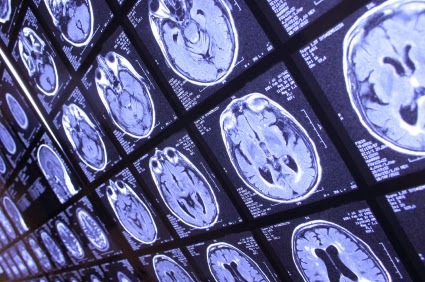
I know that cerebral hemorrhages usually don’t show symptoms, but for my plot, I want this young character to die quickly and not of an accident. I want foreshadowing of the event. I’ve given him headaches and tests will show he’s got the bulging artery–they’re going to fix it because it had leaked (thus the headaches.) He dies before that.

Is that plausible?
Jordyn Says:
Yes, this is plausible though I don’t know if I would say cerebral hemorrhages usually don’t show symptoms. This IS bleeding on the brain. Blood, where it shouldn’t be, tends to be very irritating and will show up in symptoms (things that only the patient can tell us) and signs (things that we can measure.)

I did a post on the difference between signs and symptoms that you can find here

That being said, it also depends on the size of the bleed and the location of the bleed. With a very tiny bleed– the patient may not experience any symptoms. I would say on the continuum that this would be more rare. If this aneurysm has started leaking already they may not want to postpone surgery. So, I think finding the bulging aneurysm is sufficient enough.

Other signs and symptoms of cerebral hemorrhage are:

  • Seizures
  • Weakness and/or numbness in an extremity
  • Nausea
  • Vomiting
  • Changes in vision
  • Hard to speak/Understand speech
  • Balance Issues

Don’t forget the FAST acronym for stroke:

  • Face: Is their smile equal? If they stick out their tongue– does is stray to one side and not stay in the middle?
  • Arms: Have the person lift both arms and hold them out with their palms up. If one hand turns inward or a whole arm drifts down this is called pronator drift and signals a neurosurgical emergency.
  • Speech: Have the person repeat a simple phrase. Is it clear or slurred and strange?
  • Time: If any of these are present call 911. 

In the hospital setting, I use this exact tool as a quick screening method for stroke (which can be either caused by bleeding or a clot.) A negative test doesn’t mean something didn’t happen– it just means something isn’t happening at that moment.

A friend of mine was recently on the phone with her father (who lives in another state) when he confessed to her that one of his arms had gone completely numb. She instructed him to call 911– which he did and his symptoms completely resolved by the time he got to the ED. However, he did have a transient ischemic attack (or TIA) or mini-stroke which increases his risk of a bigger event happening in the future.

For more information about cerebral hemorrhage (or stroke) you can check out this link.  

Also, these You Tube videos have a very nice, simple explanation of the genesis of stroke.

**********************************************************************

Give Carol McClain a challenge, she’s happy. Her interests vary from climbing high ropes to playing the bassoon to Habitat for Humanity and to stained glass creation. If it’s quirky or it helps others, she loves it. Significant Living, Vista, and Evangel have published her non-fiction articles. In her spare time, she coordinates the courses for ACFW, is team leader for The Christian Pulse, and has written four novels. She lives in upstate New York with her husband, a retired pastor, and their overactive Springer spaniel. You can read her work at http://carol-mclain.blogspot.com.

Up and Coming

Hello Redwood’s Fans!

What’s everyone up to? Me– burning the midnight oil. Literally– I am just writing this post and when it does post– that will be the actual time I finish. This one is on the fly. I seriously feel like this dog’s ears.

This week there are two very interesting author questions.

You know I love these!!

Tuesday: Author question dealing with cerebral hemorrhage.

Thursday: Forensic author question that Amryn Cross will be handling dealing with fetal bones. Super interesting stuff.

They are expecting snow here tomorrow. Bummer. Was loving the sunshine.

Jordyn

Medical Treatment in Medieval Times

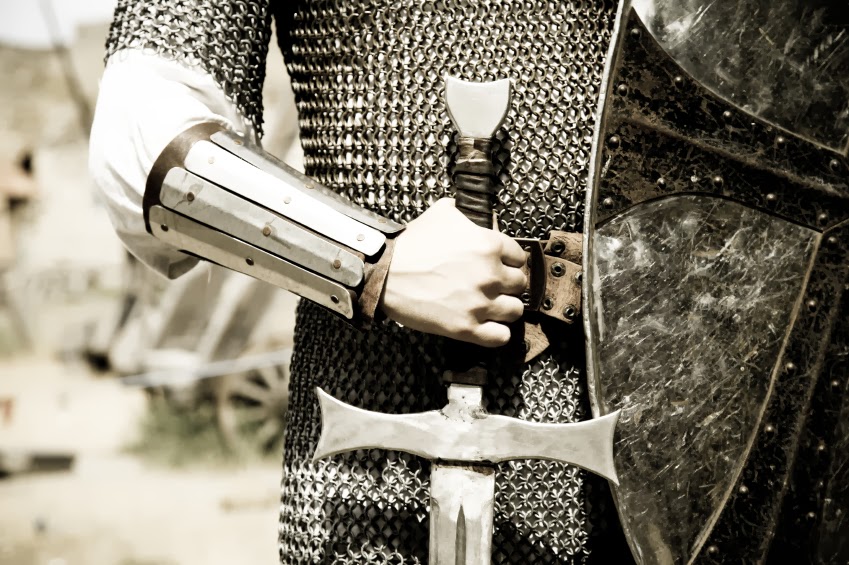
I got a very interesting e-mail from a writer (at least I hope it was an actual author– sometimes I’m not so sure.) about swords. In it, she describes and includes photos of three different types of swords and queeries about what type of “blunt-force” injuries these might cause– particularly with such and such kind of armor.

Honestly, this is not my strength but I could tell her sword type injures are “blunt-force” trauma. Blunt for trauma is like hitting your chest on a steering wheel or getting punched in the face. Swords are sharp, are meant to impale so these would be termed more like stabbing, impalement, laceration . . .

But, it did get me thinking about treatment of sword injures in medieval times. I guess it is the curse of the medical nerd so I found a few link and some interesting facts but cannot necessarily speak to the medical accuracy of them but they make for interesting reading.

http://answers.yahoo.com/question/index?qid=20081219043021AAFTAs1

And some links from Google books about medieval medicine but they likely don’t include the whole text.

1.  Medieval and Early Renaissance Medicine: An Introduction to Knowledge and Practice

2.  Medieval Medicine

3. Visualizing Medieval Medicine and Natural History, 1200-1550

Do you have other sources for medical treatment during Medieval Times?

Broken Heart Syndrome

I was watching TV at the gym (can’t remember exactly which tabloid show it was– you know, I’ve got the earphones in blaring music and I’m trying to read subtitles while running!) when a story comes on about a woman who can’t remember her wedding day.

Ok– well that’s a teeny bit unusual. I’m surmising she must have been in a horrible car accident later that day or something.

No, nothing like that.

They go on to explain that this woman suffered from Broken Heart Syndrome for which my eyes roll several times around my skull as I’m sure this can’t be a real medical thing. I mean, tabloid TV, she can’t remember her wedding day, Broken Heart Syndrome— they have totally made this up.

Evidently, they did not.

According to the Mayo Clinic, Broken Heart Syndrome is a “temporary heart condition brought on by stressful situations.” Anyone who has been through planning and actually wedding someone knows how stressful that can be. Because of the release of all these stress (adrenaline) hormones, “the heart temporarily enlarges and doesn’t pump well.” What differentiates this from a normal heart attack is that the coronary arteries aren’t blocked though the symptoms might be similar– sudden onset of chest pain, difficulty breathing and weakness.

Other names it goes by:

  • Takotsubo Cardiomyopahy
  • Stress Cardiomyopathy
  • Stress-induced Cardiomyopathy
  • Apical Ballooning Syndrome 

It is treatable and symptoms reverse in a couple of weeks. In this woman’s case, however, she suffered cardiac arrest. Her husband was able to revive her but she was comatose for approximately four days– hence losing all her wedding memories.

Be careful next time you throw someone a surprise birthday party. Make sure their heart can take it.

The Noah Movie and Up and Coming

Hello Redwood’s Fans!

How’s your week been? Me? Saw Noah. I actually didn’t have quite the negative reaction that many other religious people had. Some of the consistent complaints about the rock people, the fact that the wives weren’t present on the ark, and the sleeping smoke didn’t bother me so I thought I’d offer a contrary review of the movie.

1. The Rock People.

Supposedly, these creatures were angels who chose to leave Heaven to help Adam and Eve once they were dispelled from the Garden. Because they disobeyed God, he made them into these beings. Sure, these “rock people” aren’t in Genesis but we know that consistently in the Old Testament that God handed out punishment for disobedience. I thought that principle was consistent with a lot of Old Testament teaching. I think creative license could have been taken on this and how Noah did built such a big vessel.

2. Noah’s sons didn’t have wives.

Technically, the girls they adopted into their family had conceived her twin girls prior to boarding the ark so technically– they were present. I’ll give leeway here.

3. The Sleeping Smoke.

In the movie, a smoke is used to put the animals to sleep but does not affect humans. People cry that this could not plausible. So, we’re okay that God can summon all the animals to come to the ark but He can’t create a smoke that only affects animals. And– speaking medically– medications do affect people and animals differently. For instance, some over-the-counter pain relievers we take are quite harmful to animals.

4. Noah as a crazy religious man.

While being confined to the ark, Noah develops the belief that perhaps ALL humanity is supposed to perish and so when he finds out of the pregnancy of the adopted daughter– he threatens to kill the child if it’s female. I get the plot hole– why not kill the adopted daughter, too, since she’s not barren? What I actually found interesting about this is that the Bible doesn’t spell out Noah’s exact actions on the ark. Little is said. I know people who develop certain beliefs, even very religious people, that aren’t necessarily biblical and then eventually come to a new understanding. I think this was depicted in the film– where he chose not to kill the twin girls in the end. We don’t really know what Noah was like and, personally, I’d get a little crazy too being locked up with animals and a few humans for that long of a time period.

This is the one issue, from a religious standpoint, that I did have issue with:

The symbolism of the snake skin being a blessing/birthright to subsequent generations.

In Noah’s visions, the snake (being the devil) sheds his skin. In the first scene of the movie, Noah’s father wraps this snake skin around his forearm to give Noah a blessing. Before doing so, Noah’s father is murdered and the snake skin gets into the hands of the villain. At the end of the movie– Noah has it back and uses it to “bless” his two granddaughters.

Hmm– why would you use the skin of the serpent as a blessing? The one thing that tempted you to do evil.

That’s what I’d like to discuss.

Did you see Noah– what were your thoughts?

Now– back to the medical mayhem.

For you this week:

Tuesday: Broken Heart Syndrome. Is it a real thing?

Thursday: Fascinating author question about what a monitor can and can’t tell a nurse.

Hope you all have a great week.

Jordyn

New Medical Device: X-STAT

As a medical nerd, I’m always a little fascinated by new medical devices and what they can do. I was alerted to this device by Mike H. via Facebook (Thanks, Mike!) and found it worthy to post upon to keep all your medical treatment scenes in those novels up to date.

The Blaze

It is true that not all bleeding can be controlled by direct pressure. It is also true that bleeding is the leading cause of death when it comes to bullet wounds (unless you have suffered a direct hit to either your heart, brain, and/or spinal cord which is likely the end of your life here on earth.) Uncontrolled bleeding from limbs is one thing that harkened back the use of the tourniquet. First by the military and now by civilian EMS agencies. They found the concern over tissue damage didn’t pan out in the research.

For those other folks who get shot in the chest and/or abdomen, it’s always a race to the hospital where definitive control of bleeding can happen– which usually necessitates a trip to the OR– which takes time. You may have heard the term “Golden Hour” which is generally the preferred window to get the patient to definitive treatment before they die.

Rapid control of bleeding could actually extend this hour in my opinion.

Enter the X-STAT.  For lack of a better term, the X-STAT is a tampon shaped (sorry, guys) device that is filled with dime-sized medical grade sponges that are coated with a hemostatic (stops bleeding) agent. It is inserted into the wound and the plunger places these sponges deep into the wound where they expand (like the firework snakes) and stem bleeding without direct pressure. The expansion of the sponges prevents them from being forced out of the wound.

Genius.

Thus far it seems to be listed as an investigational device and its use is limited but if it does what it says it does I think this could mean a big difference for trauma patients.

You can read more about the X-STAT here

What do you think of the X-STAT? Would you use it in a novel? You can bet I’ll find a way to.

New Medical Device: Skin Cell Gun

It’s not often that I’m impressed by new medical devices. Many times, they’re just refined from old devices with a few new bells and whistles.

This might be different.

It is difficult to treat significant burns– particularly when grafting the skin is required. There are few options available other than taking sheets of skin from the patient’s own body or growing new skin cells on sheets which takes weeks. The problem with the wait time is that your skin is not only your largest organ but also your primary defense against infectious agents entering your body. This is often what burn patients die from– infections while their wounds heal.

That might all change and change dramatically with The Skin Gun. They take the patient’s own skin cells and grow them in a water solution and in a matter of hours grow enough to then spray the skin cells onto the injured area.

The video is impressive as the new skin doesn’t even appear to scar down which is another nemesis of burn treatment, but I would like to see some before and after photos of the same patient for me to truly buy into the claimed results. However, if this process can do what they profess– it will revolutionize care for burn patients.

Check out the video. What do you think?

Up and Coming

Hello Redwood’s Fans!

Who is ready for spring? I know I am. I do enjoy winter/snow– mostly when I don’t have to be out in it and I’ve had to be out a lot in it so– you get the idea.

Spring brings everything new and that’s what I have for you this week– new medical devices that might eventually make their way onto the market.

Tuesday: The Skin Cell Gun. Just what is it and how might it help burn patients?

Thursday: X-Stat. Do you have a character who’s been shot and they can’t control the bleeding then this medical device might be your answer.

We’re continuing the Book of Questions over at my author page. There’s a winner every month and you’re eligible for the prize just by participating.

Hope everyone else is thawing out and on their way to seeing the daffodils and tulips break through.

Jordyn

Congenital Insensitivity to Pain: Fear Nothing

Last post, I discussed the genetic disorder congenital insensitivity to pain. You can read it here.

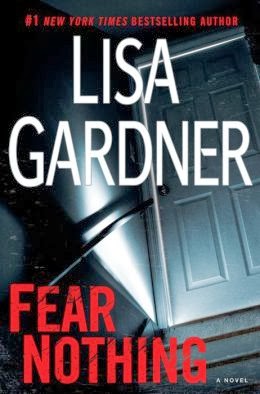
I just finished the book, Fear Nothing, by Lisa Gardner and she used this congenital disorder as a main thread in her novel.

I used to say that I wasn’t sure female suspense authors could ever be as good as their male counterparts. I can say this being a female suspense author. I want to be as good as Dean Koontz, Harlan Coben and Linwood Barclay who are some of my favorites. I wondered if, perhaps, something in the female genetic code (as we are the more nurturing of the sexes) could write dark, well-plotted, intricate novels. There are MANY female suspense authors I enjoy but they weren’t surpassing the men in my book. We can save that discussion for another time.

Now– I’m going to have to take all that back because Lisa Gardner is JUST AS GOOD IF NOT BETTER than her male counterparts. I am in awe of her talent.

I only came across her D.D. Warren series in the last two years or so but now find these must read books.

In this intriguing tale, the famed detective has been injured at a crime scene, suffering a devastating and painful injury that sidelines her (well, sidelines her a little) from her detective work.

When conventional medicine does little to ease her pain and suffering she seeks out the help of Dr. Adeline Glen, a pain specialist, who surprisingly suffers from a genetic disorder called congenital insensitivity to pain– which is a real medical disorder.

What’s more interesting is that Adeline’s sister and father are serial murderers. They inflict pain upon others in horrid ways and she can’t feel physical pain herself.

This doesn’t mean she doesn’t suffer in other ways– emotionally and psychologically. She refers to herself as the “family conscious.”

And when murders begin that copy cat her father’s old murders– she is right in the middle of the firestorm that pulls D.D. Warren in as well.

Some caution to more conservative readers for the foul language in the book that seems more prevalent in the beginning than in later chapters.

I’m not 100% keen on all the medical details. For instance, in the beginning of the novel, the doctor tells the detective that swearing at her pain won’t help reduce it. This has actually been proven false in research where it has shown that swearing can reduce pain– unless you are a frequent swearer then it didn’t help as much. I even had a physician once give permission to a teen to swear as we were doing a painful procedure if his parents didn’t mind.

 Does swearing help with pain control? Click to Tweet.

I did find the author’s note at the end of the book interesting that she had used the theory the character presents in the book for her own pain issues and found them helpful. So, I’m not going to take away from her personal experience as I just personally found acupuncture helpful which I do consider alternative pain management.

So– if you like suspense, a well crafted, intricate tale and a unique family set-up I think you’ll enjoy Fear Nothing.

Strong work, Ms. Gardner, strong work.

Have you ever used a genetic disorder in your novel?