Today, I’m posting a forensic medical question I had for Amryn Cross.
Amryn Says:
************************************************************************
Today, I’m posting a forensic medical question I had for Amryn Cross.
Amryn Says:
************************************************************************
First and foremost, I have to say that I am in love with Medical Edge. I’ve been spending a lot of time on it lately because I enjoy studying medicine and also because I am starting to do research for my novel. It’s set in 1939 through to 1943. I have three questions for you.
Jordyn Says:
Nursing in your time frame of 1939-1943 would have looked a lot different than it does today. They definitely wore uniforms and caps. Doctors would have been formally called “Dr. Smith” versus using first names like we do now (although not in front of patients).
Nursing work was viewed as inferior to the physician meaning—you do what the physician says. Now, a nurse’s input is more respected. Doctors and nurses realize they can’t work separate from one another.
Nurses likely didn’t specialize then like we do now and there was likely not a lot of physician specialties either as there weren’t any intensive care units or emergency departments until the 1970s. Equipment would have been non-existent like the heart monitors and stuff we now use. Read through this info to get a general feel of how the floors or “wards” would have been split up.
This link is from Britain but would probably have some cross-over to the US.
Here is a linkto some personalized stories from people who nursed during your time frame. I would read through these for the 1930’s and 1940’s to get a feel for what their jobs were like.Another one of my main characters goes off to fight in the war. How severe would an injury have to be for him to be discharged? Presently, I have a situation designed where he is aiding a family out of a bomb shelter; there is an unexploded shell nearby, and a child accidentally kicks rubble at it and sets it off. Big boom, main character loses part of his leg and half of his body is burnt. I’m also thinking that he loses his hearing. Would this be plausible?
I would search military discharge related to a medical condition two ways. One—what medical conditions are prohibitive for military service and those conditions that would lead to discharge.
I found this list, but you could probably find more and if it’s the 1939-1942 time frame it may be different than those that cause discharge in these times.
The injuries you list related to the bomb blast are realistic and I think would be enough to cause his discharge from the military as well.
Lastly, my nurse has a patient, a woman in her 40s or 50s, who she loves with all her heart. I want this patient to die. What would be a good way to kill this woman off? I need her to have been in the hospital for around four years. I also want to have her weak but able to speak with my other characters. What’s a good malady for this situation?
These diseases fall on a spectrum (more MS and the autoimmune diseases) but Lou Gehrig’s Disease and Huntington’s Chorea lead to neuromuscular wasting, etc that does lead to death and there is currently no cure.
In that time frame you’re looking at you’d have to determine if they were able to diagnose these diseases. To do that you could Google search “When was Lou Gehrig’s Disease discovered?” That should get you in the ballpark to know if the medical community knew about whatever disease you chose for your time frame.
Keep in mind—it would be highly unusual for someone to be hospitalized for four years straight.
One of the main goals in nursing is accident and death prevention. That’s why we talk about using helmets and wearing your seatbelt. Honestly, some of us would like to see trampolines outlawed because they are responsible for so many childhood injuries.
We also don’t like to see anything around a child’s neck that would pose a risk for strangulation. Things like this would include wearing a sling at night. We generally don’t recommend this for concern that the child may get caught up in it and get strangled to death.
Hmmm.
I explained my concern to her that I thought they posed a significant strangulation hazard and whatever perceived benefit they had for teething pain would not outweigh this risk in my mind.
This blog is generated from a comment on this post: Medical Myth: Lacerations Need a Plastic Surgeon.
I do read each and every comment to the blog. Usually, I don’t comment on real life medical scenarios but I thought this had several good teaching points that could serve the public good.
The comment:
I just brought my 5 y/o into an ED with a puncture wound to the center of his forehead through which you could see his skull. I thought the attending would close the wound, but the resident did under supervision. First year, and it was late July. What are the chances of a good outcome? The attending had to tell the resident that knots were backward, etc. Should I have insisted that the attending close, or that they call plastics? It was a large urban Children’s ER.
Jordyn Says:
Thanks so much for leaving this comment and I hope you see this post.
As a mother and a nurse, I get the parental anxiety around closing lacerations. The truth is that anything that requires sutures is going to leave a scar. That’s life. Now, how big or thick the scar is depends on many factors. How it was closed. There is a learning curve to closing the skin. Lacerations can actually be closed too tightly which can be as problematic as not bringing the edges close enough together.
That being said, there are many other factors that determine how the scar will look. Does it become infected? How does the patient normally scar? Some people genetically develop very heavy scarring (called keloid scarring) and there’s nothing we can really do about that. Also, after healing, how much is it exposed to the sun?
Now, should you have allowed a resident to suture your child?
From the medical side– students need to learn and must practice, at some point, on live patients. I’m glad this first year was being monitored during the procedure. That’s what should have happened. Knots being tied backwards and needing to be redone doesn’t mean you’ll have a bad outcome. Experienced physicians redo sutures all the time. It’s more the final closure that’s important.
From my nursing/mother standpoint– you have the right to refuse a resident practicing on your child. If you are uncomfortable then absolutely speak up and state your request plainly– “I’m sorry, but I’d like an attending to close this laceration.”
Some people are uncomfortable with a nurse practitioner or physician’s assistant doing a laceration repair and request an attending. Keep in mind, that mid-level provider may have more experience than your attending physician. They may have been in practice four times as long! So maybe ask how many years they’ve been practicing as an attending before you pass over on a mid-level provider.
If you feel that you can’t make this request to the doctor directly, then you need to tell your nurse who should advocate for you.
Should you have insisted on a plastic surgeon? The truth is that pediatric ER providers close lacerations every day on moving targets— we don’t commonly sedate kids for simple laceration repairs. Plastic surgeons are generally only utilized for complex laceration repairs and would honestly be annoyed to come to the ER for a simple repair.
If you don’t like how the wound healed and the scar it left behind then you can consult a plastic surgeon to investigate a scar revision.
Hope this helps.
Amanda Asks:
I have a character who was shot in the side, not life threatening, but he had to have surgery to remove his spleen as well as the bullet because some rib fragments damaged his spleen.
My question is how long would he be in the hospital after surgery? I’m sure when he first comes home he’ll be getting around in a wheelchair or something while he heals and gets his strength back. When could I plausibly have him on his feet slowly walking around? I don’t want any dramatic complications with his injury or anything. He’s going to heal up great and be perfectly fine afterward.
Jordyn Says:
I ran this question by some of my nursing cohorts who focus in adult surgery.
Having your spleen removed would require a couple days stay in an intensive care unit. This would be due to risk of post-surgical bleeding and concern for infection.
The surgical nurse I spoke to said these patients are up and walking by the time they come to the floor so there would be no need for the character to use a wheelchair.
Once research point that is helpful with this question is that you can Google search for discharge instructions regarding many kinds of operations. For this one, I searched for Home Care Instructions after Spleen Removal. This document gives excellent information that can be translated into your novel.
For instance– how long the patient should expect to have pain. Driving and lifting restrictions which can help determine what they would physically be capable of in your novel.
FYI– patients who have had their spleens removed are at more risk of serious infection. Your spleen is part of your immune system. So some infections that would normally not be a big deal for the general population can be life threatening to those who have had their spleen removed.
Amy Asks:
My assumption is that the doctor would review proper hygiene with herand then find a tactful way to make a referral to a psychiatrist or psychologist. Is that correct?
What questions would the doctor ask? What language would she use when documenting this meeting? And what would she do when more patients start presenting with the same complaint?
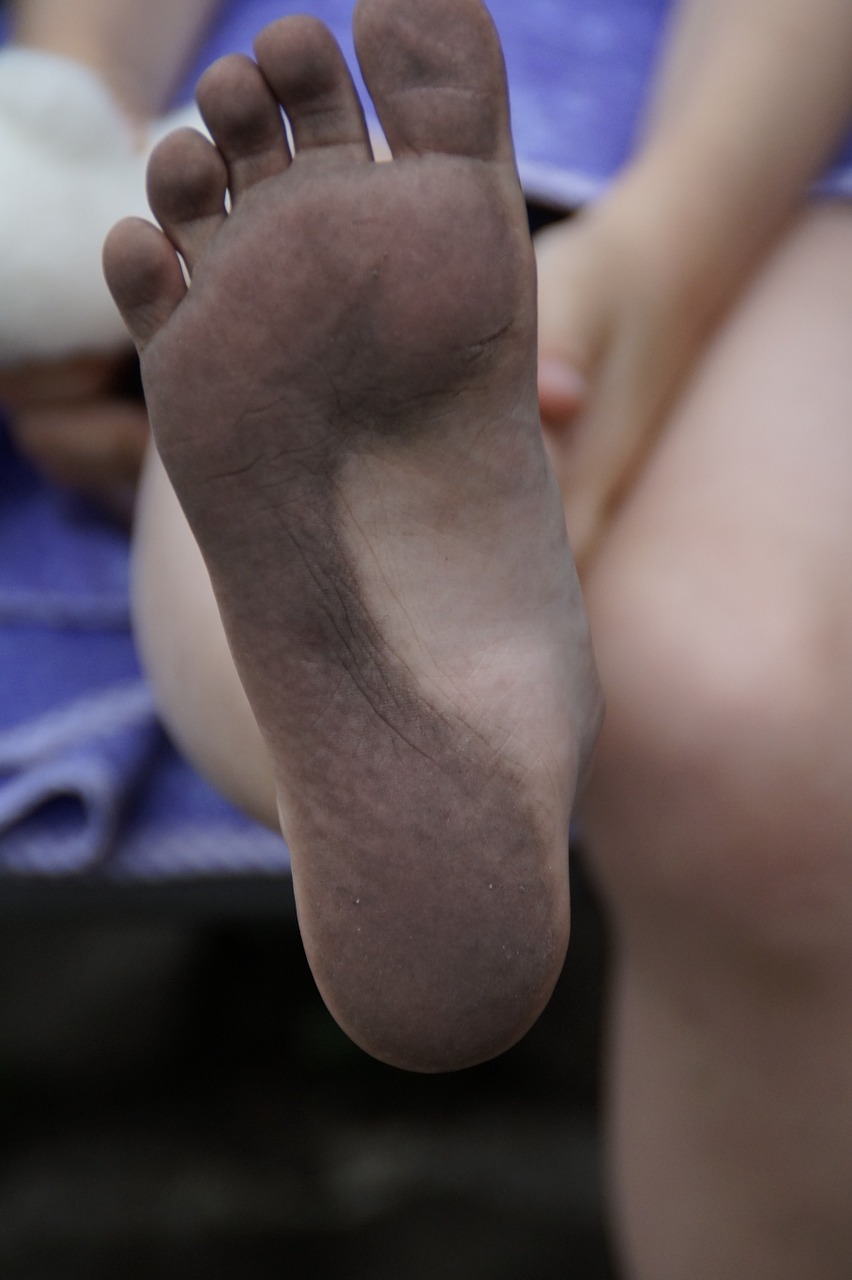
In my story, the complaint becomes a pandemic. With this illness, it’s always possible to wash away the dirt, you just can’t keep it away. What are the long-term health consequences of not being able to remain clean? I know that it will increase the possibility of local infections but can you become ill from simply being dirty? (This hypothetical illness would only attract dirt, not pests. But would being dirty make it easier to attract and harbor fleas, ticks and lice?)
Thank you for any help you may be able to provide me!
I would say localized infection from open wounds is the biggest risk. As far as attracting other pests—what kind of environment do they live in? Just because you have extra dirt on you doesn’t mean you’ll have lice, etc.
The problem, though, is that everyone’s psychotic break would be different. So, again, you’d have to build some case where they all share OCD or the opposite, an attraction to dirt to where they purposefully seek to get dirty. Both scenarios will require some work to build scientifically plausible causes.
Perhaps, there could be an illness that leads to a specific deficiency and the dirt they instinctively “collect” somehow fills this need and is absorbed through the skin. To the casual observer, they just look dirty, but a closer look finds common mineral “X” or whatever, within everyone’s grime. And it’s the only common factor, thus leading the protagonist or someone to figure it out.
First, let me be clear. I am a fan of James Patterson. I love his novels– mostly I’m sticking to the Alex Cross novels these days.
I don’t think Mr. Patterson is hurting for money which is why I’ve requested several times on this blog for him to hire me as his medical consultant– because though he’s a great story teller– he does need help in this area.
They are drugged, placed on life support and housed in a cargo container for about a week, On top of that, the cargo container is being moved (placed on a boat, etc) so it is not stationary.
AND– there is not a medical attendant 24/7. Just a group of people, drugged, on life support for a week. Oh, they are checked ONE time during the week.
Okay– sure.
Let’s talk about the medical aspects and how this scenario would never work.
1. The tubes. When someone is on life support– there’s going to be a tube in every orifice as they say. The tube that keeps them breathing. A tube into their stomach to drain secretions. A tube into their bladder to drain their urine. And they will still poop– I’m just being real people. So if no one is there to drain these items and ensure that they stay in the proper place it will cause life threatening issues for the patient.
2. The drugs/fluids. It’s not so much that I have a problem with the drugs that were used– more the fact that no one is there to change them out. Keep in mind, someone on life support cannot eat or drink for themselves. This has to be provided for them. If your goal is to just keep them hydrated then an adult needs, let’s just say, 100ml/hr to maintain hydration. That means a one liter bag is going to last 10 hours. Then the sedation drugs themselves need to be changed out as well– they are not going to last forever.
3. The oxygen. It is very rare that a ventilator doesn’t use oxygen. Ventilators generally don’t run off O2 tanks. They need a special source with adapter. So, how are all four of these vents running? Even if we could leap to oxygen tanks– again– who is changing them?
4. Electricity. Everything connected to the patient runs on electricity. IV pumps can run on batteries for a certain length of time but probably not more than 12 hours. Ventilators require a power source– they must be plugged into something. There is nothing scarier for an ICU nurse than when the electricity goes out and you’re waiting for a back-up generator to kick in. Most often– this is seemless because vents are plugged into emergency outlets that are always fed electricity expcept under dire circumstances– like a hurricane or tornado takes out your back-up systems. If that happens, the patient must be manually bagged with an oxygen tank.
5. Turning. If bed-ridden patients aren’t repositioned every few hours they are going to develop pressure sores. This puts the patients at risk for skin breakdown and infection. Also, immobility increases the risk of developing blood clots as well.
6. Drug Metabolism. The author is also assuming patients metabolize drugs and use the same drug dose. This is not true. Drug dosages in pediatrics is calculated based on the patient’s weight. Adjustments are made in the elderly population as well.
So James– loved the story but the medical scenario . . . please.
If you’re like me then you’re intrigued by viruses and how viruses are transmitted– then you’ll be fascinated by the story of MERS (Middle East Respiratory Syndrome.)
MERS is a coronavirus (in the same family as SARS– Severe Acute Respiratory Syndrome). It first popped up in Saudi Arabia in 2012.
On June 9th, 2015 the World Health Organization issued a statement encouraging people not to eat or drink uncooked or unpasteurized camel products– including camel urine. Of course, that was the big headline.
What’s interesting is that if you read further into this statement, it’s not exactly clear how MERS began to infect humans. We know that humans can infect one another but not easily which is good news.
How did humans first become infected? What is the reservoir– that seemingly innocuous place where the virus lives but doesn’t necessarily make its host sick?
Strains of MERS that have infected humans have also been found in camels. It is possible that other sources exist in animals but none have been identified yet. The WHO believes this then supports the theory that human infection is coming from camels.
It doesn’t take much of an internet search to determine that consuming camel products may be culturally important in the Middle East– hence the warning.
If you’d like to read more about MERS and its animal to human transmission then check out this link.
As many readers of this blog know, I’m a pediatric ER nurse. What that means is that I just don’t take care of newborns and toddlers but also teens and young adults up to the age of twenty-one.
Particularly, in the last five years or so, I’ve helped care for an increasing number of patients that have been placed on M-1 holds. An M-1 hold (it may go by other names in your area) is essentially a mental health hold or involuntary placement into the hospital for a mental health evaluation.
In our hospital system, there’s not a required length of stay but it does mean that, essentially, we take over custody of your child until this evaluation takes place. That means that you as the parent cannot take your kid from our facility and we can transfer them where they need to go without your consent.
Your child can be placed on an M-1 hold by two parties– either law enforcement or a physician. Sometimes kids come in via police already on an M-1 hold.
A patient is usually placed on a hold for expressing thoughts of wanting to hurt themselves or others by making these statements to either a parent, school counselor, mental health counselor, physician or law enforcement officer.
When a patient makes these statements or requires medical treatment for self-harming (cutting too deep that the cut requires sutures) or outright suicide attempt (like drug overdoses) then they’re placed on an M-1 Hold. Emergent or stabilizing medical treatment is always handled first.
When a patient is placed on an M-1 hold, the medical staff must provide for the patient’s safety.
We have them change into scrubs of a particular color and confiscate all their clothes. This means everything but their underwear (excluding bras– yes, they must remove those as well) and perhaps socks. Part of the reason for this is to keep them from fleeing (by taking their shoes) and also as a security measure so staff know that a person leaving the facility in those scrubs needs to be stopped. They also cannot wear hair bands, necklaces, or bracelets. All piercings need to be removed.
They are placed in a “safe room” which, at our hospital, is not the “rubber room” you might imagine but it is devoid of basically everything but the bed and a chair. No cords. No monitor. No alcohol hand gel.
The patient is asked to provide a urine sample. Girls are tested for pregnancy above the age of twelve. All are tested for drugs. If they give a concerning history for possible ingestion– blood tests may be added to test for aspirin and acetaminophen which can be deadly overdoses.
The patient is then scanned for metal using a wand-type device that you see at airports.
At all times, the patient is under one-on-one observation by someone on our staff even if they have a parent present.
After that, the physician will have a talk with the patient alone, the parents alone and then both parties together if the patient agrees. After that, the physician touches base with the mental health staff to determine the best course of action for the patient.
With the advent of telehealth, some of these mental health evaluations can take place with face-to-face interaction over the computer. This has helped decrease the need for transfers but is a very lengthy process. Each interview mentioned above also takes place by the mental health counselor. Each interview can take 30-60 minutes.
If a patient is transferred, it must be by ambulance. Parents are not allowed to ride in the ambulance for this type of transfer. Again, this is a safety measure. It may be surprising but sometimes parents can complicate matters and for the safety of the EMS team– they take only the patient.
I hope this provides insight into what will happen if your child is placed on an M-1 hold or you need it for a scene in your novel.