A Medical Rebuttal of Amazon Review: Dianna Benson

It’s hard as an author to get bad reviews– and it’s hard to know what to do about them. Generally, I personally feel everyone’s entitled to their opinion about my work. As Elizabeth Gilbert states in Big Magic— my job is to get my work out there and everything else is not my business.

But it’s hard, particularly when a reviewer remarks about a medical inaccuracy in your novel and you are a medical expert. And since this blog is about medical accuracy in fiction, I’m hosting Dianna Benson to talk about her experience with just such a review. 
Welcome back, Dianna.
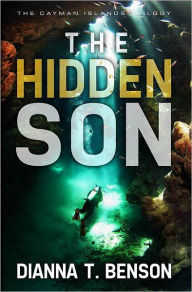
A few months after my first novel, The Hidden Son, released in 2013, a reader/fan contacted me to inform me a review was posted on Amazon with incorrect medical comments. The person who wrote the review stated it’s not possible for someone who suffered brain damage from head trauma to recover and later become a police officer. Recently, an MD wrote a review on Amazon stating and explaining how that review is medically inaccurate – thank you, Robert Littleton, MD.

As an EMT for eleven years, I have firsthand medical experience and knowledge, especially with trauma, and I implement that into all my suspense novels. As Dr. Littleton stated, the human brain can heal from temporary damage (thus not all brain damage is permanent.) In The Hidden Son I briefly explained the character’s injuries and recovery, and in Persephone’s Fugitive (Book Two in the Cayman Islands Series), I wrote more detail about those injuries and recovery since that information fit with the characterization in one of the story scenes toward the end.

Like Dr. Littleton, I’m a Tar Heels fan – my son is a pre-med student at UNC Chapel Hill, headed to medical school to become either a neurologist or a pediatric oncologist. In addition to my EMS career, I have firsthand experience and knowledge with brain damage via my son – he was born with cerebral palsy, hypermobile joints, and dextrocardia situs inversus totalis with kartagener syndrome.

Due to his health issues, he easily suffered multiple concussions in high school and now struggles with chronic concussion syndrome. While his brain is healing, he’s able to succeed as a pre-med student, but it’s rough. His neurologist’s prognosis is my son will fully recover soon. A patient of my son’s neurologist was in a coma for a month from head trauma from a car accident. For several years this patient dealt with chronic concussion syndrome due to brain damage. Now, she’s a physician and fully recovered.
       

Unless I explicitly know something as a fact, I would never post it on the Internet (especially against another person) for the world to read. Just a friendly suggestion.   

Here is the link to the page of reviews of The Hidden Son on Amazon.

**********************************************************************


Dianna T. Benson is the award-winning and international bestselling author of The Hidden Son and Final Trimester. Persephone’s Fugitive is her third release. An EMT and a HazMat and FEMA Operative since 2005, Dianna authentically implements her medical and rescue experience and knowledge into all her suspense novels. She lives in North Carolina with her husband and their three children. www.diannatbenson.com

Mysteries of Laura: Giving Insulin

The NBC detective show Mysteries of Laura might need a new medical consultant. In one of the first episodes of this season we have a boy that’s been kidnapped and of course– he’s a diabetic in need of insulin or he’ll die in short order.

Cut to scenes of distraught parents wringing their hands wondering if the police will get there in time to administer the life-saving medication.

Of course, when they find the young boy, he is unresponsive. One quick insulin shot into his leg and within mere seconds– he’s awake and crying.

This doesn’t happen in real life.

The first thing to understand about why the medical approach to this scenario is bad is to understand why a diabetic who doesn’t have their insulin gets sick. In a Type I diabetic, their body doesn’t produce insulin. Insulin is what moves sugar from your bloodstream to the inner part of your cells for energy so they can function. When there is a lack of insulin, the sugar can’t move from the outside to the inside of the cells and that’s not a good set-up for sustaining life.

As a rescue measure, the body begins to metabolize fat and muscle for energy. The byproduct of this type of metabolism leads to a build up of acids in the blood called ketones. You can also get a build up of ketones in the blood from not eating carbs as well. When you do this, even though you may produce insulin, your body still perceives a starvation state and will enter into the same process.

In the case of the diabetic, the sugar is “stuck” in the bloodstream which is why they have high blood glucose levels. However, the reason a diabetic is so sick is not really from the high blood sugar– it is really from the build up of acid in the blood from the break down of fat and muscle. This is also known as diabetic ketoacidosis or DKA. The more acidic a diabetic’s blood is when they seek medical treatment– the more emergent the condition.

So, in this episode we can assume that the diabetic is in DKA. The question is how long does it take to reverse this process?

In a nutshell– hours– not minutes. If a diabetic comes in unconscious then it will take them some time to regain consciousness after treatment is instituted to lower the acid levels in the blood and of course, by also lowering blood glucose levels.

What would have been a realistic medical scenario for this episode would be for the boy to have trouble with hypoglycemia or low blood sugar. Or, to have it be that the criminals were giving insulin but giving too much of it.

When a patient’s blood sugar is too low, we give glucose IV. In this instance, an unconscious patient WILL wake up very quickly because glucose (sugar) given IV becomes immediately available to the cells for processing and a patient can and will wake up very quickly.

You can still be dramatic using an accurate medical scenario.

Injury by Arrow


Jocelyn Asks
:

I’m now writing a book set in French colonial New Orleans, the years 1720-1722, and we’ve got some drama with the natives.

My MC gets hit with an arrow from someone who isn’t a very good marksman. Can I have him get the arrow in his chest without killing him? Like, if the angle is wrong, or if it wasn’t going super fast? I want the heroine to cut the arrowhead out of his chest, but I also want him to live. If he does survive, how long until he can get up and walk around?

Finally, I want to give him another scar from a previous arrow. Would he have survived an arrow passing through his side, by his waist? Or should I have an arrow skim across his ribs without penetrating? That would leave a scar, right?

Jordyn Says:
You can have an arrow hit a person’s chest without it killing them. It would all depend on where and how deep the arrow hit the individual. The faster the speed the more deeply the object will penetrate tissue. For instance, if I tap you with a bullet clenched between my fingers versus firing it from a gun—much different injuries.

The deeper an arrow is embedded in the chest, particularly the upper chest (where all the great vessels are) the more likely you are to do major, unsurvivable damage considering your era. To answer this question more fully, I’d want to know the size of the arrow. How long and wide is it? I would think anything measuring an inch or more would be worrisome for nicking something important like a large blood vessel or the lung. The way around this might be to have the person be fairly overweight and the arrow gets embedded into fat tissue. This might not be a good option for your hero.

As with all things—the person could just be lucky and the arrow hits but misses all vital structures. I would show this in your text by the character not bleeding heavily or having any difficulty breathing. That would allude to the fact that nothing major has been hit.
If it is merely a “flesh wound” and the arrow comes out in a fairly uncomplicated manner and no infection sets in then the character should have some mild to moderate muscle pain and soreness and perhaps some inhibited movement based on this but should be able to walk fairly immediately.
Someone can survive an arrow passing through the side of their waist, again, if it doesn’t hit any major organ. You have very vascular organs in your abdomen. The liver that sits under the right ribs and the spleen that sits under the left ribs. So, the lower the injury the better. Then you would just need to worry about perforating the intestines which would ultimately lead to sepsis and death but your intestines are housed under the fat layer and other tissues so could be fairly easily avoided. Any injury that requires stitches to approximate (get the edges close together) the wound will leave a scar so even a skimming injury that splits the skin will leave evidence of injury.

Use of Animal Tranquilizer Guns in Humans

David Asks:

In my new work in progress I have a woman shot with a tranquilizer gun. She is a former head ER nurse and is on the road. She has a well stocked medical kit. What would she have that could be injected to counteract the tranquilizer? Is there a particular tranquilizer they would use on her? They want her alive.

Jordyn Says:

Thanks so much for sending me your question.

This is an interesting question that you ask. The first part that should be answered is what kinds of drugs are generally used in animal tranquilizer guns. I was fairly surprised to see some of the same drugs we use in humans like opiates (Morphine and Fentanyl.) Interestingly, it looks from this article that the opioid compound used is called M99 which is 10,000 times more potent than morphine and one drop is lethal to humans. It is reversible with a drug called Narcan or naloxone.

A second class of drugs that is used in humans also used in animal tranquilizer guns are the benzodiazepines. For humans these would be drugs like valium, ativan and versed. There is a reversal agent for this class of drugs as well. We call it flumazenil.

Two other drugs were listed in the article. Another drug that we use in humans was a substance that is related to ketamine but does not have a reversal agent. The last, azaperone, which is not familiar to me as a drug used in humans and is also not reversible.

If your ER nurse had a well stocked medical kit then she would have the drug naloxone on hand to reverse an opiate drug if that was used in the tranquilizer dart. What’s both interesting and sad about naloxone is that it is becoming readily available to the public because of the drug problem in the USA. So, even if your ER nurse didn’t have a well stocked medical kit she could probably find some as long as the dart didn’t immediately kill the victim. Opiates cause death by inhibiting your respiratory drive. You simply stop breathing. There are certainly other effects but this is the primary one.

The other drug, flumazenil, that reverses benzodiazepines isn’t as readily available so that might not be a great choice for your story.

It’s also important to note that from the article, just as in humans, a combination of drugs might be used. So, naloxone might reverse the opiate but not whatever else is in the syringe. Also, animal darts are likely loaded with more medication that would be more likely to produce toxic and dangerous effects to a human than say a bear.

I hope this answers your question and good luck with your novel!

How Would You Fake Lab Results?

I feel like I’m going to owe an apology to How to Get Away with Murder as this will be the second time I’ve called them out in the last couple of months for medical inaccuracies– or let’s just say my personal issues with some of the medical stuff they’re floating out there.

You can see my first issue here.

One of the male characters in How to Get Away with Murder, Nate, has a wife who is terminally ill with cancer and wants help committing suicide. She first approaches Annalise Keating, the lead character and attorney to help her get her hands on some pills that will do the trick. And why wouldn’t Annalise? She is after all sleeping with her husband.

Over the course of a couple episodes, Annalise does get her hand on some pills, actually gives them to the husband who then gives them to his wife who does commit suicide. Actually, it is a little unclear to me who gives her the pills but the husband is accused of murdering his ill wife.

Unfortunately for Nate, there’s a district attorney who’s been gunning for him and would like nothing more than to see him in jail. So, even though the wife has been cremated, there’s some residual blood left over that she wants tested for the presence of this drug.

Nate approaches a sympathetic hospice nurse to switch out the blood samples so the drug doesn’t show up.

Well, probably not very realistic and I’ll tell you why.

Keep in mind the whole set up for this trade out is that the blood is already in the lab and the patient is deceased. This part of the scenario is actually plausible. Labs do hang onto specimens after patient’s die for a number of reasons.

The first thing to know about labs is it’s the one place nurses do not go. I’ve never been inside a lab– except on a tour. There’s generally a door where you can drop off specimens but you’re generally not permitted to enter. So, how does this nurse gain access to the specimen to switch it out?

One, it’s going to be odd for a nurse to be snooping around the lab. I mean, notably odd. That’s something a lab tech is going to remember.

The other issue is the labeling of the specimen. Even if the nurse gained access to the lab, found the specimen, and was going to replace it (say with her own blood)– she would need a new label back dated to the time of the “real” specimen. You can hand write out labels but this is very rarely done and I think would raise suspicion as well.

So, the only great way to switch out blood to keep the drug tainted blood from the lab is to do it at the time of collection. Someone draws blood from another person that they know has “clean” blood and puts the patient’s label on it. Unfortunately, this isn’t a possibility because the patient has died.

There is a way to work this scenario to have it be more realistic– I just don’t think this is the best way.

Fun Video Blog Break: Lady Gaga

I can’t say I’m a huge fan of Lady Gaga but this is some very interesting insight into what life’s all about. Consider this as you’re thinking through your New Year’s resolution.

And it’s clean– no swearing.

Fun Video Blog Break: What is a Transatlantic Accent?

This isn’t particularly funny but I found it pretty interesting– why do actors from the 1930’s and 1940’s talk so funny? Definitely good for research if you write in the era.

Fun Video Blog Break: Cats and Dogs Breaking Bread

I thought this would be a super fun video to show on Christmas Day. A cat hosting a meal with a bunch of dogs. Watch it a couple of times to see all the funny details they’ve done.

Merry Christmas!!

Fun Video Blog Break: Jimmy Kimmel/Halloween Candy Theft

I’m all for playing pranks on my children but comedian and late night talk show host Jimmy Kimmel has taken it to a whole new level. Evidently, for four years running, he’s asked parents to video their children’s responses when they tell them, “We ate all your Halloween candy.”

Some of the reactions are very interesting.

And if you need another helping. Here’s the one from 2013.

Overall, with Christmas coming in a few days, let’s work to teach children gratitude. 

Fun Video Blog Break: Have You Seen Jesus?

If you’re a frequent follower/reader of this blog then you know every Christmas I take a two week blog break but share funny and/or interesting videos to celebrate the Christmas season.

I recently discovered comedian Chonda Pierce. This bit on finding Jesus– as in Christmas lawn ornaments– is pretty funny.

Enjoy.