Every Day’s a Good Day when You’re Not in a Coma!

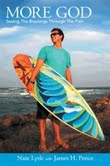
James Pence concludes the miraculous story of Nate Lytle. Hope you’ll check out his novel, More God.
Welcome back, James!
Part 2
The doctors called Nate Lytle’s injury “non-survivable”.
Nate Lytle, a 24-year-old surfer from Victoria, Texas sustained a severe head injury in a fall from a ten-foot ladder. When the doctors did a CAT scan, they discovered the extent of his injuries:
·        He had a softball-sized hole in the left side of his skull.
·        The impact of falling off a ten-foot ladder drove skull fragments deep into his brain.
·        In emergency surgery, the neurosurgeon removed three massive hematomas. When he removed the third, the left side of Nate’s brain collapsed.
·        The CAT scan showed early herniation of the brain stem, a potentially life-threatening complication.
·        The scan also showed a midline shift (the impact caused the brain to shift off-center). The ER physician said that a shift of one or two millimeters was considered “grave.” Nate’s brain shifted 1.7 centimeters off center.

The doctors did not hold out much hope for Nate’s survival. If he did manage to survive, they gave even less hope for his potential quality of life. The areas of Nate’s brain that had been damaged were the parts that control movement, speech and communication. The neurosurgeon said even if Nate were to survive, he would never walk or talk or even communicate again.

Surrounded by family and friends from their church, the only thing Billy and Tammy knew to do was pray. And pray they did.
Tammy knew that Nate could cope with living in a wheelchair, but it would absolutely kill him if he couldn’t communicate. Nate was a strong Christian with a passion for sharing his faith, and she knew that he would rather die than be unable to communicate. So she asked her pastor to pray that Nate would recover, and if he couldn’t recover, that God would take him home.
Nate survived the first night.
Then another.
And another.
The ICU team had its hands full, trying to manage Nate’s fever. And there were some scares when it appeared that he had a blood infection. But day by day, Nate slowly stabilized. He was in a full coma for two weeks and semi-comatose for four weeks after that.
When it appeared that Nate was going to survive, the neurosurgeon suggested that Tammy and Billy tried to get him into rehab. He still didn’t expect Nate to ever be able to communicate, but suggested that rehab might at least help him have some quality of life.
When Tammy asked the neurosurgeon what would be the best facility for Nate to do rehab, he told her TIRR Memorial Hermann in Houston, Texas (The same place where Gabrielle Giffords would do her rehab a few years later). But because Nate had no health insurance and lived out of county, it was very unlikely that he would be able to go there.
Tammy, Billy and the Church began to pray again and within a few short weeks. Nate was admitted to TIRR Memorial Hermann.
Two weeks after he arrived at TIRR Nate woke up from his coma. He was able to walk and, although he stuttered badly, he could talk.
Nate’s road to recovery was long and challenging. After he was discharged from TIRR, he went on to do three months of inpatient rehab at TLC (Transitional Learning Center) in Galveston, Texas. Then more outpatient rehab and speech therapy once he was back home in Victoria.
Although his recovery was nearly total, Nate still bears some after-effects of his TBI. He has problems with short-term memory. At times—particularly when he’s tired—he struggles with aphasia and apraxia (speech disabilities where he knows what he wants to say but has difficulty finding the words and saying them), and he has to stay on seizure medicine.
Amazingly, though, Nate has no physical disabilities other than his shattered his left wrist. (Because of the severity of his head injury, the doctors weren’t able to repair his wrist right away and it healed incorrectly.) But despite massive trauma to the left side of his brain, Nate has no paralysis whatever on the right side of his body. In fact, one year to the day after his injury, Nate began surfing again. It was challenging at first, mostly because of the restricted movement in his left wrist, but before long he was surfing as if nothing had ever happened.
Nate now conducts surf camps for blind, disabled, and autistic children and adults. He also speaks to TBI survivors and their families. His amazing story is told in full in the book I co-wrote with him: More God: Seeing the Blessings through the Pain.
Nate’s infectious, optimistic personality is often reflected in his unique quotes, called “Nateisms” by his friends. My favorite, which inspired the title for this post, is: “Every day’s a good day when you’re not in a coma.”
******************************************************************************

James H. (Jim) Pence is a man of many talents. He’s a performance chalk artist, singer, speaker, published author, editor, collaborator, and in his spare time he teaches karate to homeschoolers. Jim has been called a “Renaissance man,” but he prefers to be known simply as a follower of Jesus Christ and a storyteller. Jim has been published in both fiction and nonfiction. Recently, Thomas Nelson published “The Encounter,” a novella that Jim wrote in collaboration with bestselling author Stephen Arterburn. Jim’s newest book, More God: Seeing the Blessings through the Pain, is available in hardcover, softcover, and e-book format.

Links:
James’ Web site: http://www.jamespence.com/
YouTube Video about Nate Lytle: http://www.youtube.com/watch?v=l_oyX4rA07s
Nate’s Web Site: http://www.natelytle.com/
Photos courtesy of Alan Lindholm, G. Scott Imaging, and Danny Vivian

Every Day’s a Good Day when You’re Not in a Coma!

I’m pleased to host James Pence today who talks about his writing experience with a family whose child suffered a traumatic brain injury and had a truly miraculous recovery.

Welcome, James!

Part 1
Like many others, over the last year I’ve closely followed the story of Gabrielle Giffords. Her recovery from a gunshot wound to the head has been nothing less than remarkable.  However, Congresswoman Giffords’ story was of special interest to me because as her ordeal unfolded, I was completing work on a book about another remarkable traumatic-brain-injury (TBI) survivor: Nate Lytle.

Nate is a young surfer from Victoria, Texas, whose life changed in an instant on June 4th, 2007. Nate had gotten out of the Coast Guard only a few months earlier and was preparing to move to Tallahassee, Florida to be the youth and college pastor at a new church. Since he still had a week before he was to leave for Tallahassee, he offered to help out at his father Billy’s business, Engenco, a company that supplies engine parts to the oil and gas industry.

Nate was atop a ten-foot ladder, trying to help his dad maneuver a 300-pound diesel manifold off a twelve-foot shelf and onto a lift. They lost control of the manifold, and as it fell it clipped the bottom rung of the ladder, catapulting Nate into the air.
As Nate came down, he put out his left hand to try to break his fall, but succeeded only in shattering his wrist. After he landed, he heard a high-pitched ringing in his ears.
Billy climbed down from the shelf and found Nate conscious, but in extreme pain.
“Did you hit your head?” Billy asked.
“My wrist, my wrist,” Nate said, as he cradled his left arm with his right. His hand was a sickening sight, hanging loose, apparently attached only by muscles and tendons.
“Did you hit your head?” Billy repeated.
“No, my wrist. I hurt my wrist,” Nate replied.
Billy ran to get his truck. Because the location of his business was remote and difficult to find, he knew that he would get Nate to the hospital faster by driving himself. What neither Nate nor Billy knew was that Nate had sustained a severe head injury when he landed. Because he was wearing a baseball cap, Billy couldn’t see the huge dent in the left side of his son’s skull.
Billy put Nate in the back seat of his pickup truck’s cab and rushed to the hospital. In the back seat, Nate began to shout Coast Guard commands.
Nate’s mother Tammy arrived at the hospital about the same time that Billy pulled. She helped Nate into a wheelchair and took him into the ER waiting room while Billy parked the truck.
That’s when Nate crashed.
First, he began to talk gibberish. Then he stiffened and started to slip out of the chair.
A security guard helped Tammy wheel him back to a trauma room. The last thing Tammy heard as they closed the door was Nate, saying “I’m gonna puke!”
Over the next few hours, she and Billy would learn that Nate had suffered a massive head injury, He had a softball-sized hole in the left side of his skull, and the bone fragments had been driven deep into his brain.
The neurosurgeon told Billy and Tammy that they should think about making funeral arrangements.
Return Friday for Part II!
*******************************************************************************
James H. (Jim) Pence is a man of many talents. He’s a performance chalk artist, singer, speaker, published author, editor, collaborator, and in his spare time he teaches karate to homeschoolers. Jim has been called a “Renaissance man,” but he prefers to be known simply as a follower of Jesus Christ and a storyteller. Jim has been published in both fiction and nonfiction. Recently, Thomas Nelson published “The Encounter,” a novella that Jim wrote in collaboration with bestselling author Stephen Arterburn. Jim’s newest book, More God: Seeing the Blessings through the Pain, is available in hardcover, softcover, and e-book format.

Links:

James’ Web site: http://www.jamespence.com/

YouTube Video about Nate Lytle: http://www.youtube.com/watch?v=l_oyX4rA07s
Nate’s Web Site: http://www.natelytle.com/
Photos courtesy of Alan Lindholm, G. Scott Imaging, and Danny Vivian

Author Beware: Hallmark’s Christmas Magic

There’s nothing more charming for me than a Hallmark Christmas movie. Several I loved this past Christmas season– particularly Trading Christmas written by Debbie Macomber. Hilarious if you’re a writer.
Some I didn’t like as much– and you guessed it– had to do with a medical reason.
Christmas Magic was a Hallmark movie where a young PR exec was involved in serious car accident.
Spoiler alert!
Most of the movie, you’re led to believe that she has died and is doing some angel work before going to heaven. At the end of the movie– you learn she has been in a comatose state and the climatic scene is where the man and daughter she was trying to help, come to her side at the hospital, to sing her back to life before her father “pulls the plug.”
My first issue: You should actually look injured if you’ve been in such a devastating car accident that you’ve been lying in a hospital bed for the better part of a week. In her “death” scene, her hair is clean and styled. Nary a scratch on her pretty face. Exactly what was her injury? Supposedly brain trauma. Well, she should at least have a bruise on her head.
My second issue: Pulling the plug generally denotes that you are on a ventilator. Discontinuing the ventilator– pulling the plug– means a patient’s breathing is no longer being assisted, they then cannot oxygenate their body, and the heart will stop beating when it doesn’t have oxygen.
In this scene, she was on a heart monitor (which is merely a monitoring device) and an IV bag of fluids hung at her bedside. She was not on a ventilator. Therefore, no “plug to pull”.
To denote discontinuing “life support” the nurse in the movie turned off the IV solution where then the heart began to slow down. Okay, you will die if you are in a comatose state from dehydration (think Terri Shiavo’s case) but it will not happen in a few minutes. It will take days.
But, this patient was able to comply and nearly died in a few short minutes.

Next season, Hallmark Channel, hire me as a consultant. You might be surprised at how inexpensive I am!

Top Three Most Popular Posts: #1

I’m so blessed that it’s been such a great first year for this blog. I owe it to all of you and your interest in how to appropriately injure, main and kill your fictional characters. Thanks to everyone who follows and subscribes and even the lurkers who peruse by….

It isn’t surprising to me that this remains the most popular post of all time here at Redwood’s Medical Edge with nearly 1000 page views. This myth continues to be perpetuated in books and TV.

I love the series Dexter. If you’re unfamiliar with it and you’re a writer, I think it’s a great exercise in intricate plotting techniques. However, it is violent, so proceed with caution. The general premise is that Dexter works for Miami Police as a blood splatter specialist. In his free time, he’s a serial killer, but only kills those that the justice system doesn’t put away. This show is also good study for the sympathetic villain.

In one episode, poor Dexter has been in a motor vehicle collision. He is dazed and is taken to the ER. The doctor says something to the effect of, “You have a head injury. You’ll need to stay awake for the next several hours.” Great.

Sleepiness post head injury is a classic set-up for pediatrics. Every day in the ER is a story like this. It’s close to bed time. The children are running amok. Some child falls down, falls into, or falls off of something and hits their head. They cry their little heart out. After all, hitting your head hurts, a lot. After a good crying bout, they’re sleepy. Parents first thought is, he must have a terrible head injury. Off to the ER.

Now, one, I want to make it clear. Getting your child checked in the ER for head injury is good and reasonable. However, we aren’t all that concerned with sleepiness. What we are concerned with is how arousable they are from sleep. This is what we’ll be monitoring every fifteen minutes to an hour if the child sleeps during his ED visit.

Level of consciousness is assessed as an indicator of an injury going on inside of the head. How arousable you are is the most sensitive indicator of level of consciousness. If the child falls asleep, and we are concerned about head injury, we’ll try to wake them up every so often to assess their level of arousability. If we cannot wake them up, then we are concerned. It has to be more than a gentle nudge. You are really working to wake the patient and they won’t respond. This is concerning.

Remember, things that are injured need rest. This is why we put you on crutches if you break an ankle. The brain rests by sleeping. It helps it to heal. If you’re a subscriber to this myth, how long should we keep the patient awake? An hour? Two hours? A day? If you want a skewed neuro exam, try doing one on a sleep deprived patient.

For additional resources regarding this myth, check out the following:

1. http://firstaid.about.com/od/headneckinjuries/f/09_Waking_Heads.htm

2. http://familydoctor.org/online/famdocen/home/common/brain/head/084.html

Author Beware: Wrong Medical Procedure

Recently, I was reading a novel by a well-known published author. I’m enjoying the story line a lot which is preventing me from putting the book down and reading another one.

This was the written sentence. “We took him to the OR and drilled a hole in his head just in case there was a subdural hematoma.”

WOW! There’s a lot going on in this single sentence. A lot that is medically inaccurate and I’ll tell you why.

First, a subdural hematoma is a “collection of blood on the surface of the brain”– between the brain and the skull.  The volumes of this blood collection vary and do not always need intervention. However, if the volume of the blood collection is large enough, it can actually push on the brain and cause its contents to shift. This is termed herniation. In that case, surgical evacuation of the blood clot by a neurosurgeon is the preferred treatment.

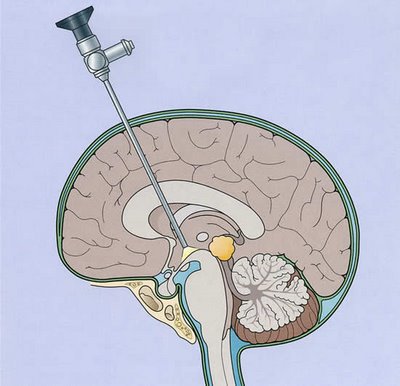
Drilling a hole in a patient’s head is generally done for two reasons. The first is to drain cerebrospinal fluid and the second is to monitor intracranial pressure or ICP. So, even if the patient did have a subdural hematoma, this likely would not be therapeutic treatment.

The next issue is the just in case part. With CT scanning readily available (even at most smaller hospitals), there should be no reason to wonder whether or not the patient has a subdural. This particular patient took a severe beating to his head and has neurological deficits. Standard treatment would be to do a CT of his head. Then the medical staff would know for sure what they were dealing with.

Which leads us to the last issue. The doctor performing the surgery was an orthopedic surgeon. This is not in their realm of specialty. Drilling a hole in someone’s head goes to the neurosurgeon. I can’t think of many ortho types who want to be mucking around near the brain. And if they are, they’ve likely consulted a neurosurgeon.

Scope of practice issues come up commonly in manuscripts. Either the act done is outside that character’s scope of practice. For example, an EMT performing a C-section is outside their scope of practice. Or, a specialist is doing something they usually don’t do as in this case.

To be clear, I do think it is okay that a fictional character does something they’re not supposed to do like operating outside of their scope of practice. This can add great tension and conflict to a scene. Imagine an EMT attempting to do a C-section to save a baby’s life when the mother has died. What I would be sure to do is make it clear that the character knows this is outside their scope and is troubled by doing it or maybe cavalier about doing it but that they know where the line is.

You can also take the other bend, the character doesn’t know and does it anyway. In this instance, there should be discussion from other characters that this person is known for operating outside their scope and presents a danger to patients. Then, your reader will know that your medical knowledge is good but it is the character running amok.

What do you think? How would you have a character do something outside their norm that won’t turn off your reader?

For Jillian: Head Injuries early 1800’s

I decided to do a special post just for Jillian. She’s an awesome supporter of this blog and had an interesting question in the comments section that was going to be easier to answer here.

Her question:  Did they know if someone had a concussion during the time period I write, which is Regency England.

Jordyn says: Jillian, my best guess is that they understood head injury symptoms but probably not what the exact cause was. Boring a hole in the head to relieve pressure was a common medical practice (probably one of the oldest surgical procedures).

Here are a few resources that may help you:

1. The prevailing view in the 1800s was that headache and other sequelae of head injury were due to malingering or psychogenic or other functional disorders.  Source: http://www.medlink.com/medlinkcontent.asp

2. http://journals.lww.com/ajpmr/Fulltext/2010/08000/The_History_and_Evolution_of_Traumatic_Brain.13.aspx

3. http://en.wikipedia.org/wiki/Traumatic_brain_injury: Look under history section.

4. This was an earlier post on trepanning. http://www.jordynredwood.com/2010/11/truly-historical-medical-question-head.html

Jillian, thanks as always for your support. Hope you find some useful information.

Medical Question: Scope of Practice

Elaine asks:
I have some medical questions from my WIP. I have a character who has had multiple concussions from past sports (ice hockey). I wondered if concussions are considered a “traumatic brain injury”?
Also, or along with the above, I have the hero suffering a fall at a remote location in Hawaii on some lava rocks which leads to possibly another concussion and a dislocated shoulder. My heroine, who is an athletic trainer, arrives on the scene and I thought it was reasonable to assume that she could try to reduce (is that the right word?) his shoulder since there is no way for help to arrive, i.e. no one else on scene and no cell phone reception plus a 30-minute hike back up to the road where her car is. Is it reasonable to assume that with his help they get to her car and she takes him to a minor emergency clinic who will probably send him to an actual emergency room for x-rays, or more tests? Also, that he might not show signs of any disability or impairment from the concussion until later?
Jordyn says:
Yes, concussions are considered traumatic brain injuries.
 3. http://www.post-gazette.com/healthscience/20000229hconcush2.asp: News piece looking at testing post concussion. What you’ll find in patients who have had a lot of concussions can be learning disabilities, headaches, issues with balance to name a few. Sometimes, symptoms suffered post head injury are termed post-concussion syndrome.


Photobucket/emilillylouloumay

As far as the question concerning your athletic trainer, I think it would be outside her “scope of practice” to try and reduce (yes, that is the correct term) a dislocated shoulder.

Most often, the patient will be splinted in a position of comfort and sent to the ED. General ED management, depending on the type of dislocation, is to take an x-ray (sometimes a pre-reduction x-ray is not done), IV placement, IV medication for pain/relaxation, the reduction is complete and stabilized— for the shoulder this is typically a sling/swath. Then post-reduction films are taken to ensure that everything is back in place as it should be.

One instance I could see this trainer attempting the reduction would be if there were problems with perfusion to the hand. For example, it’s numb (this would be worrisome for nerve entrapment, compromise), it’s pale or purple (which would suggest poor blood flow). This may actually be good for your fiction because it would be great internal conflict for the character. She’s performing a procedure outside her scope of practice but to help her friend lessen his chances for permanent damage. If you choose this, I would make it clear to the reader it’s outside her scope of practice but she’s willing to take the risk and consequences of doing the procedure.
Actually, this question started to intrigue me and I started looking up athletic training protocols to see if it was a possibility. I found one from the University of Georgia— read it. It does outline a scenario like the one I describe above with some qualifications of the person who may be allowed to try.
Any other suggestions for Elaine?
***********************************************************************
Elaine Clampitt is currently melding her passion for writing and ice hockey into a series about women in the world of professional ice hockey. She owned her own business which manufactured women’s apparel and has been able to continue to fulfill her love for numbers as treasurer of various organizations. An “empty-nester”, Elaine enjoys encouraging others in their writing and going to as many Avs games as possible.  This is her second year serving as the Secretary/Treasurer for Mile High Scribes, the ACFW South Denver chapter. You can find out more about Elaine at her websites: elaine@emclampitt.com, http://www.thewomenofhockey.com/.