Most love a good operating room scene where a brilliant mind and steady hand save the day. Dr. Strange fulfills this role in his self-titled movie and was most enjoyable to watch.
However, there is one scene that concerned me.
See anything strange besides the man who carries the name?
The two main characters are creating a burr hole in the skull to be able to retrieve the bullet lodge near the medulla. The are in full sterile attire except for their masks.
Several years ago, I was called to the OR to assist with the removal of a brain tumor guided with ultrasound. No one in that room went without a mask covering their mouth and noise. In fact, I was not even allowed to enter the suite without a mask in place.
All of the surgeons, nurses and surgical assistants surrounding the table also wore face shield to protect their eyes from any splatter of the patient’s biological fluids.
So you can imagine my disdain when watching the movie, Dr. Strange, and discovering two surgeons hovering over a patient’s head, creating burr holes in his skull without masks. Upon further research, the wearing of masks in the OR has caused some controversy.
According to Lisa Maragakis, Senior Director of Epidemiology and Infection Control at John Hopkins Health System, some studies have shown the absence of a mask in the OR “have virtually no bearing on the patient outcomes when surgeries are performed by healthy doctors in sanitary operating rooms.” (Maragakis, 2016) In some European hospitals, surgeons are no longer required to wear masks.
However, she also discusses what happens when a surgeon sneezes. Personally if it were my open brain, I’d not want my surgeon’s droplets nestling into my head wound.
Here in the US, most hospital and operating room protocols still require our surgeons to don the traditional surgical mask and encourage facial shields.
Perhaps, one day that will change, but right now, I’m glad wearing surgical masks are not strange.
References:
Sugarman, J. (2016). What Do Surgical Masks Really Protect Against? Retrieved May 28, 2018.
********************************************************************************************
Shannon Moore Redmon writes romantic suspense stories, to entertain and share the  gospel truth of Jesus Christ. Her stories dive into the healthcare environment where Shannon holds over twenty years of experience as a Registered Diagnostic Medical Sonographer. Her extensive work experience includes Radiology, Obstetrics/Gynecology and Vascular Surgery.
As the former Education Manager for GE Healthcare, she developed her medical professional network across the country. Today, Shannon teaches ultrasound at Asheville-Buncombe Technical Community College and utilizes many resources to provide accurate healthcare research for authors requesting her services.
She is a member of the ACFW and Blue Ridge Mountain Writer’s Group. Shannon is represented by Tamela Hancock Murray of the Steve Laube Agency. She lives and drinks too much coffee in North Carolina with her husband, two boys and her white foo-foo dog, Sophie.
 I already know a lot about what goes into stabilizing him: Checking the ABCs, IVs for blood and fluid replacement, intubation (an endotracheal tube), but my question is, what is the exact treatment for this type of injury in a surgical theatre? What are the indications that he may need a thoracotomy or a lobectomy? Or is it as simple as a chest tube to treat the hemopneumothorax, connecting him to a ventilator, and then suturing the lacerations in his lung?
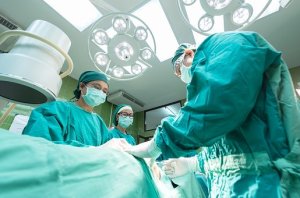 My protagonist is a surgical resident at large hospital, and I want to write a scene where she is in the OR treating a piece of shrapnel entering the patient’s large intestine with no exit wound.
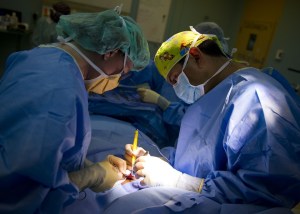 What would be the role of the surgical resident in this scenario? I don’t necessarily just want her to be cleaning up, but I want this to be as accurate as possible.
 Kimberly Zweygardt is a Christ follower, wife, mother, writer, blogger, dramatist, worship leader, Certified Registered Nurse Anesthetist, a fused glass artist and a taker of naps. Her writings have been featured in Rural Roads Magazine, The Rocking Chair Reader, and Chicken Soup for the Soul Healthy Living Series on Heart Disease. She is the author of Stories From the Well and Ashes to Beauty, The Real Cinderella Story and was featured in Stories of Remarkable Women of Faith. She lives in Northwest Kansas with her husband where their nest is empty but their lives are full. For more information:
  I have a question. I have had several surgeries, including foot surgery where a block was used. The list of medications on my bill were astounding! I understand the induction agent, narcotics and versed, but what is the anesthesia gas for? Just to keep the patient asleep? I love these posts!
 Kimberly Zweygardt is a Christ follower, wife, mother, writer, blogger, dramatist, worship leader, Certified Registered Nurse Anesthetist, a fused glass artist and a taker of naps. Her writings have been featured in Rural Roads Magazine, The Rocking Chair Reader, and Chicken Soup for the Soul Healthy Living Series on Heart Disease. She is the author of Stories From the Well and Ashes to Beauty, The Real Cinderella Story and was featured in Stories of Remarkable Women of Faith. She lives in Northwest Kansas with her husband where their nest is empty but their lives are full. For more information:
  Finally, the complication that movie nightmares are made of: recall under anesthesia.
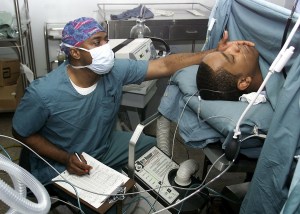 Anesthesia is sometimes defined as a controlled emergency. Here are some complications that would create great tension for our characters.
 We’ve all read about wrong patient or wrong operation or surgeons operating on the opposite leg, hip, etc. Safegaurds, like the time out, are designed to prevent this, but what if it increases plot tension?
 The OR is a cold, sterile, hard surface, brightly lit environment that is all about the task instead of comfort. Cabinets hold supplies, the operating room bed is called a table, Mayo stands hold instruments for immediate use during the operation and stainless steel wheeled tables hold extra instruments and supplies. IV poles, wheeled chairs/stools and the anesthesia machine and anesthesia cart complete the setting.
 If you have a profession besides writing, doesn’t it bug you when someone doesn’t get it right? It may be something small, but you wonder, “Why didn’t they do some research?” With the Internet, it is easier than ever to find information, but if it is a hidden profession like my own, there might not be much info for you to glean. Today I want to share with you, The Face Behind the Mask or The Life and Times of a Certified Registered Nurse Anesthetist (CRNA). The operating room is my world, so let’s begin there.
 That being said, I was mildly disappointed in a medical scene portrayed in Season 1, Episode 11. If you haven’t seen it, I don’t think I’ll be spoiling much unless you don’t the the fate of Toby post his Christmas collapse. If that statement is true then you should stop reading here.
 Redwood's Medical Edge