Take Me First: The Triage System

Often times, when I read a medical scene in a fiction novel it generally covers treatment of a character’s injury/illness. That can be the extent of the scene. What other factors inherent to the ED can increase conflict for the character?

One of the first people you’ll come into contact with if you go to the emergency department is the triage nurse. Triage is a process of sorting patients so the sickest are seen first. Can anyone see potential areas of conflict during the triage process?

When I screen a patient in triage, I take their complaint, a set of vital signs, medical history, allergies, and current medications. For pediatrics, we get a weight because every drug dosage is based on their weight. Most likely, the parent explains why they brought their child in. I then assign them a level based on my assessment of how emergency they need to be seen. Different emergency departments will use different scoring systems but all ED’s have them. Some are three levels. The hospital I work for uses a five level triage system.

If I “level” you a one then you’re dying and need immediate resuscitation. A level two patient might be a fracture with obvious deformity that may have to be set using sedation or an infant that needs a septic work-up. A level three patient would be those requiring a work-up for their issue— like abdominal pain. A level four patient is generally a simple laceration repair or concern for fracture but not an obvious deformity. If I assign you a level five, then you could likely be seen by your doctor the next day without suffering any ill effects. This would cover things like getting a test for strep throat or having a doctor look at a rash. You can see as the “acuity” goes down (level one is the highest acuity), so do the number of tests and procedures. ED nurses are very good at anticipating what tests and procedures the doctor will likely preform.

If bed space is not an issue, patients are generally taken in order of arrival. People in the waiting room are excellent at keeping track of what order they’re in and they expect this to be maintained. However, when bed space becomes limited, then I want the doctor to see the patients who have the highest acuity first.

However, when you begin to pull people out of order, this is when tension begins to rise in the waiting room. At first, it may be subtle. I call a patient back and the ones that signed in before that one give me what I affectionately call the “evil eye”. The longer the wait, the more restless people/children become. Sometimes, sicker patients do have to wait. As a nurse, this is not an ideal situation but I also can’t place more than one patient/family in a room.

Often times, it is presumed that a patient that arrives by ambulance will automatically get a room in the department. However, if beds are tight and the patient’s acuity is low, I have triaged them to the waiting room. How happy do you think that patient is? I know this may come as a shock, but some people who call an ambulance are not having a medical emergency.

In the comments section, write a triage scenario that has high conflict in no more than five sentences. Can you do it?

***Contest reposted from February 9, 2011.***
Author Question: Treatment of the Burn Patient

Jennie Asks:

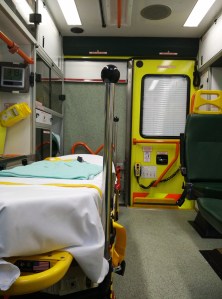
What happens when someone gets burned? What do the EMT’s do on the scene? The story line involves the explosion of a crosswired electrical box.  Two individuals are burned.

First, the man who threw the switch is thrown onto the floor and sparks are showering down on him and his clothes.  He is pinned beneath a shelf that he knocked over.  The second man takes his jacket and tries to put out the flames while others pull the shelf off the man on the floor.  The second man’s arm and hand are burned trying to put out the fire, and keep the sparks from falling on the man on the floor.
I have the paramedics taking the first man to the hospital. I describe very little about his condition. However, the hero is attended by the heroine who is an EMT. His burns are secondary. Would he have to go to the hospital?  Get a tetanus shot if he needs one?

Jordyn Says:

The first distinction to make is that there are several different types of Emergency Medical Service (EMS) providers and their level of responsibility to this patient will be different. An emergency medical technician (EMT) generally provides basic first aid, CPR, can administer oxygen and can assist the patient in giving some of their own medications (like an asthma inhaler or nitroglycerin tablets.) A paramedic does more advanced medical procedures and gives drugs. The level of your provider will need to be clear in the medical care they can provide.

For EMT’s, in general, burn care is as follows:

1. Remove clothing from the burn that is non-adherent.

2. Remove any constricting items. For instance, if the burn is on the ring finger, you would try and take the ring off.

3. Cover burn with a cool, wet, clean dressing. This will help control pain.

If you have a paramedic responding— it is possible that an IV could be started and the patient could get an IV narcotic for pain (something like morphine or fentanyl.)

If the character is burned by the electrical current, this poses a whole new set of problems. I get the feeling he is burned by the electricity because you mention that he has been thrown back. Electrical burns typically have an entrance and an exit wound like the hand and foot. The electricity enters one part but has to exit somewhere.

The other problem with electrical burns is that your heart pumps based on an electrical conduction system. An electrical burn can injure the electrical conduction system of the heart and we will look very closely at whether or not the heart sustained injury. This could be evaluated initially by a 12-Lead ECG and lab work that measures muscle breakdown specific to the heart. The issue with electrical burns is that the damage is often unseen because the electricity will injure you internally but we can’t see it externally except and the entrance and exit sites.

The other thought was the extent of your patient’s burns and this would make a difference in their medical care. Burns are generally calculated based on the percentage of skin that is affected. You can find examples of these tables by clicking this link. Adults and kids are calculated differently.

Burns <15% body surface area (BSA) would get cool, moist compresses. However, burns > 15% would get dry, sterile dressings. The reason for this is that burn patients have lost their skin integrity. Your skin helps your body maintain its temperature. Some consider it the largest organ in the body. When you burn >15% and apply cool, wet dressings, this can pull enough heat away from the patient to cause them to become hypothermic. We actually have to help burn patients maintain their body temperature by cranking up the heat in the room or using other warming techniques.

Your patient will have to go to the hospital. Initial ED treatment would be IV placement, fluid resuscitation (there is a formula we use for this and is dependent on the burn percentage), pain medication (like morphine), and likely consulting with a burn center to help determine his course of treatment. Tetanus shot would be updated if he hasn’t had one in the last five years.

Did you know that paramedic protocols are relatively easy to find online? For instance, this link shows all of the Denver Metro Prehospital Protocols. Referencing these will be one of the best sources for researching what type of prehospital care your character would receive for their given ailment.

***This content originally posted December 10, 2010.***

Author Question: Management of Unusual Patients

Amy Asks:


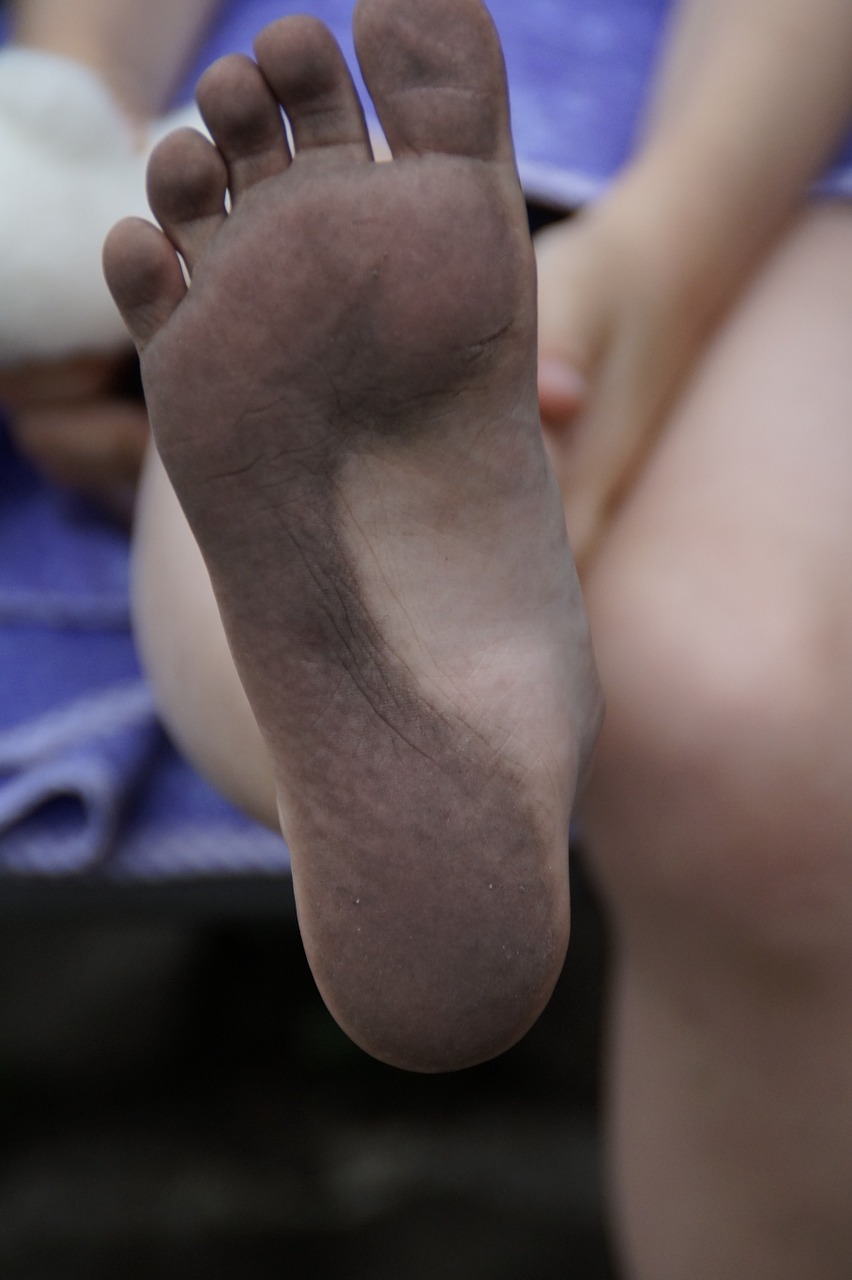
I hope you can address this. Or, if not, point me at a resource that can. I am writing a short horror story in which a patient complains about not being able to get clean. She washes and then within an hour, she’s dirty again. And if she doesn’t wash, the dirt just accumulates. She’s a magnet for dirt. The patient is not complaining of Morgellons and has no history of drug abuse. Neither does she have a history of (or current problems with) OCD behavior.

My assumption is that the doctor would review proper hygiene with herand then find a tactful way to make a referral to a psychiatrist or psychologist. Is that correct?

What questions would the doctor ask? What language would she use when documenting this meeting? And what would she do when more patients start presenting with the same complaint?

In my story, the complaint becomes a pandemic. With this illness, it’s always possible to wash away the dirt, you just can’t keep it away. What are the long-term health consequences of not being able to remain clean? I know that it will increase the possibility of local infections but can you become ill from simply being dirty? (This hypothetical illness would only attract dirt, not pests. But would being dirty make it easier to attract and harbor fleas, ticks and lice?)

Thank you for any help you may be able to provide me!


Jordyn Says:

Wow, Amy. This is a very intriguing question.

I’ll have to take it from an ER nurse’s standpoint. A patient who presents with a complaint of dirt accumulation despite showering definitely raises some eyebrows. If the patient is not expressing wanting to kill themselves or others—then there’s no immediate need to involve psychiatric services. The doctor may say something akin to, “I don’t think this has a medical cause. I think it might be best to follow-up with your regular physician for a referral to a mental health professional.”

Mental health evaluations are rarely done in the ED by an ER physician. These services are likely contracted out or handled by someone else other than the ER physician. You may have heard this phrase about ER docs, “Knowledge of all. Master of none.”—Meaning they have a significant knowledge base but are not specialists. Their job entails identifying a true medical emergency and managing that—so in absence of that, they’ll refer on.

I would say localized infection from open wounds is the biggest risk. As far as attracting other pests—what kind of environment do they live in? Just because you have extra dirt on you doesn’t mean you’ll have lice, etc.


I also ran you question by friend, author and ER physician Braxton DeGarmo.

Braxton says:

I cannot think of a single scientific way that someone could become a dirt “magnet.” As such, the idea of a pandemic in which people can’t keep clean would very much require some sort of fringe science explanation and to pull the plot off you’d have to build that idea in bits and pieces to make it believable—much like Crichton did for re-building ancient DNA from amber to clone dinosaurs.

Now, as a psychiatric condition, this is very plausible. I’ve taken care of people who thought they were shrinking and that snakes were under their skin. All of these were manifestations of a psychotic break. So, yes, a tactful referral to psych would be warranted. It would be easier to come up with something that causes such a psych pandemic than one where people keep attracting dirt and grime.

The problem, though, is that everyone’s psychotic break would be different. So, again, you’d have to build some case where they all share OCD or the opposite, an attraction to dirt to where they purposefully seek to get dirty. Both scenarios will require some work to build scientifically plausible causes.

Perhaps, there could be an illness that leads to a specific deficiency and the dirt they instinctively “collect” somehow fills this need and is absorbed through the skin. To the casual observer, they just look dirty, but a closer look finds common mineral “X” or whatever, within everyone’s grime. And it’s the only common factor, thus leading the protagonist or someone to figure it out.


Most folks have heard of people with certain deficiencies sharing a common trait, such as pica to fill an iron deficiency. So, this might be an easier way to build plausibility.


As for the specific questions, yes, local skin infections might become more of a problem, but not necessarily any systemic issues. Likewise, with fleas and such. Degree of skin cleanliness has nothing really to do with such infestations. 

Best of luck with this novel! Very intriguing idea.