Today, we’re continuing with Luna’s question. You can view Part I here. In short, a 24 y/o woman has been hit by a truck throwing her into the air. When she lands, her head hits a concrete divider.
What will the doctor check or say when she first arrives at the emergency department?
 If EMS care has been provided as I outlined in the previous post, we would do the following in the ER:
- Check vital signs and level of consciousness. If vital signs are abnormal, we would address those immediately. For instance, if her oxygen level is low, then we’ll provide more oxygen and evaluate whether or not the patient needs to be intubated (a breathing tube into the lungs). EMS may have already done this. If so, we’ll check the placement of the tube. If her blood pressure is low address that by giving either more fluids, blood, and/or a vasopressor (which is a medication given via a continuous drip to raise blood pressure). Of note, sometimes giving lots of IV fluid with head injuries is problematic.
- Draw lab work. In this case, we would check multiple labs. Blood counts, chemistries, and labs that look at how well the blood is clotting.
- Radiology studies. This patient automatically buys herself a full spine series (looking for fractures in the spinal cord) and a head CT (that would look for bleeding– and other things). Other labs and studies would be ordered depending on what other injuries were found. As previously stated, this patient would likely have more than just the head injury. A chest x-ray as well particularly if intubated to check placement of the tube.
Is surgery needed?
This would be up to you as the writer. Would there be a case in this scenario where surgery might be indicated? Yes. Hitting your head into a concrete barrier could definitely cause some fractures in the skull where bone fragments could enter the brain. This patient would get a neurosurgery consult for sure.
Does she require blood transfusion for the surgery?
Whether or not a patient gets blood is largely dependent on what their blood counts are. We look at this by evaluating a patient’s hemoglobin and hematocrit or H&H in medical lingo. If low, the patient gets blood. In trauma patients where there is a concern for bleeding, we draw blood every few hours to trend this lab. If it’s dropping, we know the patient might be bleeding from somewhere.
What machines would be used to keep her alive?
In this case, likely a ventilator (or breathing machine).
How long will she be in the hospital? I am writing for two days.
Unfortunately, I think this patient would be hospitalized much longer than that. A brain injured patient that requires brain surgery would likely be hospitalized for a week or more. A week on the short end if they wake up and are neurologically intact meaning that they can speak, walk, and talk. That they know who they are, where they are, and what time they are in. Also, are their cognitive abilities intact (memory, ability to do simple calculation, etc). If this patient had a simple epidural bleed, then perhaps home in a few days if the above is normal.
The reason I say a week for this patient is the concern for brain swelling surrounding this type of injury. Brain swelling peaks around 48-72 hours and patients generally get sicker when that happens.
Thanks for reaching out to me, Luna! Best of luck with this story.
 She is a 24 year old girl that was hit by a 4×4 pickup truck while crossing the road. She was thrown and her head hit the road divider. She was bleeding moderately (not too heavy) from her head injury. She was conscious when her friend sent her to the hospital where later the doctor said she had brain hemorrhage as a result from that accident.
 With burns to the back, it would really depend on what percentage of his back is burned. Burns are always calculated in percentages so it’s hard to know exactly what the treatment would be without knowing that number.
 I am writing a scene where my heroine gets shot in the scuffle with the bad guy. If she’s shot in the brachial artery in her left arm, is it conceivable that she’d pass out and bleed a lot? Her firefighter hero is there and immediately rips off his shirt and balls it up to stop/slow the bleeding. He then uses a strip of fabric from another shirt to tie around that and then carries her to a waiting police car to get her to the hospital—in this case, an ER clinic.
 I have an elderly character who is about 90-years-old. As things stand, he is very sharp mentally and physically and fairly strong for his age. The story needs are for him to be in a coma, whether natural or medically induced, for several weeks.
 So, I was wondering how likely she is to survive, the type of treatment and expected length of recovery, and what would the protocol be for the witnesses (her five friends, all minors)?
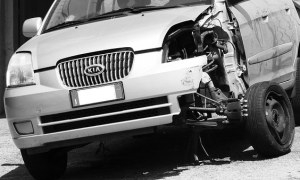 vehicle. My plan was to have the driver suffer from a broken wrist, maybe a bump on the head, nothing too serious (this can change if it needs to). If he is that okay would it be unrealistic to have his passenger hit her head hard enough to lose consciousness and suffer memory loss when she wakes up? I was thinking of including pretty severe amnesia, but as for the other four characters, would their level of intoxication let them walk away with little to no injuries, or would they still arrive in the ER with at least the unconscious passenger?
 There are so many variables in car accidents that you could basically do whatever you wanted, but I’ll give you some guidelines.
 In my novella, the main character is shot directly below the left clavicle by a sniper rifle. The bullet misses the bone, but would it have hit the subclavian artery or another artery? And if so, how long would it take for her to bleed out? She receives medical help from an off-duty paramedic within three to five minutes. Thanks!
 I have a protagonist who suffered a ruptured aneurysm two years before the story starts. The aneurysm caused a stroke. Presently, he is mostly recovered, though he still suffers migraines and some memory loss. I have a scene where another character catches sight of yet another character giving my protagonist a shot in the arm.
 Redwood's Medical Edge