Terry asks:
The information you sent me last time has been great for my story! One thing I forgot to ask though, and it is very important to the ending is this: When my character finally comes out of his coma I need to know two things:
1. He was put into a drug induced coma because of a head injury suffered in an automobile crash. Is it possible he can come out of that coma on his own? Like just open his eyes after about two weeks?
2. When they finally take the breathing tube out of him how long will it take before he will be able to speak? I want him to be able to tell about what he went through in the coma from his perspective as soon as he can.
I thank you in advance for any and all info you can give me. I really appreciate your help. Your site is THE BEST for writers!!
Jordyn Says:
Hi, Terry!
Thanks for sending me your question.
In your first question it’s hard for me to tell if you mean is it possible for this patient to just wake up from a drug induced coma— like the drugs are still infusing? If that’s the case, then no. The medications would have to be stopped before the patient would have a chance of waking up. In fact, the type of medication on board often plays into whether or not a patient can be declared brain dead.
If a patient still has narcotic and/or sedative medications in their system they cannot be declared brain dead. So first, the medication(s) given has to wear off. Most often, these medications are given as continuous infusions and are weaned down slowly and not abruptly discontinued. If after that has happened then yes— a patient may just open his eyes.
More often, patients are slow to come about. The first time they open their eyes, it might only be for a brief period of time. They may have muscle movements first. Generally, the medical team knows they’re improving when they can respond purposefully to pain by first pulling away from the stimulus, then by trying to push the stimulus away, and then by opening their eyes and understanding and following commands. It’s usually a slow process– from days to weeks (and even months to years) depending on the type of head injury the person suffered.
In regards to your second question, how long before he can speak? If he is awake and able to speak then he should be able to speak right away if the brain injury did not affect the speech sensitive areas. Some patients are extubated (or taken off breathing machines) and they’re not fully alert and responding to commands, but may be breathing adequately enough that they no longer need a ventilator. Many of these patients do have a trach in place, though.
That being said, if your character is awake and alert, his voice will sound soft, hoarse, and strained. His throat will hurt. He may have some trouble swallowing. His voice won’t have the same strength right after the breathing tube comes out as it did before. It will take some time to return to normal. The shorter the intubation the more quickly the patient’s voice should return to normal. However, he should be able to share his story.
Good luck!
 Jordyn Says
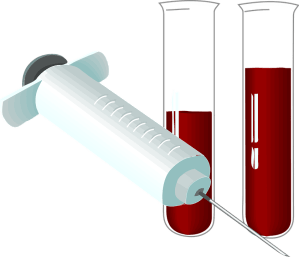 Can a vaccine or antidote be made using a blood sample? Also, what would be the proper term for this? Is it a vaccine, antidote, or a serum?
 My question is
 Usually results such as these through a medical examiner’s office are 4-6 weeks.
 1. Would one be required to go to the hospital for a bullet graze?
 Hi Fraidy! Thanks so much for sending me your question.
 It would need to be an OTC drug or something with easy access. Also, the drug would either have to wear off on its own or need be handled by an EMT without access to a hospital or medical equipment. What drug would get the job done? Would sleeping pills work and if so which kind would be best? How much would the character need to ingest? And how long before it takes effect and wears off? Thank you!
 For this patient, the neurological injury would take precedence. It doesn’t matter much about his shoulder if he never wakes up. So, if he does have an epidural bleed, that would be the surgical priority. When he’s under anesthesia for the surgery and his epidural bleed has been stabilized, they could relocate the shoulder intra-operatively.
 Redwood's Medical Edge