Author Beware: Don’t Make Medical People Look Like Uncaring Idiots 3/3

Today is the last post on my displeasure with a particular, bestselling novel. Click on the links to find Part 1 and Part 2.

In short, a fourteen-year-old girl has come to Planned Parenthood for the Morning-after Pill.

What follows in italics is an excerpt from the book where the nurse giving the patient her discharge instructions. I’m keeping the identity of the author and the name of the book anonymous.

 girl-1149933_1920Several more minutes ticked by before the nurse, her peppiness especially noticeable in the wake of her cool, serene, superior returned.  A brown paper lunch bag full of brightly colored condoms bunched underneath her arm, a prescription bottle in one hand, and a glass of water in the other.

“Take six right now.” She shook six pills into my clammy palm and watched me chase them down with water. “And six twelve hours from now.” She looked at her watch. “So set your alarm  for four am.” She shook the paper bag at me teasingly. “And being careful can be fun. Some of these even glow in the dark! ”

Wow! Just yikes. Trust me, nurses are usually not so peppy. How does the patient know the “brown paper bag” is full of “brightly colored condoms”? Can she see through brown paper? I digress.

Problem: What’s really wrong with this passage is the patient instructions. The author makes it clear in the novel that the patient is taking the Morning-after pill. There are two such pills. One by the same name and the other is Ella. Neither pill has such a dosing regime. Both are one pill only. That’s it.

I honestly don’t get the point of writing something so ridiculous that is so easily researched.

More seriously, this nurse’s teaching is cringe worthy. I don’t know a nurse on the earth who would talk about condoms glowing in the dark. How about having a serious talk about contraception? How about having a serious talk with a fourteen-year-old girl who is having sex and how she feels about that?

So much more should have been done for this girl in this book by these medical professionals that it was truly disheartening to read. Why? Because this is not the impression I want any woman of any age to expect when they interact with a medical professional about something as important as this.

Writers and authors everywhere— please, do better. Your words educate those we interact with as patients and this is not the impression we want them to have. I’m only asking for one, redeemable, medical person. Make all the rest awful— you have my permission.

Author Beware: Don’t Make Medical People Look Like Uncaring Idiots 2/3

Today, I’m continuing my discussion of an uber popular book that didn’t paint medical people in a good light— like at all.

You can find the first post here. I’m not mentioning the author or the novel here to protect the author from angry medical people everywhere (okay, perhaps it’s just me.)

What follows is the same encounter, different section. As a quick reminder, this fourteen-year-old girl believes she’s been raped and is looking for guidance from a female physician.

What follows in italics is an exert from the book.

doctor-563428_1920-1There had been a question burning in my throat for the last ten minutes, but it was her reaching for the handle of the door that forced me to say it. “Is it rape if you can’t remember what happened?”

 The doctor opened her mouth as if she were about to gasp ‘oh no’. Instead, she said so quietly I almost didn’t hear it, “I’m not qualified to answer that question.” She slipped out of the room soundlessly.

 Problem: There are so many problems with this response from this doctor to her patient that I am flabbergasted as to even know where to start. First, how about starting with a doctor who cares enough to simply ask a few follow-up questions?

Such as, “Please, tell me what happened.”

What is shocking is just the amount of information that has been disseminated to the population about getting mutual consent before a sexual encounter. In fact, in just the last couple of years was the infamous “Tea Consent” video which you can view below.

In fact, the video states, “And if they’re unconscious, then don’t make them tea. Unconscious people don’t want tea and can’t answer the question, ‘Do you want tea?’ because they’re unconscious.” So it seems the issue of whether or not this was consensual would be fairly easy to determine.

No consent, then a crime has occurred.

The first signal to this physician is her patient’s memory problems. This is very concerning for her getting slipped a drug so that she could be raped. If the physician feels this is something she can’t explore, especially considering the patient’s age, then she should seek outside guidance. This could rise to the level of needing to be reported to the police.

Never just stop and not say anything more. This young girl is clearly in crisis. A doctor is qualified to help this patient, particularly one in this setting, who should be clearly educated in circumstances just like this.

Who else can this girl turn to for answers if not a trusted physician?

Author Beware: Don’t Make Medical People Look Like Uncaring Idiots 1/3

I’m starting out my medical posts of the New Year truly fired up . . . and not in a good way. This title sounds harsh, doesn’t it? Sadly, it’s exactly how I feel.

If you’ve known me for any length of time, then you know I’m passionate (just slightly) about medical accuracy in novels. This is why this blog exists and a major reason was to clear up misconceptions about medical people and how they perform in their job.

teen-girl-2Let me first state, clearly, that you can have a bad medical person in a novel. They can even be doing bad things. Criminal things. That’s what drives fiction. Tension. Conflict. However, also should the author help the reader realize, in some fashion, that the author knows this fictional medical character is doing these things inappropriately and it is not a normal medical experience. To help with this, I encourage all authors everywhere to write a medical person performing ethically as a balance in the scene or book. This is beneficial so you don’t anger every medical person out there to want to hold gas and flame to your hard earned written prose.
Professionals like to be portrayed accurately in their profession. Anyone remember how Joy Behar angered thousands of nurses? Yes, this is what writers should avoid.

What follows is an exert from a highly popular mainstream novel. This novel hit both the New York Times AND USA Today Bestseller lists. I’m not naming the book or author here and if you know what either of these are, please do not leave it in the comments section. I’m only using the quotes as a teaching points.

For background, a fourteen-year-old female (from what I can tell from the book) believes she has been raped. She’s going to Planned Parenthood for the Morning-After Pill. The rape occurred on a Friday around midnight. The character is presenting for treatment Monday after school. What follows in italics is an exert from the book.

While she examined me, she explained what the Morning-after pill was. “Not an abortion,” she reminded me twice. “If the sperm has already implanted the egg, it won’t do anything.”

Problem: Medical professionals are careful to separate opinion from medical fact. A patient might view what an abortion is differently than their medical provider and ultimately a medical provider’s job is to disseminate medical information and not their personal opinion. If it is their personal opinion, it should clearly be identified as such.

Some people view abortion as terminating a pregnancy at any stage— including just after fertilization. You will find web sites that claim the Morning-after Pill is not an abortion pill. However, you also can find two, well respected medical sites (Web MD and The Mayo Clinic) that state one of the actions of the Morning-after Pill is “keeping a fertilized egg from implanting.”

Solution:  It would have been better for the medical provider in this passage to simply state the following. “The Morning-after pill works by delaying or preventing ovulation, blocking fertilization, or keeping a fertilized egg from implanting in the uterus. However, there is evidence out there that suggests that it also doesn’t keep a fertilized egg from implanting in the uterus. My personal opinion is that this is not an abortion pill.”

Given this information, a patient can then decide for themselves if this is ethically something they want to choose to do without the personal bias of the medical provider influencing their decision.

A patient should always be given opportunity to choose medically what works within their ethical framework. If the medical provider cannot support them in doing that (what is a reasonable decision) then they should refer them to a provider that can.

Next post, we’ll continue our discussion on the medical issues in this novel.

In full disclosure, I am pro-life.

What are your thoughts on this passage in how the medical provider relays the information to this fourteen-year-old girl?

Medical Errors in Manuscripts: Criminal Minds and Bodies Hidden in Cement

Happy Halloween Redwood’s Fans! What fun festivities do you have planned for today? What will your kids be dressing up as to celebrate?

criminalmindsToday, I thought a fitting Halloween post would be an evaluation of a recent episode of Criminal Minds. I’ve been a fan of the show for years and am always intrigued with the cases and devious/suspenseful minds of the screenwriters.
A few episodes back, uber chipperPenelope was presenting a case about a woman who had been buried in a barrel full of cement. She stated the woman’s body was discovered using ultrasound and then proceeded to show a picture of the body that looked like a plain x-ray.

This is a common mistake among writers— not knowing the proper technology to site or the right radiology equipment to use. First of all, ultrasound couldn’t penetrate cement to find the body and the scan images would not resemble anything that you’re used to seeing.

What probably would be used is something that utilizes Ground-Penetrating Radar (something that can actually look through cement) and I found an extensive article that discusses its indications and use which I’ll definitely be referencing later.

Writers— keep in mind that not all forms of radiology are interchangeable with one another. If you’re discussing the use of a particular radiological study in your manuscript— make sure it’s the right one.

Have a safe and happy Halloween!

Medical Errors in Manuscripts: Know Your Anatomy

Let’s answer the medical question posed in the last post. How do you keep an intubated patient from extubating themselves? There are a couple of options.

One is to sedate them. Sometimes sedation is necessary because the patient is so ill that we need to have total control over the patient’s breathing and we don’t want them “bucking” the ventilator. Bucking is medical lingo for the patient fighting what the ventilator is trying to do. It’s very hard to breathe on a ventilator because the machine is forcing air into the lungs. It’s unnatural in comparison to normal breathing.

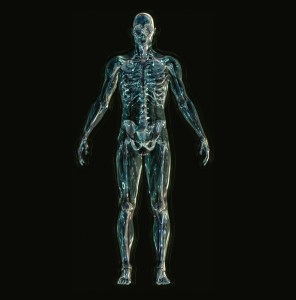
skeleton-1243818_1280Two is to restrain them. Typically a patient on a ventilator is restrained at the wrists and these are secured to the bed. Even a sedated patient can have these applied. This is for safety. Lastly, in a highly cooperative, ventilator dependent patient who has grown accustomed to living with the ventilator, they may neither be restrained or sedated. This tends to be more rare.

Let’s move on…

Note to authors everywhere: Know your anatomy. Gray’s Anatomy. The book . . . not the show.

Here’s a paraphrased example I read in a published novel. I’m not going to name the novel or author to protect the innocent. The purpose is to educate.

John Doe looked at the scar that ran along his right rib line, where a splenectomy incision might be.

Did you catch the problem? Your spleen is on your left side. Anatomy questions should be the easiest to research on Google University. Simply type in “what side is the spleen”. Go ahead . . . try it now. What I got was the “left” side in the first four of five options without even going to a web site.

Take the extra time to be sure the easy things are correct.

Medical question for you: What does it mean if you have dextrocardia?

Medical Errors in Manuscripts: People on a Vent Cannot Speak

Last post I posed a medical question. Why are there white stripes on IV catheters? Answer: If the catheter is lost in the patient, you can find it on x-ray.

Now for another common medical error seen mostly on television and at times in works of fiction.

Note to writers everywhere: Intubated people (those that are on a breathing machine) cannot talk or even moan.

I’ll start by covering the basics. The sound of talking (and other noises) is made when you pass air through your vocal cords causing them to vibrate. This is what your vocal cords look like.

Jeffbrent/Photobucket

When a patient is intubated, a large plastic tube called an endotracheal tube (ETT) is passed down the throat, through the vocal cords, and into the trachea. The end of the ETT should sit slightly above the carina. The carina is the bifurcation, or splitting, of your trachea into the right and left lung. The ETT is positioned there so both of the lungs get ventilated or inflated with oxygen.

This is what an endotracheal tube looks like.

Adventures of a Respiratory Care Student/Photobucket

When the ETT is fitted correctly, a person should not be able to make noise because air is not passing through their vocal cords, it’s passing through the tube. In an adult, the balloon at the end of the tube is inflated so that it fits snug inside the trachea. If we hear an intubated person speaking or moaning, we know that air is passing through the vocal cords again and something is wrong with the ETT.

It could be as simple as the balloon or “cuff” needing to be inflated with a little more air so it fits snug again. It could be as complicated as the patient has become extubated—meaning the ETT is no longer in the trachea and you go in the room and find the patient holding the tube in their hand.

Medical question for you: How are intubated patients kept from extubating themselves?

Medical Errors in Manuscripts: An IV is not a Needle

This week I’m going to cover three of the most common medical errors I see in manuscripts.

Note to authors everywhere: An IV is not a needle.

Product Photo

This picture is the IV as it comes out of the package. This is an over-the-needle catheter meaning the needle is encased inside the catheter. Once the needle is inside the vein, the white button (seen at the base of the blue part) is pushed and the needle is sheathed inside the bottom plastic holder. You can see the spring fills that compartment in comparison to when the needle is visible. This is a safety feature to prevent needle stick injury. Once the needle is gone, a small plastic catheter is left inside the vein. Not a needle. The needle is gone.

When you start an IV you get a “flashback”— meaning blood is visible in the catheter. Typically, once you get flashback, you advance the catheter and needle a little more (like one millimeter) into the vein. Then you’ll slide the catheter off the needle and advance it into the vein, popping the button to sheath the needle. Then you connect tubing or a cap to the yellow portion and you now have IV (intravenous) access.

Needle recapping is a no-no in the medical setting. Every healthcare provider is drilled to never recap needles. Many devices have safety features like this one so you don’t have to recap to cover the needle.

Did you know the hubs of IV catheters are color coded for size even across different brands? For instance, a yellow hub is a 24 Gauge catheter. And catheter sizes are inverse so the smaller the number, the larger the IV catheter is. A 24 Gauge would be the size for an infant versus an 18 Gauge would be the size for an adult patient.

Medical question for you: Why are there white stripes on the plastic catheter (the part that stays inside the patient)?

Author Beware: Proof’s Problem with HIPAA

Proof (not to be confused with my debut medical thriller with the same title) is a medical drama starring Jennifer Beals as renowned cardiothoracic surgeon Dr. Carolyn Tyler.

Dr. Tyler is recruited by billionaire Ivan Turing to investigate near death experiences (NDEs) as he is soon to face the other side due to a terminal cancer diagnosis.

Tyler is a skeptical atheist and believes death is the end— even though she’s had a NDE herself and longs to reconnect with her teenage son who died in a car accident.

Of course, Turing uses his wealth and a big donation to the hospital to obtain Tyler’s cooperation.

Through the course of her investigations, nearly every religious permutation of the after life is explored— past lives, reincarnation, and soul jumping among them.

The issue becomes when families become aware of Tyler’s investigations and want information that in real life she should never disclose. They’re clearly HIPAA violations. I’ve blogged extensively on HIPAA here, here, and here.

Why is HIPAA so important? It is the law. It’s what healthcare workers are instructed (pounded into the head) to protect every single day. It’s not taken lightly. Medical people have been fired for violating a patient’s privacy by disclosing healthcare related information.

However, the television show Proof seems to not understand what HIPAA entails.

In one instance, a mother who lost her son begins to believe his soul has inhabited another child’s body because he has the same rare blood type, same rare heart condition, and was a piano playing genius. The mother latches onto him and offers to pay for his medical care.

It becomes a sticky situation because the mother who lost her child begins to overstep her bounds and Dr. Tyler begins to believe she’s at risk for kidnapping this other boy over the loss of her son.

To prevent her from taking that step, she begins to list a litany of medical reasons why this patient isn’t her son. The problem is, this mother has no right to any of this information. It is a HIPAA violation.

In another instance, Dr. Tyler convinces a wife to donate her brain dead husband’s heart. Now, she has a vested interest in this happening because one of her patient’s with a rare blood type (evidently everyone in this show has a rare blood type) has been waiting for a heart for years and is running out of time.

The wife agrees and the heart is transplanted but the patient nearly rejects the heart. When the wife of the heart donor catches wind that this has happened (she seems to be hanging around the hospital after the donation has occurred) Dr. Tyler gives her detailed medical information on how the patient who received her husband’s heart is doing.

Again, this wife, even though she donated her husband’s heart, has no right to this information. In fact, donor and recipient identities are highly protected. It’s not that these families never meet, but it usually happens months after and is coordinated by the organ bank and not doctors on site.

In fiction, you can break the rules. Healthcare workers can disclose medical information but they should also face a consequence for it just like we do in real life. The plus, it dramatically increases the tension which is always the goal of any work of fiction.

Disasters and HIPAA

HIPAA, the patient health privacy law, is not only a medical/writing hot topic, but evidently a social media one as well.

Here at Redwood’s, I’ve blogged A LOT about HIPAA and writers violation of the act. You can read some of those posts by following the links: Part I, Part II, and Part III.

Let’s look at a recent example that was social media focused and revolved around the Moore, OK F5 tornado that struck on May 20, 2013.

People, in general, want to be helpful. That’s one reason why social media is becoming an avenue to try and locate lost loved ones. You’ll see missing children posters and even teens/adults posting pictures in hopes of finding biological parents that may have adopted them out.

During the crisis in Moore, an “ad” (poster, plea– whatever you’d like to call it) was put up on Facebook stating that a child had been found and said child was located at the hospital and gave the hospital’s number.

What surprised me, honestly, was the backlash of some against this photo decrying a HIPAA violation.

Umm. . . well . . . no. I don’t personally believe so.

In order to have a full fledged HIPAA violation, medical information has to be disclosed with a patient’s name. Since the sign had absolutely no medical information— there was no violation. Even if it had said the child was a patient (which is did not)— there still wouldn’t have been a violation because it didn’t disclose treatment and/or diagnosis.

This is really no different than calling up the ER and asking— “Hey, is John Doe a patient there?” Giving a patient location is not a HIPAA violation. Saying, “Oh, Yea– Johnny is here and let me tell you— he’s not feelin’ that broken femur after his blood alcohol came back at 0.5” is clearly a violation because you’ve disclosed sensitive medical information.

But I digress.

See the difference?

Let’s cut people some slack– particularly when a disaster strikes their communities. Recognize the heart of what they were trying to do— get parent and child back together.

And let’s all continue to pray for this community.

Author Question: Disclosing Protected Health Information Under HIPAA

Remember the nurse who committed suicide in the wake of the Australian radio DJ’s that posed as the Queen of England to get the medical staff to disclose private details of the Duchess?

I totally get, as a nurse, why she made that choice.

Every day, nurses face critical choices that can have dire consequences. Most often, I can say from being in this field for 25 years, that 99% of the time, medical people DO NOT have ill intentions toward their patients. They are not maliciously trying to harm people. Do mistakes happen . . . yes. But usually it is the result of a system wide problem.

This nurse that patched through the radio personality posing as the Queen of England probably was thinking, “Wow, the Queen! I better patch her through post haste. I wouldn’t want to do anything to upset the monarchy.”

She may have been star-struck– I don’t know. But we don’t ask for credentials over the phone. If you say your Britney Spears’s sister– why should I doubt you?

I can understand the horror this nurse must have felt when she learned of the prank. I know she likely feared for her job (and had every right to be fearful). I know she likely felt horrified that that one simple action of transferring a phone call led to mass attention being drawn her way.

Sadly, since I don’t know this nurse personally and am only guessing, this may have been the proverbial straw that broke the camel’s back.

HIPAA issues/violations can have dire consequences for the healthcare provider. We can lose our jobs.

In short, HIPAA is a set of laws designed to protect patient’s privacy. I’ve done a series on HIPAA that you can find here. Part 1, Part 2, and Part 3.

However, I recently got an author’s question that kind of took a new spin so I thought I’d cover it here.

Glenda asks:

In the novel I’m writing (my first), I have a young mother of a four-year-old who is in a coma because of an automobile accident hundreds of miles away from her home.  There are no other next of kin other than the child.  How can a minister who’s trying to help solve a mystery get more information about her condition? Who can the doctor disclose her condition to?  What information can be disclosed under HIPAA?  If you would address that in one of your future blogs, I would greatly appreciate it.  I’ve read through a lot of information but haven’t seen anything that addresses a situation such as this. Thank you so much!

Jordyn Says:

I think it will be hard for this minister to get information unless he became the appointed legal guardian over her (since she’s incapacitated and he’s caring for her son and they can’t find any other family.) This might be a better question to run by a lawyer– how could he become her legal guardian? The hospital is going to want someone they can go to. If he served that way— they would release information to him. Likely, he’d have to fill out a request through the medical records department.

In lieu of that– likely what he would be told would be the condition. Grave, Critical, Poor, Fair, Stable, Good— something along those lines without specific information.

In follow-up Glenda did ask her son-in-law who is a lawyer this question and here is her information after that consultation.

Glenda says:

My attorney son-in-law said that the minister would have to go before a judge to be a guardian ad litem (in South Carolina at least) in order to get medical information on the mother and to make decisions for the child while the mother was unable to do so.  Thanks for your advice!

My pleasure, Glenda. And best of luck with this novel.

******************************************************************************

Glenda Manus recently retired after teaching 30 years in an elementary school. Her love of reading good books prompted her to try and write one of her own. Though book writing is a challenge (Amen, sister!) she feels God is with her on the journey.