Author Question: Police Notification of Violent Injuries by the ER

Dale Asks:

I see in TV shows and movies people who are shot or stabbed go to get medical treatment and yet they never deal with the police. Or they refuse to go because they are afraid that it will get reported.  If a person is taken to the ER with a knife wound or gunshot wound, would the medical staff have to report it to the police?

Jordyn Says:

Police car lights close up. A group of policemen on the background.

Police car lights close up. A group of policemen on the background.

Yes, we have to notify the police if a person is shot or stabbed with nefarious intent. Knives can cause lots of wounds that aren’t criminally motivated. Think about the person slicing vegetables and cuts their finger. Knife wound . . . not criminally motivated. We wouldn’t call the police.

The most important aspect is whether or not the person is being truthful regarding their injury. It’s obvious if someone comes in with a gunshot wound that something criminal has likely happened.

If a person comes in with a knife stuck in their chest, we’re likely getting the police involved even if they say it was an “accident”. However, say a woman comes in with a defensive knife wound to the palm of her hand as she tried to keep her boyfriend from stabbing her, but she tells us that she cut it grabbing a knife from the bottom of a sink full of soapy water. If the woman doesn’t have any other suspicious injuries, we probably wouldn’t question her story.

In all honesty, we can only help patients as much as they are willing to help themselves. If they are truthful about the violence involved in whatever type of injury they have (particularly beatings from domestic abuse) then there is help we can offer them.

Ever wonder why you’re asked when presenting for medical care whether or not you feel safe? This is inherently because we know, as healthcare providers, that it is hard for victims to speak up. That question is your open door. If you feel you can’t answer honestly at the time, then look for a way to speak to your nurse or physician privately. Sometimes we try and facilitate a conversation like this by asking other visitors to step out of the room. If we do this, it should signal to you that we are suspicious that your injury did not happen the way you stated and we’re trying to find a way to help you.

It is true a patient might not seek medical treatment for fear of police involvement. The same can be true for child abuse injuries. A parent may not seek treatment or delay treatment for fear of being reported to child protective services and/or the police.

See how the different variables can vary to increase conflict in your story?
Author Question: Bullet Wound to the Chest

Gwyn Asks:

I’m writing a scene in which a cop is injured during a confrontation with a suspect.  I’d like to tell you about the scenario I have in mind and hopefully you can tell me how realistic it is.

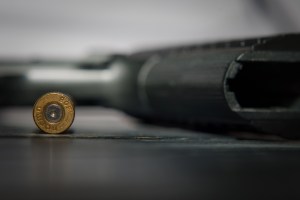
ammunition-2004236_1920Cop, mid-thirties, in excellent health and physical condition is shot with a low caliber bullet from about 10 feet away.  The bullet hits his chest, goes through the lung and exits out the back.  He’s got colleagues nearby who administer basic first aid and the EMTs get there within 5 minutes.  Say about 15 minute drive to the hospital.  They radioed ahead so the hospital is expecting them and has an OR ready.
First of all, what are the chances of survival?.  Second of all, assuming survival, what are the chances (best case scenario) of full recovery – to the point he can return to active duty.  How long would the recovery time be, how soon would he get out of the hospital, and what complications — pneumonia, blood clots, etc should the doctors be worried about?

Finally, if a full recovery is highly unlikely, are there little changes I can make to the scenario to make it more likely?

Jordyn Says:

Hi, Gwyn! Thanks so much for sending me your question.

In short, this is a survivable injury.

You don’t specify in your question whether this police officer is shot in the right or left chest. Right chest would probably be preferred as there are less vital structures on the right side of the chest then the left.

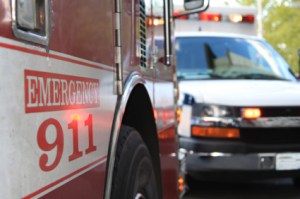
ambulance1You give your victim immediate first aid and EMS responds quickly. Keep in mind that you’re going to need a paramedic to respond to give more advanced field procedures. A basic EMT is limited in what they can do— CPR, wound dressings, assisting the patient with some of their own medication administration. Depending on the state, some EMTs can start IVs, so if your novel is set in a specific location then I would research this for that area. Assuming he has a paramedic respond then he’ll get an IV, IV fluids, oxygen, and possibly pain medications. Of course, a set of vital signs and cardiac monitoring.

In an urban setting, a drive time of fifteen minutes to the hospital seems a little long. If a rural setting then you’re probably fine but you might need to adjust there as needed.

A bullet passing through the chest is likely going to puncture and deflate the lung. This character will need a chest tube to get the air out of his chest and reinflate the lung. A chest tube can be placed in the ER. This patient would get a CT scan of his chest. If the medical team isn’t worried about any other injuries than this patient may not even need to go to the OR.

A patient with a chest tube will need to be admitted into the hospital. How long it takes the lung to reinflate depends on the size of the pneumothorax or the degree to which the lung has collapsed. Generally, a patient’s chest tube is connected to a drainage box that uses suction to help the lung reinflate. Patients with this type of injury will get daily (or every other day) chest x-rays to see how the lung is expanding. After the lung is fully expanded, the suction is stopped, but the box remains in place. This is generally referred to as placing the chest tube to water seal.

If the lung stays expanded to water seal for one to two days then the medical team would feel good about removing the chest tube. Then the patient would be observed for another one to two days to make sure the lung stayed reexpanded.

Pending any complications, you’re looking at a hospitalization of 4-7 days. Pneumonia is probably your more likely complication. Having a tube in your chest hurts. Because of this, patients don’t want to take deep breaths. This can lead to the smaller air sacs in the lung staying collapsed and trapping bacteria which could lead to pneumonia.

If you add a complication like pneumonia, then you’re easily adding another one to two weeks that he’s out of commission.

If you just stick with a “simple” collapsed lung I would say he’d be out of work for about two weeks. He won’t be physically 100% of what he was before the injury but he should feel back to his physical baseline in about a month.

I would say he can work, but he’s going to have some physical limitations. It would be up to his department what his physical capacity needs to be before he can return to work. Half days at a desk job is not unreasonable for a few weeks.

He’d likely become short of breath during any exertional activity (like running after a bad guy). However, considering his physical shape, he should bounce back fairly quickly.

A nice overview can be found here.

Hope this helps and good luck with your novel!

A Chance to Win 45 Books And a Kindle Fire!

Hello Redwood’s Fans,

romantic-suspense-i-redwoodWe’ll get back to our usual medical mayhem on Wednesday. Today is just a brief note to let you know about this fabulous contest where you have the chance to win 45 romantic suspense novels and a Kindle Fire. I’ll be giving away my debut medical thriller, Proof. You can find the contest by clicking on this link.  Don’t delay as the contest ends tonight— February 20th.

Good Luck!

Author Question: Complex Traumatic Injury

Rachel Asks:

I love your blog, and I have a fictional medical question for you.

motorcycle-654429_1280I have a young teen character in the near future (about 2075) who is a motocross racer. She has a horrible crash near the end of her freshman year of college and suffers a large injury – she has to stop school.

I want her to recover in 3-6 months, well enough to go to school, and show up full of plates and wires. I was thinking a severe shoulder fracture would do it, and assuming she got good enough PT, she could eventually race again (and even move onto a more demanding kind of racing.)

Is this a likely enough scenario? What would be a typical range of wires and plates to put in? I want a specific number for her to obsess about as she overcomes her fear of biking. Other injuries you could suggest? What about the recovery timeline? I need her off the bike for about 6-9 months, but some of that could be psychological, not physical recovery.

In this novel, there is some integrated AI technology. Obviously, the answer can incorporate speculative medical advances, but I’d like to know what is typical today so I can make them sound convincing.

Jordyn Says:

My first impression is that the shoulder may not be the best option if you want lots of plates and screws. You have to consider the bones that make up the shoulder and how those injuries would be treated. The scapula is very hard to fracture and likely wouldn’t be repaired that way. I’ve only actually seen one scapula fracture in my entire ICU/ER career in the span of almost 25 years. Collar bones we basically let heal on their own without surgical intervention. Even the upper arm— at least in kids— is not even splinted if you can believe that (most often)! Ligament repairs, labral tear, rotater cuff repairs, etc, could potentially take your time frame (with some complications) but would not involve a lot of plates and screws.

If you wanted to stick with an upper body injury— you could do amputation and then have your character learning to use a prosthetic which might tie in nicely with your integrated AI technology.

If you want to stick with a ton of plates and screws, alternative injuries could be a pelvic fracture or a complex upper or lower (or both) leg fracture. For instance, you could probably Google– x-rays of pelvic fractures repaired using plates and screws or x-rays of lower leg fractures repaired using plates and screws as references to come of with a specific number for her obsessive counting, etc.

Hope this helps and good luck with your story!

Laurie Alice Eakes: The Midwife Versus The Physician

Physicians Take over the Practice

lady-in-the-mistFor centuries, even millennia, midwives served as the primary practitioners called in to assist in childbirth. Then a family of ?French Huguenots, established as “man-midwives” invented the forceps, an instrument resembling two spoons with a handle holding them together. The Chamberlain family kept this invention a secret for over a hundred years. When it was sold to, or leaked to the public, other physicians began to use it and midwives began to lose their power over child birth, except in rural areas.

At first, midwives shunned the use of forceps. By law in some places and practice in others, they possessed small enough hands to pull out the baby in difficult births. After a while, though, laws changed and Midwives were not allowed to use forceps.  By the beginning of the nineteenth century, doctors were also using opiates to relieve the pain of childbirth.  Unfortunately, opium, as noted In Martha Ballard’s diary, A Midwife’s Tale, tended to prolong and even stop labor.  In the nineteenth century, ether and chloroform replaced opiates, especially after Queen Victoria allowed herself to be sedated during childbirth.

Lying –in hospitals came into practice, especially for poorer women. These were used as training fields for physicians wanting to deliver babies. Although germs were little more than a myth to medical practitioners until Joseph Lister and Louis Pasture proved their existence and harmfulness in the latter third of the nineteenth century, midwives and physicians made the observation that women who gave birth in hospitals suffered from childbed fever more often than did women who gave birth at home.  Women attended by midwives also had a lower mortality rates than did women attended by physicians.  After all, man midwives often went straight from an autopsy to the birthing chamber without washing their hands.

Why physicians strove to take over obstetrical practice is open to speculation.  Evidence, however, leads one to suspect that the motive was for financial gain.  Being men, thus having more power than women at that time, suppressing female childbirth practitioners was all too easy and financially lucrative.

Author’s Note: This article is adopted from a paper I delivered at the 1999 New Concepts in History conference under the title “Women of Power: Midwives in Early Modern Europe and North America”. My sources vary from newspapers, to diaries, to books difficult to obtain outside of a university library system, as many are hundreds of years old. If you wish to learn more, Google Books has some fine resources on childbirth practices in history.

*********************************************************************************************lauriealiceeakesMidwives historic role in society began to fascinate Laurie Alice Eakes in graduate school. Before she was serious about writing fiction, she knew she wanted to write novels with midwife heroines. Ten years, several published novels, four relocations, and a National Readers Choice Award for Best Regency later, the midwives idea returned, and Lady in the Mist was born. Now she writes full time from her home in Texas, where she lives with her husband and sundry dogs and cats.
You can read an excerpt from Lady in the Mist here and discover more about Laurie Alice Eakes at her website.

***This is a repost from December 1, 2010.***

Author Question: When Was Pregnancy Related Anemia Discovered?

Robin Asks:

I’m looking but I can’t find gestational anemia. I need to know if they would have diagnosed that in 1912 and what they might have called it. If it was diagnosed, what treatment might they have prescribed?

Jordyn Says:
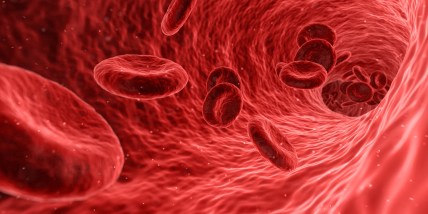
blood-1813410_1920
First of all, I’ve never personally heard the term gestational anemia so I started my Google search with “when was anemia first discovered” and then started narrowing it down from there to pregnancy related anemia. I wasn’t having much luck on doing a basic Google search and decided to head over to Google books where I’ve had better luck with historical questions.

There, I found a book called An Antropology of Biomedicine and from that found the following information:

The discovery of the link between macrocytic anemia (a lack of red blood cells in which those that remain are swollen) and folate (a water-soluble form of vitamin B) was first made in India in 1928, when a British scientist Lucy Wills traveled to Bombay to work with “Mohammedan women” who were commonly found to have this particular form of anemia during pregnancy.

So, it looks like the discovery was made after your time frame, Robin.

Fitbit Saves Man’s Life

fitbit

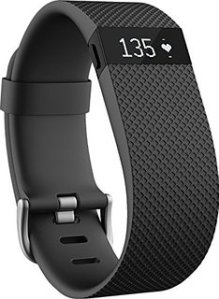
Fitbit Charge

If you know me and this blog then you know I’m fascinated by weird and interesting medical things. Now I know you might be thinking, “Of course! Fitbits help improve physical activity so that’s what saved this man’s life.”

It’s so much better than that!

This case was reported in the September 2016 issue of the Annals of Emergency Medicine. It describes the case of a 42 y/o male who was a known seizure patient. Emergency services were called when the man suffered a seizure. Upon EMS arrival, the man was noted to be in a postictal state and also in a rapid heartbeat called atrial fibrillation which they treated with IV medication.

Upon arrival to the emergency department, the man continued to be neurologically intact, though still a little sleepy from his seizure. He continued to have atrial fibrillation and the hospital had a protocol that favored electrical cardioversion for a-fib if the patient had been in the rhythm for under forty-eight hours.

Problem was, this man didn’t have any symptoms with his irregular, fast heartbeat. Someone on the medical team noted him to be wearing a Fitbit— specifically one that monitored heart rate and they retrieved the data from his smart phone. From that information, they could clearly tell when their patient went into the abnormally fast heart rate and were able to treat him safely with electricity.

Using activity trackers that specifically monitor heart rate can be useful in many medical conditions where the patient’s heart rate plays a role. I think it would be particularly useful with a particular fast heart rate called SVT (supraventricular tachycardia).

This can be a particularly sneaky rhythm to catch and it would be possible for a patient to be diagnosed with something like anxiety simply because we were unable to ever catch the rhythm. Even patients who receive 24-48 hour Holter monitoring might not have episodes captured.

It would even be useful in capturing certain rhythms that cause very low heart rates and could cause the patient to black out.

The crux is— it wouldn’t tell us the exact rhythm— only that the heart rate was low or high, but from that information we could look further.

Now, I’m thinking furiously about how to use this in a novel.


Author Question: Surviving Stab Wounds to the Abdomen

Anonymous Asks:

I have a character in my story who is stabbed three times with a three inch, narrow blade trench knife in the abdomen. I’m trying to avoid the guts or arteries and make it as non-lethal a spot as possible. He is a doctor and also a spy. I would like him to live and make a complete recovery.

He is two hours away from a hospital and has a friend to help him get there. Here are my questions:

1. Would it be feasible for him to live that long while he gets to the hospital for treatment?

2. Would he want to leave the knife in during travel time so he doesn’t bleed to death?

3. Or do I need to rework the scene so he’s closer to the hospital? If two hours is too long, what’s the maximum time he could have in travel before it’s too late?

Jordyn Says:

anatomy-254129_1280This is an example of all things are possible, but not necessarily probable. Of course, people survive devastating injuries every day. Miracles do happen. This is the category I would put your character in to.

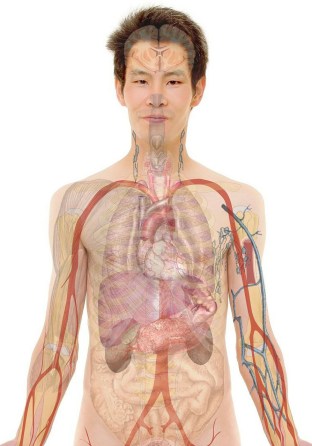
The largest problem with him surviving these injures in the length of the knife and how many stab wounds he has. Three inches is long when it comes to knife wounds— particularly if the full length is buried into the abdominal area. We have to operate on a worst case scenario until the patient proves otherwise. Looking at the picture to the right, you can see all that is located in the abdomen and how likely it is that something devastating to this patient would be punctured or nicked.

If you want to keep the scenario as is, then I would have all the punctures be to the lower abdomen and to either side. This could puncture the intestines and bladder. These would need to be surgically repaired, but should be survivable (if the bleeding is minimal) for a couple of hours.

You’d definitely want to avoid the left upper and right upper abdomen which house the spleen and the liver. If these are punctured, your character would likely bleed out within two hours. Also, more midline to the abdomen is the descending aorta (a very large blood vessel), which also would lead to rapid hemorrhage and low survivability.

Leaving the knife in is up to you as an author. I could see his friend doing either thing. In a panic, he removes the knife. Or, maybe he has some medical knowledge where he thinks leaving it in place might be a good idea. I would pick whatever increases the tension for your scene.

Two hours is reasonable if you pick the injuries I describe above. I would caution you, though, to give the reader an image that there is little bleeding and the pain is somewhat tolerable. Rapid bleeding, a hard distended belly, accompanied by signs of shock (rapid heart rate, rapid breathing, sweating, paleness, clammy skin) would be poor prognostic indicators for surviving two hours.

Hope this helps and good luck with your novel!

Sarah Sundin: WWII US Army Hospitals Part 3/3

This is Sarah’s final installment on WWII Army Hospitals. I’d like to thank Sarah for all her hard work on these terrific posts. Click the links for Part I and Part II.

US Army Hospitals in World War II—Part 3

Ruth squatted beside his cot. “Have you ever flown before, Corporal?”

            “No, ma’am. A man’s meant to stay on the ground.”

            “How long did it take you to get to England?”

            “Almost two months, ma’am, zigzagging around them U-boats.”

            “Mm-hmm. Well, tonight you’ll have dinner in New York. You may change your mind about flying.”

a-memory-betweenIn my novel A Memory Between Us, the heroine becomes a flight nurse, pioneering medical air evacuation. If you’re writing a novel set during World War II, a soldier character may get sick or wounded, and you’ll need to understand how patients were evacuated from the battleground to the hospital and perhaps taken stateside.

In my first post,  I discussed the chain of evacuation. In my second post, I discussed more details about mobile and fixed hospitals, and today I’ll cover evacuation of the wounded.

Manual Transport

On the battleground, medics or fellow soldiers could manually carry a wounded man further to the rear for aid. Methods included the supporting carry (walking side-by-side), the arms carry, the saddleback carry (piggy-back), and the fireman’s carry.

Litter Transport

American litters were made of canvas stretched over aluminum or wood poles with stirrup-shaped feet to keep them off the ground. A litter could be carried by two people, but a litter squad consisted of four men, to rotate if traveling long distances and to assist over obstacles. Ideally, litter transport was only used for short distances, but in mountainous or forested or swampy terrain, litter transport was the only available means. Mules were often used in the Mediterranean Theater to carry litters in rocky, mountainous terrain.

Motor Transport

Ambulances were used to transport patients, usually from an aid, clearing, or collecting station to a field hospital, or for transport further to the rear. Ambulances could carry seven seated patients or four patients on litters.

Water Transport

Jeeps were often used, both on the battleground and to transport further to the rear. Rugged and maneuverable, jeeps could cover terrain inhospitable to ambulances. With litter brackets, a jeep could carry two patients. Armored divisions also used light tanks to transport their wounded.

During an amphibious landing, the best way to handle the wounded was to send them back on departing landing craft, which carried them to hospital ships off-shore. Patients could be removed from danger and transported quickly to get needed care.

Hospital ships were used offshore after an invasion to care for the wounded before field and evacuation hospitals could be set up. They also transported patients who needed long-term care to general hospitals further to the rear. Another use of hospital ships was to transport to the US any patients who needed long-term convalescent care or those who qualified for a medical discharge. They carried several hundred patients and delivered full medical care, but transport took a long time and carried the danger of enemy attack at sea.

Rail Transport

Hospital trains were used within theaters of operation to transport patients from one hospital to another. They were used in the continental US, Britain, continental Europe, India, and North Africa. They could carry several hundred patients with excellent medical care.

Air Transport

Medical air evacuation was new and revolutionary, but by the end of the war, it proved successful. Planes can traverse inhospitable terrain or dangerous seas—and quickly. At the front, the wounded were gathered at collecting stations at airfields. C-47 cargo planes carried 18-24 litter patients or a higher number of ambulatory patients further to the rear. A team consisting of a flight nurse and a surgical technician cared for the patients in flight. The larger C-54 cargo plane was used for trans-oceanic evacuation. Danger still existed, both from the inherent risks of flight and also because the planes carried cargo and couldn’t be marked with the Red Cross.

Resources for Research

Office of the Surgeon General. Medical Field Manual: Transportation of the Sick and Wounded. Washington, DC: US Government Printing Office, Feb. 21, 1941 (available free on-line at http://www.ibiblio.org/hyperwar/USA/ref/FM/index.html ). Please note the date—some of the material, especially about air evacuation, became quickly outdated.

For better information on air evacuation, please see:

Links, Mae Mills & Coleman, Hubert A. Medical Support of the Army Air Forces in World War II. Washington, D.C.: Office of the Surgeon General, USAF, 1955.
*********************************************************************************************
sarahsundin2
Sarah Sundin is the author of the Wings of Glory series from Revell: A Distant Melody (March 2010), A Memory Between Us (September 2010), and Blue Skies Tomorrow (August 2011). She has a doctorate in pharmacy from UC San Francisco and works on-call as a hospital pharmacist.

***This content is reposted from December 17th, 2010.***

Sarah Sundin: WWII US Army Hospitals Part 2/3

This week, I’m pleased to host author Sarah Sundin as she shares some of her wonderful research that served as the backdrop for her Wings of Glory Series. You can find Part I here.

US Army Hospitals in World War II—Part 2

Ruth passed precise military rows of the hospital’s Nissen huts. Redgrave Hall stood to the west, but she headed south across the road the ambulances used and entered a lightly wooded meadow and another world. How could one family own so much land?

          If Ruth had resources like that, she wouldn’t be in a fix.

a-memory-betweenIn my novel, A Memory Between Us, the heroine serves as a US Army nurse based in England. If you’re writing a novel set during World War II, you may need to write a scene set in a military hospital, and you’ll need to understand Army hospitals.

Last post, I discussed the chain of evacuation, today I’ll discuss more details about mobile and fixed hospitals, and on the next post, I’ll cover evacuation of the wounded.

Mobile Hospitals

Field hospitals (400 beds) and evacuation hospitals (either 400 bed or 750 bed) arrived within a few days of an invasion and followed the army, staying about thirty miles behind the front. They were close enough to treat patients quickly and send them back to the front quickly as well.

These hospitals relied on mobility. They usually used canvas tents, but also used schools, barracks, hospital buildings, hotels, Mediterranean villas, and an Italian stadium. A few days before a move, the hospital stopped admitting patients and evacuated their current patients to other hospitals. They packed their equipment and personnel into trucks, advanced, set up, and were ready to admit patients within hours.

When ambulances arrived, triage officers sent patients to pre-op, medical, shock, or evacuation wards as needed. Surgical teams worked twelve hours on, then twelve hours off.

In the European Theater (England, France, Belgium, Germany), the field hospitals stayed closer to the front, with the evacuation hospitals further to the rear. In the Mediterranean Theater (North Africa, Sicily, Italy, southern France), field hospitals and evacuation hospitals were often used interchangeably. Both theaters practiced “leapfrogging” as the front advanced—hospital A would pass hospital B, then hospital B would pass hospital A. This reduced the frequency of moves.

Fixed Hospitals

The station hospitals (250, 500, or 750 bed), general hospitals (1000 bed), and convalescent hospitals (2000 or 3000 bed) were set up far from the front to keep patients safe from danger, but also to keep them in the theater, which made it easier to return the soldiers to duty. In England before D-Day, field and evacuation hospitals waiting for the Normandy invasion functioned as station hospitals to care for patients.

In each theater of operations, fixed hospitals operated in what was called the “Communications Zone.” In the European Theater, the COMZ was originally in England, then as the Allies approached the German border, the COMZ extended to include Normandy and Belgium. In the Mediterranean Theater, Morocco served as the first COMZ, then Algeria. When the Allies invaded Sicily and Italy, North Africa was the COMZ, and as the front advanced, the COMZ was established in the Naples area of southern Italy. In the Pacific, fixed hospitals were first established in Hawaii and Australia, then followed into secured regions.

Fixed hospitals moved less often and occupied more permanent facilities. American units used some standing hospitals in host or occupied countries, but most were a collection of Nissen huts, 20-ft by 40-ft corrugated tin semi-cylinders. In England, these hospital complexes were often placed on estate grounds, and had concrete floors, flush toilets, clean water, and were heated by coal-burning stoves. In the Mediterranean and Pacific, facilities were more primitive but improved over time. In these theaters, mosquito netting was draped over the beds to prevent transmission of malaria.

Fixed hospitals in the Zone of the Interior (continental United States) enjoyed the benefits of modern buildings and facilities. However, shortages of medication, equipment, and personnel were always a problem.

*********************************************************************************************
sarahsundin2
Sarah Sundin is the author of the Wings of Glory series from Revell: A Distant Melody (March 2010), A Memory Between Us (September 2010), and Blue Skies Tomorrow (August 2011). She has a doctorate in pharmacy from UC San Francisco and works on-call as a hospital pharmacist.

***This content is reposted from December 15, 2010.***