Men Who Kill Women

Regular followers of my blog know that my medical nerdiness can reach into other areas of science like forensics and psychology. I was actually doing a search on women who kill men when I came across this very interesting article on the opposite— men who kill women. Information in this post comes directly from the Vice article entitled Inside the Minds of Men Who Kill Women posted August 10, 2015.

Married couple and criminologists from the University of Manchester, Rebecca and Russell Dobash, spent a decade interviewing men serving life sentences in seven different British prisons. According to the article, this was the largest study done to the date of the posting. They have also published a book on the subject (photo right).

There were some consistent similarities that pertained to these men. “They found that many women are murdered by jealous, possessive, and controlling men.”

Here are some of the highlights.

1. In the majority of cases, men kill out of sexual jealousy. They are possessive. And this possessiveness can also lead these men to kill others close to their victim like her children, family, and friends.

2. Many had problematic childhoods and adulthoods that consisted of alcohol use and unemployment. The authors suggest that the use of alcohol is common to Britain and doesn’t necessarily mean illicit drug use as perhaps is the case in the US. Though they don’t specify this difference.

3. Many are sexual predators.

4. Older women, over the age of sixty-five, are considered vulnerable and therefore worthy targets. Living alone does add risk.

5. The murderers were largely not remorseful of their crimes.

6. Surveillance programs that force violent men (before they murder) to understand denial, remorse, and empathy could prove helpful. Also suggested are developing youth programs to teach people how to handle breakups.

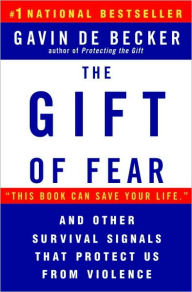
I also highly recommend all women read The Gift of Fear by Gavin de Becker. I think it should be required reading of all girls over the age of fourteen. The sooner they can learn these skills the better.

Escaping Hunted

Hunted was a new reality show that aired earlier this year on CBS. Nine pairs of people “go on the run”. If they survived twenty-eight days they won $250,000 per team. This show was really interesting as an author to watch because it highlighted what kinds of tactics law enforcement uses to capture evaders of justice. Some things I didn’t even know existed.

Here are things NOT to have your characters do if they are on the run from law enforcement.

1. Don’t contact anyone you know. The couples that lasted the longest really stayed away from their network of friends and family.

2. Internet use will be your downfall. The hunters, as they are called, comb through all your social media and even use it against you. In one instance, they saw one contestant loved a particular basketball team because he had photos of being at their games and wearing their jerseys. The team’s name ended up being a password to one of his online accounts. They also would post “wanted” posters on contestant’s Facebook page asking for help in locating “fugitives”.  Also, deleting your social media accounts doesn’t really work. “Nothing is ever erased on social media.”

3. They will access everything to try and find you. They can access real time banking information. Vehicle registration. Closed circuit TV cameras. They’ll look at your old high school yearbooks. There are systems in place on major highways that automatically capture and scan license plates and they can put an alert out for it.

4. Burner phones. Burner phones may not necessarily be the answer. Although the phone may not pop up with a name, they can see the phone number that you’re calling from on the receiving person’s phone bill. A new, unknown number calling? They’re going to guess that it’s you. Once they pin down the phone number, calls between you and people you assume are safe can actually be listened to.

5. Telematics. In all cars built after 2010, GPS satellites can be used to track your car.

6. Mail Cover. Did you know the post office takes photos of every letter sent through their system? Yea, me either. A warrant can be issued for a particular address to try and find you. Here’s an interesting news story specifically about mail cover.

7. Don’t do something you would normally do. If you’re a parent, don’t call your children. If you’re an outdoor expert, maybe don’t go camping. Many duos were successful if they stayed off grid, but many also grew tired of being on the run after a few weeks and would contact friends and/or family for respite. That’s when they were usually caught.

Hunted was a fascinating show of real life cat and mouse. If you’re an author, it’s definitely worth the time in research to take in the episodes.

Only two of the nine couples made it twenty-eight days. Do you think you could last that long?

Why Do Some Nurses Prefer Night Shift?

I was reading a newly released medical thriller when I came across this passage:

“Nurses on night shift were often young (lack of seniority meant they had no choice but to work unpopular hours) and surly (i.e., pissed off about it.)”

Yes, that’s a quote. Perhaps I’m being oversensitive (okay, of course I am), but this is my profession and I don’t like me or my colleagues to be painted in such broad strokes so I thought I would give some reasons why some nurses actually prefer to work nights and are even very happy about it. These are not numbered according to importance.

1. Night Shift Differential. Nurses are generally paid a nice differential for working nights. This varies widely depending on the institution but can be a nice bump in pay. This may translate into working less and being able to spend more time with family or getting more bang for your buck for working the same hours.

2. We’re just night people. I know day shift people don’t understand that it is easier for some people to stay up all night. Our clocks are a little bit different than most other people. That’s a good thing, right? You don’t want your night nurses falling asleep and it’s a good thing some nurses like working nights because hospitals run 365/24/7. Personally, I think a crime has occurred if I have to be up before the sunrise. It feels wrong on a cellular level.

3. Child Care Reasons. Some families like to juggle one (or even both) parents working nights to limit or stave off daycare costs.

4. Less Administration on Site. This might be the night shift untold secret, but there are infinitely less administrators around during the night shift which means less overall scrutiny. I don’t mean to say night nurses are crazy with power and do inappropriate things, but there is a more relaxed feeling on nights because of this. Government entities don’t pop in at 0300 for a surprise inspection— though they might now that I’ve written this.

5. More Relaxed Pace. Many nurses prefer nights because of the more relaxed pace. Fewer tests and procedures to take your patient to. In the ER setting, less overall patients as the night goes on (though you also have less nurses to take care of those patients.) For inpatient and ICU nurses, doctors round during the day which is when the most orders are generated. Not having as many tasks leaves more time to truly connect with your patient. When we have only one or two ER patients at 4AM— we can spend a lot of time teaching and/or visiting with families.

6. They are smart, scrappy people. Not to say this isn’t true of day shift nurses, but night shift nurses usually have less resources available to them overnight. There are fewer people— fewer bodies to help in a code. Support services like lab, pharmacy, central supply, etc may not staff people 24/7 so if a patient needs something, night shift nurses have to think outside the box.

Overall, what raised my ire about these two small sentences from this author (a male physician) was the “surly” connotation. Even if a nurse doesn’t like to work nights, they do not take it out on their patients because of it. Are there cranky, surly nurses? Sure.

However, you can find them on both days and nights.

Love your night shift nurses. They are there for you when everyone else sleeps. And many are highly professional, excellent nurses with years of experience.

Civil War Medicine: Part 4/4

Today, we’re finishing up with Erin Rainwater’s amazing series on Civil War medicine. You can find Part I, Part II, and Part III by clicking the links.

Civil War Medicine: Hapless or Heroic in Retrospect? 

History has not always been kind to Civil War practitioners of medicine. The methods discussed in the previous posts seem barbaric to us now, and the lack of medical knowledge regarding foundational principles such as asepsis, infection, and sanitation is regarded as tragically antiquated. Their twenty per cent mortality rate is unacceptable by today’s standards. More horror stories abound. From our retrospective and often condescending viewpoint, we smugly judge one century’s standards by the current set. This is not only an unfair but a flawed verdict. The inadequacies of those medical care deliverers have received considerably more attention than their accomplishments, which were many.

If judged by the standards of their day, Civil War doctors and nurses should be hailed as remarkably successful.  With the existence of bacteria still only theoretical, with the available instruments and anesthesia, and with the indescribable numbers of patients inflicted upon them, the fact they saved lives in such unhoped-for numbers is a credit to their skill, creativity, and tenacity.

In the war that preceded this one, the Mexican-American War, ten men died of disease for every one killed in combat. During the Civil War, that ratio was reduced to 2:1. That alone is measurable evidence of an enormous advancement in medical care in the span of under two decades, much of which came about as a result of the war. The creation of frontline field hospitals, ambulance services, and the utilization of female nurses should cause modern historians to conclude that the maligned medical practitioners during the Civil War should be reckoned as heroic, not hapless. Their crude system of triage, setting aside men wounded through the head, chest or abdomen because they would most likely die seems brutal, but with the knowledge and little time available, it allowed surgeons to save those who could be saved. Modern mass casualty triage is not so far removed from this practice.

Aside from medical care administered to the living, advancements in post mortem measures took place as well. Prior to the war, embalming was usually only done to preserve specimens for scientific study. Because many families of killed soldiers desired to bring them home for burial, embalming became more commonplace.

I have only skimmed the surface in relating how the War Between the States necessitated numerous adaptations in the delivery of medical care, and how we benefit even today from some of those changes. These are just some examples of not only medical but also the many moral and social advancements that came as a result of the American Civil War. I truly hope these four posts have been educational and entertaining, and that perhaps this information will help you gain a greater appreciation of our sesquicentennial commemorations over the course of the next four years.

REFERENCES:

Burns, Stanley B., MD, FACS, “The Naldecon Gallery of Medial History,” Bristol Laboratories, © 1987.

Civil War Manuscripts, Library of Congress.

Downs, Robert B., Books That Changed Amercia.

Miller, Francis Trevelyan, ed., The Photographic History of the Civil War, Prisons and Hospitals

Ward, Geoffrey C., Burns, Ric, and Burns, Ken, The Civil War, An Illustrated History. Alfred A. Knopf, Inc., © 1990.

The Day Richmond Died.

www.civilwarhome.com/medicinehistory

www.civilwarsurgeons.org

www.members.cox.net/cwsurgn/civilwar

http://home.nc.rr.com/fieldhospcsa

*********************************************************************************************Erin Rainwater is a Pennsylvania native whose trip to Gettysburg when she was twelve enhanced her already deep interest in the Civil War. She attended Duquesne University in Pittsburgh, and entered the Army Nurse Corps upon graduation.  Serving during the Vietnam War era, she cared for the bodies and spirits of soldiers and veterans, including repatriated POWs and MIAs. Now living in Colorado, she is a member of a Disaster Medical Assistance Team, and has been deployed to disaster areas around the country. True Colors is partly based on her military and nursing experiences as well as extensive research. She also authored The Arrow That Flieth By Day, a historical love story set in 1860s Colorado, and Refining Fires, a uniquely written love story that was released in July, 2010. Erin invites you to visit her “virtual fireside”.

***Content reposted from January 31, 2011.***

Civil War Medicine: Part 3/4

We’re continuing Erin Rainwater’s four part series on Civil War Medicine. You can find Part I and Part II by clicking the links.

Conditions and Treatment

Unlike today, the majority of soldier deaths during the Civil War were attributed to disease. Unsanitary and close-quarter living conditions in the camps led to outbreaks of dysentery, typhoid, measles, smallpox, chicken pox, throat distemper (diphtheria), and other diseases. Scurvy and other nutritional disorders were prevalent, as was typhus from lice and fleas.

Mosquito-borne illnesses such as yellow fever and “ague” (malaria) also posed a threat, although they were believed due to “miasmic vapors” from stagnant waters. Minor wounds such as from a splinter, a scratched mosquito bite, or the rub of a boot could become infected and ultimately lead to septicemia and death. Lacking scientific knowledge regarding the causes of disease, physicians depended on a few standard remedies, such as quinine, calomel, ipecac and opium to cure most symptoms. Mercury was used to treat venereal disease, although it only cleared the symptoms and was not a cure. Nitric acid was poured on open wounds to kill infection. It also seared the flesh.

The physiology of some conditions, such as the gastrointestinal system, was surprisingly well known back then. The digestive process was understood, as well as the length of time for various foods to be digested. Much of this knowledge came from Dr. William Beaumont’s experiments and studies, including the observation of an open stomach wound in a man who’d been shot.

Gastrostomy tubes were used for feeding patients with such wounds, and drains were placed to remove infectious drainage and gastric juices. Cardiopulmonary-wise, physicians used stethoscopes to discern crepitant rales and rhonchi, heart murmurs, and friction rubs. They used percussion techniques in the physical exam to appreciate dullness and diminished resonance of the chest and abdomen. Mercury thermometers were available but rarely used. Fever was considered a disease, and temperatures were taken only to investigate unusual maladies or those of special concern. Doctors then were faced with some of the same frustrations of today: addicts pilfering drugs and alcohol, and well-intentioned family members offering food to patients with serious stomach and intestinal ailments and wounds.

Wounds, of course, were the other consideration in this war of inconceivable casualties. As bullet manufacturing changed during the war so did the wounds they left. The small- caliber round balls shot from a smooth bore musket often produced a different type of wound than the newer, faster velocity, conical-shaped slugs later produced. All had the capacity to incur catastrophic injuries beyond repair. In battlefront hospitals, there were few alternatives to amputation of limb wounds, and an experienced surgeon could perform the procedure in under ten minutes.

Later in the war, some surgeons experimented with blood vessel resection, but amputation remained far more common. Soldiers with head and chest wounds were given a poor prognosis, and often not considered treatable. Bullet wounds were the most common by far, but those from canister, cannonballs, shells, sword and saber had to be reckoned with as well.

It was considered routine that combat wounds become infected. Pus was considered “laudable” because the body was discharging poisons, a necessary adjunct to proper healing. In the rare instances pus did not appear, it was called “union by first intention” and considered an utter mystery. Yet there were five types of infections acknowledged as abnormal.

A triad of infections referred to as “hospitalism” included gangrene, erysipelas (a skin infection we now know is caused by strep), and pyemia (septicemia, or “blood poisoning.”) The mortality rate from these hospital-acquired infections reached ninety-five per cent. The survivor of a “routine” infection often became the victim of osteomyelitis, a chronic bone infection, and was doomed to a slow and painful death from a festering wound where entire sections of bone would be eaten away. Tetanus was present, though less common than other diseases, because most battles were fought on virgin soil unfouled by the manure that carries the tetanus spores.

Wet dressings could be applied utilizing a siphoning technique. One end of a strip of cotton or linen was placed in a container of water suspended over a wound. The other end of the material hung just above the wound but below the level of the water, thus providing a continuous drip. The nurse was freed up from having to return for frequent remoistening of the bandage. Oilcloths were placed to catch the excess water and drain it into a vessel on the floor.

With flies rampant, so were their eggs, or maggots. Although the critters caused no pain, female nurses were disgusted by them and their wiggling bothered the wounded men. Yet some discerning surgeons detected that wounds infested by maggots healed more rapidly, and that the little vermin actually cleansed wounds, digesting and removing dead tissue while leaving healthy tissue uninjured. Rats reportedly tendered similar results. Some modern day physicians have accepted maggot therapy as useful for debridement, although I’ve yet to see where rat therapy has become part of standard treatment.

Without the benefit of x-ray equipment, sometimes the only way to hit upon the location of a bullet was to take “soundings.” In my novel True Colors Cassie Golden, who at this point thinks she’s seen everything, watches in awe as a Confederate surgeon inserts a porcelain-tipped probe into a wound and taps it against various obstacles. She observes that the sound of tapping bone versus lead is distinguishable. Additionally, when the doctor rubs the white-tipped probe against lead it comes out streaked with gray—a sign it has detected its quarry. Like all nurses, she realizes that the learning process is never over.

*********************************************************************************************
Erin Rainwater is a Pennsylvania native whose trip to Gettysburg when she was twelve enhanced her already deep interest in the Civil War. She attended Duquesne University in Pittsburgh, and entered the Army Nurse Corps upon graduation.  Serving during the Vietnam War era, she cared for the bodies and spirits of soldiers and veterans, including repatriated POWs and MIAs. Now living in Colorado, she is a member of a Disaster Medical Assistance Team, and has been deployed to disaster areas around the country. True Colors is partly based on her military and nursing experiences as well as extensive research. She also authored The Arrow That Flieth By Day, a historical love story set in 1860s Colorado, and Refining Fires, a uniquely written love story that was released in July, 2010. Erin invites you to visit her “virtual fireside”.

***Content reposted from January 24, 2011.***

Civil War Medicine: Part 2/4

We’re continuing our four part series with Erin Rainwater and her research into Civil War Medicine. You can find Part I here.

Changes in delivery of medical care resulting from the war.

When you look at the casualties wrought by the Civil War it is mind-boggling. The Battle of Antietam in Maryland was the single bloodiest day of the war. There were over 20,000 American casualties in a single day (North and South combined). The Battle of Gettysburg was fought over three days, and 51,000 men were killed, wounded or missing. In all, more than 620,000 men died during the four-year conflict.

Over half perished from disease, not battle wounds. These numbers are inconceivable, both in terms of lives lost and in the challenge of delivering medical care in a day prior to asepsis (germ-free), antibiotics, and helicopter aerovacs. As a result of the enormous casualties, many of whom were brought into nearby towns where churches, hotels, barns and even citizens’ homes were requisitioned by the armies and made into makeshift hospitals, a new system of medical care delivery was born of necessity.

Both governments ordered the swift construction of general hospitals to treat the injured and ill. Additionally, frontline hospitals were born of necessity. Initially, the ambulance service was maintained and run by the Quartermaster Corps. Around 1862, the medical director of the Union army, Jonathan Letterman (for whom the Army hospital in San Francisco was named) developed a system whereby ambulances and trained attendants were assigned to and moved with a division.

This provided for more immediate collection of the wounded from the battlefield and transport to dressing stations and on to field hospitals. The current system of rapid response and ambulance conveyance was conceived due to the necessities brought on by the Civil War. It is interesting to note that casualties from both sides were treated at the frontline hospitals.

When (unsterile) silk, cotton or catgut ligatures were at a premium, horse hair was boiled to soften the texture to make it pliable for use as suture material. It was noted by some that the infection rate dropped significantly when this was used. The same was true when a lack of reusable sponges led to the utilization of one-time use rags for cleansing wounds. Applying iodine to wounds and wiping instruments with chlorine between surgeries brought similar results, but without scientific data to prove a correlation, some physicians saw no sense in these procedures.

The surgeon general remained opposed to the use of civilians and women in the hospitals, but the lack of males to perform the required duties forced the issue. Dorothea Dix, highly respected as a crusader for improving conditions in prisons and hospital for the mentally ill, managed to convince skeptical military and government officials that certain women were capable of dealing with what the war did to men.

With the news of her appointment as Superintendent of Women Nurses in June, 1861 came torrents of applications from women offering their services. Working for no pay, Miss Dix personally looked after the well-being of the female nurses she hired as well as the soldiers to whom they ministered. However, in her attempt to weed out those merely looking for a husband, she would only hire women over thirty or married, strong, and plain of face and dress. Some hospitals’ chief surgeons rejected the hiring authority given Miss Dix, and in a show of defiance, refused to accept her nurses on their wards.

It took a literal Act of Congress to allow the surgeons to bypass her authority and hire nurses on their own. This is what happens to the heroine in my novel, True Colors, who is considered unacceptable by Miss Dix because she is under thirty, unmarried, and not so plain. Disappointed yet undaunted, Cassie follows in the footsteps of many of her fellow rejects and marches straightway to an Army hospital and applies directly to the surgeon-in-charge. She is fortunate in that this doctor had worked alongside British Army surgeons in the Crimean War a decade earlier, and was appreciative of the role of female nurses. He hires her on the spot.

The significance of the contribution of women nurses during this conflict should not be understated. Rather than being seen as mere helpers of the main players—interesting but insubstantial—available evidence indicates their activities had important ramifications in both the immediate medical sense and the broader social sense. Truly they were the forerunners of female nurses of our generation.

*********************************************************************************************Erin Rainwater is a Pennsylvania native whose trip to Gettysburg when she was twelve enhanced her already deep interest in the Civil War. She attended Duquesne University in Pittsburgh, and entered the Army Nurse Corps upon graduation.  Serving during the Vietnam War era, she cared for the bodies and spirits of soldiers and veterans, including repatriated POWs and MIAs. Now living in Colorado, she is a member of a Disaster Medical Assistance Team, and has been deployed to disaster areas around the country. True Colors is partly based on her military and nursing experiences as well as extensive research. She also authored The Arrow That Flieth By Day, a historical love story set in 1860s Colorado, and Refining Fires, a uniquely written love story that was released in July, 2010. Erin invites you to visit her “virtual fireside”.

***Content originally posted January 17, 2011.***

Civil War Medicine: Part 1/4

I’m pleased to host Erin Rainwater as she shares her expertise concerning Civil War Medicine.

Welcome, Erin!

Pre-war medical system.

This year marks the Sesquicentennial (150-year anniversary) of the beginning of the Civil War. If you’ve never studied it much, I recommend you use these four commemorative years as an incentive to expand your knowledge of it.

That war was a watershed time in our nation’s history like no other event before or since, in war or peacetime. It even changed the way citizens referred to their nation. From the time of the Revolution until then the country was thought of as a collection of independent states. Shelby Foote, the Civil War historian who made you feel like you were there, said that prior to the war people would say, “The United States are…” As a result of the war, it was grammatically spoken as “The United States is…” That’s what that war accomplished, Foote said. It made us an is.

There are many interesting facets regarding the standards of medical care and how it was delivered back when we were still an are. Some of what we read about seems barbaric to us now, yet American surgeons were up to international standards of medical science of the time. Furthermore, as often happens in time of war, this conflict quickly propelled physicians into the role of leaders in medical and surgical breakthroughs.

Prior to the war, cleanliness was regarded as insignificant except in respect to gross contamination by foreign matter. Surgeons operated in street clothes or donned a surgical apron. They might wipe bloody and pus-laden instruments on their aprons or a rag, but washing them wasn’t routine. Clean linens and washed hands were statistically proven to be of value but rejected as non-scientific.

Medical school in the 1860s was normally two years long. Microscopy was taught, as was the cell theory of tissue structure. Tissue samples were stained and analyzed, urinalyses and stool studies were performed.

The primary anesthetics available were ether and chloroform, each having its pros and cons. Chloroform was non-flammable, which made it preferable during the war when gunpowder was lying about and bullets flying about. It was also faster acting. On the down side, it was easier to overdose a patient with chloroform, and anesthesia-related fatalities were higher. Surgeons and attendants, however, were more easily overcome by the vapors of ether while performing surgery.

At the outbreak of hostilities, there were few military physicians, fewer military hospitals, and lack of a hospital corps. Nursing and other duties were performed by soldiers temporarily assigned to hospital detail, and who were not necessarily qualified nor of upstanding character. After the fighting began, civilian doctors flooded into the military system. Others chose not to join up but worked as contract physicians. Doctors not only were required to be skilled but were expected to organize, equip, supply and administrate their hospitals. The enlisting, training and disciplining of subordinates was also in their job description.

Female nurses were rarely tolerated. They were believed to lack the physical strength to help wounded men, and especially in the South they were considered too delicate and refined to assist a rough soldier in bathing and tending to personal hygiene. It was generally conceded, however, that women were more attuned to the emotional needs of the sick and more skilled at “sanitary domestic economy.”

As word of Florence Nightingale’s notable work in the Crimean War spread, women’s abilities in the field of nursing became more widely acknowledged. Some American physicians who had gone to the Crimea to assist the British came home reporting that the female nurses were undeniably competent and able to care for soldiers with war-related wounds and illnesses. It was finally becoming more seemly for females to care for male patients. Their pay, however, was half of what civilian male nurses received to care for military patients. In my novel, True Colors, Cassie Golden receives the standard pay for civilian female nurses working in a government hospital—twelve dollars a month plus meals. That is for twelve-hour shifts, usually five days per week but often more. And she was glad to have it.

*********************************************************************************************

Erin Rainwater is a Pennsylvania native whose trip to Gettysburg when she was twelve enhanced her already deep interest in the Civil War. She attended Duquesne University in Pittsburgh, and entered the Army Nurse Corps upon graduation.  Serving during the Vietnam War era, she cared for the bodies and spirits of soldiers and veterans, including repatriated POWs and MIAs. Now living in Colorado, she is a member of a Disaster Medical Assistance Team, and has been deployed to disaster areas around the country. True Colors is partly based on her military and nursing experiences as well as extensive research. She also authored The Arrow That Flieth By Day, a historical love story set in 1860s Colorado, and Refining Fires, a uniquely written love story that was released in July, 2010. Erin invites you to visit her “virtual fireside”.

***Contest reposted from January 10th, 2011.***


Facing Darkness: Fighting Ebola in Liberia Part 2/2

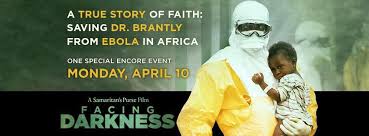
Recently, I viewed the movie Facing Darkness produced by Samaritan’s purse highlighting their response to the Ebola outbreak in Liberia. I highly recommend seeing this movie. It is having an encore event in limited theaters on April 10th, 2017. Click this link for showings near you.

You can view Part I here that takes a medical view on how Ebola spread so easily and quickly through Liberia.

This post, I’ll be discussing some of the spiritual aspects of the movie. As a Christian myself, it was hard not to be amazed at some of the incidents (or miracles) that I’ll talk about here.

Samaritan’s Purse is a Christian organization run by Franklin Graham, the eldest son of famed evangelist Billy Graham. Samaritan’s Purse had a presence in Liberia before the Ebola outbreak. The American physician, Kent Brantly, was serving there as a missionary with his family at the onset of the outbreak.

When Ebola hit the region, there were only two organizations that responded despite the Liberian government’s cry for help. They were Samaritan’s Purse and Doctors Without Borders. Since Samaritan’s Purse already had a presence in Liberia, they were asked by DWB to respond to the Ebola crisis.

They agreed but had no training to do so, but they did begin to respond by caring for the sick and dying.

Dr. Kent Brantly eventually headed up the Ebola response in Liberia. He and nurse, Nancy Writebol, worked closely together. Nancy was mainly in charge of getting medical personnel in their protective gear before entering the hospital. To this day, it is not exactly clear how Kent or Nancy were infected with Ebola.

Many Christians believe there is a battle in the spiritual realm between good and evil. That these forces are at play on earth even if we don’t physically perceive them. When the movie Facing Darkness opens, they comment on a feeling of oppression in the area. “The sea had never seemed so angry.” There was an unrelenting rain that few had seen in many years. The country was still shrouded in the darkness of two civil wars.

I believe there are miracles still happening today. These are some of the things I consider miracles from Facing Darkness. There are spoilers here so stop reading if you plan on seeing the movie.

1. Kent Brantly contracted Ebola within days of his wife and children leaving Liberia for a wedding in Texas. This event likely saved them from contracting the disease.

2. ZMapp was used for the first time in humans— and it worked. ZMapp is a drug that is used specifically to treat Ebola. Up until that point, it had never been used in humans, only in monkeys.

3. Dr. Brantly was going to be life-flighted out of Liberia, but the plane broke down and had to return to the US. This event likely saved his life. At the time the flight started, Kent was feeling pretty well and deferred the first dose of ZMapp to nurse Writebol. However, as she was literally warming up the medication under her arm for administration, Kent’s health took a dramatic turn for the worse and they took the drug away from Writebol to administer to Brantly. If he’d been on that flight, he likely would have died.

4. Brantly’s survival and testimony as to what was happening in Liberia finally garnered some international support that enabled Samaritan’s purse to turn the tide via education to combat the spread of Ebola. The movie is pretty clear on how little the world provided aid during the Ebola crisis. Doctors Without Borders and Samaritan’s Purse were the only two organizations combating the disease and they were drowning. Their personnel were way overextended and they didn’t have the supplies they needed. Only the media attention after Brantly’s US return pushed the issue where finally financial support and supplies were offered.

Sometimes, it’s hard to understand God’s view when you’re in the middle of a crisis. Brantly’s infection was one of the worst things that happened in his life, but it also ended up saving a country.

Many people featured in the film continue to serve the people of Liberia.

So many lessons in this one film— medically and spiritually. Please, go see it.

Facing Darkness: Fighting Ebola in Liberia Part 1/2

On May 30th, I attended a limited showing of the movie Facing Darkness which is a documentary produced by the Christian organization Samaritian’s Purse about how they assisted with the Ebola crisis in Liberia. It is a fascinating piece of film and I highly encourage all to go and see it. There will be more showings on April 10th so check your local theaters for viewings. Honestly, I cannot recommend this movie enough.

What’s interesting as a nurse medically is why did Ebola take such hold in Liberia? What factors contributed to it being so widespread? What was the tipping point as they say— or those circumstances that when combined cause something to take on a life of its own.

There were several factors that aided the spread of Ebola in Liberia and I’ll discuss a few here. I often hear people say that widespread disease and outbreaks couldn’t possibly happen in the US— that our medical system could easily handle the onslaught of victims and prevent the spread quickly. I am not so convinced. After events like Katrina it’s easy to see how any local healthcare system could be overwhelmed.

Here are some factors that aided the spread of Ebola in Liberia.

1.  Liberia’s infrastructure was devastated by civil war. Liberia had been rocked by two civil wars. One lasting from 1989-1996 and the other lasting from 1999-2003. Because of the wars, much of their infrastructure, including healthcare, was limited. The Ebola outbreak in Liberia started in March, 2014. It would seem that a decade would be long enough for a nation to recover, but think about how long it took to rebuild Ground Zero after the 9/11 attacks. Liberia is an economically depressed emerging nation. It’s in the top ten of poorest countries. Before the outbreak, 4 million people were being cared for by fifty physicians (yes, 5-0.) 

2. Cultural practices spread the disease easily. Liberians have a very affectionate culture. Ebola is spread by direct contact with an infected person. Culturally, Liberians prolong touch via handshakes and hugging. Also, their care of the dead includes direct handling and washing of the body. In some instances, the bath water used to bathe the deceased family member is drunk. If a person dies from Ebola, their corpse is teaming with virus and these practices will infect family members.

3. People lived in close proximity to one another.  Ebola in Liberia was both an urban and rural issue. When the disease hit urban centers, its spread happened much more quickly.

4. Liberians didn’t believe Ebola was real. Early in the outbreak, people believed Ebola was merely a myth. That it didn’t exist.

5. There was distrust of the medical profession. As the Ebola outbreak became more prolonged, many Liberians began to believe that medical people were proactively spreading the disease instead of trying to stop it. They wouldn’t bring sick family members to the hospital which led to more infection. In fact, medical professionals were physically attacked in some instances because of this belief.

The Atlantic did a follow-up piece on Ebola in Liberia in its July/August 2016 issue. If you think Ebola cannot happen again to such a degree, where 11,000 Liberians were infected, think again.

As the article highlights, several factors that added to the outbreak are still present.

1. People still eat bushmeat. Bushmeat is a concern as an origin for Ebola infecting humans.

2. There remains little understanding among the Liberian population of how Ebola is spread.

3. There have been three small outbreaks since Liberia was declared Ebola free in May, 2015.

4. It is possible that Ebola could spread via sexual transmission months after victims are symptoms free.

5. The poverty is worse.

I highly recommend viewing Facing Darkness on April 10, 2017. It is an eye-opening experience.

Guest Author Gillian Marchenko: Living Through Depression

Today, I’m hosting author Gillian Marchenko. Her book on living with and through depression called Still Life really struck me on several levels and so I asked Gillian if she would stop by Redwood’s Medical Edge and answer a few questions. I’m also giving away a copy of Gillian’s book. All you need to do is leave a comment on this blog post by Saturday April 8, 2017. I’ll post the winner here on Sunday, April 9, 2017. Winner must reside in the U.S.

Thanks so much for stopping by Gillian!

Jordyn: What do you find are some of the common misconceptions about depression? 

Gillian:
Common misconceptions include:

Depression is not a real illness.

A person is lazy and can ‘break out of it’ if she really wants to do better.

For Christians, many still believe that depression is a spiritual issue. She should ‘pray away depression.’ That depression has more to do with the individual’s sin issues than an actual illness.

Jordyn: Do you feel like these misconceptions are perpetuated in the media? Books, television, and film? If so, how?

Gillian: Yes. People with depression (and other mental illnesses) are often portrayed as ‘crazy’, and disregarded as valued members of society who have dignity and purpose. Countless media outlets use mental illness as comedic material or objects of pity. If a person on the street shows signs of mental illness (talking to themselves or psychosis), people throw a few dimes in their cup and move on. Individuals are put into one box: mental illness. Because of misconceptions, inconsideration, and lack of education, they are not taken seriously. I also want to say, though, that I get it. Mental illness can be scary. Many don’t know how to help or what to do, or even fear for their safety. So, they do nothing. Education helps with these things. But I don’t fault their emotions.

Jordyn: What do you feel like are some frustrations you have in dealing with the medical community?

Gillian: I relied on my primary care physician to help manage my depression for years. The problem was that the doctor did not specialize in psychiatry and therefore, did not know enough to treat me. Once I started seeing a psychiatrist who knew how to evaluate needs and address them accordingly, my treatment became much less of a ‘throw meds against the wall and see what sticks.’ I wish my doctor would have seen that my symptoms were more than a few bad days and referred me to a psychiatrist much sooner.

Also, I’ve found that both my doctor and psychiatrist have gone straight to medication without also encouraging a holistic approach towards health; things like talk therapy, cognitive behavioral therapy, diet and exercise, and spiritual components. After investing in a lot of personal education out of desperation, I’ve sought these various helps out personally and had to inform my doctors on the positive effects produced in my journey through health.

Jordyn: What would you change about our mental health care system?

Gillian: This is a hard question. I’d love to say that I know enough about how the health care system works to provide an educated answer. But I can only go by what I hear from other people and their families who are battling illness.

I’ve heard that families typically have no say regarding a loved one who clearly needs their help in medical decisions unless they have a power of attorney. A lot of times their hands are tied and the person who is sick is in charge. Bad decisions abound. One should be hospitalized, but unless there are claims of self-harm and attempts at suicide, he or she can discharge themselves at any time. I have a friend right now whose husband believes he is a prophet from God. But every time he is taken in for his psychosis, he is lucid enough to play the doctors. They see no reason to commit him long-term and he is released.

I also, think that many doctors, sadly, still don’t take mental health symptoms seriously and buy into misconceptions. But I don’t have data and statistics, so I’m not sure I can concretely contribute to this claim.

Jordyn: What advice do you have for friends or family members who have a loved one with a recent diagnosis of depression?

 Gillian: I recently wrote a blog post about this very topic.

In you are an acquaintance, help a depressed friend by:

Reaching out via text or with a card letting her know you are praying for and thinking of her.

Leaving a small gift or a meal (without the expectation that she will open the door).

Praying for them regularly.

 If you are a close, help a depressed friend by:

Doing all of the above.

Noticing when she is withdrawing (no longer attending church, events, or other activities he previously participated in).

Taking a little more intentional action when you notice. Call once a week. Text more often. Let her know she is loved and not alone.

Inviting her out without the pressure of acceptance. If you are refused, try again but give it time. It may feed into her guilt and anxiety.

Dropping off a book or another thoughtful gift. For instance: a small box of encouraging quotes and verses.

If you are a very close, help a depressed by:

Doing all of the above.

Reminding her that getting out will help her get out of her head.

Standing there. Don’t give up on her. She needs support in and out of depressive episodes. While depressed, that support may be from afar. When she is doing better, she needs to know that she still has friends, that she isn’t judged, or considered a lost cause.

Being more specific with Bible verses, direct encouragement, and gentle reminders of things that have helped her in the past during particularly difficult episodes. You’ve earned her trust to speak into her life. If you aren’t close enough to her, she will resent it.

Telling someone. If she talks of self-harm or suicide but doesn’t want you to tell anyone, tell anyway.

Thanks so much for your insight, Gillian. I found your book so insightful and it really helped give me new perspective into those who struggle with depression. I highly recommend Gillian’s book, Still Life.