Every Day’s a Good Day when You’re Not in a Coma!

I’m pleased to host James Pence today who talks about his writing experience with a family whose child suffered a traumatic brain injury and had a truly miraculous recovery.

Welcome, James!

Part 1
Like many others, over the last year I’ve closely followed the story of Gabrielle Giffords. Her recovery from a gunshot wound to the head has been nothing less than remarkable.  However, Congresswoman Giffords’ story was of special interest to me because as her ordeal unfolded, I was completing work on a book about another remarkable traumatic-brain-injury (TBI) survivor: Nate Lytle.

Nate is a young surfer from Victoria, Texas, whose life changed in an instant on June 4th, 2007. Nate had gotten out of the Coast Guard only a few months earlier and was preparing to move to Tallahassee, Florida to be the youth and college pastor at a new church. Since he still had a week before he was to leave for Tallahassee, he offered to help out at his father Billy’s business, Engenco, a company that supplies engine parts to the oil and gas industry.

Nate was atop a ten-foot ladder, trying to help his dad maneuver a 300-pound diesel manifold off a twelve-foot shelf and onto a lift. They lost control of the manifold, and as it fell it clipped the bottom rung of the ladder, catapulting Nate into the air.
As Nate came down, he put out his left hand to try to break his fall, but succeeded only in shattering his wrist. After he landed, he heard a high-pitched ringing in his ears.
Billy climbed down from the shelf and found Nate conscious, but in extreme pain.
“Did you hit your head?” Billy asked.
“My wrist, my wrist,” Nate said, as he cradled his left arm with his right. His hand was a sickening sight, hanging loose, apparently attached only by muscles and tendons.
“Did you hit your head?” Billy repeated.
“No, my wrist. I hurt my wrist,” Nate replied.
Billy ran to get his truck. Because the location of his business was remote and difficult to find, he knew that he would get Nate to the hospital faster by driving himself. What neither Nate nor Billy knew was that Nate had sustained a severe head injury when he landed. Because he was wearing a baseball cap, Billy couldn’t see the huge dent in the left side of his son’s skull.
Billy put Nate in the back seat of his pickup truck’s cab and rushed to the hospital. In the back seat, Nate began to shout Coast Guard commands.
Nate’s mother Tammy arrived at the hospital about the same time that Billy pulled. She helped Nate into a wheelchair and took him into the ER waiting room while Billy parked the truck.
That’s when Nate crashed.
First, he began to talk gibberish. Then he stiffened and started to slip out of the chair.
A security guard helped Tammy wheel him back to a trauma room. The last thing Tammy heard as they closed the door was Nate, saying “I’m gonna puke!”
Over the next few hours, she and Billy would learn that Nate had suffered a massive head injury, He had a softball-sized hole in the left side of his skull, and the bone fragments had been driven deep into his brain.
The neurosurgeon told Billy and Tammy that they should think about making funeral arrangements.
Return Friday for Part II!
*******************************************************************************

James H. (Jim) Pence is a man of many talents. He’s a performance chalk artist, singer, speaker, published author, editor, collaborator, and in his spare time he teaches karate to homeschoolers. Jim has been called a “Renaissance man,” but he prefers to be known simply as a follower of Jesus Christ and a storyteller. Jim has been published in both fiction and nonfiction. Recently, Thomas Nelson published “The Encounter,” a novella that Jim wrote in collaboration with bestselling author Stephen Arterburn. Jim’s newest book, More God: Seeing the Blessings through the Pain, is available in hardcover, softcover, and e-book format.
Links:

James’ Web site: http://www.jamespence.com/

YouTube Video about Nate Lytle: http://www.youtube.com/watch?v=l_oyX4rA07s
Nate’s Web Site: http://www.natelytle.com/
Photos courtesy of Alan Lindholm, G. Scott Imaging, and Danny Vivian

Are Home Deliveries Safe?

I’m pleased to host Tanya Cunningham today as she discusses the safety of home deliveries. I think this is another one of those instances where some important information is not as prominent as what is portrayed by celebrities and others.

What do you think? Welcome, Tanya!

The birth of a new baby is a life changing, exciting event in the lives of the expecting mother and father to be. The number of decisions to be made are numerous and often overwhelming. One question many expecting parents ask is whether to give birth in a hospital setting or at home with the aid of a certified nurse midwife (CNM).

Although there are benefits to both hospital and home births, the American College of Obstetricians and Gynecologists does not recommend home births due to a concern for safety and a need for much more research according to Dr. Joseph R. Wax of Maine Medical Center in Portland.
The benefits of home births that appeal to expectant mothers include a more relaxed or therapeutic setting, decreased risk of tearing and episiotomies, decreased risk of hemorrhage, decreased risk of infections, and a sense of autonomy concerning her birth plan.
In a systematic review of literature by Laurie Barclay, MD and Hien T. Nghiem, MD, they found that planned home births have a worrisome neonatal mortality rate triple that of hospital births, despite similar perinatal mortality rates. So while an actual delivery may go as planned, triple the number of newborns die in the first month of life after a planned home birth.  Barclay and Nghiem also found the 9% of parous (repeat mothers) and 37% of nulliparous (first time mothers) had to be transported to the hospital during planned home labor.
Other safety concerns I personally cannot ignore is the “what if” factor. Hopefully everything does go as planned whether delivering at home or at a hospital, but what if the new mother does hemorrhage in the postpartum period? The amount of blood loss in minutes can be catastrophic, and if it’s me, I want to be in a hospital setting where quick and timely interventions such as an emergent blood transfusion can save my life.
Another example is fetal distress. If severe or prolonged enough, an emergent or “crash” c-section may be a necessity. Again, if it’s me in the delivery room, I take comfort knowing an OR is seconds away if needed.
I love the idea of the home delivery, but I don’t love the realities. The reality is, even in the most straightforward, low risk pregnancies, unforeseen and even emergent complications can occur during labor and delivery. I do feel the OB hospital setting and staff have been vilified a bit, as time driven, heartless wardens chaining the laboring woman to a hospital bed with fetal monitoring against her will.
As a postpartum RN, I can assure you our first interest is the health of the mother and baby. As long as their well being isn’t compromised, mothers are encouraged to labor as they wish. At the hospital where I work, women are free to roam the halls and utilize birthing balls and birthing tubs. There are many women who deliver naturally, and their birth plans are respected and followed.
If you’ve had a negative experience in a hospital setting delivering a baby, feeling rushed by medical interventions or that a c-section might have been premature, remember, that may be more of an issue with your health care provider or the staff working at the time. I’d encourage you to research doctors who are more flexible and work with expectant/laboring mothers to follow their birth plans as closely as possible.
We who are in the business of delivering and caring for new mothers and babies seek to be as therapeutic as possible, but there are times when medical interventions are necessary to protect the health and well being of either the mother or baby. While delivering a baby at home might be more desirable to an expectant mother as far preserving her autonomy, the truth is hospital deliveries are safer. If you’re expecting or planning to have a child in the future, be sure you make an informed decision when considering where to deliver your precious little one.
****************************************************************************
Tanya Cunningham is a mother/baby RN and lives in Missouri with her husband and two small children. She has been caring for mothers and their newborns for almost four years, before which she was a RN in the USAF. During that time, Tanya worked on a multipurpose inpatient unit for two and a half years (taking care of ortho, neuro, medical, general surgical, and tele) and a family practice residency clinic for a year and a half. Tanya earned her BSN at Oral Roberts University.
Tanya has been writing children’s stories for almost 2 years now and is working towards being published. She enjoys raising her children, cooking, and reading medical suspense/mysteries, especially those in Christian Fiction. You can find out more about Tanya by visiting her website.

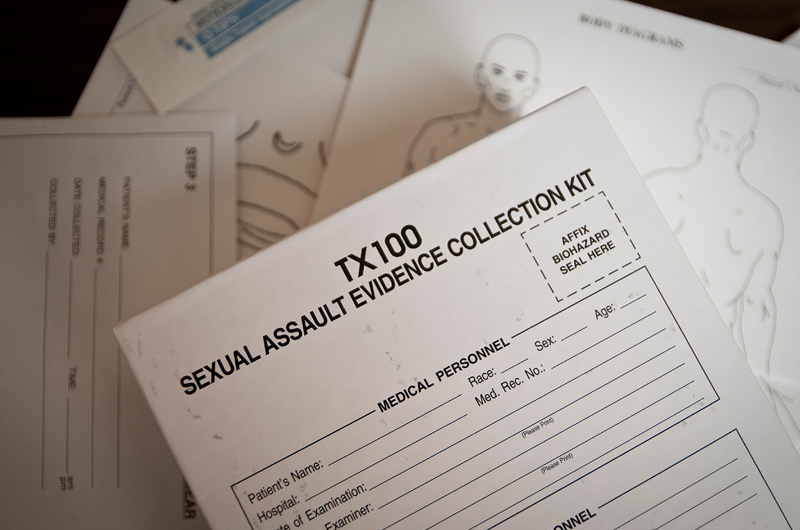
Forensic Issues: Maintaining the Chain of Evidence

I can remember when I’d been in nursing about two years and became involved with a patient who’d been the victim of a sexual assault. I was tasked with the job of collecting most of the evidence for her rape kit and when I was done, I had about three large paper (grocery size) bags of evidence.

Photo by Todd Wiseman

Taking care of a sexual assault victim takes a lot of time. It can easily tie up one nurse for several hours. What becomes paramount is maintaining the Chain of Evidence or Chain of Custody. You may find that these terms are used interchangeably but essentially mean the same thing.

Chain of custody is a record of who was accountable for the evidence from the time it is collected to the time it is disposed of. It’s a chronological record of signatures of who possessed the evidence when. If the chain of custody is broken, the item may be inadmissible in a court of law.

The envelope is designed to reflect this. It may look something like this:

Jordyn Redwood, RN
Steven Lee– Denver PD

Steven Lee– Denver PD
Luke Simmons– Denver Crime Lab

Etc…etc.

From the point in time where I collect the evidence, it should be locked up where few people have access. For instance, a locker where there is only one key. It could come into play who has access to the locker so it should only be a small group of people. If the evidence cannot be locked up, then it must stay in the possession of the person who collected it until it is handed off to the next responsible person– typically someone in law enforcement.

In my case, there wasn’t a place to lock it up. The police took about an hour to claim it. So, as I continued to care for patients, I literally carried those bags with me from room to room.

Can you think of a plot where chain of evidence could come in to play? My thought was… what if someone was an impostor and signed on the chain of custody log. What would happen when that was found out?