Amitha Knight is a former pediatric resident turned writer of middle grade and young adult fiction. She’s also a blogger, a book lover, an identical twin, and a mom. Follow her on twitter @amithaknight or check out her website: http://www.amithaknight.com/.
Month: March 2012
Rare Disorders – Flesh Eating Disease
I’m so pleased to host Tanya Goodwin, OB/GYN extraordinaire. She’ll be stopping by on a monthly basis to offer her insight into all things medical.
Welcome, Tanya!
![]() |
| http://www.medicinenet.com/necrotizing_fasciitis/article.htm |
As a medical student I was taught about a barrage of diseases, acute and chronic, common and rare. One of the rare was necrotizing fasciitis.
Thinking I’d never encounter this deadly disease, I forgot about it until one night as a second year OB/GYN resident (4 year specialty training after medical school) when I was called to evaluate a woman who was transferred from a community hospital to our large teaching institution with possible necrotizing fasciitis.
I briefly reviewed this disease before I took the elevator, along with my intern (aka 1st year resident) to the ninth floor, ready to evaluate this young woman.
Tanya Goodwin is an obstetrician/gynecologist and a novelist of romantic suspense with slice of medicine. She enjoys sprinkling unusual medical conditions in her writing. A character in one of her novels has the misfortune of contracting necrotizing fasciitis, and in her debut novel, If Memory Serves, due for release in November by Knight Romance Publishing, her main character, Dr. Tara Ross has dissociative fugue, a rare disorder as well. You can find out more about Tanya at www.tanyagoodwin.com.
Author Question: Refusing Medical Treatment
Carrie Asks:
I’m going to come from the standpoint of this person presenting to the ER. Put simply, we are not going to let this patient sign out AMA. A couple of things in your statement about his condition will prevent this. Almost everything you’ve listed as far as his medical condition makes it impossible for him to make a reasonable decision regarding his care–concussion, disorientation, hypothermia. Even though he can talk, it doesn’t mean he has enough medical capacity to make an appropriate decision regarding his care until these issues are straightened out.
I did verify this through an EMS friend of mine as well. The issue is not whether or not they can talk, it’s whether or not they are medically competent to make a decision about refusing care. This character’s condition precludes that.
Ten Myths of Drug Addiction 2/2
Today, we’re concluding Dr. Rita Hancock’s guest post on the ten myths of drug addiction. Today, we’re finishing the last five. These posts have been a wealth of information. Thanks, Rita.
Ten Myths About Drug Addiction 1/2
Welcome, Rita!
Myth #1:
The first two are normal physical phenomena that happen in ALL patients who take heavy doses of narcotics, but only the last one is abnormal/pathological. Thus, if you claim your character is addicted, his or her behavior should show at least a few pathological psychological features (bad relationships, inability to hold a job, stealing to pay for fixes, lying to doctors for drugs, etc.).
Myth #2:
You don’t become physiologically tolerant and/or physically dependent on ALL drugs. Thus, you don’t necessarily go through withdrawals when you come off certain controlled substances (e.g. hallucinogens like marijuana and PCP don’t cause withdrawals). And not all withdrawal symptoms are the same. They depend on the drug in question. E.g. withdrawals symptoms and overdose treatment for alcohol/benzodiazepines/ barbiturates are similar. However, the symptoms of stimulant withdrawal and overdose will be totally different. The point is the writer needs to research the specific overdose and/or withdrawal symptoms for the individual drug his or her character is hooked on.
Myth #3:
Only SOME people are susceptible to addiction to controlled substances (don’t make the mistake of thinking that ALL people who take controlled substances eventually become addicted). People susceptible to addiction tend to exhibit addictive tendencies early on (teenage or young adult addictions to smoking, alcohol, etc). In general, young people are more susceptible to developing addiction because their coping skills aren’t yet developed and they can learn to rely on drugs for dealing with the underlying anxiety that leads them into addiction.
Myth #4:
I see many elderly people with severe, painful joint pathology who don’t want to take narcotics b/c they’re afraid of getting addicted. But if they’ve taken narcotics periodically during their lives for e.g. root canals, fractures, etc, and have never had a problem getting off the drugs, they’re at lower risk for addiction. As noted above, though, they will (especially if they’re on large doses) eventually become physically dependent).
Myth #5:
There’s a difference between pain and suffering. Pain happens when an inciting event causes pain receptors to fire (e.g. a burn, a sprain, a pulled muscle, etc.). However, that physical pain is interpreted by the brain in the context of the person’s emotional state. A highly anxious patient or one with a volatile psych history (history of abuse, etc.) is more likely to experience psychological “suffering” with a low level of pain.
Thus, if the person tries to medicate his or her subjective experience with pain using pain pills, he or she is likely to over-medicate to quell the anxiety. You’re not supposed to treat your anxiety with pain pills. That’s how you become addicted. Many, many chronic pain patients suffer with psych issues, and often those psych issues long pre-dated their chronic pain. Psych issues are a definite risk factor for chronic pain and addiction.
***********************************************************************

Dr. Rita Hancock, a full-time physician and author of Christian health books, writes about how emotional and spiritual factors contribute to physical disease through the mind-body-Spirit connection. According to Dr. Rita, “Once these underlying barriers fall away in the healing light of God’s truth, patients automatically feel less physical pain, experience fewer stress-induced symptoms, lose weight, and shed addictive behaviors more easily.” Dr. Rita is the author of The Eden Diet (Zondervan, 2008) and an as-yet untitled release with Charisma House, pending January 2013. She resides in Oklahoma City with husband Ed, and two wonderful children, Lindsey and Cory.
What’s the Difference Between?
Today, I’m pleased to host guest blogger Jason Joyner. Have you ever been confused by certain letters behind health care provider’s names? Jason is here to clear that up.
Welcome, Jason!
When I interviewed for the physician assistant program at my university, the program director offered this scenario to me.
Jason works as a physician assistant in southeast Idaho, while trying to keep up with three crazy boys and a little princess. He is working on a medical suspense with international flair. Follow him on Twitter @JasonCJoyner or his blog at http://spoiledfortheordinary.blogspot.com/
Renee Yancy: Ancient Medicine in Ireland
I’m so pleased to host author Renee Yancy today as she discusses her research into ancient medicine in Ireland. And, as a special treat, if there are 10 or more comments, she is giving away a free copy of her book!
Welcome, Renee!
In my 5th century historical novel, A Secret Hope, my heroine Ciara is studying to become a druid physician. Having a medical background myself, it was a delight to research ancient medicine in Ireland. Here are some of the tidbits I found.
contains salicin, and salicin is used to create acetylsalicylic acid, better known today as aspirin. The ancient Celts would simmer willow bark, let it steep, and drink the resulting tea. In the cold, damp areas of Britain, Scotland, Wales, and Ireland, the magical willow bark tea would have been a precious commodity for people who suffered the pains of rheumatism and arthritis.
Renee Yancy has been living vicariously through historical fiction since she was a young girl. Her all time favorite book is Shogun by James Clavel. One of her writing goals is to be as historically and archaeologically as accurate as possible. Every object she describes in her novels, including jewelry, dishes, furniture and glassware, are actually in museums all over the worlds. In her other life she is an RN with many years of nursing experience and presently works in an Endoscopy Unit. Learn more about Renee by visiting her website and blog at http://www.reneeyancy.com/ and http://www.reneeyancy.blogspot.com/.Clipston Family Story: A Leap of Faith
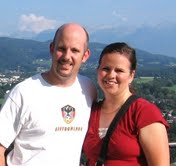
It seems appropriate that our kidney transplant took place on June 14, which was seven days after Joe turned 40 and six days before our 13th wedding anniversary. Through the transplant, Joe and I began a new life together, a chapter in our relationship. I’m so very glad I took that leap of faith. I’m so very thankful that God called me to donate a kidney. I saved two lives — my husband’s life and my recipient’s life.
***********************************************************************
Amy Clipston is the author of the bestselling Kauffman Amish Bakery novels. She has a degree in communications from Virginia Wesleyan College and currently works for the city of Charlotte, North Carolina. Amy lives with her husband, two sons, and four spoiled-rotten cats. Visit her on the web at http://www.amyclipston.com/.
Unbelievable Real Life, Believable Fiction
When I hear a reader say: “That’s not realistic; all of that couldn’t happen to one character.” I think, “That reader has skirted through life with little trial.”
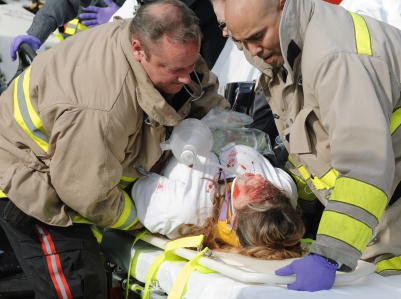
Spring 2009, a cop barreled into our car, injuring my oldest daughter, my son and myself. My husband and our youngest daughter escaped uninjured. The two kids healed; I suffered a shoulder and cervical injury. Actually, those injuries initially occurred when I was in a bicycle accident (a driver ran a stop sign); the car accident worsened those injuries.
After majoring in communications and enjoying a successful career as a travel agent, Dianna Torscher Benson left the travel industry to write novels and earn her EMS degree. An EMT and Haz-Mat Operative in Wake County, NC, Dianna loves the adrenaline rush of responding to medical emergencies and helping people in need, often in their darkest time in life. Her suspense novels about characters who are ordinary people thrown into tremendous circumstances, provide readers with a similar kind of rush. Married to her best friend, Leo, she met her husband when they walked down the aisle as a bridesmaid and groomsmen at a wedding when she was eleven and he was thirteen. They live in North Carolina with their three children. Visit her website at http://www.diannatbenson.com
Every Day’s a Good Day when You’re Not in a Coma!
The doctors did not hold out much hope for Nate’s survival. If he did manage to survive, they gave even less hope for his potential quality of life. The areas of Nate’s brain that had been damaged were the parts that control movement, speech and communication. The neurosurgeon said even if Nate were to survive, he would never walk or talk or even communicate again.
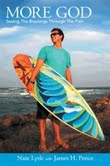
James H. (Jim) Pence is a man of many talents. He’s a performance chalk artist, singer, speaker, published author, editor, collaborator, and in his spare time he teaches karate to homeschoolers. Jim has been called a “Renaissance man,” but he prefers to be known simply as a follower of Jesus Christ and a storyteller. Jim has been published in both fiction and nonfiction. Recently, Thomas Nelson published “The Encounter,” a novella that Jim wrote in collaboration with bestselling author Stephen Arterburn. Jim’s newest book, More God: Seeing the Blessings through the Pain, is available in hardcover, softcover, and e-book format.