What Could Go Wrong Series – The Drunk Patient
Medical shows love to use imaging procedures in their episodes, but often times the scenes do not follow a realistic procedure protocol or the drama is escalated in over the top scenarios.

Image by ashish choudhary from Pixabay
Everything from doctor’s running the MRI machine to using the wrong probes or technology in ultrasound, our television shows get the details wrong more often than right. Good thing most actors are easy on the eyes so we tend to forgive the script errors a bit more.
In an effort to provide positive change and help writers produce accurate material for their story lines, the What Could Go Wrong Series will reveal realistic scenarios that could (and likely have) happen in a medical setting.
Imagine an intoxicated patient comes into the x-ray department from the ER for multiple images of an extremity. They’ve recently been involved in a fight.
The technologist has to position the patient’s extremity into a painful posture to get diagnostic images. The patient cusses the radiographer. They haul off and hit the healthcare professional, knocking her to the floor. She gets back up, dusts herself off and dives back in, calling for help to restrain the patient.
Unlike most TV shows where a slew of physicians rush in to aid the staff, some doctors will remain in their offices or in the ER department tending to other patient cases. If we wait for them to intervene, the attacker could inflict more damage.
In real life, other x-ray team members will help by entering the room and donning lead shields. They will hold the patient in position while another radiographer takes the image from outside the room. Healthcare workers will act in the moment and move as a team to keep the scenario under control.
If for some reason, a physician is nearby or in the department, then they might help with the situation. However, most radiologists read from their offices, and ER doctors remain in their work space taking care of other trauma cases. From their locations, they might not even hear what has happened in the radiology suite.
Real World Facts
Radiographers and other healthcare professionals must deal with verbal patient abuse. When things turn physical, we must stay calm and keep a clear head.
A 2017 study by the National Institute of Health determined that patient to worker assault in the healthcare setting was a serious occupational hazard with front line staff being at a higher risk for Type II violence. (Arnetz, 2017)
These scenarios impact the employee’s well being, decrease morale, and can cause depressions or even post-traumatic stress long after the incident is over.
New Storyline
Now, imagine a TV character with this story line. A drunk patient attacks the healthcare worker, a nurse, doctor, technologist, etc. and the emotional and psychological stress impacts every area of their life for several months. Even after the patient sobers, the effects of what he’s done could provide issues in his life and or recovery.
Sounds like an episode or two with loads of drama yet realistic to real world healthcare.
References
Arnetz, Judith E, et al. “Preventing Patient-to-Worker Violence in Hospitals: Outcome of a Randomized Controlled Intervention.” J Occup Environ Med, Jan. 2017. https://www.ncbi.nlm.nih.gov/pmc/articles/PMC5214512/
******************************************************************************************
Shannon Moore Redmon writes romantic suspense stories, to entertain and share the  gospel truth of Jesus Christ. Her stories dive into the healthcare environment where Shannon holds over twenty years of experience as a Registered Diagnostic Medical Sonographer. Her extensive work experience includes Radiology, Obstetrics/Gynecology and Vascular Surgery.
As the former Education Manager for GE Healthcare, she developed her medical professional network across the country. Today, Shannon teaches ultrasound at Asheville-Buncombe Technical Community College and utilizes many resources to provide accurate healthcare research for authors requesting her services.
She is a member of the ACFW and Blue Ridge Mountain Writer’s Group. Shannon is represented by Tamela Hancock Murray of the Steve Laube Agency. She lives and drinks too much coffee in North Carolina with her husband, two boys and her white foo-foo dog, Sophie.
 and beds that lack the comfort of home. However, while watching an episode of
  Luxury three-bedroom, two bath suites, beautiful living and dining areas with sweeping views of the city await them when admitted. Kate Hudson, Victoria Beckham and the Kardashian sisters have all experienced the posh treatment when delivering their babies.
 As for the average Joe, our wallets can’t afford the four thousand dollar a night stay. Our rooms are less ornate. We get one clean bedroom, one small bathroom, mediocre food from the cafeteria and bland furnishings. No personal doula for us although, breast feeding centers and coaches are available.
 Today, we’ll focus on how to add tension and conflict from real-life scenarios in the ultrasound department.
 Knowing a little about computers, I wondered how that could be possible. Can an ultrasound store the millions of images or 3d imaging from another patient to be “played” on another patient? Of course, I wrecked the show for my wife by questioning the episode she was enjoying.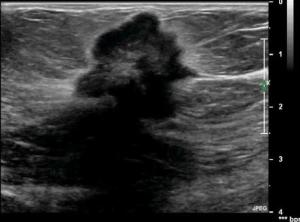
 MRI Brain Coils
 Quite a bit different from what was shown in the movie. In real life, there are a couple of coils to show the face, but they would have hindered the actor’s ability to intubate which again would not be done in an MRI Scan room because of the metal Laryngoscope used.
 When in elementary school, our teacher rewarded good behavior with an episode of Spiderman. The thought of a once nerdy boy turned superhero, gave all the kids in class grand ideas of swinging from tall buildings and capturing bad guys with web like nets. Thankfully, no one ran out and searched for spiders to bite them.
 For example:
 Most scans are performed in the designated ultrasound department for their exams, unless they are in active labor, in the ICU or for some astronomical reason, cannot leave their room. Even in the emergency department, if the patient can be transported to the department, then they will be.
 What many fail to recognize are the glaring inaccuracies associated with the ultrasound profession and the exams being performed on the television screen. Such scenes contain incorrect anatomy, probes placed in wrong positions, or actors who need more camera face time and scan patients backwards.
 Redwood's Medical Edge