Ah, Dexter. Few shows juggle serial killing, dark humor, and wildly inaccurate hospital scenes quite like you. In Season 4, Episode 2, our favorite blood-spatter analyst wrecks his van—with a dead body conveniently riding shotgun in the back—and winds up in the ER. What follows is a crash course in how not to portray medicine on television.
Let’s dissect, shall we? (Pun very much intended.)
The ER doctor shines a light into Dexter’s eyes. Normal practice? Sure. But then we’re treated to the statement that his pupils dilate. Pupils constrict when you shine a light into them. They dilate in darkness. This is how the human body properly works.
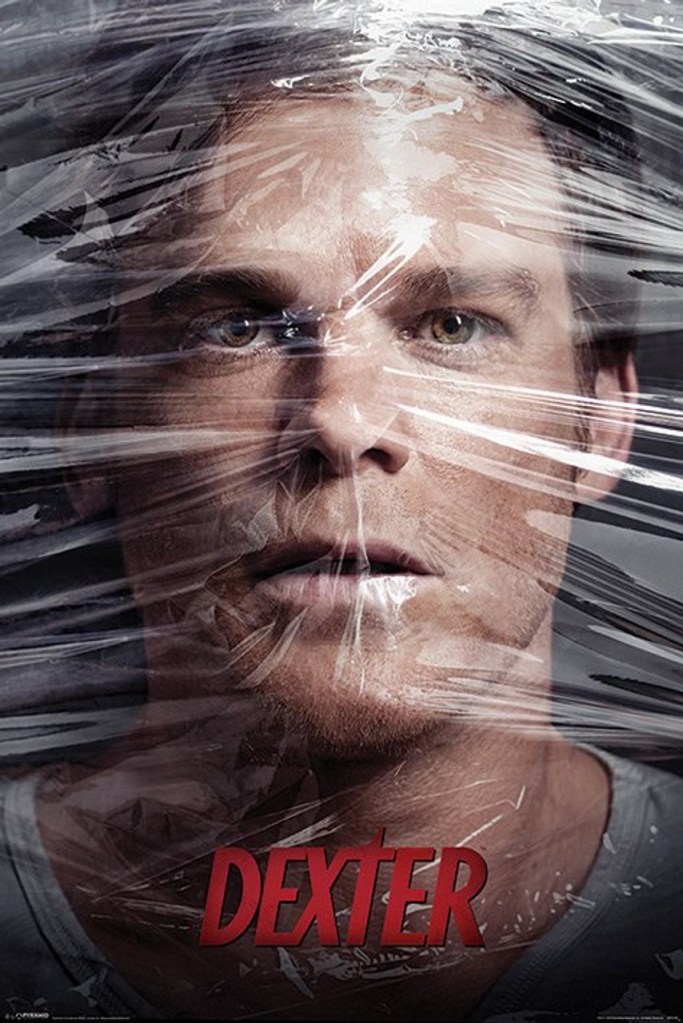
Next, the doctor looks at Dexter’s CT scan and announces, “You’ve sustained a concussion.” implying that concussions are diagnosed this way. Concussions can be clinically diagnosed, based on symptoms like headache, confusion, dizziness, and loss of consciousness. You don’t need a CT scan to tell you that, and a CT isn’t going to show a concussion anyway. If it does, congratulations—you’re likely now dealing with a bleed, not a simple concussion.
But hey, why rely on pesky medical standards when you can dramatically gesture at a glowing scan instead?
Then comes one of my favorite relics of outdated medical lore: the “Don’t let him sleep” after head injury rule. Dexter is told not to sleep for twelve hours, as if a good nap might somehow erase him from existence.
In reality? We don’t keep people awake anymore after they’ve suffered a head injury if they feel like they need to sleep. That advice has gone the way of lobotomies. Any injured body part needs rest to heal. The brain rests by sleeping. Sleep is good and beneficial for the head injured patient. The guidance is: let the patient rest, check in periodically if symptoms worsen, and maybe—just maybe—don’t torture the poor guy who just got his bell rung trying to hide his crimes.
Ultimate lesson– don’t get into a car accident with a body in the back of your van that the police are going to tow.
Which show do you think butchers medical accuracy the most and which on gets it right?
 come-true via a hyper advanced virtual reality program. The participants receive an implant that allows them to interact virtually with a program partly of their design.
 However, medically, this man would have already been dead because they are not providing for either hydration or nutrition. This could be solved simply medically by inserting a feeding tube via his nose and providing free water interspersed with bolus liquid feeds. After all, thousands of people live in comatose states for years if their basic medical needs are met such as oxygen (if needed) and nutrition.
 In episode 2, the producers must have gotten some feedback that they needed some actual medical equipment if they were concerned about these clients suffering medical complications. This time, a woman’s heart is going into erratic rhythms, specifically V-tach, because of the stress she’s under in her dream scape. But the medical equipment must make sense. What’s pictured in the photo to the right is what we call a rapid fluid infuser. It delivers IV fluids very quickly. Typically, it would be used in a trauma patient or one who is suffering from overwhelming sepsis where rapid delivery of IV fluids can be lifesaving. It is not appropriate for this patient who is suffering from a heart arrhythmia— much better to park a defibrillator at her bedside.
 In the movie, a group of medical students intentionally put one another into cardiac arrest so they can have a near death experience (NDE). Let’s examine medically whether or not their method would work.
 Issue #3
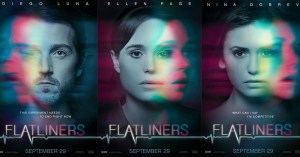 Flatliners centers around a group of medical students who become curious with the phenomenon of near death experiences (NDEs) to the point that they “flatline” one another so that they can purposefully have one.
 Ray: “The protocol of actually living in the real world. Where guys with crappy HMO’s go undiagnosed with spinal injuries.”
 Attending: “What is it?”
 I’ve found Zubin’s videos fun. Some are satirical in nature, but others tackle very serious healthcare issues. Zubin does for the general public what I try to do for writers. As a note, some of his videos do have some salty language.
 Redwood's Medical Edge