Clipston Family Story: A Leap of Faith

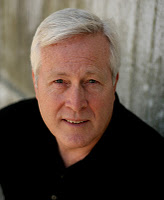
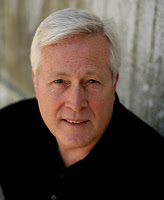
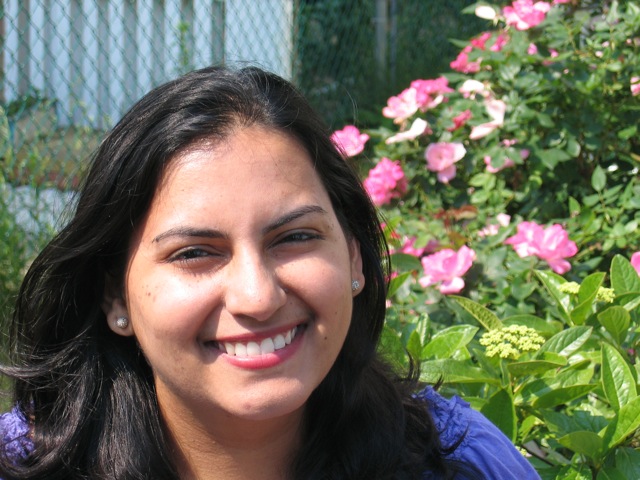
I’m so pleased to host Amy Clipston today as she shares her story about being an organ donor.
Welcome, Amy!
On June 14, 2011, I donated a kidney to a stranger in order to help my husband, Joe, receive a second kidney transplant. I became a kidney donor through a leap of faith. I felt that God had chosen me to be a donor since I’ve always enjoyed good health and have a common blood type.
Kidney disease has been a black cloud over our lives since Joe was diagnosed in 2000. He spent a year on dialysis before receiving his first kidney transplant from his brother in 2004. Unfortunately, his first transplanted kidney only lasted four years, and Joe went back on dialysis in July 2008. Since he had rejected a kidney, he was a difficult match. My donating a kidney was his best chance of receiving one from a matching donor.
My kidney recipient, who was a stranger before the surgery, is now my dear friend. Once she received my kidney, it immediately began to work in her body. I met her for the first time a few days after the transplant, and it was one of the most emotional experiences in my life. We hugged and thanked each other. Just as my kidney worked for her, her husband’s kidney immediately began to work in Joe’s body.
Becoming a kidney donor was a natural choice for me. Watching my husband suffer with an illness was heartbreaking, and I sobbed the day I found out I couldn’t be his donor. I’m honored and humbled that I could help a family who had suffered like ours, and I never thought twice about my decision, despite negative comments I often heard.
Joe’s illness was also difficult for our boys, who are 11 and 6. There were days when Joe was too ill to spend time with them. We couldn’t plan vacations, since coordinating dialysis out of town is complicated, and as Joe would say, it wouldn’t be fun for him to be sick in the hotel room. However, now that Joe is well, I notice that my boys smile more, which warms my heart. Aside from the emotional toll of Joe’s illness, we also suffered from financial worries. Since Joe was only well enough to work part-time, I carried the financial burden by working full-time and also writing Christian fiction.
Before June 14, I had never undergone a serious surgery, and I was nervous. However, I knew in my heart that I was meant to be a donor for Joe. Many people were counting on me — my kidney recipient, Joe, and my children, who missed seeing their daddy healthy. The most exhilarating moment for me was when I spoke to my 6-year-old on the phone after the surgery, and without any prompting he said, “Mommy, I’m proud of you.”

It seems appropriate that our kidney transplant took place on June 14, which was seven days after Joe turned 40 and six days before our 13th wedding anniversary. Through the transplant, Joe and I began a new life together, a chapter in our relationship. I’m so very glad I took that leap of faith. I’m so very thankful that God called me to donate a kidney. I saved two lives — my husband’s life and my recipient’s life.
***********************************************************************

Amy Clipston is the author of the bestselling Kauffman Amish Bakery novels. She has a degree in communications from Virginia Wesleyan College and currently works for the city of Charlotte, North Carolina. Amy lives with her husband, two sons, and four spoiled-rotten cats. Visit her on the web at http://www.amyclipston.com/.

Unbelievable Real Life, Believable Fiction

When I hear a reader say: “That’s not realistic; all of that couldn’t happen to one character.” I think, “That reader has skirted through life with little trial.”

Spring 2009, a cop barreled into our car, injuring my oldest daughter, my son and myself. My husband and our youngest daughter escaped uninjured. The two kids healed; I suffered a shoulder and cervical injury. Actually, those injuries initially occurred when I was in a bicycle accident (a driver ran a stop sign); the car accident worsened those injuries.

A few months following the car accident, my husband’s biopsy on an enlarged lymph node was negative, but a few months later he was diagnosed with head and neck cancer (the biopsy results were wrong). In 2009 and 2010 he endured two surgeries and cancer treatments.
During this same time, our son battled a mysterious illness I suspected was Lyme disease since he had fourteen Lyme’s symptoms, but Curtis didn’t test positive so no physician would listen—see Brandilyn Collins’ posts May 2011 titled: The Lyme Wars. Most Lyme’s patients don’t test positive.
For the love of hockey, Curtis fought the pain and continued to play; unfortunately, he suffered a shoulder separation during a game. In a sling for that injury, he had a MRI on a large cyst behind his knee; it tested benign. Hoping I was wrong about Lyme, I agreed to allergy injections to treat Curtis’ allergy-like symptoms. Days after the injections started, he developed a systemic rash. The allergist responded, “There’s an underlining cause.” So, I told an infectious disease MD, “Don’t think of me as a mom; as an EMT I’m telling you this patient has Lyme disease. Please help him.”
After several months of Lyme’s antibiotics, Curtis improved but still battled bilateral knee and ankle arthritis. My orthopedic surgeon (explanation later in this paragraph) diagnosed Curtis with Lyme arthritis saying, “Bring on the CDC; this kid has Lyme disease and I’m treating him as so.”
During the several months of Curtis enduring tons of doctor appointments (pediatrician, allergist, dermatologist, infectious disease, rheumatologist and orthopedist) plus countless tests, my shoulder worsened to the point I needed surgery to repair a labral tear. To date, Curtis still suffers with Lyme arthritis and may for years. Unbelievably, fall 2011 he suffered a severe concussion from head trauma in a hockey game and was out of school for three weeks.
As for my daughters: In 2010 my oldest was being recruited by countless college swim coaches. They were in and out of our home and Sabrina traveled on college recruiting trips; exciting yet stressful. My youngest, Fiona, dealt with anxiety from watching her family endure this mess.
How can one family battle all that in two years? For starters, God carried the five of us. Plus, Leo and I are well practiced in dealing with life’s mountains. Leo’s brother committed suicide when I was pregnant with Sabrina; I went into labor at the funeral. When Leo was sixteen, his dad suffered a heart attack; Leo drove him to the hospital in time. At age seventeen, I lost my family when my dad was killed in a bicycle accident. Also, Leo and I lost three babies, one of them in my second trimester due to a disease that prevented the development of limbs and caused a miscarriage.
My attitude during 2009-2010 was calling the five of us: “As the Bensons Turn.” Laughter, a positive attitude and our faith, plus the love and support of our family and friends, carried us through.
All that said (whew), next time you think something is unrealistic, really ask yourself – “Is it?”
******************************************************************************
After majoring in communications and enjoying a successful career as a travel agent, Dianna Torscher Benson left the travel industry to write novels and earn her EMS degree. An EMT and Haz-Mat Operative in Wake County, NC, Dianna loves the adrenaline rush of responding to medical emergencies and helping people in need, often in their darkest time in life. Her suspense novels about characters who are ordinary people thrown into tremendous circumstances, provide readers with a similar kind of rush. Married to her best friend, Leo, she met her husband when they walked down the aisle as a bridesmaid and groomsmen at a wedding when she was eleven and he was thirteen. They live in North Carolina with their three children. Visit her website at http://www.diannatbenson.com

Every Day’s a Good Day when You’re Not in a Coma!

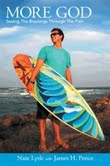
James Pence concludes the miraculous story of Nate Lytle. Hope you’ll check out his novel, More God.
Welcome back, James!
Part 2
The doctors called Nate Lytle’s injury “non-survivable”.
Nate Lytle, a 24-year-old surfer from Victoria, Texas sustained a severe head injury in a fall from a ten-foot ladder. When the doctors did a CAT scan, they discovered the extent of his injuries:
·        He had a softball-sized hole in the left side of his skull.
·        The impact of falling off a ten-foot ladder drove skull fragments deep into his brain.
·        In emergency surgery, the neurosurgeon removed three massive hematomas. When he removed the third, the left side of Nate’s brain collapsed.
·        The CAT scan showed early herniation of the brain stem, a potentially life-threatening complication.
·        The scan also showed a midline shift (the impact caused the brain to shift off-center). The ER physician said that a shift of one or two millimeters was considered “grave.” Nate’s brain shifted 1.7 centimeters off center.

The doctors did not hold out much hope for Nate’s survival. If he did manage to survive, they gave even less hope for his potential quality of life. The areas of Nate’s brain that had been damaged were the parts that control movement, speech and communication. The neurosurgeon said even if Nate were to survive, he would never walk or talk or even communicate again.

Surrounded by family and friends from their church, the only thing Billy and Tammy knew to do was pray. And pray they did.
Tammy knew that Nate could cope with living in a wheelchair, but it would absolutely kill him if he couldn’t communicate. Nate was a strong Christian with a passion for sharing his faith, and she knew that he would rather die than be unable to communicate. So she asked her pastor to pray that Nate would recover, and if he couldn’t recover, that God would take him home.
Nate survived the first night.
Then another.
And another.
The ICU team had its hands full, trying to manage Nate’s fever. And there were some scares when it appeared that he had a blood infection. But day by day, Nate slowly stabilized. He was in a full coma for two weeks and semi-comatose for four weeks after that.
When it appeared that Nate was going to survive, the neurosurgeon suggested that Tammy and Billy tried to get him into rehab. He still didn’t expect Nate to ever be able to communicate, but suggested that rehab might at least help him have some quality of life.
When Tammy asked the neurosurgeon what would be the best facility for Nate to do rehab, he told her TIRR Memorial Hermann in Houston, Texas (The same place where Gabrielle Giffords would do her rehab a few years later). But because Nate had no health insurance and lived out of county, it was very unlikely that he would be able to go there.
Tammy, Billy and the Church began to pray again and within a few short weeks. Nate was admitted to TIRR Memorial Hermann.
Two weeks after he arrived at TIRR Nate woke up from his coma. He was able to walk and, although he stuttered badly, he could talk.
Nate’s road to recovery was long and challenging. After he was discharged from TIRR, he went on to do three months of inpatient rehab at TLC (Transitional Learning Center) in Galveston, Texas. Then more outpatient rehab and speech therapy once he was back home in Victoria.
Although his recovery was nearly total, Nate still bears some after-effects of his TBI. He has problems with short-term memory. At times—particularly when he’s tired—he struggles with aphasia and apraxia (speech disabilities where he knows what he wants to say but has difficulty finding the words and saying them), and he has to stay on seizure medicine.
Amazingly, though, Nate has no physical disabilities other than his shattered his left wrist. (Because of the severity of his head injury, the doctors weren’t able to repair his wrist right away and it healed incorrectly.) But despite massive trauma to the left side of his brain, Nate has no paralysis whatever on the right side of his body. In fact, one year to the day after his injury, Nate began surfing again. It was challenging at first, mostly because of the restricted movement in his left wrist, but before long he was surfing as if nothing had ever happened.
Nate now conducts surf camps for blind, disabled, and autistic children and adults. He also speaks to TBI survivors and their families. His amazing story is told in full in the book I co-wrote with him: More God: Seeing the Blessings through the Pain.
Nate’s infectious, optimistic personality is often reflected in his unique quotes, called “Nateisms” by his friends. My favorite, which inspired the title for this post, is: “Every day’s a good day when you’re not in a coma.”
******************************************************************************

James H. (Jim) Pence is a man of many talents. He’s a performance chalk artist, singer, speaker, published author, editor, collaborator, and in his spare time he teaches karate to homeschoolers. Jim has been called a “Renaissance man,” but he prefers to be known simply as a follower of Jesus Christ and a storyteller. Jim has been published in both fiction and nonfiction. Recently, Thomas Nelson published “The Encounter,” a novella that Jim wrote in collaboration with bestselling author Stephen Arterburn. Jim’s newest book, More God: Seeing the Blessings through the Pain, is available in hardcover, softcover, and e-book format.

Links:
James’ Web site: http://www.jamespence.com/
YouTube Video about Nate Lytle: http://www.youtube.com/watch?v=l_oyX4rA07s
Nate’s Web Site: http://www.natelytle.com/
Photos courtesy of Alan Lindholm, G. Scott Imaging, and Danny Vivian

Every Day’s a Good Day when You’re Not in a Coma!

I’m pleased to host James Pence today who talks about his writing experience with a family whose child suffered a traumatic brain injury and had a truly miraculous recovery.

Welcome, James!

Part 1
Like many others, over the last year I’ve closely followed the story of Gabrielle Giffords. Her recovery from a gunshot wound to the head has been nothing less than remarkable.  However, Congresswoman Giffords’ story was of special interest to me because as her ordeal unfolded, I was completing work on a book about another remarkable traumatic-brain-injury (TBI) survivor: Nate Lytle.

Nate is a young surfer from Victoria, Texas, whose life changed in an instant on June 4th, 2007. Nate had gotten out of the Coast Guard only a few months earlier and was preparing to move to Tallahassee, Florida to be the youth and college pastor at a new church. Since he still had a week before he was to leave for Tallahassee, he offered to help out at his father Billy’s business, Engenco, a company that supplies engine parts to the oil and gas industry.

Nate was atop a ten-foot ladder, trying to help his dad maneuver a 300-pound diesel manifold off a twelve-foot shelf and onto a lift. They lost control of the manifold, and as it fell it clipped the bottom rung of the ladder, catapulting Nate into the air.
As Nate came down, he put out his left hand to try to break his fall, but succeeded only in shattering his wrist. After he landed, he heard a high-pitched ringing in his ears.
Billy climbed down from the shelf and found Nate conscious, but in extreme pain.
“Did you hit your head?” Billy asked.
“My wrist, my wrist,” Nate said, as he cradled his left arm with his right. His hand was a sickening sight, hanging loose, apparently attached only by muscles and tendons.
“Did you hit your head?” Billy repeated.
“No, my wrist. I hurt my wrist,” Nate replied.
Billy ran to get his truck. Because the location of his business was remote and difficult to find, he knew that he would get Nate to the hospital faster by driving himself. What neither Nate nor Billy knew was that Nate had sustained a severe head injury when he landed. Because he was wearing a baseball cap, Billy couldn’t see the huge dent in the left side of his son’s skull.
Billy put Nate in the back seat of his pickup truck’s cab and rushed to the hospital. In the back seat, Nate began to shout Coast Guard commands.
Nate’s mother Tammy arrived at the hospital about the same time that Billy pulled. She helped Nate into a wheelchair and took him into the ER waiting room while Billy parked the truck.
That’s when Nate crashed.
First, he began to talk gibberish. Then he stiffened and started to slip out of the chair.
A security guard helped Tammy wheel him back to a trauma room. The last thing Tammy heard as they closed the door was Nate, saying “I’m gonna puke!”
Over the next few hours, she and Billy would learn that Nate had suffered a massive head injury, He had a softball-sized hole in the left side of his skull, and the bone fragments had been driven deep into his brain.
The neurosurgeon told Billy and Tammy that they should think about making funeral arrangements.
Return Friday for Part II!
*******************************************************************************
James H. (Jim) Pence is a man of many talents. He’s a performance chalk artist, singer, speaker, published author, editor, collaborator, and in his spare time he teaches karate to homeschoolers. Jim has been called a “Renaissance man,” but he prefers to be known simply as a follower of Jesus Christ and a storyteller. Jim has been published in both fiction and nonfiction. Recently, Thomas Nelson published “The Encounter,” a novella that Jim wrote in collaboration with bestselling author Stephen Arterburn. Jim’s newest book, More God: Seeing the Blessings through the Pain, is available in hardcover, softcover, and e-book format.
Links:

James’ Web site: http://www.jamespence.com/

YouTube Video about Nate Lytle: http://www.youtube.com/watch?v=l_oyX4rA07s
Nate’s Web Site: http://www.natelytle.com/
Photos courtesy of Alan Lindholm, G. Scott Imaging, and Danny Vivian

Are Home Deliveries Safe?

I’m pleased to host Tanya Cunningham today as she discusses the safety of home deliveries. I think this is another one of those instances where some important information is not as prominent as what is portrayed by celebrities and others.

What do you think? Welcome, Tanya!

The birth of a new baby is a life changing, exciting event in the lives of the expecting mother and father to be. The number of decisions to be made are numerous and often overwhelming. One question many expecting parents ask is whether to give birth in a hospital setting or at home with the aid of a certified nurse midwife (CNM).

Although there are benefits to both hospital and home births, the American College of Obstetricians and Gynecologists does not recommend home births due to a concern for safety and a need for much more research according to Dr. Joseph R. Wax of Maine Medical Center in Portland.
The benefits of home births that appeal to expectant mothers include a more relaxed or therapeutic setting, decreased risk of tearing and episiotomies, decreased risk of hemorrhage, decreased risk of infections, and a sense of autonomy concerning her birth plan.
In a systematic review of literature by Laurie Barclay, MD and Hien T. Nghiem, MD, they found that planned home births have a worrisome neonatal mortality rate triple that of hospital births, despite similar perinatal mortality rates. So while an actual delivery may go as planned, triple the number of newborns die in the first month of life after a planned home birth.  Barclay and Nghiem also found the 9% of parous (repeat mothers) and 37% of nulliparous (first time mothers) had to be transported to the hospital during planned home labor.
Other safety concerns I personally cannot ignore is the “what if” factor. Hopefully everything does go as planned whether delivering at home or at a hospital, but what if the new mother does hemorrhage in the postpartum period? The amount of blood loss in minutes can be catastrophic, and if it’s me, I want to be in a hospital setting where quick and timely interventions such as an emergent blood transfusion can save my life.
Another example is fetal distress. If severe or prolonged enough, an emergent or “crash” c-section may be a necessity. Again, if it’s me in the delivery room, I take comfort knowing an OR is seconds away if needed.
I love the idea of the home delivery, but I don’t love the realities. The reality is, even in the most straightforward, low risk pregnancies, unforeseen and even emergent complications can occur during labor and delivery. I do feel the OB hospital setting and staff have been vilified a bit, as time driven, heartless wardens chaining the laboring woman to a hospital bed with fetal monitoring against her will.
As a postpartum RN, I can assure you our first interest is the health of the mother and baby. As long as their well being isn’t compromised, mothers are encouraged to labor as they wish. At the hospital where I work, women are free to roam the halls and utilize birthing balls and birthing tubs. There are many women who deliver naturally, and their birth plans are respected and followed.
If you’ve had a negative experience in a hospital setting delivering a baby, feeling rushed by medical interventions or that a c-section might have been premature, remember, that may be more of an issue with your health care provider or the staff working at the time. I’d encourage you to research doctors who are more flexible and work with expectant/laboring mothers to follow their birth plans as closely as possible.
We who are in the business of delivering and caring for new mothers and babies seek to be as therapeutic as possible, but there are times when medical interventions are necessary to protect the health and well being of either the mother or baby. While delivering a baby at home might be more desirable to an expectant mother as far preserving her autonomy, the truth is hospital deliveries are safer. If you’re expecting or planning to have a child in the future, be sure you make an informed decision when considering where to deliver your precious little one.
****************************************************************************
Tanya Cunningham is a mother/baby RN and lives in Missouri with her husband and two small children. She has been caring for mothers and their newborns for almost four years, before which she was a RN in the USAF. During that time, Tanya worked on a multipurpose inpatient unit for two and a half years (taking care of ortho, neuro, medical, general surgical, and tele) and a family practice residency clinic for a year and a half. Tanya earned her BSN at Oral Roberts University.
Tanya has been writing children’s stories for almost 2 years now and is working towards being published. She enjoys raising her children, cooking, and reading medical suspense/mysteries, especially those in Christian Fiction. You can find out more about Tanya by visiting her website.

Forensic Issues: Maintaining the Chain of Evidence

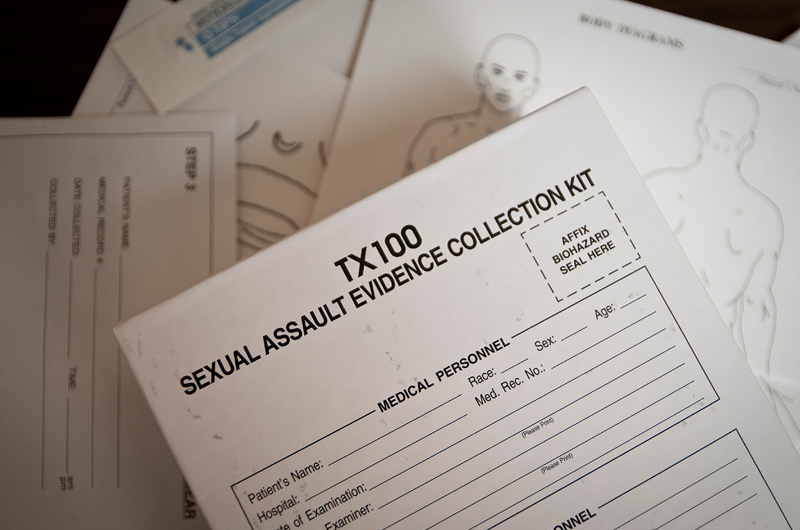
I can remember when I’d been in nursing about two years and became involved with a patient who’d been the victim of a sexual assault. I was tasked with the job of collecting most of the evidence for her rape kit and when I was done, I had about three large paper (grocery size) bags of evidence.

Photo by Todd Wiseman

Taking care of a sexual assault victim takes a lot of time. It can easily tie up one nurse for several hours. What becomes paramount is maintaining the Chain of Evidence or Chain of Custody. You may find that these terms are used interchangeably but essentially mean the same thing.

Chain of custody is a record of who was accountable for the evidence from the time it is collected to the time it is disposed of. It’s a chronological record of signatures of who possessed the evidence when. If the chain of custody is broken, the item may be inadmissible in a court of law.

The envelope is designed to reflect this. It may look something like this:

Jordyn Redwood, RN
Steven Lee– Denver PD

Steven Lee– Denver PD
Luke Simmons– Denver Crime Lab

Etc…etc.

From the point in time where I collect the evidence, it should be locked up where few people have access. For instance, a locker where there is only one key. It could come into play who has access to the locker so it should only be a small group of people. If the evidence cannot be locked up, then it must stay in the possession of the person who collected it until it is handed off to the next responsible person– typically someone in law enforcement.

In my case, there wasn’t a place to lock it up. The police took about an hour to claim it. So, as I continued to care for patients, I literally carried those bags with me from room to room.

Can you think of a plot where chain of evidence could come in to play? My thought was… what if someone was an impostor and signed on the chain of custody log. What would happen when that was found out?

Mark Young: Heroes Among Us 2/2

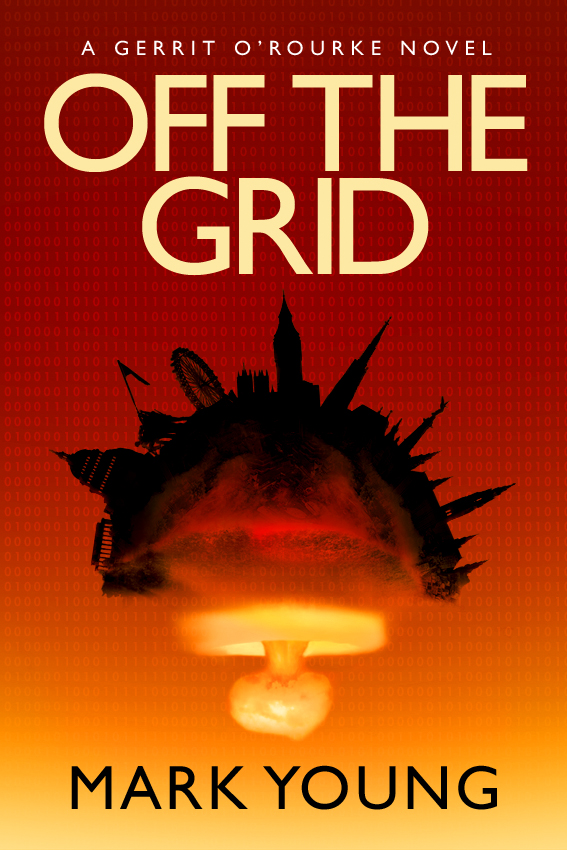
Today, we’re continuing with Mark Young’s posts that reflects how a personal experience provided fodder for the opening scene of his latest novel, Off the Grid. A great read for a great price!

Welcome back, Mark!

They seemed to vanish as we neared where I last saw them. We followed the trail they made for quite a ways without any further sightings. Finally, orders came through to break off and head toward our main camp. Just as we veered off, enemy soldiers opened up. Our machine gunner was the first man hit. My adrenaline kicked in. As I reached for another magazine of ammunition, I realized that I had been hit. Someone yelled “medic” as the jungle around us seemed riddled with enemy fire. I saw a lone corpsman crawling through the brush, working his way toward our position amidst heavy enemy fire. With little regard for his own safety, I watched this man move forward and began to treat each of us who had been hit.

He worked with speed and compassion in what seemed like an impossible situation. Nightfall soon descended and we pulled back a short distance. We could hear movement all around us that night as we waited for morning light. Air support could not reach us until daybreak, and for the moment we were cut off from the rest of our troops. The machine gunner lay mortally wounded, but it took most of the night for him to die. That corpsman stayed with the dying Marine, trying to comfort the injured man at great risk to himself. The dying man occasionally screamed out in pain, and the noise threatened to give our position away. The enemy might have easily lobbed a grenade or fired a shot in our direction, using the howls of pain to locate our position. That brave medic, however, stayed by the dying man’s side until the very end risking his own life.
That corpsman was my idea of a hero.
As I came back into the present and began to write, I tried to remember those moments and make the memory of that corpsman, and others I met on the battle field, a part of what my main character would become—a hero. In this world, we need to witness the courage and bravery lived out in the lives of those around us. We need to find those heroes among us. We saw it in the lives of others when the events of 9/11 changed us forever. Today, there are heroes living among us, normal everyday folk whose bravery might never be known—a nurse comforting the injured, a doctor easing the pain of others. And a corpsman braving a foreign battle field to provide aid and comfort.
Our world needs to see that there are more heroes. That is why readers will always find a hero somewhere in my novels. These main characters will not always be perfect—but they always come through in the end regardless of the cost.

*****************************************************************************

Mark Young is an American novelist. His second novel, Off the Grid, is his first international thriller. Mark was a police officer with the Santa Rosa Police Department in California for twenty-six years; an award-winning journalist; and a Vietnam combat veteran. He served with several law enforcement task force operations, including the presidential Organized Crime and Drug Enforcement Task Force targeting major drug traffickers, and the federal Organized Crime Task Force charged with identifying and prosecuting prison gang leaders. He lives in the Pacific Northwest with his family. Visit Mark’s blogs for further information at Mark Young: Arresting Fiction… or at his mystery blog site Hook’em & Book’em.

Mark Young: Heroes Among Us 1/2

Mark Young is a good friend and talented writer. I have read the opening scene of Off The Grid and it is gripping! I highly suggest you pick this novel up.

Welcome, Mark!

One of the bravest people I ever met was a navy corpsman who came to my rescue on a battlefield many years ago.

As an author, creating fiction sometimes forces you to relive moments of your own life that you might otherwise suppress—maybe even try to forget. As I began creating my main character, Gerrit O’Rourke, in my latest novel, Off the Grid, one of these moments came crashing through from the past.

I began creating Gerrit as a lieutenant in the U.S. Marine Corps in the opening prologue. The scene opens during a military operation in Iraq, dubbed Phantom Fury, one of several hard-fought operations to gain control over the city of Faluja, in 2004. It was an intense fight between Marines and enemy combatants. Many military veterans likened these battles to the conflict to gain control of Hue City, in Vietnam, more than forty years ago, door-to-door firefights that by their very nature create heavy casualties.
As this character developed in my mind, I brushed aside the cob webs and relived moments of my own experience in the Marines during the Vietnam conflict. It was 1968. Our company had sustained 120 percent casualties in the battle over Hue City. I and my fellow Marines, fresh from the states, became replacements for those killed or injured in that conflict.
We were moved from that battlefield to the mountain tops along what was dubbed the Ho Chi Minh trail, a jungle pathway weaving through the countries of Laos and Cambodia, along the Vietnamese borders. This network of jungle trails, beneath heavy jungle foliage, was being used by the enemy to move troops and equipment from North Vietnam into South Vietnam. We were charged with providing protection to engineers, as they built mountaintop landing zones (LZs) to allow helicopters to land troops and equipment into the area.
One day my platoon was sent out to scout the mountain slopes around this LZ. It had been raining, and fog hugged the mountains in a chokehold. At times, it seemed visibility extended to the end of my nose. I had been selected to walk point that day. We worked our way quite a ways from the LZ, and it was getting late in the day.
At one point the lieutenant directed us to start heading back home. Leading our platoon down the mountain side, I saw movement further down the slope, figures like gray ghosts working their way through the fog. These ghosts turned out to be North Vietnamese and Chinese soldiers. I was ordered to start following them to see if we might locate their main body of troops….

Mark concludes on Wednesday!

******************************************************************************

Mark Young is an American novelist. His second novel, Off the Grid, is his first international thriller. Mark was a police officer with the Santa Rosa Police Department in California for twenty-six years; an award-winning journalist; and a Vietnam combat veteran. He served with several law enforcement task force operations, including the presidential Organized Crime and Drug Enforcement Task Force targeting major drug traffickers, and the federal Organized Crime Task Force charged with identifying and prosecuting prison gang leaders. He lives in the Pacific Northwest with his family. Visit Mark’s blogs for further information at Mark Young: Arresting Fiction… or at his mystery blog site Hook’em & Book’em.

Medical Question: Brain Surgery

Today, Amitha concludes her thoughts on surgery with some specifics about brain surgery.

–>>Note: If you’re squeamish stop reading here!<<–

As far as what would exactly happen during the brain surgery, it’s hard for me to say because I don’t really know what kind of surgery your fictional patient is having. But most basically, the surgeon first cuts into the patient’s scalp, exposing the skull. They drill open and remove a portion of the skull, then cut into the dura (a membrane surrounding the brain) to expose the brain. Then the surgery is performed (depends on the type of surgery). At the end of a craniotomy, the skull is reaffixed using screws or other techniques (though in a “craniectomy” it is not replaced).

This website: http://www.brain-surgery.us/12_open_surgery_postop.html goes into some specifics about what’s involved during different brain surgeries. Make sure to scroll down to the bottom for some nice images.

Search YouTube for craniotomy:

If you have an idea what specific kind of surgery your fictional surgeon is performing, there’s probably a video of it on YouTube.

But as far as things that would make your story believable, I think this video of an awake craniotomy is excellent. You get views of the room, the equipment they use, the patient, the doctors and others in the room, and the surgery itself.


This video isn’t quite as self-explanatory, but shows a surgery where the patient isn’t awake and where a special microscope is used during the surgery.


When writing, I’d try not to get too bogged down in research and details. You’ll bore yourself and your readers to tears. I’d focus on getting the overview of things right. What people are wearing. What people are doing—rather than specifics of the surgeries.

It’s the simple things that will make your reader question your credibility as an author. For example, knowing that your surgeon will already have her face mask and hair coverings on before she enters the OR and that she’d keep these on the entire time she’s in there is something that anyone who has seen a surgery would notice. Whereas, choosing the wrong type of scalpel, or the wrong kind of anesthesia, would be overlooked by most people.

******************************************************************************

Amitha Knight is a former pediatric resident turned writer of middle grade and young adult fiction. She’s also a blogger, a book lover, an identical twin, and a mom. Follow her on twitter @amithaknight or check out her website: http://www.amithaknight.com/.

Medical Question: Surgical Timeline

I’m pleased to have Amitha Knight back who will be hosting a medical question today and tomorrow about surgeries. Today, she covers the general surgical timeline and what the patient’s process is through the OR. On Friday, she’ll cover more in depth about brain surgeries.

RB asks:

In the book my one lead character, a Brain surgeon, will be performing two major surgeries during the life of the book, one on (an animal), and the other she will be performing a radical operation on the male lead.

Could you, in as short as possible, give me an overview of what happens during such a surgery. The big picture and any suggestions you could give me that would make the scenes believable.

Even if you can point me at a website where I can read up about brain surgery – any videos would help as well, I am not squeamish about blood etc… so don’t worry about that side (more fascinated by the whole process).

Any help would seriously be appreciated.

Amitha says:

While I saw lots of surgeries during my 12-week surgery rotation in medical school, ranging from cholecystectomies (gall bladder removal) to liver transplants to cardiac surgeries to breast implants, I didn’t see any brain surgeries. I especially didn’t see any veterinary surgeries so I can’t comment on that part of your question.

The reason I didn’t see the brain surgeries was that the surgeons wanted you to be there for the entire surgery and brain surgeries can take a long time. For example, I heard of one brain tumor removal taking 6 hours. A quick search of the web reveals people who report their brain surgeries having taken more than 12 hours–not sure if they’re counting recovery time. Performing and assisting surgeries for long periods of time requires stamina, dedication, and patience. Alas, our hospital didn’t have a surgical theatre like on Grey’s Anatomy where people could eat lunch, gossip, and come and go as they please while watching surgeries.

While I haven’t seen a brain surgery, the very basic timeline of surgeries are generally the same:

  • The patient is wheeled into the sterile operating room (OR) and transferred to the operating table. Everyone in the room (besides the patient) is required to wear a face mask, a hair covering of some kind, scrubs, and shoe covers.

  • The anesthesiologist sedates the patient (sometimes this is started in the pre-op area). During some brain surgeries, the patient is kept awake for portions of the surgery (so they can monitor the patient’s brain functions by having the patient do different things during surgery) while in others, the patient is intubated and kept under general anesthesia the entire time.

  • The patient is positioned appropriately for the surgery. Parts of the body that aren’t being operated on are covered up. The patient’s head is shaved (or at the very least the part that they are operating on I should think).

  • Meanwhile the surgical team “scrubs in” (i.e. they go to a separate room attached to the OR to thoroughly clean their hands/arms up to the elbows and then return to the OR where they are helped by surgical technicians and nurses into sterile gowns and gloves, all the while making sure not to touch anything that isn’t sterile). Sterile coverings (which are usually all blue) are draped everywhere so that people who are “scrubbed in” don’t accidentally touch non-sterile things. People who aren’t “scrubbed in” aren’t allowed to touch anything in the sterile field. Keeping things sterile and clean is key.

  • The surgical area is “prepped” (i.e. cleaned).

  • Surgeons and surgical techs do a “time out” and double check the patient’s name and the procedure being done and the area being operated on.

  • The first incision is made.

  • The surgery is performed. Tools are all counted by the surgical tech. (During long surgeries, this may happen several times throughout.)

  • The surgical site is “closed” i.e. stitches are put in, the wound is dressed.

  • The patient is wheeled to the post-operative area (“post-op”).
Have you ever written a scene that involved the operating room?
******************************************************************************

Amitha Knight is a former pediatric resident turned writer of middle grade and young adult fiction. She’s also a blogger, a book lover, an identical twin, and a mom. Follow her on twitter @amithaknight or check out her website: http://www.amithaknight.com/.