Pacifiers: Detrimental or Beneficial?

I’m so pleased to have Tanya Cunningham back as she discusses another popular medical myth– or is it? Do pacifiers cause difficulty with breastfeeding.

I think it’s important on a couple of levels for an author dealing with these issues to be aware of both sides. A seasoned, nursing professional keeping up with research is going to know this information. Our responsibility as nurses is not to sway the patient to our belief (though, of course this does happen) but to present unbiased information to the family so they can make the decision that best suits their needs.

Welcome back, Tanya!

Pacifiers have long been vilified as major disruptors between infants and successful breastfeeding. Have they been given a bum rap, or are the accusations substantiated? Is it actually true that pacifiers
interfere with breastfeeding? If you asked me this a few months ago, I’d say, “It depends.”

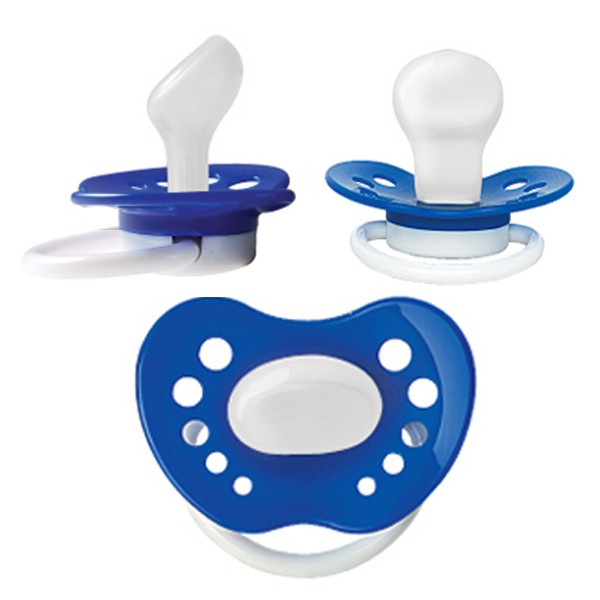
Being a postpartum mother/baby nurse, I want all my patients who endeavor to breastfeed to be as successful as possible. I would discourage pacifier use if the mother had “flatter” or “inverted” tissue. However if her anatomy were similar to the pacifier (everted and firm), the risk of “nipple confusion,” I felt, was decreased.

I would relay my own experience with my two children, who I had breastfed for a year each. I had used pacifiers with them, but only if they were fussy and needed to suck for soothing. Then when they were calm, I’d take it away, not letting the pacifier, “just hang out” in their mouths. Neither of them used pacifiers beyond a couple to a few months old.

In medicine and healthcare, we want our practice to be evidence or researched based. If we do or recommend something, it’s because it has been proven by research studies. Do you feel like medical recommendations are always changing? You’re right. In medicine, we are always learning and growing.

With new research, established ideas can be challenged, sometimes causing us to cringe, but forcing us to grow. In researching for this blog post I found intriguing newer evidence concerning pacifier use that I’m excited to share with you.

In 2011, the American Academy of Pediatrics updated its recommendations regarding the prevention of sudden infant death syndrome or SIDS. Interestingly enough, among the updates was offering a pacifier at nap time and bedtime. According to an article by Medscape Education entitled, “AAP Statement Expands SIDS Guidelines on Safe Sleeping Environment,” it doesn’t matter if the pacifier falls out of the baby’s mouth during sleep. “The protective effect persists throughout the sleep period,” states the article. The reason for this isn’t known as of now, but the evidence is there.

At the end of April this year, the Today Show ran a segment on pacifiers actually promoting breastfeeding. Are you thoroughly confused now? The story spoke on how the Oregon Health & Science University Doernbecher Children’s Hospital, in seeking to become a UNICEF and WHO

(World Health Organization) Baby Friendly Hospital locked up their pacifiers. This was to be in compliance with the WHO’s “Ten Steps to Successful Breastfeeding.” On the Today website you’ll find a post by Corey Binns who reports that the hospital’s exclusive breastfeeding rate dropped from 80% to 70% after easy access to pacifiers was blocked. The hospital performed an observational study of 2,249 babies from June of 2010 to August of 2011.

This study raises questions instead of answers for me. Are health care workers doing new mothers a favor by locking up pacifiers? Is practicing the suck reflex between feedings promoting breastfeeding in newborns? The truth is more research needs to be done. What do we do in the mean time? I think the only thing I can do is tell new mothers what I know, the current idea of pacifiers causing “nipple confusion” may not be true, the AAP now recommends pacifier use during sleeping times to reduce the risk of SIDS, and newer research may actually show benefits of pacifier use in relation to successful breastfeeding. The new mother can consider the newer evidence with a grain of salt, pending corroborating studies, and make an informed decision on what’s best for her and her newborn. 

Each mother and baby are unique and what is true for one pair may not be true for another. If you’re

a new mother reading this, and you’re now not sure what to do, use your mommy instincts. Trial and
error is a natural process in motherhood. Decide for yourself if using a pacifier for your little one is detrimental or beneficial.

***********************************************************************
Tanya Cunningham is a mother/baby RN and lives in Missouri with her husband and two small children. She has been caring for mothers and their newborns for almost four years, before which she was a RN in the USAF. During that time, Tanya worked on a multipurpose inpatient unit for two and a half years (taking care of ortho, neuro, medical, general surgical, and tele) and a family practice residency clinic for a year and a half. Tanya earned her BSN at Oral Roberts University.
Tanya has been writing children’s stories for almost 2 years now and is working towards being published. She enjoys raising her children, cooking, and reading medical suspense/mysteries, especially those in Christian Fiction. You can find out more about Tanya by visiting her website.

The Death Chill 2/2

Today, we’re continuing with Ramona Richard’s two part piece on her personal experience with hypothermia. Her details are critical for getting the symptoms right.
Welcome back, Romona!

I’ve been soggy drunk, and I’ve had serious sugar lows. Those two experiences are the only ones I know that can compare to the sensation of having your body and brain stop talking to each other, then try to shut down completely. I wanted to sleep, but the divemasters wouldn’t let me. When I could finally walk without stumbling, they took me and my dive bag into the hold and told me to strip, dry off, and get into dry clothes. They turned their backs but wouldn’t leave me. Afterwards, they wrapped me in blankets head-to-toe and made me drink a lot of room temperature water.

The cold didn’t leave immediately. It lived on, deep in my muscles, for several hours, re-emerging ever so often in a chill and shudder. An unexpected cramp. I found that even walking carried a tinge of fear, as if the cold would return at any minute.
People who’ve never been through this have said to me, “Oh, you were just really cold.” No. I wasn’t just really cold. I felt deadened, frozen from the inside, helpless, non-functional, and terrified.
And one thing no one warned me about was the after effects. I don’t even know if this is medically proven, but it was my experience, and it might make for a good story element. I remain hypersensitive to cold, as if the hypothermia had messed up my internal thermostat. At times when I should have been “just cold,” I’ll become chilled and shaky, unable to regenerate my own warmth. Sometimes, at night, I’ll wake up shivering, and no pile of quilts is enough to stop the shaking.
One of the most memorable reoccurrence was in Gatlinburg, which is in the mountains of east Tennessee. I’d worn shorts during the warmth of the day. Then a friend and I had dinner, during which I’d drunk ice water. When we came out, the air temp had dropped from the 70s into the 40s, and within a few minutes, that familiar chill sank into my muscles. I started shivering and I couldn’t get warm. I grew angry and weak, and the walk back to our hotel became a series of short stops at shops, hotel lobbies, and bars while I warmed up enough for the next few yards.
Since that time, I watch the weather like a hawk, and I ALWAYS have blankets and water in my car, even in the summer. It changed other things for me as well. I dislike being hot, and had always preferred cold weather to warm (which is why I was snow camping). Now, I’m wary of it.
So why did I become hypothermic on one dive and not on the previous one? I believe it happened mainly because I was stupid. I drank too much alcohol the night before, slept little, and downed too many Sudafed, those little red pills my buddies on the boat called “diver’s candy.” All of it acted to dehydrate me – a prime set-up for hypothermia. Between that and the way water sucks heat out of your body, I became a self-induced victim.
Now, when I wake up shivering or feel that internal chill when I’m out, I know the solution is warm or room temperature water.
As a writer, I’ll someday work this into a plot. Mild hypothermia is perfect for slowing down your characters, without making them sick or injured. It’s great for making one character protective of the other, and a marvelous reason a hero and heroine must seek shelter together, yet be ready to go the next day. 
I’ve listed some links below that go into more detail about the different causes and levels of hypothermia. My case was mild—no frost bite, organ damage, or unconsciousness—because Rob’s brain kept working when my started to falter. To this day, I try not to think about what would have happened had I been deeper, or he’d been farther away…although that does put my romantic suspense brain into high gear…
*******************************************************************************

Ramona Richards, fiction editor for Abingdon Press, started making stuff up at three, writing it down at seven, and selling it at eighteen. She’s been annoying editors ever since, which is probably why she became one. She’s edited more than 350 publications, including novels, CD-ROMs, magazines, non-fiction, children’s books, Bibles, and study guides. Ramona has worked with such publishers as Thomas Nelson, Barbour, Howard, Harlequin, Ideals, and many others.

The Death Chill 1/2

I’m so pleased to host amazing editor with Abingdon Press, Ramona Richards. Ramona has been a great supporter of this blog and she is sharing a first hand experience of hypothermia. I believe first hand accounts are invaluable when writing scenes where a character might experience these symptoms.

Welcome Ramona!

I didn’t realize I was in trouble. Fortunately for me, my dive instructor did.

I was about thirty feet underwater, still clinging to the anchor rope. For some reason, I couldn’t decide what I needed to do next. I felt perplexed and frustrated. And cold. The Gulf water temperature hovered at about sixty-five degrees, but we had dived the day before, so the chill of the water shouldn’t have surprised me. I’d certainly not had any trouble yesterday. But now . . . why did I feel so cold? I shuddered lightly.

Someone tapped on my tank, and I turned. When I did, a deeper chill shot through me and I shivered hard. Rob, my instructor, floated a few feet away, his face scrunched in concern. He held up one hand, his thumb and forefinger touching, making a circle. Are you OK?
I frowned, not understanding why Rob was concerned, and his eyes widened, eyebrows arching behind his mask. I shivered again, harder and longer. I could no longer feel any warmth in my wetsuit or muscles, and my fingers tingled, going numb. Confusion about what to do, how to respond, clouded my brain.
Rob signaled frantically. Up! UP! When I didn’t respond, he shoved me upward and reached for the valve on my vest, causing it to inflate. I was going up, whether I liked it or not.
We had only been in the water a few minutes, so there was no need for the 15-foot safety stop. Rob put me on the surface, and spit out his regulator, ordering me to grab the rope that trailed along the side of the boat. I tried to swim toward the back of the boat, but my legs didn’t want to pump.  My hands wouldn’t close on the rope, and the iciness of a walk-in freezer cut into every muscle. I felt totally helpless, and I’d begun to shake so violently that terror finally pushed through my confusion.
Behind me, Rob bellowed at the divemasters, “We have to get her out of the water!” He pushed me to the ladder at the back of the boat, and I suddenly felt several strong hands grab my tank and vest and haul me onto the deck. By now, I’d ceased functioning. I couldn’t stop shaking, and I felt inexplicably exhausted and sleepy. My legs refused to support me, and only a few words emerged, jumbled and slurred. I barely comprehended that I was being tugged along the deck toward the front of the boat. There the divemasters turned a warm shower on me, and began to remove my gear. They got me up on a bench and braced me while the shower poured lovely warmth inside my wetsuit.
I finally pushed out a halfway coherent, “Wha—?”
“You’re hypothermic. Sit still. When your suit gets warm, we’ll get you out of it and into some warm blankets.”
That took awhile. My hands and feet were bluish, and I couldn’t put words together, much less utter them through lips that felt numb, swollen, and useless. It was as if my entire face and my hands had been deadened with Novocain. After which I’d been locked in that walk-in freezer for a few hours.
I had never experienced this kind of penetrating, overwhelming sense of cold. And I’ve been cold. I once broke my ankle snow camping and had my socks freeze on my feet overnight. Been lost in an icy winter rain with only a jacket. But nothing prepares you for the helpless feelings that arrive with hypothermia.

******************************************************************************

Ramona Richards, fiction editor for Abingdon Press, started making stuff up at three, writing it down at seven, and selling it at eighteen. She’s been annoying editors ever since, which is probably why she became one. She’s edited more than 350 publications, including novels, CD-ROMs, magazines, non-fiction, children’s books, Bibles, and study guides. Ramona has worked with such publishers as Thomas Nelson, Barbour, Howard, Harlequin, Ideals, and many others.

Micro Premies: Terri Forehand

I’m pleased to host neonatal nursing expert Terri Forehand. She will be doing several posts on the unique problems as it relates to gestational age. This is very important for writing medical accuracy into novels as to what these tiny charges and their parents face.
Welcome, Terri!

The neonatal intensive care unit is a frightening place for most visitors. Infants from 23 weeks gestation and older can be found attached to as many tubes and wires making the technical and medical environment confusing and overwhelming.

In the midst of the confusion of an NICU is an awesome atmosphere of healing and growth. The sole purpose of such a place is to mature these tiny creatures into healthy infants who suck, swallow, and breathe without mechanical assistance. In short, is nothing but amazing.
Follow us here to learn about each gestational stage of such infants whether for your own information or for details for your next novel. Today, we’re starting with micro premies.
Gestation: 23 weeks.
Most medical professionals consider a fetus over 23 weeks to be viable, meaning they can be assisted to grow and mature into a full term infant outside of the womb. No one that I know would ever guarantee an infant this young will mature without many hurdles and without the risk of complications that go along with prematurity. But there are many success stories over the course of years of researching neonatal care and progress is outstanding.
The fetus born at 23 weeks gestation will have loose thin skin. Skin grows faster than fat develops and at this stage the fetus doesn’t show much fat development so they are all skin and bones.
After 23 weeks the fetus will begin packing on pounds and increasing in weight. The fetus at 23 weeks is approximately 8 inches long and just over one pound and growth is rapid for the next few weeks.
The essential problem with survival of a 23 week fetus outside of the womb is breathing. Lung development at this age is very immature and the lining of the lungs is stiff making the exchange of oxygen more difficult. One of the main goals of the NICU team at this stage is to promote adequate oxygenation with supplemental oxygen and a variety of mechanical adjuncts to assist with breathing.
Another classic characteristic of a 23 week gestational infant is the eye lids most often are still fused closed. The combination of loose thin skin, extra hairy limbs, and fused eyelids make for increased anxiety for new parents and an overwhelming fear of what comes next.

Have you ever written a NICU scene for your novel?

********************************************************************************

Terri Forehand is a pediatric/neonatal critical nurse and freelance writer. She writes both fiction and nonfiction, is the author of The Cancer Prayer Book released in 2011. Her picture book titled The ABC’s of Cancer According to Lilly Isabella Lane is due out in 2012. She writes from her rural home in Indiana which she shares with her husband of almost 30 years and an array of rescue animals.  

Dissociative Fugue: Tanya Goodwin

I’m so pleased to have Dr. Goodwin back. She is a lot like me in that the rare and unusual fascinate her. I thoroughly enjoyed this post and I think it makes for a good character disease/developemnt.


Welcome back, Tanya!


In case you missed my last month’s guest post on necrotizing fasciitis, rare or unusual medical conditions fascinate me. Today’s weird condition is dissociative fugue, the basis of my debut novel, If Memory Serves, in which my protagonist, Dr. Tara Ross experiences this disorder.


The Merck Manual defines dissociative fugue as one or more episodes of amnesia resulting in the inability to recall one’s past and the loss of one’s identity accompanied by the formation of a new identity with sudden and unexpected travel from home; a traumatic nature that isn’t explained by normal forgetfulness.

The DSM IV (a diagnostic manual of psychiatric disorders) characterizes dissociative fugue by 1) sudden and unplanned travel from home 2) inability to recall past events or important information from the person’s life 3) confusion or loss of memory 4) significant distress or impairment.

Fugue is temporary and there isn’t a physical or organic cause (ie brain injury or stroke). Although it’s rare (2% of population), it can happen to those that are chronically stressed, often with a major inciting event noxious enough to catapult them into a fugue state. It’s the brain’s defense mechanism, and eventually resolves within days, weeks, or months, leaving them unaware of occurrences during their amnesic state. They are fully functional but may not recall their identity or parts of their identity. They are often called travelers since they wander or travel away from home. Their nomadic adventure generally occurs after a stressful event.


Physiologically, the hippocampus of the brain is bathed in cortisol, the stress hormone secreted by the adrenal glands, those glands that sit on top of the kidneys. Normally cortisol is ushered away from the brain by calming hormones that bind or pick up cortisol and send it to the kidneys for excretion. The chronic wearing of the nervous system leads to the decrease of important neuropeptides and neurotransmitters necessary for memory creation, processing, and storage. The brain is like a computer and if pressed with too many requests in too short of time freezes from the overload.


So what’s the treatment? Dissociative fugue is temporary and will eventually resolve, but psychotherapy and cognitive therapy can be very helpful. If the person is very anxious or clinically depressed, pharmacologic remedies are considered. And of course, other organic sources of memory loss should be ruled out by blood work and radiologic tests such as CAT scans.


Because the disorder is self-limiting, the prognosis is good. Attention to the underlying emotional issues decreases the likelihood that dissociative fugue may reoccur.


So how did I get interested in dissociative fugue? When I was an OB/GYN resident (doctor in training) I often left the hospital exhausted and stressed. One day, I couldn’t remember how I had made it home, waking up in my bed completely disorganized. It was a frightening experience, at least for a minute or two. That prompted me to think of dissociative fugue and what it must feel like to be totally lost.
*************************************************************************
Tanya Goodwin is an obstetrician/gynecologist and a novelist of romantic suspense with slice of medicine. She enjoys sprinkling unusual medical conditions in her writing. A character in one of her novels has the misfortune of contracting necrotizing fasciitis, and in her debut novel, If Memory Serves, due for release in November by Knight Romance Publishing, her main character, Dr. Tara Ross has dissociative fugue, a rare disorder as well. You can find out more about Tanya at www.tanyagoodwin.com

Author Interview: Candace Calvert 2/2

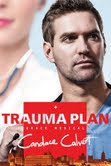
We’re continuing today with my interview with medical thriller writer Candace Calvert. Be sure to pick up her latest and greatest novel, Trauma Plan.

Welcome back, Candace!

Jordyn: Tell us about your current release.
Candace: Trauma Plan is the first book in my (Texas set) Grace Medical series. Here’s the back cover blurb:

Sidelined by injuries from a vicious assault, nurse chaplain Riley Hale is determined to return to ER duties. But how can she show she’s competent when the hospital won’t let her attempt even simple tasks? To prove herself, Riley volunteers at a controversial urban free clinic despite her fears about the maverick doctor in charge.

Dr. Jack Travis defends his clinic like he’s commander of the Alamo. He’ll fight the community’s efforts to shut its doors, even if he must use Riley Hale’s influential family name to make it happen.
As Riley strives to regain her skills, Jack finds that she shares his compassion—and stirs his lonely heart. Riley senses that beneath Jack’s rough exterior is a man she can believe in. But when clinic protests escalate and questions surface about his past, Jack goes into battle mode, and Riley wonders if it’s dangerous to trust him with her heart.

Jordyn: What’s one thing readers might be surprised to learn about you?
Candace: Like the nurse heroine in Trauma Plan, I’m also a certified lay chaplain.
Jordyn: Most embarrassing moment while nursing? Most triumphant nursing moment?
Candace: Embarrassing: I once walked into an ER treatment room, glanced at the partially clad young man on the gurney and asked, “Can you expose your upper thigh without taking off those bicycle shorts?”  He stared at me for a moment, then struggled to do that: healthy skin exposed. Confused, I asked him where his “infected boil” was. It turns out that the clerks had put the wrong ID sticker on this man’s chart. He was there for a sore throat. I can’t tell you how many times nurse friends STILL snicker and ask me, “Can you expose your thigh . . .”?
Most triumphant: Once there was a woman brought in as a possible overdose, she was unconscious, pale, rapidly deteriorating. We were about to intubate, give reversal agents and lavage. In talking with the husband, I learned that she’d also taken Benadryl because of a “sudden rash and itching.” She was in anaphylactic shock, but too far gone to show the hives. We turned her around in moments with the appropriate interventions. It was a small “triumph,” but I always think about the “what ifs” had we proceeded along that OD path instead.
Jordyn: Most embarrassing writing moment? Most triumphant writing moment?
Candace: Most embarrassing: Probably my first submitted manuscript years ago. After I mailed it off (snail mail era), I was looking through the Word file and realized that I’d accidentally pasted a huge chunk of Internet research smack in the middle of a scene. To this day I always check my manuscripts compulsively, then still hesitate and take a deep breath before pushing the “Send” button. Submission PTSD.
Triumphant: The most obvious would be getting that first call from my agent Natasha Kern saying she was interested in signing me. But, in truth, the moments continue. Not so much the starry reviews or awards, but rather the connections I make with readers; the incredible notes that say my stories have touched their lives, made a difference, offered hope in tough times. For me, this is exactly like “the best part” of nursing.
Jordyn: What are you writing now?
Candace: I’m currently writing (working title) First Responder, the third book in the Grace Medical series.
Jorydn: Any final thoughts?
Candace: I’d like to say how very happy I am that medical drama has found its place in today’s Christian fiction market. I love teaming with talented writers like Dr. Harry Kraus, Hannah Alexander, Dr. Richard Mabry and Jordyn Redwood (!) to invite readers into our exciting world. And help “Grey’s Anatomy find its soul.”
Thank you for hosting me here, Jordyn. It’s a pleasure to connect with your readers. I invite them to stop by my website: candacecalvert.com or visit me on Twitter and Facebook. Happy reading!
***********************************************************************


Candace Calvert is a former ER nurse who believes love, laughter and faith are the best medicines. Her Mercy Hospital and Grace Medical series offer readers a chance to “scrub in” on the exciting world of emergency medicine—along with a soul-soothing prescription for hope. Wife, mother, and very proud grandmother, she makes her home in northern California.

Author Interview: Candace Calvert 1/2

I can’t tell you how excited I am to be interviewing Candace Calvert today and Wednesday! She’s a fellow medical thriller writer, a great mentor and true friend. Her novel, Trauma Plan, just released so be sure to pick up your copy.

Welcome, Candace!

Jordyn: Tell us a little about your nursing/writing path. Were you always an ER nurse? Have you always written stories? Or, did writing come after nursing?
Candace: I was an ER nurse for more than 3 decades. Yes, (laughing) I was drafted into this calling as a mere child. Writing has always been an outlet for me, and in school I was one of those rare (and possibly odd) students who welcomed essay assignments as a treat. Though I tinkered with creative writing off and on during my adult years, it was a near-death experience that actually launched my publishing career.
In 1997, I was thrown from a horse and eventually landed “on the other side of the stethoscope” in my own trauma room. I’d suffered thoracic and multiple rib fractures, a bleeding lung, cervical fractures and a spinal cord injury. The inspirational account of that event—“By Accident”—appears in Chicken Soup for the Nurses Soul and was my first published work.
Jordyn: What was your favorite part about nursing? Least favorite part?
Candace: Favorite part: That heart-warming and goose bumpy moment when you know that “being there” for a particular patient has made a big difference in that person’s life. Least Favorite: Inflicting physical pain during necessary treatment, especially with children.
Jordyn: What do you think are some common misconceptions about nurses– or ER nurses specifically?
Candace: People think that nurses get “tough” and immune to the pain and tragedy they experience in their careers, that there is some protective psychological flak jacket we pull on to distance ourselves. It’s so not true. As a peer counselor for Critical Incident Stress (“burn out”), I saw the profound effects that painful scenarios have on staff. One of the main reasons I write medical fiction is to reveal (and honor) the compassionate hearts behind the stethoscopes.
Jordyn: What made you decide to pursue publication?
Candace: In truth, my husband. I’d been dabbling, dreaming. One day he signed me up for an online writing class, saying, “Stop talking about writing a book and just do it.” Pushy and wonderful man.
Jordyn: What are some common medical inaccuracies you see when you read novels or watch television?
Candace: One of things that irks me most, is when a young, healthy person is the victim of trauma (gunshot, MVA, etc.), drops to the street of a huge city (meaning LOTS of hospitals!) and someone does a quick pulse check and then says with wisdom and melodrama, “He’s gone.” Excuse me? I’m sure it’s plot effective to get rid of that victim, but no CPR, no 911 call, no transport to a nearby trauma center? Where’s that “Golden Hour”?  A witnessed collapse and no one does anything. Makes me crazy.
We’ll continue with Candace on Wednesday. Looking forward to seeing everyone for Part II!
**********************************************************************

Candace Calvert is a former ER nurse who believes love, laughter and faith are the best medicines. Her Mercy Hospital and Grace Medical series offer readers a chance to “scrub in” on the exciting world of emergency medicine—along with a soul-soothing prescription for hope. Wife, mother, and very proud grandmother, she makes her home in northern California.

Obstetrical Emergencies: Prolapsed Umbilical Cord

If you’re a writer and you are wondering about a grave situation to put a pregnant, delivering woman into– this might be your solution. A prolapsed cord.

Heidi Creston, OB RN extraordinaire returns to discuss this obstetrical emergency.

Welcome back, Heidi!

The umbilical cord connects the baby from its umbilicus (belly button) to the placenta (afterbirth) inside the uterus (womb). The cord contains blood vessels, which carry blood, oxygen and nutrients, to the baby and waste products away. After the baby is born, the cord is clamped and cut before delivery of the placenta.
A prolapsed cord is when the umbilical cord slips or falls through the open cervix (entrance of the womb) in front of the baby before the birth. When the cord prolapses, it reduces the amount of blood and oxygen supply to the baby. This causes an emergency situation, which requires immediate delivery of the infant.
A doctor, midwife, or labor nurse will need to insert a hand in your vagina to lift the baby’s head to stop it from squeezing the cord. Alternatively a catheter (tube) may be put into your bladder to fill it up with fluid. This will help to hold the baby’s head away from the cord and reduce pressure on it.
If the provider is able eliminate pressure on the cord through positioning, and the vaginal delivery is imminent, then they may proceed with the vaginal birth. Most providers will perform an emergency Cesarean section.
Patients will be placed in a knee chest position, in order to reduce compression on the cord. The labor nurse will hold the fetus’s presenting part in the vaginal canal, when the physician is ready, the nurse will apply pressure pushing the fetus back up into the uterus. The physician will then remove the infant via Cesarean section.
A prolapsed cord is a desperate situation for the infant requiring everyone to work very quickly.
           
Prolapsed cords are usually the result of multiple gestations (twins, triplets etc), malpresentation of the fetus (transverse or breech), polyhydramnos (to much fluid around the baby), artificial rupture of membranes (water breaking), or if membranes rupture before head is fully engaged.
***************************************************************************
Adelheideh Creston lives in New York. She is former military and married military as well. Her grandmother was a WAVE and inspired her to become a nurse. Heidi spent some time as a certified nursing assistant, then an LPN, working in geriatrics, med surge, psych, telemetry and orthopedics. She’s been an RN several years with a specialty in labor and delivery and neonatology. Her experience has primarily been with military medicine, but she has also worked in the civilian sector.
Heidi is an avid reader. She loves Christian fiction mysteries and suspense. Though, don’t recommend the gory graphic stuff to her… please. She enjoys writing her own stories and is yet unpublished. 

Historical Treatment of Epilepsy

Jorydn, thanks for hosting me today!

I’d love to give away a paperback copy and an electronic copy of The Homesteader’s Sweetheart to two of the people who comment. Jordyn will draw names Friday the 4th at midnight and announce the winner Satuday, April 5th!

Also, in honor of my birthday this month, I’m doing a special promotion for the book release. Check it out at www.megamaybirthdaybash.com. Jordyn here: I am happy to say I am part of the Mega May Birthday Bash as well so if you’re interested in a couple of free chapters of Proof and a chance to win the novel– I’ll be there!!
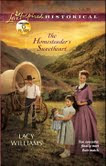
What would you be willing to do, how far would you be willing to go to get your child the medical treatment they need?

That was the question I started with when writing The Homesteader’s Sweetheart.

I knew that the hero’s daughter would have some kind of health issue. Her health would be a pivotal part of the book for the hero, who needs money to get her the treatment she needs. Based on the research I did, I gave her a childhood form of epilepsy.

In 1890, there was really only one accepted drug to treat epilepsy: bromide. The side-effects of this drug are described as “considerable” and are listed as sedation, depression, skin rashes, and gastro-intestinal distress. So basically your choices were to suffer the seizures or live in a state of half-awareness. Thankfully, it seems that seizure-controlling drugs have come a long way since then and are able to help a lot of people.

Another suggestion for managing epilepsy in 1890 was to lead a more sedentary life—a lot of resting and relaxing. But for Jonas’s five-year-old, a precocious little girl who wants to follow her older brothers around, that’s not an option either.

And so the hero of my story has a desperate need to raise funds for a (fictional) experimental treatment for his daughter. And he will do anything to get that money, to get his daughter the treatment.

Having kids of my own, I have a lot of empathy toward my hero. I hate it when my kids even get a little sniffle, so I know that dealing with something like this can definitely make you feel powerless and desperate to do anything to help.

Here’s a short excerpt from The Homesteader’s Sweetheart. This is a scene where Breanna (the daughter) is suffering a seizure and the heroine, Penny, realizes that the hero has a lot more on his plate than she thought.

An hour passed without a word spoken between them. Breanna woke up. She seemed quieter, more reserved, and this seemed to worry Jonas, if the crease on his brow was any indication. He insisted they stop awhile under a clump of trees. Sam roused, too, though he remained taciturn and kept to himself. They ate a small picnic in the limited shade from the wagon before continuing on their way.

Breanna did not chatter this time. Penny idly wondered if the trip was a mistake—she already missed conversing with her friends from town.

The summer sun made her drowsy, and she was half-dreaming about her father forcing her down the aisle to meet Mr. Abbott when a startled exclamation from Jonas roused her.

“Breanna? Do you feel ill?”

Breanna did not answer, but Penny turned in time to see the little girl collapse into the wagon.

Suddenly, the placid, quiet man next to Penny leapt into action.

“Whoa!” He pulled back on the reins and set the brake as the wagon rolled to a stop. Instantly, he scooped Breanna into his arms from her prone position in the wagon and maneuvered himself off the bench seat.

Breanna appeared to be shaking. She hadn’t seemed sick at all this morning…

Alarmed by the girl’s pallor, Penny blurted, “What can I do to help?”

Sam jumped from the back of the wagon, shaking his head as if he’d been drowsing, too. “What’s wrong?”

“Jonas?” Penny questioned again, forgoing propriety.

Jonas ignored Sam as he settled the girl in the small patch of shade cast by the wagon itself. He spoke to Penny instead. “Can you get the canteen? It’s under the bench there. And find a piece of fabric to wet her face?”

She reached for the canteen tucked under the bench seat and hiked up her skirts before stepping down on top of the wagon wheel to dismount. As she pulled her other leg from the wagon, her boot slipped on the smooth wheel and she tumbled to the ground, knocking her chin on the way down. She ended up sprawled inelegantly on her backside, the canteen rolling away.

And face-to-face—albeit across the wagon—with Jonas. He was gentleman enough not to laugh at her. He only grunted, “You all right?”

She chose not to reply, instead reaching underneath her gown and ripping off a piece of her petticoat. She stood and rushed around the wagon to join Jonas kneeling near Breanna in the soft spring grasses.

The girl lay on her side, her entire body convulsing.

“Will she be all right?” Penny asked, voice breathless from her fall and the suddenness of Breanna’s episode.

“Yes, in a bit.” Jonas did not look away from Breanna’s face. He’d loosened the neck of her dress and Penny caught sight of the girl’s undergarment, so worn it appeared gray.


Thanks Lacy for this great post! Looking forward to participating in your Birthday Bash!


Lacy also did a great series here at Redwood’s Medical Edge last July on historical medicine. You can find them here: Part I, Part II, Part III, PartIV.
*****************************************************************************

As a child, Lacy Williams wanted to become a veterinarian “when she grew up”. However, the sight of blood often made her squeamish so she gave up that dream before her teen years. As a college student, Lacy was a physical therapy major for approximately two weeks—until she found out she’d have to take a cadaver lab to complete that degree plan. As a writer, Lacy has finally found a way she can handle blood and gore—fictionally.
A wife and mom from Oklahoma, Lacy is a member of the American Christian Fiction Writers and is active in her local chapter, including a mentorship program she helped to start. She writes to give her readers happily-ever-afters guaranteed and mostly reads the end of the book first. You can find out more about Lacy at her website www.lacywilliams.net. She is also active on Facebook (www.facebook.com/lacywilliamsbooks) and Twitter (www.twitter.com/lacy_williams).
How Neuroscience Helps Create Characters

As a big neuroscience fan myself, I’m so excited to have Maree Kimberley posting today about how (being a medical nerd like myself) she used her research into neuroscience to help create her characters.

Welcome, Maree!

My fascination with neuroscience began in 2009 when I read Norman Doidge’s The Brain that Changes Itself. Doidge’s explanation of brain plasticity, and of how the scientific community had discarded the centuries old idea that the brain was fixed, struck a chord with me.

A few months earlier, I’d finished my M.A. in creative writing where I’d explored how characters in young adult fiction showed resilience. One of my key research texts was The Boy who was Raised as a Dog by Bruce Perry. Perry’s case studies, gathered through his working life as a child psychiatrist, led him to believe that trauma experienced as a child changed that child’s brain, causing sometimes irreparable damage.

After I read Doidge’s book about brain plasticity, the two concepts—brain changes caused by early childhood trauma and the brain’s ability to rewire itself—opened up for me a new way of thinking about how my own teen aged characters acted and behaved. Before I knew it, I’d signed up to do a PhD with neuroscience in young adult fiction as my topic.

I hadn’t studied any science since the middle years of high school. And yet I found myself devouring not only the more generalist/popular books on neuroscience but articles published in scientific journals. I borrowed a copy of Neuroconstructivism:how the brain constructs cognition and made copious notes on the writers’ theories on how every gene, every experience and every aspect of a child’s environment work together to ‘construct’ their brain.

I bought myself a copy of Kolb and Whishaw’s The Fundamentals of HumanNeuropsychology and began working my way through it, chapter by chapter, learning about brain anatomy, how the human brain is organised and trying to familiarise myself with topics such as the principles of neocortical function (I’m still working my way through it—it has 800+ pages!). I became obsessed with not only learning more about how the human brain works (or how we think it works) but what this meant for me as a writer of young adult fiction.

The text books are great as resources when I want to use technical terms in my writing; however, the scientific journal articles have a broader purpose. I’m fascinated by the debates about what a new neuroscientific discovery might mean and discussions about where the discoveries might take humans in the not too distant future.

These debates and discussions are, for me, a treasure trove of ideas. The idea might not come directly from reading the article. Sometimes when I’m writing, something I’ve read from a neuroscientific article will connect with a character’s actions or behaviour, and that will spark further exploration about who that character is and why they do what they do.

For my current work in progress, which I’m writing for my PhD, I have written in-depth character profiles (around 5000 words each) for several of my main characters. Going back to the core theories of neuroconstructivism and my reading in neuropsychology, I delved back into each character’s past: who their parents and grandparents were; how their parents met; what their lives were like growing up; details about significant incidents or experiences they had.

I didn’t need to be a neuroscientist to write these character profiles but having some insight into how the brain might construct who we are and who we might become gave me a different focus. It made me really think about who each character was—about their traits, abilities, aptitudes, flaws, actions and reactions.  It led me to insights about characters I doubt I would have had if I hadn’t taken this approach.

Reading neuroscientific texts isn’t everyone’s idea of fun. However, for me, using medicine in fiction is not just about getting the technical aspects right (like making sure you know adrenaline is injected into the thigh, not the heart!).

Neuroscience gives me another way to view my characters, to analyse them more clinically, perhaps, and to get to know them from a different perspective. Neuroscience helps me look into the brains of my characters, and that brings my characters to life.

***********************************************************************

Maree Kimberley lives in Brisbane, Australia where it’s nearly always sunny. She holds a Bachelor of Creative Industries and a Master of Arts, both from Queensland University of Technology. She has published short stories, feature articles and a children’s book and has several novel-length manuscripts hidden away. Apart from neuroscience, her obsessions include the grotesque, bizarre and somewhat strange. She also has a thing for circuses. Maree enjoys combining her obsessions into stories: some work and some fail dismally. She has a sneaking suspicion that it’s the bad stories that make her a better writer. Maree is on Twitter @reebee01