Author Beware: Delusional Diagnosis (2/2)

Last post, I discussed the issue of heart palpitations and how, in isolation, they can be benign and not representative of heart disease.

The line in this particular published novel that did get my ire up is shortened as follows: “Any experience terrifying enough to cause a panic attack, in extreme circumstances, causes an arrhythmia. That’s a heart attack.”

Really? No. There’s a lot medically wrong with this sentence.

First, in very general terms, a heart attack is caused from lack of oxygen to the heart muscle, generally from a clot in an artery that feeds blood to the heart– your coronary arteries. When the heart muscle is not getting oxygen, it becomes irritable. One interesting thing about your heart is that each cell can generate an electrical current that will contract heart muscle. It generally does not do this due to the over-riding normal pacemaker. However, when oxygen is cut-off and the heart cells become irritable, they can begin to fire outside the normal conduction system.

When this happens, the medical team begins to see aberrant beats. But see, the heart attack itself generally causes the arrhythmia, not the other way around.

Let’s stay on track with this character. A healthy, college age woman. The incidence of actual heart disease is going to be low. What causes chest pain during a panic attack? Generally, the heart rate may be faster than usual. However, the truly rapid heart beat of SVT (more on that later) I would say is rare and would point away from the mind and more to the conduction system in the heart.

The last thing to consider is that people who have true heart arrhythmias, may have structurally fine hearts. Meaning the muscle, valves, and coronary arteries are good. Just the conduction system is a little funky.

My advice for authors– don’t make blanket medical statements. Just like they taught you in school– sentences that have all, every, etc… are likely the wrong answer.

Author Beware: Delusional Diagnosis (1/2)

There’s nothing I hate more as a reader than to be happily reading along a novel that I really like and come across a medical issue that begins to pull me out of my snow globe of a story bubble. It’s even worse when it begins to keep me up at night and I dream up a whole blog series about this issue.

That means things are really bad.

This happened recently. The story is actually quite good. Solid, interesting premise. Had it not been for this medical issue that was a thread through the entire story, I’d easily give it a five star rating. But, because of this medical issue and how it was painted, I downgraded my review just for that reason.

It made me wonder if the author had talked to someone in the medical field. And if they did, who it was. I mean, the 125 year-old retired dermatologist may not be the best resource. For dermatology– yes, absolutely. Otherwise, just sayin…

And I love dermatologists by the way. But if I’m dying– please find me a cardiologist!

The issue surrounded palpitations. The author began to write about how the lead character was having palpitations and how she was concerned this represented a major heart issue that would ultimately lead to her not being able to pursue her ultimate career goal. The author painted it as a major event in her life.

I’m going to ease off a little here as patients are often this way. They worry that a minor symptom represents a major life-ending disease. Happily, this if often not the case. So, it’s okay to do that… in the beginning. I’ll cover the major down side of this book next post.

Let’s cover what we know. What are palpitations?

Palpitations are merely the sensation of your being aware of your heart beating. Normally, you can’t feel that muscular pump busily working in your chest. Is doesn’t keep you up at night with its never-ceasing beating nature.

Palpitations are often skipped beats. When your heart skips a beat, sometimes blood doesn’t flow out as it naturally would and this fullness can be felt. Normally, these skipped beats aren’t anything too concerning if they happen every so often. More worrisome is if it is happening all the time and/or associated with chest pain and/or shortness of breath.

Palpitations can also represent rapid heart beats or irregular heart beats. These can be a little more worrisome.

However, some people with palpitations do not have heart disease or an arrhythmia. This character happened to be a young, healthy college student which makes these diagnosis more unlikely.

Come back for Part Two of Delusional Diagnosis next time.

Determining Brain Death: 3/3

Last post, we talked about the use of apnea testing to determine brain death after the patient meets certain criteria.

There is one additional test that may be done to determine brain death and that is a brain perfusion scan.

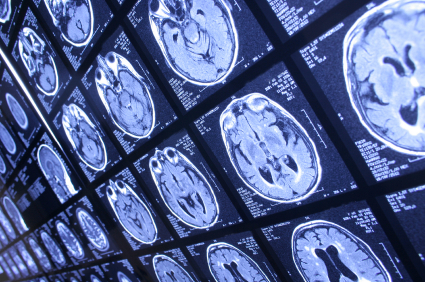
This procedure is done in radiology which can make it very difficult. Imagine taking a ventilated patient through the halls of the hospital along with several IV pumps giving medication that are keeping the patient alive. That in itself is not a fun excursion.

Once the patient is in radiology, they are given an injection of a radioisotope—something that will trace where the blood is flowing. After the injection, photos are taken of the patient’s brain. If there is no blood flow to the brain, and this must include the brain stem as well, then the patient is said to have “brain death” and is clinically dead at that point.
This You Tube video provides a very good explanation of these concepts.

After brain death is determined, the patient is not immediately withdrawn from life support but a conversation will ensue with the family that the patient has died and they will be encouraged to discontinue life support.

Generally, families are given a lot of time to come to terms with this decision. Anywhere from 1-3 days is reasonable. They may want to fly in additional family members to be present when life support is discontinued. I’ve never been part of a situation where, when the finding of brain death were fully explained, where families chose not to discontinue support.

This is not to say that the patient may not proceed to circulatory death despite receiving life support. Once the brain has died, it does become very difficult to keep the body functioning.

Does this change your mind about how brain death is determined?

Determining Brain Death: 2/3

I’m continuing with a series on how brain death is determined. All hospitals likely have a policy in place with strict guidelines on how brain death is determined. Check last post for the beginning stages.

Now, we’ll move onto actual testing.

Can the patient breathe on their own? This is a relatively simple test. It’s called apnea testing. The ventilator is turned off and we see what the patient will do. Naturally, when we stop breathing, carbon dioxide will build up in the blood stream. Your body has receptors that monitor the level of CO2 and it will initiate a breath when the levels rise.

Here is the procedure for performing an apnea test.

1. The patient will be on an ECG and pulse ox monitor.

2. Give the patient 100% oxygen for five minutes.

3. After five minutes, disconnect the patient from the vent, but give oxygen via T-piece. The breathing tube will still be in place. At this point, the patient is off the vent and no longer being assisted but will have needed oxygen if they do initiate a breath.

4. Watch the patient for breathing. If any attempt is made to breathe, it is inconsistent with brain death and the test is stopped and the patient is placed back on the ventilator.

5. If the patient has any cardiac arrhythmias, low blood pressure or oxygen level that falls to less than 80% (normal level is 90-100%) then the test is discontinued. These finding will lead more to a conclusion that brain death has occurred.

6. If the carbon dioxide level increases above 60 (normal level is 35-45)—the apnea test is consistent with brain death. The brain is very sensitive to rising levels of carbon dioxide and the absence of a response is consistent with brain death.
Next post, we’ll talk about brain perfusion studies.

Determining Brain Death: 1/3

Several months ago, I skewered a Hallmark movie for its unrealistic portrayal of discontinuing life support. In light of that, I thought I’d do a special series on determining brain death.


How do medical personnel determine a patient has suffered brain death?

Brain death means that your brain as an organ has died. It is no longer receiving blood flow. Without blood flow, no oxygen is being delivered. Without oxygen, an organ dies. Your brain is your body’s main control. If it has died, you have died.

If you have a character that is brain dead, they should be on life support. Again, if the brain isn’t working, it’s not telling your lungs to inhale. However, we can do this medically with a ventilator. This is why families sometimes have trouble understanding brain death means ultimate death. If we provide oxygen to the lungs, the heart will continue to beat and bodily functions can be maintained for a limited amount of time. A family sees the rise and fall of the patient’s chest and assume the patient is initiating those breaths when in fact it is the machine doing all the work.


There are several ways to determine brain death. Some are not as precise as others. I’ll try to cover least precise to most precise.


Before testing, there is generally an observation period. My hospital uses the following guidelines:


Less than 7 days: Not applicable
Age 7 days-2 months: 2 exams 48 hours apart
Age 2-12 months: 2 exams 24 hours apart
Over 12 months: 2 exams 12 hours apart
Adults (18 years and older): 2 exams 6-12 hours apart.


Also, prior to the exam to determine brain death, the patient must also meet the following criteria:


1. Absence of a reversible condition. The cause of the coma must be documented.


2. Absence of hypothermia. The patient must have normal body temperature.


3. Absence of hypotension. The patient must have normal blood pressure.


4. Absence of drugs or toxins in significant amounts as to interfere with the diagnosis of brain death.


5. Absence of a metabolic cause of the coma.


6. Normal levels of carbon dioxide.


Once these are met, the patient should be observed for the following:


1. No cranial nerve reflexes. Here is an extensive list of what those are: http://www.clinicalexam.com/pda/n_cranial_nerves_exam.htm


2. Flaccid tone in all extremities.


3. No response to deep pain.


Once these are met, the patient proceeds to apnea testing. That’s where we’ll pick up next post.

The Rogue Medical Character

The dream of getting published has been a long one for me. And today, that day, has arrived! The day I’ve longed wished came true.

To celebrate, anyone who leaves a comment on my blog during this weeks posts will be eligible to win a free copy! I’ll also be drawing from my followers/subscribers lists as well. So, plenty of places for you to win. Drawing cutoff will be Sunday, June 3rd. Winners announced Tuesday, June 5th. To claim, you must e-mail me with your info so definitely check the June 5th post. Must live in the USA.

Then, there’s always where real life and dream life meet in some sort of fantastic collision. What you expected is far from what happens. Both good things and bad things.

Mostly good things.

Running a medical blog for authors is a great source of fun. But even I’m not a medical expert in all areas. My first novel, has an OB physician as a major character. Now, I have never been an OB nurse nor do I have any desire to be. That’s why I had other specialists review my novel to make sure everything was authentic and not just the part that I knew about.

The best medical expert to get to review your work is someone actively working in the area currently. These are the experts I sought out and through that process I learned some important lessons that I’d thought I’d share here.

If your novel has some heavy medical aspects, it is best to have it reviewed by someone who works the area. I recently reviewed a manuscript for someone who was writing about diabetes. The character was newly diagnosed and she had done some research to try and determine what the treatment would be. Let me give some kudos here and say she was close. But close is like not scoring a touchdown when you’re on the one yard line. Wrong route giving insulin. Hanging clipboards at the end of the bed (which is not done anymore people!!) and not providing for rehydration which is the #1 therapy for DKA. It’s the little details that will trip you up.

People don’t want their profession to be disparaged. Now, as a writer, I understand characters needing to do bad things for the sake of the plot. So, how do you handle a medical person gone bad without people practicing in that profession lighting your manuscript on fire?

I recently read a contest entry where the author had two nurses doing very bad things to a patient. Even the “bad” nurses I know would never do the things these nurses were doing– very demeaning things.

Here is how I’ve determined the best way to handle the issue. You must have one character in the profession in the scene who points out the bad behavior and shows how the real medical person is going to act. It’s the seasoned charge nurse that comes into the room and dresses down the two horrible nurses. Now, beauty of this, adds conflict! Particularly if the patient is awake (which in real life should never happen in front of a patient.)

It’s okay to have bad, rogue, medical person as long as another character in the story is pointing it out. Then, the reader will know you know what you’re writing about.

What do you think? How do you handle rogue characters without people in that profession being offended?

Black Market Trade of Human Body Parts

This week my debut novel, Proof, releases!

To celebrate, anyone who leaves a comment on my blog during this weeks posts will be eligible to win a free copy! I’ll also be drawing from my followers/subscribers lists as well. So, plenty of places for you to win. Drawing cutoff will be Sunday, June 3rd. Winners announced Tuesday, June 5th. To claim, you must e-mail me with your info so definitely check the June 5th post. Must live in the USA.

Welcome back , Bette!

It’s RN Gina Mazzio’s wedding eve. She answers the week’s final OB/Gyn advice call and a deadly serious voice says, “She’s all cut up.”

That single telephone call ignites a series of irreversible events, and instead of marriage and a honeymoon, Gina is plunged into the dangerous, illicit trade in human body parts.
Illicit trade in human body parts?
Gimme a break! That could only happen in fiction. Right?

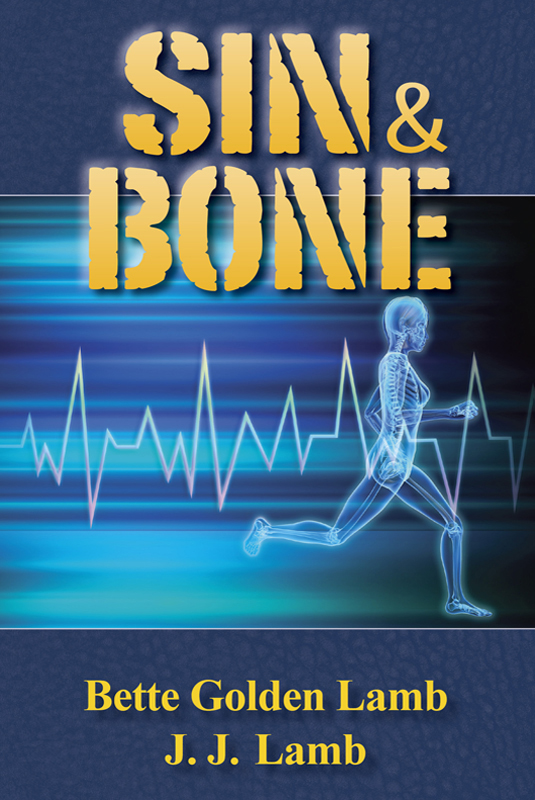
Although the new medical thriller, Sin & Bone, by J. J. Lamb & Bette Golden Lamb, is fiction, this second book in the RN Gina Mazzio series, is steeped in a reality that most of us never think about.

Can some black-market creep (or shall I say entrepreneur?) steal your body and make an unbelievable profit in untraceable cash?  They can and they do. It’s all a matter of supply and demand. When it comes to body parts, the demand is sky-rocketing. A lot of people are stepping up to the plate and they’re out for the money. Legal or not.
So, yes, there’s a huge black market trade in human body parts.
Who are these people who work in this international illegal industry?  The ones who obtain, prepare, carve up, and sell bodies for profit?
Unethical doctors, dentists, drop-out medical students, funeral parlor owners and/or employees, and, of course, the mafia probably has a hand in it, too. But really anyone with a decent knowledge of anatomy can figure out how to take advantage of this dubious opportunity. After all, it’s easier to cut and paste without a live patient screaming at you to stop.
Most of us think of heart or vital organ transplants when we talk about harvesting the human body. But the black market makes your whole body even more valuable when it’s picked apart and divided into many pieces. Corpses are disjointed, dissected, sold, and distributed from the US and other countries around the globe.
Did I say there was money in it?  It’s huge. Teeth, nails, eyes, connective tissue, bone of every variety – leg, arm , knee cap — and there’re fingers and toes, ligaments, heart values – and on and on. They’re all valuable and vital even though illegal replacements are implanted without ruling out any of the dangerous diseases they might carry with them. Bacteria and viruses will be passed on to the receiver without a second thought.
Our brave new world, with its medical and pharmaceutical advances, has now created an environment where it’s possible to replace sick or dying organs. Though it’s still a dangerous experience we have learned how to do it — and so have the body-snatchers.
Living forever?
Does all this replacement of body parts take us down the road to immortality? Well, yes. The only fly in the ointment? We are short of all the viscera to replace all that we need to keep going.
Will there ever be enough affordable replacements to go around?  I don’t think so. And what kind of money are we talking about anyway? How much does it cost to save someone’s life?
It varies from place to place, but here are some ballpark figures: Lung, $50,000, liver, $40,000, heart, $60,000, kidney, $20,000.
Why not go the legal route? Use your insurance company to pay for the procedure, that is, if you have insurance. After all, it’s the safest, most ethical, disease-free way to go
Watch a few TV medical dramas, or listen to the news, or read your newspaper, or tap into your I Pad media app and it won’t take long to find an answer: You could die long before you even got near to the top of the waiting list. Also, I’m a cynic, but I think people with money and influence will get to the top of those critical lists while you hover somewhere around the bottom.
So without being one to throw the first stone, I understand those who investigate illegal pathways to stay alive. I really get it!
 Few of us are ever ready for that final void.

Here are some real life links of current instances:

http://www.slate.com/articles/life/faithbased/2009/07/organ_failure.html

http://www.usatoday.com/money/2006-04-26-body-parts-cover-usat_x.htm

http://www.unicef.org/mozambique/pt/Liga_Mocambicana_dos_Direitos_Humanos_Trafficking_Body_Parts_in_Mozambique_and_South_Africa__2008.pdf

***********************************************************************

Bette Golden Lamb is unmistakably from the Bronx – probably why she likes to write thrillers. When she isn’t writing crime novels, you can find her in her studio playing with clay. Her artistic creations appear in juried regional, national, and international exhibitions. She sells through galleries, associations, and stores. She’s also an RN, which explains, Bone Dry, a medical thriller, and Heir Today, an adventure/thriller which also has a medical aspect to it. And just released at Amazon .com, Sister in Silence, a medical thriller about barren women — available as an ebook or trade paperback. Both books were co-authored with husband J.J. Lamb. You can learn more about Bette here:

Puncture: Medically Accurate or Not?

This week my debut novel, Proof, releases!

To celebrate, anyone who leaves a comment on my blog during this weeks posts will be eligible to win a free copy! I’ll also be drawing from my followers/subscribers lists as well. So, plenty of places for you to win. Drawing cutoff will be Sunday, June 3rd. Winners announced Tuesday, June 5th. To claim, you must e-mail me with your info so definitely check the June 5th post. Must live in the USA.

Back to business…

When you author a medical blog on medical accuracy in fiction– people will start to flag you when they are outraged over a certain movie, book, experience (you get the picture.) I love getting these alerts because, of course, it helps me write blog posts for you.

My interest was piqued after I got several “Hey, have you seen the movie Puncture?” and lamentations over how inaccurate the film was.

Off to Netflix to reserve a copy. Over the last weekend, I watched the film.

Spoiler Alert!

Puncture is “based on the true story” of two lawyers, Mike Weiss and Paul Danziger, litigating in the 1990s to get the use of safety needles into hospitals on behalf of a nurse who was stuck with a contaminated needle, contracted HIV, and subsequently died. During discovery for the lawsuit, there seemed to be a concentrated effort to keep these types of needles out of the hospitals due to how expensive they are.

So far– nothing is too hard for me to believe. I first started nursing in 1993 and at that time, use of safety needles and needleless systems were not used at every hospital. One unit I interviewed for often took care of AIDS patients. When I asked if they used needleless systems– the answer was “no”.

I didn’t work there.

Now, in the US, I don’t know of anyone not using needleless systems. This is a good thing.

The one claim in the movie that seemed to be getting everyone’s ire up was the statement that the re-use of needles in Africa and Asia could have been more responsible for the transmission of the HIV virus amongst those populations than sexual transmission. In the movie, it was also claimed that children were paid money to dumpster dive in search of used needles to bring back to the hospital for use.

Hmmm–well, it might be true (maybe not the dumpster part.)

I started to do a little research of my own and within the last couple of years, a few studies have shown that the estimated 90% transmission rate of the HIV virus related to sexual transmission may not be that high— that perhaps the re-use of needles was more of a contributing factor.

Why would a government want to hide this truth? Well, for a practical reason as quoted in some of my reading. If people feared getting HIV and other viruses from re-used needles– they might not want to receive a regular immunization for say— tetanus. Lower immunization rates are problematic for everyone.

You can read my immunization series here:
http://jordynredwood.blogspot.com/2011/11/pediatric-controversies-immunizations.html
http://jordynredwood.blogspot.com/2011/11/pediatric-controversies-immunizations_30.html
http://jordynredwood.blogspot.com/2011/12/pediatric-controversies-immunizations.html

So–I’m going to give Puncture a pass for medical accuracy. I think their theory is plausible and backed up by some credible resources– which is more than I can say for a lot of other movies.

If you’re interested in reading some of the resources I found– here they are:

http://protectthepope.com/?p=1821: This post has lots of additional links.
http://www.sfgate.com/cgi-bin/article.cgi?f=/c/a/2002/12/01/MN334.DTL&ao=all
http://thebovine.wordpress.com/2011/04/25/aids-in-africa-more-from-medical-re-use-of-needles-than-sexual-transmission/

What are your thoughts?

Cujo Gave Me Rabies

I remember working in the Pediatric ICU taking care of a boy who was from another country. His symptoms were strange neurological symptoms. The intensivists were concerned when they began to hear reports that he may have been in contact with bat feces in his home country. They began to discuss the possibility of active rabies infection. One thing that struck with me was the mortality rate of nearly 100%. I don’t exactly remember what happened to that boy but I do remember that.


This is going to be a very bad day if you have your character contract rabies. Rabies infection is almost 100% fatal even with treatment. Did you know that? Once you’re past the point of no return, it’s time to buy your coffin.

I thought I’d follow up last post by talking about rabies infection. As previously stated, rabies infection related to dog bites is rare in the USA due to widespread vaccination of the mangy mutt population (I own a dog so I can say this.)

Rabies infection occurs through the saliva of an infected animal when a bite breaks the skin. The incubation period is anywhere from 10 days to seven years (yes, I really typed years!) Though the average is 2-7 weeks. Still a long time if you thought the bite was fairly inconsequential. Incubation period is from the time of infection to the time symptoms are exhibited. During the incubation period, you can feel fine. This is the trouble with rabies infection. Treatment needs to be started before the symptoms start. However, in a person that feels fine, they may not seek treatment.

That’s the crux of the issue. Anyone else have plots developing in their mind?

Once symptoms appear, death usually ensues within seven days from respiratory failure.

Here are some further resources that discuss rabies infection.

http://www.ncbi.nlm.nih.gov/pubmedhealth/PMH0002310/

http://www.cdc.gov/rabies/

http://www.emedicinehealth.com/rabies/article_em.htm

http://www.mayoclinic.com/health/rabies/DS00484

How about you? Ever written a scene that involved the transmission of rabies?

Mangy Mutt Bit Me: Treatment of Dog Bites

Some mangy mutt bit you and you’re off to the ED. Dog Bites can be devastating, particularly when it’s a child, and if you have a character that has been bitten by a dog– or any animal– certain care is required.

First, I’m going to talk mainly about dog bites but you could lump other animal bites into this category. Unfortunately, dog bites tend to be more destructive than say cat or other animals.

The first consideration is how extensive is the injury? Dog bites are reportable injures though this may depend on the county of which the dog bite took place. Generally, we have the parent fill out a “dog bite form” that includes information about the owner, the dog, and the nature of the events surrounding the injury.

Just because a dog bite is reported does not mean that in the next breath the police are at the house taking the animal away. Though, it likely is filed away for those states that forgive the first dog bite but hold the owner responsible for all subsequent bites. These reports are faxed to animal control of the jurisdiction where the bite took place.

If the injury is extensive, a report can be made to the police for “serious bodily injury”. I actually didn’t know this until I spoke to my brother who works for a large sheriff’s department. So, if parents insist, then we will contact police. Medical staff can initiate this report as well.

In kids, we will apply a topical numbing gel called LET. It has three medications in it: Lidocaine (to numb), Epinephrine (to vasoconstrict and decrease bleeding) and Tetracaine (that also numbs). The gel is left in place for a minimum of 20-30 minutes. Adults can go to straight injection with lidocaine if sutures are required. Once the patient is numb, the wound is then irrigated with copious amounts of sterile saline. For a simple laceration we usually use 450ml. Dog bites require twice that for each wound. The wound is then stitched and an antibiotic ointment is placed over top. The wound is dressed as needed.

One special note: If the wound is more of a puncture, it may not even be stitched at all. Puncture wounds can run deep and again, we don’t want to trap potential infection.

Dog bites are high risk for infection so they are never glued shut. This is so that any infection that develops can be seen as it drains from the wound. Most often, due to the concern for infection, a patient will be placed on an antibiotic like Keflex.

Rabies prophylaxis is rarely given. There is a window of opportunity to start rabies injections if concern is warranted but it is definitely not a standard treatment for all dog bites. Rabies infection related to dog bites is rare due to widespread vaccination of the canine population but is more prominent in developing countries.

Have you ever written a scene where someone was bitten? If so, what kind of animal was it?