Winner!

Hello Redwood’s Fans!

How has everyone’s week gone?

Mine . . . amazing.

I got to spend the week up in Estes Park and it was GORGEOUS except for one brief sleet storm. You know it is Colorado and for some reason this year the state does not want to give up winter.

I was part of the faculty for the Colorado Christian Writers Conference. If you want a smaller, amazing conference this is one to book for next year. I got to take a suspense class from Bill Myers and he was awesome. Hope you’ll check out his books sometime. 

The WINNER of Lynette Eason’s latest novel When A Secret Kills is Kristie Porter!

Congratulations, Kristie, and I’ll be e-mailing you shortly on how to claim your prize.

A big THANK YOU to Lynette for coming and visiting Redwood’s. It’s always an honor to have you.

What amazing thing happened to you this week?

Jordyn

Author Question: I Need a Medical Condition!

I often get questions from authors who just need a medical condition for their characters. Here are a couple of options for Cheryl’s scenario. Can you think of any more options?
Problem: 18y/o with congenital heart defect whose condition has been controlled by medication. Develops sudden need for surgery. What kind of surgery? How long? Recovery Process?
Cheryl: I think there are a couple of ways you could approach this scenario.

Option One: Endocarditis

Is he an IV drug user? If so—you could give him a viral infection of the heart itself called endocarditis versus a congenitial heart defect.
Here are a couple of links that would go over symptoms, diagnosis, and treatment. It might be easier to deal with an illness in your writing versus a heart surgery. He’d still need to be hospitalized and the course can run the gamut from mild to serious.


Option Two: Atrial Septal Defect

This is an actual congentital heart defect. You heart is split in half from top to bottom. The top two chambers are referred to as the atria. An atrial septal defect is when there is a hole between these two chambers of the heart. As a person grows older, the heart may begin to decompensate due to this defect.

Here are a couple of links that talk about ASD repair in an older adolescent/adult.

http://kidshealth.org/teen/diseases_conditions/heart/asd.html

http://www.childrenscolorado.org/conditions/heart/conditions/atrial-septal-defect.aspx

http://pediatricct.surgery.ucsf.edu/conditions–procedures/atrial-septal-defect.aspx

Option Three: Congestive Heart Failure

Many of these congenital heart defects present with signs/symptoms of congestive heart failure. Signs are things we can measure. How fast the heart rate is. What is the patient’s blood pressure. Symptoms are things the patient must tell us. “I feel nauseated, lightheaded. I have pain.”


Medication to Treat Congestive Heart Failure
If his heart condition is known and he’s on medication—I’m also including links of treatment for CHF. They may have also been mentioned in the links above. It’s usually medication to get the heart to contract stronger and medication to help pull fluid off the body. Two examples of this type of medication would be digoxin and lasix.

Past, Present and Future with Lynette Eason


I’m so honored to get to one—participate in this special suspense author blog hop with such amazing writers and two—get to interview Lynette Eason who is a mentor and friend. I wish we lived in the same town and could sit down and have tea together (though I would buy her whatever drink she wanted!) so we could chat about the writing life.
In lieu of that—this interview will have to suffice but I’m so excited to pick her brain!
Lynette has graciously offered to give away one signed copy of When a Secret Kills. Simply leave a comment on this post that includes your e-mail address. US residents only. Drawing closes Saturday, May 18th and midnight and winner announced here at Redwood’s on Sunday, May 17th!

PLUS: There is going to be one MEGA prize give away of several authors participating in this blog hop. I know both Proof and Poison will be given away. Simply formulate a tweet using the hashtag #ILoveSuspense to be entered. The more you tweet– the more often you’re entered. I’ve made it easy for you to do below:
Inspirational Suspense Author Blog Hop. Tons of prizes. Lots of GREAT interviews #ILoveSuspense. RT to enter! Click to Tweet.

My interview is over at Connie Man’s blog so I hope you’ll check it out and enter over there, too. 

If this is your first time visiting Redwood’s Medical Edge—it’s a medical blog for writers to aid them in writing medically accurate fiction. And I love helping authors injure, maim, and kill fictional characters the proper way. I field medical questions and blog on medical topics with a writing focus.
Welcome, Lynette! I’m so honored to have you here at Redwood’s!
Lynette: Thank you, Jordyn! I’m so happy to be here. Thanks for having me. And I would LOVE to live near each other. Think of all the trouble we would get into!! LOL.

Jordyn: It’s probably good we don’t live close for just that reason– all the trouble we would get into. I thought we’d focus on the past, present and future for our questions.

What’s been your favorite novel that you’ve published? What are you working on now? What’s something you dream to write about that might be outside your genre?

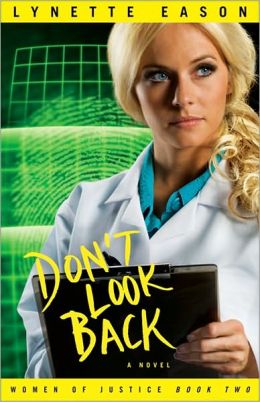
Lynette: My favorite novel would have to be Don’t Look Back simply because it was an easy write. I literally wrote the thing in about eight weeks and it only need a few edits. Right now, I’m working on book #2 in the Hidden Identity series. Book #1 is No One to Trust and set to release in January 2014. Book #2 doesn’t have a title yet.
Jordyn: I have to say Don’t Look Back was a favorite of mine as well– plus we have the whole best-friends-may-not-fare-so-well thing in common, too. 
I’m a big Castle fan and I love his card games where he invites fellow authors to play along. If you could have such a poker night, what three authors would you invite and why? One must be deceased. One alive. And the other perhaps a new author you’re liking but may off the radar.
Lynette: Well, you KNOW I’d invite you for my new author! LOL. Deceased? Hm…Mark Twain because he would provide the comic relief we all need. And Terri Blackstock simply because I love her books and bet she’s an awesome brainstormer.
Jordyn: Those are great picks and not just because I’m on the list but I am so glad I’d get an invite. It would be like being a rookie at the Super Bowl. 
Publishing is going through lots of rapid changes. What’s one thing about traditional publishing you’d like to stay the same, one thing you’d like to change presently and one prediction you have about the course of publishing in the future?
Lynette: Oh goodness, yes, changes all around us, aren’t there? I like traditional publishing because all I have to do is write the story and do some marketing. I would like that to stay the same. One thing I’d like to change is  the amount of marketing the publisher expects the author to do.  But that will never change, lol. And one thing I predict is that e-books and self publishing will continue to rise.
Jordyn: Now, this is a little off topic but I’m curious to know if you’d ever consider self publishing?
Lynette: I have considered it. I may even do it one day. But I like traditional publishing too much to mess with a good thing while I’ve got it. Besides, I think self-publishing might be way more work than I want to do right now. That is if I want to do it right—and I do. There is a lot of BAD self-pubbed stuff out there. I don’t want to be part of that.
Jordyn: I agree wholeheartedly. Now for some quirky—One thing you had to give up. One thing you’re currently loving. One dream you have that’s not yet fulfilled. 
Lynette:
I had to give up scrapbooking – simply no time.
Currently loving – life.
One dream that’s not yet fulfilled – hitting the NYT’s bestseller list.

Jordyn: Lynette—thanks so much for joining me today and I have no doubt I’ll see your name on the NYT’s bestseller list someday soon. Truly, my joy to have you. Many continued blessing on your writing journey!
Lynette: Thanks so much!
Next on your blog hop SUSPENSE tour is Lynette! Head on over to her site. She’s interviewing author Karen Barnett. Happy Hopping!
********************************************************************

Lynette Eason grew up in Greenville, SC. Her home church, Northgate Baptist, had a tremendous influence on her during her early years. She credits dedicated Sunday School teachers and Christian parents for her acceptance of Christ at the tender age of eight. Even as a young girl, she knew she wanted her life to reflect the love of Jesus Christ.

Some of Lynette’s favorite authors who influenced her writing include, Brandilyn Collins, Dee Henderson, Shirlee McCoy, Karen Kingsbury, Robert Liparulo, Terri Blackstock and Deborah Raney. Lynette loves to ice skate, go bowling, walk on the beach, visit the mountains of Asheville, NC, watch American Idol, Law and Order, A & E channel, and surf the web. She is often found online and loves to talk writing with anyone who will listen. She gives God the glory for her giving her the talent and desire to spin stories that bring readers to the edge of their seat, but most importantly, to the throne of Christ.

Author Question: Panic Attacks

Becky asks:

My MC’s ex-boyfriend to come back with not-so-good-but-not-outright-

bad intentions to try to force her to take him back. He’s been leading a high-stress life-style (Dental School, top of his class, used to be an cyclist but stopped exercising, angry about no perfect job post school, turned-mean, etc.) and then she leaves him because he’s so awful and after almost 9 years of waiting to get married and live happily ever after, he tell her he doesn’t know if he really wants to be with her. Okay. That’s the back story on him.

Basically, he shows up in the throws of a nervous breakdown/panic attack that looks a lot like a heart attack. And that’s my question: Can a panic attack have similar/same symptoms of a heart attack? I want him to be hospitalized at least over night, so it needs to be bad enough to have to be monitored for 24+ hours, but not bad enough to kill him or leave him there long-term.

Jordyn Says:

As far as the scene, it can work medically. I think instead of a panic attack– you should go with an arrhythmia called SVT (supraventricular tachycardia.) I’ve included some links for you. At its simplest, SVT is a super fast heart beat. For an adult– it would be a sustained, unwavering heartbeat over 180 beats/min.

The reason to change it to this type of medical condition is if the medical team determines he had a panic attack– he will not be observed overnight. However, if he had an arrhythmia for which he was hemodynamically unstable (low blood pressure)– then observing overnight is warranted– particularly if they converted him out and he went back into it.

When you have SVT– it can feel like you’re having a heart attack. Many of the symptoms can be the same. Chest pain. Pain down the left arm. Jaw pain. Difficulty breathing. Low blood pressure. Sweating (diaphoresis). Pale, cool, clammy skin.

I don’t know if this is the direction you want to go but would be my suggestion.

Up and Coming

Happy Mother’s Day to my mom and ALL the great moms I know. Hope you enjoy your day.

WOW! What a great couple of weeks it’s been here at Redwood’s. Jocelyn Green’s post were AMAZING and I thank her from the bottom of my heart for all her great posts, great guest hosting and hard work.

The WINNER of Jocelyn’s book Widow of Gettysburg is Marissa!! I’ll be e-mailing you to let you know how to claim your prize.

Congratulations.

And– we have another great week coming up! I’m so excited!!

For you this week:

Monday: Author Question. You know these are my favorite to answer. This one deals with panic attacks. I offer the author an alternative medical condition. Can you guess what it might be?

Wednesday: Lynette Eason (yes, you heard me!!) is stopping by for a very special author interview. I’m participating in a special Suspense Author Blog Hop and there’re going to be TONS of giveaways so I hope you’ll stop by and check out all the interviews. I’ll be over at Connie Mann’s blog and I’m so excited to meet her and her readers.

Friday: I Need a Medical Condition! And I give this author some ideas. Another one of my favorite things to do.

Events:

I’ll also be up at Colorado Christian Writers Conference this week May 15-18th serving as faculty so if you’re there be sure to come up and say “hi”. It was one of my first conferences and I LOVE it (four appointments for attendees!) and am so excited to be serving there this year.

AND– on May 19th I’ll be participating in Douglas County Libraries Author Showcase! Starts at 2:00pm at Parker Library in Parker, CO. Would love to see some of you there. Registration is required.

Hope your week is as awesome as mine will be!

I KNOW– too many exclamation points.

Phantom Limb Pain: 2/2

Today, author and Christy Award nominee (two nominations!) Jocelyn Green concludes her two-part series on phantom limb pain. You can find Part I here

As an added bonus, Jocelyn has graciously offered to give away a personalized copy of her latest novel, Widow of Gettysburg, to one commentor. To enter, leave a comment on any of her posts WITH your e-mail address. Must live in the USA. Winner drawn midnight, Saturday, May 11th, 2013 and announced here at Redwood’s on May 12th, 2013.

Jocelyn has also graciously said she’ll send you a signed bookplate if you have any of her novels and would like one. Again, MUST have your e-mail. 

You can view Jocelyn’s previous posts at Redwood’s here and here.

Welcome back, Jocelyn!

What We Know Today

The study of PLP continues with today’s generation of amputee veterans. Most contemporary studies confirm what Mitchell found, but add to it some new information. Most recent studies report PLP at rates of 50% to 80%. A few of these are in constant pain, but for most, the episodes can last a few seconds or one to two hours.
Since the beginning of the conflicts in Iraq and Afghanistan more than 1000 amputees have been treated at Walter Reed Army Medical Center in Washington, DC. Almost all experience PLP, either within the first 24 hours of amputation, or within two weeks. The following insight comes from an article in a 2010 issue of The Neurologist:
“As part of routine treatment efforts, the patients are asked to describe their experience with phantom sensation and phantom pain. There have been a plethora of responses regarding the onset, duration, description, and location of phantom sensations and phantom pains from those queried. Furthermore, some explain they have volitional control over their phantom, and can move their phantom at will, while others report their phantoms being fixed in a specific position. Some even report the inability to make movements with the phantom, despite the presence of a strong sensation or pain emanating from their residual limb. For example, one service member reported that his phantom hand was in a distinct position: he felt he was pulling the trigger on his rifle with his index finger, and was unable to move his hand to a different position. He also felt cramping pains in his hand muscles. Another service member, a bilateral, above knee amputee, described the feeling of heavy legs, asserting that the feeling was similar to weights attached to his calf muscles. He also described that it felt as though his combat boots were on too tightly.”
There are multiple theories as to the cause of PLP, all of which can be read in this online article [http://sunburst.usd.edu/~cliff/Courses/Advanced%20Seminars%20in%20Neuroendocrinology/Pain/Weeks10.pdf]. 
The most successful treatments have been with opioids and mirror therapy, the latter considered the most promising treatment plan.
In this treatment, the patient views the reflection of their intact limb moving in a mirror placed between the arms or legs while simultaneously moving the phantom hand or foot in a manner similar to what they are observing. The virtual limb in the mirror appears to be the missing limb.
Patients have reported a relief of cramping and “frozen limb” phantom pains as a result of even one session with the mirror. In one study in which patients used mirror therapy for 15 minutes each weekday for four weeks, significant decreases in pain were reported. More about mirror therapy can also be found in the online article hyperlinked above.
For further reading:
Mitchell, Silas Weir. The Case of George Dedlow. (fictional account of quad amputee) New York: The Century Co., 1900. Read it online at Google Books here, and begin on page 115. http://bit.ly/ZixtJd
 
Gunshot Wounds and other Injuries of Nerves. Philadelphia: J.B. Lippincott, & Co., 1864. Read it online at Google Books here: http://bit.ly/17hhuvf
**********************************************************************
 A former military wife, Jocelyn Green authored, along with contributing writers, the award-winning Faith Deployed: Daily Encouragement for Military Wives and Faith Deployed . . . Again. Jocelyn also co-authored Stories of Faith and Couragefrom the Home Front, which inspired her first novel: Wedded to War. She loves Mexican food, Broadway musicals, Toblerone chocolate bars, the color red, and reading on her patio. Jocelyn lives with her husband Rob and two small children in Cedar Falls, Iowa.


Phantom Limb Pain: 1/2

Author and Christy Award nominee (two nominations!) Jocelyn Green joins us again this week for a two-part series on phantom limb pain.

As an added bonus, Jocelyn has graciously offered to give away a personalized copy of her latest novel, Widow of Gettysburg, to one commentor. To enter, leave a comment on any of her posts WITH your e-mail address. Must live in the USA. Winner drawn midnight, Saturday, May 11th, 2013 and announced here at Redwood’s on May 12th, 2013.

Jocelyn has also graciously said she’ll send you a signed bookplate if you have any of her novels and would like one. Again, MUST have your e-mail. 

You can view Jocelyn’s previous posts at Redwood’s here and here.

Welcome back, Jocelyn!

Though the phenomenon of phantom limb pain had been recorded long before the Civil War, it was Silas Weir Mitchell, a Philadelphia physician specializing in nerve injuries during the Civil War, who coined the term. Phantom limb pain, or PLP, occurs when a patient feels pain in an arm or leg that has been amputated. Mitchell studied PLP (or sensory hallucinations, as he also called them) in depth at the Turner’s Lane hospital in Philadelphia, dubbed the Stump Hospital because it focused on caring for amputees.

If a character in your story is an amputee, like one of my characters in Widow of Gettysburg, the following will be helpful to you.
What Mitchell Found
·         Almost every amputee at Turner’s Lane Hospital experienced PLP. 
·         Most of them came out of anesthesia feeling the presence of the amputated limb.
·         Those who did not immediately feel PLP usually felt it within three weeks.
·         Usually, the patients felt the missing hand/foot but not the section of limb directly beyond the stump.
       Mitchell wrote: “The patients describe themselves as knowing that they have a hand which is connected to a stump, and feel able to move it, but of the rest of the limb they are unconscious, and the subjective sensations which are so common are always referred to the hand or foot, and rarely to the continuity of the member.”
·         In about one-third of the leg cases, and in one-half of the arm amputations, the patient felt that the foot or hand is nearer to the trunk than the extremity of the limb.
·         The type of pain could be burning, itching, stabbing, or cramping.
·         Missing legs usually felt as though they are hanging straight down, while missing arms felt as though they were bent at the elbow or locked in the last position they were in prior to the operation.
·         Treatment of water dressings on the stump helped with burning sensations in some cases, but most efforts to relieve PLP were ineffectual.
·         Amputee veterans wrote to Mitchell decades after their operations and shared that in their dreams, they had all their limbs perfectly whole.
    
      Return Friday as Jocelyn finishes up her Civil War medical series.

*********************************************************************

A former military wife, Jocelyn Green authored, along with contributing writers, the award-winning Faith Deployed: Daily Encouragement for Military Wives and Faith Deployed . . . Again. Jocelyn also co-authored Stories of Faith and Couragefrom the Home Front, which inspired her first novel: Wedded to War. She loves Mexican food, Broadway musicals, Toblerone chocolate bars, the color red, and reading on her patio. Jocelyn lives with her husband Rob and two small children in Cedar Falls, Iowa.


Author Question: Burn and Crush Injuries

Amitha Knight returns to give her medical insight in this reader question.

Welcome back, Amitha!

Q:

I am writing a novel and understand that you give medical information online which I would be really grateful for.  The two main characters in my current book are hurled out of a burning bus which has smashed into a building after going out of control.  They land on concrete.  One of those characters has been in the smoke-filled bus about 15 minutes.

I would appreciate it if you could tell me the following;
1) What type of injuries would they have received, burns, fractures, concussion etc and what procedures are followed by medics who turn up at such accidents. What equipment would they use? 
2) I want one of the characters to be in intensive care for about 3 days and then be allowed onto the ward, what type of follow up treatment could she receive, what machines would she be attached to etc.
3)I want the second character to be unconscious for about three weeks and then wake up with temporary amnesia.  Is this plausible and what treatment would he receive while he’s
unconscious …. what machinery would he be attached to.
  
Thank you in advance for your help!!!
M.G.
Amitha says:
I will help you the best that I can. My specialty was pediatrics and not intensive care or emergency medicine, so keep that in mind.
1) What type of injuries would they have received, burns, fractures, concussion etc and what procedures are followed by medics who turn up at such accidents.  What equipment would they use. 
The types of injuries sustained could range from anything from a few bruises to severe cranial fractures and multiple broken bones. When medics show up, they will place a neck collar in case there are spinal injuries and basically follow the “ABC” rules for emergency medicine. (some links to read more about this: http://en.wikipedia.org/wiki/ABC_(medicine)) This means if the patient isn’t breathing, they’ll make sure there is no obstruction, then they will intubate the patient as necessary. They will also start IV fluids and take them immediately to the hospital. What they would do *exactly* would depend on the extent and severity of the injuries. For fiction purposes, I would think hard before going into too much medical detail.
2) I want one of the characters to be in intensive care for about 3 days and then be allowed onto the ward, what type of follow up treatment could she receive, what machines would she be attached to etc.
This depends on the type an extent of the injuries. if there was a perforation to the lung, they may have a chest tube. They probably can’t get up and thus would need a foley catheter for urine. they would definitely have some kind of IV fluids attached. This website has some good information about smoke inhalation injuries: http://www.emedicinehealth.com/smoke_inhalation/article_em.htm
3)I want the second character to be unconscious for about three weeks and then wake up with temporary amnesia.  Is this plausible and what treatment would he receive while he’s
unconscious …. what machinery would  he be attached to.
This person who is unconscious might be intubated for at least some of that time, which means they would have a ventilator machine in the room in addition to everything I said in #2. As far as amnesia, there is a blog post on Jordyn Redwood’s blog that may help with this: http://jordynredwood.blogspot.com/2011/08/remember-me-use-of-amnesia-in-fiction.html 
Her website is a great place in general for information like this!
I hope this helps.

*************************************************************************

 Amitha Knight is a former pediatric resident turned writer of middle grade and young adult fiction. She’s also a blogger, a book lover, an identical twin, and a mom. Follow her on twitter @amithaknight or check out her website: http://www.amithaknight.com/. 

Opium Abuse during the Civil War Era: 2/2

Author Jocelyn Green returns with another installment in her series of posts on Civil War Medicine. Jocelyn was here last week discussing amputees and prosthetics. You can Part I and Part II by following the links.

As an added bonus, Jocelyn has graciously offered to give away a personalized copy of her latest novel, Widow of Gettysburg, to one commentor. To enter, leave a comment on any of her posts over the next three weeks WITH your e-mail address. Must live in the USA. Winner drawn midnight, Saturday, May 11th, 2013 and announced here at Redwood’s on May 12th, 2013.


Jocelyn has also graciously said she’ll send you a signed bookplate if you have any of her novels and would like one. Again, MUST have your e-mail. 

Good Luck!

Today, Jocelyn continues her discussion on opium abuse during the Civil War. Here is Part I.


In severe cases, the individual may have a weak pulse, lower blood pressure, reduced heart rate, difficulty or labored breathing, and changes in the color of lips and fingertips. Seizures, convulsions, hallucinations, confusion and psychomotor retardation also take place.

Common Opium Abuse Withdrawal Symptoms

If the patient suddenly stops taking opium, either by choice or from lack of supply, which often happened among Confederate soldiers especially, the following symptoms could be present.

§  emotional instability
§  depression
§  feeling shaky
§  nightmares
§  exhaustion
§  general body weakness
§  lethargy
§  mental fogginess
§  anxiety
§  nervousness

Signs of Opium Abuse Withdrawal

§  trouble sleeping
§  nausea and vomiting
§  heart palpitations
§  headaches
§  clammy
§  sweaty skin
§  decreased appetite
§  unusual movements
§  hand tremors
§  alterations of the pupils
§  pale skin

Severe Opium Withdrawal Symptoms

In extreme cases, the following might present themselves.

§  irrational thoughts
§  irritability
§  anger
§  confusion
§  fever
§  seizures
§  convulsions
§  hallucinations

Treatment

So what did doctors do when a patient was overdosed on opium? The following case study from the archives of the University of Virginia offers some answers. Though this example took place a decade before the Civil War broke out, we can imagine many doctors may have used similar methods.

“On May 7, 1850, Dr. John William Ogilvie traveled eight miles to a plantation in Barnwell County, SC in response to a reported overdose of Laudanum, or a tincture of opium. The patient had attempted suicide, swallowing the tincture at 4:15 that morning. Arriving at 7:15 AM, Dr. Ogilvie found him still alive. Apparently in a state of melancholy, the patient was conscious and calm, but expressed regret that the doctor had come as he still wished to die. Dr. Ogilvie, however, proceeded to treat the patient without any apparent difficulty. Initially, he administered ten doses of zinc sulphate solution, five minutes apart. The patient began to vomit fifteen minutes after the last dose, and Dr. Ogilvie smelled and saw the drug in his regurgitated fluids. The doctor then proceeded to put a tube down his patient’s throat and forced four pints of warm water into the man’s stomach. Dr. Ogilvie left at 10:45 AM, his patient stabilized and quickly recovering.”

Historically, southern whites were the most susceptible to opium addiction, and prior to 1900, the addiction primarily affected the middle- and upper-class. Country physicians actually had the highest rate of addiction among nineteenth-century professions, so it was not a big leap for me to give an opium addiction to a Confederate surgeon in my novel.

Dependency on the drug during the Civil War was likely magnified by soldiers’ traumatic experiences. Opium helped calm frayed nerves and brought sleep to those who otherwise may not have been able to rest. Not only did it numb physical pain, but it numbed emotional pain, as well.

Up until the Civil War, opium use and abuse was so widespread it was not frowned upon. It was not until the significant abuse during and after the Civil War that doctors began to take drug abuse seriously and medical opiate addiction finally began to disappear.

For further reading:

Courtwright, David T. Dark Paradise: Opiate Addictionin America Before 1940. Cambridge: Harvard University Press, 1982.

Hodgson, Barbara. In the Arms of Morpheus: The Tragic History of Laudanum, Morphine, and Patent Medicines. Buffalo: Firefly Books, 2001.

**********************************************************************


A former military wife, Jocelyn Green authored, along with contributing writers, the award-winning Faith Deployed: Daily Encouragement for Military Wives and Faith Deployed . . . Again. Jocelyn also co-authored Stories of Faith and Couragefrom the Home Front, which inspired her first novel: Wedded to War. She loves Mexican food, Broadway musicals, Toblerone chocolate bars, the color red, and reading on her patio. Jocelyn lives with her husband Rob and two small children in Cedar Falls, Iowa.

Opium Abuse during the Civil War Era: 1/2

Author Jocelyn Green returns with another installment in her series of posts on Civil War Medicine. Jocelyn was here last week discussing amputees and prosthetics. You can Part I and Part II by following the links.

As an added bonus, Jocelyn has graciously offered to give away a personalized copy of her latest novel, Widow of Gettysburg, to one commentor. To enter, leave a comment on any of her posts over the next three weeks WITH your e-mail address. Must live in the USA. Winner drawn midnight, Saturday, May 11th, 2013 and announced here at Redwood’s on May 12th, 2013.

Jocelyn has also graciously said she’ll send you a signed bookplate if you have any of her novels and would like one. Again, MUST have your e-mail. 

Good Luck!

As you can image by the title of my novel, Widow of Gettysburg, writing it required extensive research into the condition of wounded soldiers and their treatment. I soon discovered that opium was considered a wonder drug by battlefield surgeons. It was sprinkled on wounds to help slow blood loss, and taken orally to relieve pain and induce sleep. Opium and morphine were the most popular painkillers—but they were also used in the treatment of cholera and sometimes dysentery.

The most significant incidence of opium abuse in the United States occurred during the Civil War, when an estimated 400,000 soldiers became addicted to the drug. Two of my characters in Widow of Gettysburg struggle with it. The following signs and symptoms helped guide those storylines.
Opium Abuse Side Effects
These side-effects depend on factors such as the dose, how the drug is taken, and the individual’s metabolism. In addition, these side-effects depend on the duration of time in which the drug has been taken. Opium abuse brings about side-effects such as:

  • Drowsiness
  • Sedation
  • Depressed or slowed breathing
  • Glazed or red eyes
  • Slurred speech
  • Headaches
  • Confusion
  • Dizziness
  • Small pupils
  • Nausea
  • Sleeping disorders
  • A runny nose
  • Sinus irritation
  • Excessive energy
  • Rapid speed
  • Mania
  • Loss of appetite
  • Mood swings
  • Depression
  • Apathy
  • Slowed reflexes
  • Vomiting
  • Constipation and other gastrointestinal problems
  • Extreme anxiety
  • Restlessness and tension


In most cases, side-effects are experienced at the early stages of abuse and decrease as time goes by.

Depression was one of the most serious side effects of long-term users, and could lead to suicide.

In severe cases, the individual may have a weak pulse, lower blood pressure, reduced heart rate, difficulty or labored breathing, and changes in the color of lips and fingertips. Seizures, convulsions, hallucinations, confusion and psychomotor retardation also take place.


***********************************************************************
 A former military wife, Jocelyn Green authored, along with contributing writers, the award-winning Faith Deployed: Daily Encouragement for Military Wives and Faith Deployed . . . Again. Jocelyn also co-authored Stories of Faith and Couragefrom the Home Front, which inspired her first novel: Wedded to War. She loves Mexican food, Broadway musicals, Toblerone chocolate bars, the color red, and reading on her patio. Jocelyn lives with her husband Rob and two small children in Cedar Falls, Iowa.