Killing Autism: The Case of Kelli Stapleton

Normally, I would put this post under Parents Behaving Badly, but the case of Kelli Stapleton makes this not so easy and may shed light more on a dysfunctional mental healthcare system than of a mother callously wanting her autistic daughter out of her life.

One thing I’ve learned from my years of pediatric nursing is that child abuse/child homicide is a multifaceted issue. Families under stress with limited resources can bring a violent component into the household as a way of managing tension. In no way am I justifying this as appropriate behavior but I can also understand how some people make these choices.

Kelli Stapleton is accused of trying to kill her autistic daughter, Issy, in a murder/suicide attempt by lighting two charcoal grills inside a van. The pair were found unconscious but both have survived.

Kelli’s husband, in this People piece, says he’ll never forgive her for her alleged actions.

If her actions prove true, then she should be punished, but perhaps this is a case where forgiveness and mercy should be given out in spades.

Autistic kids can be violent. But the services available to help families deal with these children are paltry at best. Even before the Sep, 2013 event, Kelli Stapleton had been on local news the previous March discussing her plight at the hands of her violent daughter. You can watch the video below which details how violent Kelli’s daughter had become.

In one instance, Kelli had been beaten unconscious during one of Issy’s violent outbursts. She was desperate to find mental health services in her community. Finally, she did find a residential facility that agreed to take Issy’s case to the tune of $800.00/day. Part of the news piece below states the family was looking for additional financial support to keep her in residential treatment for six months. While in treatment, the residential staff determined that her outbursts were a result of her hearing the word “no” and she used violence to get to the person or thing she wanted.

What parents is not going to occasionally say no?

I’ve worked with families of autistic children. It is no easy road. I would never justify this mother’s alleged actions but I can also understand someone coming to the end of their rope in a situation like this and perhaps making a choice out of desperation when there seems to be little light in hopes of continued community support.

I think what we need to consider is how paltry and ineffective our mental healthcare system is and what the repercussions of that can be.

Kellie Stapleton’s trial is set to start this September.

What do you think? If Kelli Stapleton is convicted of these charges, are they understandable or unforgivable?

Up and Coming

Hello Redwood’s Fans!

How are you? Has autumn started where you’re at yet? I. Cannot. Wait. I am ready for all things pumpkiny and scary. Caramel apples. All the holidays. The leaves changing color.

Do you have a favorite autumn thing you enjoy?

For you this week:

Tuesday: The case of Kelli Stapleton who is accused of trying to kill her autistic daughter. Is this a potential case of a parent behaving badly or does it speak to something wrong with our mental health care system.

Thursday: Author question regarding X-linked disorders.

Have a great week!

Forensic Question: Differentiating Twin Murder Suspects

Sarah asks:
If you have identical twins who are both suspects in a murder, how could you tell them apart?
Amryn says:

Identical twins are a hot topic in forensic DNA. Up until now, it’s been thought that identical twins have identical DNA and therefore are the perfect twist to a murder mystery. We’re finding out now that’s not necessarily true.

Strictly from a DNA perspective, research is showing that even twins have small minute differences in their DNA called SNPs (single nucleotide polymorphisms.) These aren’t routinely tested for in forensics because they’re pretty cutting edge, but such testing could be done (likely by a private lab) if the need arose.
Another option would be generating an antibody profile. When we’re born, we have an antibody profile like our mother. But beginning at birth and until the age of two, our antibody profile is evolving. It’s pretty much set in stone by the age of two and (as far as we know) doesn’t change throughout life. These antibodies are slightly different than the ones you make to fight off disease, but the important part is that they’re unique. Even identical twins will have different antibody profiles. This testing is new and is beginning to be used in conjunction with DNA testing.
Of course, this all depends on what type of evidence is found at a crime scene. Antibody profiling might be useful if some type of body fluid is found (i.e. blood, saliva, tears, sweat, etc.) but not so much with skin cells or hair. And, of course, even identical twins should have different fingerprints, so in a case such as this, DNA evidence might not be as strong as some other possible links.
If you’re interested in learning a bit more about antibody profiling, check out this article: http://www.americanlawyeracademy.com/antibody-profiling-forensic-evidence
************************************************************************
Amryn Cross is a full-time forensic scientist and author of romantic suspense novels. Her first novel, Learning to Die, will be released in September. In her spare time, she enjoys college football, reading, watching movies, and researching her next novel. You can connect with Amryn via her website, Twitter and Facebook.

The Problem with TNT’s The Last Ship

There’s nothing like a good TV show about a virus running amok especially with the largest Ebola outbreak EVER in history happening to make it even more realistic.

I’ll update you with the story line if you’re not familiar with the show. Be warned, this post will contain spoilers.

A deadly virus is wiping out much of the earth’s population. It’s swift, but supposedly not airborne, which may present the first issue with the theory behind the show.

One U.S. Navy vessel was sent to Antarctica under the guise of military exercises. On board, a research scientist tagged along and spent a lot of time on the ice. It was only later disclosed that she was trying to find the “primordial strain” to help her develop a vaccine. She was able to find the strain needed. What her mission truly entailed was developing a vaccine for the disease. Essentially, the crew has had to stay away from civilization until this was developed.

It’s actually a very good set-up. Of course, what generally trips a show up is those pesky medical details and I want to highlight the biggest violation here today.

Of course, this research scientist develops a vaccine but she needs to test it out before she can truly say it works. Six volunteers are picked from the crew that meet certain age, race, and gender requirements.

First, this group of six gets the vaccine and then fairly immediately– gets dosed with the pathogen.

Sure.

What’s misleading here is the time it takes for a person to develop immunity. It’s never mere minutes. Generally, it takes weeks to months. The flu vaccine (which I hope all of your are planning on getting) takes about two weeks for immunity. This link from the CDC states it takes 4-5 weeks for seroconversion for the MMR vaccine.

Needless to say, it’s unrealistic to portray a vaccine working in mere moments. This is also the reason for multiples injections– some people gain immunity only after a couple of doses. You can read more about that from the above link.

The kicker is– I actually don’t think it would have destroyed their story line in any way. There’s plenty of drama to be had with a deadly virus killing off the majority of the world’s population. Whoever owns the cure, rules the world.

Overall, I liked this show but there wasn’t a need to cheat on the medical details.

Up and Coming

Hello Redwood’s Fans!


What’s new for you this week? Me? Recently, I took the ice bucket challenge that is raising money and awareness for ALS. It was COLD but I do like that it’s talking about a disease that needs more funding and it’s been fun watching well-known types undertake getting ice water dumped them. 

I think my favorite so far is from author John Grisham. I mean, he leaves his cigar in his mouth! 


Whether or not you’ve participated in the ice bucket challenge– please support a charity. There are lots to choose from and many who need financial support.

For you this week:

Tuesday: My medical analysis of TNT’s The Last Ship

Thursday: Amryn Cross stops by to discuss how twin murder suspects could be forensically distnguished form one another.

Have a great week! 

Scary Spice: The Problem with Synthetic Marijuana

I’ll be the first to say as a mother and pediatric nurse, I was less than thrilled when my home state of Colorado legalized marijuana. I think it’s a very bad idea because, even though there is an age limit, we know when something is legal, the stigma with using is goes down. I have seriously heard more than one teen say, “It’s legal. It can’t be bad for you.”

But, we’ll save that discussion for another time. 
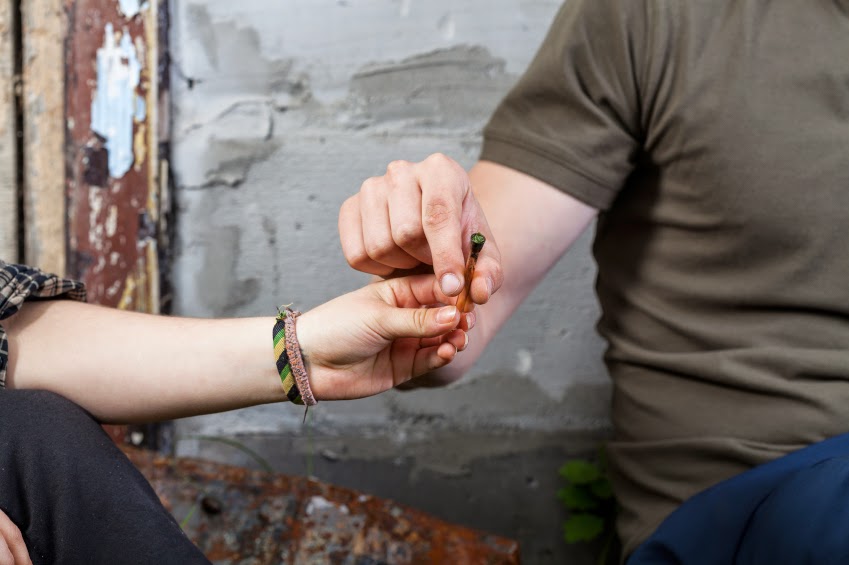
Recently, the state of New Hampshire has been in the news for 34 overdoses related to Spice. Spice is a “legal drug” of dried plant material with a chemical sprayed on it that is structurally similar to THC, the active component in marijuana. Typically, it is smoked to induce a high. 
Law enforcement if having a hard time keeping this stuff off the streets. The issue becomes, once they identify the chemical nature of the substance and make it illegal, the street chemist can simply differ the compound by one molecule and it will be legal again because it doesn’t exactly match what was outlawed. Some states are trying to combat this by making a law more inclusive by saying “this compound and similar molecular structures”. Thus far, they are having difficulty doing that. 
What are some of the symptoms of a Spice overdose? This list comes from the linked article. 
1. Seizures. 
2. Decreased level of consciousness to coma. 
3. Vomiting.
4. Hallucinations and paranoia. 
5. Increased heart rate and blood pressure– enough to be dangerous. 
6. Anxiety.
7. Threatening behavior. 
8. Headaches.
9. Difficulty Speaking.
There is no reversal agent for a Spice overdose. In the ER, treatment centers around controlling the symptoms and supporting dangerous changes in vital signs
Are you for or against the legalization of marijuana? 

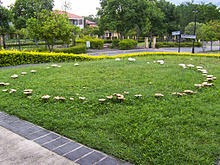
Ingestion of Mushroom

It’s not unusual for kids to ingest things. Young kids put in their mouth whatever is in their environment. Question is, what do you do if your child eats a mushroom from the yard? Worry or not?

Wikipedia

Pediatric nurses face a lot of interesting scenarios each day they work because of the curious nature of their patients. When a case like this presented itself– it was the first of its kind in twenty of years of peds nursing. And we ask ourselves the same thing– should we worry or not?

The best resource for anyone for all things ingested is the Poison Control Center. They are our first line resource for discussing these cases. I knew I would call them but didn’t really know what help they could offer. In my mind, they’d be limited to known pharmaceuticals or toxins. Something with a label on it.

I was clearly wrong.

Because the Poison Control Center I called actually had a “mushroom specialist” available by phone. Some who had worked in the field for twenty-five years.

Luckily, we had a specimen available to us. This is where my authorly skills came in– in describing the mushroom.

What I found interesting was some of the questions she asked about the mushroom in order to help identify it and ultimately determine if it was poisonous or not.

1. Where was it found? In a “cultivated lawn” or a wooded area? From what I gather from her, poisonous mushrooms are less likely to grow on manicured lawns.
2. Did it grow near a tree? What type of tree? How close did it grow to the tree?
3. What color is the cap, stem and gills?
4. How big does the cap measure?
5. How long is it?
6. What is the width of the stem?
7. When the stem is bent– does it bend or break?
8. Does it have gills? These are the page-like structures underneath the cap.
9. Does it have a ring? This is a structure that might cover the gills and you wouldn’t know gills were present unless the ring was removed.

In this case, we were able to send photos of the mushroom to the specialist via a smart-phone. This is one way smart phones have really enhanced medical diagnosis.

Good news, in our case, the mushroom was edible. In fact, her favorite edible kind called a fairy-ring mushroom or marasmius oreades. She enjoyed them so much she wished they would start growing in her yard again.

The mushroom specialist encouraged the family to keep the specimen in wax paper (definitely not plastic) for an additional 24 hours in case the child developed any other symptoms. Not because of the mushroom itself but what could be on the mushroom. She said, often kids have ingested something around the mushroom (perhaps a pesticide) that is causing their symptoms but the “mushroom gets blamed.”

I guess that’s a perk of being a mushroom specialist, knowing what you can eat from your lawn without killing yourself.

So, know that poison control is a good option for ingestions of these sorts but, if at all possible, pick a couple of the specimens to take with you. And, if the child is okay, feel free to call poison control before proceeding to the ER.

Often times, they can save you a trip.

Up and Coming

Hello Redwood’s Fans!

How has your week been? Mine? Good. I finally feel like I’m getting caught up on some writing tasks now that the kids are back on school.

This week we’re focusing on plants. I’m certainly not a botanist by any means but plants are getting kids into trouble. Particularly plants laced with a chemical similar to the active component in marijauna. New Hampshire is having a hard time with some Spice overdoses. Do you think synthetic/designer drugs become more palatable when their counterparts are legalized?

Do you think all drugs should be legalized?

For you this week:

Tuesday: A curious case of mushroom ingestion. What does Poison Control need to know?

Thursday: The New Hampshire Spice Overdoses. Why is it so hard to keep this stuff off the streets?

Have a great week!

Head Injuries: Jason Joyner

There was that time when the editor saved the medical professional.

As a physician assistant, I enjoy having medical aspects in my story. But even medical folks can slip up and have errors in our fiction.

I have a scene where my heroine gets head trauma and wakes up later in the clutches of the villain. The freelance editor, Ben Wolf, wondered about that. He had read that if there was significant time of loss of consciousness (LOC), then it suggested a serious injury that would be hard for the victim to bounce right back from to be active.

One of my pet peeves is when characters are injured and recover too fast, so I had to look into this again.

Basically, my heroine suffered a concussion, also known as a Traumatic Brain Injury (TBI). Symptoms of a concussion can include headache, confusion, dizziness, visual changes, a blunted affect, and may or may not include LOC. (People always flash lights in pupils to check for concussion. If the pupils are affected, it is a serious sign and they won’t be up and active soon.)

LOC usually is only for a few minutes, and as my editor noted, will mean a much more severe injury if it lasts for hours.

Blast. Foiled by the editor.

Except, you can use the amnesia angle.

A concussion with LOC may have retrograde (before the incident) or antegrade (after the incident) amnesia. According to one research article, the antegrade amnesia can last for a few hours after the incident. I can attest – I had a concussion in 5th grade and couldn’t remember a couple hours afterwards.

So if you need your protagonist to be out of it for a while, keep the actual LOC on the short side and use the amnesia angle to get you where you need to be. The victim may be incoherent, unsteady, with a blank expression during this time. Use these symptoms to add drama to the situation.

When your protagonist comes to, it is actually the end of antegrade amnesia. I remember with my concussion it was like I “woke up” after lunch during our quiet reading time at school. I was confused, unsure of what happened. I could remember part of the morning, but about two hours was blank. I even found a goose egg on my head later, but I didn’t know how it got there.

So that was my work around. My heroine didn’t have LOC the whole time. But there was enough injury to cause confusion and amnesia, keeping her from attempting escape. There you go Ben. A few minor tweaks, and all is well. Except for my heroine, who’s tied up and threatened. But that’s another story.

**************************************************************************

Jason loves good stories and wants to use words to make a difference. When he’s not writing, playing soccer, or losing in fantasy football, he works as a physician assistant in southeast Idaho. He also tries to keep up with his awesome wife, three high-energy boys, and his little princess. He writes suspense and YA supernatural, and likes to use his medical experience to punch up the stories. You can find him on Twitter @JasonCJoyner or his blog at www.jasoncjoyner.com/blog.

Death by Spider Bite

I like to use scary medical things in my books and for some reason, Poison (my second novel), was probably the creepiest because of the involvement of spiders.

But Poison is not that far from medical fact.

Brown recluse and black widow spiders tend to cause the most problems in the US. Evidently, a Florida man was bitten on his neck while renovating his house. The problem with a brown recluse spider bite is the venom necrotizes (or eats away) the tissue.

In this man, it rotted out one of his vertebrae and eventually caused his demise.

Death by spider bite is rare. As this news piece states– the most common cause of death related to spider bites is anaphylaxis– a severe allergic reaction your body has to the venom.

Brown recluse or fiddle back spiders have a characteristic marking on their back that looks like a violin. For more information on this deadly arachnid check out this link.

 Have you ever used insects in an unusual way in your novels?