Genetic Analysis: Guest Blogger Bethany Macmanus
Bethany has graciously agreed to award one e-book copy of Nerve to a commenter of this posts. Comments close on Wednesday, March 25th.
Up and Coming
Hello Redwood’s Fans!
How has your week been? Mine? Let’s just say I’m glad I got that novel done last week because this week has been busy– saving lives and teaching other people how to save lives.
Spring is coming. Do you love springtime? For me, spring is my third favorite season (behind autumn and winter). I’m ready for the snow to melt and for some warmer weather but I’m a cave girl so the bright sun is not always high on my list. Oregon, I think I’d do well living in your rainy state.
For you this week! Two fantastic ladies and guest bloggers.
Tuesday: Friend and author Bethany Macmanus stops by to guest blog on some of the diseases that can show up on genetic testing and how it inspired her latest novel, Nerve. Bethany has been kind enough to offer one free e-book to a commentor on her March 17th post– so be sure to stop by.
Thursday: Forensic expert Amryn Cross answers an author’s question. How early can a pregnancy be detected on autopsy?
Have a GREAT week.
Jordyn
Acetaminophen Poisoning
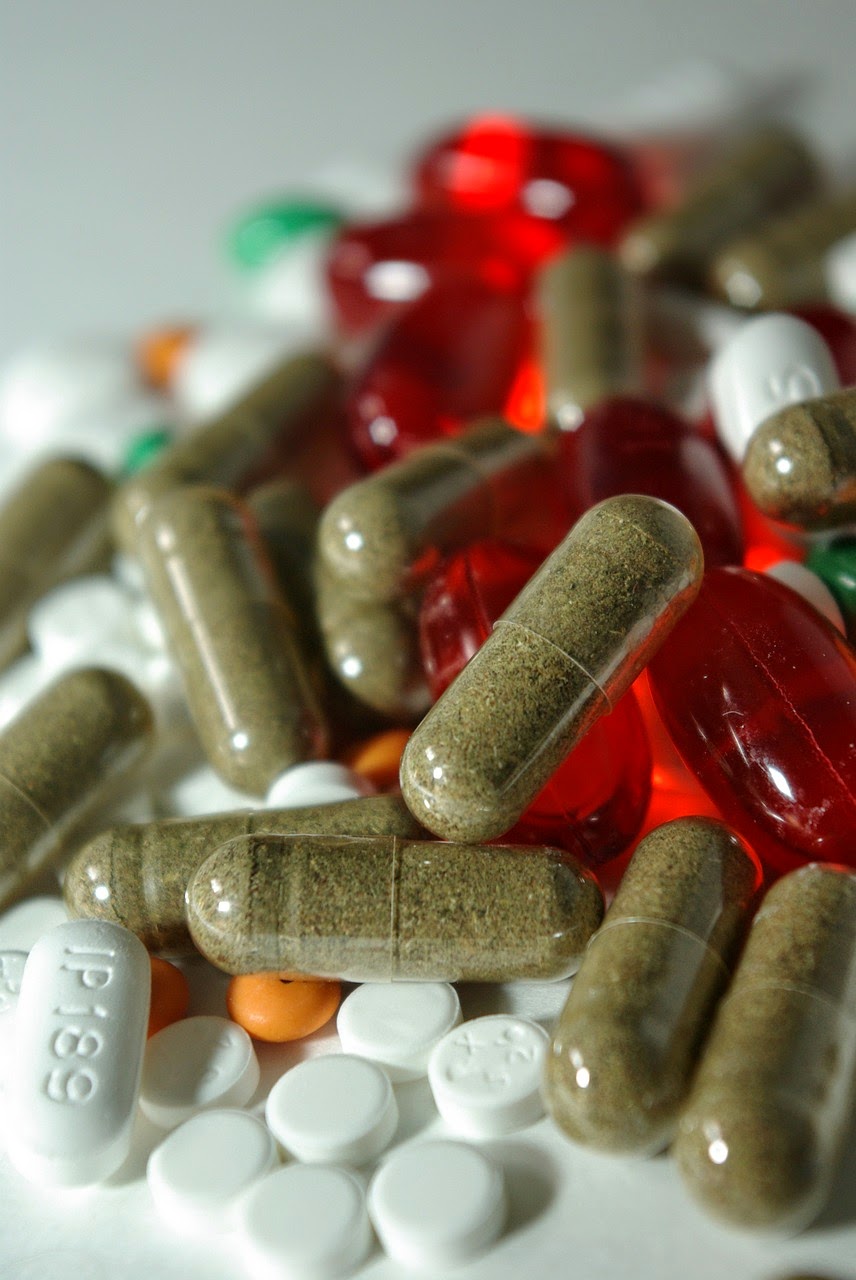
Acetaminophen, commonly known as Tylenol, is one of the number one ingestion (accidental and intentional) calls to the Rocky Mountain Poison Control Center. One of the reasons behind this is that Colorado has one of the highest rates of prescription drug abuse and acetaminophen is a common co-ingredient of narcotics (Vicodin, Percocet and others.)
Using a possible overdose in a novel is a good way to increase conflict/tension. Acetaminophen ingestion, if caught early enough, is highly treatable with a mortality rate of <0.5% which is in large part to N-Acetylcystein (NAC).
Acetaminophen was first used in 1955. It’s primary function is as a pain reliever and fever reducer. It peaks in 45 minutes and the half-life is 2-3 hours. I discussed the importance of half-life and ingestions here.
Acetaminophen is metabolized by the liver which also becomes the primary victim in overdose. If untreated, acetaminophen kills off liver cells over the period of a couple of days. This type of overdose is the #1 cause of liver failure in the US, UK and Europe– again, largely as a result of prescription drug use/addiction.
What’s considered a toxic dose? Greater than 150mg/kg for a child and 7.5 grams and over for an adult. Keep in mind, extra strength tablets are 500mg each so taking just fifteen of these places a person in the toxic category. For an acute overdose, the entire amount needs to be ingested in eight hours. A person can still become toxic from chronic ingestions but it does complicate their medical management a little.
We do use decontamination at times in poisonings but the treatment for acetaminophen ingestion is so good that it generally outweighs the benefit of decontamination which is discussed here.
What’s most important in acetaminophen overdose is the four hour drug level (four hours after the time of ingestion.) Whether or not to give the antidote is based on this level. Now, in a massive overdose (let’s say twice the toxic level) the medical team may be directed to decontaminate the patient because the patient can die from a massive overdose even though their liver may be fine. At the four hour mark if the drug level is less than 150– the patient does not require NAC. If over 150– they get the treatment.
NAC can be given two ways– either IV or by mouth and should be started within eight hours of ingestion. The oral route is preferred because it goes to the liver in higher amounts. NAC works by enhancing a protein that breaks down acetaminophen in the liver when it’s own mechanisms are overwhelmed by the amount of drug the patient has taken.
Even if a patient denies taking acetaminophen, we’ll generally test for it under suspicious circumstances– such as admitting to taking another drug or suicide attempt through other means. In 8.4% of cases, the patient will test positive and 2.2% of those require extensive treatment.
A negative acetaminophen level doesn’t mean they didn’t take an overdose so in a patient where there is concern for acetaminophen toxicity– we would also draw liver enzymes. If those are elevated, the patient will get the antidote even if the acetaminophen level is negative.
Patients generally die from cerebral edema or overwhelming sepsis. Researchers are unsure why the cerebral edema develops. Sepsis occurs because the liver protects the body against bacteria and if the liver has died– their protective mechanism fails.
What’s interesting in acetaminophen overdose is there is little intermediate ground. Either the patient gets better or they don’t. Past a certain point, the only way to save them is to transplant their liver.
General Treatment of Ingested Drugs
Early in my nursing career, I worked in a community ER. In this setting we saw both adult and pediatric patients. One day, three young boys were brought in after they’d gotten into grandma’s medicine cabinet and sampled a multitude of pills.
What has remained is the use of activated charcoal. Activated charcoal literally looks like ground up charcoal. It is a thick, sludge like material that is sweetened to make is more palatable. In kids– we usually put it in a covered up Styrofoam cup so they can’t see it. If they won’t initially drink it we may flavor it with chocolate milk. The problem becomes that whatever it is diluted in they have to drink all of in order to get the full dose.
Activated charcoal works by binding the drug to make it inactive. If the effects of the drug would be more detrimental to the patient (versus just observing and offering symptomatic support) then we’ll generally try to give it if the patient comes in within one hour of the overdose.
With any ingestions, we usually follow the direction of our Poison Control Center.
If your child has ingested anything of concern, I highly recommend you call them first at 1-800-222-1222.
Up and Coming
Hello Redwood’s Fans!
How was your weekend? Mine? Amazing.
I finished the first draft on my indie novel releasing this Fall! Doesn’t it, fellow authors, feel so good to type those words “THE END”!
Yes, yes it does.
More news on that later.
It’s a pretty exciting week here at Redwood’s because I’m covering some very common questions that I get asked repeatedly. Most authors are keen to find the perfect poison to kill off their characters.
Sometimes, though, we want our characters to survive a poisoning incident. That’s what we’re talking about this week.
Tuesday: Decontaminating a patient who has been poisoned. Do we still use Syrup of Ipecac? What exactly does it mean to “pump” someone’s stomach?
Thursday: Treatment of acetaminophen (aka Tylenol) poisoning. This is one of the most common overdoses that medical personnel deal will. I’ll cover why that is and how to save patients.
Hope to see you here!
Jordyn
Author Question: Motor Vehicle Collision 2/2
2.
Would she still be in her own clothing while unconscious at the hospital?3.
What sort of treatments would they give her, if any, at the ER? IV’s, examinations, etc?4. Is this scenario even possible or would she have immediately died from the injury?
5. If her survival was impossible, what can I make her injuries so she can be healed by the other character?
6. How would she appear? Eyes open, eyes closed, or would it matter? Vomit? Skin coloring?
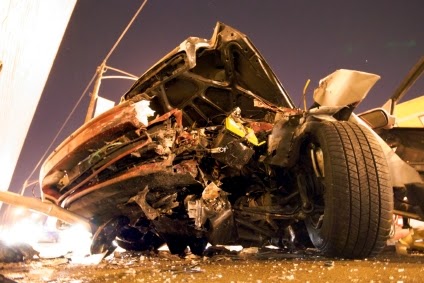
1. One, they’ll assume she could be gravely injured considering her mechanism of injury. They’ll first check to see if she’s breathing and has a heartbeat. At the same time, they’ll be stabilizing her spine by putting on a C-collar and placing her on a backboard. If she’s breathing on her own at an adequate rate, they’ll give her some oxygen via a mask. If she’s not breathing or doesn’t have a pulse then they’ll begin resuscitation by giving her breaths and doing CPR. After those major things are taken care of, they’ll start an IV to give her some fluid. Then begin to look for secondary injuries. An unconscious patient thrown from a vehicle will have presumed traumatic brain injury or TBI.
2. If the EMS team can provide her adequate care without cutting off her clothes, then they’ll leave her that way until she gets to the hospital.
3.
In the ER, we start where the EMS team left off. We’ll start our assessment much in the same way the EMS team does. We continue any care they’ve provided. If they were unable to get IV access—we’ll start to work on “getting a line”. We’ll do a detailed secondary survey looking for other injuries which means entirely undressing the patient, log-rolling them to their side and checking for injuries to their back as well. A catheter would be inserted into her bladder and the urine tested for blood and she’d also likely get a pregnancy test.Additional tests in the ER for this unconscious patient would be: x-rays of her spine, CT of her brain and likely chest and abdomen. Some baseline labs: blood counts, electrolytes, labs that look to see if organs have been injured and bleeding time studies. They’d likely “type and cross” her for blood products. Any other injuries would be x-rayed as well—for instance if her arm were misshapen or significantly bruised.
The unconscious patient is challenging because they can’t tell you what hurts.
4.
Skull fractures can run the gamut and there are several different types of skull fractures. A patient could have a traumatic brain injury that eventually causes death but just have a simple linear skull fracture. Or, a patient can have a depressed skull fracture and be awake and talking to you. As an author, you have a lot of leeway here.5.
I guess it depends on what you mean my “healing”. Do you want her to have evidence of injury but be fine?6.
I’ll go with the assumption that she presents to the ER unconscious. An unconscious patient can look relatively well to nearly dead—again, you have a lot of leeway here. They can “appear to be sleeping” except they’re completely dead weight. There are specific vital signs a patient will demonstrate when their brain is swelling but I’m not sure you want to go that route.Author Question: Motor Vehicle Collision 1/2
2. Would he make it to a hospital about 4 miles away in an ambulance or likely die at the scene?
3. How would he look in the hospital after death (coloring, would they leave his clothing on if he just died)?
4. Would they let his sister see his body?
Jordyn Says:
1. Would he be conscious? Yes, it’s possible but for a very short amount of time following his injury. Your aorta is a very large vessel that comes right off the heart. If it is entirely ruptured—you’ll bleed out in one to two minutes. The quicker the blood loss the sooner unconscious sets it because blood supplies oxygen to the brain and the brain is a very oxygen sensitive organ.
2. This character would likely die at the scene.
3. What you might want to look into is reasons an EMS provider is allowed to call death at the scene. Patients who are obviously dead may not even go to the hospital. Let’s say they do “work” him and bring him to the hospital where he is declared dead shortly after. Likely, his clothes are on with the exception of the care EMS provided. It’s atypical for them to cut off all their clothes like a trauma center will. He’ll be extremely pale with areas of blueness. Livor Mortis begins fairly quickly where the blood will be begin to settle in dependent areas of the body. This looks like bruising. If he lying on this back—it would settle all along his backside.
4. Yes, the sister would be allowed to see his body. Nurses are pretty sensitive to this so they’ll try to make the body as presentable as they can and explain what the sister will see before she views the body.
Living on the Edge
Hello Redwood’s Fans!
Author Forensic Question: Planting DNA Evidence
Question:
I’m considering writing a crime novel that involves the antagonist framing others for crimes he has committed. He is a genius level sociopath who studies his victims’ habits by analyzing their trash. His day job is with the local trash company (handy for him.)
Now the question. Can he use semen from a condom (if it’s not too old) to plant on/in a victim? He rapes, kills, and then plants the evidence along with other clues that lead to his intended second victim?
*********************************************************************