You’ll have to forgive the language– which for Kevin Hart isn’t too bad. Here he is discussing his raccoon problem.
Summer Video Blog Break: Could You Ride This Bike?
I thought this video was pretty interesting on how our brains work and learn– particularly his term about “brain plasticity”.
We know that young children who suffer head injury can have much better outcomes than teens and adults. This has been proposed as the theory why.
What do you think? What does this bike experiment teach us about the way we think and learn?
Summer Blog Break
Hello Redwood’s Fans!
On this Memorial Day– I want to take a moment to thank all those who gave their lives for our country. Thank you to the families who remain behind for your sacrifice. I know the price of freedom is steep and am grateful every day for the rights I enjoy.

May God richly bless you.
Are you enjoying the sunshine? We, in Colorado, are not. It has been the grayest, cloudiest, rainiest May that I can ever remember– which is good for me since I tend to like dark and stormy. However, I am starting to feel sorry for my fellow Coloradans who really do look forward to those sun shiny days.
Over the next several weeks– we’ll be taking a break from the medical mayhem and posting some fun, maybe even thought provoking, video clips. These are ones that I have enjoyed and hope you do to.
Enjoy the time with your family. Take a camping trip! Finish that novel you’ve dreamed of finishing.
In the mean time, I’ll be preparing great medical posts for you to enjoy after July 4th!!
Party Hard!– as we used to say in the 80s, but of course with responsibility at safety.
Jordyn
Science Fiction or Medical Breakthrough: Children with Three Genetic Parents
Recently, this headline grabbed my attention– a child with three genetic parents. My first novel, Proof, dealt with a DNA genetic twist that made it difficult for law enforcement to put away the villain. So, as both a medical nerd and a suspense author, this concept intrigued me and set off several plot ideas in my mind.

What exactly are three-parent-babies?
A little science lesson first. Mitochondria are present in each of your cells. They are typically referred to as the “engine” or “powerhouse” of the cell. They provide the energy to run the cell kind of like a battery.
There are a group of diseases that affect the mitochondria and therefore can be passed to you genetically by your mother.
Science is using “three-parent” DNA in IVF to prevent these mitochondrial diseases, which can be very devastating, from being passed down from mother to child by replacing the mother’s mitochondrial DNA with a donor woman’s mitochondrial DNA. The first article I linked to above provides the best diagram I could find as to how they accomplish the genetic transfer.
How much DNA is provided by the donor? Approximately 0.1%.
This procedure is outlawed world wide and just recently gained approval in the UK. It has been performed in the US but was outlawed when one woman miscarried and three other children were born with disorders. It’s not clear if the procedure is to account for these. Other healthy children have been born using this technology who are now in their teens.
Is this a good idea?
I think it remains to be seen. The articles I’ve read liken this to a bone marrow transplant. You’re simply replacing broken batteries with new ones. Naysayers of course worry about manipulating someone’s genetic code and the slippery slope to designer babies.
To me, I’m open to the technology but would be interested in seeing how many eggs are destroyed because the technology failed. I view life as beginning at conception so this worries me on that level.
Supporters say replacing dysfunctional mitochondria doesn’t affect the child’s overall genetics from their parents. It doesn’t influence eye color, height, or intelligence. I’ve seen children suffer with mitochondrial diseases and to offer parents a “cure” is something I could support.
What about you? Does this kind of technology concern you? If so, why?
Science Fiction or Medical Breakthrough? Head Tranplants
Did your own head do a double take at the title of this post?
I know mine did when I first read this story.

Imagine it . . . someone being essentially decapitated and their head being placed onto another body.
This isn’t science fiction– but the real medical plan of Dr. Sergio Canavero— head of the Turn Advanced Neuromodulation Group.
And– he has a patient volunteering to be the first “guinea pig”. A patient that suffers from Werdnig-Hoffman disease which is a form of spinal muscular atrophy which can lead to severe muscle weakness causing a person to become ventilator and wheelchair dependent.
I’m most familiar with this disease in working with kids who suffer from spinal muscular atrophy (SMA) . Children who suffer from this illness have relatively short life spans of about two years– though it obviously depends on what kind of medical care the family chooses such as life-long ventilator dependence.
This surgery could happen as soon as 2017.
Perhaps it is a worthy medical concept. I don’t know how I feel about it ethically. What I do think is that it would be a great plot for a medical thriller.
What do you do when the new body rejects the transplant? What is it going to be like for a person’s mind to be exposed to antibodies and hormones that it hasn’t been exposed to? What if the person is female but the transplanted body is male? Could any of these things cause a person to go insane?
I personally don’t see this type of surgery happening any time soon. As one article states– the soonest something like this could possibly happen is 2117.
Why?
Nerves. The crux of the issue is the severing of the spinal cord. Even now, in accidents where the spinal cord is severed– we don’t have the medical technology available yet to repair it so that the person is “fully functional” and not wheelchair bound. I think until this technology is available– a head transplant is still in the realm of science fiction.
What say you– is a head transplant a good or bad idea?
Up and Coming
Hello Redwood’s Fans!
Still alive out there? Enjoying the spring sun?

You may or may not have heard but Colorado had a FREAK snowstorm over Mother’s Day weekend. I mean, it was blowing snow like a January blizzard. Heavy, wet, spring snow.
In case you doubt me– the photo is proof.
The next day? All melted off. Aww– the joy of Colorado living.
For you this week . . . it’s all about deciding if some proposed medical breakthroughs are medical probabilities or just science fiction. This week we’ll cover children who have three genetic parents and transplanting someone’s head onto another body.
Have a GREAT week.
Jordyn
Critical Care Toxicology: What Did My Patient Take? 2/2
Today, I’m continuing my series on critical care toxicology. You can read Part I here.
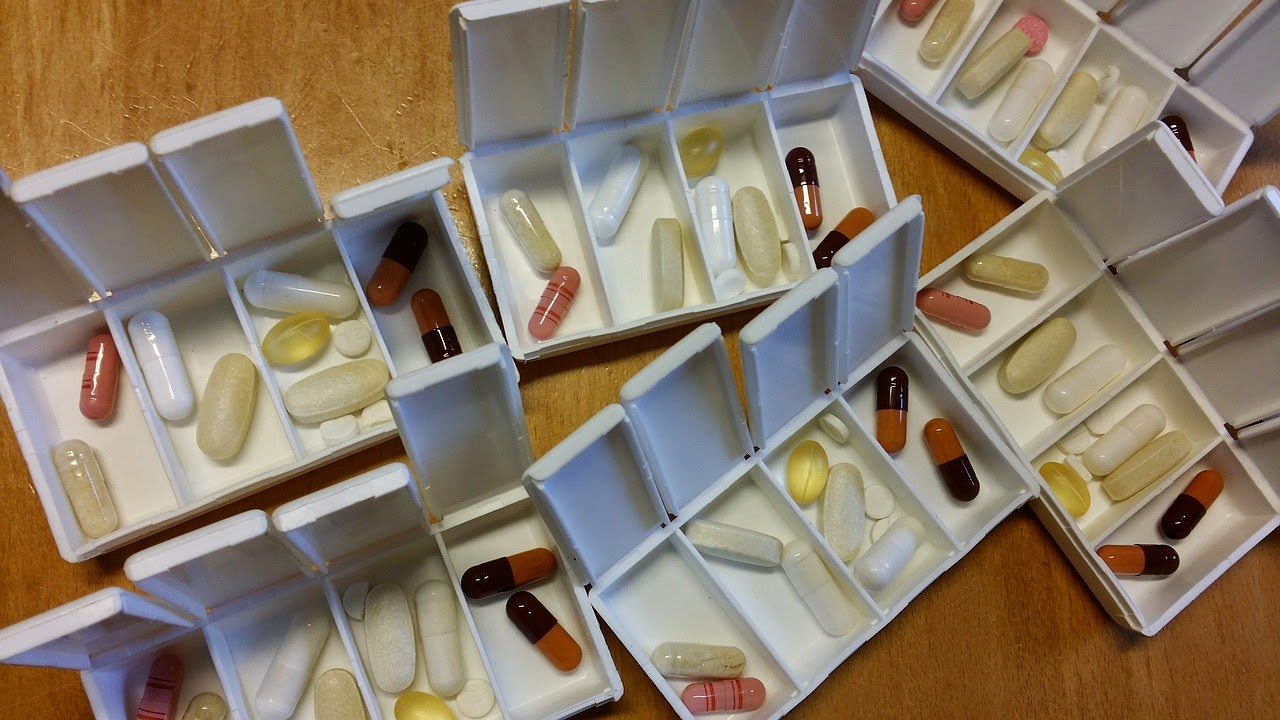
As mentioned in the first post, sometimes we really don’t know what a patient took because either they won’t tell us or can’t tell us.
When that happens, we have to look at the patient’s clinical signs (those things that can be observed and measured) and symptoms (the patient’s subjective experience) if they’ll tell us.
Let’s cover the following signs and see what possible drugs the patient might have ingested.
Scenario #2:
Low blood pressure with increased heart rate. Possibly obtunded or even agitated.
This has the potential to be a sodium channel blocker (class I antiarrhythmics like quinidine, lidocaine or flecainide) or a tricyclic antidepressant (TCA) like amitriptyline. The problem these drugs have is the effect on the heart’s electrical activity and we have to look very closely at whether or not the drug is lengthening the electrical cycle or increasing the heart rate.
Treatment specifically for TCA overdose is:
1. Establish IV access and give IV fluids.
2. Give sodium bicarbonate. This makes the blood more alkaline (less acidic) so the drug doesn’t bind as tightly.
3. Give a vasopressor (drugs that increase blood pressure) for low blood pressure.
4. Give benzodiazepines for seizures (valium, versed or ativan.)
Scenario #3:
Altered level of consciousness, nausea, vomiting, increased heart rate and sweating.
Couple this with ringing in the ears (if the patient can tell you) and you likely have an aspirin overdose. Aspirin overdoses are the second leading cause of death behind Tylenol overdoses.
Treatment:
1. There is no specific therapy. Only symptom support.
2. Goal is to decrease the amount of aspirin in the brain. Making the blood more alkaline can do this.
3. Dialysis if the patient has kidney failure or excess fluid in the lungs (pulmonary edema).
Scenario #4:
Nausea, vomiting and diarrhea coupled with slow mentation and tremors.
Lithium overdose. Treatment for this patient is hydration (IV fluids) and observation. Consider dialysis.
These are some of the more common drugs overdoses and hopefully give you some guidelines for your novel writing on both the medical side and what the patient might be suffering.
You can follow the links for more in-depth information.
Critical Care Toxicology: What Did My Patient Take? 1/2
Surprisingly, patients aren’t entirely truthful about what they may have ingested to make them sick. Or, they might be in a state where they can’t share the information due to their medical condition. This can put the medical team in a worse case scenario where if they knew what the patient took . . . they might be able to offer the right antidote.

Without the information it can seem like a shot in the dark to try and reverse the effect the substance is having on the individual.
Recently, I heard a fascinating lecture given by a doctor of toxicology who gave some guidelines, based on the patient’s signs, as to what that drug might be and I thought I’d share them with you for some great writing details.
Let’s first assume that we at least know the patient likely ingested something. They’re discovered by EMS in their home with an array of alcohol, pills, and drug paraphernalia. A good EMS team will try and take stock of what they see and report to the ER what they found. They’ll likely not grab illegal drugs like weed or powders (this would be for the police to confiscate) but they may bring unidentified pills and prescription bottles to help us. This can help narrow down what the person might have taken.
The opposite is finding someone unconscious in the middle of the street with nothing around them and the police call EMS for transport.
Or, even better, a teen has been involved in a “pharming party” where they raid every medicine cabinet they have access to and dump all they find into a punch bowl. Then proceed to swallow a handful of these pills with a bunch of alcohol. I have had cases like this where EMS grabbed the bowl and brought it with them. I mean, a punch bowl filled with prescription drugs but no boxes or labels. Even if we have the pills– it takes time to identify what they might be.
Time the patient might not have.
Scenario #1:
The patient presents with low heart rate and low blood pressure.
First, why would we think this may be a drug ingestion? The body’s normal response to low blood pressure is to increase your heart rate– not lower it– as a mechanism to prevent shock.
There’s only one other medical state I can think of that would mimic this and that would be a spinal cord injury. When the spinal cord is damaged, you lose nerve innervation that would help increase blood pressure. So, in absence of a traumatic event, a spinal cord injury would be ruled out. However, an unconscious person can’t tell us if they’ve been injured which further complicates the picture.
Drugs that can create this picture could be the following:
1. Beta-blocker. Your heart has beta receptors. When these are stimulated, say by a release of adrenaline in your body, the heart contracts harder and beats faster. A beta-blocker “blocks” these receptors so the opposite happens. Propranolol is beta blocker.
2. Clonidine. Clonidine is a sympatholytic medication meaning it blocks the flight or fight response. It’s used to treat high blood pressure but also ADHD and anxiety disorders. Personally, I’ve seen quite a few of these ingestions and they tend to be very unpredictable. The child can be fine one minute and then, with little warning, have a very slow heart rate and be unarouseable.
3. Baclofen: A muscle relaxer.
4. Calcium Channel Blocker. These drugs do what they say– block the flow of calcium from entering heart cells and those that line your blood vessels. Calcium acts to contract things so blocking its flow has the opposite effect. They are used to treat high blood pressure, migraine headaches and Raynaud’s disease. Verapamil would be a drug in this class.
5. Digoxin: I talk extensively about digoxin toxicity in this post.
How do we treat? With the exception of digoxin, there is no specific antidote so it is largely symptomatic support.
1. Give IV fluids. This will help support and raise the blood pressure.
2. Give Calcium. This helps things contract– thereby raising the blood pressure as well.
3. Give a Vasopressor. Vasopressors work to contract blood vessels to raise blood pressure. These would be drugs like dopamine and epinephrine (adrenaline).
There are a few other things to be done but this will give you plenty to write a scene that involves this type of drug ingestion.
Have you written a medical scene that dealt with a drug overdose in your novel?
Up and Coming
Hello Redwood’s Fans!

First of all– Happy Mother’s Day to all those fantastic, amazing women who are mothers and a big shout out to my own mom for all the love, attention, and care you gave me to help me become the adult I am today. I see your influence in how I raise my own girls and it is a good thing!
And for everyone else– please, pick up that phone and call your mom. From my years of working in the ER– none of us truly know how many days we have left so take time and appreciate your loved ones while you have them.
For you this week.
This week on Redwood’s Medical Edge is all about toxicology. How do we in the medical profession treat a patient who ingested something but they can’t or won’t tell us what they took? In these posts, I give you guidance on how we approach this medically and what treatments are instituted for common drugs of overdose.
Hope you have a GREAT week.
Jordyn
Are ED Patients Selfish?
I recently came across this satirical piece about an ER physician that conducted a study about how selfish ED patients were.

When I first read it, I didn’t think it was a joke but actual research. When I read further and figured it was a humor based website– I was a little disappointed.
Why? Because the article validated what I feel like at work many days. Parents of patients have a limited view of the total department and its needs or demands on my time. They simply want their problem fixed as immediately as possible.
The problem is, the reality of the ER will never meet those expectations of . . . really anyone.
How often have you had to wait for a doctor’s appointment? That is, an actual scheduled time to meet with your physician. Rarely, am I seen within 30 minutes by the actual doctor. First, the office schedules you before your “real” time for paperwork, etc and also for the hope that you’ll show up on time for the actual appointment time even if you’re running late.
Did that make sense?
My point is . . . why has it become the expectation that emergency care means you’ll be seen expeditiously? I’ll be the first to say that we’ve not helped ourselves as emergency care providers in this arena. I actually think posting wait times (like a restaurant) feeds into this idea that you’ll be seen upon arrival.
Our goal is to save the sickest people first. That means we may not see you in order. That means we may not get to you in the hour you’ve allotted for your emergency care to take place.
In my experience, most patients want to be seen by the provider within fifteen minutes of arrival and discharged home in sixty minutes.
Once, when I worked in a dedicated urgent care, we had a sick infant come in who needed to be intubated. When explaining to families why there was a delay, someone actually said, “That doesn’t mean we should wait. That family should have gone to the ER.”
That may be true but now they’re here . . . with us . . . and we have to manage their illness.
I’m not sure what the answer is. How do we make your ER visit more enjoyable? More timely yet still cost effective? Isn’t that the crux of the problem? You’re coming with a problem to be solved and a time frame in mind.
Just what if we can’t fix either? Is it our fault?
Curious to know what you think.
 Redwood's Medical Edge