Author Question: Delayed Death by Crossbow

Ben Asks:

Here’s my scenario that I would appreciate some advice on:
I’ve got a 25 year old woman that is shot through the left calf and the upper torso (I was thinking, maybe having the upper body shot piercing her shoulder) by crossbow bolts made of wood in my fantasy novel. The weapons that shoot her are each one-hand-held, meaning that they can be aimed and fired with only one hand.
What I need to know is this:
1. Would this outright kill the character?
2. If yes, where on the average human female body can I have two crossbow bolts made of wood puncture that body in such a way as to negate instant death, but still leave months of recovery time for that character, if she gets the proper medical help fast enough?
For background information, the science level of the world I am writing is roughly the same level we have today in America and Europe, the same with this world’s medical tech and knowledge.
Jordyn Says:
Thanks for sending me your questions.
1. A wound to the calf is unlikely to outright kill someone immediately. Any bleeding that’s not controlled if brisk enough can lead to death. Infection is a risk with any wound– particularly those that are caused from things (like arrows) that penetrate the body deep into its tissues leaving bacteria and other microorganisms behind.

The shot to the torso has more likelihood to cause death if it hits the right structure. On the left side of your chest are your heart, great blood vessels, and lungs. If the shot was more to the shoulder then an outright kill would be less likely and the risks above would be more prominent (bleeding and infection).

2. A shot to the calf and the shoulder have the potential to set your character back several months. If you don’t want the character to die– I would avoid having a shot to the torso. A projectile to any extremity can cause the bone underneath to fracture. Fractures typically take 6-8 weeks to heal.

If you didn’t want to go with a fracture of the bone from the projectile– you could have onset of infection (depending on how sick you’d want her to be for those months). Systemic infection can easily cause death. Local infection to the wounds can be problematic as well. You could also go with tendon damage to the arm or leg which would inhibit movement of the extremity. Healing and rehab of tendon and/or ligament damage can take months as well. Whenever an extremity isn’t used because it’s immobilized you always get muscle atrophy (muscle wasting) which causes weakness of the arm/leg, etc. It takes time to rehab that as well.


Good luck with your novel!

How Long Can Some Survive Without Adrenal Glands?

Jessica asks:

In my story idea one of the things my serial killer does is remove her victim’s adrenal glands(she has illegal organ harvesters do this), then put him in an underground maze and see how far he manages to make it out of the maze before he collapses and dies. This character dies.

What I wanted to know was:

1. Is this idea realistic? Would he actually survive long enough to try and find his way out of a maze, or would he just collapse there and then?

2. If not, could I make it realistic somehow, for example, by having the killer give him some steroid hormones before dropping him in the maze, but then no more?

3. What would actual removal, as opposed to, say, Addison’s disease, do to him? Like how severe would the effects be – would be just be a little bit weak and then deteriorate, or would he be really sick right away?

4. Something she does to another victim is render them completely deaf. How easily could she do this?

Jordyn Says:

The adrenal glands sit on top of your kidneys and release cortisol and epinephrine. You do have some of these hormones circulating at all times that will probably last somewhere between 2-4 hours. As to how long your character could last probably depends on how long and how much energy they would have to expend in the maze.

For instance, a five minutes stroll and he’s out then he’s probably alive at the end. However, if it’s a long arduous maze and he’s being chased by a serial killer, the victim will burn through their hormone reserves much faster and would be more likely to succumb to death more quickly.
 

Giving steroids could lengthen the amount of time they could live for. Patients with Addison’s disease, where the adrenal glands aren’t working properly, generally take supplemental steroids twice a day.
 
I would imagine the effects of immediate removal of the adrenal glands would cause the patient to be sick right away. In Addison’s disease, the symptoms develop slowly over time because there is still some amount of these hormones being released. In surgical removal, there’s no further release from the glands, just what the patient has remaining in their blood stream. And remember, surgery in and of itself, is a stressor to the body which would likely use up some of these hormones as well. I would do some reading on Addisonian crisis to get a clear picture of how soon and how sick the patient/victim would be.

It is easy to render someone deaf by puncturing the tympanic membrane and removing one of the ossicles (or one of three bones in your middle ear.) 
 
Hope this help. Your book idea sounds very intriguing!

And shout out to Liz for helping me with this question. 

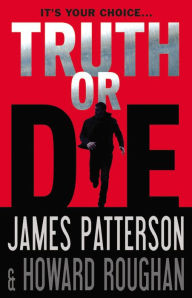
Killing my Arteries: Truth or Die by James Patterson

If you’re a frequent reader of the blog, you know I have a love/hate relationship with author James Patterson. LOVE his books but he needs a medical consultant– STAT.

Recently, I read Truth or Die by James Patterson and Howard Roughan. Here is my Goodreads review of the novel if you’re interested.

What I’d like to discuss here is an interesting medical aspect that was part of the book.

SPOILER ALERT. If you haven’t read the book and don’t want any part of the novel divulged then stop reading right now.

In the novel, a journalist is murdered when she goes to see one of her sources. The question is why? What comes to light is that there has been a new drug invented to be used as a torture device to illicit confessions. In short, the drug will kill you if you don’t tell the truth.

The concept itself is intriguing from a fictional point of view and I do give the authors credit for brainstorming this medical scenario and the ethical implications that surround it.

My issue is the way they deliver the drug– always through an injection into the carotid artery.

I’m sure this is done for dramatic effect but giving drugs via arteries is generally not done. The question is why.

Let’s first think of the main difference between veins and arteries. Arteries are vessels that are leaving your heart. The blood has just been oxygenated. These vessels operate under pressure– we measure your blood pressure at arterial points. Arteries flow into smaller vessel beds.

Veins lead back to your heart. Smaller veins lead to bigger vessels. The oxygen has been off loaded and the red blood cells are on the return trip for more. You have far more veins than arteries.

Many drugs can be “caustic” to veins. This means the drug itself could cause irritation at the least– loss of the blood vessel at the worst.

Considering how many veins you have– possibly losing the function of one vein probably won’t be a huge deal. However, say I give a drug via your radial artery and completely destroy it. That radial artery feeds a lot of tissue in your hand– which would die off if the artery were destroyed. That’s generally what we consider poor patient care.

The other thing about arteries is that they are usually deeper and harder to access in comparison to veins. As I stated above, they also operate under high pressure. You know you’ve hit an artery when blood backs up into your syringe– and pulsates.

Lastly, arteries carry oxygen rich blood to cells. If that blood flow is displaced for a period of time with liquid from an infusion that dilutes the bloodstream– those tissues could become oxygen starved to the point of dying. Again, generally a bad idea for patient care.

There is an alternative the authors could have used and still had dramatic effect for the book and that would have been IO or intraosseous access. This is where we drill a large needle into your bone marrow. It is considered central access and all drugs could be given this route. Also very dramatic.

Remember, James, I’m available for medical consultation.

Murdering a Television Scene

The ABC drama, How to Get Away with Murder, is a series not for the faint of heart. The show centers around defense attorney Annalise Keating (great acting by Viola Davis by the way) and how murder victims keep popping up around her where she may or may not be involved.

The second season opens with an intense scene where Annalise has been shot in the chest and subsequent episodes deal with the events leading up to this one scene. Just who shot her and why did it happen?

Of course, this is a great time to do some medical analysis of her EMS rescue. What’s follows is a conversation between two medics who are taking her to the hospital.

Medic One: Starting a 16 Gauge IV. Lungs are clear. Need another blood set for a second IV and a BVM. Blood pressure 70/palp. Pulse is thready.

Medic Two: Feels tachycardic. I’m seeing some JVD. Might have to do a needle thoracostomy. Need to get ETT right away. Diminished respirations. Chest is clear. Equal breath sounds but respiratory effort decreasing.

Just what does all this medical mumbo jumbo mean and is it medically accurate? Well, kind of.

When dealing with a trauma patient, getting IV access is paramount. Usually two lines of a large bore gauge is necessary. A 16 Gauge is a large size. And working to get two lines in is accurate.

What does BP 70/palp mean? Likely, you’re used two seeing two numbers in regards to blood pressures. Something like 120/72. The top number is what’s referred to as your systolic number– or the pressure inside your arteries when your heart is contracting. The bottom number, or your diastolic number, is the pressure in your arteries when the heart is relaxing. To get both numbers, you have to be able to listen to the blood pressure by using a BP cuff and stethoscope at an artery point– usually at the antecubital space (the crook of your arm.) The first time you hear the heart beat– that’s the first number. The moment you can’t hear it anymore– that’s the bottom number.

In EMS, active resuscitation scenes are really loud and it’s hard to hear. There is  technique where you feel for the blood pressure but you only get one number– the systolic one. In this technique, you feel where the radial pulse is (at your wrist) and pump the cuff up until you can’t feel it anymore. As you let the air out of the BP cuff, you record the number where you first feel the pulse. In this case 70– which is low. But, that’s why there is only one number and the “palp” denotes it was felt or palpated.

Pulse being thready– means it feels thin and weak. Also appropriate for someone experiencing blood loss related to a gunshot wound. As does what the second medic begins to say– feels tachycardic which means the patient’s heart rate is increasing– which is also a sign of blood loss.

The main medical inaccuracy with this scene is the procedure one medic says they might need to do– a needle thoracostomy. Just what is that?

A needle thoracostomy is done to pull air from the chest that has caused a lung to deflate– here from a gunshot wound to the chest. It is a rescue measure– meaning it will buy you some time until the patient can get a chest tube placed in a hospital setting.

But note what the medics say over and over– her breath sounds are equal. These comments denote that her lungs are filling as they should. If one lung was “down” or deflated from the gunshot wound– the breath sounds should be unequal. Generally, you can’t hear breath sounds on the side of the chest where the lung is deflated– or there is very little air moving on that side.

The writer has also picked the wrong procedure. When one medic comments– “I’m seeing some JVD.”– this usually denotes an obstruction somewhere in the chest (like a deflated lung or blood collecting around the heart) and blood is having difficulty flowing as it should and so the blood is backing up into the veins. JVD= Jugular Venous Distention and is when the jugular vein is easily seen at the side of your neck because it is filling up with blood.

Since the medics state her breath sounds are “clear and equal” then we know the problem is not with her lungs but could be with her heart.

The rescue procedure for blood collecting around the heart is called “pericardiocentesis”.

Again, Hollywood, I am available for medical consultation. Let’s rescue our characters using the right procedures.

If you’re interested in seeing a video on needle decompression (the first) and/or pericardiocentesis (the second)– then watch the videos below. They aren’t gory.

Effects of Electroconvulsive Therapy

Jean asks:

I have a question related to cerebral hypoxia as a complication of old-style electro-convulsive therapy.

I’m plotting out a story that takes place in a psychiatric hospital. My protagonist is a patient at the hospital who was sane and healthy when he was forcibly admitted. He was formerly a thief, and escaped prison by being diagnosed with kleptomania, as a form of monomania. During the year he is incarcerated at the asylum and as a result of the treatments he undergoes, he gradually loses his sanity and his memory.

One of the anachronisms I have in the setting is the existence of electroconvulsive therapy, or ECT, which will be done using the early, more damaging methods. As such there will be no anesthetic, muscle relaxants, bilateral electrode placement or oxygen administered during the procedure. Other than the existence of ECT, the medical knowledge of the doctors at the hospital largely reflects the state of medical knowledge from about 1850 or thereabouts.

I’ve learned that one of the complications of ECT is the possibility of triggering a prolonged seizure or series of seizures that can last for many minutes during which the patient might be unable to breathe. Currently, doctors can prevent this by administering oxygen and using anticonvulsants to arrest a seizure that continues for too long. Neither of these options is available in a Victorian-based setting in which there were no effective treatments for seizures or coma.

In the plot, the ECT triggers a prolonged seizure and the protagonist is unable to breathe for several minutes. The resulting hypoxia puts him into a shallow coma for a short period of time. After he wakes again, the complications from the hypoxia produce symptoms in him that mimic the psychiatric symptoms that the doctors were expecting to see as a result of his “insanity”, such as memory loss, confusion, hallucinations, etc.

The research I’ve been able to do suggests to me that this is a plausible scenario, but I have no medical training and would greatly appreciate a more experienced opinion. Can hypoxia from a prolonged seizure triggered by old-style ECT send a patient into a coma if given no treatment? How long might be a realistic length of time for the coma to last? How severe could the resulting symptoms be?

Jordyn Says:
Thanks so much for sending me this question Jean and it is an interesting question!
I ran this by a physician friend of mine (thanks Liz!) and here are her thoughts and then I’ll add some of mine.

Liz Says:

I am sure with ECT “anything could be possible” but nowadays it is total disinhibition. These patients become very “frontal”—driven by the frontal lobe and lose their filter, become hypersexual, will say and do anything.

Some can become psychotic which can be accompanied by hallucinations. I don’t know if they could have hallucinations WITHOUT psychosis. But I don’t think anyone would argue the point since strange things happen in the brain with electricity especially in the setting as the early years of ECT. I’m sure hallucinations could also happen after the hypoxia and coma.

Jordyn Says:

The brain is one organ that we still know very little about. In the presence of hypoxia (or lack of oxygen) the length of coma and the severity of symptoms is largely up to the writer. There is a lot of leeway here. I’ve seen patients wake up from a coma that I would never thought should have survived and I’ve seen patients with more what seemed to be treatable head injuries progress to death.

Hope this helps and best of luck with your book! 

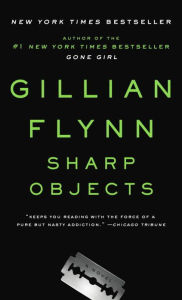
The True Side of Sharp Objects

I became a Gillian Flynn fan with Gone Girl. Being a suspense author myself, I like to read what’s catching the reader’s eye. Particularly a book made into a movie.

After reading Gone Girl, I decided to go back and try one of Ms. Flynn’s earlier novels and I chose Sharp Objects. I was interested in this novel because it dealt with the subject of cutting which I’ve seen more and more in the teenage population and I was hoping the book would offer some insight.

If you haven’t read Sharp Objects— this is your SPOILER ALERT as I will basically be discussing the plot of the novel. You’ve been warned.

Camille Preaker is a journalist with a history of cutting words into her skin. She was raised in a small town with an overbearing mother and their relationship has been on the rocks since her sibling died many years earlier.

Camille goes back to this small town after a string of grisly murders involving several of the town’s children. While living and reconnecting with her mother and getting to know her younger and only remaining sibling better– she begins to suspect her mother of these murders.

When Camille begins to suspect this, both she and her younger sister begin to get ill and Camille not only suspects her mother of the murders but also of killing her younger sister ala Munchausen’s by Proxy.

Munchausen’s by Proxy is a mental health disorder where typically an adult caregiver intentionally sickens a child for medical attention.

In order to prove her theory correct, Camille goes to the local hospital to search through her deceased sister’s medical records.Which, of course, are released to her without requiring her to sign any sort of medical release. I would question even whether these would be released, at least initially, to a sibling.

While reading the medical record, Camille becomes convinced that she needs to question a particular nurse who brought up concern about this child during one hospital stay.This nurse happens to be on duty on the same unit TWENTY years later. Yea, sure. That’s quite a convenient coincidence.

Lastly, the nurse Camille talk to basically says there was nothing she could two decades ago even though she was concerned the mother might be harming the child.

This is patently false. A nurse, even in that time era, was and is a mandatory reporter. A physician’s blessing or order is not required to involve social services if the nurse suspects the child is being abused.

I didn’t enjoy Sharp Objects nearly as much as Gone Girl and I would suggest reading Gone Girl if you’re new to Gillian Flynn. I haven’t made up my mind about Dark Places but am willing to give the author another try.

Just wish she would have spoken to a nurse about this scenario.

How to Help a Loved One with Cancer

I was asked to post about this topic by my good friend, Dale– what do you do when a loved one is diagnosed with cancer.

This is a situation where it’s easy to feel helpless. Right now, two of my relatives and a good friend are dealing with cancer diagnosis– all of them pretty serious.

My maternal grandmother also died of kidney cancer so I’ve dealt with this from both ends– both as a family member and as a healthcare provider even though it’s not my primary area of focus. I’ve been there when families receive the news that their child has cancer.

So, if I could offer any helpful tips, this is where I would start.

1. Realize when a family member first gets a cancer diagnosis— they will likely not hear anything past those three words. “You have cancer.” While your family member’s mind is reeling, your job will be to remember (and I would even take notes) about what the doctor says next because the person receiving the diagnosis is in shock.

2. It is really helpful to have a family member go to the doctor’s appointments to take notes. Keep a notebook and journal with everything the doctor gives you. Write down questions that you want to ask at your next appointment. It’s easy for things to slip from your mind when your face to face with the doctor.

3. Get a second opinion. I do encourage second opinions for all major diagnosis and surgeries. Your provider should not be threatened by the fact that you want a second opinion. In fact, they should encourage it. You may not want to delay treatment, particularly if you’ve been diagnosed with an aggressive form of cancer, but that also doesn’t mean you can’t get one. It’s not a betrayal of your doctor and it also doesn’t mean you’re going to leave them.

The purpose of a second opinion is to make sure the treatments are relatively aligned and you don’t have a doctor coming out of left field.

4. Do things without asking. I know this may seem rude but what happens when people ask you for help? “No, I’m okay. I’ll let you know if I need anything.” And then, they never call. There are lots of ways to do this and with on-line sign up sheets so pervasive– it’s easy to set up. Set up a sign-up sheet for providing meals, cleaning the house, or giving caregivers respite breaks. If that seems overwhelming, show up at the door and say, “I’m here to clean your house. Where is the vacuum?”

5. Do fun things. A cancer patient doesn’t always want to talk or think about cancer and they still want to live life. Don’t stop calling or inviting them to do activities because you think they’ll be too sick and/or tired.

6. Do cancer things with them. At the same time, don’t be afraid to do “cancer” things with them. Go with them when they get their head shaved. Offer to go wig shopping with them.

7. Pray. This might seems trite but it has been proven through scientific study that patients that are being prayed over medically do better.

8. Be okay if they want to stop treatment. Hopefully, you won’t face this point and your loved one with cancer will have successful treatment and go on to lead a full life. However, this isn’t the case for everyone. Some patients make the decision to forgo treatment. They haven’t come to this decision lightly. Be supportive and make the most of the time you have left. Let them know what they’ve meant to you.

What are your suggestions in how to help a loved one during a cancer diagnosis and treatment?

How Hard Is It To Do CPR?

Some of the questions you get asked as an ER nurse are very interesting. Some I can talk about . . . and some I can’t. One fairly consistent question is, “How hard is is to do CPR on someone?”
It’s hard people . . . flat out hard. 
The goal of CPR is to do the work that your heart does from the outside of the body. Keep in mind all that protects your heart from getting injured: layers of skin, fat, muscle and bone. All that has to be overcome to squish the heart enough for it to generate blood flow. 
Research has proven two things. The first is that CPR done effectively is the best thing that can be done to save your life if you go into cardiac arrest. Every minute you go without CPR your percentage of survival decreases precipitously. The second is that the effectiveness of one person doing CPR also significantly decreases after about two minutes which is why the American Heart Association encourages changing out those people doing compressions every two minutes. 
This story of an EMT suffering a stroke after performing CPR for 30 minutes highlights how much exertion a body sustains from performing chest compressions. 
So, there is a definite balance between doing effective CPR with the amount of physical strength you have on hand. 
Studies are also showing that continuous CPR, without pausing for breathing, is also increasing a patient’s likelihood of survival. Some EMS organizations have gone to doing two continuous minutes of CPR immediately upon arrival and then going into the appropriate advanced life support protocol. 
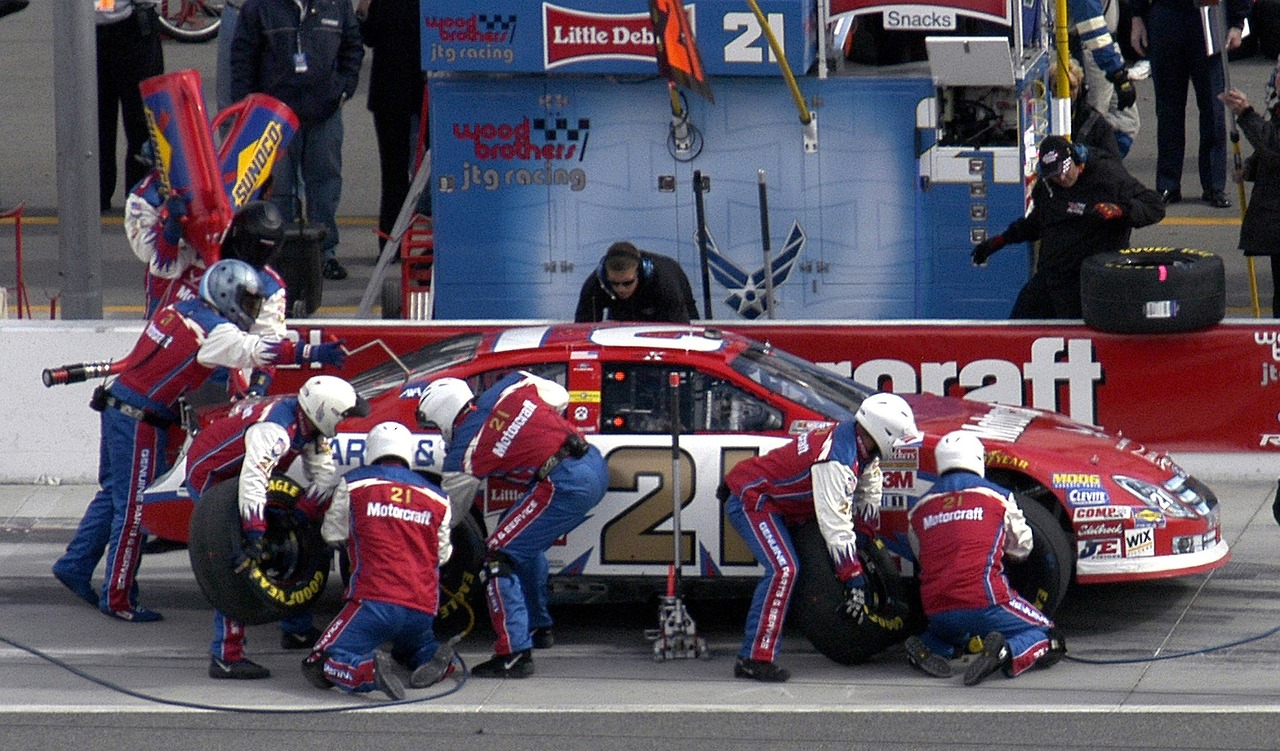
The newest approach is what is called Pit Crew CPR. Just as in car racing where everyone has a defined role and becomes an expert at that role– the same is true for this style of CPR. The importance of this method is that there is little pause in compressions. The concern with stopping CPR is that it takes anywhere from 15-30 compressions to get pulsatile flow again which is never good for the patient in cardiac arrest. 
In Salina, KS where they’ve trialed this their rates of return of spontaneous circulation (getting back a heartbeat) increased from 44% from 32%. That may not seem significant but it is a tremendous leap in terms of resuscitation medicine. Each of those points is a person living
Basically, in Pit Crew CPR, two people alternate compressions at either side of the chest. The person at the head of the patient manages the airway but initially the patient is placed on oxygen but there is not an emphasis on providing breaths as in traditional CPR. One person at a leg manages the defibrillator and a provider at the other leg establishes IO access (drilling an IV into the leg). 
After a few minutes of this style of CPR if the patient doesn’t have a return of their pulse, they are placed on an AutoPulse and transported to the hospital. 

Author Beware: Proof’s Problem with HIPAA

Proof (not to be confused with my debut medical thriller with the same title) is a medical drama starring Jennifer Beals as renowned cardiothoracic surgeon Dr. Carolyn Tyler.

Dr. Tyler is recruited by billionaire Ivan Turing to investigate near death experiences (NDEs) as he is soon to face the other side due to a terminal cancer diagnosis.

Tyler is a skeptical atheist and believes death is the end— even though she’s had a NDE herself and longs to reconnect with her teenage son who died in a car accident.

Of course, Turing uses his wealth and a big donation to the hospital to obtain Tyler’s cooperation.

Through the course of her investigations, nearly every religious permutation of the after life is explored— past lives, reincarnation, and soul jumping among them.

The issue becomes when families become aware of Tyler’s investigations and want information that in real life she should never disclose. They’re clearly HIPAA violations. I’ve blogged extensively on HIPAA here, here, and here.

Why is HIPAA so important? It is the law. It’s what healthcare workers are instructed (pounded into the head) to protect every single day. It’s not taken lightly. Medical people have been fired for violating a patient’s privacy by disclosing healthcare related information.

However, the television show Proof seems to not understand what HIPAA entails.

In one instance, a mother who lost her son begins to believe his soul has inhabited another child’s body because he has the same rare blood type, same rare heart condition, and was a piano playing genius. The mother latches onto him and offers to pay for his medical care.

It becomes a sticky situation because the mother who lost her child begins to overstep her bounds and Dr. Tyler begins to believe she’s at risk for kidnapping this other boy over the loss of her son.

To prevent her from taking that step, she begins to list a litany of medical reasons why this patient isn’t her son. The problem is, this mother has no right to any of this information. It is a HIPAA violation.

In another instance, Dr. Tyler convinces a wife to donate her brain dead husband’s heart. Now, she has a vested interest in this happening because one of her patient’s with a rare blood type (evidently everyone in this show has a rare blood type) has been waiting for a heart for years and is running out of time.

The wife agrees and the heart is transplanted but the patient nearly rejects the heart. When the wife of the heart donor catches wind that this has happened (she seems to be hanging around the hospital after the donation has occurred) Dr. Tyler gives her detailed medical information on how the patient who received her husband’s heart is doing.

Again, this wife, even though she donated her husband’s heart, has no right to this information. In fact, donor and recipient identities are highly protected. It’s not that these families never meet, but it usually happens months after and is coordinated by the organ bank and not doctors on site.

In fiction, you can break the rules. Healthcare workers can disclose medical information but they should also face a consequence for it just like we do in real life. The plus, it dramatically increases the tension which is always the goal of any work of fiction.

Book Review: Rush of Heaven

As a nurse, I’ve seen a few miracles in my career. Kids that lived that should have died. A co-worker of mine had a son and it was looking like he’d developed leukemia on several different tests– and then a follow-up blood sample before they were getting ready to discuss treatment was clear.

As a Christian, I do believe that miracles still happen. I believe the birth of a healthy baby is a daily miracle. If you study even a smidgen about fetal development and what all must fall in to place for a healthy baby to be born– you’d be in awe.

However, I do think most other miracles are rare– the kind where someone is miraculously healed of a devastating chronic illness or a life threatening disease.

Rush of Heaven is the true story of Ema McKinley and how she was healed of Reflex Sympathetic Dystrophy or RSD. Ema developed RSD after a work-related accident where she hung upside down by her leg for several hours. One type of RSD can happen after traumatic injury and there becomes miscommunication between your peripheral and central nervous system as well as a heightened inflammatory response.

What happens in response to this injury can be muscle atrophy and tightening but the syndrome can extend beyond the injured extremity– as it did in Ema’s case– leading her entire body to become significantly disfigured to the point where she was nearly bent all the time at a ninety degree angle.

Then one night, about eighteen years after her accident, Ema says she received a visit from Jesus and is cured of her RSD. She is healed to the point where she is no longer wheelchair bound and can actually stand up straight. She becomes independent again.

The story is very interesting and the pictures in the middle of the novel are, literally, worth a thousand words. It was very interesting as a nurse to read about all the difficulties Ema had navigating the healthcare system (payment issues complicated by a workman’s comp case, a multitude of doctors– some better than others).

One consistent theme I’ve noticed that runs through these health related miraculous healing stories is that these patients never “curse” God. All through their illness, they continue to speak their faith in bold ways. Imagine the impact that has on nonbelievers when you’re so sick and continue to praise God with every breath– and then can speak to the healing He provided you.

If you’re interested in reading about miracles or even about RSD in particular, I think you’ll love this book.

I was provided a free copy of this book to review. A positive review was not required.