How is Blood Type Determined?

There’s nothing more fun as a suspense author then to have a twist in your novel. Some medical twists can be intriguing and one that is in such a category is looking simply at blood type. Knowing a child’s blood type can give you an idea if their parents are really their parents.

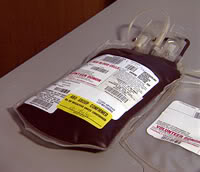
b7ab9-bloodbagLet’s say a child has AB blood type, but his parents are both blood type O. I can tell you right now that those parents are not that child’s parents. How? Because you inherit a letter from each of your parents. So this child can be A, B, or AB blood type, but never O.

A parent that is just A or B blood type have an O they can pass on. It might be easier to view them as AO blood type. So if both parents were blood type A— their children could actually just be blood type O from inheriting that “O” from each of their parents. What blood type could they never be?

Type B.

Here is a chart that looks at how blood types are determined. Scroll to the bottom of the page.

As a writer, have you ever used blood type to reveal that a child is not living with his biological parents when he thought he was?

Who Can Get Whose Blood?

Recently, a very astute reader by the name of David wrote to me regarding my latest novel Fractured Memory.

In the letter he writes:

blood-donation-376952_1280“On page 67, you referred to a child with ‘the most rare blood type–AB negative.’ You then implied that to give a transfusion to the child, AB negative blood would be required. As far as blood type is concerned, it was my understanding that AB negative is close to being the Universal Recipient (which would actually be AB positive). Thus, while AB- may be extremely rare, such a person could still accept blood which is AB-, A-, B- or O-, so the rarity of AB- itself doesn’t necessarily mean it would be difficult to find donor blood for a transfusion.”

Strong work, David, strong work.

With a couple of caveats.

Why do we even worry about blood types and who can accept whose blood? The issue comes down to whether or not your body will identify the donated blood as a foreign tissue or not. If the body looks at those newly infused blood cells and cries out in terror because it doesn’t recognize it as self— it mounts a war on a cellular level to kill those foreign red blood cells, which leads to a drastic systemic reaction that can lead to some very serious complications for patients.

The trick in transfusing blood is to give something the body doesn’t recognize as foreign. The letters in your blood signify antigens but also signify which type of antibodies are in the blood. So a person who is blood type A has B antibodies in their blood which means if they get any blood with a “B” in it (B or AB), that person’s body is going to want to kill those blood cells. People who are blood type “O” carry antibodies to both A and B blood. Therefore, a person with type O blood can only receive type O blood.

So, yes, a person who is AB negative can safely receive blood from a person who is A-, B-, AB-, and O negative. But for the purposes of a planned surgery, which was the case in the novel, usually type specific blood is sought out. Also, the other blood types this patient could receive are about ten percent of the population combined. Individually they number a lot less. Certainly not impossible to find depending on what’s in stock in the blood bank. Because O negative blood is so valuable in the sense that anyone can receive it it is generally reserved for emergency situations and would likely not be used for a planned surgery.

This article is a great resource for writers when it comes to blood types and who can get whose blood.

Do you know how a person’s blood type is determined?
Author Question: What Kind of Trauma Causes Blindness?

Belle Asks:

One of my characters is in a minor plane accident. When you see him next, he is blind. What could cause him to be blind as a result of this accident?

eye-211610_1920Jordyn Says:

A character can lose vision as a result of this accident in one of two ways. Either direct injury to the eyes themselves or injury to brain centers that are involved in the processing of visual information.

Direct injury to the eye could include the eye itself or bones around the eye could become fractured and impinge on certain nerves that could ultimately lead to blindness. You could also have traumatic retinal detachments that if not repaired could lead to blindness.

Many areas of the brain are involved in processing the information our eyes takes in. Any injury to any one of these centers could lead to blindness even though the eye itself looks perfectly normal. This article gives a basic outline and would probably be a good jumping off point for further research. As mentioned in the piece, some of these conditions would be called “cortical visual impairment, cerebral visual impairment, neurological vision loss, brain-damage-related visual impairment, and vision loss related to traumatic brain injury”.

Best of luck with your story!

Medical Errors in Manuscripts: Criminal Minds and Bodies Hidden in Cement

Happy Halloween Redwood’s Fans! What fun festivities do you have planned for today? What will your kids be dressing up as to celebrate?

criminalmindsToday, I thought a fitting Halloween post would be an evaluation of a recent episode of Criminal Minds. I’ve been a fan of the show for years and am always intrigued with the cases and devious/suspenseful minds of the screenwriters.


A few episodes back, uber chipperPenelope was presenting a case about a woman who had been buried in a barrel full of cement. She stated the woman’s body was discovered using ultrasound and then proceeded to show a picture of the body that looked like a plain x-ray.

This is a common mistake among writers— not knowing the proper technology to site or the right radiology equipment to use. First of all, ultrasound couldn’t penetrate cement to find the body and the scan images would not resemble anything that you’re used to seeing.

What probably would be used is something that utilizes Ground-Penetrating Radar (something that can actually look through cement) and I found an extensive article that discusses its indications and use which I’ll definitely be referencing later.

Writers— keep in mind that not all forms of radiology are interchangeable with one another. If you’re discussing the use of a particular radiological study in your manuscript— make sure it’s the right one.

Have a safe and happy Halloween!

It’s a Fire Sale! Cheap Books and Prizes

Happy Halloween (tomorrow)!

If you’re a fan of my books and have been holding out to purchase some new novels— now is the time.

The e-book of Fractured Memory, my latest release, is currently on sale for $1.99 (and hopefully still is at this posting!)

book-fractured-memory book-proof 2016-10-17-17-17-50

Also, the e-book series for my entire Bloodline Trilogy can be picked up over at Amazon for the stunning price of $1.98. Proof is free and both Poison and Peril are each $0.99.

Also, I’m giving away the contents of this lovely Candy Corn themed prize basket via my newsletter tomorrow. Only my newsletter subscribers are eligible to win. You can subscribe here.

Historical Medical Question: Head Injury 1870s

April Asks:

skull-476740_1920I have a question regarding medicine in the 1870’s.  What would brain/cranial surgery consist of then?
I’ve tried to find some information on this type of operation from this time period, but have had very little luck so far.  In a quick scenario, there’s been a serious buggy accident, and the heroine of the novel has bleeding on the brain. I know one proposed procedure for this was to actually drill a hole into the skull to let out the influx of blood. Was this happening and being practiced in the 1870’s? Also, what would the medical instruments of the day have been to achieve such a surgery?

Jordyn Says:

This could definitely be a set up for a craniotomy (drilling a hole into the skull or creating a burr hole) to be used to relieve pressure within the cranium. The procedure would have been called trephining and was definitely used during your time period. Two resources for the procedure can be found here and here.

Author Question: Stab Wound

Sandi Asks:

Where can you place a stab wound that wouldn’t instantly kill your character, but keep him around for a few hours?

diagnosis-1476620_1920-1Jordyn Says:

You have a couple of options here. One would be a stab wound into the right side of the chest. This could partially collapse a lung and cause some bleeding as well. Think of the lung as a balloon. A small nick to the lung could cause it to slowly leak air into the chest, keeping the character alive for a few hours, but killing him in the end if the collapsed lung isn’t treated. The more collapsed the lung is, the less it is able to function. The more air that accumulates in the chest, the more it will push other structures.

We call this a tension pneumothorax.

Imagine the right chest is now full of air. Air will keep building unless it is given a way out (like a chest tube) and can actually squish the heart and lungs on the other side of the chest to the point where the heart may not beat anymore.

If a tension pneumothorax is left untreated, this will cause the patient to die. They may die from blood loss, or low oxygen levels, or from the heart being impinged to the point where it can no longer beat.

Why not a stab wound to the left chest? This has an increased chance to kill instantly because you have the heart and several large blood vessels that come off the heart that sit there. Can anyone say aorta?

Another option would be to have a stab wound to the belly. All sorts of stuff in there. If you wanted the character to die in a few hours, this could happen from untreated bleeding. There are two organs that sit in your abdomen that have a rich blood supply— the spleen and the liver. The medical term is highly vascularized . . . meaning rich with blood supply. You could also have an infection set in and this could keep him alive for a couple of days until he is overwhelmed by sepsis.

What signs and symptoms would a patient with a collapsed lung (pneumothorax) have? What’s the difference between and sign and symptom?

Author Question: Gunshot Wounds and Rib Fractures

Shanda Asks:

I have a scene where (in my mind at least) someone very physically fit is shot in the torso as they dive to save another from being shot. They then land excruciatingly hard on the edge of raised concrete (think like the front of an outside step) and break three ribs but that injury goes unnoticed as a result of the gunshot wound.

human-skeleton-163715_1280So my questions are as follows:

1. Would it be possible for someone to pick up the injured and run say a mile or two to get them to where help is waiting?

2. Could it be possible to have surgery for the gunshot would and the rib injuries be missed and hours later cause internal bleeding?

3. What would be the typical recovery time for the first and the latter?

4. Would it be realistic that after the second surgery (for the internal bleeding) the patient could not wake up for days having had two trauma surgeries so close together?

Jordyn Says:

Thanks so much for sending me your questions.

1.  Can someone carry an injured person one to two miles for treatment? It would depend on the physical characteristics of the character who is lifting the other person. Carrying someone one to two miles is a long way. I could possibly imagine a man doing this for an injured female and possibly a very fit male for another male, but a female doing this for a male might be stretching it. It would have to be a very fit female character.

On the other hand, could a character with these injuries get themselves to the hospital? The three cracked ribs are definitely going to slow them down and it also depends on what the gunshot wound has injured which you’re not clear on here. If the gunshot wound deflated a lung then they are going to have a lot of trouble breathing.

2. Could the broken ribs be missed on the first medical exam? Probably no. Any patient with a gunshot wound to the torso is going to get plain x-rays of the chest and probably a CT scan of the chest as well— both of which would show the rib fractures. So in the setting of modern medical care it would almost rise to the level of negligence to miss the rib fractures with a gunshot wound to the torso. I don’t see that happening.

3. To determine your typical recovery time I really need more information on this gunshot wound. Where was the character shot and what was injured specifically? The rib fractures themselves will take 4-6 weeks to heal. Rib fractures are very painful and could inhibit breathing based on their location. Also, successive ribs that are broken in more than one place can create a free floating segment that can be very detrimental to breathing as well.

4. A patient could still develop internal bleeding and need to go back to surgery even if the rib fractures are found right away. This would not be a rare event. It is reasonable for a patient to not wake up for a couple of days if they suffered a code during the second surgery due to extreme blood loss and had flat lined for a period of time.

Even the stress/shock of the surgeries close together might be enough for the brain to check out for a time. The problem with a comatose patient is they have to be in the ICU, on a vent, with a tube in every orifice as they say. For instance, a patient can’t be out cold and have no way to pee— so a catheter has to be placed so the urine can come out.

Going down that road can get very complicated for a novel depending on whose POV you’re telling it from.

Best of luck with your novel!

Happy Halloween! One Week Early

What’s not to love about Halloween for a suspense author? As you know, fall is my favorite season, but it’s no fun to celebrate alone.

Do you love Halloween? Love Candy Corns? Want to win the contents of this lovely Candy Corn themed prize basket? I’m giving it away October 31st via my newsletter– which means you need to be a subscriber of my newsletter to win. Click here to subscribe.

2016-10-17-17-17-50 2016-10-17-17-17-46 2016-10-17-17-17-58 2016-10-17-17-18-02

Prize Includes:
1. Hand stitched (by me!) uber cute candy corn pillow.
2. One print copy of Fractured Memory.
3. One $10.00 Starbucks Gift Card.
4. One Pecan Pumpkin Cake Candle.
5. Three different flavors of candy corns! Brunch Favorites, Peanut Butter Cup, and Sea Salt Chocolate.

***Pumpkin Basket Not Included***

For November, I’ll be celebrating Pumpkin Spice with another themed basket as a give away for my newsletter subscribers. Don’t miss out!

Medical Errors in Manuscripts: Know Your Anatomy

Let’s answer the medical question posed in the last post. How do you keep an intubated patient from extubating themselves? There are a couple of options.

One is to sedate them. Sometimes sedation is necessary because the patient is so ill that we need to have total control over the patient’s breathing and we don’t want them “bucking” the ventilator. Bucking is medical lingo for the patient fighting what the ventilator is trying to do. It’s very hard to breathe on a ventilator because the machine is forcing air into the lungs. It’s unnatural in comparison to normal breathing.

skeleton-1243818_1280Two is to restrain them. Typically a patient on a ventilator is restrained at the wrists and these are secured to the bed. Even a sedated patient can have these applied. This is for safety. Lastly, in a highly cooperative, ventilator dependent patient who has grown accustomed to living with the ventilator, they may neither be restrained or sedated. This tends to be more rare.

Let’s move on…

Note to authors everywhere: Know your anatomy. Gray’s Anatomy. The book . . . not the show.

Here’s a paraphrased example I read in a published novel. I’m not going to name the novel or author to protect the innocent. The purpose is to educate.

John Doe looked at the scar that ran along his right rib line, where a splenectomy incision might be.

Did you catch the problem? Your spleen is on your left side. Anatomy questions should be the easiest to research on Google University. Simply type in “what side is the spleen”. Go ahead . . . try it now. What I got was the “left” side in the first four of five options without even going to a web site.

Take the extra time to be sure the easy things are correct.

Medical question for you: What does it mean if you have dextrocardia?