Treatment for Amnesia

Marissa Asks:

How do doctors proceed if they suspect amnesia? In my novel, the patient was brought to emergency after being found on the side of the road (in the snow.) The patient shows signs of physical torture: multiple rapes, bruises, lacerations, glass embedded mainly in his hands, hypothermia, and a cold (because obviously my character needs to be ill on top of everything).
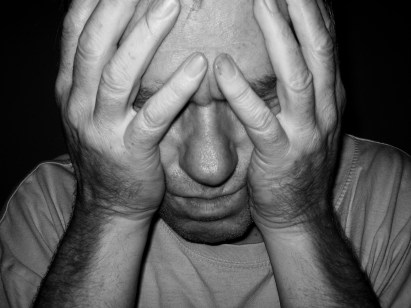
burnout-384086_1920The patient has just woken up and had a panic attack. Been settled down. You asked for his name and he seemed uncertain as he gave his first name. You asked for his last name and the patient shook his head. What next? I mean obviously the glass would have been removed from his hands and a drip put in for painkillers but what next? Who does the nurse call? Or what does she ask now? And if memory loss is confirmed, how do they find out it’s amnesia like which SPECIFIC tests do they do? Who is contacted and brought in to liase?

I just sort of need a timeline rundown because my character is going to be going through that.

Jordyn Says:

Thanks so much for sending me your question. First of all, it sounds like this patient has a period of time where he is unconscious in the ER. You make it sound like he wakes up on his own and not in response to an exam by a doctor.

So an unconscious patient found with these injuries would have a CT scan of his head. Hypothermia could be determined simply by taking the patient’s temperature and warming him up with something as simple as warm blankets to more complex as heated IV fluids. Regarding the IV drip for pain— this is actually unlikely in the ER. This is referred to as a PCA pump (patient controlled analgesia) and I’ve never seen them used in any ER setting. Would we treat the patient’s pain? Yes. But, you might be surprised that we may choose not to use a narcotic (for many reasons) and instead try something like Toradol which is an IV form of an NSAID (which is in the same drug class as Ibuprofen.)

The glass embedded in his hands would be removed. The wounds irrigated and stitched closed if necessary. The lacerations would be treated the same way. Keep in mind, not all lacerations can be stitched closed if they’ve been open too long due to the risk of infection.This patient would also receive a tetanus booster if he hasn’t had one in the last five years (even if he can’t remember the last time he had a shot.) If anything looks infected, he would receive IV antibiotics.

If the patient wakes up and doesn’t know who he is (and doesn’t have any form of identification on him) then we would involve the police. Likely, they are probably already involved considering the circumstances— that he was found unconscious and beaten. Plus, you mention that the character has been raped several times so a sexual assault kit should be collected, but the patient’s consent is required, so we’d ask him if he wants this when he’s awake. Yet another reason the police would be involved.

If the doctors think the amnesia is related to a brain injury from the beating, they may just see if it improves with time.

I think it’s reasonable to admit this patient to the hospital and I speak a lot here about how it is actually rare to admit a patient with concussion, but considering the amnesia (it sounds like you want it to persist), the beating, the rapes, the wounds to his hands (as well as additional lacerations), and the hypothermia then some watchful observation is warranted. The doctors could consider a neurological and/or some type of psychological evaluation considering the circumstances of the case to see if his memory loss has a non-medical cause. Neuro might request an MRI of his brain to look for additional injuries not as easily discerned via CT scan.

In the end, if he never remembers, there’s little treatment to “correct” amnesia. This is good for the writer because you have a lot of leeway in what you want to happen to the character. Your time frame can be what you wish.

I think if he were stable in the hospital for a few days and the neurological/psychological evaluation didn’t warrant anything that required further inpatient treatment, he could be discharged home even if the amnesia persists with outpatient neurological follow-up and perhaps outpatient therapy if he consents.

Obviously the police would be very involved with this case.

Treatment for Multiple Concussions

This question came to me via my blog comments section.

Melody asks:

ice-hockey-1084197_1280I’m working on a hockey injury scenario where it’s the second hit to the head in a matter of a week, with a dull headache that hadn’t really went away to begin with (but he kept it to himself).

The second hit knocks him out for a few minutes, and he has confusion (and afterwards his demeanor is now very mean vs his nice personality before the hit). Would a second hit to the head with confusion, headache (and I’ll add nausea) require the CT scan? Would they be worried about brain swelling? Would they keep him or send him home with a headache that is extremely sensitive to every little sound (like a baby crying would send him through the roof)?

Jordyn Says:

Hi Melody. Thanks for submitting your question.

Yes, shame on this character for not being honest about his symptoms because if he had persistent headache then he shouldn’t be playing hockey until that resolves— like at all.

To be honest, if this is an adult patient, he’s going to get a CT scan of his head. In reality, CT scanning is much more prevalent in an adult ED (or community ED) than in a pediatric ER run by specially trained pediatric ER physicians. There are many reasons for this that I won’t go into here.

The CT scan will show if there is brain swelling. Depending on the extent of the brain swelling then medical decisions would be made. If mild, then admission to the hospital and observation. If significant, this could require specialized medications, going on a breathing machine, and ICU admission. Though if the swelling were severe the patient would likely be unconscious.

Sometimes headaches associated with concussion are treated like migraine headaches to see if that will improve the pain. But no, a patient wouldn’t be sent home until his headache pain is significantly improved, but it doesn’t have to be entirely gone. We just want to make sure it improves with medications. In some more serious medical conditions like brain tumors and brain bleeds, medications have little effect on the pain.

Then again, in this patient, CT scan would have shown whether or not these other things are present.

The Invention of the Stehoscope

I’m pleased to host historical author Ruth Axtell Morren as she posts about some of the medical research she did for her novel The Healing Season. You can find out more about Ruth by checking out her website.

the-healing-seasonThe stethoscope was invented by a French doctor, Laennec, in 1816. He discovered that you could hear sounds better from a certain distance, if there was something in between.
Back in those days, modesty many times prevented a (male) doctor from hearing a female patient’s heartbeat, because the only way you could hear it, was putting your ear up to the person’s chest.

Laennec rolled up some paper and put it against the patient’s chest and his ear to the other end, and voilà, the heartbeat sounded even clearer than if he had had his ear pressed against her.

I did a lot of research on medicine in the early nineteenth century for my regency novel, The Healing Season. 

I traveled to London and toured a museum that used to be an apothecary’s shop. It was part of the St. Guy’s/St. Thomas’s Hospital complex of that time. It was fascinating to see all the things used at that a time, especially the herbs and how pills were made.

Another interesting thing I found about that period was that at that time three kinds of medical practitioners existed: the physician, the apothecary and the surgeon.

The physician was the “profession,” only practiced by the aristocratic, university educated man. The apothecary was our pharmacist, but he learned through apprenticeship. Then there was the lowly surgeon, who evolved from the butcher, and he was strictly called in for cuts, broken bones or amputations and the few surgeries performed in those days (kidney stones being one). The physician hardly touched the patient, just prescribed tonics and dealt with “humors.” Medicine was more theoretical for this guy. The medicines he prescribed were made up by the apothecary.

What began happening, though, was that generally there weren’t that many physicians, especially away from the large cities, so apothecaries began taking over more and more of his duties. Surgeons, who also worked aboard navy ships and accompanied armies, began to perfect their technique on the battlefield (primitive triage). So, the professional lines began to blur, and the apothecary began to change into what would become the General Practitioner.

My story is about a surgeon. I also included his uncle and made him an apothecary. Some of the resources I used were Irvine Loudon’s Medical Care and the General Practitioner 1750-1850; Sherwin B. Nuland’s Doctors: The Biography of Medicine (excellent resource!); And Roy Porter’s Quacks, Fakers & Charlatans in Medicine.

This is a repost of a blog piece from November 19, 2010.

Medical Scene Diagnosis: Part 2/2

Today, I’m continuing my analysis of this medical scene. You can read the Part I here. Last post we learned this patient has been in a terrible car accident. We’ll resume with the physician entering the room to give the patient the low down. My comments will be in parentheses in red. I’m just focusing on the medical aspects, not grammar.

doctor-840127_1920-1The door opened, and an older gentleman in a lab coat walked briskly into the room. He checked the clipboard hanging from the end of the bed, noted the numbers on the monitors beside the bed that were tracking Tony’s vitals, and nodded, apparently pleased with what he saw. (Patient information is not kept in plain view. Clipboards hung on the end of the pateint’s bed with medical information is a HIPAA violation. HIPAA is the law that protects patient information.)
“I’m Dr McGregor, your attending physician. Arnold says you remember the accident?”

“Just parts of it.”

“Do you know what day it is?”

Tony squinted his eyes as he concentrated. “Well, I was driving home from San Jose late Saturday night or early Sunday morning. Other than that, I couldn’t say for sure.”

The doctor made some notes on the chart. (Many hospitals have gone to computer charting.)

Tony forced a grin. “Is that a good nod or a bad nod?”

Dr McGregor smiled at him, peering over the frames of his bifocals that perched on the end of his nose. “That’s good. It’s Sunday, actually. You haven’t lost much time. Considering the shape you were in when they brought you in here, that’s a miracle.”

Tony nodded gently. “Yes, sir.  God is in the business of miracles.”

The doctor peered intently at Tony, then smiled. “Apparently so. You should have died.”

Tony tried to shift, then winced at the waves of pain and nausea that threatened to engulf him.

The doctor moved closer to him and laid a restraining hand on his shoulder. “Take it easy. If you want to move, ask your nurse for help.”

“I’d like to have my head up.”

“I think we can arrange that.”

Dr. McGregor beckoned to Arnold, who came around to the head of the bed. Using his forearm, he propped Tony in the bed, adjusted the pillows, and nodded to the doctor, who stood at the end of the bed. Dr. McGregor pushed a button that raised the head of the bed. Arnold eased Tony back to the pillows and adjusted the sheet covering the lower half of his body. (I like that it’s a male nurse because it’s unusual. However, the doctor is coming across as very stereotypical. He’s older, long lab coat, bifocals on the end of his nose. What are some ways to vary this character to make him more unique?)

Tony gripped the handrails as another wave of nausea passed over him.

Dr McGregor patted his shoulder. “It’s normal to have some dizziness after a head injury, and you got a pretty nasty bang on the head.”

Tony held up one bandaged hand. “What else is wrong with me, Doc?”

Dr McGregor cleared his throat before proceeding. “Well, some lacerations on your hands from broken glass.” He flipped another page on the chart. “Same on your legs and back. A couple of broken ribs. The most serious injury is to your liver.” (Remember in the first part of this scene, the writer noted his legs and feet were unscathed. Maintain consistency with the patient’s injuries.)

“My liver?”

“Yes. You sustained a fairly serious tear in the accident. We were able to stop the internal bleeding, but right now your liver is not working well. In fact, the most recent blood panel we did shows it is deteriorating quickly.  I’m sorry, Tony.”

Instinctively Tony’s hand moved to his right side. He felt the edge of a bulky bandage that covered his flank, the incision still tender.

“A person can’t live without a liver, can they, doctor?”

“Your only option at this point is a liver transplant.” (I liked this a lot because I learned something new. As a confessed medical nerd, the first thing I thought was really? Went and looked and transplant can be used in cases of severe traumatic injury to the liver. Check it out here if interested.)

“A transplant?” Tony felt sweat running down the back of his neck and realized his face was wet, too. He ran a hand across his forehead.

“Yes. We’ll enter your name and statistics on the national database for liver transplants. To be honest, although your need is critical, your physical condition at this point in time would place you near the bottom of the list. In the meantime, you will have to stay in hospital so we can monitor your liver function.”

“Come on, Doc. Don’t beat around the bush with me. Not everyone who needs a liver transplant gets one, do they?”

“That’s true.”

“So, what other alternatives do we have?”

The doctor squinted. “I’m going to be honest. Your best bet at this point is to have a close family relative donate part of their liver. That will be the best match and can be accomplished a lot more quickly than a regular transplant.” (This is a place to be careful with your statements. After all, a stranger can come up as a perfect match. It may be better to say, “Your best hope for a new liver is to test a close biological relative like your mother, father and any siblings. If they prove to be a match, this process will be faster than waiting on the transplant list.”)

Tony’s heart sank. This didn’t sound good. “So what exactly are you saying?”

Dr. McGregor blinked at him myopically. “I don’t think you would survive the waiting. If you have any close relatives, you should call them.”

“My parents are dead and I’m an only child.”

“I’m so sorry, Tony. I wish I had better news. There’s not much more we can do at this point. Except pray.”

This writer deserves a lot of credit for setting up some nasty odds and conflict for this character. Strong work!! Do you have any other medical suggestions? 

Medical Scene Diagnosis: Part 1/2

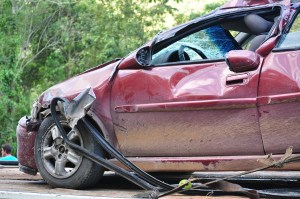
This medical scene was submitted by a fellow writer who wanted some critique and agreed to allow me to post my suggestions leaving her name off the piece. The scene begins with a victim of a motor vehicle collision coming into the ER. His car rolled several times during the accident. What follows is her scene. My thoughts will be in parentheses at the end of the sentence in red. I’m only going to comment on the medical accuracy. Grammar editing is not the focus.

crash-1308575_1920Tony screamed out to God, and flung his hands over his face. Rough hands grabbed his hands as he tried to pry off whatever was smothering him. (This is good as patients often feel like an oxygen mask is smothering. Kids particularly aren’t fond of them.)

“Hey, take it easy. You’re all right. You need that oxygen.”

Tony opened his eyes, blinking rapidly in the bright lights. As his blurred vision came into focus, he tried to see who was holding his hands.

Blue scrubs. Dark face. The whitest of teeth. Name tag. Arnold.

Tony tried to speak, but his throat was dry. Arnold reached over, raised the mask on Tony’s face, and placed something cold and hard in his mouth. Making sure the mask was securely replaced, he sat back in his chair. (In the initial evaluation of a trauma patient in the ER, a patient is never given anything by mouth until it is ruled out whether or not they need surgery. The more the stomach is empty, the less likely the risk of aspiration during intubation. In this situation, aspiration would refer to inhaling vomit into your lungs while the endotracheal tube is placed. Aspiration can mean different things in the medical arena. And I also don’t know too many nurses who actually sit vigilant at a patient’s bedside.)

“It’s an ice chip. It’s all you can have right now.” (I know, we’re mean. But not even ice chips.)

Tony nodded his gratitude and slowly savored the small chip. It may have just been ice, but at that moment, it was like ambrosia to his parched throat.

Swallowing carefully past the pain in his throat, Tony lifted the mask and tried again. “Where am I?”

“You keep that mask in place. You can talk through it just fine.”

He waited until Tony complied before continuing. “You’re in the Regional Medical Center in San Jose.”

“Accident?”

Arnold’s smile faded. “Yes. Doctor said you’re lucky to be alive.”

Tony nodded towards the container of ice. Arnold placed another chip in Tony’s mouth, replaced the mask, then set the cup where he could reach it on the bedside table.

“Where is the doctor?”

“I’ll go have him paged.” Arnold rose and left the room. (This is a situation where it is reasonable for a nurse to give the patient an update on his status and condition without needing to page the doctor. I may say something like, “Your leg is broken, but your other tests looks good. I’ll let the doctor know you’re awake and he’ll come in and talk things over with you in more detail.” Also, in the ER, doctors are generally present, and there may not be a need to have them paged. This can be very unit specific so you’d have some latitude as a writer.)

Tony surveyed his situation, beginning with his toes, and moving up to his hands. While he was achy all over, his feet and legs seemed to be unscathed. His chest and abdomen hurt, burning all the way through to his spine, and were heavily bandaged. (Saying his feet and legs are unscathed may be reaching a little. Remember, he rolled his car several times. At a minimum, there should be some bruising, cuts, or abrasions.)

His hands were bandaged but usable, and he took this opportunity to pop several chips into his mouth, crunching them to make them go down faster. Feeling with his hands, he knew his head was bandaged. Vaguely he remembered blood running into his eyes.

We’ll resume the analysis of this medical scene next post. Any other medical aspects you would change?

Drug Warning: Flakka Insanity

There is a new drug on the market— not a legal drug, but a new synthetic drug called Flakka that is creating havoc in south Florida and could be coming to your hometown.

What’s causing concern among law enforcement is that Flakka addiction became endemic in Broward County in a matter of months versus drugs like cocaine that took decades.

Flakka (alpha-PVP) is a synthetic crystal manufactured in China and sold via the internet. It arrived on the scene in Florida in 2014. It is ten times stronger than cocaine and far cheaper that cocaine, crack, and heroine.

Users of Flakka can suffer from dementia, psychosis, and paranoia. One of the biggest side effects is a state excited delirium which causes users to feel invincible yet deathly afraid. In this state, they can exhibit superhuman strength where it could take six to eight police officers to restrain them. Excited delirium leads to a rise in body temperature that can lead to heat exhaustion and even cardiac arrest. Some users have described this state as feeling like their “blood is on fire” and strip off their clothes because of it.

What’s also concerning law enforcement are the accidental and self-inflicted wounds that are killing Flakka users— more than forty deaths in the last year in Broward County alone.

Even more concerning is the after effects of the drug once a user stops. Some addicts suffer long term acute lapses in memory, difficulty articulating words, and poor concentration. Its effects on unborn babies is unknown, but one nine week premature infant boy has died with Flakka in his system.

There is no known reversal agent for the drug, only symptomatic support can be given.

Be on the lookout for this deadly drug in your community.

Information for this blog post largely came from the show Intervention which aired November 15, 2016.

Forensic Medical Question: Forensic MRI for Child Abuse

Susan Asks:

mri-782459_1920Is there such a thing as a forensic MRI? Not to be done on a dead person, but in a child abuse case? Can one tell if a child has been beaten and see healed bruises, etc?

Jordyn Says:

Thanks for your questions.

The only indication I can think of using MRI to discern abuse would be for head trauma. MRI is the most sensitive study when it comes to differentiating old and new bleeds (as in possibly discerning two episodes of shaking), but still an exact time of the bleed could probably not be given. We just would know there were two separate instances of injury that caused bleeding.

Also, it wouldn’t be called a forensic MRI on a live child. We would just call it by the study we’re doing. In this case, a brain MRI, but the reason for doing the study would be concern for child abuse and/or intracranial (inside the brain) bleeding.

You can’t really tell healed bruises because they’re healed after all. The skin would have normal appearance. We could at least take a history of where the bruises were because we know normal versus abnormal bruising patterns in children, but pictures are always more impressive so seeing current injuries will always be better if trying to build a child abuse case.

Perhaps you’re thinking about healed fractures which you could possibly see some evidence of healed fractured on x-rays depending on how significant the fracture was. However, not all healed fractures are visible on x-ray. Healing fractures can be seen on x-ray.

Research Tool: Web MD Symptom Checker

Today, I have a gift for the research interested writer (if looking for medical ailments) and all fellow hypochondriacs. I love tools that can broaden your thoughts on how to injure, maim, or kill your fictional characters.

ill-womanWhile perusing the Internet, I found a symptom checker hosted at Web MD.

How can we use this for fiction?

Start by inputting the age and sex of your character. Then select a body part by scrolling over the animation. You can even do the backside. Pick a body part and then the tool will zoom in on that area. Now you can pick a more specific area and it will give you a list of symptoms. There may be some you’ve never heard of.

Once you pick from this list, it will give you a list of potential diseases that can cause those symptoms. After you pick a disease, input this over at Google University and see if it will work for your novel.

Maybe your male character presents with the classic heart attack symptoms: chest pain, left arm pain, chest pressure, and sweating, but you don’t want him to have a heart attack. You want to confound the medical team. This would be a good way to find some alternatives.

My novels generally have a medical mystery at their core and I found this tool a good way to open up the medical possibilities. I hope you find it useful as well.

If you checked out the Symptom Checker, leave the age and sex of your character, a few symptoms and one disease it came up with in the comment section.

Zika Update

On November 6th, 2016, 60 Minutes did a piece on the current state of Zika infection that I found quite intriguing. A runaway infectious virus is always good fodder for a novel, but as a healthcare provider I also feel there is a public teaching component so this blog piece serves as both. What follows is taken directly from this 60 Minutes piece and I highly encourage you to watch it.

Currently, there are 30,000 diagnosed Zika cases in the United States. It is present in every state but Alaska. Most of these cases are in Puerto Rico. Of these cases, there are approximately 1000 pregnant women in the US with the virus mostly obtained from travel. Of these pregnancies, twenty-five were born with birth defects and five ended with loss of the baby.

Zika has now been identified to be transmitted three ways: mosquito bite, blood, and sex (the very first mosquito born virus to be transmitted this way.)

Zika was first discovered in Africa in 1947 where it caused regional infections for sixty years. In 2007, it popped up in the Pacific Islands which became its launching point for worldwide infection because infected people traveled from there globally.

The infection stays in the bloodstream for approximately one week. What makes that problematic is the person can be infectious but asymptomatic. People tend to be less precautious when they think they aren’t sick.

Currently, the largest concern is infection among pregnant women where Zika has been positively linked with microcephaly– a severe brain birth defect. Infection in the first trimester is most critical though Zika has been shown to cause birth defects regardless of how far the mother is along in her pregnancy. In addition to microcephaly, Zika can cause seizures, difficulty swallowing, retinal damage which could lead to blindness, and hearing loss.

Zika infection causes a range of symptoms— the most common is what feels like the flu. However, a small number of patients go on to suffer more complicating neurological problems such as inflammation of the spinal cord and Guillain-Barre syndrome.

There is a vaccine in early clinical trials. If the vaccine proves successful, it could be available in early 2018.

Many doctors encourage women to delay pregnancy until a vaccine is available— particularly if living or traveling to a region where populations of the Aedes mosquito infected with Zika are high. If pregnant and in an area where Zika is present then good mosquito control measures.

What are your thoughts on Zika? Would you get a Zika vaccine if available?

Author Question: Car versus Pedestrian

Alex Asks:

My character suffers the following injuries. I want the injuries to be severe enough that they require immediate surgery, but also that he recovers after about a month in the hospital and a stay in rehab.

carpedistrian1. Character is standing in the road, tries to run but is hit by the car front on.  Body smashes into the windscreen, sending him up into the air.

2. Hits his head on the pavement on landing and suffers broken bones as a result.

3. He blacks out from the impact and wakes up several hours later. In this instance, would he be able to survive for several hours with the kinds of injuries he could have?

4. Possible injuries I thought he could have included: bleeding on the brain, broken leg/s and/or arms, fractured ribs which could cause a puncture to one of his lungs.

5. As a result he suffers from retrograde amnesia when he wakes up at the scene because of the injuries to his brain. Cannot remember his name/where he is or other events in his memory. Again here I am not sure what kind of specific head trauma could cause this.

6. After surgery to the brain, he is put into an induced coma to monitor the swelling. He will eventually wake up from this about a month later.

Jordyn Says:

The accident you describe would include some very serious injuries— perhaps not even survivable. It’s not just the injuries the character suffers getting thrown from the impact onto the pavement, but also the injuries he suffers from getting hit by the car. An impact that is so violent that it throws someone into the air would also likely shatter the windshield indicating to EMS responders that there was a lot of violent energy associated with this collision— which means bad things for the patient.

My first opinion is if you want this character to wake up in a few hours would be that he doesn’t fall directly on his head after he’s thrown into the air from the first impact. Overall, for your scenario, you might want to lessen the violence of this crash if you want him up in a few hours. It wouldn’t be surprising for this patient to require surgery to fix broken bones and/or internal bleeding.

A pedestrian surviving this crash is not impossible but it is more on the improbable side. This patient will have a lengthy hospital stay. May not wake up for days or months— not just hours. What you outline is a high speed impact to a pedestrian.

To answer some of your medical questions— surgery may be required for the bleeding on the brain depending on its location. All patients who have a brain bleed do not necessarily go to surgery. A punctured lung will require a chest tube to be placed which further complicates your patient’s medical picture. This patient would be placed on a breathing machine for sure to stabilize him until all these injuries could be sorted out.

Could a patient with a significant brain bleed be conscious at the scene after the accident? Yes. There is a specific type of brain bleed that fits this scenario called an epidural bleed. It does have a characteristic lucid period before the patient becomes unconscious again. It does require surgery to correct. If no surgical intervention is done then the patient will likely die. Honestly, as a writer, you have a lot of leeway in regards to what to do with amnesia. Any type of traumatic brain injury (and this certainly qualifies) could cause amnesia.

Medically induced comas are used frequently in medicine as a way to help control brain swelling. However, the medicines are not used forever. Peak brain swelling usually occurs 48-72 hours after the injury. After this time has passed, the medical team will evaluate when to decrease the medications keeping the patient in the coma. Keep in mind, even after these medications are discontinued, the patient may never wake up. Further studies would need to be done to determine the extent of the damage to his brain. These changes will evolve over time becoming more stable the more time that goes on.

My recommendation would be to lessen the severity of the crash. The car hits him, he hit the windshield, breaks it and then falls to the ground. This alone could cause a femur fracture and brain injury for which he could suffer amnesia and require surgery. If it’s an epidural bleed then he gets surgery, perhaps with some swelling and therefore the medically induced coma, but wakes up in a month. The leg is set in surgery with pinning or a rod. I think just having these two things is enough for your scenario.

All the rest might prove too complicating.