Christmas Fun: Social Media Christmas

Hello Redwood’s Fans!
I usually take a blogging break for two weeks around Christmas and just post light, fun stuff. We’ll get back to the medical mayhem after the first of the year.
In the meantime, enjoy the videos and lighter posts and most of all— have a Merry Christmas!
Jordyn

Christmas Fun: Holdman Christmas Lights

 Hello Redwood’s Fans!
I usually take a blogging break for two weeks around Christmas and just post light, fun stuff. We’ll get back to the medical mayhem after the first of the year.
In the meantime, enjoy the videos and lighter posts and most of all— have a Merry Christmas!
Jordyn

Christmas Fun: AFV Videos

 Hello Redwood’s Fans!
I usually take a blogging break for two weeks around Christmas and just post light, fun stuff. We’ll get back to the medical mayhem after the first of the year.
In the meantime, enjoy the videos and lighter posts and most of all— have a Merry Christmas!
Jordyn

Christmas Fun: Sinbad!

 Hello Redwood’s Fans!
I usually take a blogging break for two weeks around Christmas and just post light, fun stuff. We’ll get back to the medical mayhem after the first of the year.
Sinbad is one of my all time favorite comedians. I hope you enjoy his humor too. 
In the meantime, enjoy the videos and lighter posts and most of all— have a Merry Christmas!
Jordyn

Christmas Fun: Ormie JUST wants a cookie!

 Hello Redwood’s Fans!
I usually take a blogging break for two weeks around Christmas and just post light, fun stuff. We’ll get back to the medical mayhem after the first of the year.
In the meantime, enjoy the videos and lighter posts and most of all— have a Merry Christmas!
Jordyn
 

Up and Coming

Hello Redwood’s Fans!

How has your week been?

Mine… one word. EDITING! Ugghhh.

What one word would describe your week?

For you coming up:

Monday: JoAnn Spears returns!! I love, love, love her posts where she takes a current medical eye to long lost monarchs and their illnesses. This Monday starts a four part series on Ann Boleyn (our favorite Tudor bad girl) and the mysterious Sweating Sickness.

Wednesday: Are ER nurses superstitious? What might some of those beliefs be?

Friday: HIPAA and law enforcement. Can medical professionals disclose patient information to the police?

Hope you guys are doing well. Anyone Christmas shopping yet?

Jordyn

The Universal Language of Parenthood

I’m pleased to welcome back Dr. David Carnahan as he writes about a personal experience caring for an Iraqi youngster during his military service.

Welcome back, David.

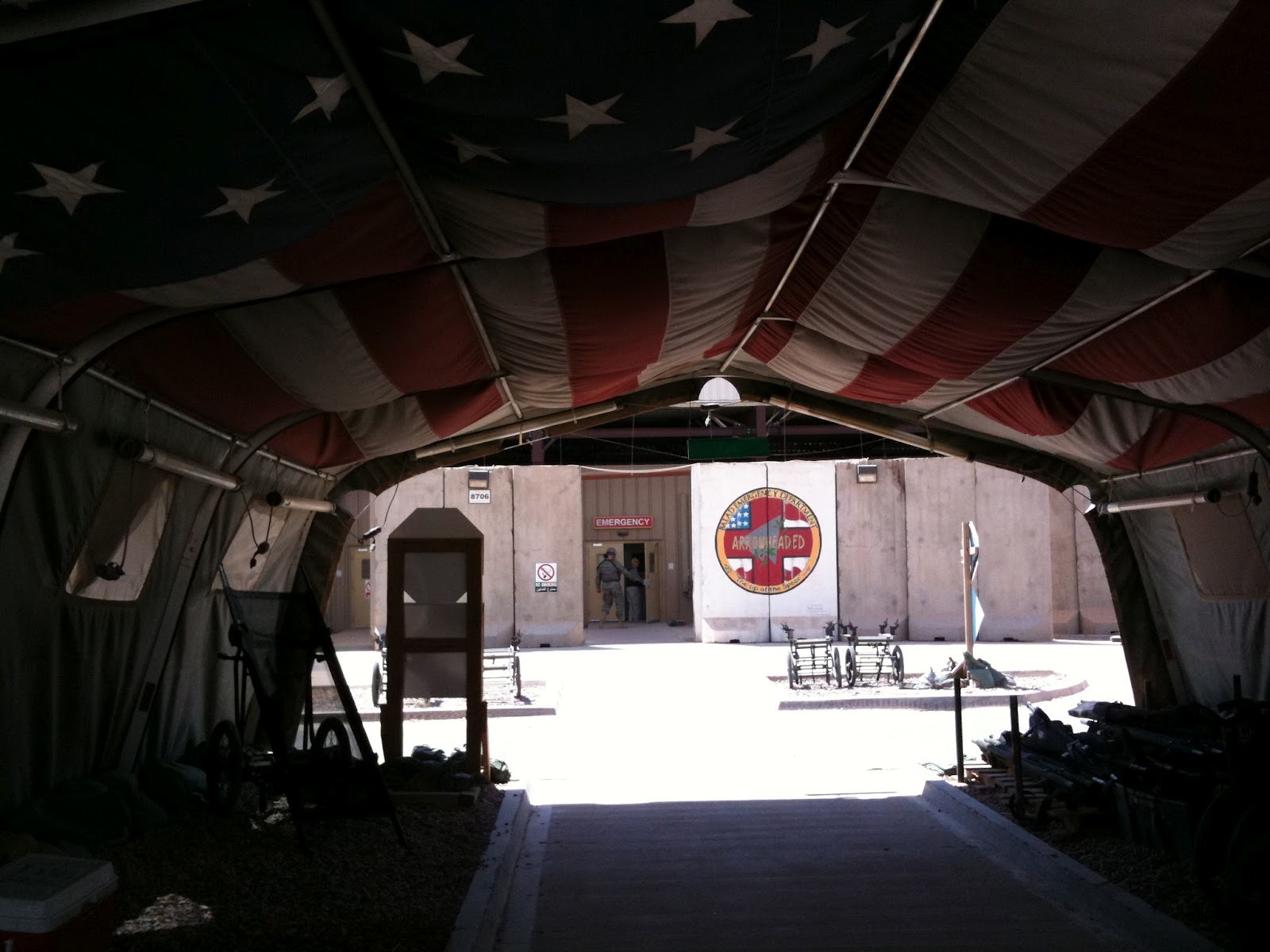
It was easy to hate the people who had produced the martyrs of 9/11. Maybe hate was too strong a word, but I certainly had no compassion for them, even though I’d taken an oath to do so. That was until one night in Iraq, when the squawk box relayed a trauma on its way in.

“Trauma call, Trauma call, Trauma call, times one, pediatric,” a voice cried over the hospital speakers. A collective moan echoed in the emergency room as physicians, nurses, and technicians streamed in to take their positions.

The squawk box sounded again in staccato sentences. “Vitals stable. Patient fell off roof. Fall distance: twenty feet. Seven year old boy trying to fly his kite. Significant head injuries. Would call the Neurosurgeon. Over.”

Trauma Tahoe arrived listless and unresponsive with a bluish hue. Orders reverberated off the walls as the Trauma Czar, Dr. Garrett, directed Tahoe’s initial resuscitation, stabilizing him for his eventual surgical care. Within an hour, he was taken to surgery and  then placed in the Intensive Care Unit on the ventilator.

The next morning I got up early to check on him. His physical examination had degenerated, and now showed signs of herniation, a condition incompatible with life. The ominous signs on the initial CT scan suggested that Tahoe had suffered severe damage akin to having major strokes on both sides of the brain, and had little chance of recovery, but we all were praying he would be the outlier. The neurosurgeon leaned against the door of the “doc box,” the room where the doctors stay overnight to care for the ICU patients. “There’s nothing more we can do,” he said. All gazes cast downward, and the room remained quiet. We had all arrived at the same conclusion, but saying it had cast the reality into the universe with finality.

The pediatrician, ICU director, neurosurgeon and I walked into the room, and looked at the silent, unconscious patient. His head was wrapped in white bandages. His long, dark eyelashes curled up hinting of his former handsome features, but his swollen face now cast a shadow over his angelic appearance. The ICU staff worked all around me as I watched them perform as professionals: removing tubes, shutting down machines, gradually causing the room to grow still. Dr. Williams, the pediatrician, asked the nurse to bring in the nicest blanket we had. She returned with a hand-quilted blanket sent from a family in Wisconsin.

The beautiful design contrasted against the hideousness of the moment. Then, we waited. The little boy’s father approached the door, his face somber and eyes heavy. The mother was close behind. She was dressed in a black robed dress, shawl and shoes. She held a handkerchief to her face as the tears streamed down her face. Her voice filled the room with an Arabic phrase uttered repetitiously and mournfully. I imagined what I would say, how I would react, and my mind began to whirl as I pictured my own seven-year old daughter in the bed. The father pulled the blanket off and leaned over the bed to kiss his boy’s feet. His tears washed his son’s toes as he slumped over his feet, rocking back and forth in grief.

His mother kissed his lips, brooded over him as she continued to chant the doleful phrase trying to bring her boy back to her. Then as if she suddenly realized we were in the room, she looked up at Dr. Williams and with begging eyes asked him the question in Arabic. The translator in the room knew that he need not explain, Dr. Williams had been asked the question that all doctors despise, the question that raises the issue of the limitations of medicine and the injustice of harm that befalls innocent children. He shook his head and said, “I’m sorry, there’s nothing we can do.”

In that moment, I stood with tear-brimmed eyes, struggling with the sorrow and grief that losing a child will bring.

**********************************************************************

Dr. David Carnahan is a Board Certified Internist, who fell in love with writing while getting his Masters Degree in Epidemiology at the University of Pennsylvania. He has served in the Air Force for the past 14 years as an academic clinician/educator and now works in the area of Healthcare Informatics. He has a wonderful wife and two beautiful daughters, and invites you to read about his life (www.dhcarnahan.blogspot.com), and weekly installments of his current work in progress, The Perfect Flaw (www.theperfectflaw.com).

Nurse as Patient

When my debut medical thriller, Proof, was going through the editorial process there was a question about a particular character’s reaction to finding his friend, and love interest, attacked and unresponsive in her home.

Kadin Daughtry is an OB/GYN. So, he’s used to being under pressure. After all, babies can be in a rush sometimes to be born.

However, when he finds Lilly, beaten, he does the necessary things– checks her pulse, calls 911. But he is stunned and having difficulty.

Editorial thought he should have his act much more together– after all, he is a trained physician.

Hmmm….

It’s true, medical people have the knowledge to deal with emergencies. But they still are people and can suffer the same reactions other people under stress will feel.

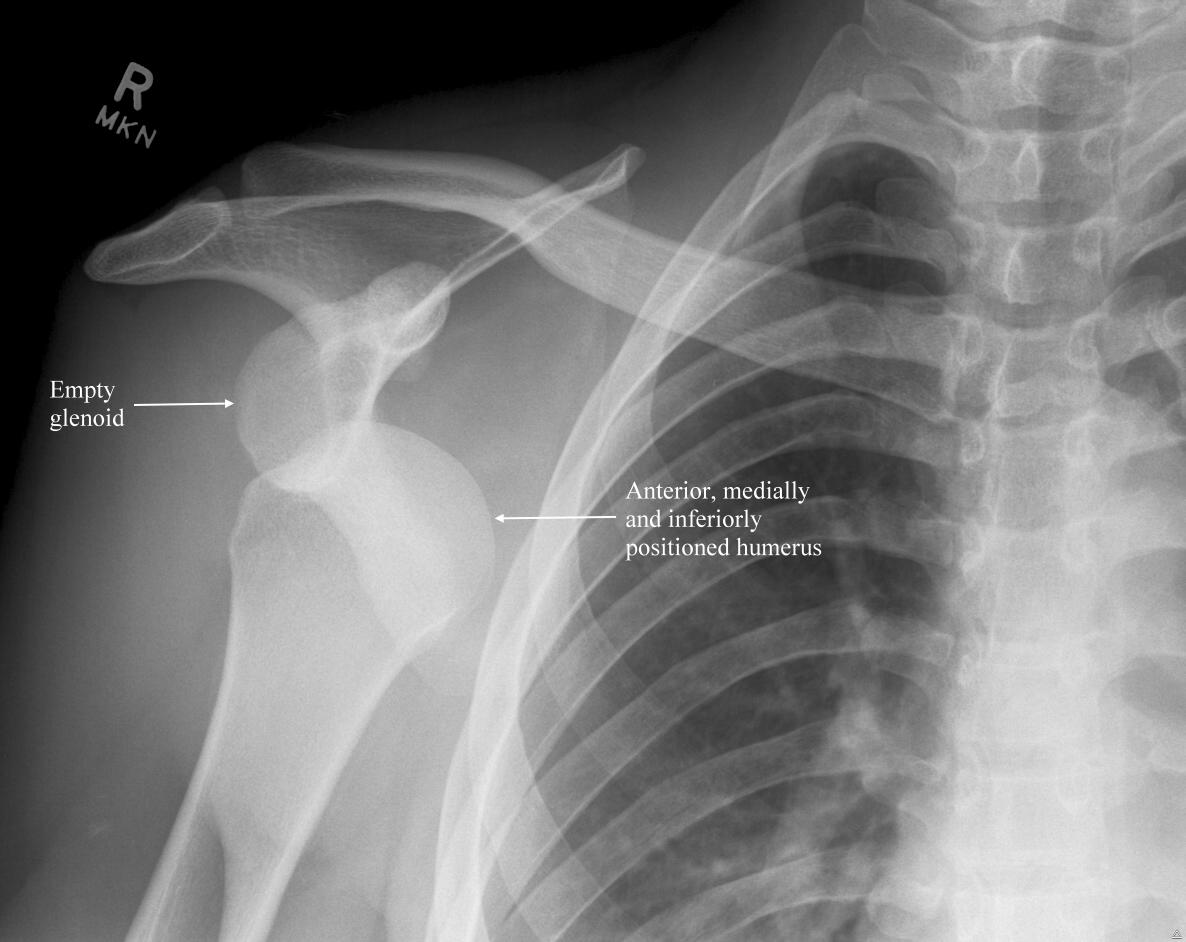
About nine months ago, I dislocated my shoulder while working out with a personal trainer. Unfortunately, this was not a new thing (to the left shoulder it was!) so, initially, I felt like– okay, I can manage this. We just need to get it back into place as I’d been able to self reduce my right shoulder before.

The pain was pretty awful. No quite as bad as burning my eyeball with a curling iron (yes, the actual eye!– I know– it takes talent) or giving birth but up there. When it became clear that I wasn’t going to be able to reduce it myself and wasn’t willing to let my trainer try because he doesn’t carry Fentanyl in his pocket– in retrospect I realized a couple of things.

1. Pain makes it really hard to think. It doesn’t matter how well versed you are about treatment of certain injuries, pain makes it hard to think through your options. You just want the pain to stop– quickly.

2. Because of #1– making decisions is hard. It’s not that your clinical brain checks out. You can still assess the injury and walk someone else through the treatment, but it’s not seemless. Meaning, there were long moments of silence as people waited for me to tell them what to do because they know I’m an ER nurse.

3. You really want someone else to make the decisions. Even though I am an ER nurse, I really wanted someone else to step up and say– this is what I’m going to do and this is what I need you to do. We’re going to get you up. I’m going to call an ambulance… It’s reassuring to feel that someone has your back. When people are doubtful around you and looking horrified at your injury– you begin to worry about yourself more. That’s why having that “doctor face” is important. People want to feel like you can competently handle whatever is wrong with them.

4. Ambulance rides are very bumpy! Don’t ever write that an ambulance is a comfortable ride. They are not.

What about you? Have there been times people looked to you to be an expert but you really needed someone else to step in?

Author Question: How Long to Drown to Death?

Kara asks:

I’m a fan of your blog and was hoping you could help me. My current work in progress has a seven-year-old girl die from drowning. After the rest of her family goes inside, she returns back to the pool to retrieve something and then is found minutes later.

My question is two-fold:

1. What is the minimum amount of time a girl that age and of average weight and height would succumb to drowning (assuming she fell & hit her head, then fell into the water.)

2. Physically, what exactly happens when a person drowns? I’m assuming there is a lot more to it than just the lungs filling with water. For example, what would an autopsy show to prove that it was a drowning?

Jordyn says:

I had prepared this post to run long before I got a phone call from a good friend who also happens to be an ER nurse and mother of seven. I don’t know what it is about kids and water– but it draws them like a moth to a flame.

I think personal accounts of situations are good for us to read through as writers because it gives us a glimpse of what it’s like to have a moment in another person’s shoes. My friend’s young son drowned and was subsequently revived with no neurological deficits. This is a MIRACLE and you can read her first hand account of this event here.

Part one of your question– first thing you need to determine is does she fall into the water unconscious? If so– she will drown quicker. Versus, if she falls into the water conscious– she will struggle in the water (you can determine this) before succumbing to the water based upon her ability to swim. Maybe this struggling lasts for 2-3 minutes, then she goes unconscious.

When she goes unconscious, the water will flow into her lungs. When water is in the lungs– there can no longer be gas exchange. When there is no longer gas exchange, the organs begin to die from lack of oxygen. The most common time frame you’ll hear for “brain death” to occur is four minutes.

Now, it would not be all that unusual to revive her at some point after four minutes. We may get a return of her pulse but her brain likely will be past the point of return. So, upon finding her down in the pool, say after 10 minutes of someone last seeing her, you could just have them be unable to revive her at all. That would probably be the easiest way to deal with it. She would likely still be transported to the hospital and worked on because she is a child and pronounced dead at the hospital.

If she is revived– that’s a whole other can of worms you may not want to go into.

As far as what the autopsy would show– this is an excellent resource I think you should read through. I think it has a lot of what you’re looking for.

http://forensicpathologyonline.com/index.php?option=com_content&view=article&id=101&Itemid=125

******************************************************************************
Kara Hunt is an inspirational speaker and writer who throughout the years has mentored women on the various aspects of living daily and triumphantly as women of God, despite their past and regardless of their circumstances. Kara’s transparent testimony touches hearts and has helped many women reconnect and refocus on what’s truly important during their spiritual journeys. As Kara ministers out of her own personal experiences, she desires to communicate God’s truth as He reveals it, and wants other women to know that they too can experience God’s merciful and unspeakable joy.

Kara also created the Christian Fiction blog “Fiction With Faith.” See her upcoming reviews and news at http://www.kararhunt.com/

A Miracle in the Desert

Today, Dr. David Carnahan concludes his series on the widow maker and finishes up with his first hand experience of a patient surviving this usually fatal heart attack. The first part can be found here.

Now, David….

Then, their expressions dropped.


“I’m sorry I don’t have better news.” I paused, letting the words sink in and waited for their questions to bubble up to the surface.


“Does this mean you aren’t going to do anything else for him?”


“No. We’re going to continue to do everything we can to keep him alive. I just wanted you to know how grave the situation is.”


An hour later, the team stood at the bedside, waiting for another round of electrical shocks and epinephrine to urge his body to fight through the blockage in his heart.

I walked up next to Dr. Winfield again. “He still the same?”


“Pretty much. I think we are at the decision point now.”


“Yeah?”


“He’s on eleven drips.”


Most patients in the ICU are on a couple of drips: antibiotics, sedation, pain meds, but eleven is an unusually high number.


“I’m worried he’s not going to get his brain function back,” Winfield said.


I envisioned him at the end-state: awake, alive but functioning at a third grade level or worse, non-communicative. Are we doing this guy any favors by bringing him back? I rubbed my forehead with my right hand and then scratched the top of my head as I thought again about the consequences of our decision. “I think the next time he codes, you should code him. But, if he doesn’t come right back, then just call it.”


As I finished my sentence the announcement was made again, “He’s in V tach.”


I watched as they pushed on his chest, the patient’s ribs flopped up and down. Dr. Winfield looked over at me and I knew what he was thinking because I was thinking it as well: we’re torturing this poor man.


I walked over to the crowd of co-workers who’d assembled for the impromptu vigil. “Mr. Williams, I’m worried he’s not going to regain his mental abilities. We’re at a point where I feel the best thing to do is to let him go.” They looked at me apparently expecting this because they all held their expressions with little reaction. “I know this is tough, but I think the right thing to do is to let him pass when he codes next.”


“Can our chaplain say a prayer over him?”


“Of course.”


The look of relief on the faces of Drs. Winfield and Bauer told me I’d made the right decision, but I still wondered.


The chaplain stood beside the patient’s bed and the onlookers formed a semi-circle around him as well. “I would like to start by saying, on behalf of his co-workers and his family, that we appreciate the heroic measures you all have taken to preserve his life.” He grabbed the black skinned book in both hands and dipped his head. “Richard loved to laugh. He’s a good man and well liked. I know he will be missed greatly.” He paused, closed his eyes and said, “Will you join me in prayer.”


Several weeks later, I sat at my desk, working on a presentation that I would give to the medical staff of the hospital. I did this every month to relay the outcomes of the patients we sent to a hospital in Germany. I paused on the slide that represented Mr. Hall; the man I predicted would never make it to Germany alive. Tears rolled down my cheeks as I smiled in remembrance.


After the chaplain’s brief prayer, Mr. Hall, who coded almost ten times during the first four hours in the ICU, went the next fourteen without so much as a blip on the telemetry monitor. He then made it to the next hospital while being managed in a plane on a ventilator and eleven drips for eight hours. But most importantly, I later learned that he woke up and began following commands – a sign his brain had made it through the whole ordeal.


To this day, I am humbled at how close we came to “calling the code,” and thankful that God hears the cries of his people. Most of all, I was honored to watch God’s handiwork on yet another Sunday.


****************************************************************************

Dr. David Carnahan is a Board Certified Internist, who fell in love with writing while getting his Masters Degree in Epidemiology at the University of Pennsylvania. He has served in the Air Force for the past 14 years as an academic clinician/educator and now works in the area of Healthcare Informatics. He has a wonderful wife and two beautiful daughters, and invites you to read about his life (www.dhcarnahan.blogspot.com), and weekly installments of his current work in progress, The Perfect Flaw (www.theperfectflaw.com).