Themelina Asks:
I have read some of your posts and I am wondering if I could please have some help regarding a book I am writing. I have three scenes in my book that are in a hospital. The background story is that a girl gets notified that her mom and sister have been in a car crash. Her mom has died and her sister is currently in surgery. Is it right that a police officer comes to her house and lets her know or does something else happen?
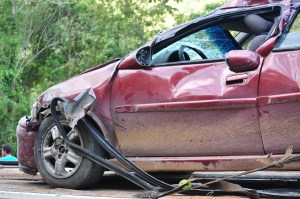 After she finds out she faints, and hits her head. I don’t want to make this part sound too serious. However, I still want her to go to the hospital. So what floor would she go to? How long would she stay?
Lastly, the third scene is where the sisters see each other after surgery for the first time. She is paralyzed. How could she communicate with her?
Jordyn Says:
Thanks, Themelina, for sending me your questions.
Question #1: Who would notify the family of the death? I could see this happening a couple of ways. If the mother was declared dead at the scene of the car accident then the police would notify the family. If the mother is transported to the hospital and the hospital team declares her dead then it probably falls on the hospital team to notify the family.
We don’t generally like to give death notifications over the phone. I’m not saying it’s not ever done, but not preferred. We would likely call the family and ask them to proceed quickly, but safely, to the hospital. This might also be preferred because the sister is requiring surgery and except in the most extreme cases surgeons generally like consent before they operate. If there is not a parent to give consent (you don’t mention a father in your scenario) it could fall to the sister, if she is eighteen or over, to give consent for her sister’s surgery.
Question #2: People who pass out and hit their heads are rarely admitted to the hospital. I’m assuming you want this sister to suffer some form of concussion. She gets the awful news about her family, passes out, hitting her head in the process. If she wakes up rather quickly (a few minutes or less), is oriented to person, time and place, and doesn’t show neurological signs of a brain injury that might require surgery then she would get a physician evaluation, a few hours of monitoring to be sure her symptoms are improving, and then she would be discharged home. There would also be no need to wake her up through the night. This is a myth.
Question #3: You don’t specify in your question the level of the sister’s paralysis. Her ability to talk will depend on the level of paralysis. Patients paralyzed from the neck down are, at least for a while, on a ventilator. When a person has a trach, there are special adapters for the trach that allows people to talk. However, a trach is not placed at the beginning and it takes time for a person to learn to talk with the special valve. If she is on a breathing machine and can’t write (because her arms are paralyzed), but is awake and can understand questions then we use a system of eye blinking for responses. One blink for “yes”. Two blinks for “no”. And obviously more simply phrased questions.
Hope this helps and good luck with your story!
 First, the man who threw the switch is thrown onto the floor and sparks are showering down on him and his clothes. He is pinned beneath a shelf that he knocked over. The second man takes his jacket and tries to put out the flames while others pull the shelf off the man on the floor. The second man’s arm and hand are burned trying to put out the fire, and keep the sparks from falling on the man on the floor.
 I’m thinking open or compound fracture because then I can have him develop a bone infection. What I’m wondering is the order of things and how long it would take to develop what and how to recover, how long it takes, and so on.
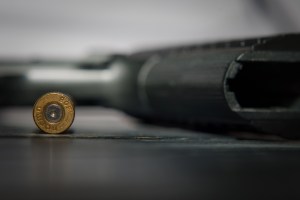 Cop, mid-thirties, in excellent health and physical condition is shot with a low caliber bullet from about 10 feet away. The bullet hits his chest, goes through the lung and exits out the back. He’s got colleagues nearby who administer basic first aid and the EMTs get there within 5 minutes. Say about 15 minute drive to the hospital. They radioed ahead so the hospital is expecting them and has an OR ready.
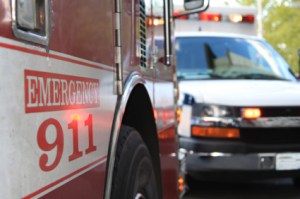 You give your victim immediate first aid and EMS responds quickly. Keep in mind that you’re going to need a paramedic to respond to give more advanced field procedures. A basic EMT is limited in what they can do— CPR, wound dressings, assisting the patient with some of their own medication administration. Depending on the state, some EMTs can start IVs, so if your novel is set in a specific location then I would research this for that area. Assuming he has a paramedic respond then he’ll get an IV, IV fluids, oxygen, and possibly pain medications. Of course, a set of vital signs and cardiac monitoring.
 I have a young teen character in the near future (about 2075) who is a motocross racer. She has a horrible crash near the end of her freshman year of college and suffers a large injury – she has to stop school.
 This is an example of all things are possible, but not necessarily probable. Of course, people survive devastating injuries every day. Miracles do happen. This is the category I would put your character in to.
 The patient has just woken up and had a panic attack. Been settled down. You asked for his name and he seemed uncertain as he gave his first name. You asked for his last name and the patient shook his head. What next? I mean obviously the glass would have been removed from his hands and a drip put in for painkillers but what next? Who does the nurse call? Or what does she ask now? And if memory loss is confirmed, how do they find out it’s amnesia like which SPECIFIC tests do they do? Who is contacted and brought in to liase?
 1. Character is standing in the road, tries to run but is hit by the car front on. Body smashes into the windscreen, sending him up into the air.
 Jordyn Says
 Jordyn Says
 Redwood's Medical Edge